

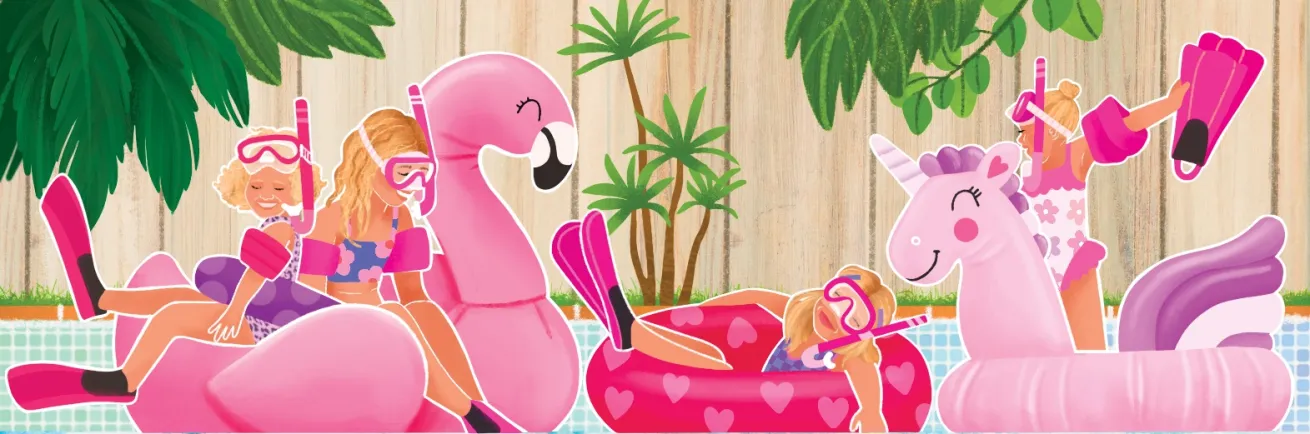
Illustration: Lauren Rebbeck
Before I was a mother, I was an aunt. And as soon as my nieces learned to swim at home in their backyard pool in Tampa, I was already hopeful the towheaded and swim diaper–clad girls were my future dive buddies in the making.
Just as many great love affairs with the ocean and all its wondrous denizens begin, theirs started with a snorkel. First, in that backyard pool, where they’d slip on hot-pink fins and masks to match, and shimmy their bodies like little tadpoles across its smooth expanse to see who could make it all the way to the deep end the fastest.
When the oldest of the girls, Maddy, was only 6, my sister let me take her on a solo trip to Key West. At a marina near Duval Street, we piled into one of those massive catamarans blasting reggae music and full of sunburned tourists. Then I got to watch Maddy as she took her first breaths through her trusty snorkel in the wild.
Related Reading: Ode to the Average Dive
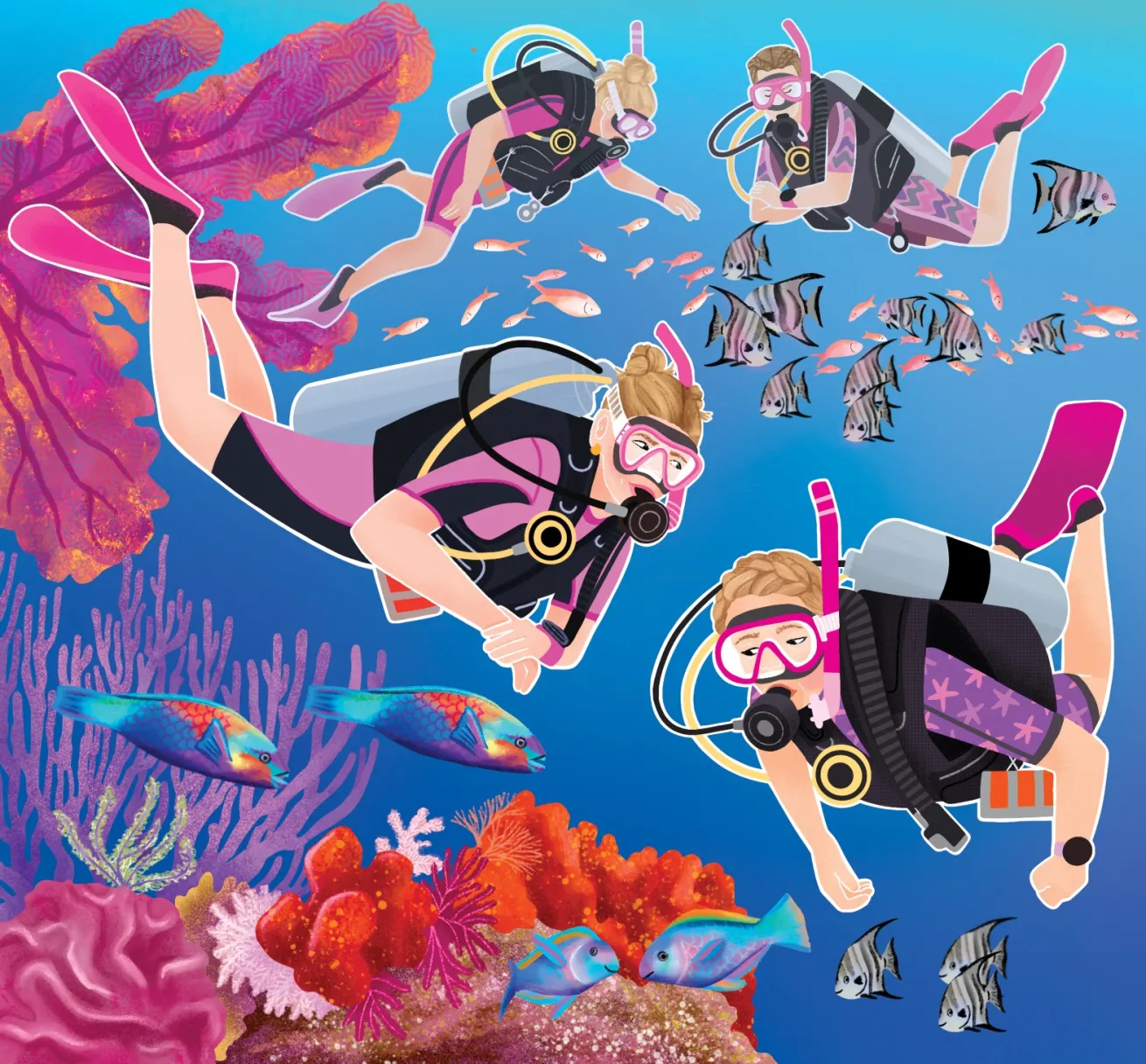
Illustration: Lauren Rebbeck
She was a natural after all that pool time, but totally unprepared for what she was about to see. The shallow, coral-filled canyons of Eastern Dry Rocks were busy with the usual Florida Keys National Marine Sanctuary suspects—schools of black and yellow sergeant majors, blue and yellow grunts, patrolling parrotfish and the like. What was commonplace to me, though, might as well have been manta rays and whale sharks to my niece.
Maddy yelped through her snorkel, fogged up her mask with excitement and kept calling me over to see what she’d spotted, like it was my first time too. She was a great swimmer by then, but still tested my nerves when she went kicking off in pursuit of a passing trumpetfish.
Watching her surprise underwater made me remember my own first time in the waters of the Florida Keys, when I was far older than she was and down in Key West for college spring break. Growing up in the Northeast with snow days and sweaters, I suddenly felt like I’d been cheated all my life. I could hardly believe that such a place with such colorful coral reefs was right here in the United States.
As soon as they could, my nieces all got certified as open water divers at Blue Heron Bridge in Florida, another shallow-water wonderland where we found oddities like flying gurnards and skittish Atlantic spadefish lurking in the shadows of pilings under the old bridge.
Related Reading: Heart to Heart With Humpbacks
By the time we made it back to the Florida Keys again, the oldest of the girls were in their early teen years—and all of them were practically fish at that point. It was 2020, pandemic times, and we boarded a dive boat in Marathon clad in surgical masks that we soon enough swapped out for scuba masks—with much relief.
Related Reading: An Ode to Shallow Diving
Underwater with Maddy and her younger sister Ella at Coffins Patch reef, I spent more time admiring their buoyancy and contagious curiosity while trailing along as they pointed out every little thing to each other—here a cleaner shrimp, there a Spanish hogfish or hawksbill turtle.
When we surfaced, they ribbed me for missing a massive barracuda they’d seen. I told them how much fun I’d had just being along for the ride.


