

Alessandra Figari, the owner of Cave Training Mexico, has been teaching full cave diving since 2007. She is an IANTD and TDI Full Cave Instructor and has authored two diving books.
That is just a glimpse of her many other achievements—both on the international diving stage and in her local community in Mexico’s Yucatán Peninsula.
For Figari, the moment any diver descends beneath the ceiling of a cavern is transformational.
“There’s a moment every diver remembers, the first time they enter a cavern,” she says. “It’s not when you descend. It’s not when you see the light beams. It’s when you look up and realize you can’t go straight to the surface anymore.”
Whether you are experienced in cavern and cave diving or curious about the wonders that await, read on to dive along with her into this incredible and unforgiving world, where surface light fades and a different experience comes into view.
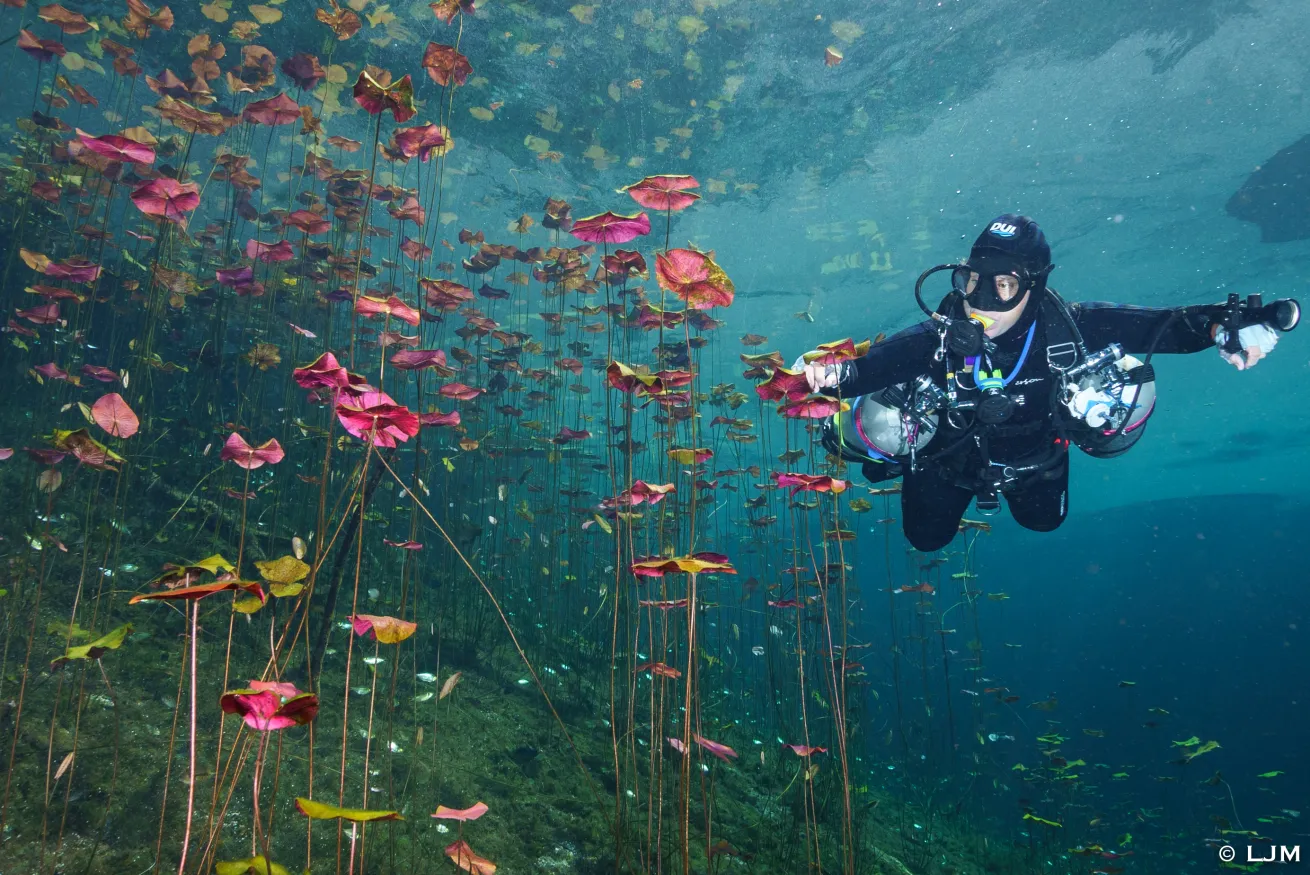
Courtesy of Cave Training MexicoThe moment you look up and realize the surface is no longer directly above you is the moment cavern diving truly begins.
Everything Changes
Everything changes the moment you turn your head to look up toward the surface when inside a cavern—the place where you have come from and the world you know above. That is when you realize the direct route up is no longer there. There is no ascending as you would during an open-water dive to reach it. Something clicks inside you.
Until that moment, diving might have always felt forgiving. Your buoyancy may not be perfect, your trim might be slightly off, and your awareness might come and go. But you know for sure that the surface is always right there above you.
Inside a cavern, that safety net is gone. This is the moment when you start to understand what diving in caverns and caves is all about.

Courtesy of Cave Training MexicoCrystal-clear cenotes may look serene, but their overhead environment demands skills and awareness far beyond a typical open-water dive.
The Illusion of Easy
The beautiful cenotes in places like Playa del Carmen in Mexico’s Yucatán Peninsula are easy on the eyes. It is easy to gaze at their crystal-clear depths, marvel at the dramatic shafts of light, and simply bask in their beauty. After all, these are some of the most spectacular dive sites on Earth.
But that beauty creates a potentially dangerous illusion.
A cavern is far from an open-water dive with a ceiling. It is an overhead environment where the rules are different—even if the dive feels calm and effortless.
And that is where problems can begin.
Perfect Buoyancy Is No Longer Optional
In open water, poor buoyancy might mean you drift slightly more than the others in your dive group or bounce on the bottom when you intend to stay above it.
In a cavern, such lack of buoyancy control can lead to zero visibility within seconds.
One careless kick, one moment of instability, and the silt rises around you. What was once a crystal-clear environment becomes a whiteout.
In that moment, you realize something vitally important: control is not about looking good to others or looking the part. It has everything to do with staying safe in this singular setting.
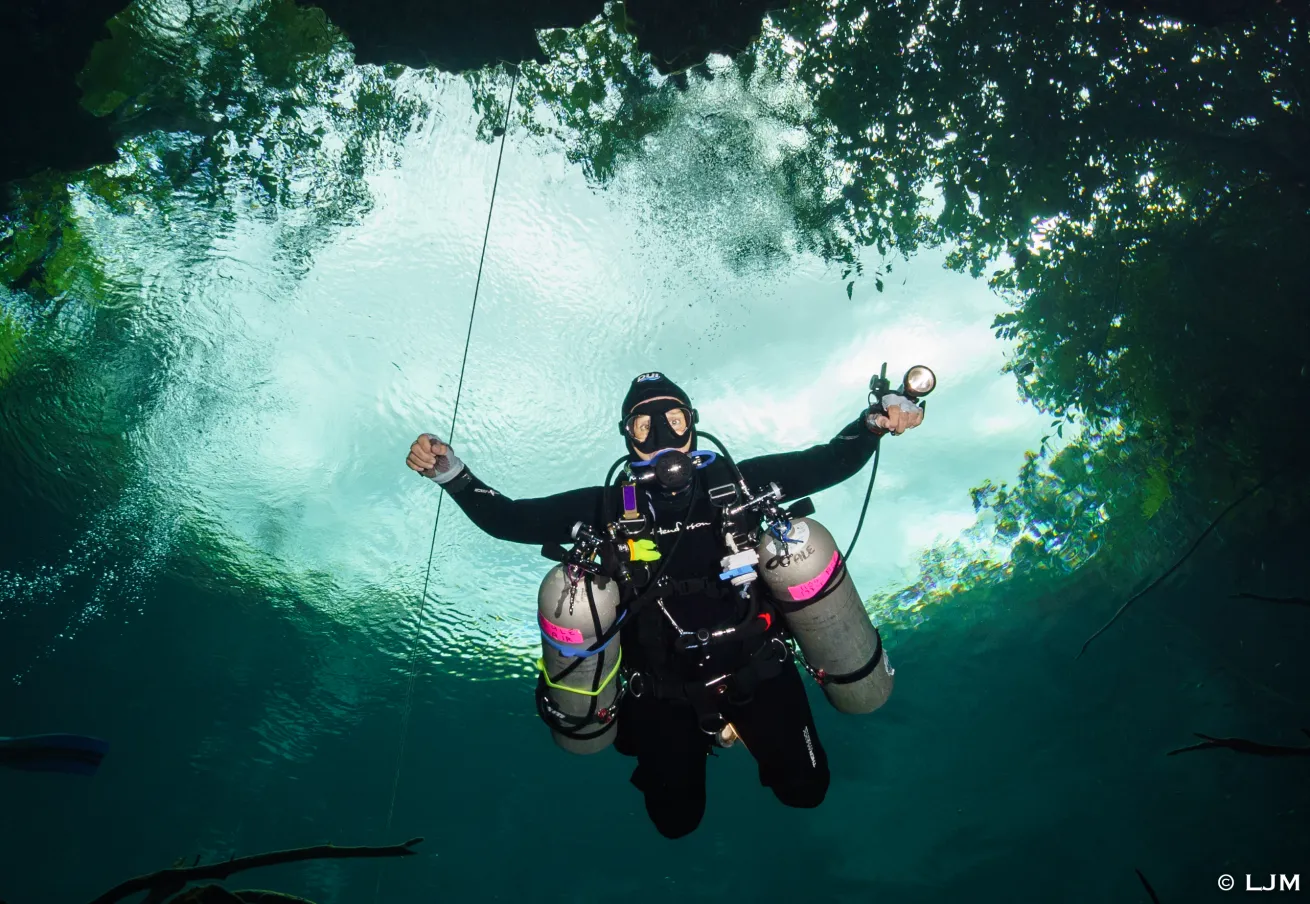
Courtesy of Cave Training MexicoThe guideline is more than a marker—it’s a diver’s lifeline, providing the path back to light and open air.
The Line You Should Never Ignore
There is always a line in the cavern as part of protocol. Divers may see it, but few truly understand the lifeline it represents.
This is the single most important reference in your dive. It is your way out, your way to the surface, your way into the air above. When visibility drops, when stress rises, when orientation disappears, this is your lifeline.
You never leave your line; you never lose awareness of it. In a cavern, knowing where it is and where you are is everything.
Light Is Your Voice
For most recreational divers, a torch is merely a tool to illuminate subjects better. In a cavern, however, it becomes something entirely different.
A torch is how you communicate. It connects you to your team. It helps you maintain awareness in space and time.
Where you point your light matters to both yourself and the divers with you. When you lose control of it, you lose part of your presence in the dive.
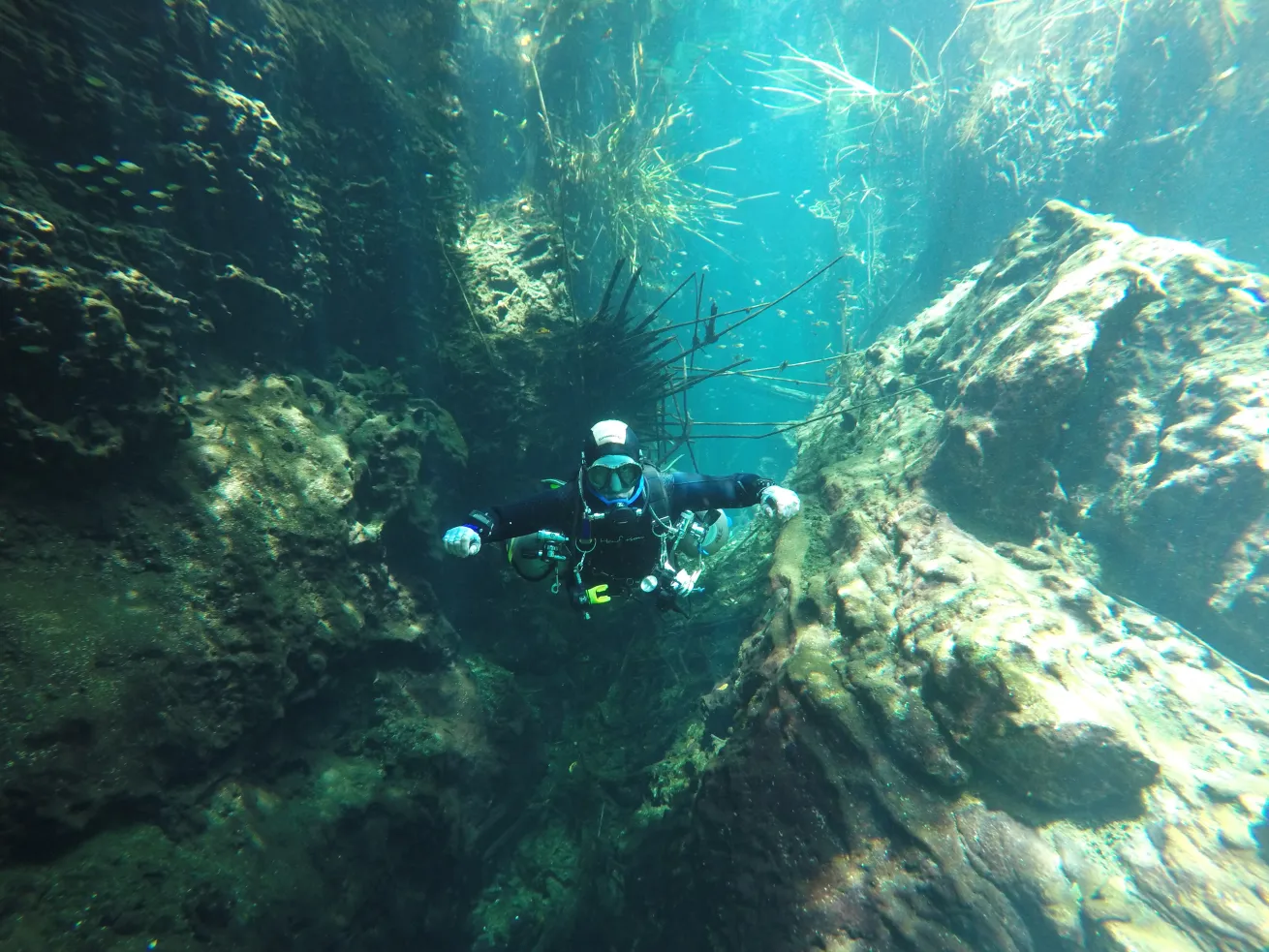
Courtesy of Cave Training MexicoFor many divers, the first cavern dive sparks a quiet transformation in awareness, control, and respect for the underwater world.
The Shift
Some divers emerge from a cavern dive talking about its beauty. Others come out quietly because something shifted.
They reflect on their position in the water, their movements, and their breathing. They begin to notice details they ignored before. They become infinitely more aware—not just of the environment, but of their role within it.
That is the real value of cavern diving. It is not about going deeper into caves.
It is about becoming a better, more aware diver with every descent.
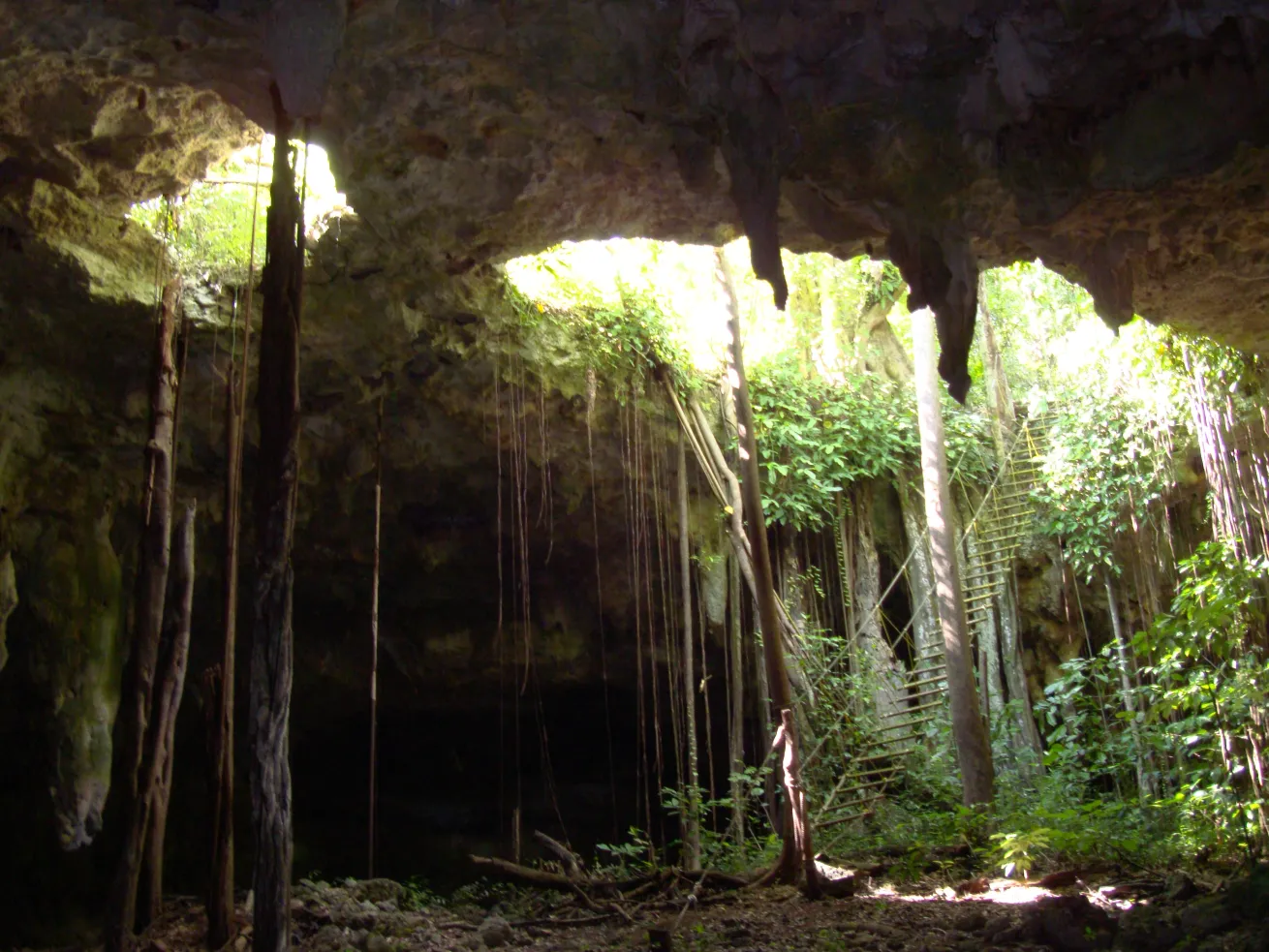
Courtesy of Cave Training MexicoCavern diving demands discipline and respect, but even a single experience beneath the ceiling can change how a diver approaches every future dive.
It’s Not for Everyone—and That’s Okay
Some people try cavern diving and realize it is not for them. That is not failure—it is awareness.
Overhead environments demand a different mindset and skill set, as well as discipline, attention, and respect.
The pull to explore further is often immediate.
But even if you never venture beyond the cavern zone, the experience of having been there changes you.
You return to open-water diving with more control, better awareness, and improved habits. You stop diving passively and start diving with intention.
And that, too, is where real diving begins.
Your first cavern and cave diving adventure starts here.


