
2001 Testers' Choice Regulators
November 2000
By Jon Hardy
Regulators Reviewed in This Article
| Aqua Lung Calypso Aqua Lung Cousteau Micra Adj Atomic Aquatics B1 Atomic Aquatics T1 Atomic Aquatics Z1 Beuchat USA VX4 Evolution Beuchat USA VX10 Evolution Beuchat USA VXT8 Evolution Cochran Duo Pro IDI Osprey Airtec IDI Seaira Titanium IDI Seaira Titanium/Brass IDI Seaira Tri Metal Mares Abyss Mares Ruby | Mares MR 12 Epos Mares V16 Epos Oceanic Alpha 7 CDX Oceanic Alpha 7 SP4 Oceanic Delta II DX4 Oceanic Delta II PX2 Oceanic Gamma DX4 Oceanic Gamma PX2 Scubapro MK2 Plus R190 Scubapro MK20 R380 Scubapro MK20 G250HP Scubapro MK20UL G250HP Sporasub Alto Plus Sporasub Mini Compact |
The ethic of constant improvement has, over the last decade, created a quantum leap in regulator performance. Today's regulators are, simply put, the best ever made. Period. They deliver more air with less effort and better performance for less money. Leading the way are these 29 models, the best high-performance regulators on the market today.
What makes a high-performance reg? The ability to deliver plenty of air in a stable fashion with little effort, even at great depth or low tank pressure.
Also important are comfort, ease of use and value for the dollar--all factors that weighed heavily in ScubaLab's exhaustive consumer testing of more than 400 regulators over the past nine years. Thanks to their work, you can select the right blend of features, performance and price for your style of diving.
All of these regulators rated a Testers' Choice for their ability to deliver air in an efficient manner. Some also rated a Best Buy, for a blend of high-performance and value for the dollar. And when you start comparing features and prices of these models with the rest of the pack, you'll often find that quality doesn't always cost more. So why dive with anything less?
Consumer tip: ScubaLab testing has shown that price does not always correspond to performance. There are expensive regs with just average performance and budget regs with way-above-average performance. Why pay more for less? Do your homework on www.scubadiving.com's GEAR section before you lay down that cold hard cash.
Regulators in Review
Aqua Lung Testers' Choice
||||
|---|---|---|
|

|
| Aqua Lung Calypso|
Aqua Lung Known For: Dependability and broad selection
Aqua Lung Calypso
Moderate price and above-average performance make this a Best Buy. $215
Aqua Lung Cousteau Micra Adj
Proof that big air can come in a small package. This tiny, low-drag unit earned its Testers' Choice rating with a top score in breathing machine tests. $475
Atomic Aquatics Testers' Choice
||||
|---|---|---|
|

|
| Atomic Aquatics Z1|
Atomic Aquatics Known For: High performance, stability
Atomic Aquatics B1
The B1 offers the same design, features and performance as the T1, but in a heavier brass housing. Like the T1, it has a well-designed diver adjustment. $630
Atomic Aquatics T1
The highest performing regulator ScubaLab has ever tested, it's also the lightest and most expensive model on the market, thanks to a titanium first stage. $1,442
Atomic Aquatics Z1
A chip off the old Atomic block, the competitively priced Z1 has all the breathing characteristics of the more expensive models, but fewer bells and whistles on the first stage. $450
Beuchat USA Testers' Choice
||||
|---|---|---|
|

|
| Beuchat VXT8 Evolution|
Beuchat USA Known For: Performance at an excellent price
Beuchat VX4 Evolution & VX10 Evolution
Beuchat's adjustable Evolution second stage diverts exhaust bubbles better than most high-performance regulators. With both first stage options it breathes easy, even at low tank pressures. $449, VX4 Evolution; $449, VX10 Evolution.
Beuchat VXT8 Evolution
This model performed 10 percent better on the breathing machine than the manual promised. Sweet. Test divers liked the comfort and excellent bubble dispersion. Best Buy. $369
Cochran Testers' Choice
||||
|---|---|---|
|

|
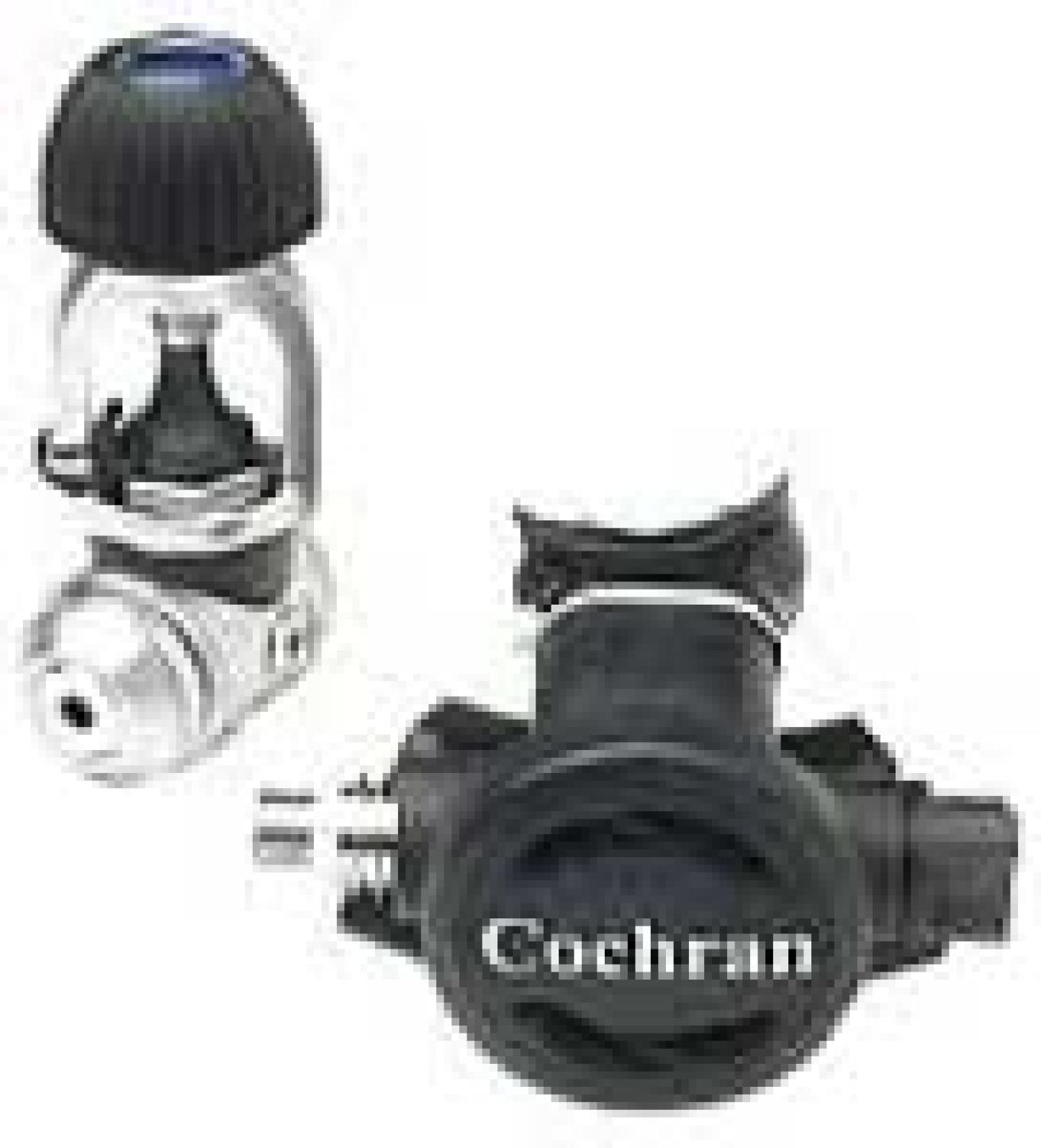
| Cochran Duo Pro|
Cochran Duo Pro
An old-style balanced diaphragm first stage mates to totally new user-adjustable second stage to create a powerful reg that breathes well. $495
International Divers Inc. Testers' Choice
||||
|---|---|---|
|

|
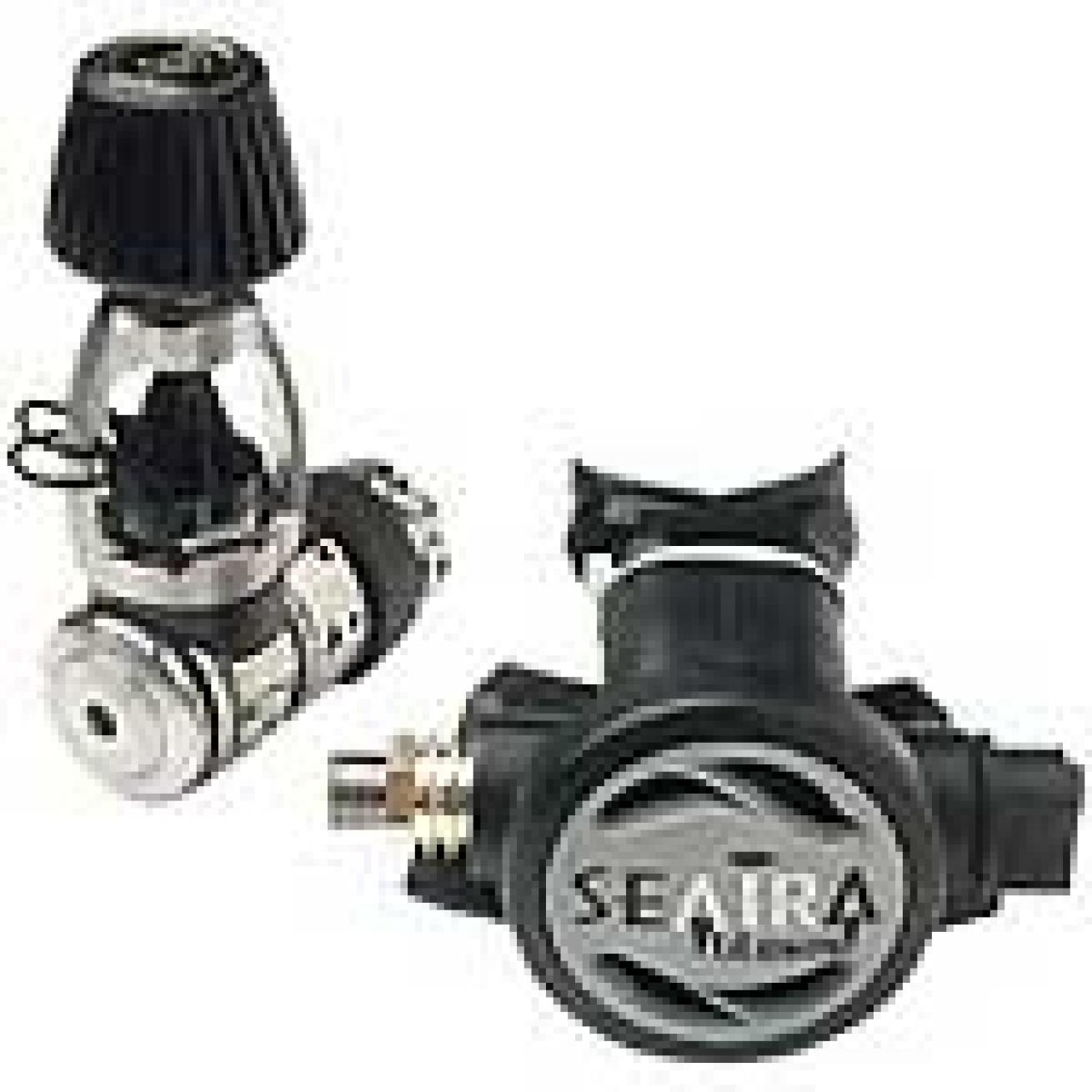
| IDI Seaira Titanium|
IDI Known For: Innovative, solid performance
IDI Osprey Airtec
Simplicity is a virtue with this general purpose reg: a brass second stage, no diver adjustments to worry about and an easy-to-use purge that covers the entire front of the second stage. $580
IDI Seaira Titanium & Seaira Titanium/Brass & Seaira Tri Metal
The Seaira is IDI's latest second stage design, featuring a breathing resistance dial and your choice of housing materials--all designed to resist corrosion and lower weight. $1,300, Seaira Titanium; $650, Seaira Titanium/Brass; $425, Seaira Tri Metal.
Mares Testers' Choice
||||
|---|---|---|
|

|
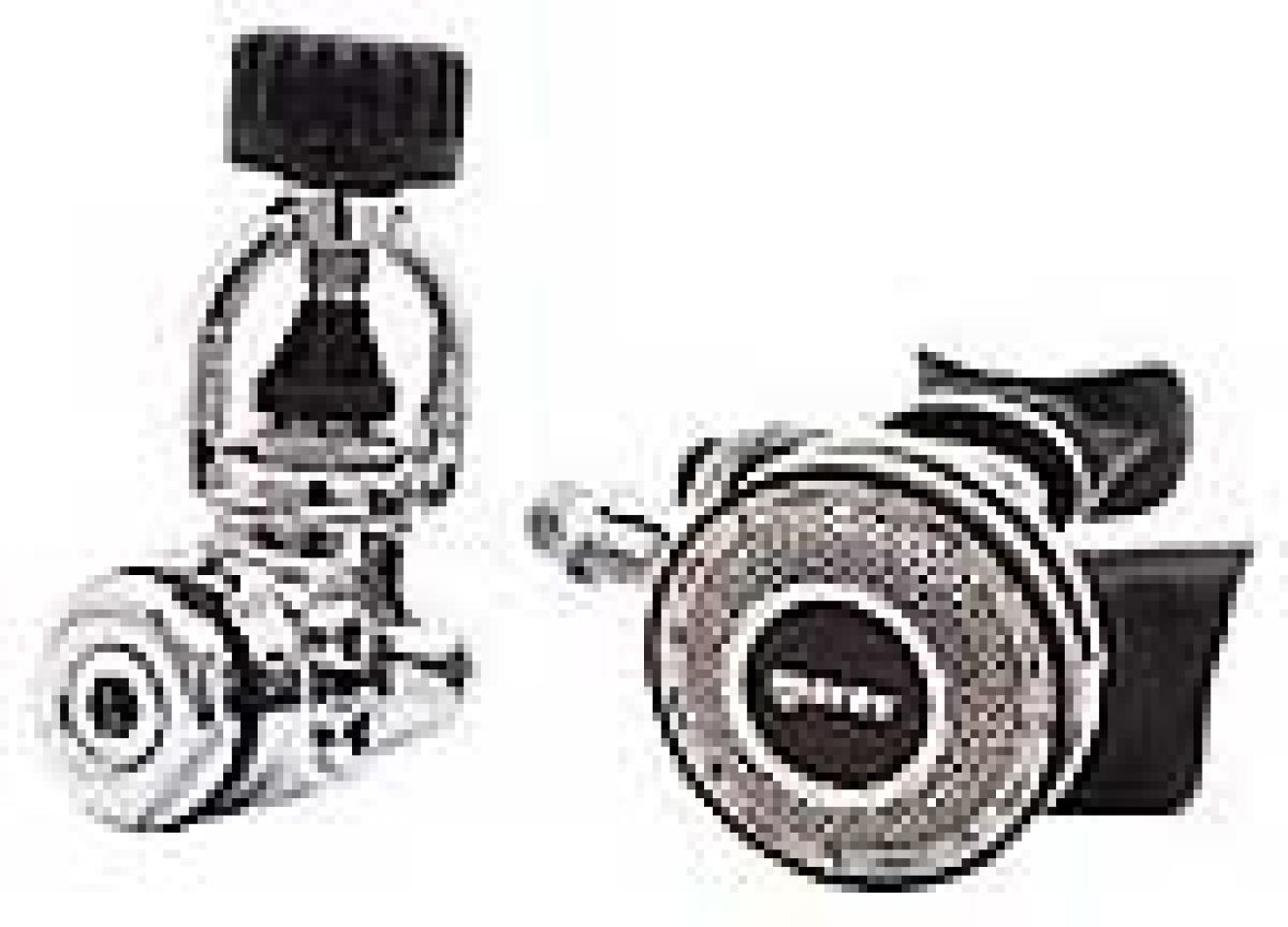
| Mares Ruby|
Mares Known For: High performance and quality with no user adjustments
Mares Abyss
Comes available in a titanium-coated first stage housing to resist corrosion. $579
Mares Ruby
An actual gemstone is used as a first-stage valve seat. It's designed to resist wear and improve performance, but the Ruby couldn't top the less-expensive Abyss at extreme depths. $819
Mares MR 12 Epos & V16 Epos
Updated version of outstanding Akros second stage, the Epos line now incorporates a different purge cover that may affect the performance. Look for future ScubaLab tests. Both first stage options are proven performers. $379, MR 12 Epos; $439, V16 Epos.
Oceanic Testers' Choice
||||
|---|---|---|
|

|
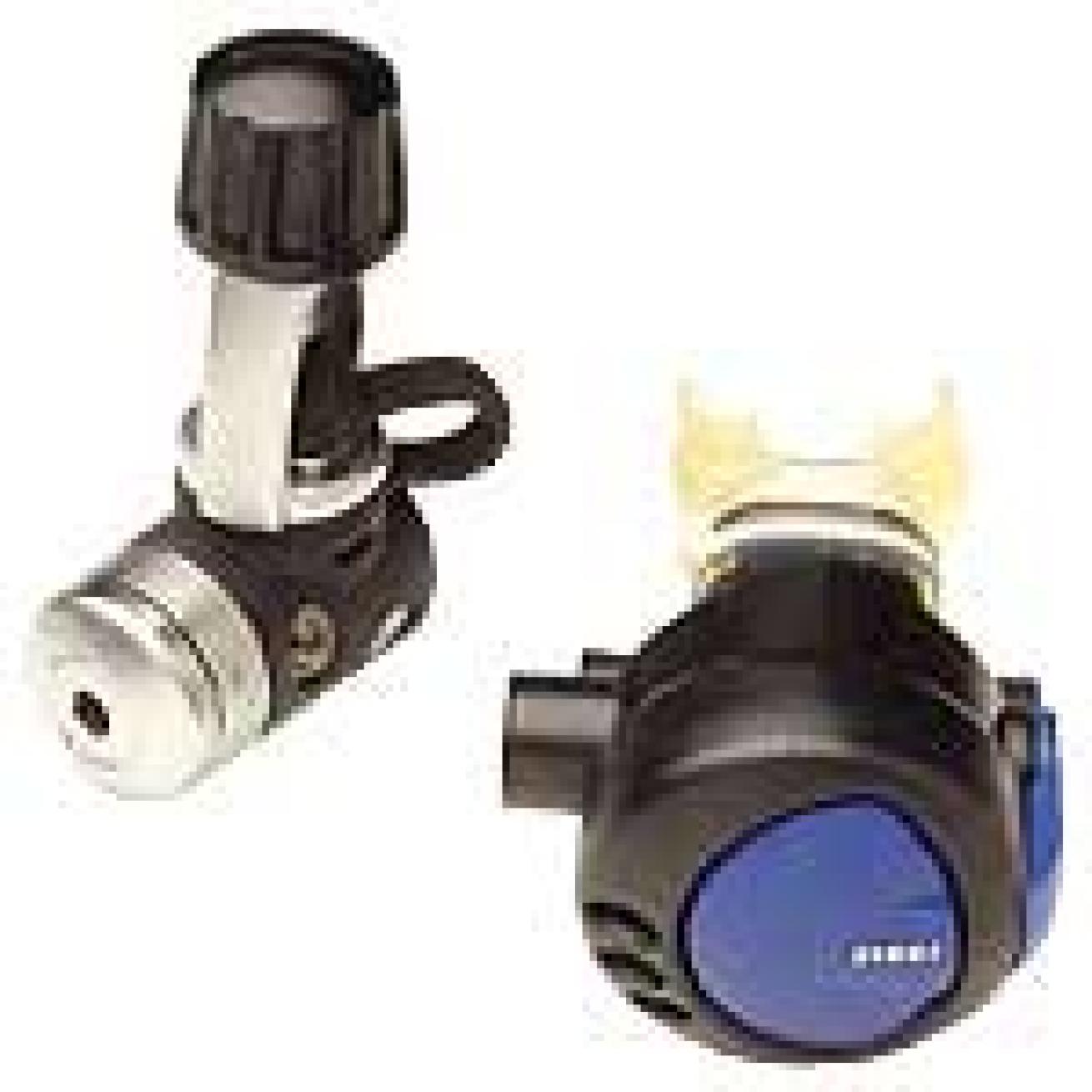
| Oceanic Gamma DX4|
Oceanic Known For: High performance at budget pricing
Oceanic Alpha 7 CDX & Alpha 7 SP4
The Alpha series (also available in nitrox versions) earns Best Buy awards for performance well above its price range $299.95, Alpha 7 CDX; $269.95, Alpha 7 SP4.
Oceanic Delta II DX4 & Delta II PX2
Neutral buoyancy gives the Delta user-adjustable second stages high scores for comfort, and both models deliver enough air at extreme depth to warrant a Tester's Choice rating. $425.95, Delta II DX4 and Delta II PX2.
Oceanic Gamma DX4 & Gamma PX2
No-frills budget regs with high comfort scores and stable air delivery. $369.95, Gamma II DX4 and Gamma PX2.
Scubapro Testers' Choice
||||
|---|---|---|
|

|
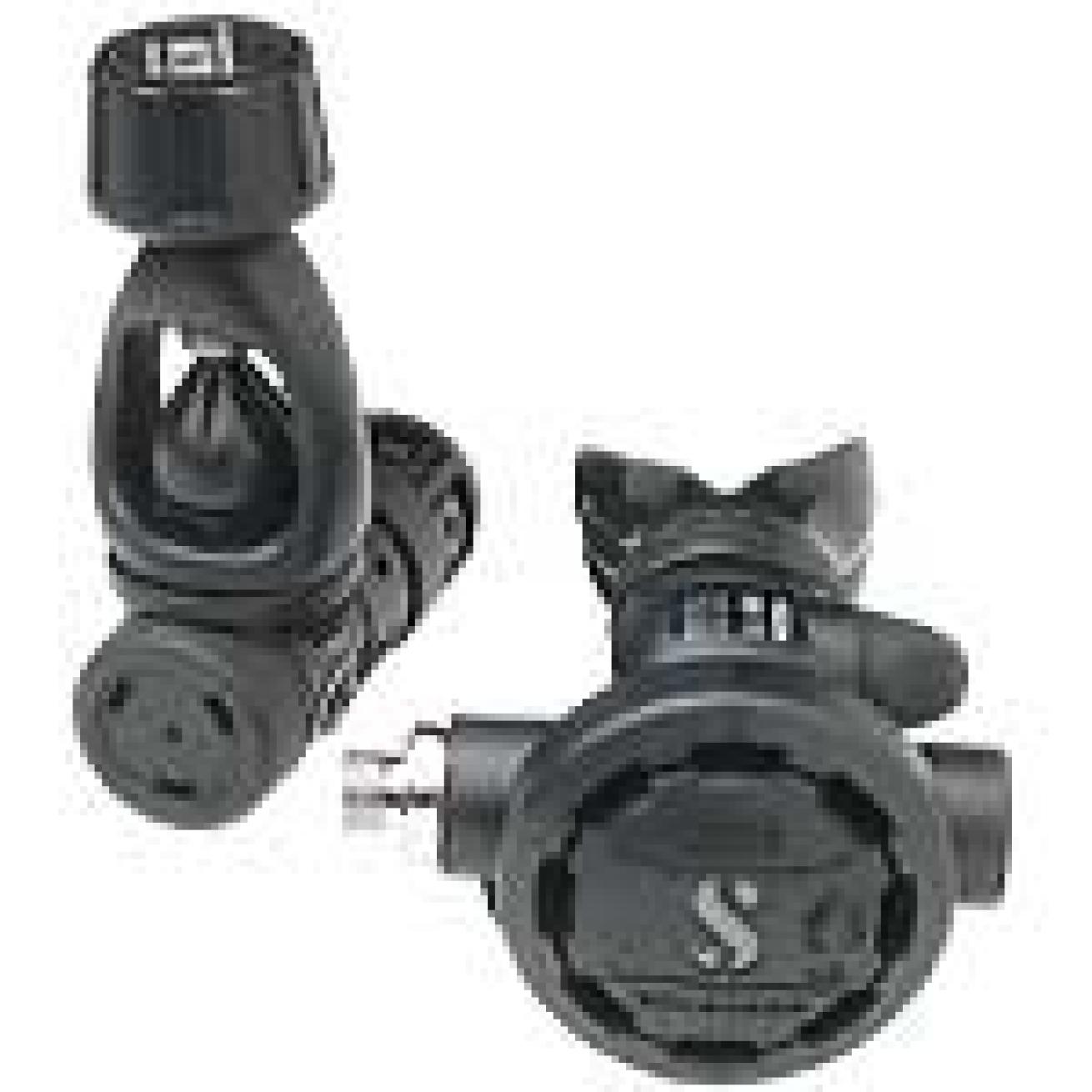
| Scubapro MK20 R380|
Scubapro Known For: High quality and high performance
Scubapro MK2 Plus R190
This combination of an unbalanced piston first stage and an adjustable second stage is an all-purpose champ. Best Buy. $256
Scubapro MK20 R380
This high-performance reg with a mid-range price breathes as easy at 198 feet as it does at 30. An intelligent design also allows the user to mount it right or left handed. $458
Scubapro MK20 G250HP & MK20UL G250HP
Easy-to-use diver adjustments, high comfort scores and benchmark-setting performance that's still better than most, make the improved G250 a good choice with the low-weight aluminum Mk20UL or the brass MK20 first stages. $550, MK20 G250HP; $826 MK20UL G250HP.
Sporasub Testers' Choice
||||
|---|---|---|
|

|
| Sporasub Mini Compact|
Sporasub Known For: Performance at budget prices
-
Leaking air. This problem plagues all regulators, new and old; high-performance and just average. Why? Regulators are mechanical devices that need an annual tune-up (even if it's just been sitting on a shelf) to stay in top working order. By the way, our survey showed that only 66 percent of you actually do have your reg serviced every year. Tsk, tsk.
-
Excessive free flows. A "high-quality" problem found in some high-performance regs. The refinements that provide voluminous and stable air-flow at depth can make regulators quick to free flow at the surface. Some of the best designs automatically compensate for this tendency. Still others provide min/max switches or dial adjustments that let divers tune down the airflow at the surface.
-
Hard Breathing. At great depth, in a panic situation or at levels of high exertion, a diver can still over-breathe even the best regulator. The biggest problem occurs when divers breathe faster than the reg can deliver air. That's why a slow, deep and relaxed breathing cycle works best.
-
Leaking water. Next to volume and stability, divers want their regulator to deliver air that's dry. A mist of water is not only uncomfortable but disconcerting. The problem may not be your reg. Check the position of the regulator in your mouth and make sure you have a good seal on the mouthpiece.
- Irregular breathing. Chattering or stuttering may be a maintenance problem. Have the reg serviced by a qualified technician. If the problem persists, particularly in shallow water or odd positions, it's probably a result of the regulator's design. Maybe it's time to change to another make of regulator.
-
Make sure you've received complete instructions, both written and verbal, on how to use and care for the regulator.
-
Check the manufacturer's warranty and make sure the store is qualified to do annual servicing.
-
Have the technician confirm that all hoses and port plugs have been removed; that the threads have been checked for any metal debris left from the manufacturing process; that all O-rings have been cleaned, lubricated and installed; and that all hoses and plugs have been securely replaced.
-
Have the unit tested by the store's technician on a test bench to ensure that it operates within specifications and has no leaks.
-
Have the regulator fitted to you for maximum comfort.
-
Bubble interference. In general, the higher a regulator's performance, the greater the bubble interference.
-
Adjustments. Min/max switches can be hard to find and grip while breathing resistance dials are often hard to grip and turn.
-
Comfort. Regulator comfort has not kept pace with improvements in the inner workings. Second stages that sit crookedly in a diver's mouth, that are positively or negatively buoyant, can all make an otherwise well-designed regulator a chore to use.
Sporasub Alto Plus
An adjustable reg that earns a Best Buy for its combination of stable performance and price. $273
Sporasub Mini Compact
Also a Best Buy with streamlined design and excellent bubble dispersion. $220.50
When Good Regs Go Bad
Catastrophic failure of regulators is extremely rare. No, the most common problem divers face with regulators are niggling little things like:
Some regulator designs that breathe perfectly dry in standard horizontal positions tend to leak when you're swimming upside down or head down. This is a feature we test for in ScubaLab reviews.
Dealer Prep
Not surprisingly, the vast majority of divers buy their regulators from a dive store. Good choice, because even the top models here need expert set-up and tuning before your first dive.
Before you walk out of the store:
What Needs Improvement
As gear manufacturers work on the next generation of regulators, here are three features ScubaLab hopes they'll work to improve.
November 2000
By Jon Hardy
Regulators Reviewed in This Article
||| |---|---|
| Aqua Lung Calypso Aqua Lung Cousteau Micra Adj Atomic Aquatics B1 Atomic Aquatics T1 Atomic Aquatics Z1 Beuchat USA VX4 Evolution Beuchat USA VX10 Evolution Beuchat USA VXT8 Evolution Cochran Duo Pro IDI Osprey Airtec IDI Seaira Titanium IDI Seaira Titanium/Brass IDI Seaira Tri Metal Mares Abyss Mares Ruby | Mares MR 12 Epos Mares V16 Epos Oceanic Alpha 7 CDX Oceanic Alpha 7 SP4 Oceanic Delta II DX4 Oceanic Delta II PX2 Oceanic Gamma DX4 Oceanic Gamma PX2 Scubapro MK2 Plus R190 Scubapro MK20 R380 Scubapro MK20 G250HP Scubapro MK20UL G250HP Sporasub Alto Plus Sporasub Mini Compact |The ethic of constant improvement has, over the last decade, created a quantum leap in regulator performance. Today's regulators are, simply put, the best ever made. Period. They deliver more air with less effort and better performance for less money. Leading the way are these 29 models, the best high-performance regulators on the market today.
What makes a high-performance reg? The ability to deliver plenty of air in a stable fashion with little effort, even at great depth or low tank pressure.
Also important are comfort, ease of use and value for the dollar--all factors that weighed heavily in ScubaLab's exhaustive consumer testing of more than 400 regulators over the past nine years. Thanks to their work, you can select the right blend of features, performance and price for your style of diving.
All of these regulators rated a Testers' Choice for their ability to deliver air in an efficient manner. Some also rated a Best Buy, for a blend of high-performance and value for the dollar. And when you start comparing features and prices of these models with the rest of the pack, you'll often find that quality doesn't always cost more. So why dive with anything less?
Consumer tip: ScubaLab testing has shown that price does not always correspond to performance. There are expensive regs with just average performance and budget regs with way-above-average performance. Why pay more for less? Do your homework on www.scubadiving.com's GEAR section before you lay down that cold hard cash.
Regulators in Review
Aqua Lung Testers' Choice
|||| |---|---|---|
|<
table>
| | Aqua Lung Calypso|
Aqua Lung Calypso
Moderate price and above-average performance make this a Best Buy. $215
Aqua Lung Cousteau Micra Adj
Proof that big air can come in a small package. This tiny, low-drag unit earned its Testers' Choice rating with a top score in breathing machine tests. $475
Atomic Aquatics Testers' Choice
|||| |---|---|---|
|<
table>
| | Atomic Aquatics Z1|
Atomic Aquatics B1
The B1 offers the same design, features and performance as the T1, but in a heavier brass housing. Like the T1, it has a well-designed diver adjustment. $630
Atomic Aquatics T1
The highest performing regulator ScubaLab has ever tested, it's also the lightest and most expensive model on the market, thanks to a titanium first stage. $1,442
Atomic Aquatics Z1
A chip off the old Atomic block, the competitively priced Z1 has all the breathing characteristics of the more expensive models, but fewer bells and whistles on the first stage. $450
Beuchat USA Testers' Choice
|||| |---|---|---|
|<
table>
| | Beuchat VXT8 Evolution|
Beuchat VX4 Evolution & VX10 Evolution
Beuchat's adjustable Evolution second stage diverts exhaust bubbles better than most high-performance regulators. With both first stage options it breathes easy, even at low tank pressures. $449, VX4 Evolution; $449, VX10 Evolution.
Beuchat VXT8 Evolution
This model performed 10 percent better on the breathing machine than the manual promised. Sweet. Test divers liked the comfort and excellent bubble dispersion. Best Buy. $369
Cochran Testers' Choice
|||| |---|---|---|
|<
table>
| | Cochran Duo Pro|
An old-style balanced diaphragm first stage mates to totally new user-adjustable second stage to create a powerful reg that breathes well. $495
International Divers Inc. Testers' Choice
|||| |---|---|---|
|<
table>
| | IDI Seaira Titanium|
IDI Osprey Airtec
Simplicity is a virtue with this general purpose reg: a brass second stage, no diver adjustments to worry about and an easy-to-use purge that covers the entire front of the second stage. $580
IDI Seaira Titanium & Seaira Titanium/Brass & Seaira Tri Metal
The Seaira is IDI's latest second stage design, featuring a breathing resistance dial and your choice of housing materials--all designed to resist corrosion and lower weight. $1,300, Seaira Titanium; $650, Seaira Titanium/Brass; $425, Seaira Tri Metal.
Mares Testers' Choice
|||| |---|---|---|
|<
table>
| | Mares Ruby|
Mares Abyss
Comes available in a titanium-coated first stage housing to resist corrosion. $579
Mares Ruby
An actual gemstone is used as a first-stage valve seat. It's designed to resist wear and improve performance, but the Ruby couldn't top the less-expensive Abyss at extreme depths. $819
Mares MR 12 Epos & V16 Epos
Updated version of outstanding Akros second stage, the Epos line now incorporates a different purge cover that may affect the performance. Look for future ScubaLab tests. Both first stage options are proven performers. $379, MR 12 Epos; $439, V16 Epos.
Oceanic Testers' Choice
|||| |---|---|---|
|<
table>
| | Oceanic Gamma DX4|
Oceanic Alpha 7 CDX & Alpha 7 SP4
The Alpha series (also available in nitrox versions) earns Best Buy awards for performance well above its price range $299.95, Alpha 7 CDX; $269.95, Alpha 7 SP4.
Oceanic Delta II DX4 & Delta II PX2
Neutral buoyancy gives the Delta user-adjustable second stages high scores for comfort, and both models deliver enough air at extreme depth to warrant a Tester's Choice rating. $425.95, Delta II DX4 and Delta II PX2.
Oceanic Gamma DX4 & Gamma PX2
No-frills budget regs with high comfort scores and stable air delivery. $369.95, Gamma II DX4 and Gamma PX2.
Scubapro Testers' Choice
|||| |---|---|---|
|<
table>
| | Scubapro MK20 R380|
Scubapro MK2 Plus R190
This combination of an unbalanced piston first stage and an adjustable second stage is an all-purpose champ. Best Buy. $256
Scubapro MK20 R380
This high-performance reg with a mid-range price breathes as easy at 198 feet as it does at 30. An intelligent design also allows the user to mount it right or left handed. $458
Scubapro MK20 G250HP & MK20UL G250HP
Easy-to-use diver adjustments, high comfort scores and benchmark-setting performance that's still better than most, make the improved G250 a good choice with the low-weight aluminum Mk20UL or the brass MK20 first stages. $550, MK20 G250HP; $826 MK20UL G250HP.
Sporasub Testers' Choice
|||| |---|---|---|
|<
table>
| | Sporasub Mini Compact|
Sporasub Alto Plus
An adjustable reg that earns a Best Buy for its combination of stable performance and price. $273
Sporasub Mini Compact
Also a Best Buy with streamlined design and excellent bubble dispersion. $220.50
When Good Regs Go Bad
Catastrophic failure of regulators is extremely rare. No, the most common problem divers face with regulators are niggling little things like:
Leaking air. This problem plagues all regulators, new and old; high-performance and just average. Why? Regulators are mechanical devices that need an annual tune-up (even if it's just been sitting on a shelf) to stay in top working order. By the way, our survey showed that only 66 percent of you actually do have your reg serviced every year. Tsk, tsk.
Excessive free flows. A "high-quality" problem found in some high-performance regs. The refinements that provide voluminous and stable air-flow at depth can make regulators quick to free flow at the surface. Some of the best designs automatically compensate for this tendency. Still others provide min/max switches or dial adjustments that let divers tune down the airflow at the surface.
Hard Breathing. At great depth, in a panic situation or at levels of high exertion, a diver can still over-breathe even the best regulator. The biggest problem occurs when divers breathe faster than the reg can deliver air. That's why a slow, deep and relaxed breathing cycle works best.
Leaking water. Next to volume and stability, divers want their regulator to deliver air that's dry. A mist of water is not only uncomfortable but disconcerting. The problem may not be your reg. Check the position of the regulator in your mouth and make sure you have a good seal on the mouthpiece.
Some regulator designs that breathe perfectly dry in standard horizontal positions tend to leak when you're swimming upside down or head down. This is a feature we test for in ScubaLab reviews.
- Irregular breathing. Chattering or stuttering may be a maintenance problem. Have the reg serviced by a qualified technician. If the problem persists, particularly in shallow water or odd positions, it's probably a result of the regulator's design. Maybe it's time to change to another make of regulator.
Dealer Prep
Not surprisingly, the vast majority of divers buy their regulators from a dive store. Good choice, because even the top models here need expert set-up and tuning before your first dive.
Before you walk out of the store:
Make sure you've received complete instructions, both written and verbal, on how to use and care for the regulator.
Check the manufacturer's warranty and make sure the store is qualified to do annual servicing.
Have the technician confirm that all hoses and port plugs have been removed; that the threads have been checked for any metal debris left from the manufacturing process; that all O-rings have been cleaned, lubricated and installed; and that all hoses and plugs have been securely replaced.
Have the unit tested by the store's technician on a test bench to ensure that it operates within specifications and has no leaks.
Have the regulator fitted to you for maximum comfort.
What Needs Improvement
As gear manufacturers work on the next generation of regulators, here are three features ScubaLab hopes they'll work to improve.
Bubble interference. In general, the higher a regulator's performance, the greater the bubble interference.
Adjustments. Min/max switches can be hard to find and grip while breathing resistance dials are often hard to grip and turn.
Comfort. Regulator comfort has not kept pace with improvements in the inner workings. Second stages that sit crookedly in a diver's mouth, that are positively or negatively buoyant, can all make an otherwise well-designed regulator a chore to use.