

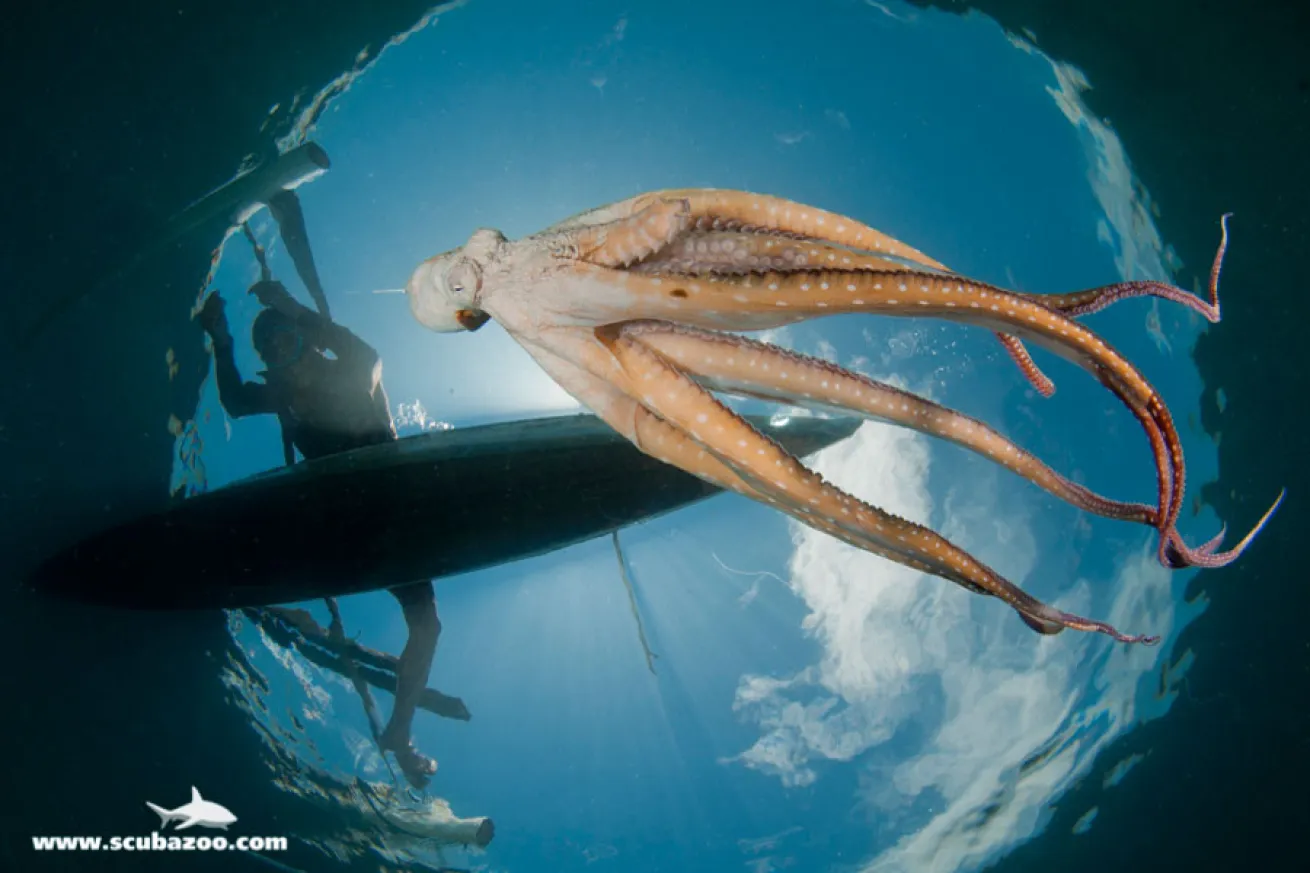
Christian Loader / ScubazooThrough underwater photography, we can document different fishing methods from around the world. Here, this old fisherman used a fake bait octopus on a line just above the reef, to attract and catch this reef octopus.
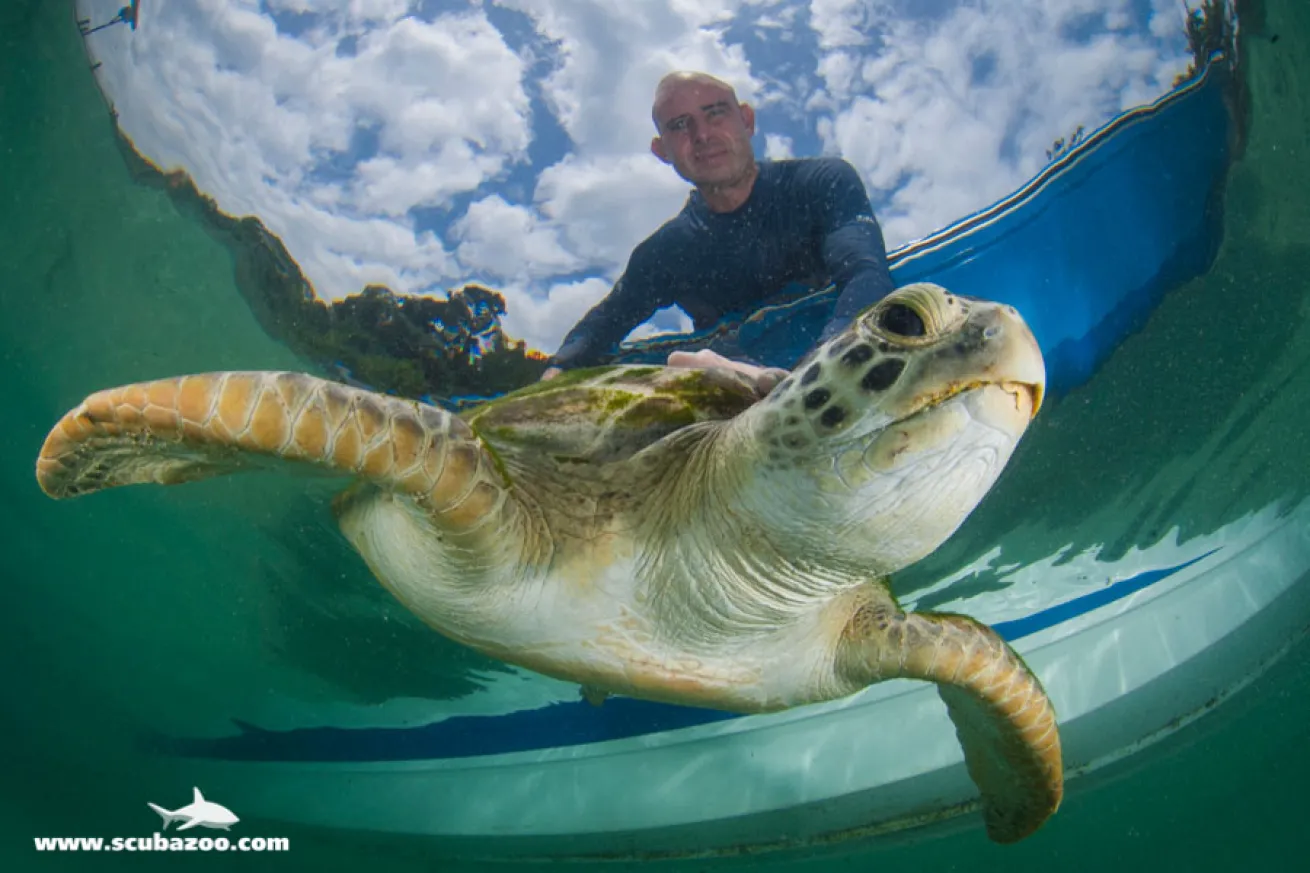
Christian Loader / ScubazooMarine conservation photography isn't limited to depressing subjects/issues. This green turtle was rescued on the brink of death, and over the course of 5 months was cared for and rehabilitated, and finally released back into the wild as a healthy animal.
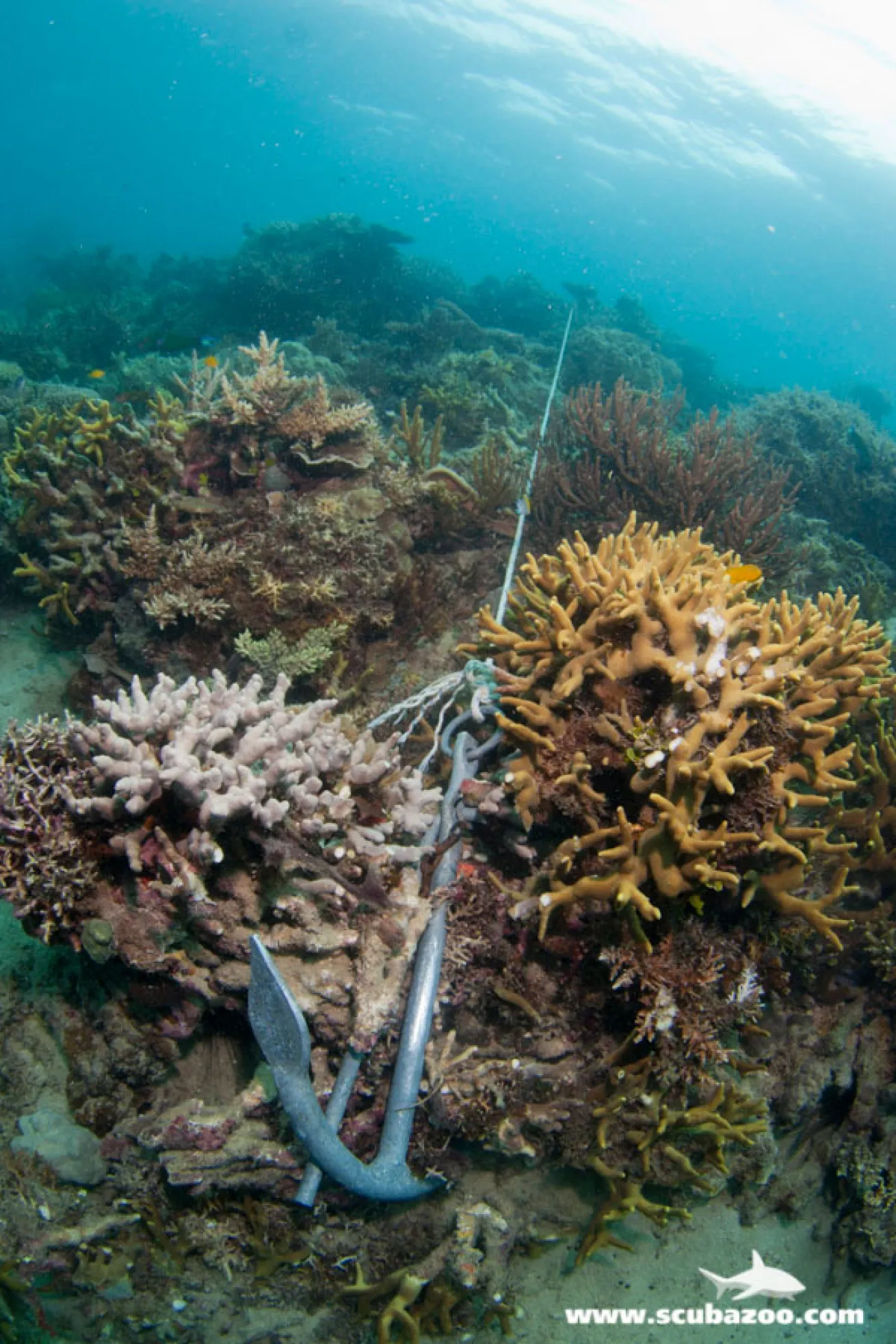
Christian Loader / ScubazooA common problem facing reefs all over the tropics, which many divers can relate to. Images like this will encourage divers to question their boat captains / or dive centre about anchoring properly when on a dive trip, to avoid further damage to their local reefs.
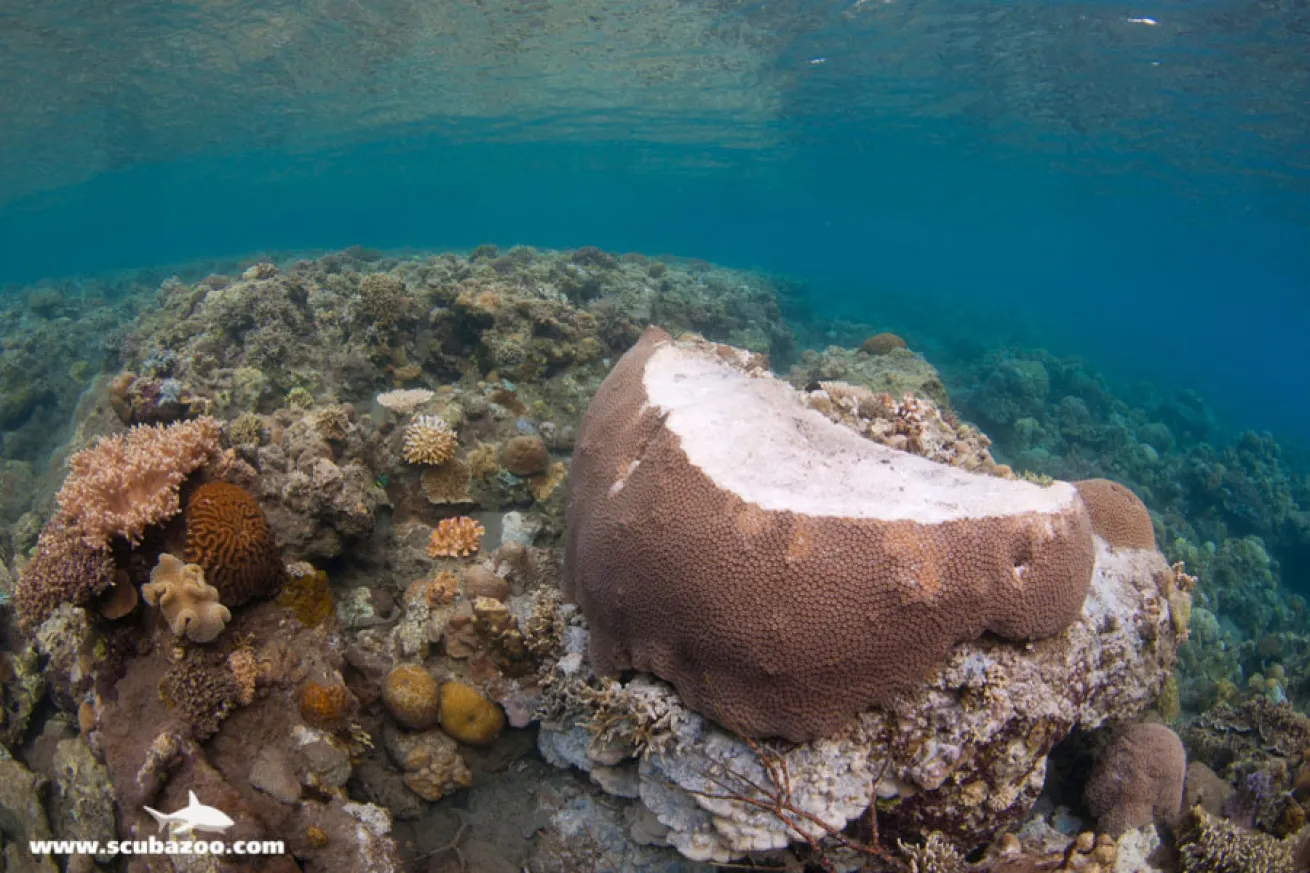
Christian Loader / ScubazooShips that become grounded on coral reefs in protected areas can be prosecuted for the environmental damage they cause, and photographic proof of such damage (topside and underwater) can be used to help with prosecution.
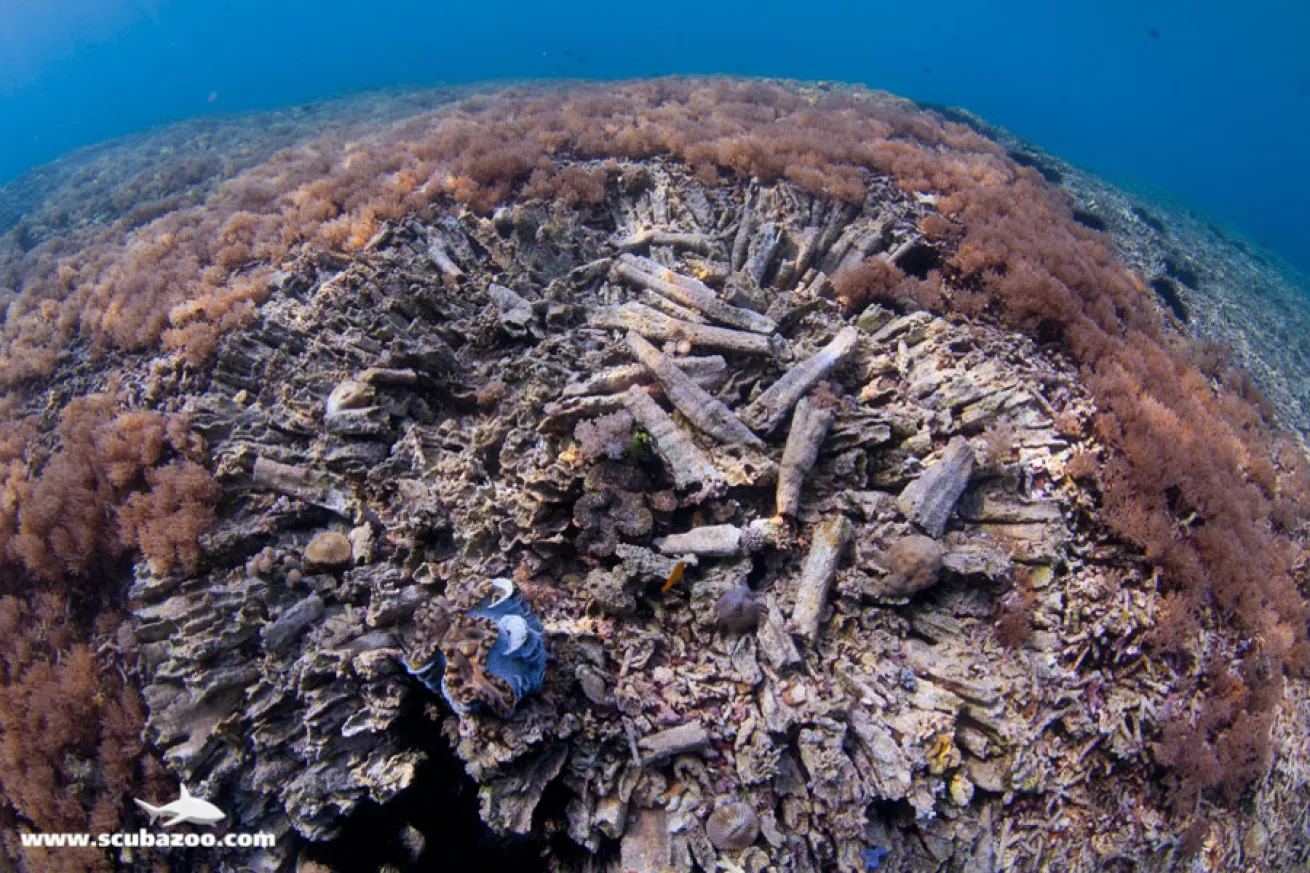
Christian Loader / ScubazooWide-angle lenses are most commonly used for shooting marine conservation images underwater. Using manual white-balance and sunlight in shallow water results in a more pleasing, natural look to an image.
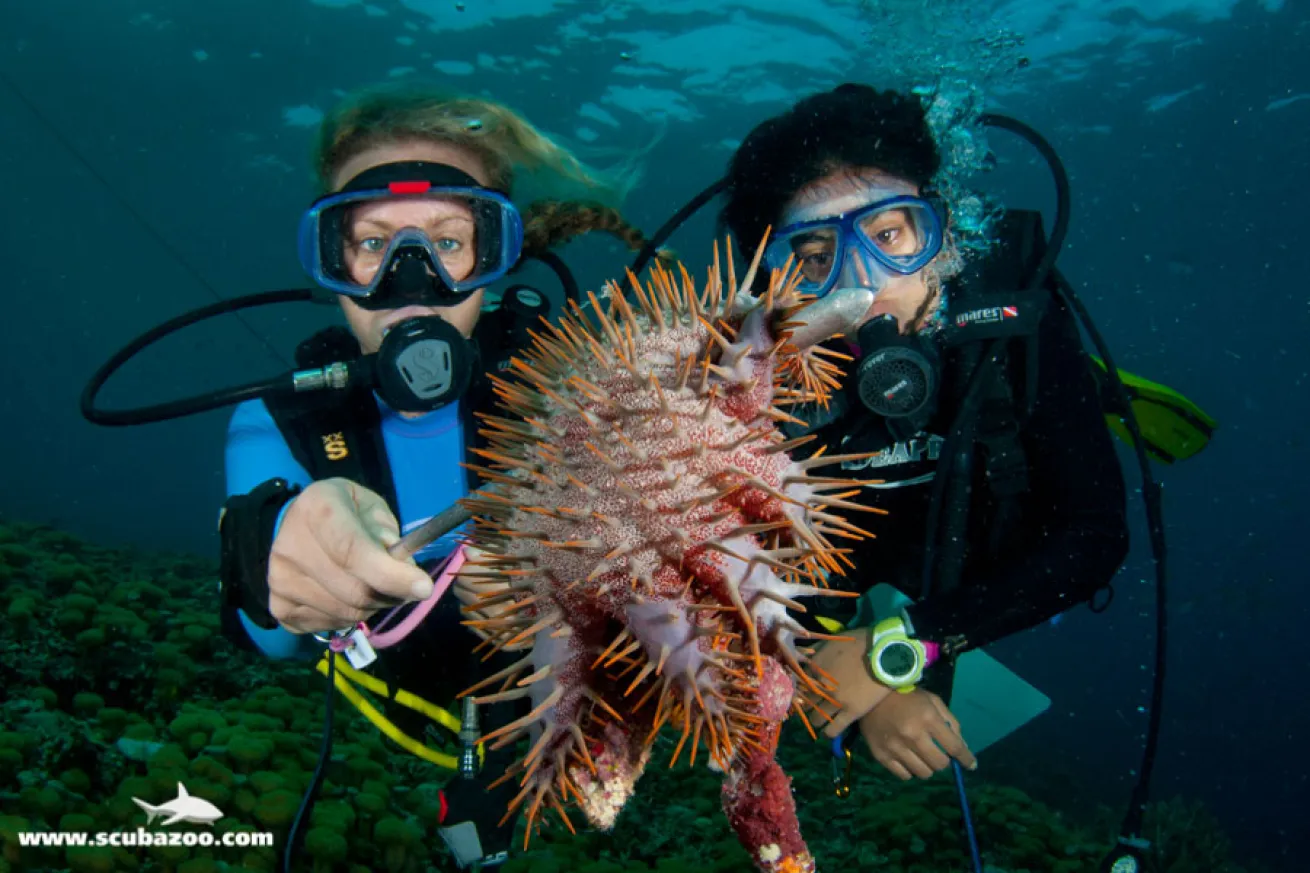
As well as fishing practices and human-related marine issues, natural threats to reefs should also be documented, such as these divers removing pest Crown-of-Thorns sea stars which kill hard corals. Including divers in marine conservation images adds a human element which the viewer can relate with.
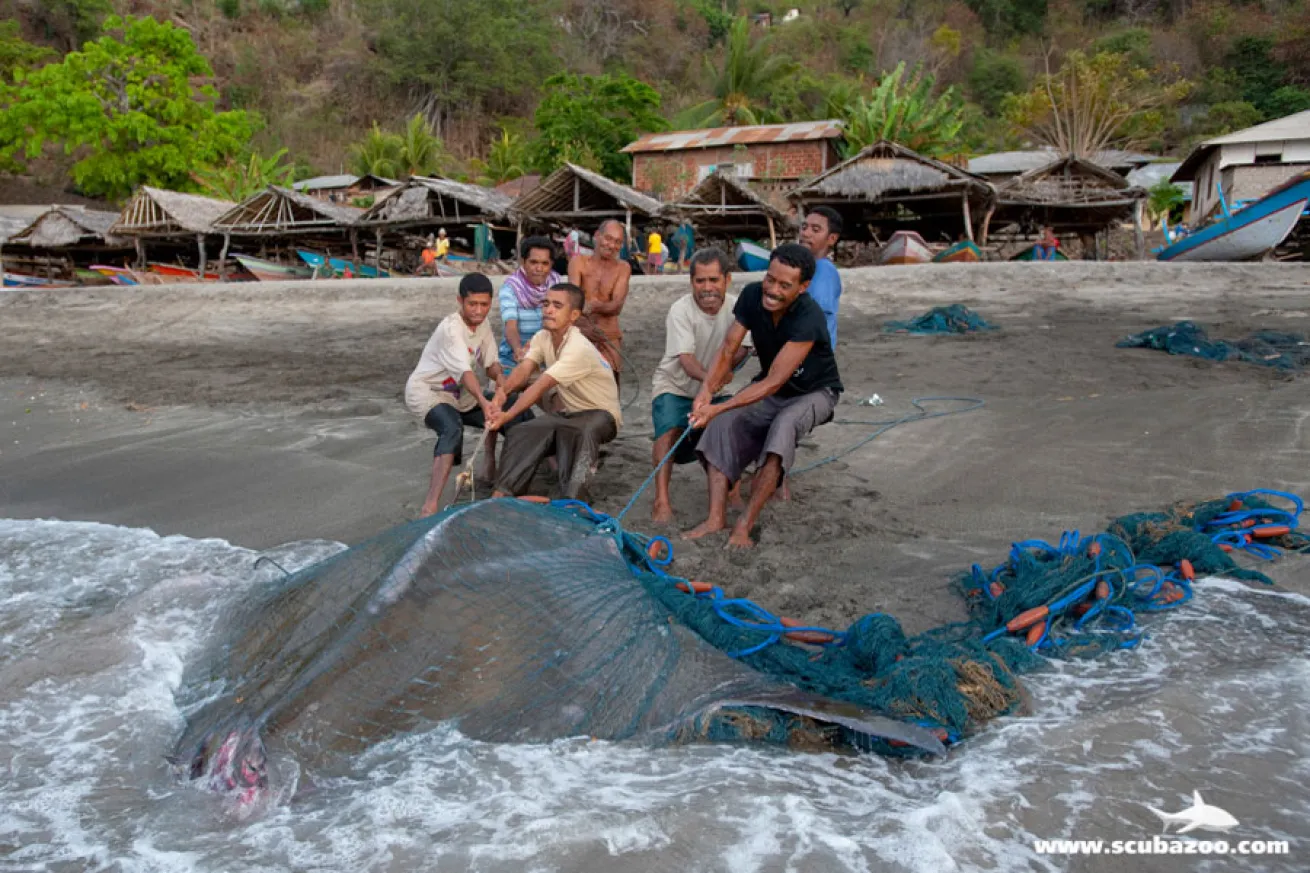
Jason Isley/ScubazooIf you're on a dive trip in a remote location, it can be worthwhile to take a day to explore the local villages along the coast, where scenes such as this can result in some striking images.
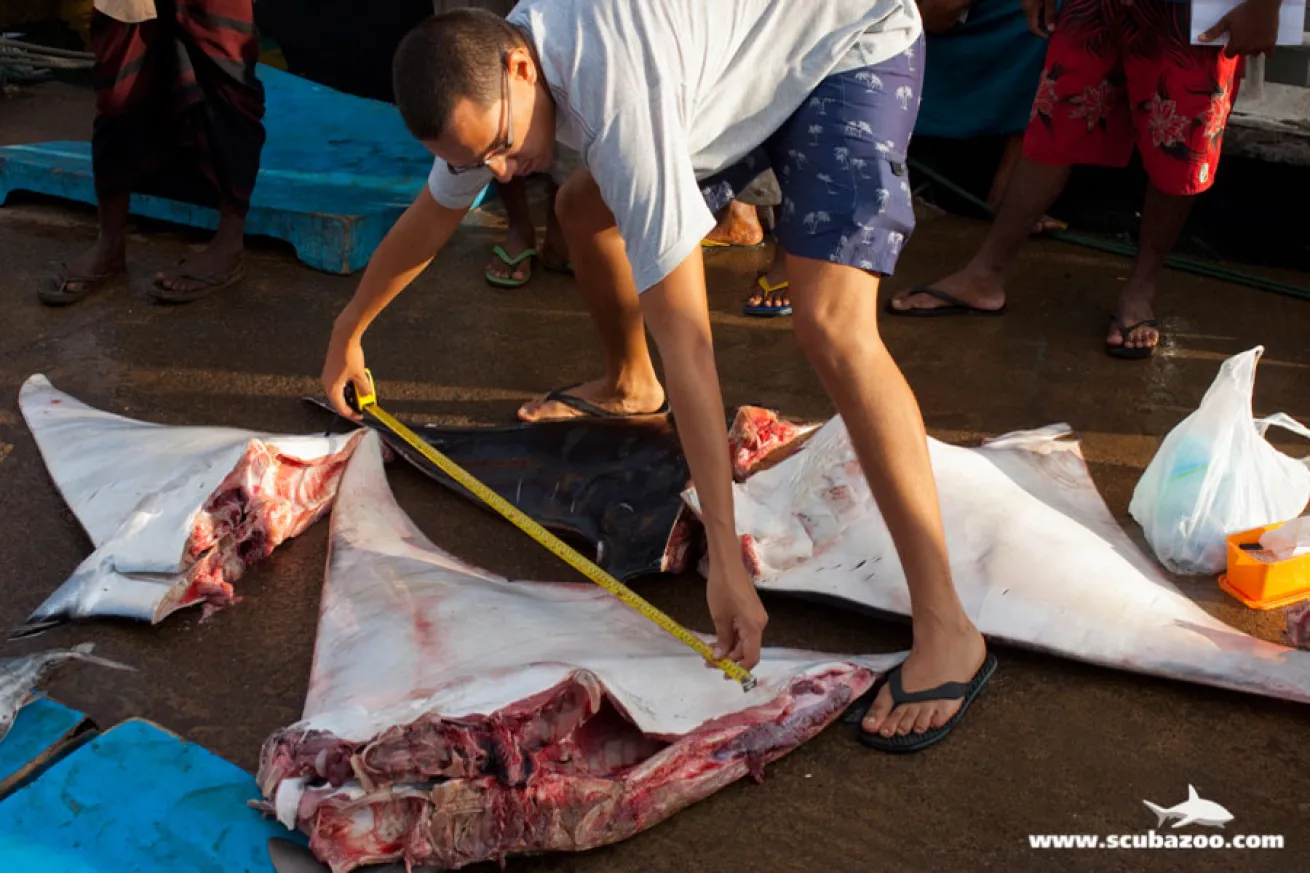
Jason Isley/ScubazooContact local marine biologists and scientists in your area and ask if you can join and photograph them while they work.
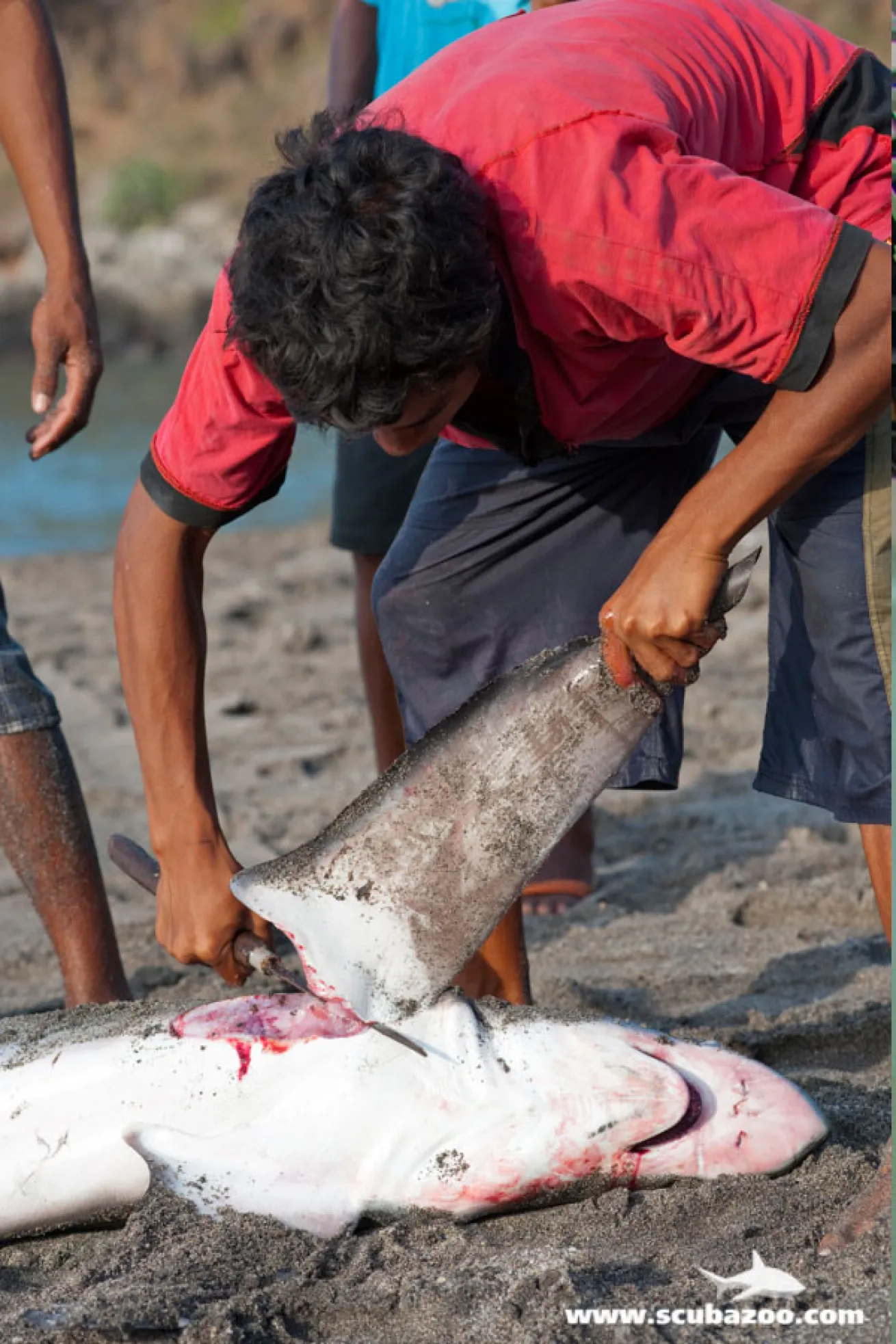
Jason Isley/Scubazoo'Telling a story' is an important aspect of marine conservation photography which you should keep in mind. For a simple example, a sequence of images: a dead shark; a shark being finned; dried shark fins for sale; a restaurant menu with shark fin soup.
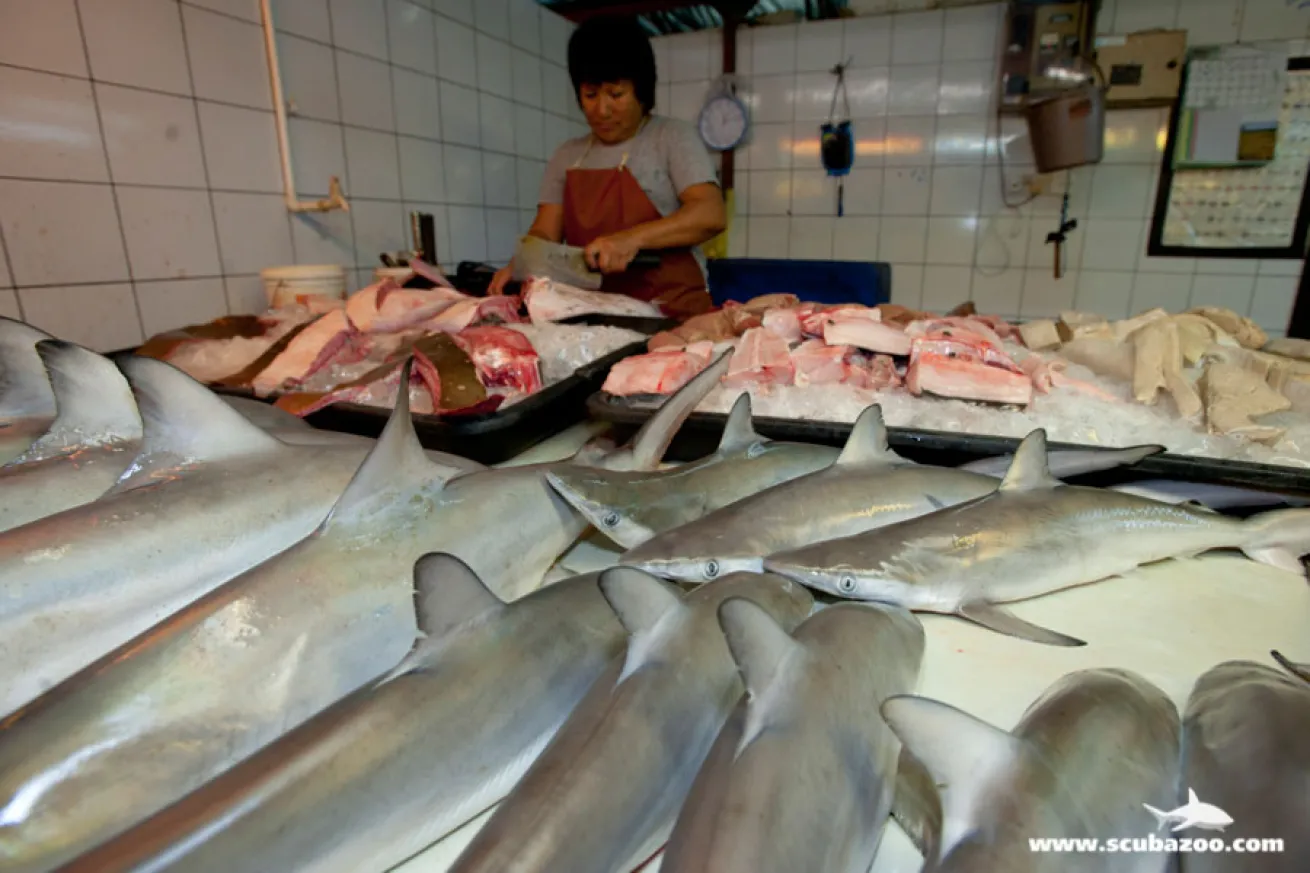
Jason Isley/ScubazooWherever divers and underwater photographers are enjoying our ocean's wonders around the world, they won't be too far from a fish market – a great place to capture (often quite shocking) conservation images of many threatened marine species on display for sale. Our natural instinct would be to berate the seller for selling juvenile sharks, but as a conservation photographer it's best to play 'tourist' and ask politely with a smile if you can take some photos of them.
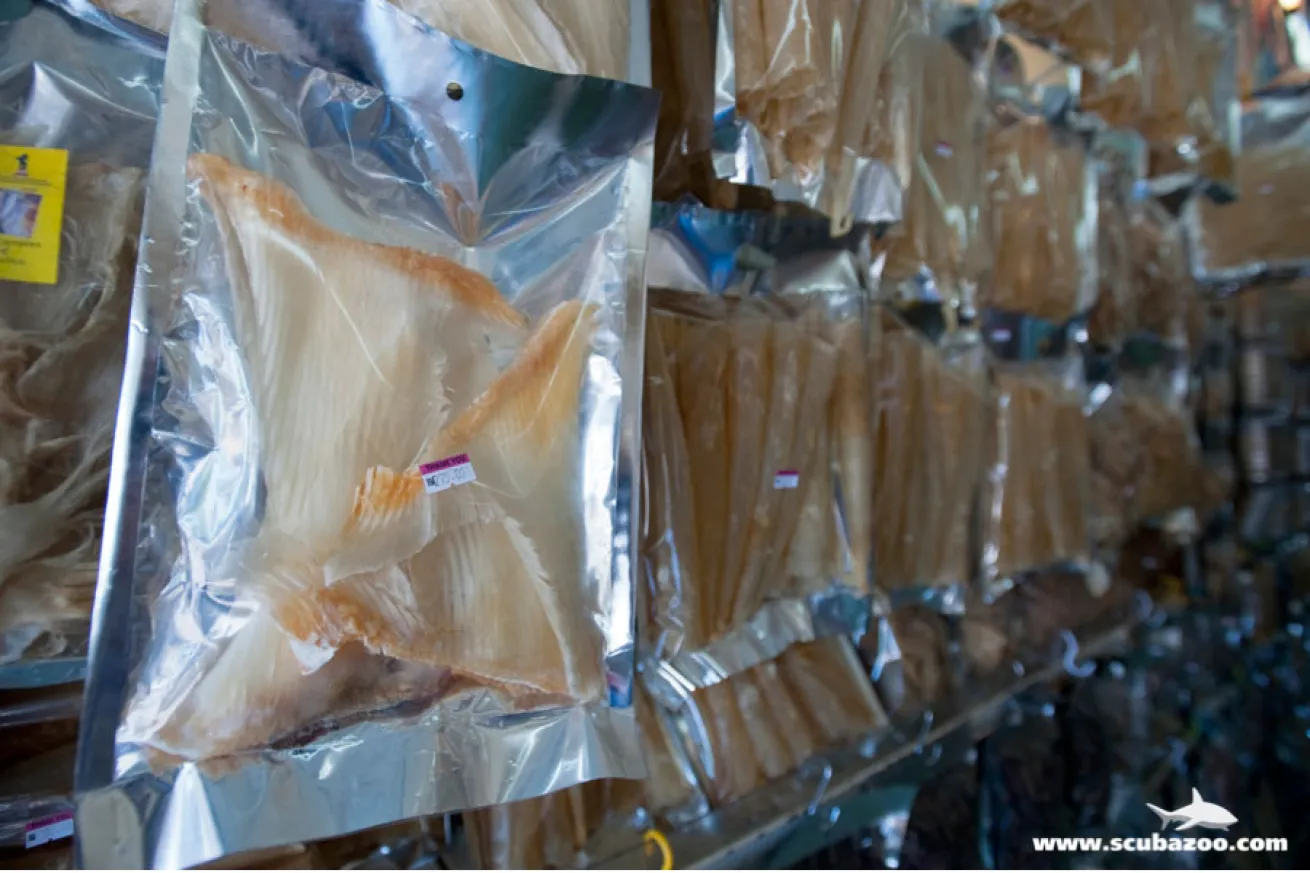
Roger Munns/ScubazooAll over Asia, and some other parts of the world, seafood shops such as this have vast amounts of dried seafood products of familiar species that would shock many divers, such as seahorses for example. Souvenir shops are also good for shooting this kind of image, where you can find items such as shark jaws, or polished shells of Nautilus or Giant Clam for sale. Some shop owners may not like people taking photos of these items on sale, so again it's best to take a friendly 'tourist' approach when trying to get your shots.
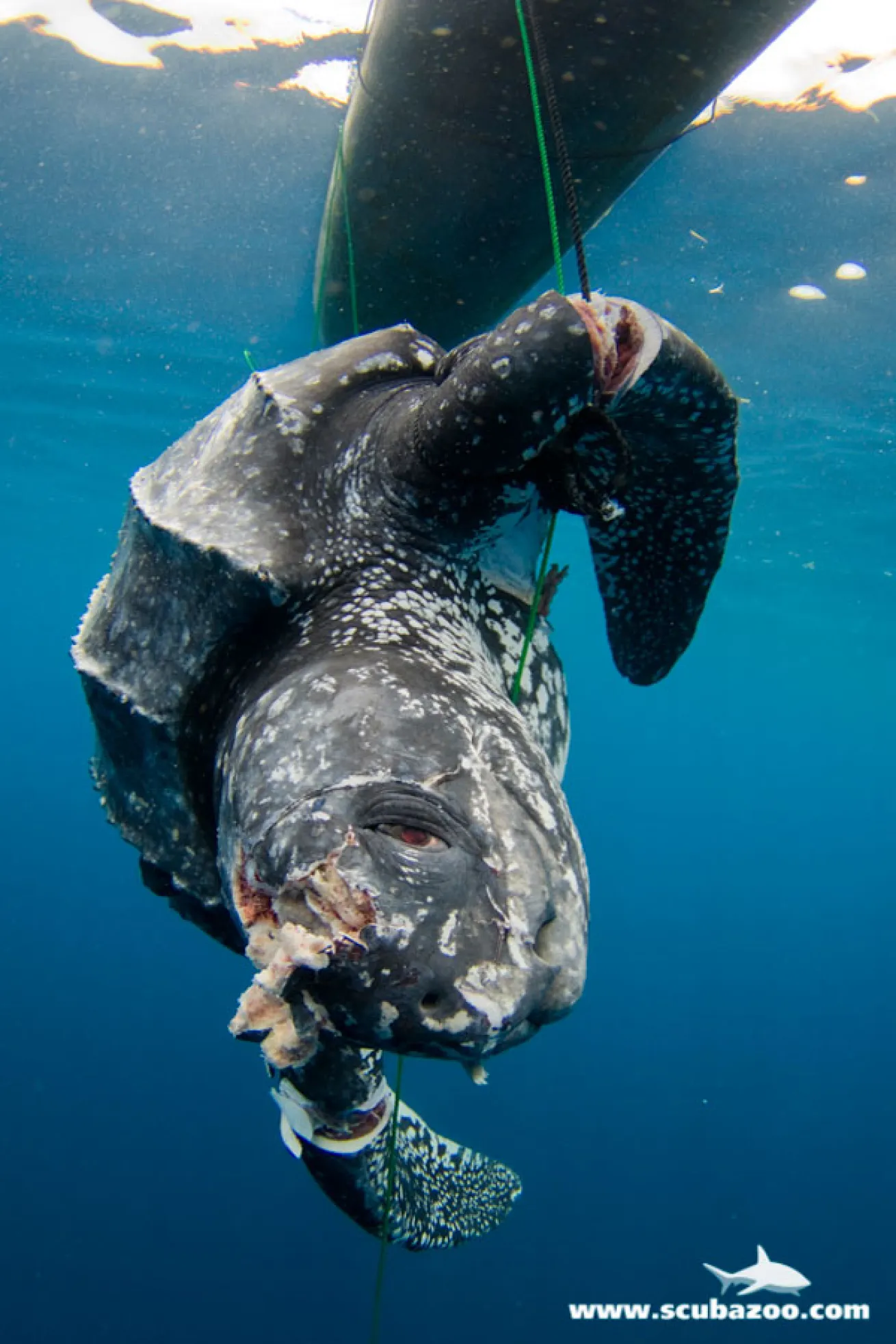
Jason Isley/ScubazooScubazoo were on a mission to film & photograph local fishermen hunting endangered Leatherback Turtles in the remote Kei Islands, untouched by tourism. It was a harrowing experience for the team, witnessing such slaughter. In situations like this, as much as you may want to intervene and stop the fishermen from doing what they're doing, you have to accept that you can't – they're simply putting food on their families plates, and you're there to shoot images for the world to see.
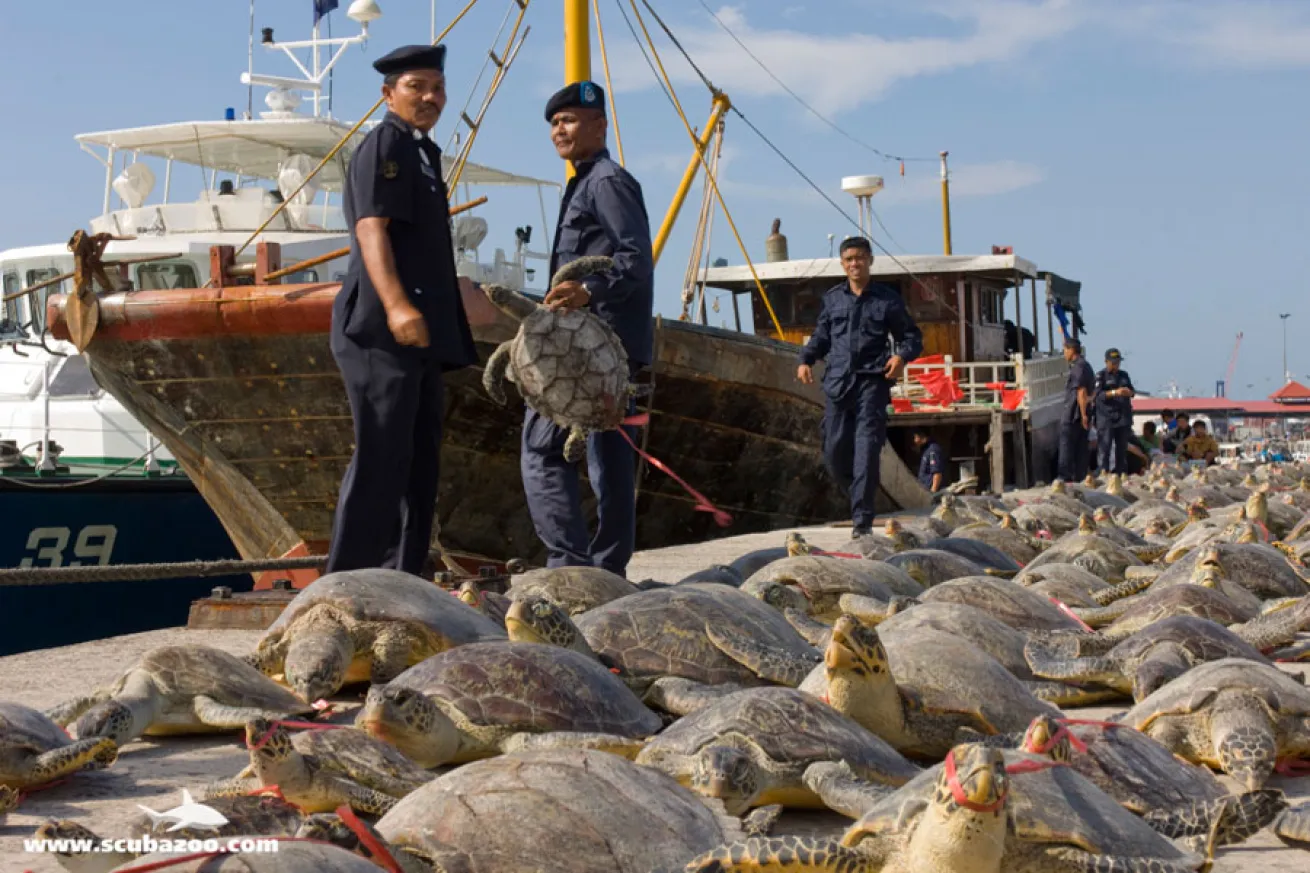
Matt Oldfield / ScubazooGet friendly with local workers at fishing harbours in your area, and ask them to contact you immediately if anything interesting is happening. We got a call about an illegal fishing boat caught with a number of turtles – It can be an emotional and heart-wrenching experience shooting scenes such as this, and something you need to be mentally-prepared for.
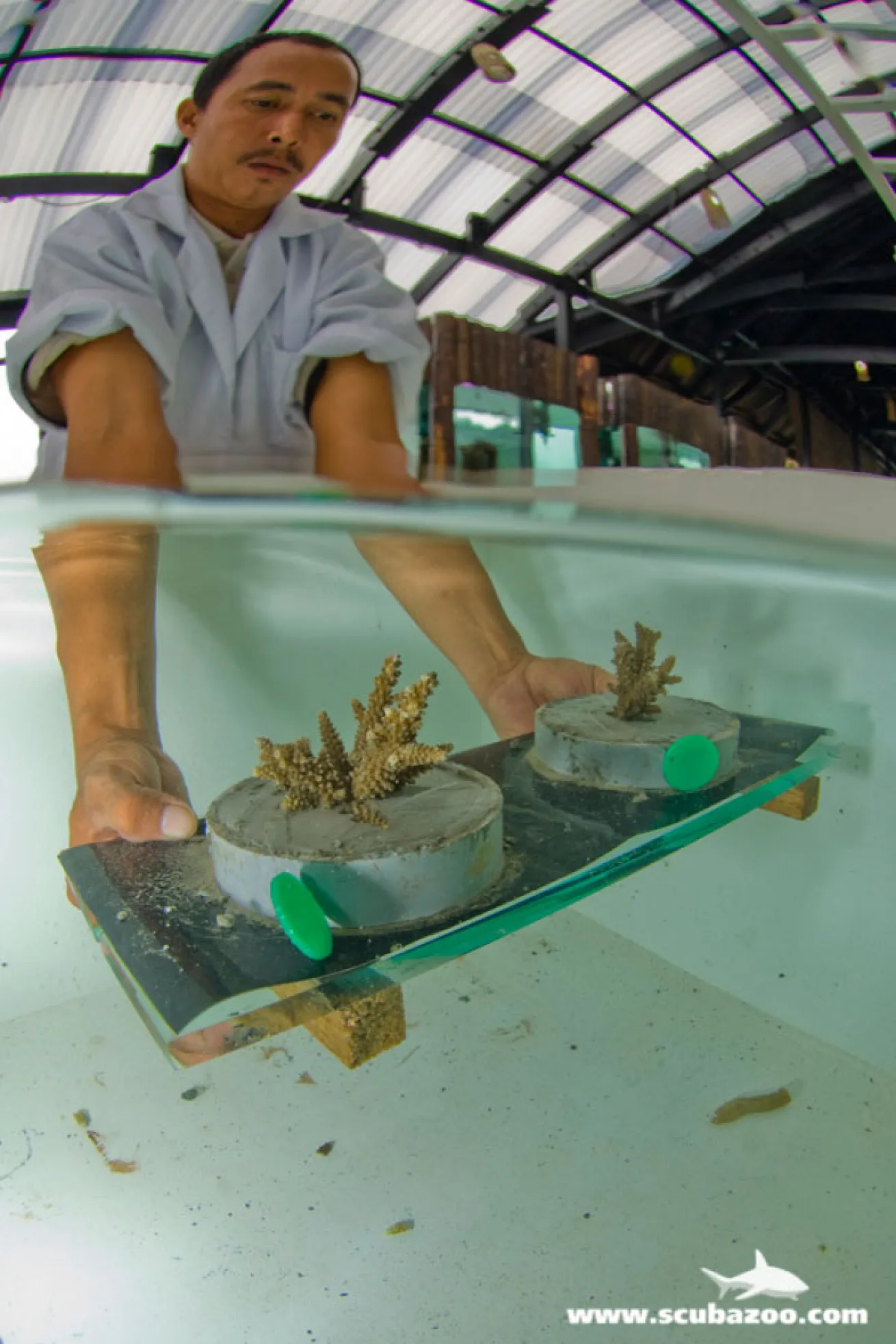
Roger Munns/ScubazooHere's a good example of a 'conservation in action' image. Split-level (aka half & half) images like this are a great way of connecting topside with underwater, (in this case, a marine scientist working with hard coral).

Jason Isley/ScubazooBe on the lookout for opportunities to shoot 'conservation in action' – images which often have a more positive and hopeful feel to them, compared to a scene of slaughtered sharks for example. Images like this help the viewer to 'look on the bright side', leaving them with an optimistic feeling.
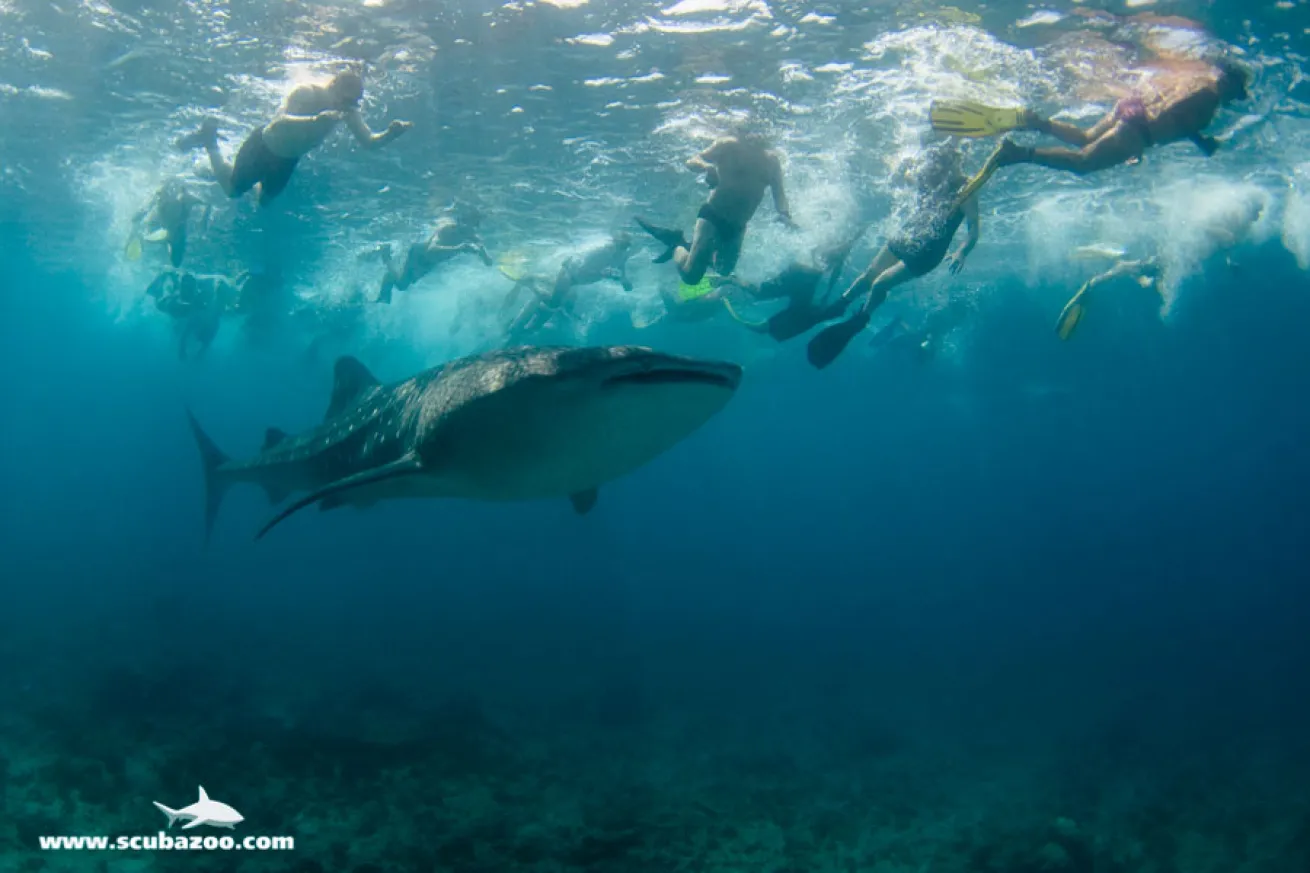
Jason Isley/ScubazooAn image such as this can show just how valuable marine species are, from a tourism perspective. Viewing this image, one might see the whale shark being harassed by a large number of snorkellers, while others may see a large, harmless shark swimming alongside a number of curious tourists.
Most underwater photographers love nothing more than travelling to an exotic location on a dive trip and capturing the best images they can of marine life, big or small, whether its a supermacro shot of a rare species of pygmy seahorse, or a wide-angle shot of a pod of dolphins.
Shooting images of marine life is our bread & butter and what we know and love best. A lot of money gets spent on travel, accommodation and camera gear, and your time spent diving to get your images is precious. However, as divers and photographers in locations all over the world, we frequently come into contact with more depressing images like damaged reefs, illegal fishing methods, overfishing, pollution and irresponsible tourist activities, to name just a few.
In a world where we're constantly being asked “What can you do to help save the environment?"
As underwater photographers one thing we can do is capture images of these marine environmental issues to show to the world and get the message out there, with photographic proof – there's a lot of truth in the saying "A picture is worth a thousand words."
Marine conservation photography will help to improve environmental, marine life, and marine habitat conservation, raise public awareness of environmental issues, and hopefully stimulate remedial action. Shooting this style of photography can at times be harrowing, while at other times it can be greatly rewarding because it won't always be depressing stories you may be shooting, but positive ones too.
Here are some tips to help guide you with this style of photography:
The vast majority of marine conservation images will be shot using a wide-angle lens. Shooting underwater, a zoom fisheye lens such as the Tokina 10-17mm, or Canon 8-15mm is ideal. For wide-angle, and close-focus wide-angle topside photography, a rectilinear wide-angle zoom lens is best, such as a 12-24mm or 16-35mm for example. In situations where you may need to keep some distance (possibly to avoid confrontation, or if shooting from your dive boat to a fishing boat for example), then other topside lenses giving you more range will be necessary – a standard 'kit' lens like an 18-200mm, or a mid-range zoom lens like a 24-70mm, or even a large telephoto lens like a 70-200mm or 300mm.
Shooting underwater will often require using two strobes, but in shallow water with good natural sunlight then turning your strobes off and shooting with manual white-balance can result in a more pleasing 'organic' image with natural lighting. For topside, a flashgun (or speedlight) will be necessary in certain situations, such as a fish market at dawn when there is little natural sunlight.
A fast shutter speed will be necessary for most situations, especially when shooting any kind of action, such as cutting shark fins for example. In low-light however, a slower shutter speed will be needed, or to add exciting movement to an image, such as fishermen hauling their nets in, or a dead shark or fish being dragged through a fish market.
Shooting underwater, it can be useful to use a dedicated model for shots that need a diver. Attempting to capture decent shots 'on the fly' of divers/scientists as they work can be difficult, and it may be better to set up a staged shot using your model, or the diver/scientist themselves. This way, you can achieve the perfect composition and lighting. Before the dive, talk and go through the shots you want to get with your model so they understand what they need to do. A couple of good examples for setting up shots using a model are: cleaning trash from the reef; divers collecting Crown-of-Thorns sea stars; divers/scientists conducting a survey of a reef or measuring animals length etc.; or simply using a diver in the background of an image to give a sense of scale (for example, reef damage caused by dynamite fishing).
If you're in a situation where you're shooting local fishermen catching an endangered species (often in remote and poor locations), it's important not to intervene, despite your desire to stop them from doing what they're doing. It's likely that they are poor fishermen just trying to catch food to feed their family or small village community. It can be a harrowing experience to shoot such scenes and you need to be mentally prepared – your role is to document what they're doing and how they're doing it, by taking photos for the rest of the world to see.
Shooting in a souvenir shop (shark jaws, shells, dried shark fins etc.) or in a fish market (dead sharks and other threatened species etc.) it's a good idea to take the 'friendly tourist' approach when you want to get your shots, as some vendors may not like photos being taken, and could be confrontational.
Lookout for opportunities to shoot 'conservation in action'. Find out about local marine conservation projects etc. in your area, and if there's any marine biologists or marine scientists working locally, ask if you can join and photograph them as they conduct their research/conservation activities. Another good local contact to have is someone who works at a busy fishing port/harbour, who can contact you if anything of interest pops up, such as a fishing boat with a catch of sharks or manta rays for example.
Be aware of irresponsible tourist activity that you could shoot, such as tourist snorkellers or divers touching/riding whale sharks, manta rays, or turtles, or snorkellers and divers touching or standing on coral reef. Be mindful though, some tourists who see you're taking a photo of them riding a turtle for example, may think that it's okay to do what they're doing and could carry on. If you're in the water with them, talk to them at the surface or use hand signals underwater to get them to stop, and explain why they shouldn't be doing what they're doing. The majority of tourists are simply uninformed about marine conservation issues (such as those mentioned above), and a blunt explanation from yourself could set them straight.
With marine conservation photography it's very important to 'tell a story' with a sequence of images about a particular subject, so always keep this at the front of your mind when shooting marine conservation images. A good example could be telling a story about shark finning, with the following sequence of images: live shark in the wild; dead shark caught by fishermen; dead shark being finned; dried shark fins for sale; restaurant menu with shark fin soup.
Marine conservation photography can be highly influential, with images that shock the viewer and leave a lasting impression. They also have the ability to change the world for the better (much more so than other types of underwater photography). At times it can be emotionally challenging when faced with shooting a heart-wrenching scene, but once you've got your images out there and they've been seen around the world (whether by 100 or 1,000,000 people), ultimately you should feel proudly satisfied that you have done your bit to help protect our oceans.
Christian Loader (31, UK) is a full-time professional photographer for Scubazoo Images. He has worked extensively throughout south-east Asia as an underwater videographer and photographer for Scubazoo since 2007, and lives in Kota Kinabalu, Sabah, Malaysian Borneo.


