

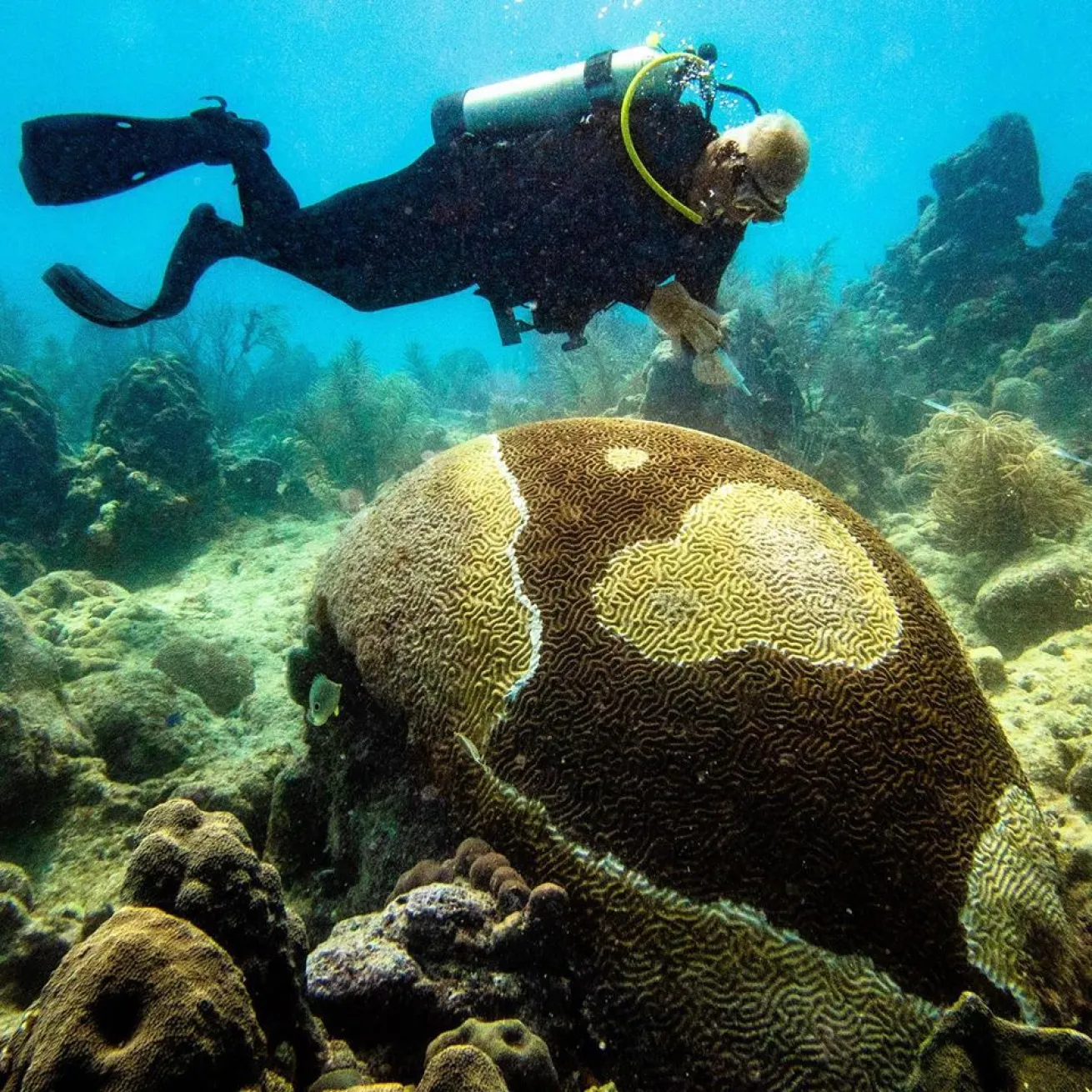
Emily Hower/Nova Southeastern UniversityA diver applies topical antibiotic treatment to disease lesions on a large brain coral. From 2019-2025, over 30,000 corals were treated for SCTLD in Florida.
When a mysterious new disease ravaged corals in Florida and the Caribbean, researchers raced to find ways to stop it. For years, scientific divers have fought Stony Coral Tissue Loss Disease by treating infected corals with an antibiotic paste—but the approach raised an important question: Could it fuel antibiotic resistance?
Antibiotic resistance occurs when antibiotics kill susceptible bacteria but allow resistant ones to survive and multiply, meaning the drug may become less effective over time.
“This treatment has always been very localized and specific to active disease lesions,” says Karen Neely, a coral biologist and lead author of the new study. “But we still wanted to address an important concern: Are we causing unintended problems for the corals? Are we altering the microbiome—the bacterial community and things that help it survive? And are we contributing to the development of antibiotic-resistant genes?”
Stony Coral Tissue Loss Disease (SCTLD) was first observed in 2014 near Virginia Key, a barrier island in Biscayne Bay, Miami. Since then, it has spread across Florida and much of the Caribbean, devastating hard, reef-building corals, also called stony corals. The exact cause of the outbreak remains unknown, though experts suspect a bacterial component, as antibiotics appear to be effective. Other factors, including a possible viral element, may also be at play.
To combat SCTLD, researchers developed a topical paste containing amoxicillin that can be applied directly to active disease lesions. “Think of it as applying an ointment to a wound,” says Neely.
Related Reading: Two Iconic Coral Species Now Functionally Extinct in Florida
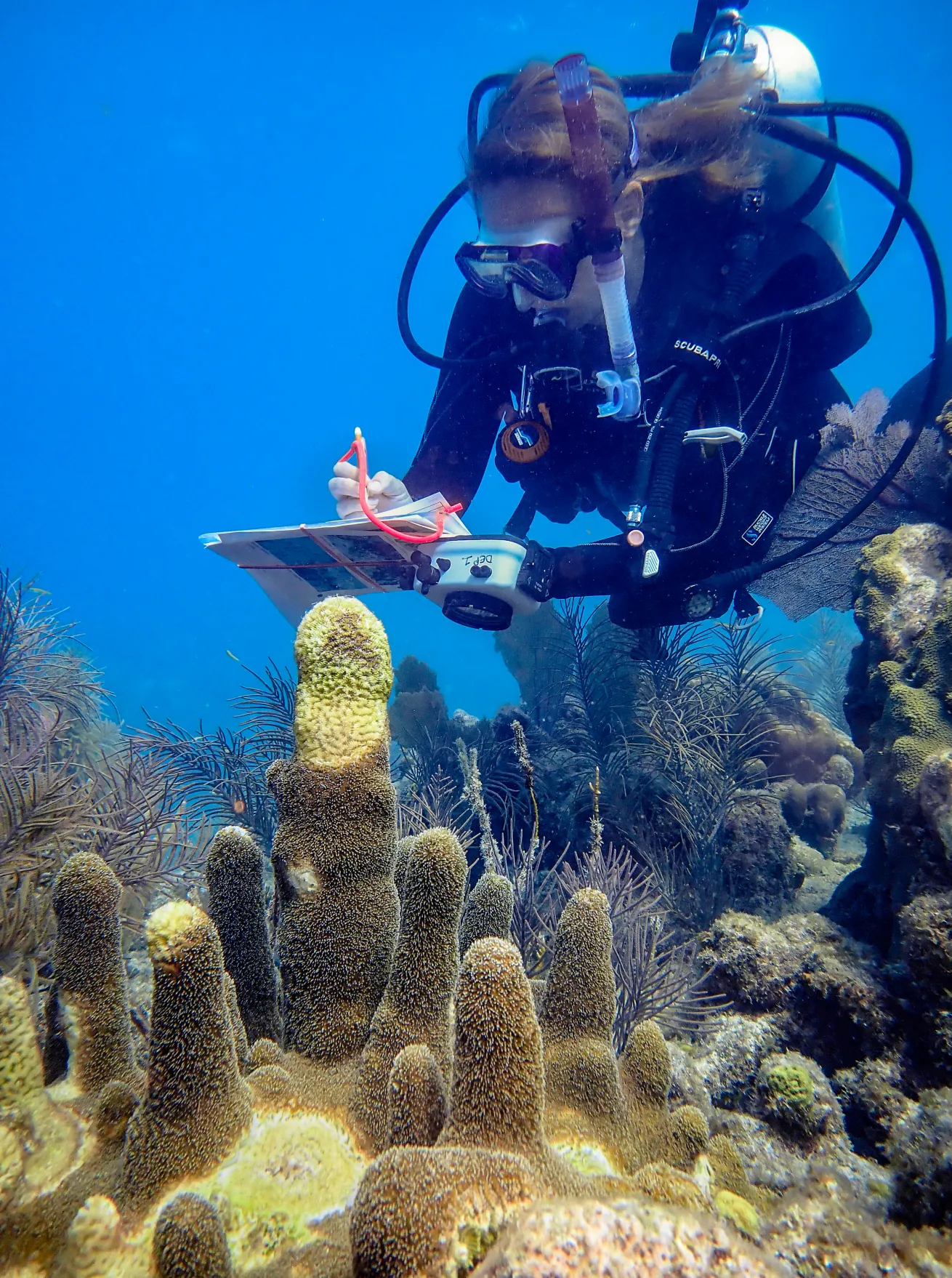
Emily Hower/Nova Southeastern UniversityKaren Neely monitors a pillar coral dying from stony coral tissue loss disease. The outbreak killed over 95 percent of pillar corals in Florida.
How Scientists Treat Stony Coral Tissue Loss Disease
To treat the corals, divers take pre-filled syringes of the paste and locate infected colonies—many of which are tagged and mapped within the Florida Keys National Marine Sanctuary. After confirming the coral is actively losing tissue, they carefully apply a line of paste along the edge of the damaged area. In most treated corals, the disease stops in its tracks, she says.
“We spend most of our time upside down, with our heads down in the reef,” Neely says. “My husband is a scuba instructor, and he jokes that his students should never watch me do all the things he tells them not to do!” Neely adds that the work demands exceptional buoyancy control and strong navigation skills. Divers must trust their compass headings to move efficiently from one diseased coral to the next.
And this work has been the most rewarding for her. “I spent a decade or more of my life monitoring corals to death,” says Neely. “I was just so sad watching there be fewer and fewer corals. This was the first time I felt like we could actually do something about it.” Since 2018, teams across Florida have treated roughly 30,000 affected colonies.
Related Reading: Diving Florida's Ginnie Springs
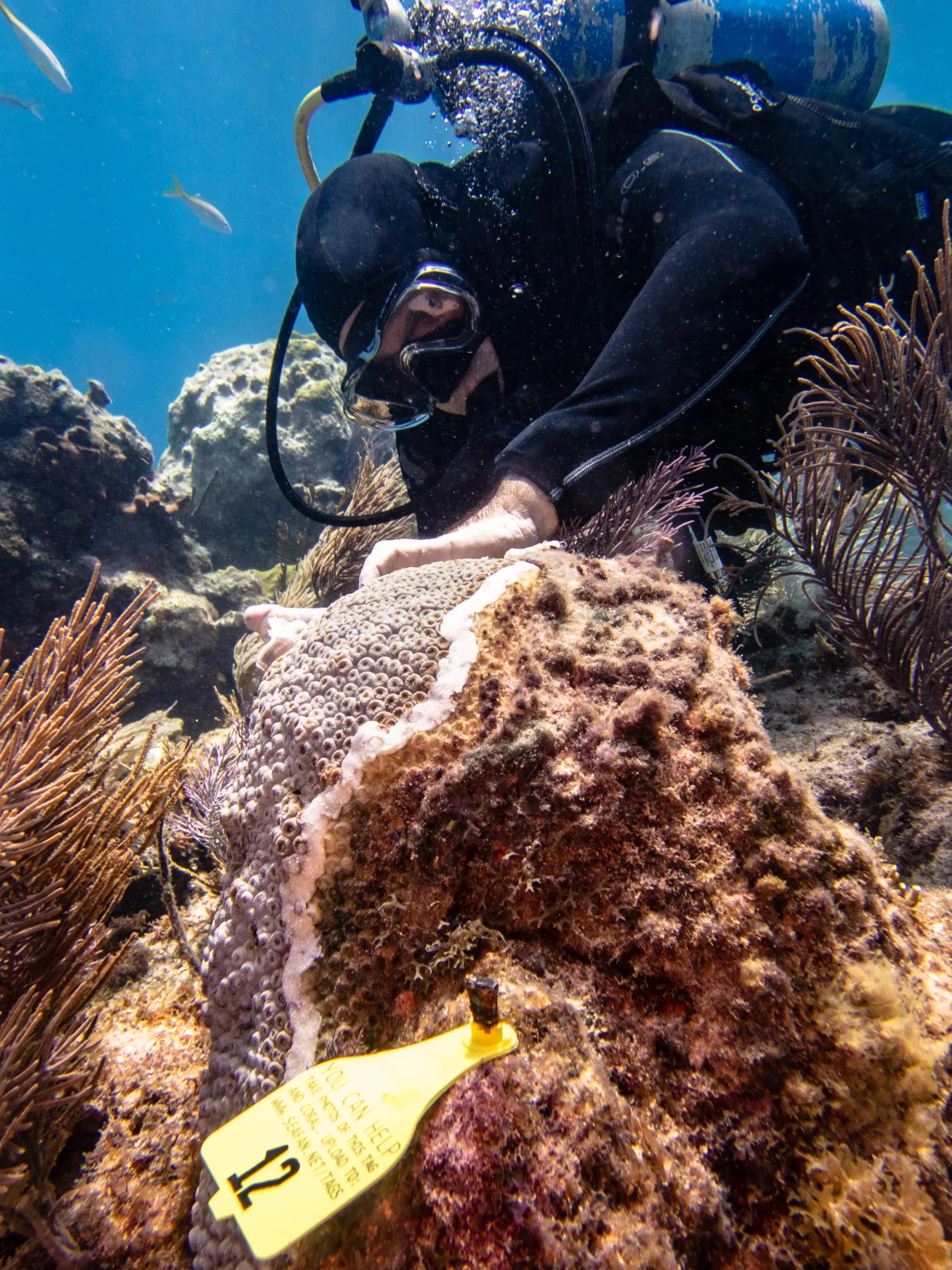
Karen Neely/Nova Southeastern UniversityA researcher collects coral tissue and mucus samples to assess whether antibiotic treatments have unintended side effects, such as promoting antibiotic resistance.
Are Corals Resistant to Antibiotics?
To address concerns of antibiotic resistance, Neely partnered with scientists at the University of Florida and the United States Geological Survey to conduct two complementary studies.
The first experiment examined short-term effects by comparing coral mucus samples collected before treatment and 24 hours after to detect shifts in bacterial communities or increases in antibiotic resistance. In the second experiment, scientists evaluated longer-term effects by studying tissue cores collected from three groups: untreated corals, corals sampled seven months after a single treatment and corals that had received multiple treatments more than seven months earlier.
Their findings were reassuring: after treatment, the microbial community composition did not change and there was no increase in antibiotic resistance genes.
Importantly, while antibiotic resistance genes naturally exist in many environments, including remote caves and ancient sediments thousands of years old, researchers found no evidence that treatment increased those antibiotic genes, Neely says.
Another key factor is the drug itself. Amoxicillin breaks down quickly when exposed to heat and sunlight, so it’s unlikely to stick around in the surrounding waters. If no impacts are observed in tissue directly adjacent to treated lesions, Neely says, it’s highly unlikely there would be effects farther away.
Related Reading: How Can I Help Protect the Ocean?
A Promising Wave in Coral Disease Treatment
For managers across the Caribbean, Neely says these results provide critical data. As SCTLD continues to spread, officials must weigh the risks and benefits of intervention. The new findings suggest that targeted antibiotic treatment can remain an important tool without causing unintended environmental harm.
Preventing the death of massive, decades-old coral colonies is far easier and far cheaper than attempting to rebuild reefs from fragments later, says Neely.
“Keeping as much of our ecosystem alive as we can, is so much easier than having to replace it.”