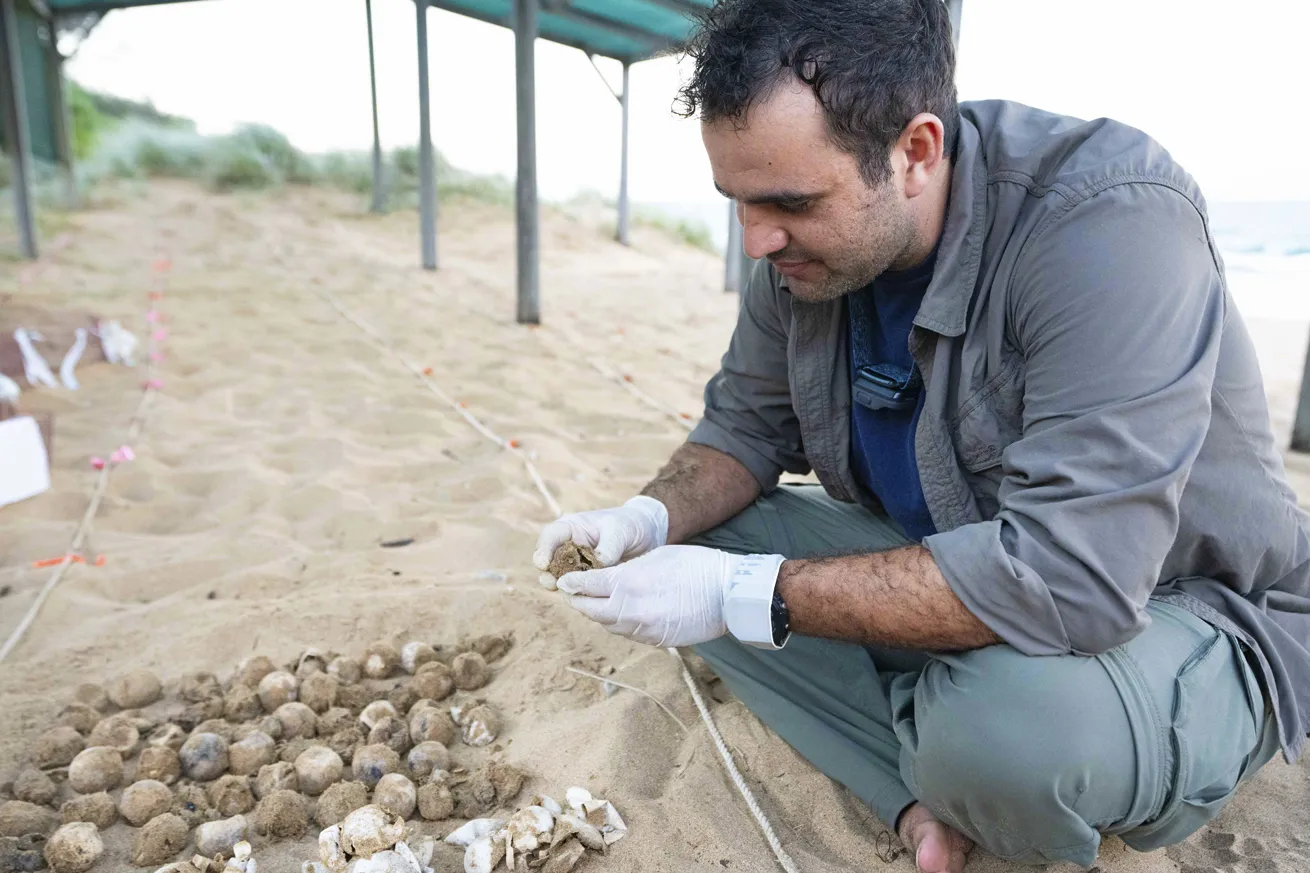
Courtesy StylediaA researcher with the Healthy Hatchlings project inspects relocated sea turtle eggs.
Researchers in Australia are testing the success of different egg relocation protocols to support loggerhead turtle conservation efforts.
The Healthy Hatchlings project is trialing the relocation of 40 loggerhead turtle nests in Mon Repos Conservation Park near Bundaberg, Queensland. Their goal is to find out how different methods affect the health of turtle hatchlings.
Egg relocation is common in turtle conservation. “Relocating sea turtle eggs considered to be ‘doomed’ has been a practice used here for decades,” says the project’s lead researcher, Dr. Caitlin Smith of James Cook University’s Centre for Tropical Water and Aquatic Ecosystem Research, in a statement.
Related Reading: Why Florida Sea Turtles Are Turning Into “Chilly Popsicles” During a Rare Cold Snap
Turtles lay around 100 eggs at a time, and their chances of hatching depend on threats including predation, tidal inundation (nuisance flooding), beach erosion, overheating and human disturbance. To help the hatchlings along, conservationists sometimes carefully move eggs to a more suitable area.
“In general, relocation is used when a nest is judged unlikely to survive in place—for example, if it is too low on the beach and likely to flood, highly exposed to erosion, or vulnerable to predation or human disturbance,” says Dr. Robert Puschendorf, associate professor in conservation biology at the University of Plymouth, who isn’t involved in the project. “The usual aim is to move eggs as little as necessary, ideally within the same beach system, while trying to match the original nest conditions as closely as possible, including depth, substrate and thermal environment.”
Shutterstock/Chrissy Capp
The scientists at JCU are now testing three common relocation methods: moving eggs to caged areas to reduce predation risk from animals such as foxes and pigs; to higher ground so they aren’t washed away; and to shaded hatcheries to reduce temperatures. (Cooler nests produce male turtles, while hotter ones result in more females. Too hot and the little turtles can die.)
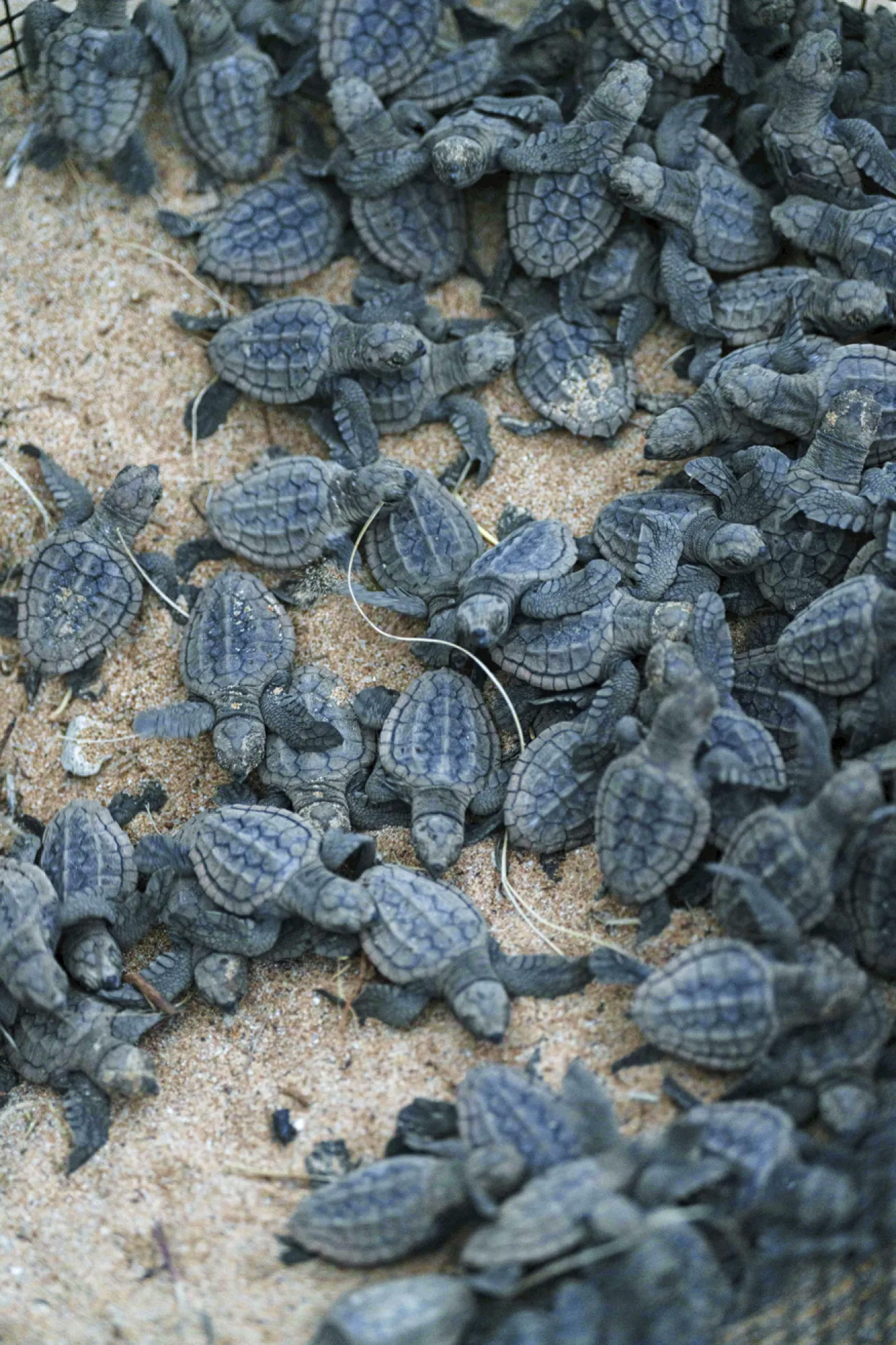
They’re not just looking at whether the eggs will hatch, but also the health of the little turtles that emerge. Only one in 1,000 turtles survives to adulthood—the healthier the babies, the better their chance of making it.
“Relocation is not automatically beneficial just because eggs still hatch,” says Puschendorf. “The key question is not only whether the eggs hatch, but whether the hatchlings produced are as fit and viable as possible.”
Related Reading: Protecting the Sea Turtles of Timor-Leste

Smith adds: “Protocols around best practices for relocating turtle eggs have yet to be investigated thoroughly and need to go beyond ensuring eggs survive to hatch.”
This is why the researchers will also measure the size and weight of 20 hatchlings from each clutch. They will also identify any mutations, record the little ones’ crawling and swimming speeds, and check how long it takes them to right themselves after being flipped onto their backs. This data will give an indication of their health and probability of survival.
Puschendorf welcomes these efforts to find evidence around the most effective relocation methods but stresses the importance of protections.
Nest relocation “should remain a targeted intervention rather than a default response,” Puschendorf says. “The strongest conservation outcome is usually to protect natural nesting habitat well enough that fewer nests need to be moved in the first place.”
Related Reading: The Race to Save the Maldives' Sea Turtles
Sea Turtle Population Decline
There are seven species of sea turtles and around 6.5 million individuals in the wild. These ancient reptiles have been on the planet for more than 100 million years but are threatened by human activities, including pollution, bycatch and poaching.
According to the IUCN Red List of Threatened Species:
GREEN SEA TURTLES (Chelonia mydas) are categorized as a species of Least Concern
LOGGERHEADS (Caretta caretta), along with leatherbacks (Dermochelys coriacea) and olive ridley turtles (Lepidochelys olivacea), are Vulnerable species
HAWKSBILLS (Eretmochelys imbricata) and Kemp’s ridley turtles (Lepidochelys kempii) are Critically Endangered species
FLATBACK TURTLES (Natator depressus) are Data Deficient, meaning there isn’t enough population information to confirm extinction risk