

There’s no better way to spice up a dive destination than by adding a new wreck. Wrecks attract throngs of marine life and divers, so it’s no surprise that operators in hot spots around the world go to great lengths to acquire, clean and sink interesting ships in their waters. This “science of scuttle” means the landscape of available wrecks is forever growing — there’s always a new sinking on the horizon to keep us excited. From Pensacola to Papua New Guinea, we’ve compiled a guide to some of Scuba Diving’s favorite purpose-sunk-wreck dives — some newly sunk, some longtime classics, but all offer ideas for endless bottom time.
Are you a wreck aficionado? Check out the Wreck Diving section of our website.
There’s no better way to spice up a dive destination than by adding a new wreck. Wrecks attract throngs of marine life and divers, so it’s no surprise that operators in hot spots around the world go to great lengths to acquire, clean and sink interesting ships in their waters. This “science of scuttle” means the landscape of available wrecks is forever growing — there’s always a new sinking on the horizon to keep us excited. From Pensacola to Papua New Guinea, we’ve compiled a guide to some of Scuba Diving’s favorite purpose-sunk-wreck dives — some newly sunk, some longtime classics, but all offer ideas for endless bottom time.
Are you a wreck aficionado? Check out the Wreck Diving section of our website.
Andrew Sallmon
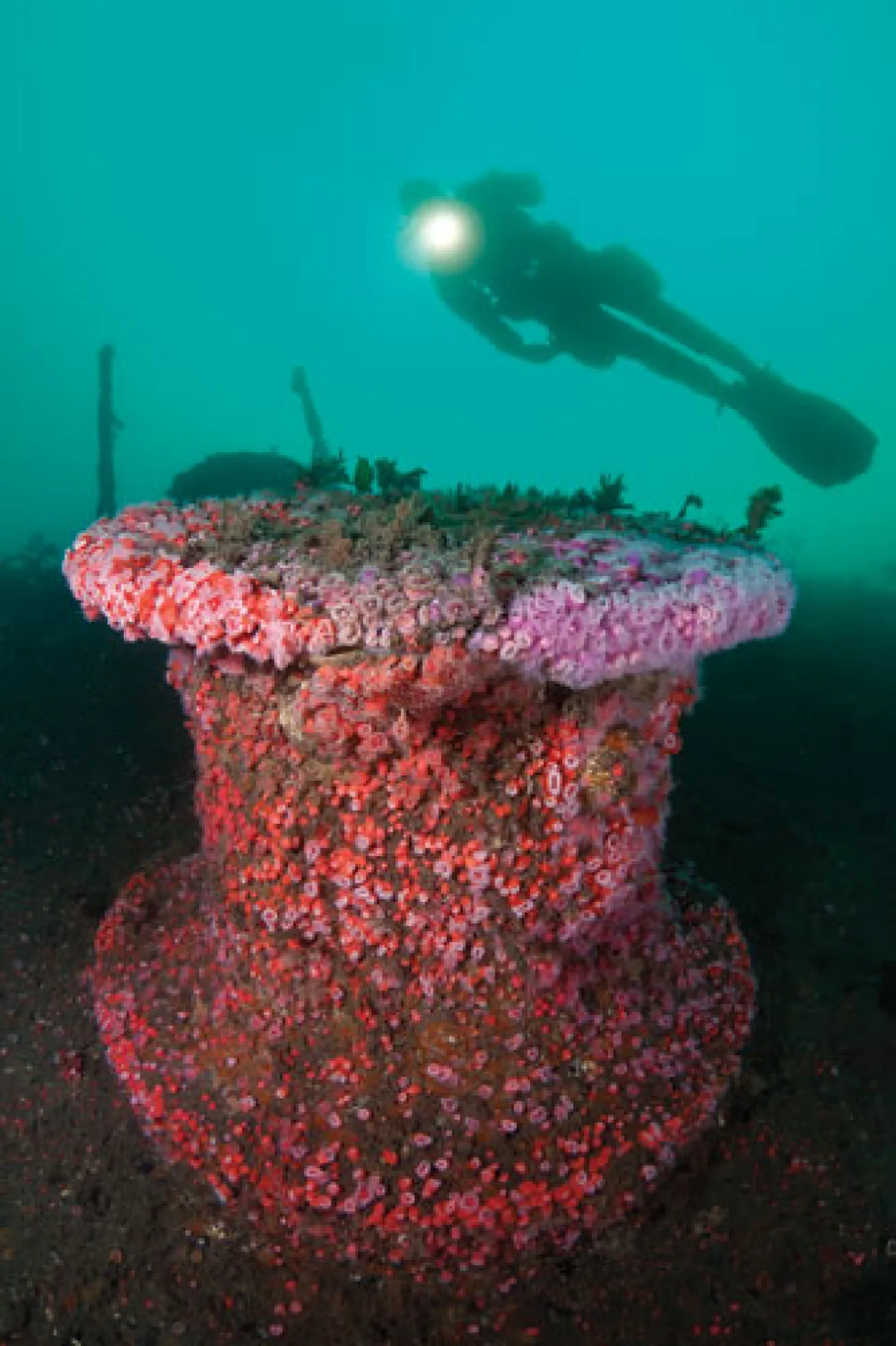
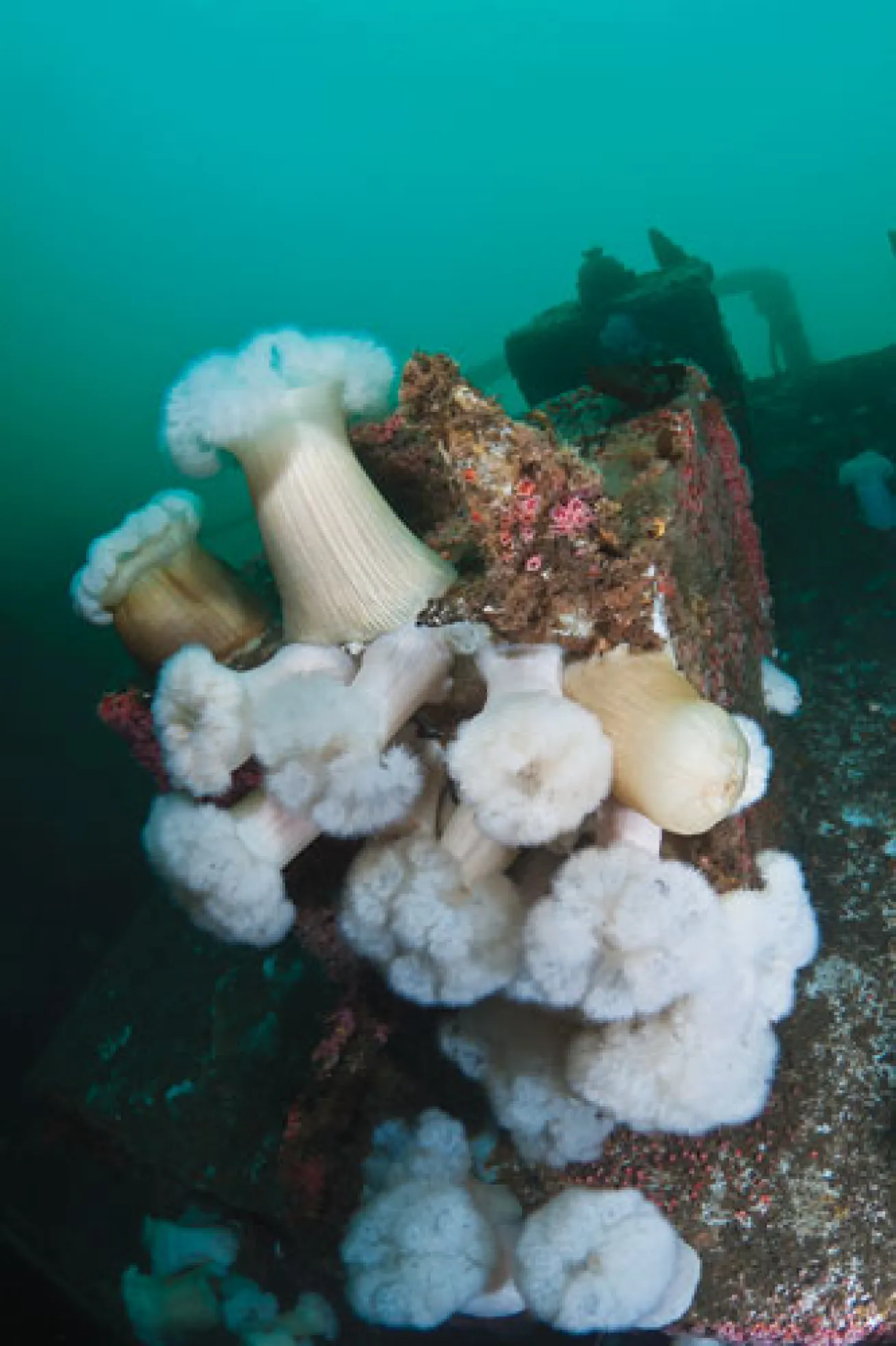
HMCS Yukon, San Diego The premier dive of Wreck Alley since its sinking in July 2000 by the San Diego Oceans Foundation, the Yukon didn’t go down without a fight, ending up on its side in about 100 feet of water. Advanced wreck divers planning to penetrate the ship must contend with lopsided passages and rooms that run vertically rather than horizontally. On the exterior of the wreck, recreational divers will find gun turrets near the bow and stern, and macro photographers can shoot a wide array of subjects, from blankets of stark-white metridium anemones to technicolor nudibranchs.
Make It Happen: You can dive the Yukon year-round. Lois Ann Dive Charters (loisann.com) makes regular trips to Wreck Alley, and can accommodate recreational and tec divers alike. Two-tank charters start at $75 per person.
Andrew Sallmon
HMCS Yukon, San Diego The careful plan to put the Yukon down on the ocean bottom was never fully realized — the night before the scheduled sinking, swells rocked the ship, allowing water to enter the holes cut low to the waterline. As the ship headed to the bottom, it rolled over on its port side, with the stern stuck up in the air.
Make It Happen: You can dive the Yukon year-round. Lois Ann Dive Charters (loisann.com) makes regular trips to Wreck Alley, and can accommodate recreational and tec divers alike. Two-tank charters start at $75 per person.
David Doubilet
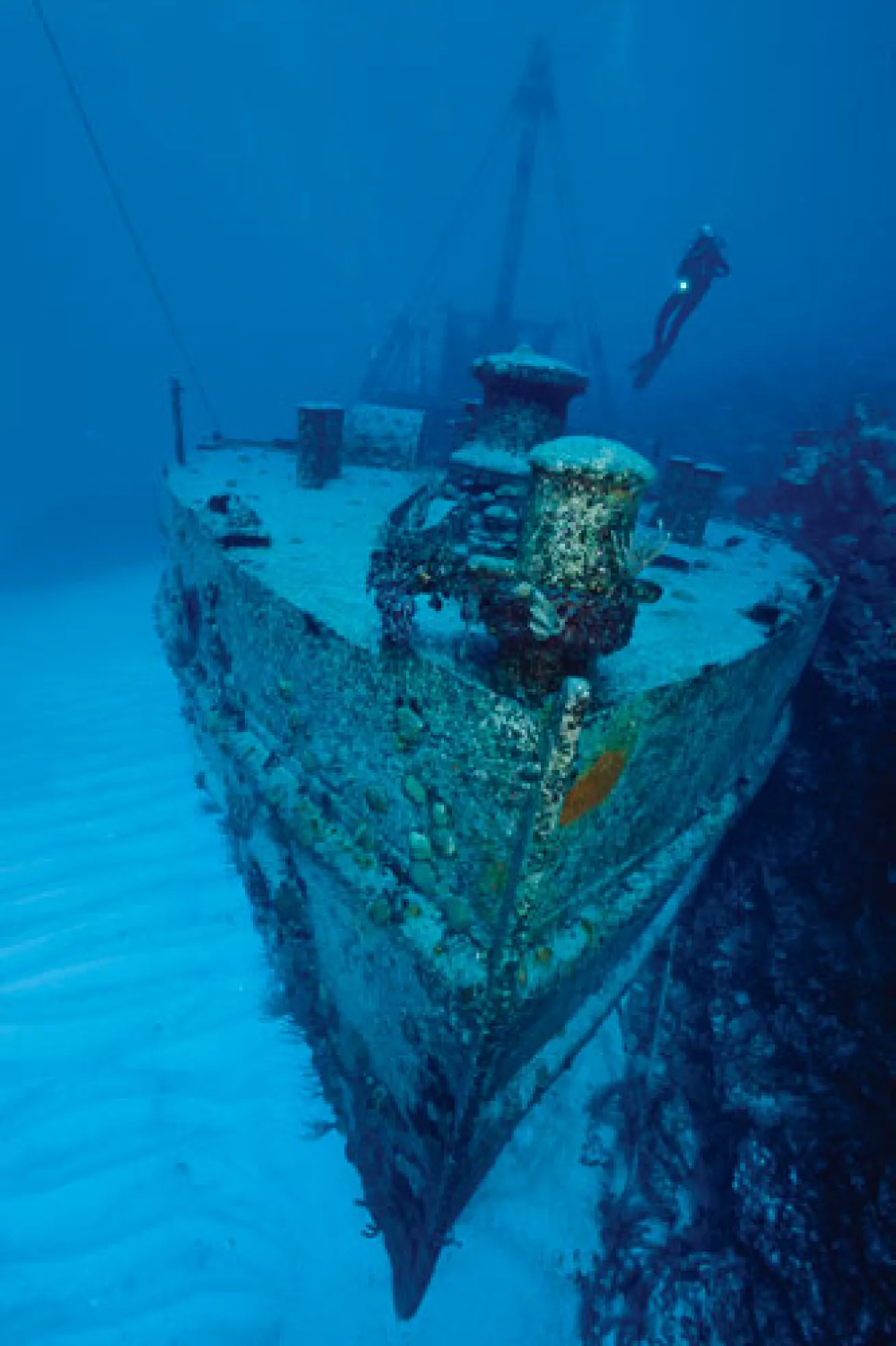
Hermes, Bermuda With literally hundreds of shipwrecks scattered across its fringing reefs, Bermuda is heaven for wreck divers, and hell for the innumerable ships that have foundered and broken apart on its treacherous shoals. But the Hermes — a former buoy tender — stands because, as an intentionally sunk artificial reef, it went down in a protected area and remains largely intact. Sunk in 1984 by the Bermuda Divers Association, the Hermes sits in 80 feet of water, and numerous open hatches offer access to the pilothouse, engine room and cargo holds.
Make It Happen: High season runs from May to November — plan accordingly because some dive shops don’t operate during the low season. Blue Water Divers and Watersports (divebermuda.com) offers two-tank dives for $120 per person.
Don Silcock
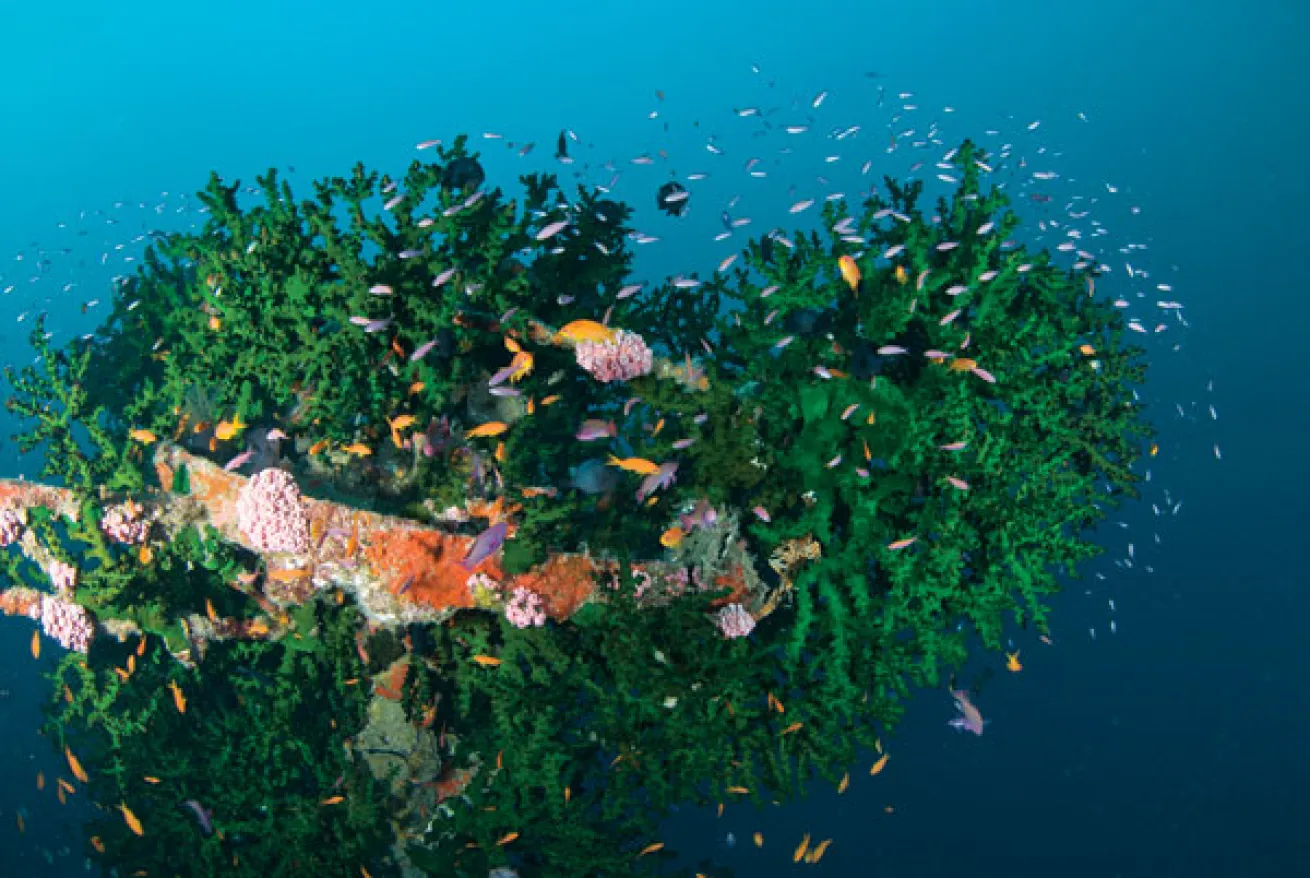
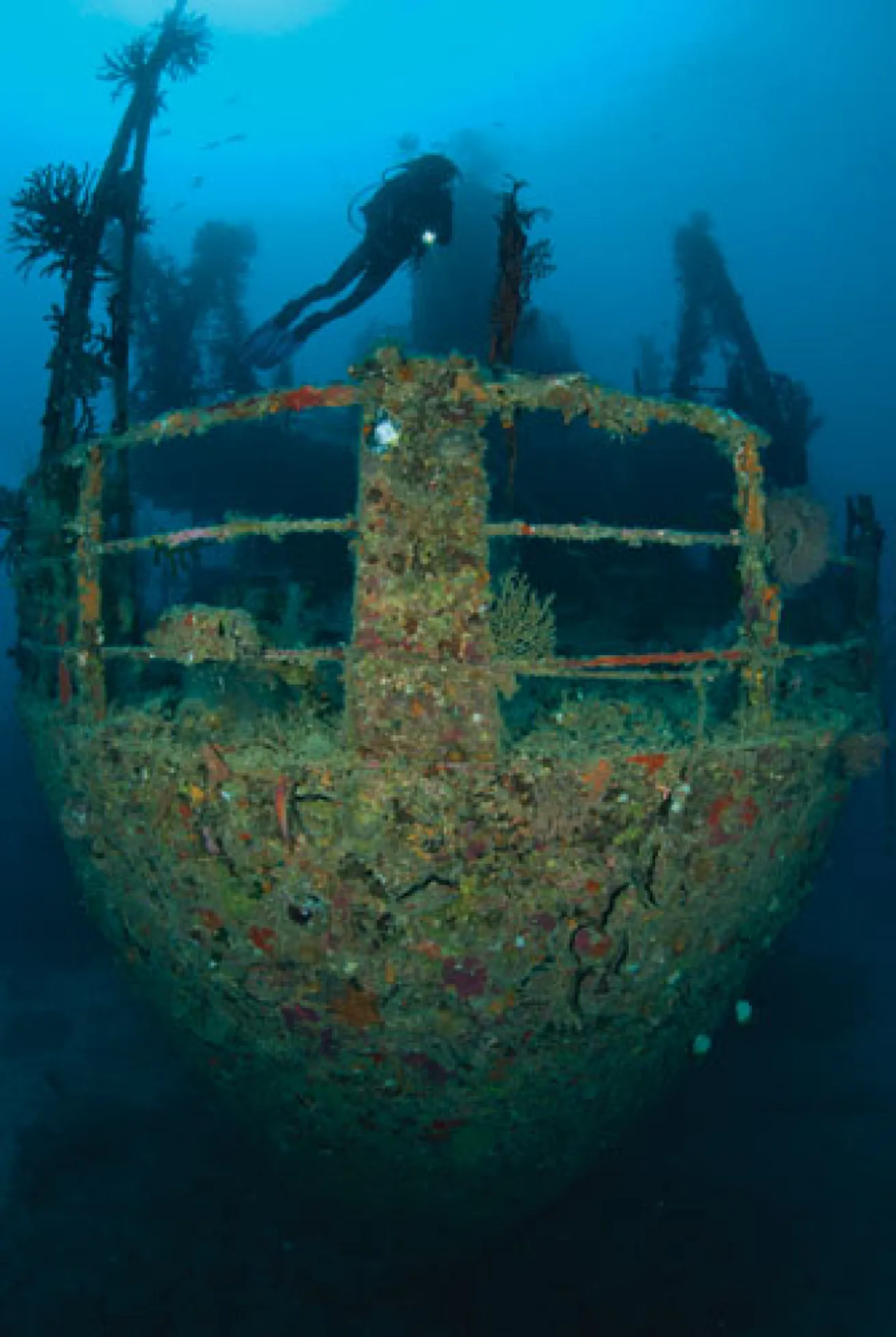
Pacific Gas, Papua New Guinea PNG has no shortage of divable wrecks. A hotbed of fighting during WWII, downed airplanes are the norm, but the purpose-sunk Pacific Gas dwarfs its neighbors in comparison. One of the largest shipwrecks in the country, the 215-foot natural-gas tanker went to the seafloor near the capital city Port Moresby in 1996, under the guidance of PNG diving pioneer Bob Halstead.
Make It Happen: December to April is calmest, June to October has the best viz. Loloata Island Resort (loloata.com) is 15 minutes from the Pacific Gas, and offers day and night dives to the wreck. Two-tank trips cost $130; one-tank night dives cost $75.
Don Silcock
Pacific Gas, Papua New Guinea The rudder of the Pacific Gas sits at the bottom of a sandy slope at about 145 feet, while the ship’s bow reaches to about 50 feet, making it accessible to all experience levels.
Make It Happen: December to April is calmest, June to October has the best viz. Loloata Island Resort (loloata.com) is 15 minutes from the Pacific Gas, and offers day and night dives to the wreck. Two-tank trips cost $130; one-tank night dives cost $75.
Eric Cheng
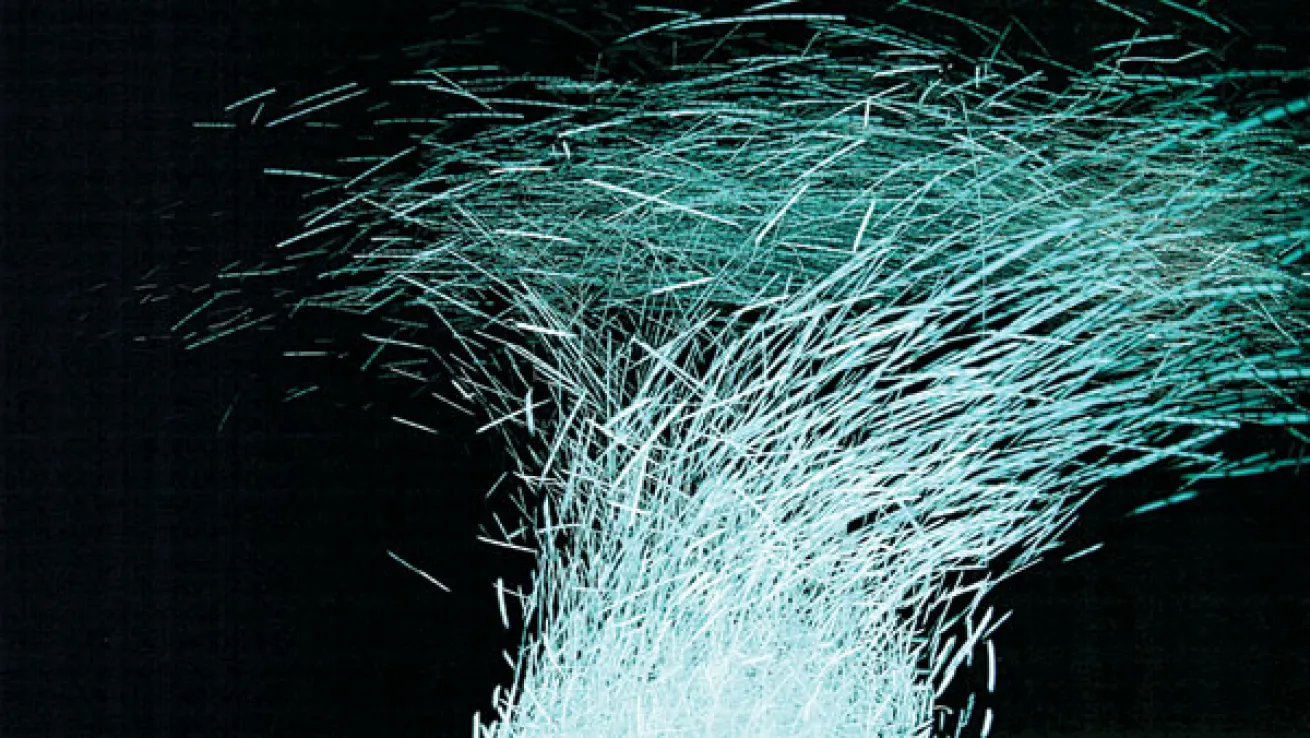
Pacific Gas, Papua New Guinea The stern’s multilevel superstructure boasts exterior stairways, walkways and swim-throughs in the crew quarters, but it’s the bow where the real action happens. Under the cover of darkness, divers can drop to the base of the mooring line, where an open hatch in the ship’s forward hold acts as a window onto a thousands-strong school of flashlightfish, which leave the hatch looking like a massive trail of glowing ants as they traverse the cargo holds.
Make It Happen: December to April is calmest, June to October has the best viz. Loloata Island Resort (loloata.com) is 15 minutes from the Pacific Gas, and offers day and night dives to the wreck. Two-tank trips cost $130; one-tank night dives cost $75.
Berkley White
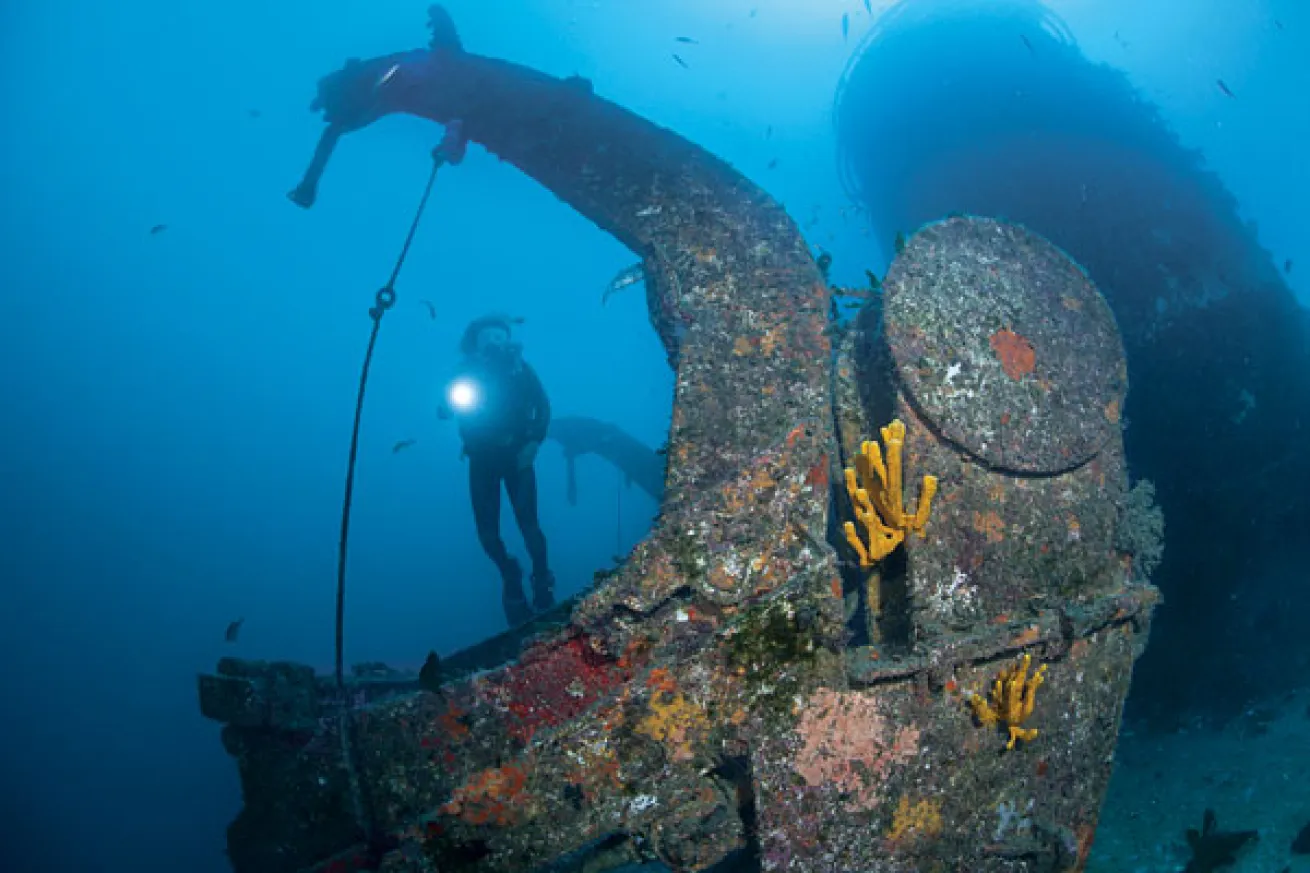
HMNZS Canterbury, Northland, New Zealand Scuttled in 2007 beneath the calm, protected waters of Deepwater Cove — at the mouth of the Bay of Islands, 150 miles north of Auckland — HMNZS Canterbury became the most recent of three New Zealand Navy frigates sunk as artificial reefs in the island-nation’s emerald waters.
Make It Happen: The Canterbury is diveable at any time of year, but the plankton blooms in the spring can decrease visibility. Northland Dive (northlanddive.com) offers day trips to the Canterbury for $70 per person, as well as dive/accommodations packages in the on-site divers’ lodge starting at around $100 per person for one night, two dives and meals.
Berkley White
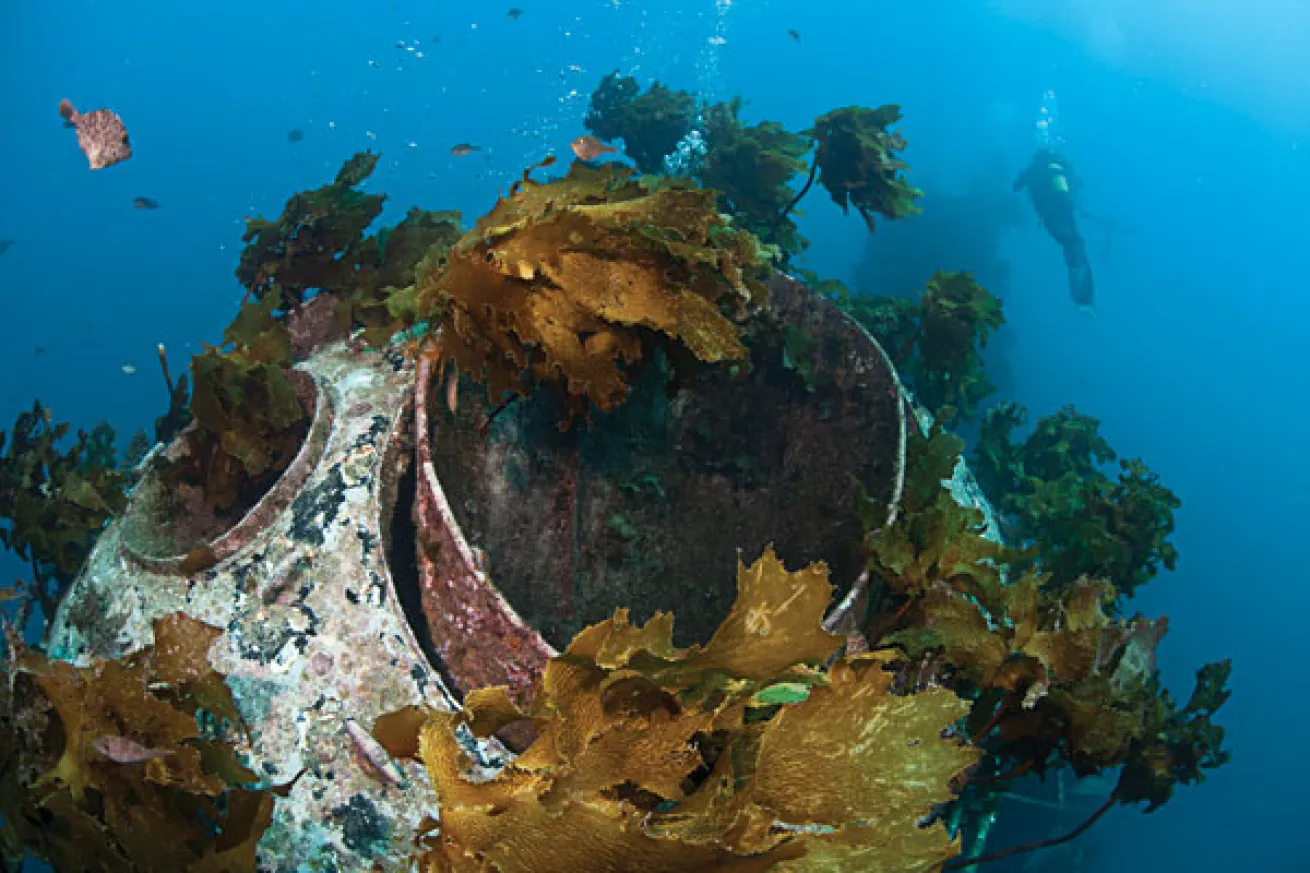
HMNZS Canterbury, Northland, New Zealand The Canterbury’s stern meets the seafloor at about 120 feet, but divers can reach the bow at just 60 feet. Must-see features include the bridge and the ship’s helicopter hangar.
Make It Happen: The Canterbury is diveable at any time of year, but the plankton blooms in the spring can decrease visibility. Northland Dive (northlanddive.com) offers day trips to the Canterbury for $70 per person, as well as dive/accommodations packages in the on-site divers’ lodge starting at around $100 per person for one night, two dives and meals.
David Fleetham
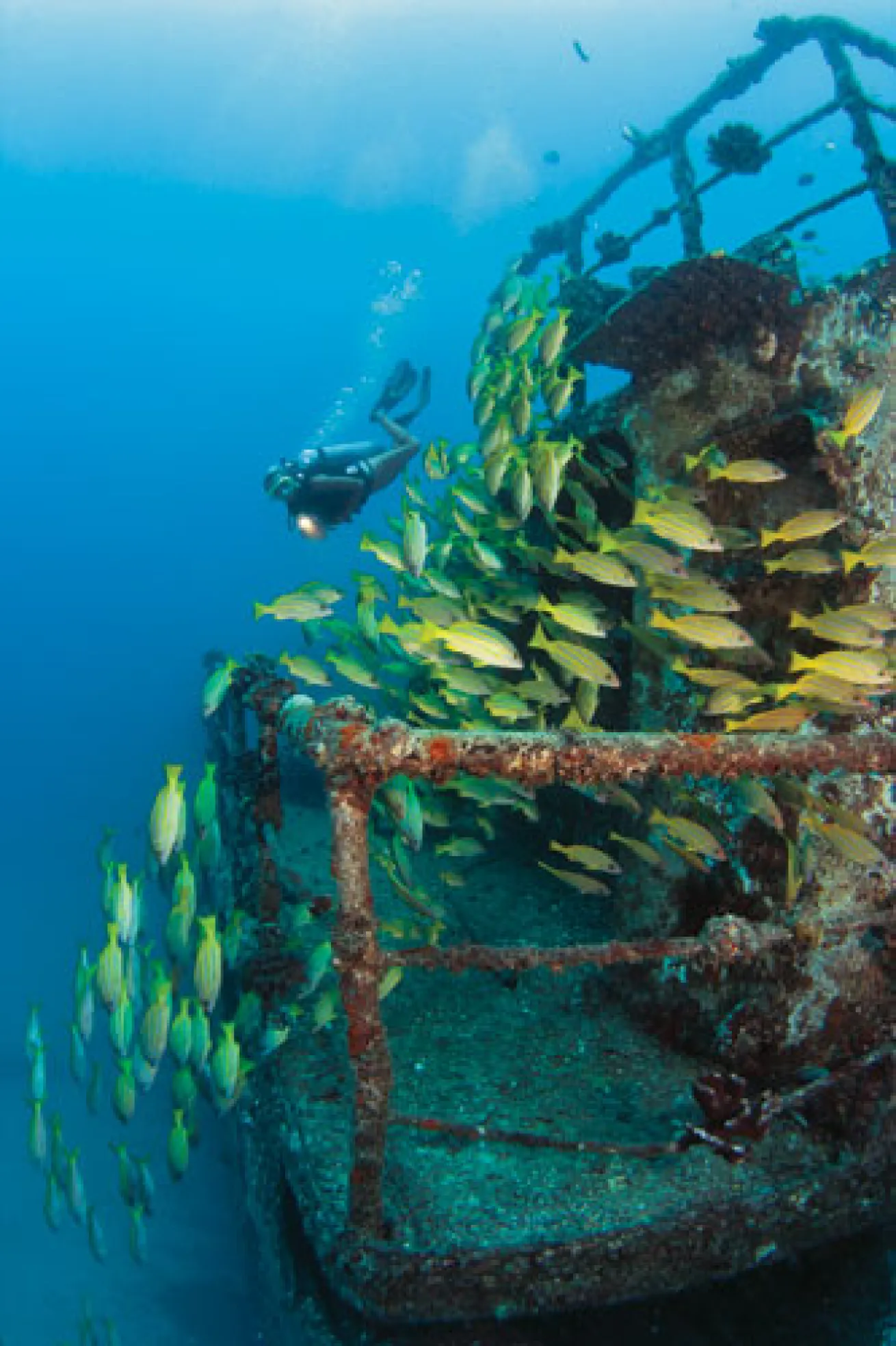
YO-257 and Sea Tiger, Oahu Below the surface of Oahu’s waters, divers can find the classic Hawaiian hard-coral reefs, lava tubes and sea turtles, but the pinnacle of this island’s dive options is the collection of wrecks that fringe its shores. Two in particular — the YO-257 and the Sea Tiger — are easily accessible from Honolulu and make great morning dives. Sunk by Atlantis submarines as an artificial reef for its sub tours, the YO-257, a former WWII fuel boat, sits in depths ranging from 85 to 100 feet, and its denizens include turtles, sharks and the occasional spotted eagle ray. The Sea Tiger has less coral growth than the YO-257, but this former Chinese smuggling ship is wonderfully intact with open holds, exterior stairways strung between decks, and a max depth of 120 feet.
Make It Happen: Summer is warmer and calmer. Dive Oahu (diveoahu.com) offers two-tank charters followed by a reef dive for $129 per person.

Tanya G. Burnett
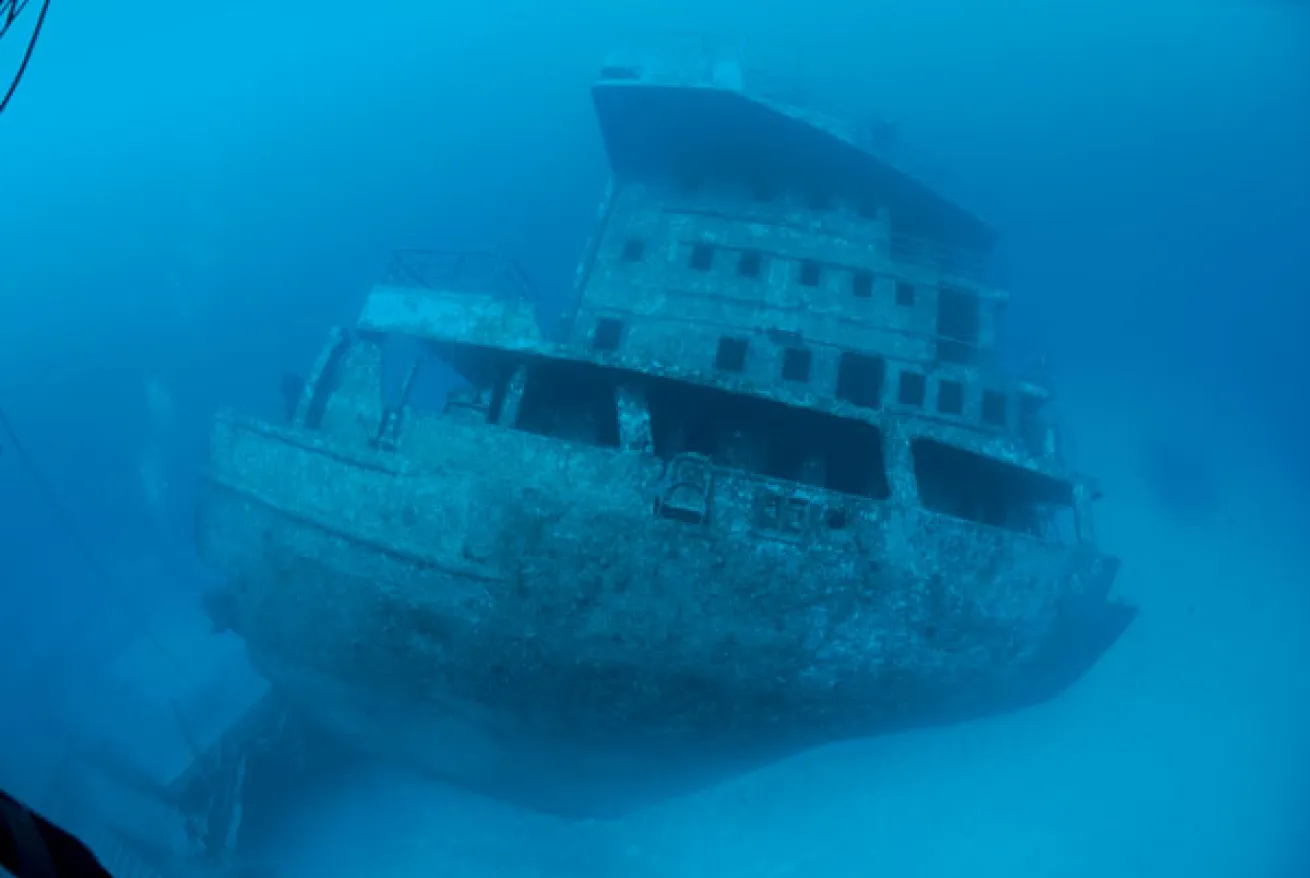
Odyssey, Roatan, Honduras The decision to scuttle the Odyssey on the north shore of Roatan, in Honduras’ Bay Islands, happened after the ship caught fire in the island’s port of French Harbour. The owners of the popular dive lodge Anthony’s Key Resort then spearheaded the effort to clean and sink the damaged 300-foot cargo ship. A near flawless sinking put the Odyssey between two coral heads in 110 feet of water off Mud Hole, but subsequent storms flattened much of the ship’s forward section. The accommodations quarters at the stern remain intact, however, boasting eye-catching exterior stairways and easily penetrable rooms.
Make It Happen: Dive the Odyssey year-round. Anthony’s Key Resort (anthonyskey.com) offers seven-night, all-inclusive dive packages starting at $839 per person during the low season, which include three boat dives each day and two night dives during the week.
Felipe Barrio
Odyssey, Roatan, Honduras The ship is split into three pieces and is perfectly positioned between two lovely coral reefs.
Make It Happen: Dive the Odyssey year-round. Anthony’s Key Resort (anthonyskey.com) offers seven-night, all-inclusive dive packages starting at $839 per person during the low season, which include three boat dives each day and two night dives during the week.
Alexander Mustard
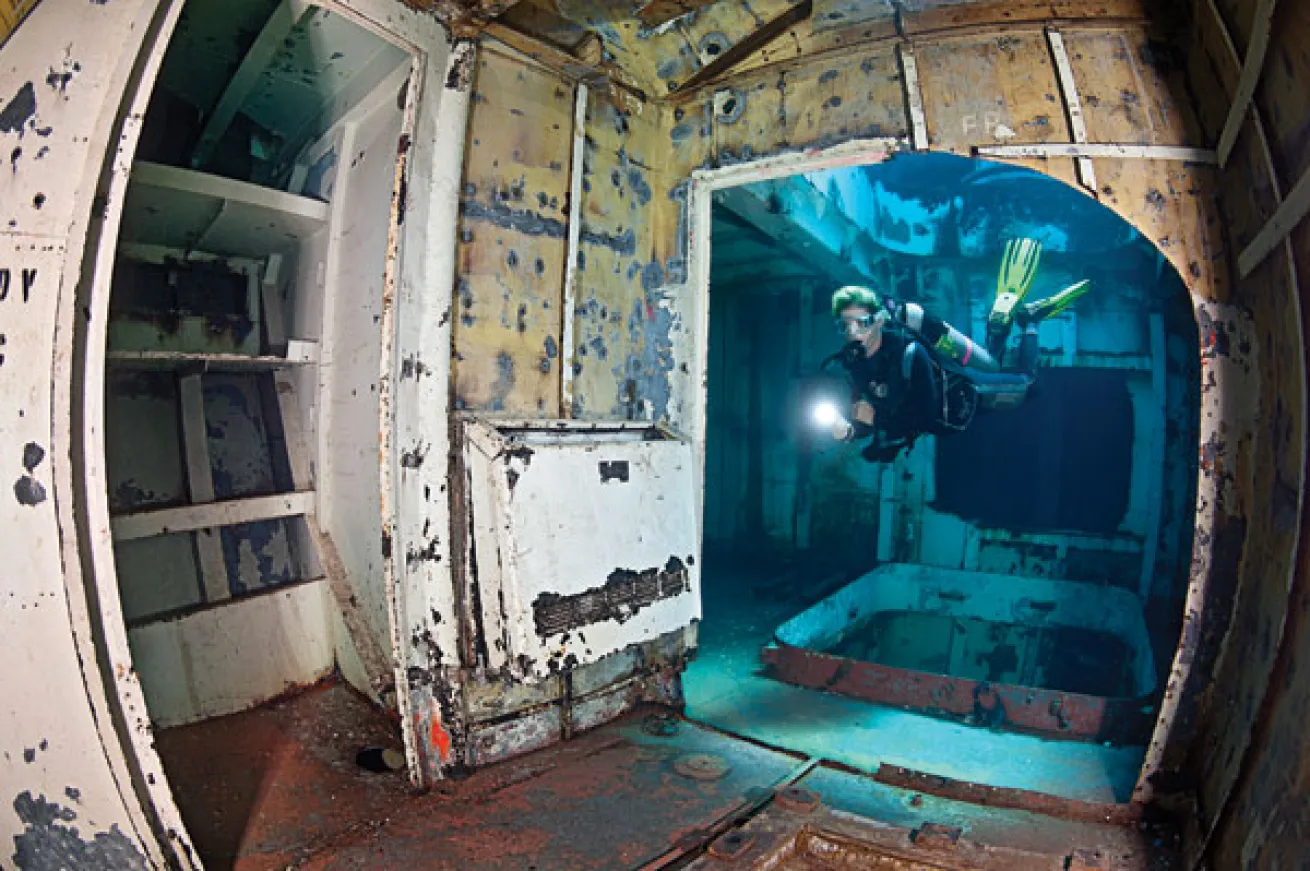
Kittiwake, Grand Cayman It took years of planning, but the long-awaited sinking of the USS Kittiwake finally happened Jan. 5, 2011, with the 251-foot-long submarine rescue ship coming to rest off Grand Cayman’s Seven Mile Beach in just 60 feet of water. located near the Sand Chute dive site at the northern end of the beach, the Kittiwake’s mast reaches to about 5 feet below the surface, making the wreck easily accessible for both divers and snorkelers. And the ship’s five decks have been meticulously prepped and opened to allow easy and safe exploration of sections like the diving locker, complete with the shackles, hooks and chains once used to move subs; and the engine room, which can be accessed through the ship’s towering smoke stack.
Make It Happen: Enjoy this Grand Cayman site any time of the year. Divers have a wealth of options to choose from (dive365 cayman.com/specials), as most operators dive the site. Rates vary for one- and two-tank dives, so check ahead. A park fee applies for divers ($10) and snorkelers ($5) visiting the wreck.
Alexander Mustard
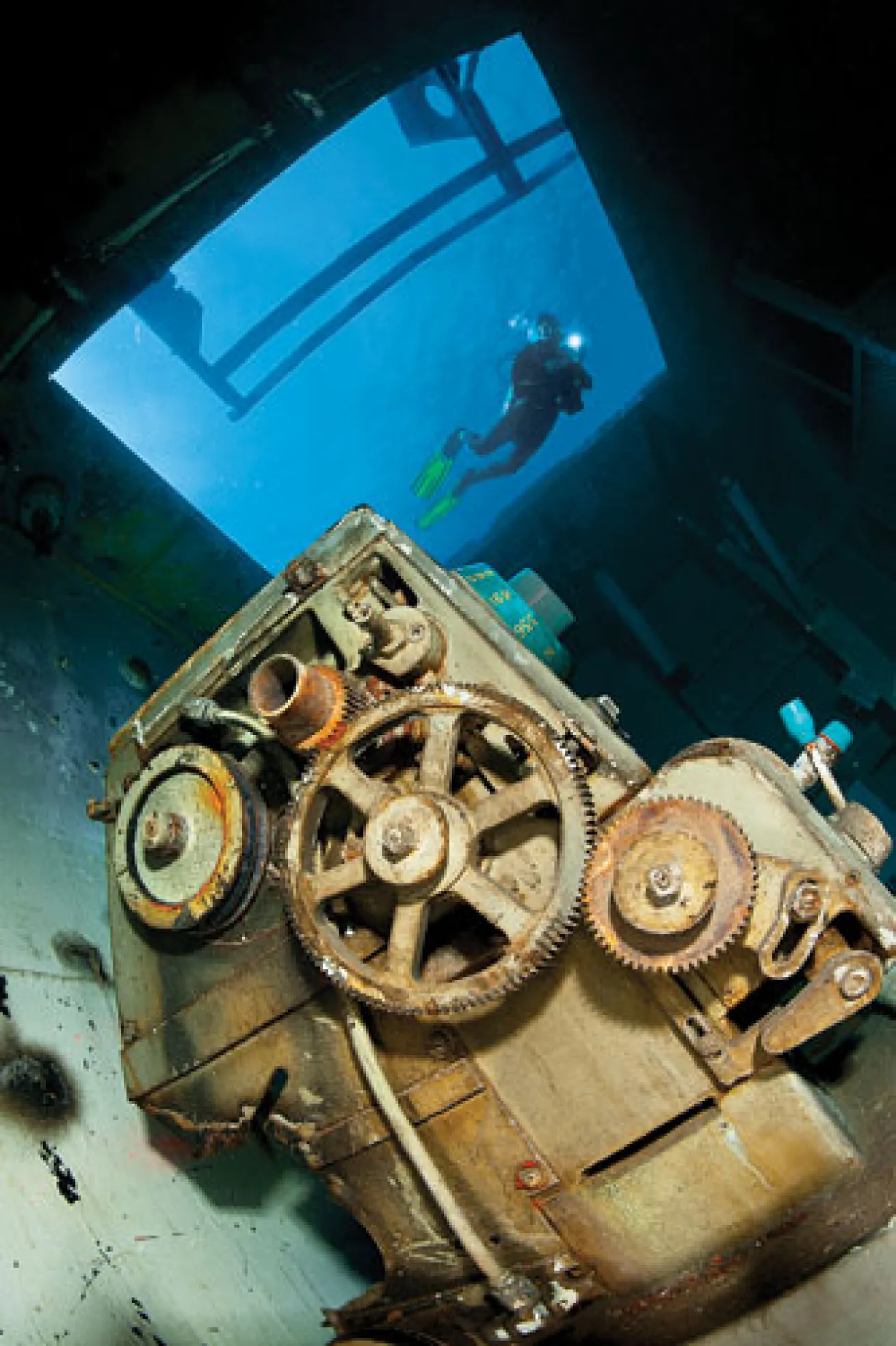
Kittiwake, Grand Cayman The engine room can be accessed through the ship’s towering smoke stack.
Make It Happen: Enjoy this Grand Cayman site any time of the year. Divers have a wealth of options to choose from (dive365 cayman.com/specials), as most operators dive the site. Rates vary for one- and two-tank dives, so check ahead. A park fee applies for divers ($10) and snorkelers ($5) visiting the wreck.
Alexander Mustard
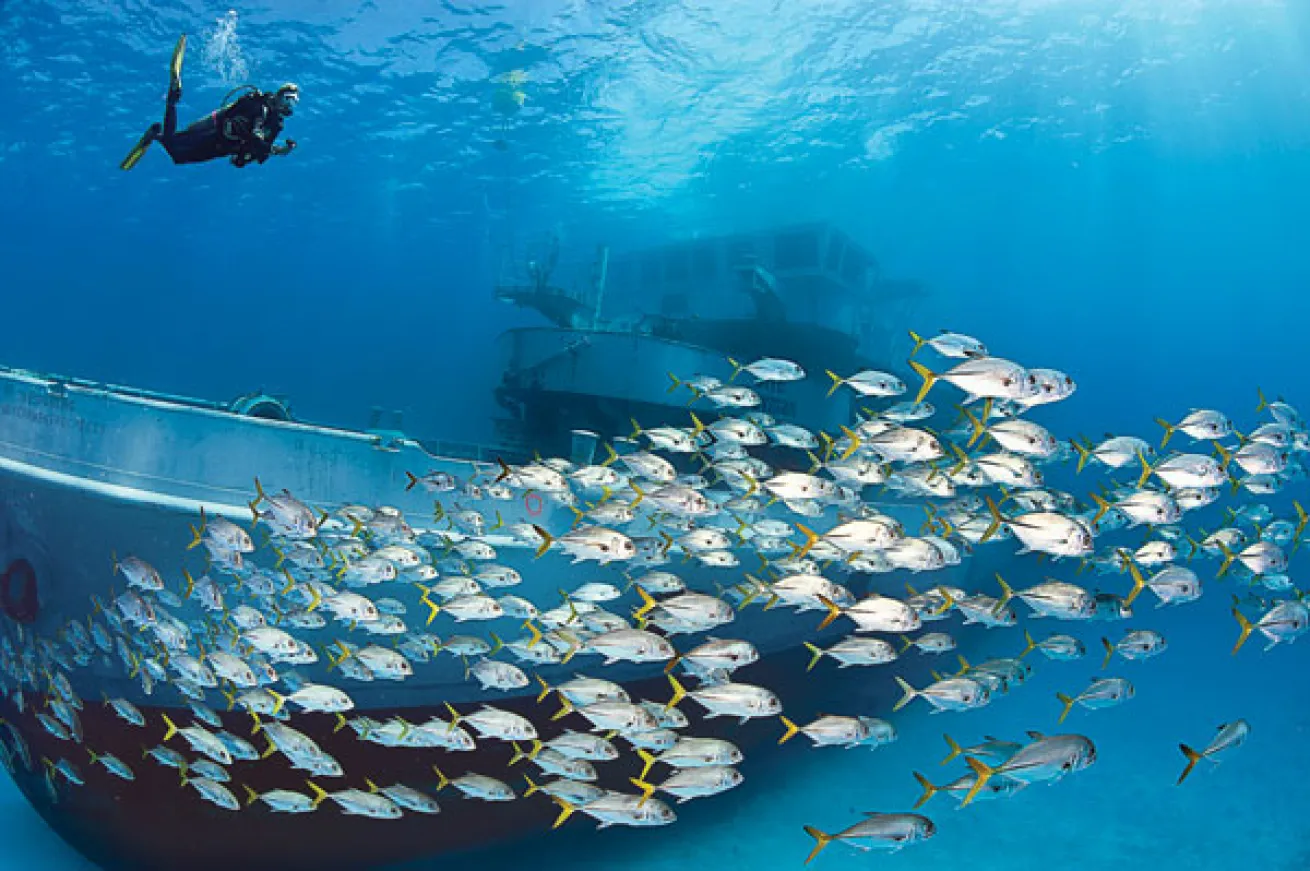
Kittiwake, Grand Cayman A school of fish sweeps across the wreck. Located near the Sand Chute dive site at the northern end of the beach, the Kittiwake’s mast reaches to about 5 feet below the surface, making the wreck easily accessible for both divers and snorkelers.
Make It Happen: Enjoy this Grand Cayman site any time of the year. Divers have a wealth of options to choose from (dive365 cayman.com/specials), as most operators dive the site. Rates vary for one- and two-tank dives, so check ahead. A park fee applies for divers ($10) and snorkelers ($5) visiting the wreck.
Alexander Mustard
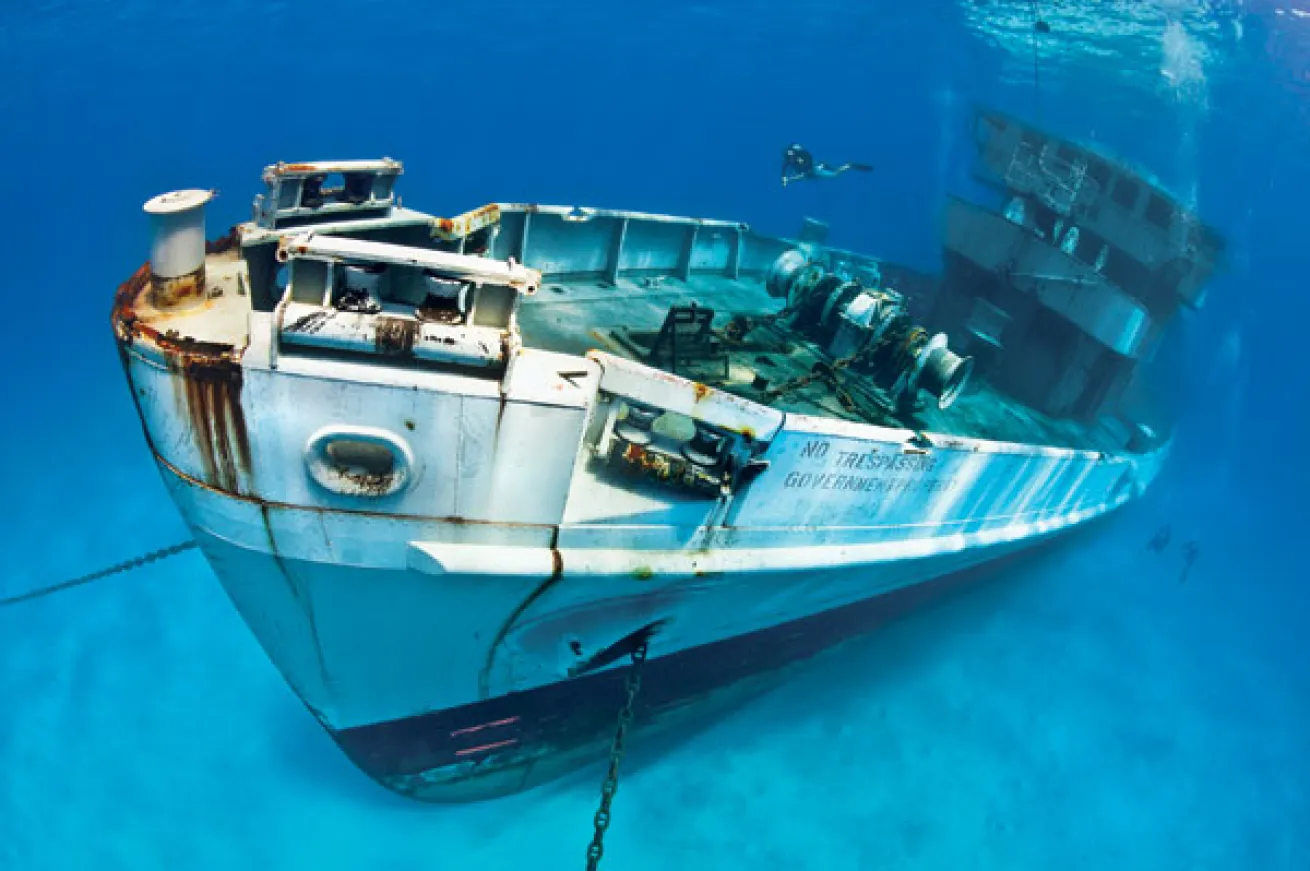
Kittiwake, Grand Cayman The Kittiwake's bow. The ship’s five decks have been meticulously prepped and opened to allow easy and safe exploration of sections like the diving locker, complete with the shackles, hooks and chains once used to move subs.
Make It Happen: Enjoy this Grand Cayman site any time of the year. Divers have a wealth of options to choose from (dive365 cayman.com/specials), as most operators dive the site. Rates vary for one- and two-tank dives, so check ahead. A park fee applies for divers ($10) and snorkelers ($5) visiting the wreck.
Don Kincaid
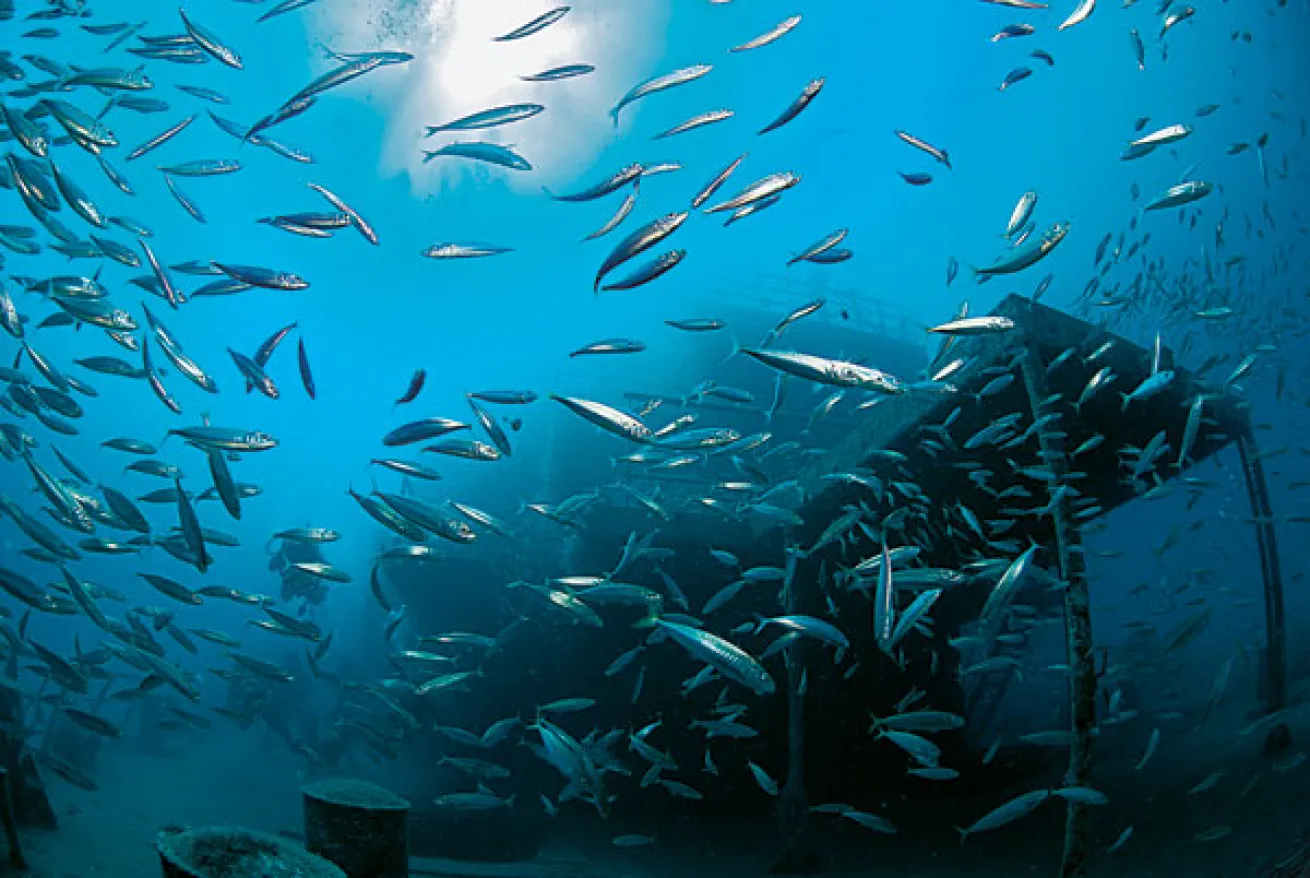
Vandenberg, Key West, Florida Keys The former missile-tracking ship Vandenberg, which went down in 2009, boasts a rich and varied past, ranging from service in WWII to a role in the movie Virus. Now the 523-foot ship holds the title of largest artificial reef in all the Florida Keys, and thousands of divers have made their way to the end of U.S. Highway 1 to explore the sprawling decks, swim-throughs and massive radar dishes.
Make It Happen: Warmest water is in the summer, but it’s diveable year-round. Dive Key West offers a guided dive on the deck that leads you in exploration of Vandy's unique superstructure, radar dishes, bridge, com-rooms and crown nest on an air profile. Packages start at $119.
Don Kincaid
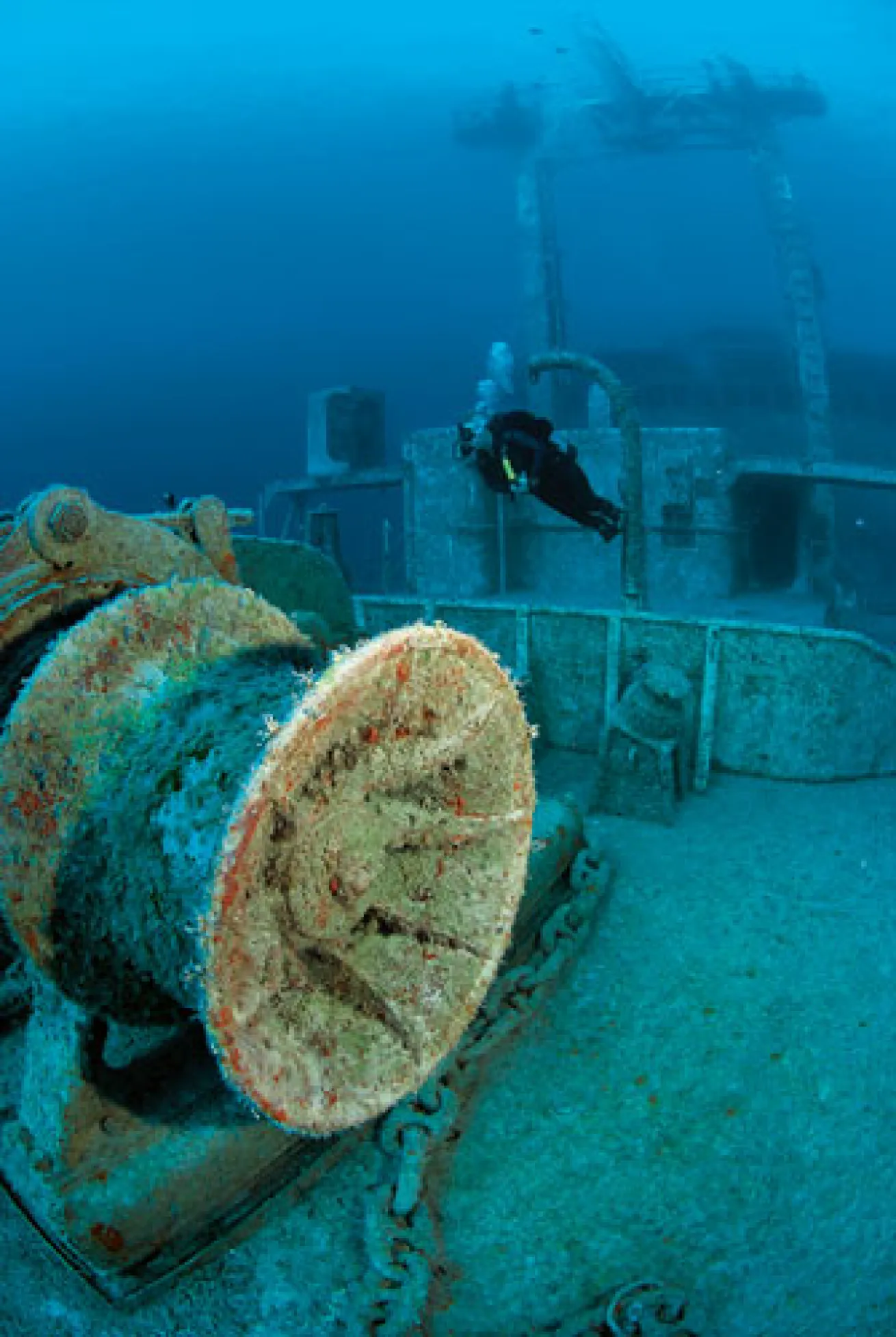
Vandenberg, Key West, Florida Keys Coral growth is just starting to cling to the wreck, and a full complement of Keys marine life has taken up residence — from the ever-present blue-striped grunts to goliath grouper and turtles.
Make It Happen: Warmest water is in the summer, but it’s diveable year-round. Dive Key West offers a guided dive on the deck that leads you in exploration of Vandy's unique superstructure, radar dishes, bridge, com-rooms and crown nest on an air profile. Packages start at $119.
Jurgen Freund
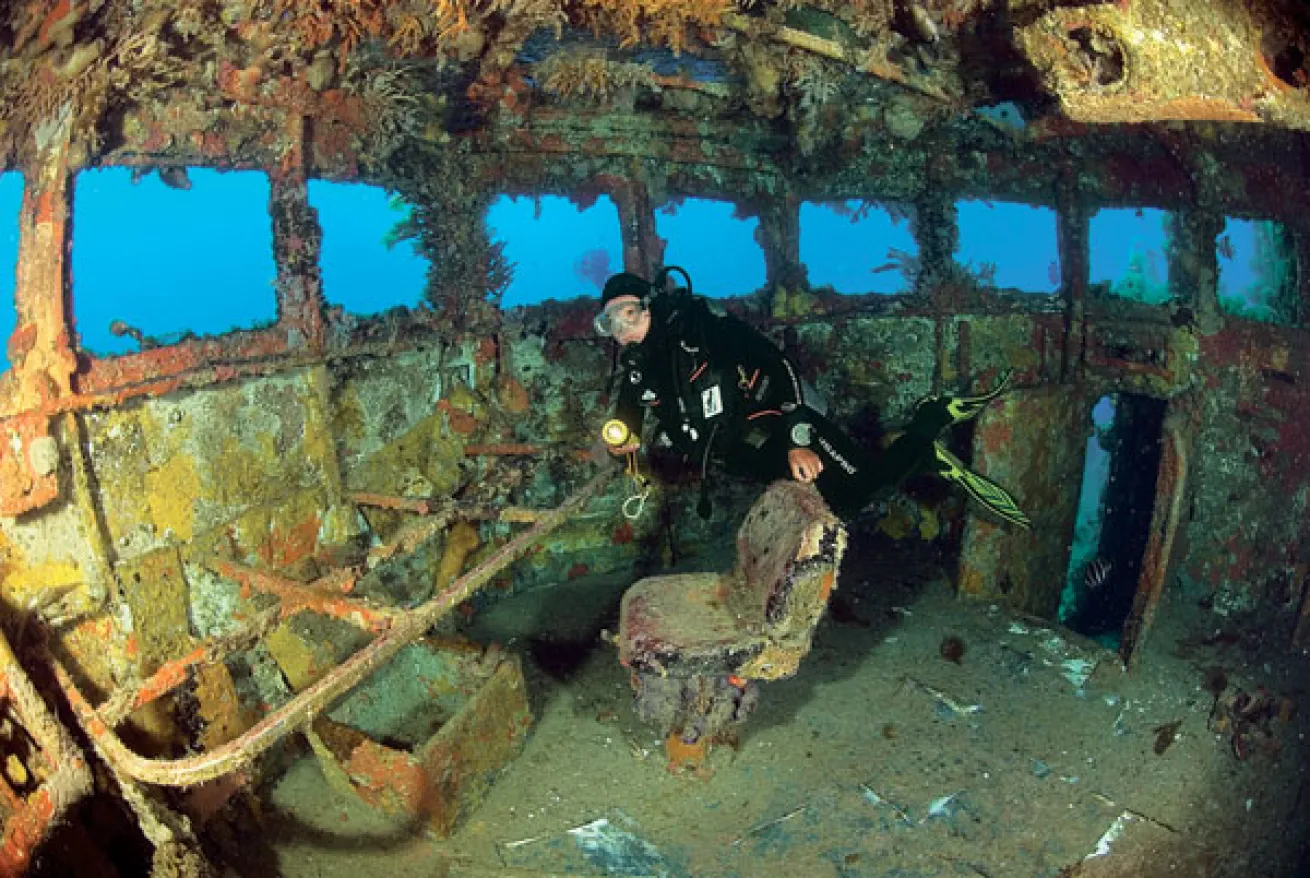
HMAS Swan, Western Australia One of Australia’s most lauded wreck dives, the former Australian Navy destroyer escort HMAS Swan sits tucked away off the southwest corner of the country, about 150 miles south of Perth in the state of Western Australia.
Make It Happen: The dive season runs from September through June, but you’ll get peak conditions from November through April. Dive boats operate from the towns of Bussleton and Dunsborough. The Dive Shed in Bussleton (diveshed.com.au) offers HMAS Swan charters with two dives on the wreck starting at $165 per person.
Jurgen Freund
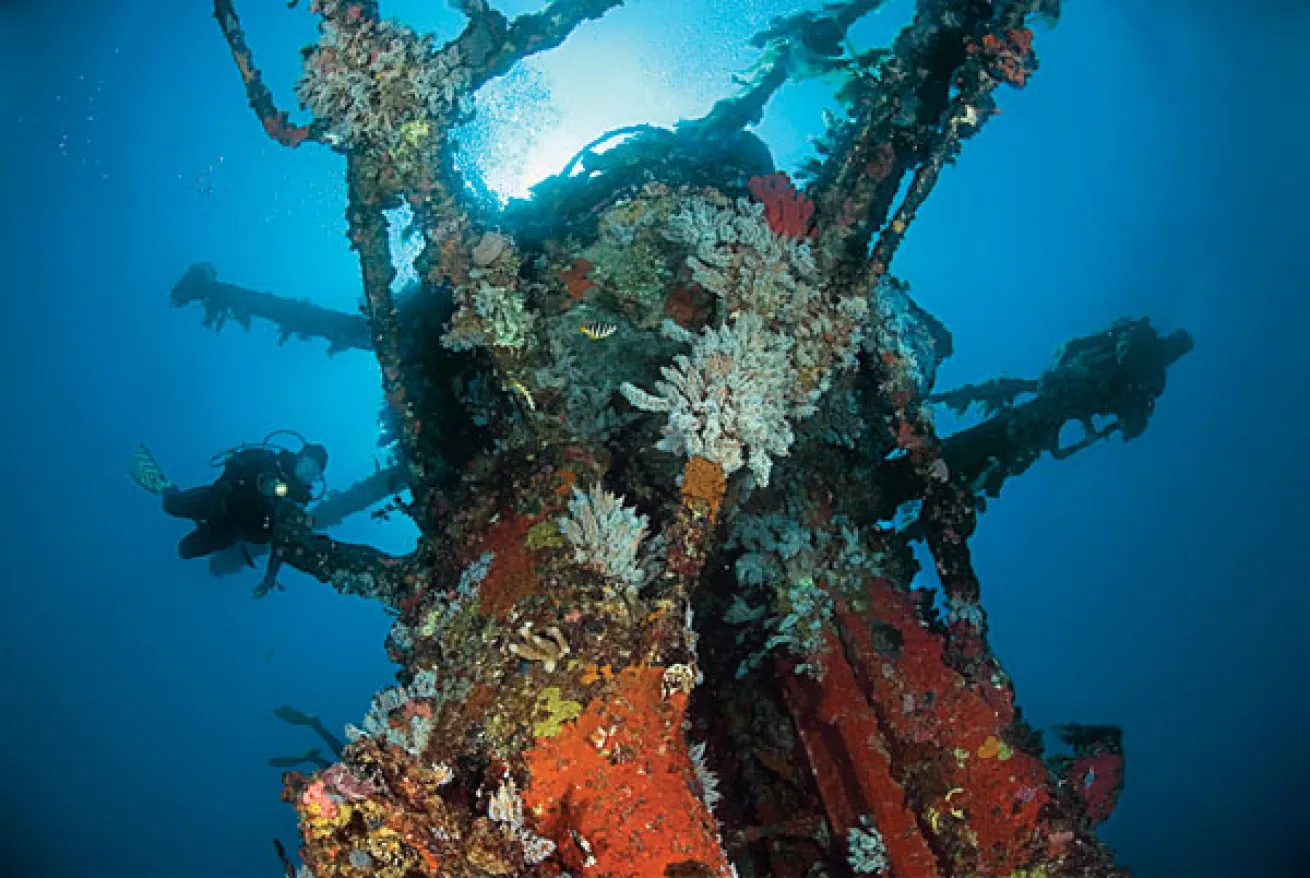
HMAS Swan, Western Australia Standing upright on the bottom of protected Geographe Bay, HMAS Swan has holes cut into its hull to allow easy penetration of the bridge, and the ship boasts a healthy population of Indian Ocean marine life, like the batfish that keep watch from the picturesque crow’s-nest.
Make It Happen: The dive season runs from September through June, but you’ll get peak conditions from November through April. Dive boats operate from the towns of Bussleton and Dunsborough. The Dive Shed in Bussleton (diveshed.com.au) offers HMAS Swan charters with two dives on the wreck starting at $165 per person.
Courtesy Stuart Cove's
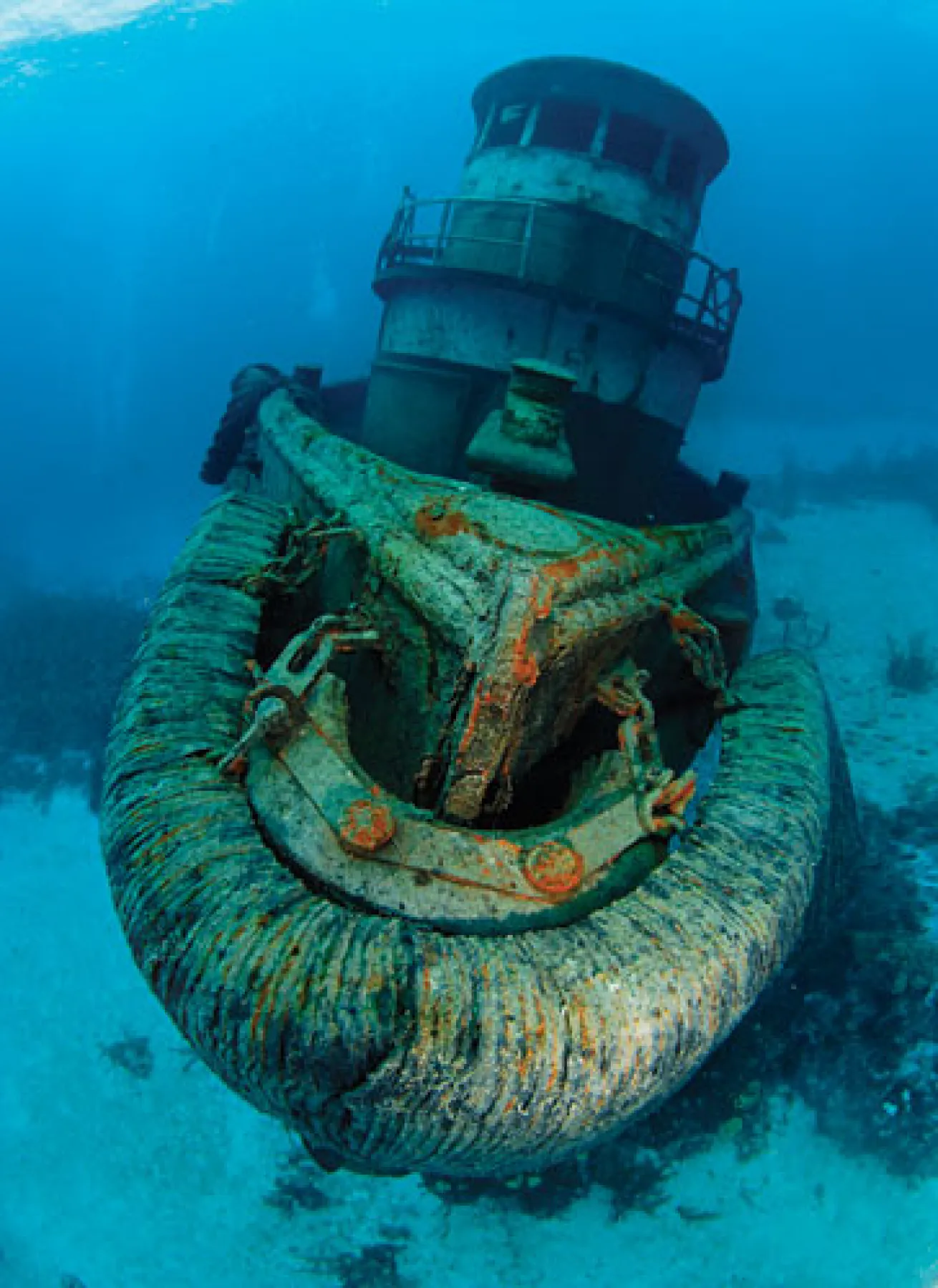
Anthony Bell, Nassau, Bahamas The shallow, near-shore waters around New Providence Island boast dozens of purpose-sunk wrecks, many put down under the watchful eye of dive pioneer Stuart Cove. While some wrecks were used in movies, others were decommissioned ships that Cove gave new life as artificial reefs. The Anthony Bell and the Long Island Lady are two of the most recent, sunk in 2009. A 90-foot tugboat, the Anthony Bell is surrounded by coral heads in 50 feet of water near Goulding Cay, and divers can do light penetration into the wheelhouse and the engine room. The Long Island Lady is a 70-foot-long abandoned fishing boat taken from Nassau Harbour; it rests on the edge of the Tongue of the Ocean canyon.
Make It Happen: Calmer, warmer water temps are in the summer months. Stuart Cove’s Dive Bahamas (stuartcove.com) offers two-tank trips, morning and afternoon, for $109 per person.
Scott Bartel, courtesy of Visit Pensacola
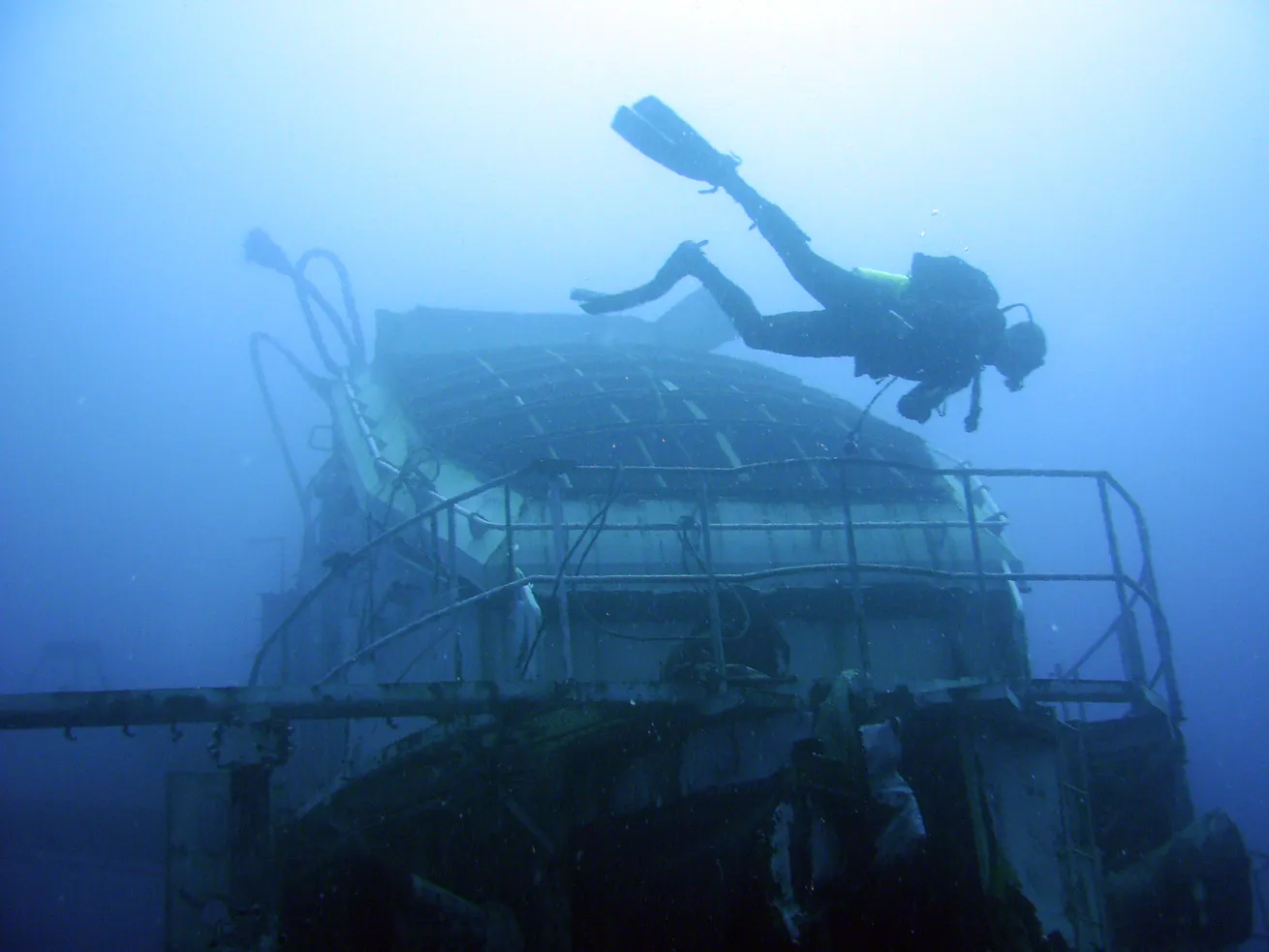
Oriskany, Pensacola, Florida At 911 feet long, the USS Oriskany — aka the Mighty O — holds the record for the largest purpose-sunk wreck in the world. Located off Pensacola, Florida, this former aircraft carrier sits upright on the sand in 210 feet of water. The island towers 65 feet over the flight deck and comprises eight levels — topping out at 80 feet deep, this is the only part of the ship within recreational-diving depths. The massive ship’s flight deck starts at 145 feet, and its nine subdecks offer near-endless exploration for experienced tec divers.
Make It Happen: Conditions permitting, year-round. Dive the O with Pensacola's Bay Breeze Dive Center (baybreezescuba.com) or Gulf Coast Dive Pros (florida-divepros.com).


