
Scuba Diving with the Deadliest Animals on the Planet
DIVE IF YOU DARE
There is diving — the casual pursuit of water time for the simple fun of it. And then there's DIVING — exploring new frontiers and edgy locations where divers are few and far between. It’s about discoveries with purpose, and exotic marine life that are truly exceptional. Risk? Sure, there’s some. But the rewards are substantial. For anyone who loves checking off another species (and an excuse to travel around the world), here are diving’s most daring encounters.
MORE OF THE WORLD'S MOST ADVANCED DIVING
Diving with Oceanic Whitetip Sharks in the Bahamas
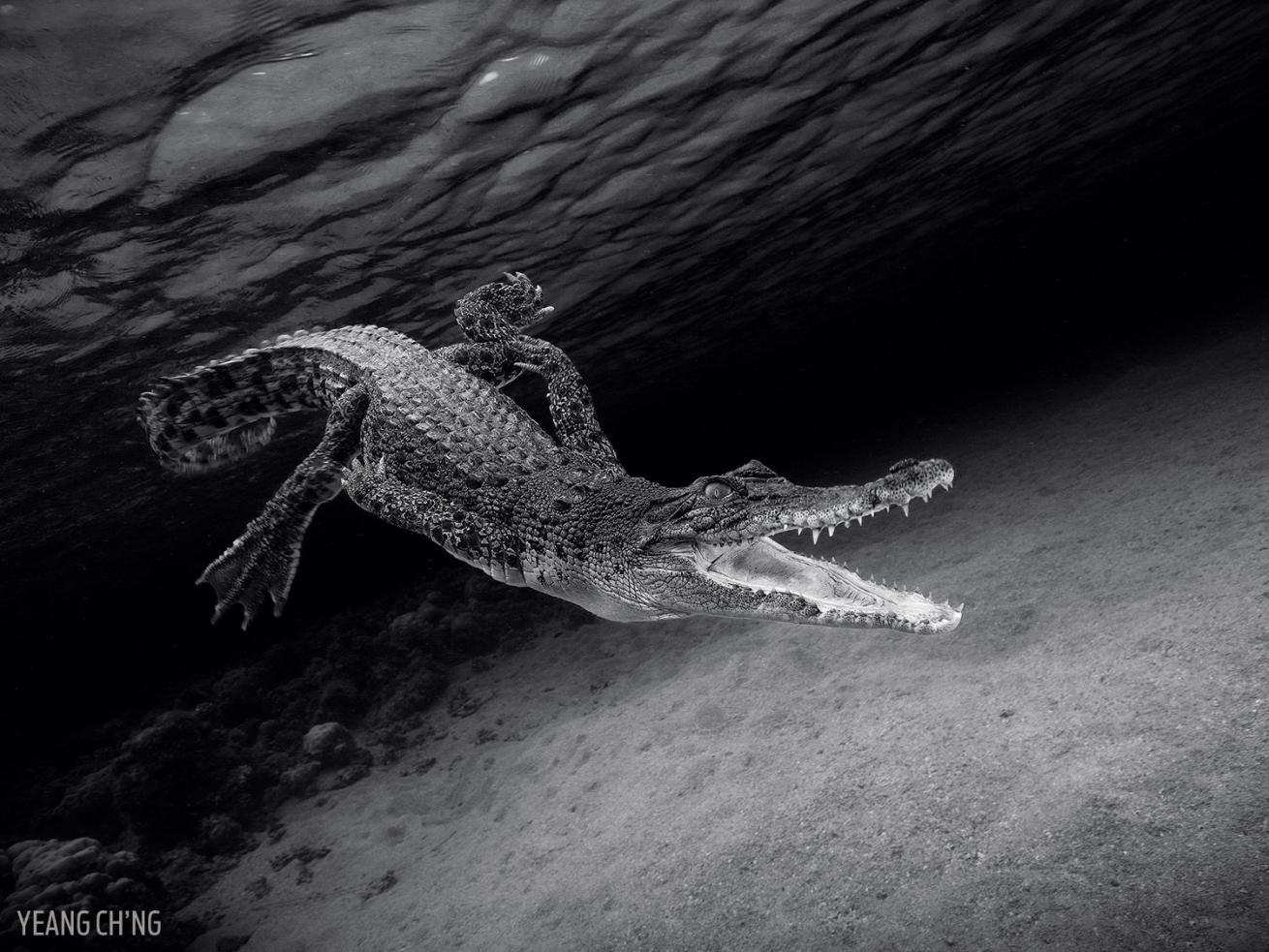
Yeang Ch'ngCAUTION: Not for the Faint of Heart
From leopard seals, sea snakes, salt-water crocodiles and blue-ringed octopuses to oceanic whitetip and bull sharks, these creatures will give you wicked thrills at these six daredevil dives.
DIVE IF YOU DARE
There is diving — the casual pursuit of water time for the simple fun of it. And then there's DIVING — exploring new frontiers and edgy locations where divers are few and far between. It’s about discoveries with purpose, and exotic marine life that are truly exceptional. Risk? Sure, there’s some. But the rewards are substantial. For anyone who loves checking off another species (and an excuse to travel around the world), here are diving’s most daring encounters.
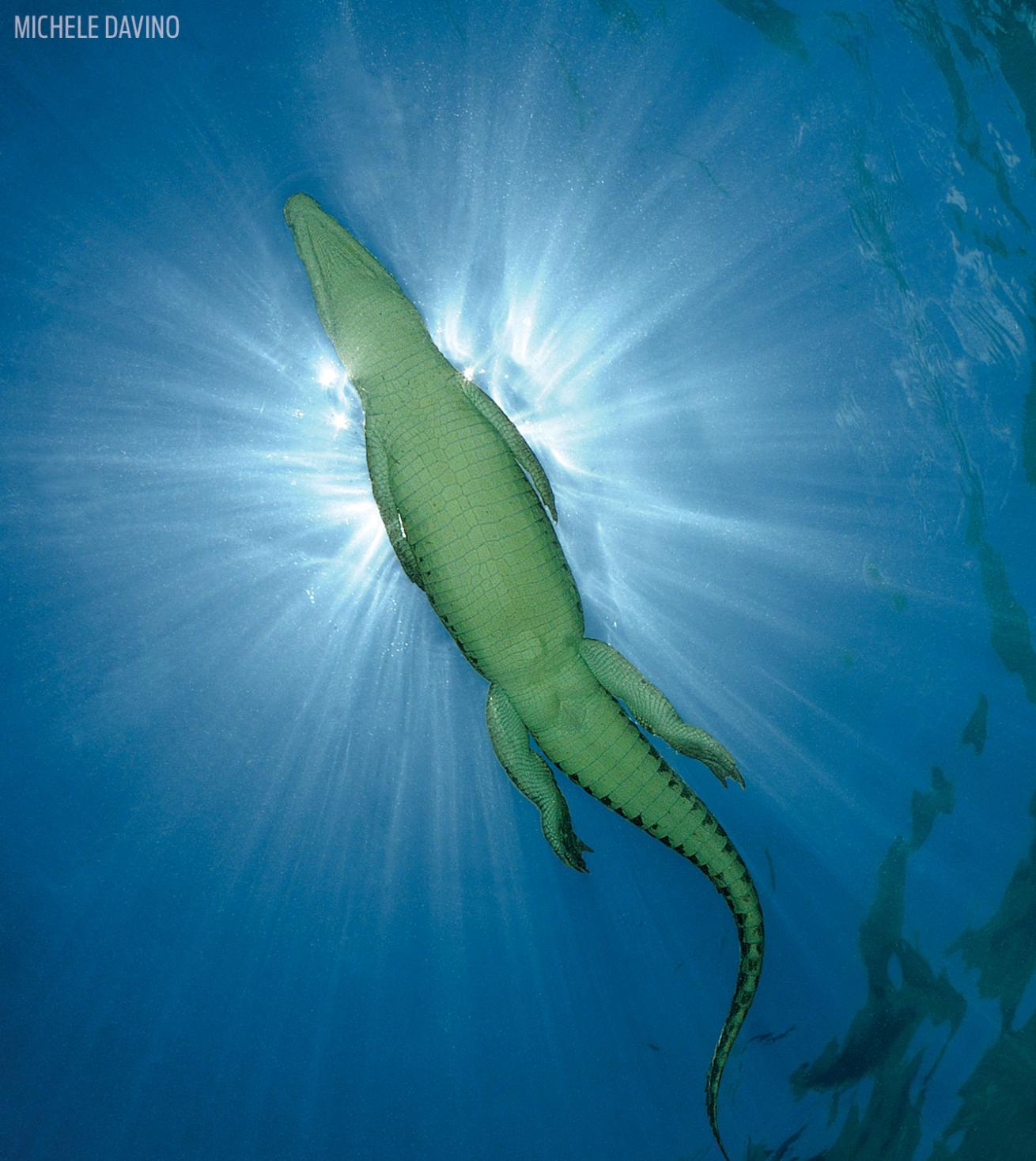
Michele DavinoCrocodile from below in Papua New Guinea
Papua New Guinea
Saltwater Crocs
Along Australia’s Cape York Peninsula that juts toward Papua New Guinea, there’s a cautionary saying among divers and boaters: “Don’t worry about the tiger sharks, the saltwater crocs ate them.” Indeed, sharing water with Crocodylus porous — a species that’s changed little in 200 million years — is a real-life marine version of Jurassic Park. The Indo-Pacific saltwater crocodile is the largest of all living reptiles, a formidable,opportunistic eating machine that’s posted a record size of 20-plus feet – and incalculable human fatalities in Papua New Guinea. Improbable as it seems, diving with saltwater crocodiles is possible, with caveats. “Saltwater crocs are found all around PNG’s coastline, lakes and rivers,” explains Cheyne Benjamin, manager of Walindi Plantation Resort located on PNG’s New Britain Island at Kimbe Bay. “These animals are extremely dangerous to observe in the wild, so we offer a unique, controlled environment to see and photograph crocodiles that wouldn’t be possible otherwise.” The technique involves handlers with five-foot toothy juveniles tethered by clear monofilament lines attached toward the rear legs. On command, divers are allowed to fin in proximity of the croc as the creature swims while restrained. Those underwater photos of these saltwater denizens in their natural habitat? Chances are they originated at Walindi. “From what we know, we offer divers the only opportunity to see these animals in a safe environment where they naturally occur,” Benjamin says.
Dive this now: Walindi Plantation Resort
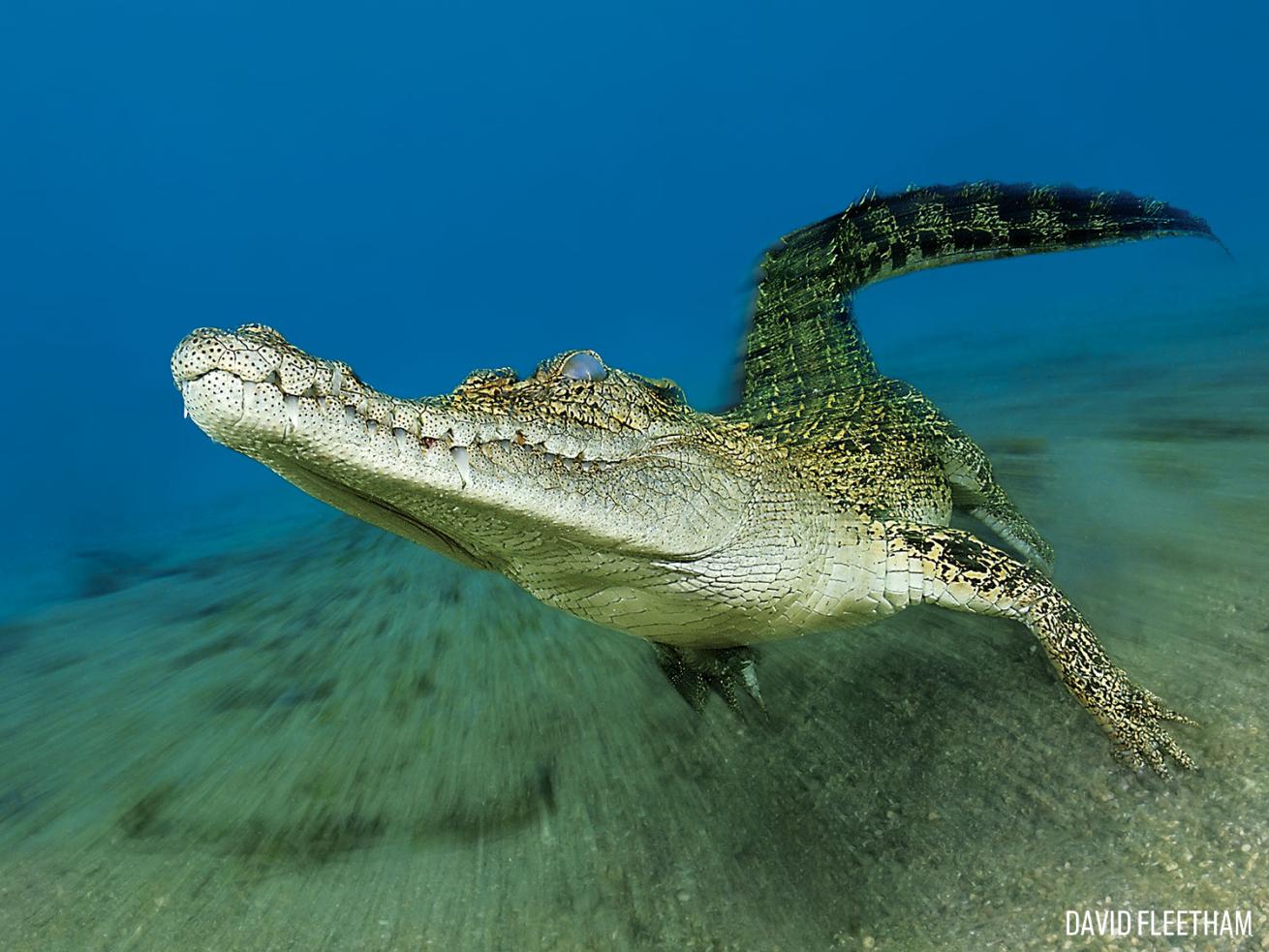
David FleethamCrocodile Underwater Photo
Crocodiles in Papua New Guinea will give you wicked thrills.
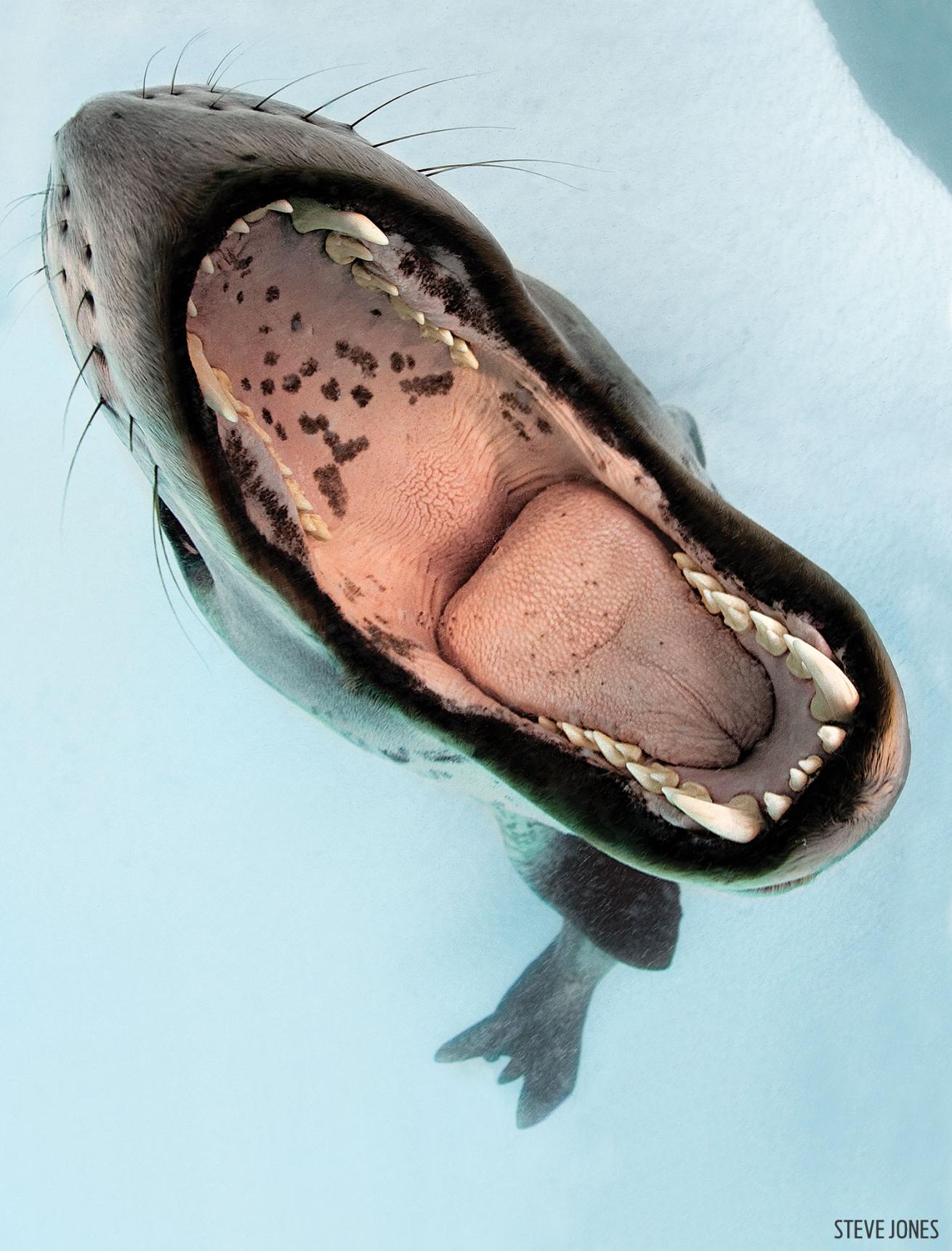
Steve JonesLeopard Seal Mouth Open in Antarctic
Antarctic
Leopard Seals
The antarctic is the world’s most demanding dive environment: 28-degree water temps, roily seas, shifting ice floes, crashing icebergs. Add to this diving among 11-foot, 1,200-pound leopard seals with the mobility of 25 mph torpedoes, and you have what’s perhaps the most extreme underwater experience imaginable. “I’ve been working with leopard seals for 10 years,” says Göran Ehlme, co-founder of polar dive operator waterproof expeditions, “and I have developed a love affair with this animal. But first and foremost, it is important to remember that the leopard seal is a wild animal governed by the rules of survival in one of the most inhospitable environments in the world.” More than 200,000 of these seals live along the ice shelves, with late February to march being the months of highest concentration as they hunt for penguin chicks. “The first time I entered the water with leopard seals, I had a huge female open her jaws and display her jagged teeth just inches from my face,” recounts Ehlme. “I was uncomfortable at first, but over the years, I’ve found immense peace diving with these elegant creatures.”
Dive this now: Waterproof Expeditions
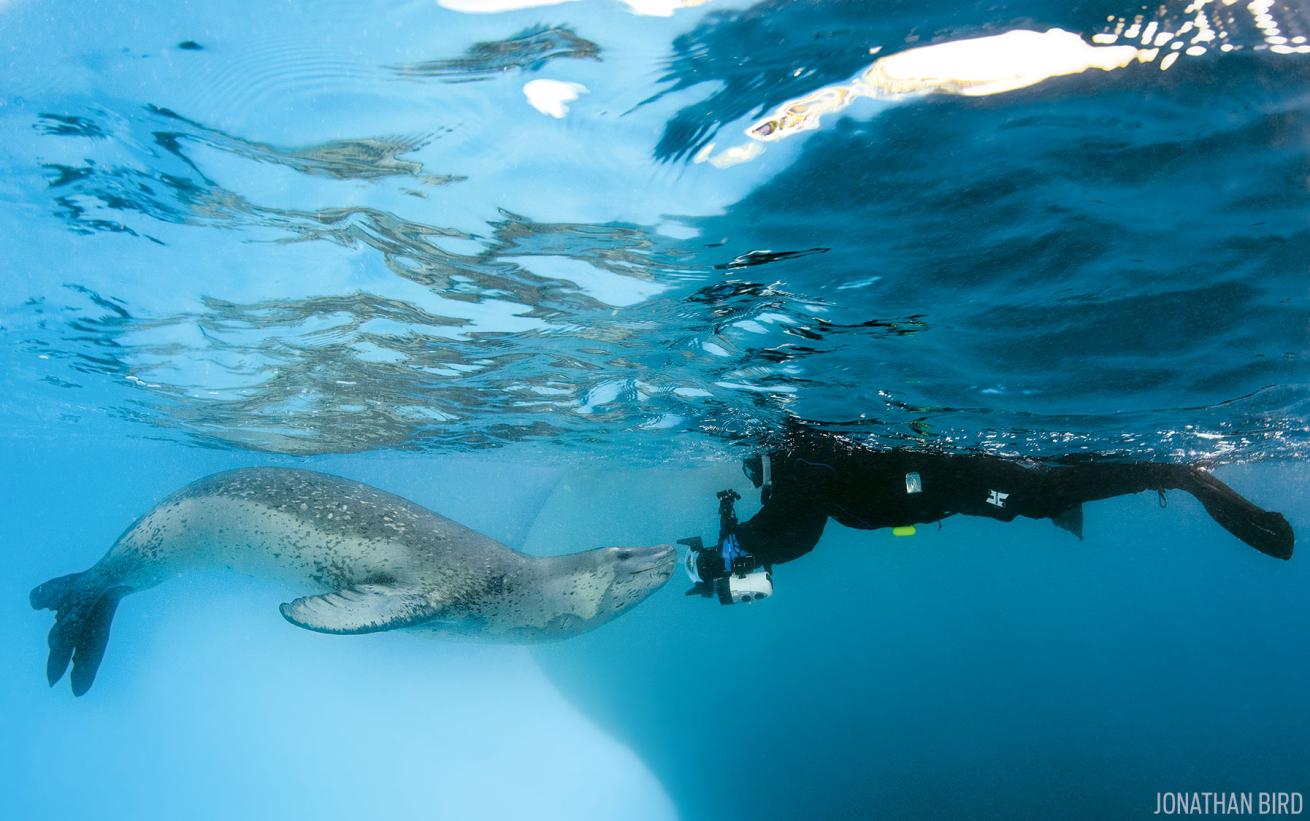
Jason SpaffordLeopard Seal Underwater Face-To-Face with Diver
Not only are leopard seals twice the size of a harbor seal, they are also the only species that stalks and kills warm-blooded animals.
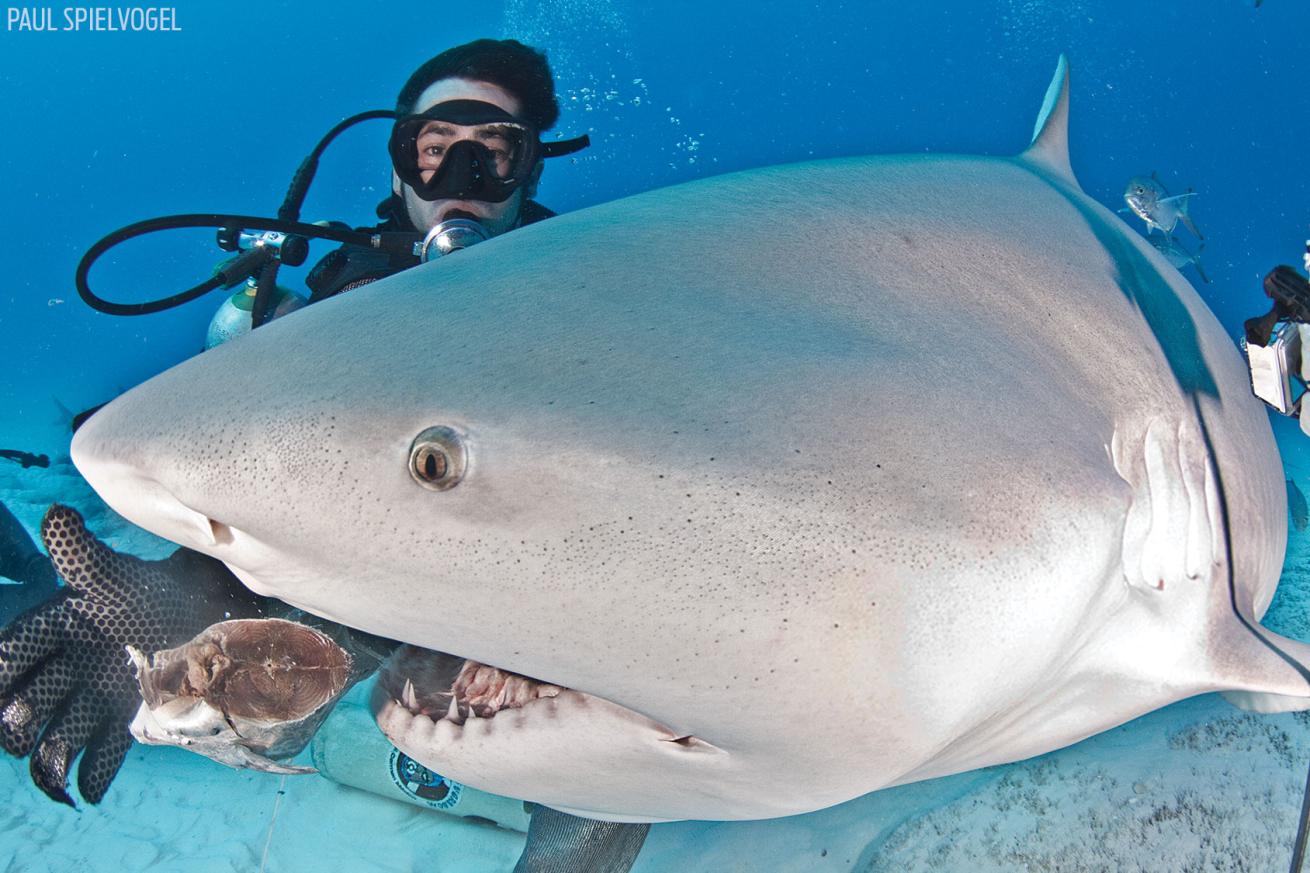
Paul SpielvogelScuba diving shark
Mexico
Bull Sharks
They share the rap sheet of the fearsome foursome — along with great whites, tigers and oceanic whitetips. Yet it’s bull sharks that are thought to account for most near-shore attacks. Like pit bulls with fins, this exceptionally stout shark averages nine feet and 300 pounds. Bulls thrive in salt and fresh water— even hundreds of miles inland. Their occurrence in warm, shallow, often murky water — coupled with territorial behavior — is a recipe for attacks. But that danger is diluted in clear conditions: experts blame poor visibility rather than feeding behavior. “We’ve been developing our own techniques and learning from operators around the globe since 1997 to make this a safe, educational, and enjoyable dive,” says Jorge Loria, dive director of phantom divers in Playa del Carmen, Mexico, which offers a PADI Shark Observer specialty certification dive. Phantom also collaborates with international NGOs for the study and protection of sharks.
Dive this now: Phantom Divers - Playa del Carmen, Mexico
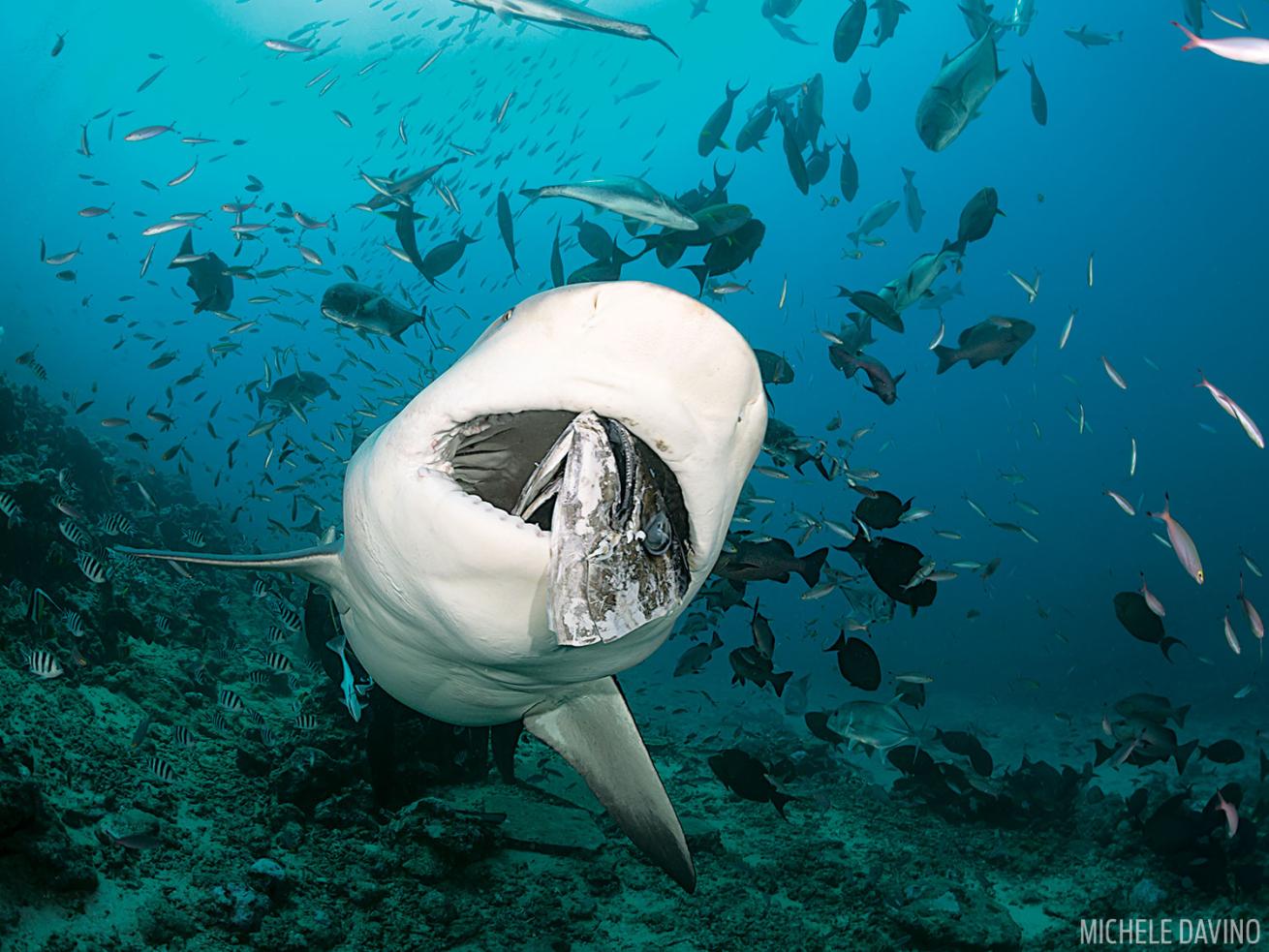
Michele DavinoBull Shark with Fish In Mouth
Considered one of the fearsome foursome, bull shark encounters in Mexico will have your adrenaline pumping through the roof.
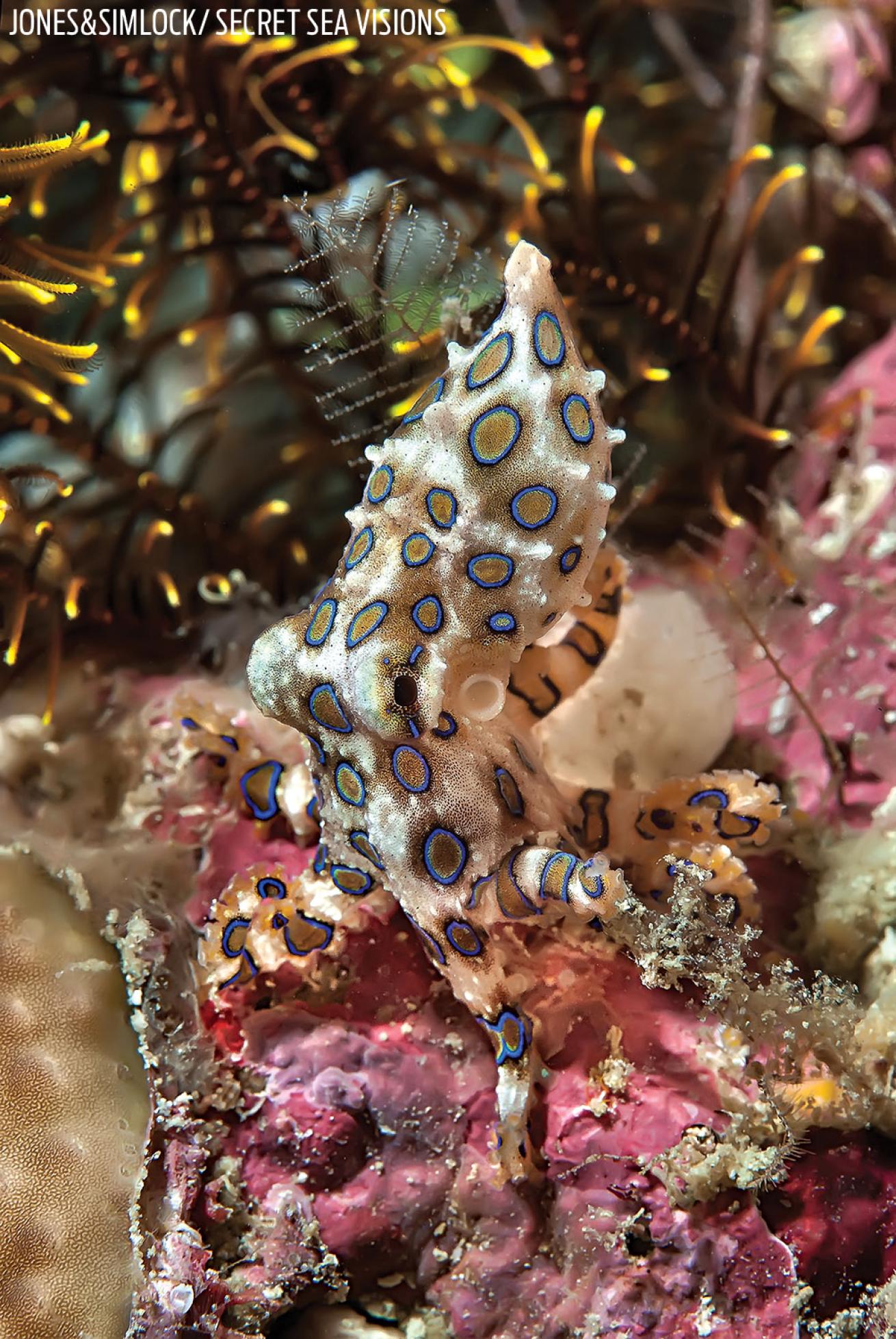
Jones&Shimlock/Secret Sea VisionsDeadly Blue Ringed Octopus in the Philippines
Philippines
Blue Ring Octopus
As mollusks go, the four species of blue ring octopuses of the Western Pacific certainly don’t appear threatening. The diminutive five-to nine- inch creatures can be hard to spot, dwelling in the crevices of reefs or crawling over sand in search of prey. At rest, its pale, thin blue rings are barely visible. When agitated, its blue rings become engorged, appearing brighter and pulsating with an eerie iridescence. That warning is to be taken seriously. Bites from a blue ring deliver an unusually deadly toxin that quickly paralyzes victims. All species have been responsible for human fatalities, typically from accidental contact or careless handling.
Yet the octopus is unaggressive and represents a world-class sighting for species-driven divers. “It’s somewhat common to see the blue ring octopus during our Southern Visayas itinerary, a macro-critter hot spot,” says Susie Erbe, a manager with Worldwide Dive and Sail International, which operates the Siren Fleet of liveaboards that scours the Coral Triangle. “The octopus is often seen in the open reef during daytime, while under the lights of piers at night, the blue ring can be seen hunting over shallow sandy areas. They’re beautiful, but you keep your distance.”
Dive this now: Worldwide Dive and Sail — Siren Fleet
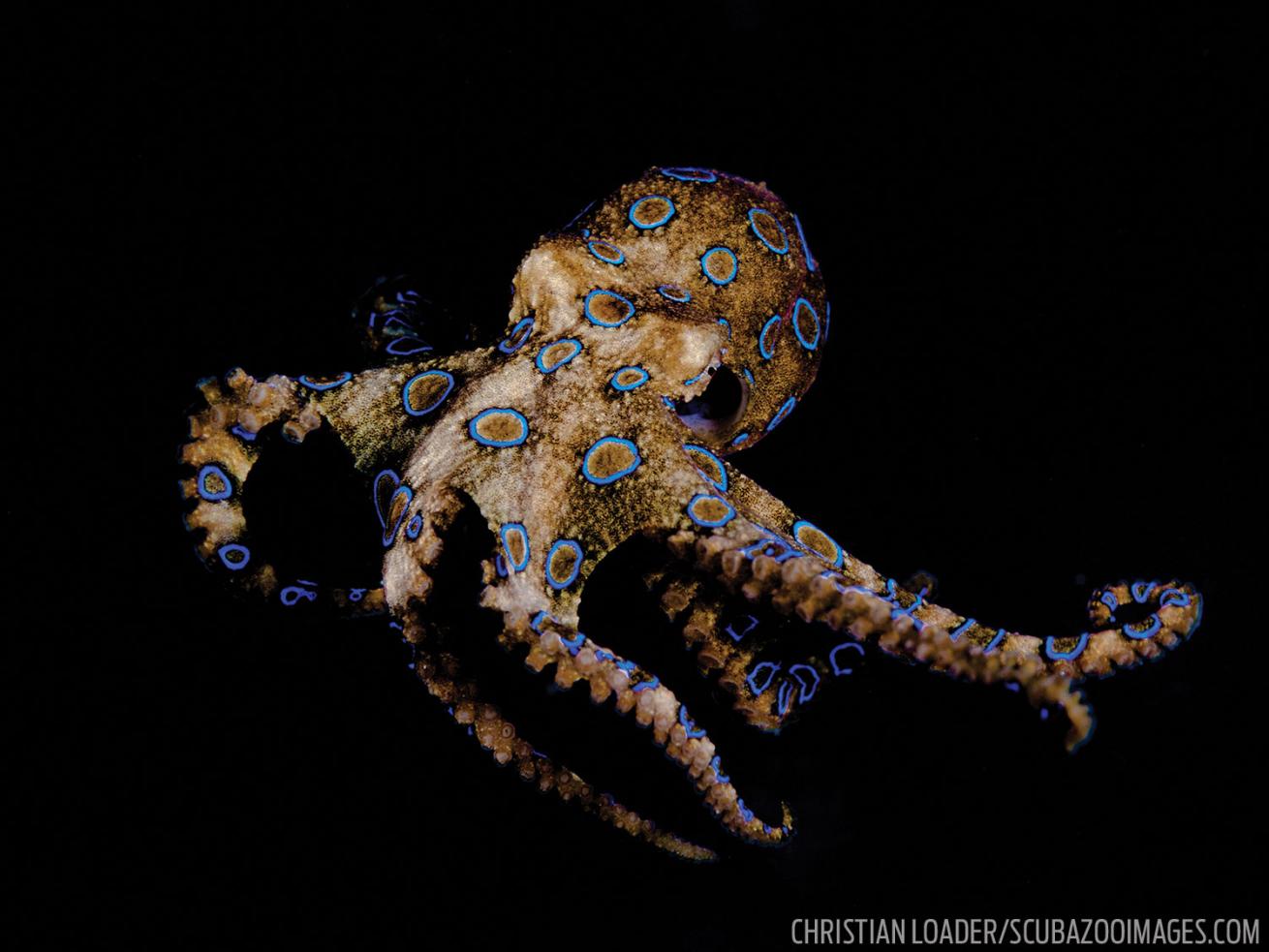
Christian Loader/scubazooimages.comBlue Ringed Octopus Underwater
Beautiful but deadly, blue ringed octopus can be found diving in the Philippines.
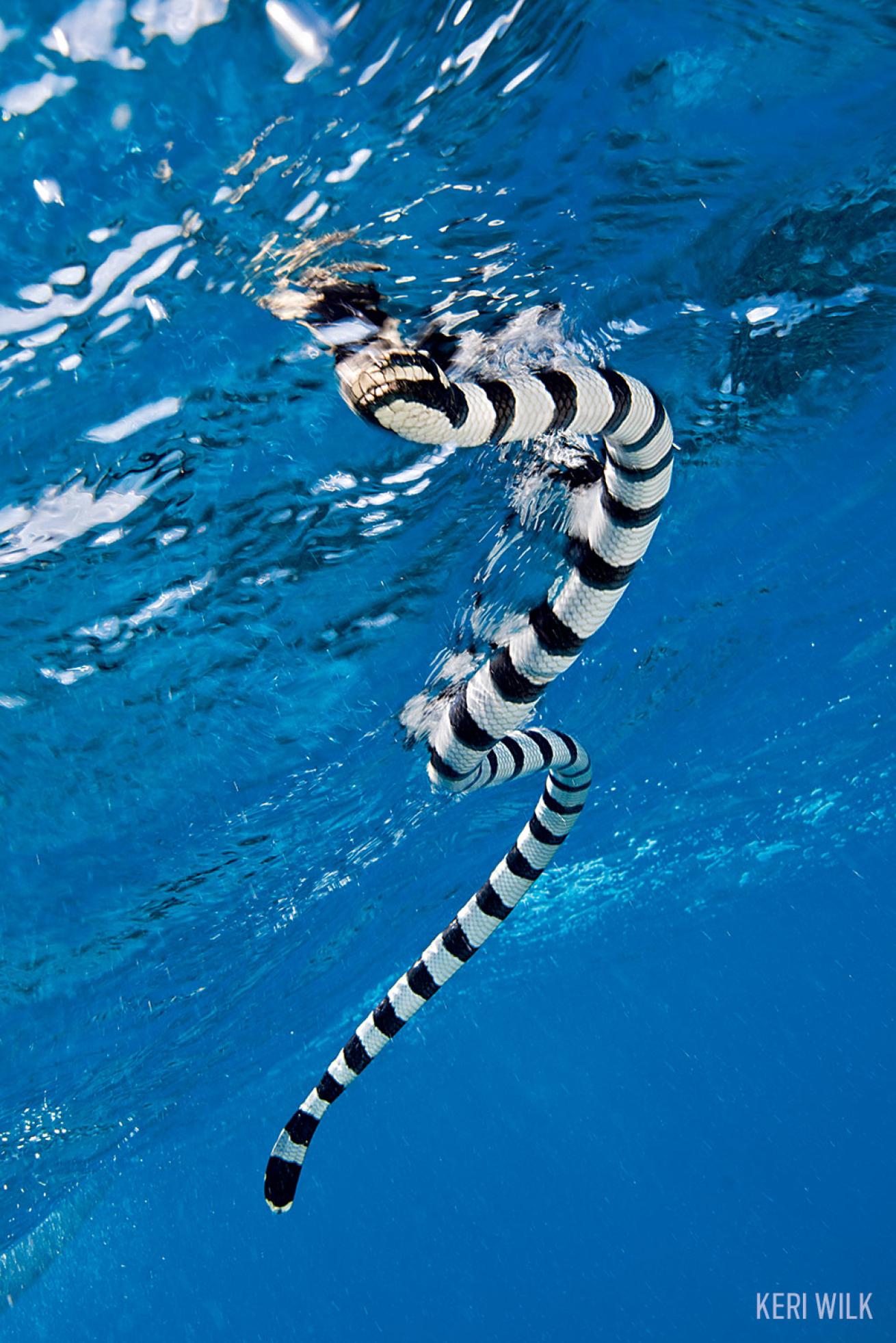
Keri WilkSea Krait Snake in Indonesia
Indonesia
Sea Kraits
“You have to be a little brave to get into the water with so many sea snakes,” says Laura Goddard, a manager with Arenui live-aboard, in Indonesia. “On one particular dive at Snake Ridge, the reef was writhing with snake spaghetti, about 60 snakes.” This isn’t just any of the some 62 species of sea snakes — all related to terrestrial cobras, all venomous — but the sea krait. This highly venomous species is found in the Indian Ocean and Coral Triangle, growing four to five feet but known to attain a length of nearly 10. “We typically see many banded sea kraits,” Goddard says, “and even though they’re highly poisonous, they are not at all aggressive toward divers.” Divers often experience the sea snake on personal terms: “These snakes are curious,” Goddard says. “They’ll swim straight for your mask or make a quick tongue flick against your leg, or just bump into your fins. You just need to relax because if you try to swim away, the snakes will actually chase you.”
Dive this now: Arenui Liveaboard - Indonesia
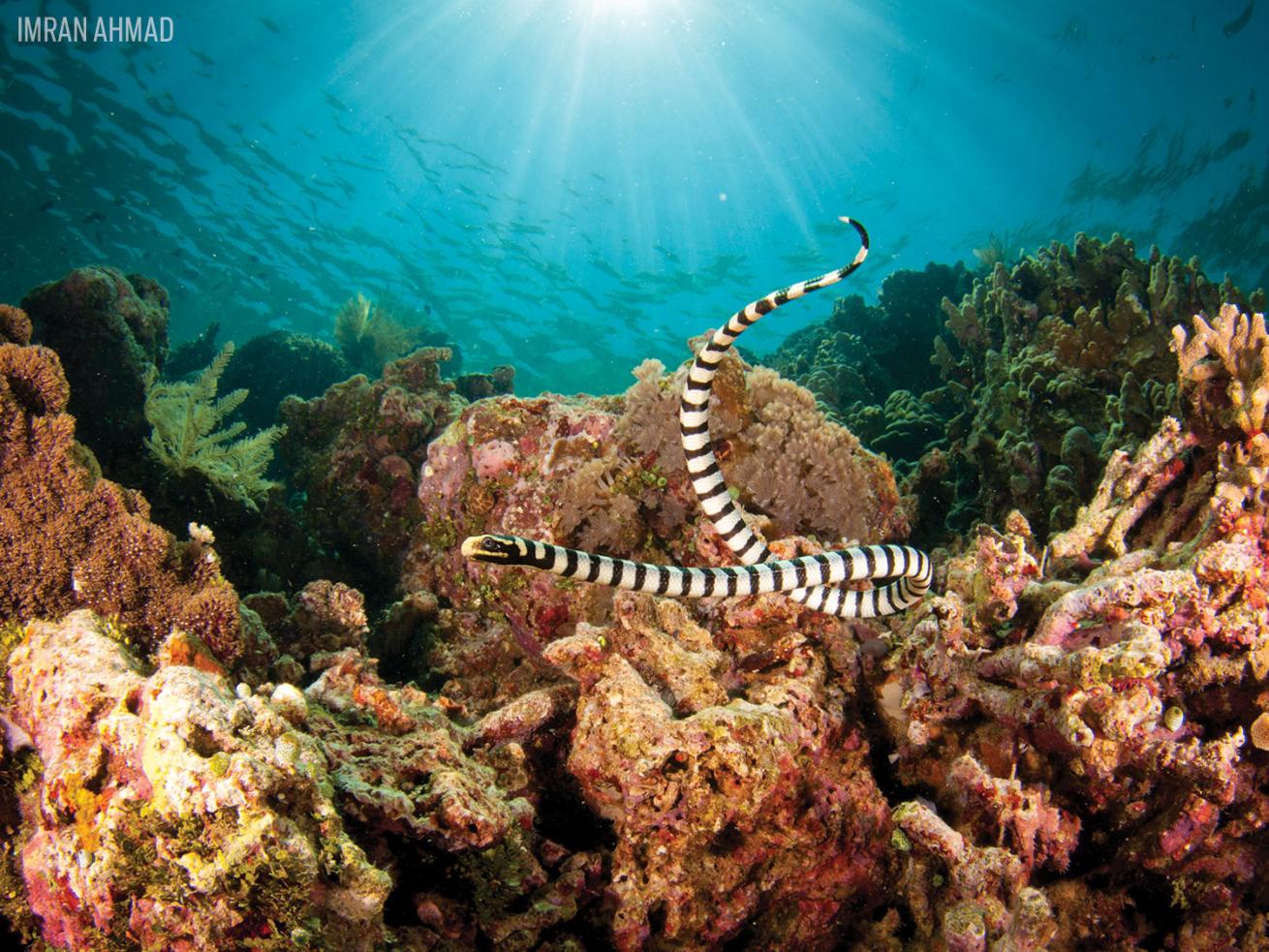
Imran AhmadSea Krait Sea Snake with Coral in Indonesia
In Indonesia, you can see as many as 60 poisonous sea snakes underwater.
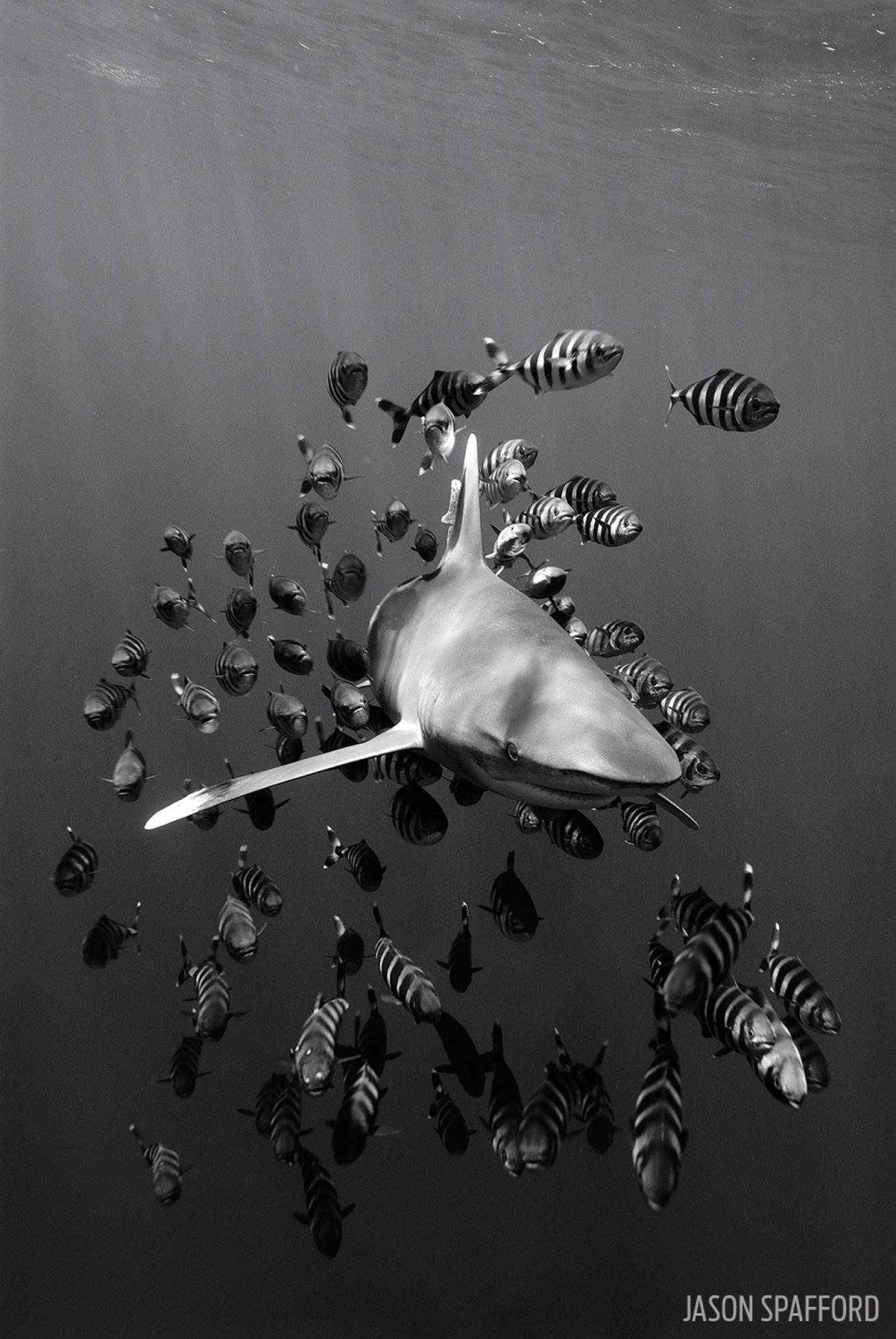
Jason SpaffordOceanic Whitetip Shark in the Bahamas
Bahamas
Oceanic Whitetips
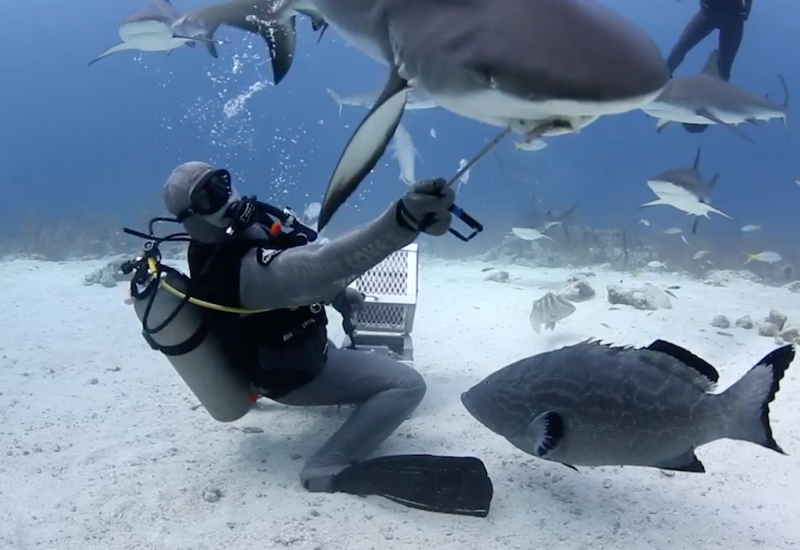
The stocky body of a top-line predator; telltale white-tipped, rounded fins; a hypnotically slow, undulating motion while searching for subsurface food – these are the hallmarks of the oceanic whitetip shark, a pelagic species described by Jacques Cousteau as “the most dangerous of all sharks.” Not to be confused with smaller, mild-mannered whitetip reef sharks, oceanic whitetips are known aggressors in numbers, swarming in feeding frenzies that have exacted substantial tolls on shipwreck survivors. “This is a very large shark, and its size alone is inspiring and awesome,” says Stuart Cove, owner of Stuart Cove’s Dive Bahamas in Nassau. Cove’s annual Cat Island Oceanic Whitetip Shark Adventure is widely considered diving’s premier opportunity to interact with the species. “The open-ocean encounters are conducted in deep-ocean water, where conditions are very clear. The sharks are very inquisitive and attracted by chum,” Cove says. “The experience in close proximity is absolutely thrilling.”
Dive this now: Stuart Cove's Dive Bahamas
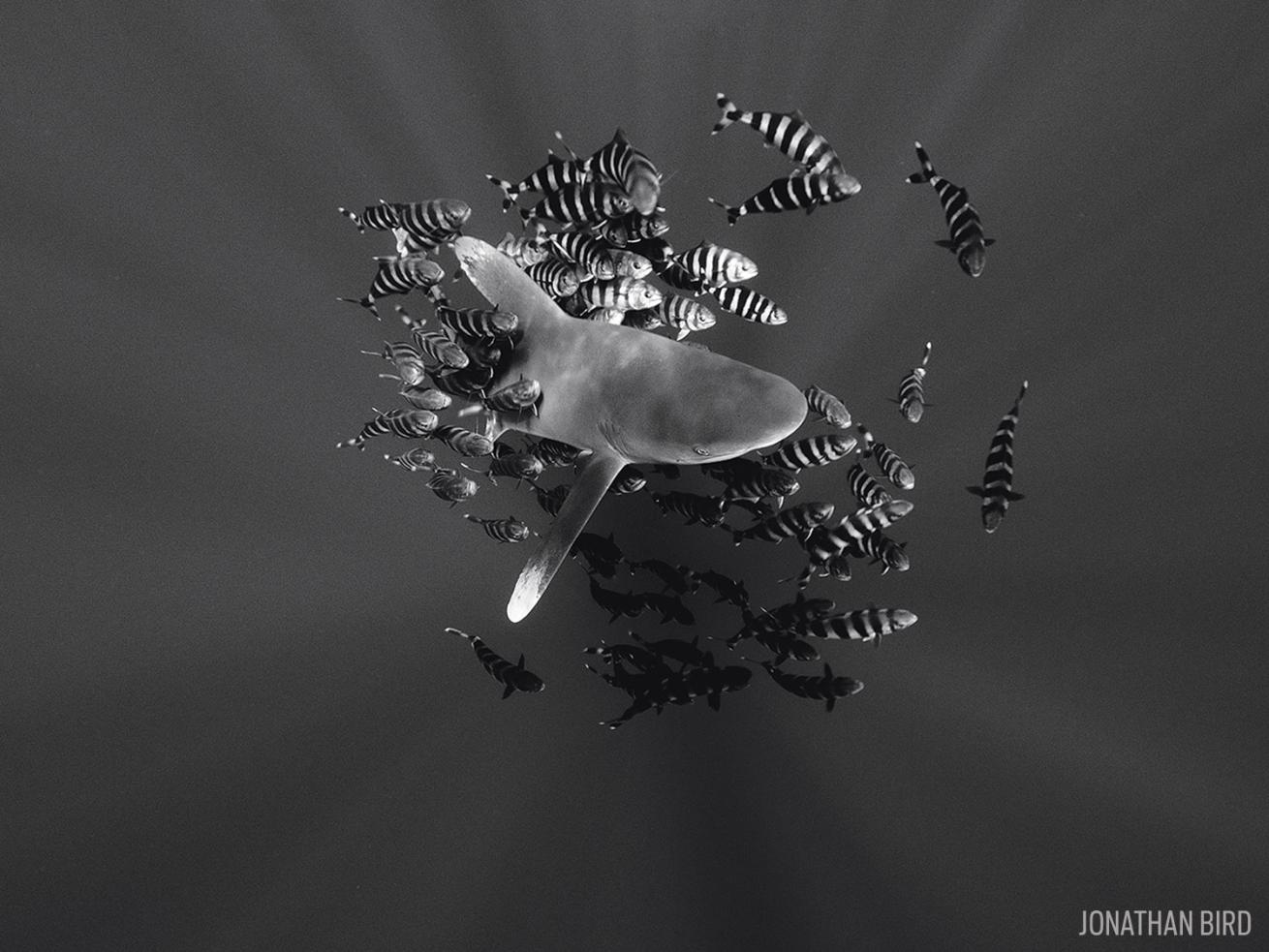
Jonathan BirdOceanic Whitetip Shark with fish in the Bahamas
Beautiful but sometimes terrifying, oceanic whitetip sharks are inquisitive creatures.
MORE OF THE WORLD'S MOST ADVANCED DIVING
Diving with Oceanic Whitetip Sharks in the Bahamas