

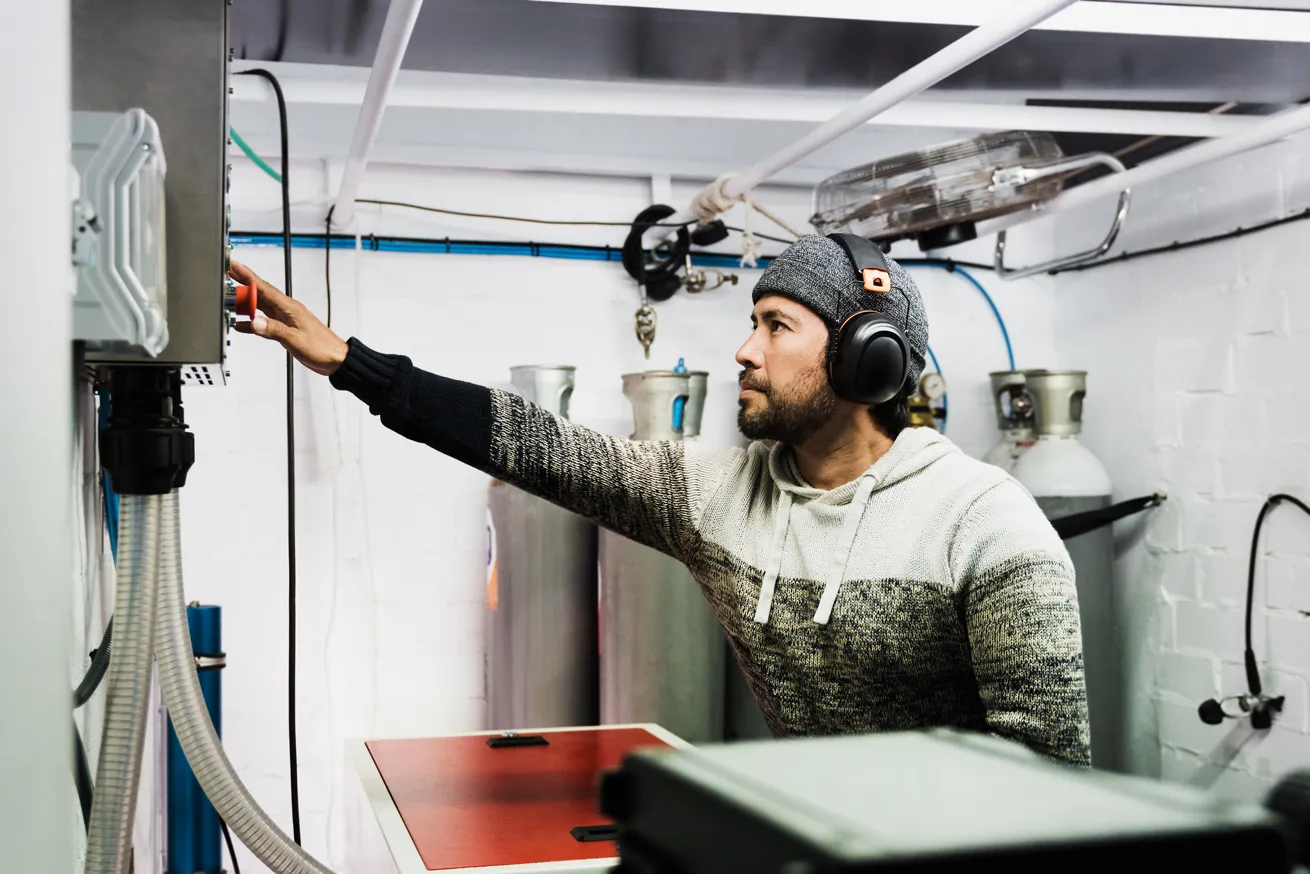
The fill station is a place to meet friends, swap stories and learn from more experienced divers as you prepare for your next dive. However, just because you are out of the water does not mean you should not stay observant. Understanding how fill stations should operate—and recognizing unsafe practices—can prevent life-threatening incidents.
The Anatomy of A Safe Fill Station
A fully pressurized AL80/11L cylinder stores energy roughly equivalent to half a stick of dynamite. In addition to mechanical hazards, breathing contaminated air can lead to chemical hazards such as carbon monoxide poisoning or other serious medical emergencies. Thus, as divers we should be familiar with identifying hazards at the fill station.
A fill station is more than a compressor and a few tanks. Key components include:
Related Reading: How to Travel Safely With Lithium Batteries
» Clean Gas Intake
If your fill station uses a compressor, the intake should be positioned away from exhaust fumes, fuel storage or chemical contaminants. This helps ensure that only clean, breathable gas is compressed into the tanks. The compressor room must be well-ventilated and cooled to ensure the system operates within safe limits. Open flames and other fire hazards need to be avoided, given the presence of oxygen at many stations.
» Filtration Systems/air Quality Testing
Compressors should use high-quality filters to remove moisture, oil and particulates. These filters must be maintained and replaced regularly according to manufacturer specifications. In addition, gas should be tested at least quarterly for contaminants. Divers should not hesitate to ask dive centers for their latest test results or maintenance records.
» Trained Operators
Arguably the most important part of the fill station is the personnel. Only trained and certified staff should operate the fill station. They must be familiar with both normal operations and emergency shutdown procedures.
» Fill Hoses and Piping
Fill hoses should be short and fitted with restraints to prevent injuries—in the event of a hose rupture, hoses can become whips and lead to serious injury. Also keep an eye out for rust draining from gauge cluster hoses.
Cylinder Safety During Filling
Beyond the fill station itself, pay attention to the cylinders being filled:
» Visual and Hydrostatic Inspection
Cylinders must be inspected prior to filling. A visual inspection is typically required annually, while hydrostatic testing is mandated every five years in the U.S.
» Secure Cylinders and Hoses
Restrain tanks during filling to prevent them from becoming projectiles in the event of a valve failure or burst disc rupture. Also be cautious and avoid cross-threading the fill hose and the tank valve.
» Fill Rates and Pressures
Tanks should be filled slowly to prevent overheating and only be filled to their rated capacities.
Related Reading: How to Safely Enter and Exit the Water From a Boat
What Divers Should Do
Although you may not be operating the fill station, you can still take steps to protect yourself:
» Ask Questions
Don’t hesitate to ask about air-quality testing and inspection records.
» Maintain Your Cylinder
Ensure it is within its inspection dates and shows no obvious signs of damage prior to going to the fill station.
» Test the Gas
Don’t forget to analyze the gas contents at the fill station. Tasting the gas prior to diving can help prevent potential exposures to contaminants. Any gas that tastes off should not be dived with.
Final Thoughts
Fill stations are not only a place to bond after a dive—they also represent a vital link in the chain of dive safety. Staying informed, asking the right questions and choosing reputable operations helps ensure that your next breath underwater is as safe as it is unforgettable. For more information on fill station safety, check out DAN’s website, dan.org.


