

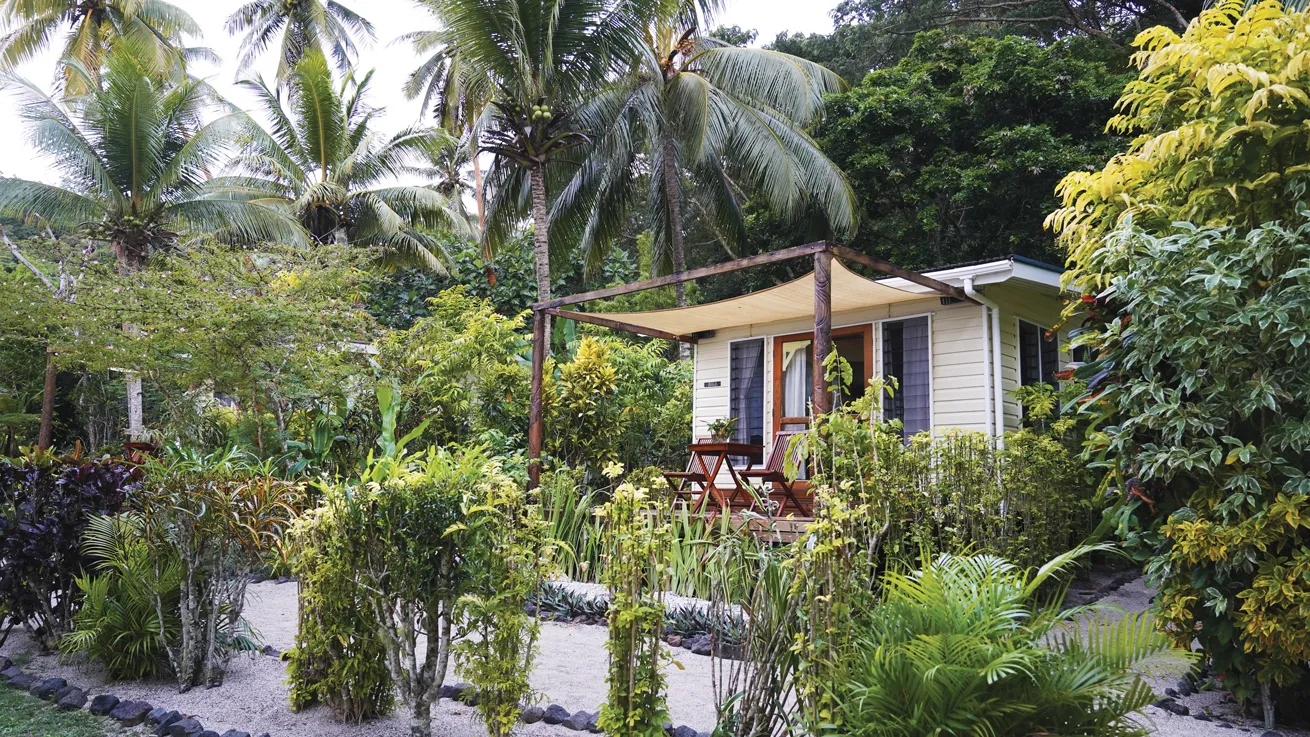
Chantae RedenGuests at Sau Bay stay in one of a handful of bay-facing bures (traditional Fijian dwellings)
A shy black, white and orange Clark’s anemonefish catches my eye as I float above, enchanted by its dancing anemone home. The ping of a tank banger pulls me out of my trance. I’m at Sanctuary Reef, a five-minute boat ride from Sau Bay Resort.
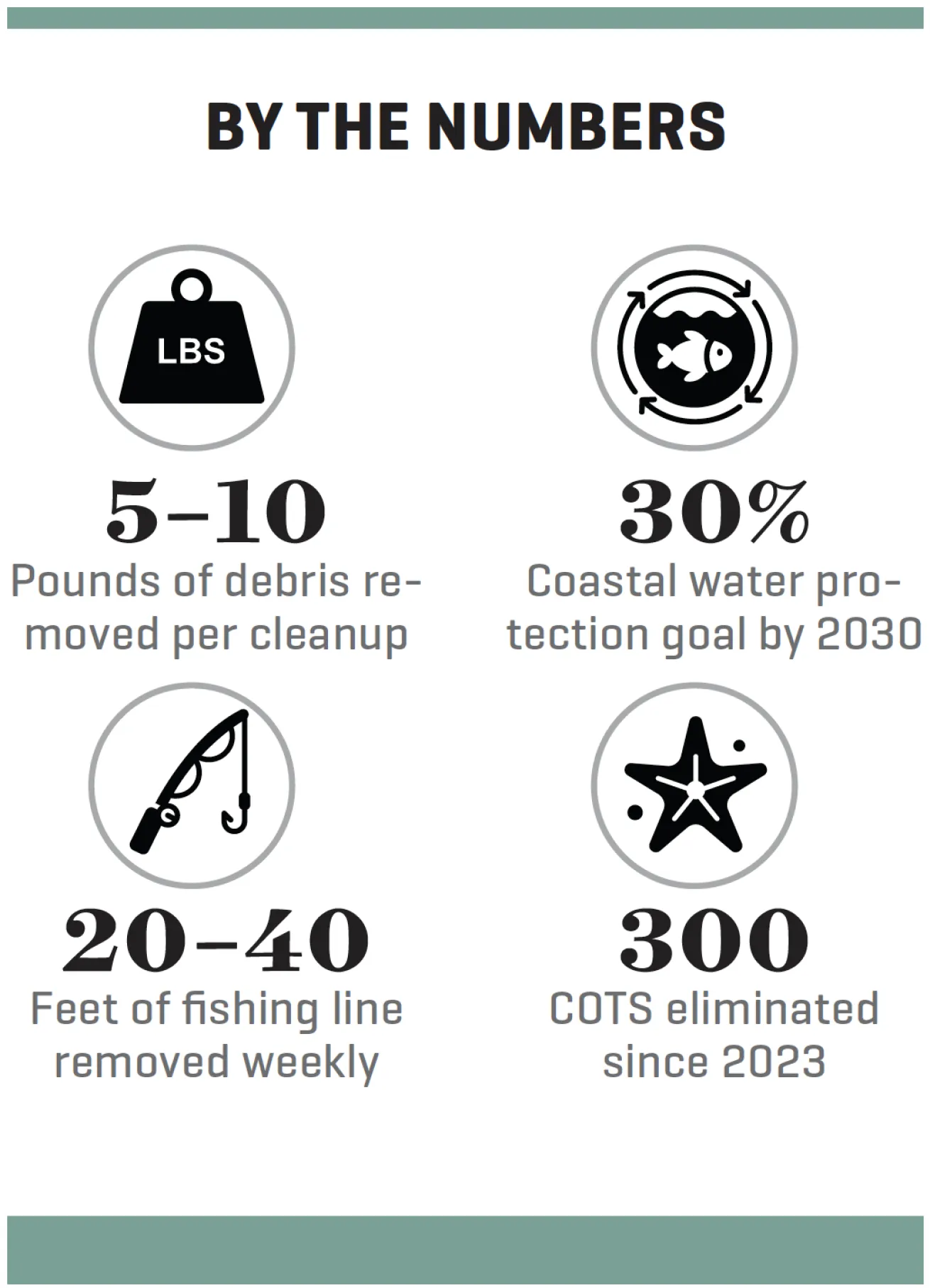
My dive guide, Lotu, and the resort owner, Leo Rebele, are on a mission to control crown-of-thorns starfish (COTS) populations on the reef. Guests act as spotters, and Lotu handles the removals.
These coral-eating echinoderms, whose population booms devastate reefs across the Indo-Pacific, can grow to over a foot in diameter and have very few natural predators. Left unchecked, a COTS invasion can decimate a large stretch of reef in just a few months.
Leo has spotted one of these spiky starfish on a large coral shelf, and the damage is apparent. Half the coral is blindingly white; the other half is a tangerine hue on its way to being devoured. Lotu carefully injects the starfish with vinegar, which is lethal to the starfish but relatively harmless to the surrounding ecosystem. The creature loosens its grip.
I see why Leo and Lotu need extra eyes. The next COTS is well-camouflaged in a reef crevice, and I don’t see it until Lotu’s pointer directs my gaze. Nearby, I spot another wrapped around a vibrant staghorn coral. By the time our tanks run low, we’ve removed around 30 starfish. Leo estimates we’ve covered roughly one-fifth of the reef.
“The goal isn’t eradication, but balance—especially since their predators, like the triton snail, have been overharvested,” says Leo. His greatest fear is that COTS will reach Fiji’s Rainbow Reef.
Related Reading: The World's Largest Artificial Reef Project
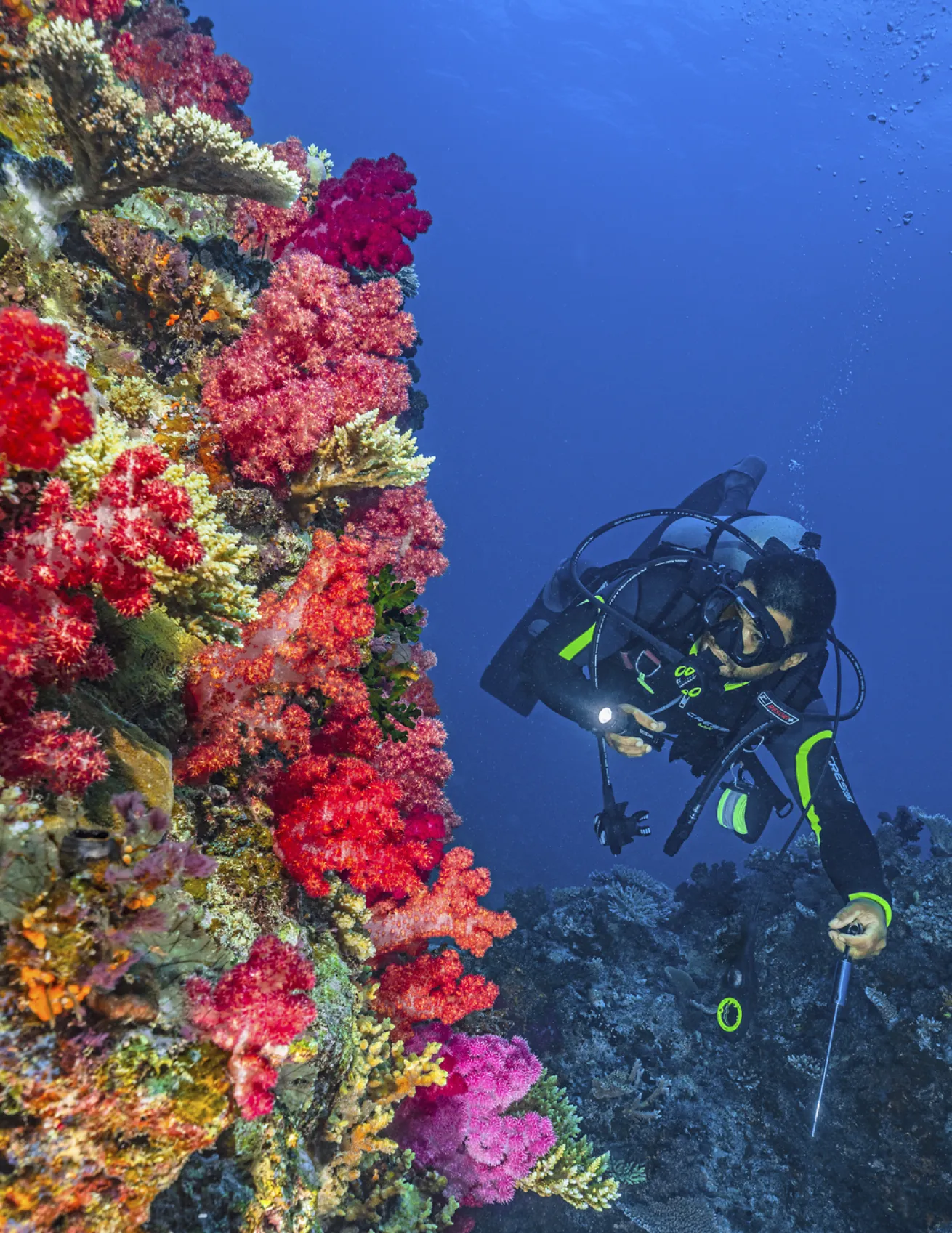
Courtesy Sau Bay ResortDivers can help preserve the vibrant coral life Fiji is known for
Rainbow Reef, the reef that likely gave Fiji its title as the Soft Coral Capital of the World, lies in the Somosomo Strait between the islands of Taveuni and Vanua Levu. Nutrient-rich tidal flows feed fields of soft coral that bloom like underwater gardens. Aptly named dive sites like the Great White Wall, Rainbow’s End and Purple Wall erupt in color under the right conditions.
And when you look into the blue, there are often pelagics cruising there too. Seasonal currents support a vibrant ecosystem of reef sharks, manta rays and barracuda.
Sau Bay Resort, just a 10-minute boat ride from Rainbow Reef, is the region’s first PADI Eco Dive Center. Leo and Jeanne Rebele took ownership during the COVID-19 pandemic while living in Southern California.
“I Googled ‘dive resorts for sale in Fiji,’” Leo tells me, leading me to wonder why I didn’t commit more to my lockdown daydreams.
For Leo, an oceanographer and marine resource specialist, conservation was a core motivator. “I didn’t want just any resort—it had to be a dive resort,” he says. “I fell in love with diving and with Fiji.”
Related Reading: 10 Reasons to Book a Family Dive Trip to Fiji
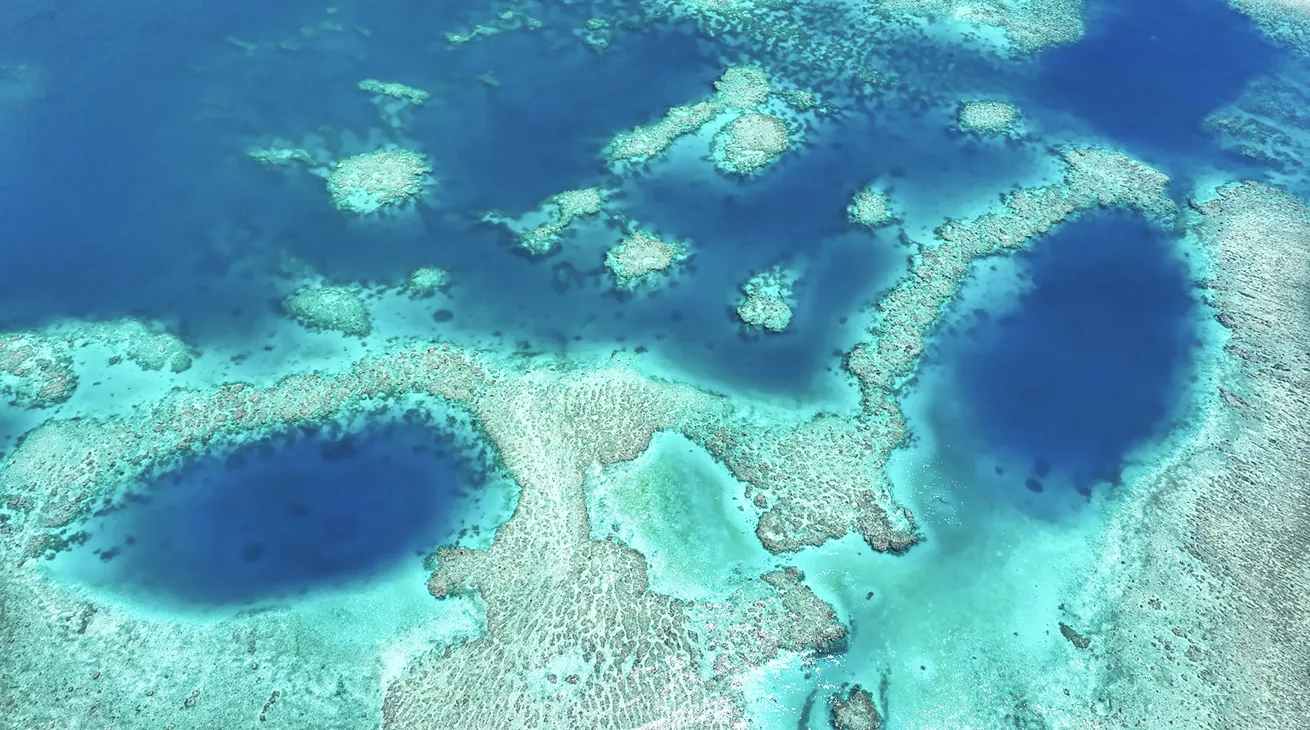
Courtesy Henthorne.ComWelcoming shades of blue beckon to divers as they fly into Taveuni
He explored Fiji from Kadavu’s passages to the coral gardens off Vatu-i-Ra, but kept coming back to Rainbow Reef. “Sau Bay stood out not just for its beauty, but also for its proximity. Being just 10 minutes away from Rainbow Reef lets us run more conservation programs and involve guests.”
That ethos extends to operations. They’ve eliminated single-use plastics, gone paperless in guest operations and aligned with the Green Fins Code of Conduct, a comprehensive list of environmental best practices for dive operators. The resort has cut diesel use drastically by switching from desalination to a nearby freshwater spring. Piping gravity-fed water to the resort eliminated the need for energy-intensive desalination, reduced disposable filters and brought running water to the neighboring community. Solar may be next. “We’re working around limited sunlight because of the trees, but even a 50 percent cut in generator use would be huge,” Leo says.
The resort is also shrinking its transportation footprint. Fuel is now sourced from a closer base, and they plan to add smaller, more efficient boats for two- to four-diver charters.
Beach cleanups are regularly offered to guests, often paired with cultural exchange. Through Tourism Fiji’s Loloma Hour, guests who participate in cleanups earn complimentary village visits. Debris collected is counted and uploaded to the Clean Swell app. Divers can also earn discounted dives by taking part in the COTS removal program. The resort has adopted Sanctuary Reef and the Great White Wall through PADI AWARE Adopt the Blue, where dive centers monitor the ongoing health of the reef. Every dive with Sau Bay Resort is a Dive Against Debris.
On CoralWatch dives, guests receive briefings about how to collect reef health data for CoralWatch, a monitoring effort that has been collecting coral bleaching data since 2002. Using a simple color chart, divers record coral vibrancy and bleaching, uploading the results for researchers worldwide, who can use this research for conservation efforts.
Related Reading: Manta Resort's Reef-Recovery Initiatives
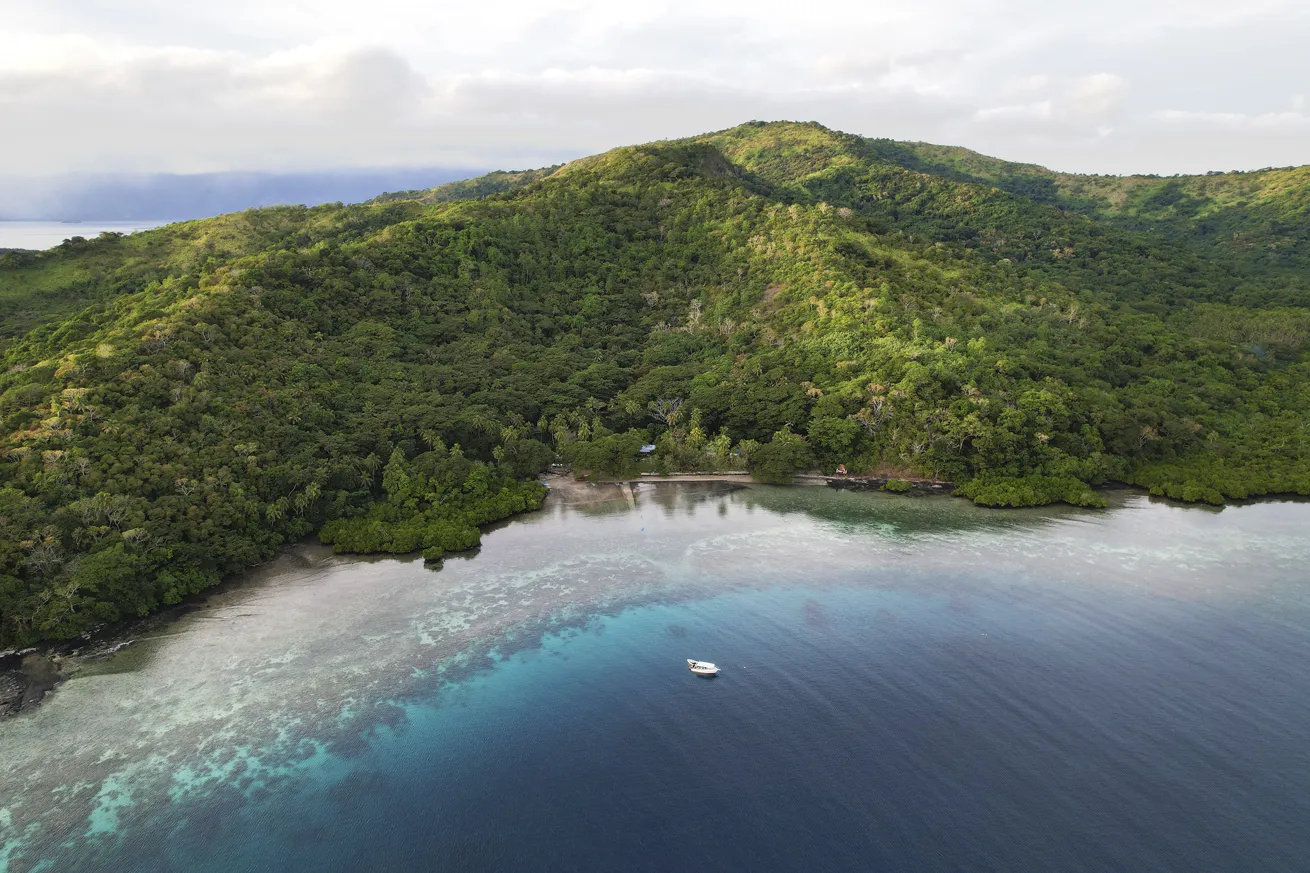
Chantae RedenSau Bay’s modestly sized property boasts expansive views of the bay
In recent seasons, they’ve watched the Great White Wall swing from vibrant to pale and back again. These cycles, likely tied to temperature anomalies and current strength, remind divers that reefs are living, dynamic systems—and they can become easily stressed too. Coral bleaching plus crown-of-thorns predation could cause irreparable damage.
Sau Bay is working with PADI AWARE and nearby operators to advocate for formal protection. “It’s incredible that Rainbow Reef is not a marine protected area,” Leo says. “It’s one of the most important reefs in Fiji.”
With Fiji’s national goal of placing 30 percent of its coastal waters under protection by 2030, Rainbow Reef is a prime candidate thanks to its biological diversity and economic profitability for dive and tourism operators. Fijian communities already practice traditional marine management through tabu (from which the word taboo is derived), zones where fishing is temporarily banned. The challenge, as with many conservation efforts, is capacity. Aligning government, operators and communities is no small task.
Staying at Sau Bay Resort is an adventurous endeavor. Guests arrive via flights into Taveuni’s Matei Airport, followed by a 30-minute boat ride. A handful of bungalows overlook a mangrove-fringed bay, accommodating over a dozen guests at a time. The intimate setup gives guests a say in shaping their days—snorkeling with manta rays, diving Rainbow Reef, visiting villages, enjoying private beach picnics, lounging on the floating bar, planting mangroves, receiving seaside massages or hiking to lookouts. It’s a secluded, customizable escape where every day can be as adventurous (or relaxed) as you choose.


