

On January 1, 2013, as the rest of the U.S. celebrated the ringing in of the New Year, I was hopping on the first plane of seven, heading out to one of my top 10 dive destinations in the world, Indonesia. Losing a day traveling across the Pacific, plus having an extra cushion just in case my camera cases got lost in transit, we boarded the Dewi Nusantara in Sorong on January 5 for 11 days of an underwater odyssey. We were off to explore Raja Ampat, the epicenter of coral and marine diversity, a place where no two islands are alike and no two dives the same.
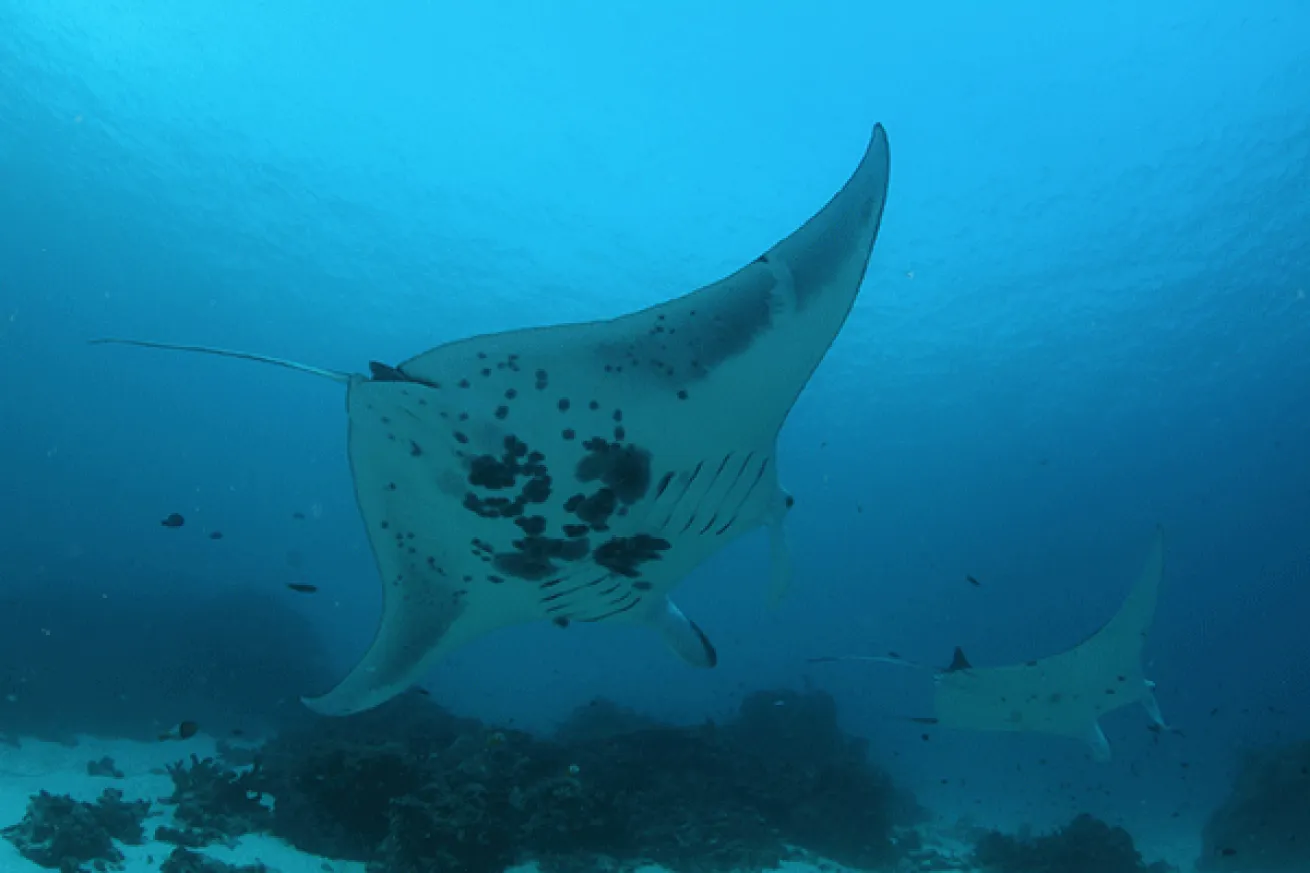
Annie CrawleyA manta soars in the blue.
Scuba diving means something different for everyone. For me, it is my best days, both in and out of the office. My travel companions came from four continents and joined me for work, conservation, underwater photography, video … and to have the time of our lives. Dive time on the Dewi starts at 7:30 a.m., and by dive day 2, there was not a soul on the vessel who wanted to miss the wake-up call.
Every crew has a different ritual for their dive briefings. Aboard our vessel we were diving with one of my long-time friends, Divemaster Yan and Cruise Director Wendy. Destination for the morning dives: M_ _ _ a Sandy, a dive to look for the animals not to be named. You see, on this boat, if you said the “M” word before diving, there is a chance you will be jinxed and not see the animal not to be named. Thank goodness we had the briefing the night before.
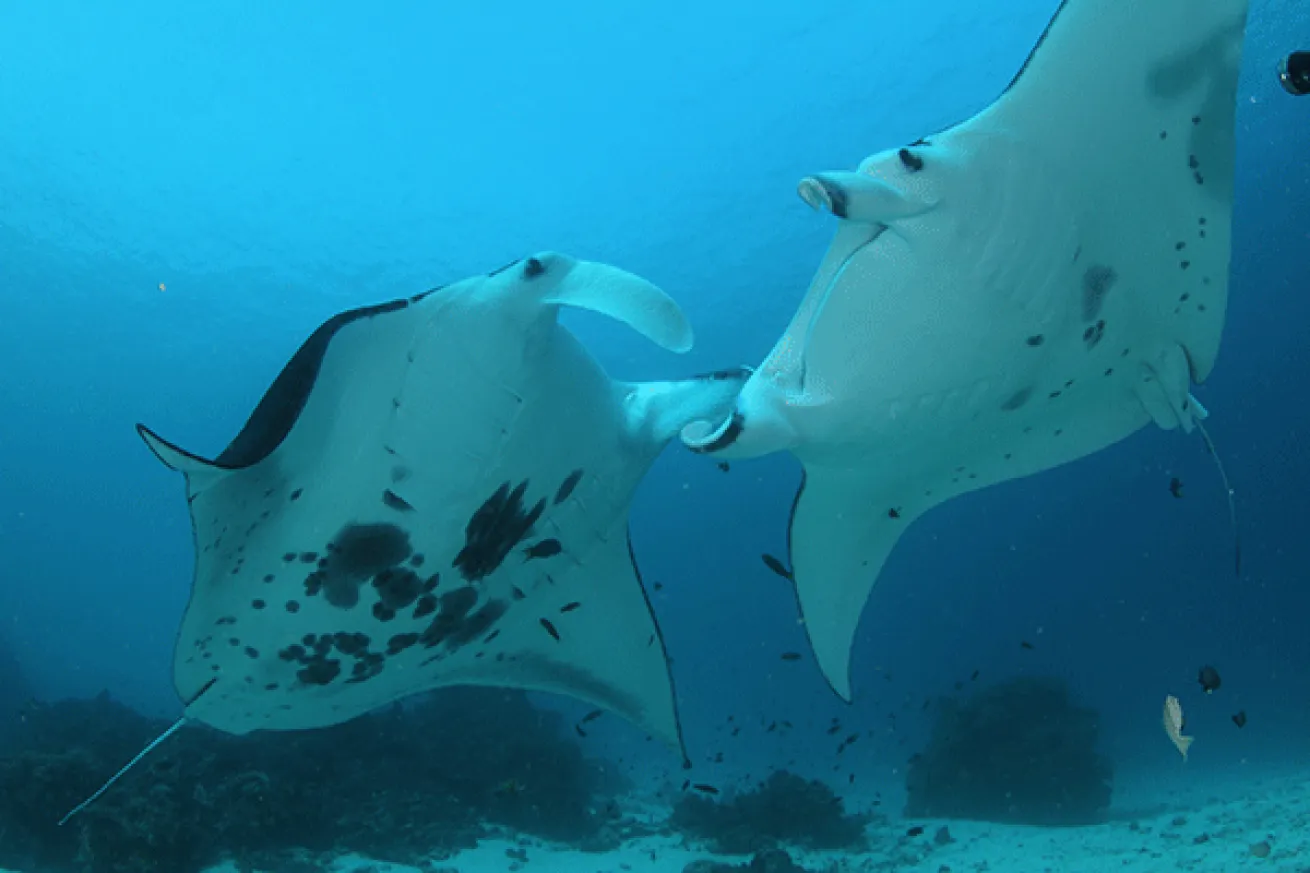
Annie CrawleyManta Sandy is a cleaning station for these pelagic giants.
As we descend, we swim along a sandy bottom to a line of rocks, taking care not to kick up the sand. Once we arrive at the rocks, we position ourselves behind them. We had been instructed not to cross the line as we need to give the animals space. We are there simply to observe.
Manta Sandy is a very special place as it is a cleaning station where many mantas can be seen above two coral bommies waiting patiently to get cleaned by wrasses and other cleaners on the reef. Max Ammer, a diving pioneer in the Raja Ampat region, realized that with the increase of divers coming to the region and people not understanding the importance of keeping their distance, a boundary line was needed which divers stay behind in order to observe the animals. He discovered Manta Sandy and wants to ensure it stays protected.
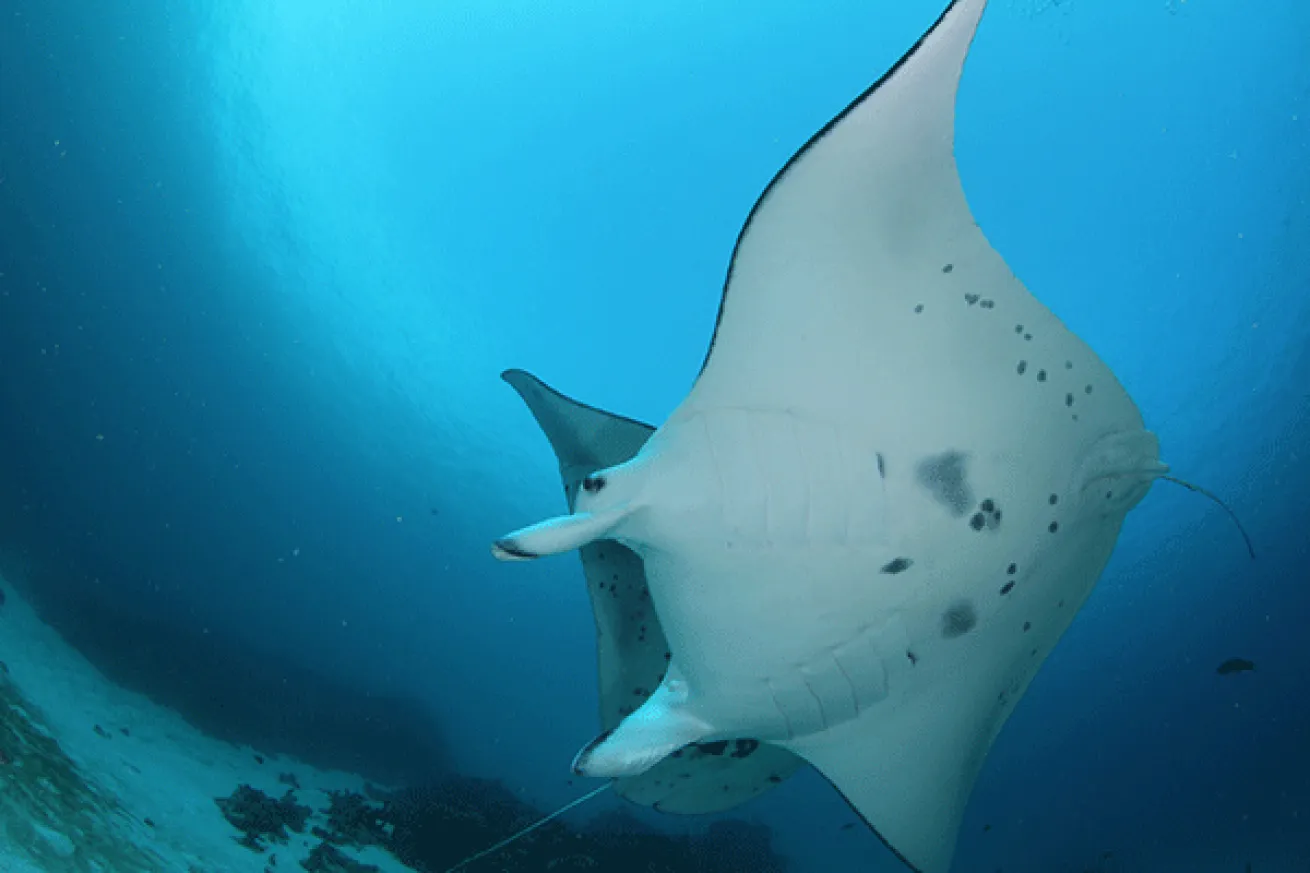
Annie CrawleyEach manta is unique.
So there we were, many people with sleep still in their eyes, breathing underwater, sitting patiently on the bottom, hoping to see the animal that we didn't name while preparing for the dive. Within minutes of descending, the first of many mantas showed her spots — and what a glorious sight this is. Like a cloud passing over the sun, light is blocked for a moment. More than half of our group are "manta virgins," and this is their first experience underwater with these incredible animals. A few screams could be heard through regulators, and then silence as we sat together in awe.
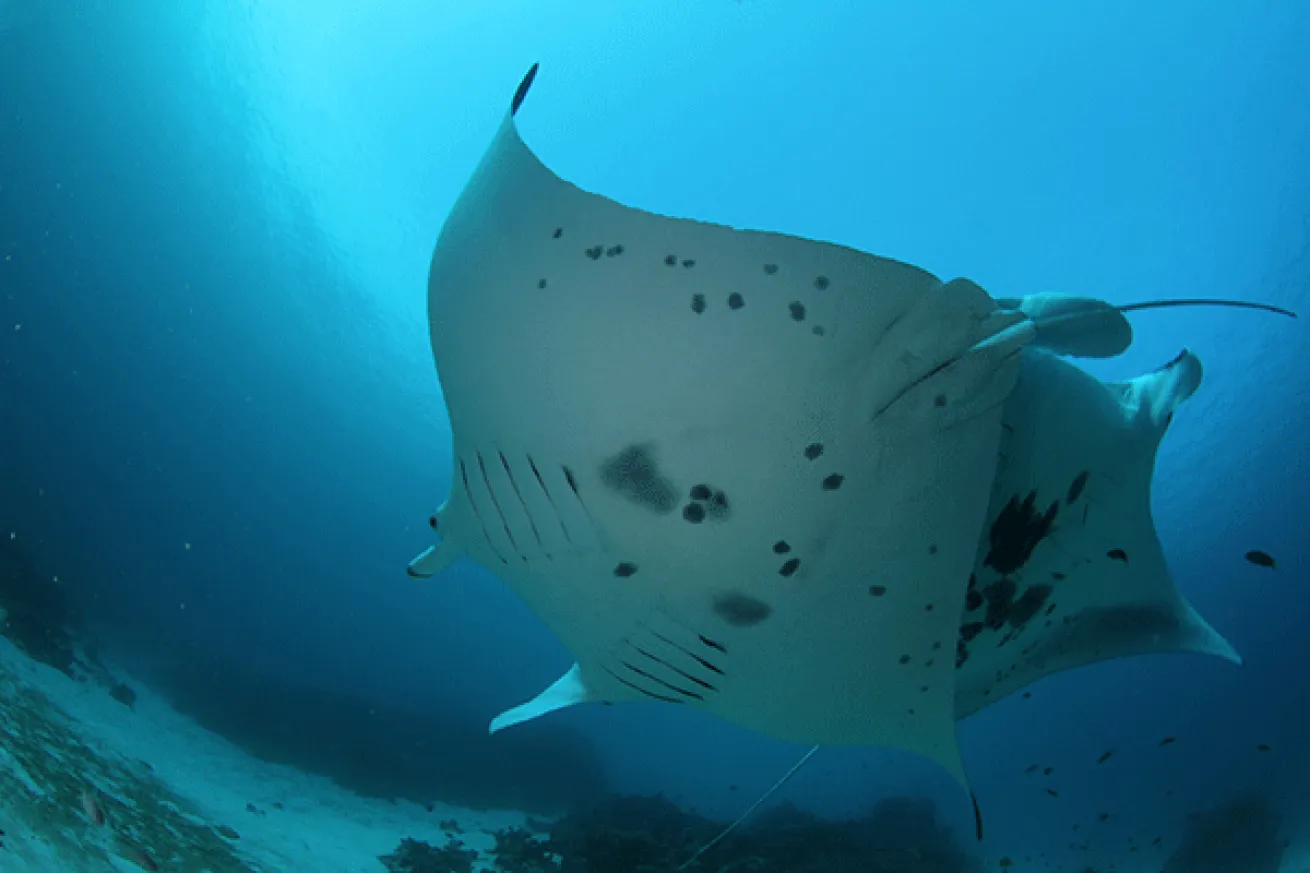
Annie CrawleyMantas' wingspans can measure 18 feet.
Nicknamed devil rays because fishermen thought they looked like the devil when their cephalic lobes are curled up, these gentle giants have no stingers for protection like their cousins. A manta ray's only form of self-defense is speed —these animals can swim up to 25 mph. They are harmless as they are planktivores. Their gills are lined with gill rakers. When they open their mouths to feed, the food is trapped in the gill rakers.
Like all fish, mantas need to get cleaned. Because they use their gills to breathe and feed, you will often find them visiting cleaning stations right after feeding. Mantas will often spend entire days going between feeding stations and cleaning stations. Manta rays are fish in the elasmobranch family, along with sharks and rays. Their skeletons are made of cartilage, lighter than bone, and extremely flexible. I learned a lot about manta ray behavior during a month long expedition in Palau with Sam’s Tours. My latest production on sharks and rays features a lot of this behavior, captured in high-definition video.
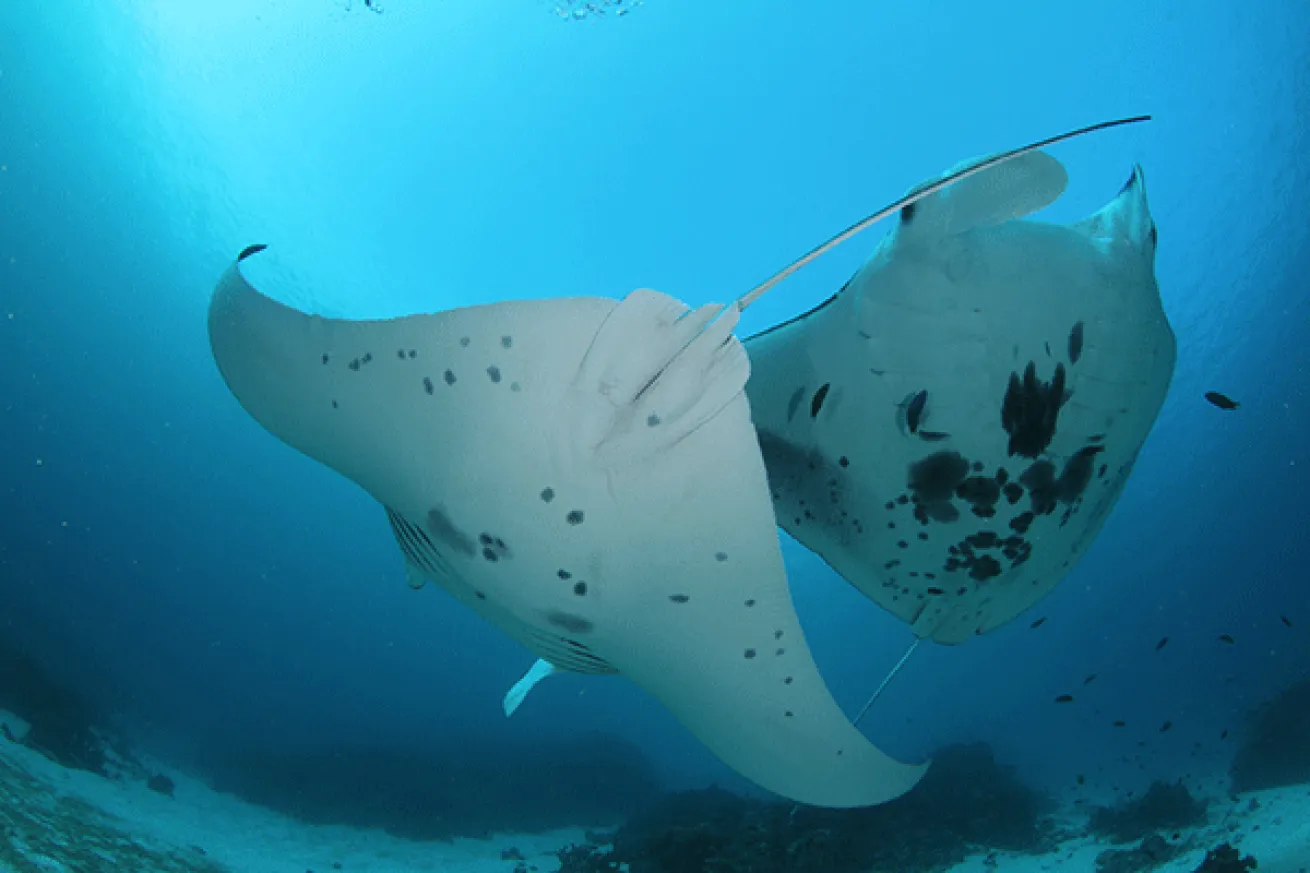
Annie CrawleyMantas are close cousins of sharks.
We sit behind the line watching different mantas come up and park themselves above the coral heads. To my absolute dismay, I had a super-wide lens on my camera, a Tokina 10-17, and the mantas were just far enough away that I could not get a great shot of them as the sun was still low on the horizon. So even though I was enjoying the experience, as a photographer and filmmaker, I also needed to get the shot. So I began my underwater imaging ritual and started mental telepathy and talking to them. Yes, you read that correctly. I am giving away one of my secrets: I talk to the animals … all dive long, camera or no camera, I have conversations with the animals I film. I believe it is the conversations I have with the animals that helps me capture amazing behavior. (The fact that I research before I go, talk with scientists, am a dive instructor and slow breather might help too.) So as we witnessed this amazing dance, I began my silent messaging.
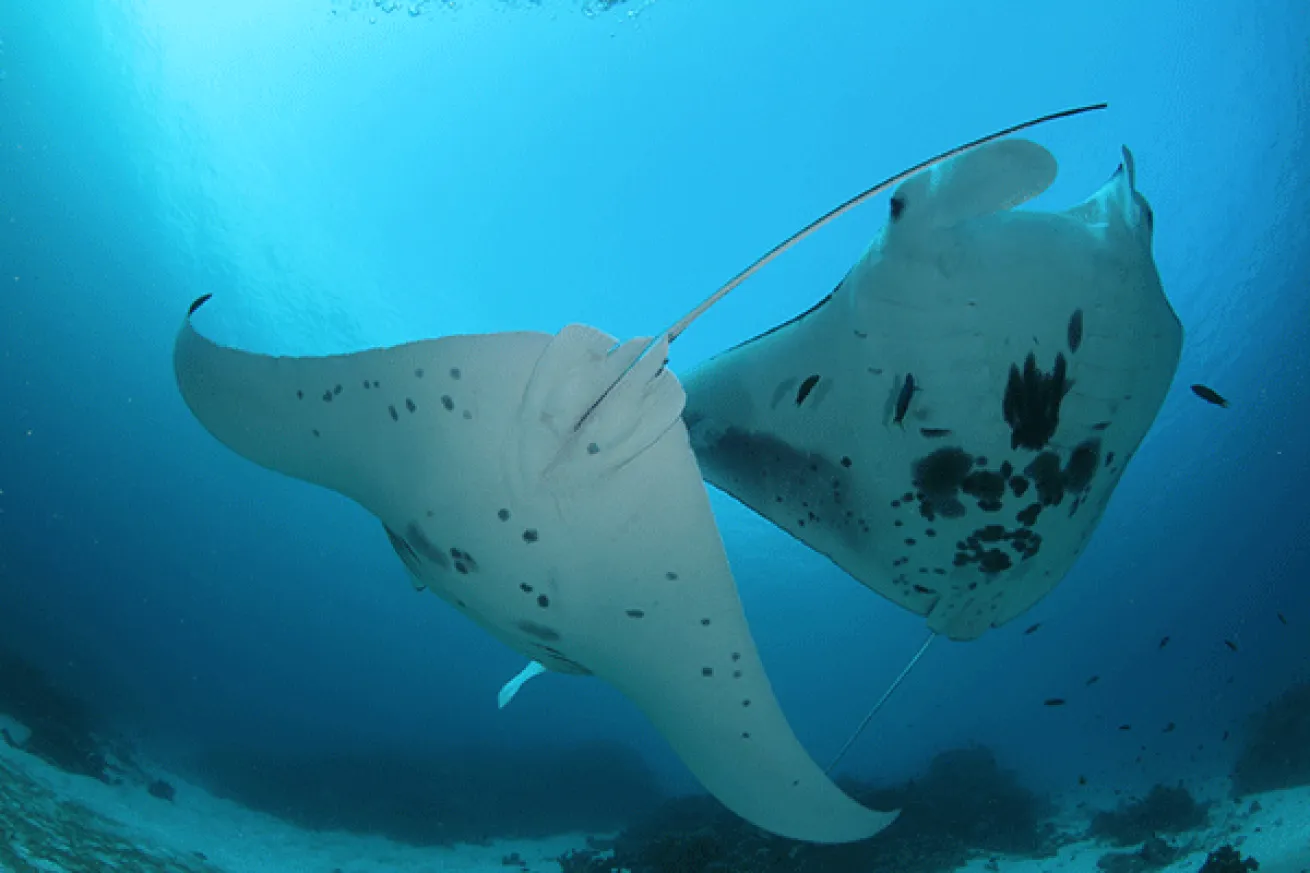
Annie CrawleyA little "manta whispering" helped the author and underwater photographer, Annie Crawley, to get this shot.
A giant female approached one of the coral bommies and began dancing. The next thing I knew, a male was tailing her, following every move. I can tell the difference between them because male rays and sharks have two external claspers for reproduction, while the female has only fins. So as the two of them start dancing, I am in heaven, capturing their dance as best I can from far away with my wide-angle lens — all the while coaching them to come closer. And in the next moment, I know they have heard me. Out of a line of 20 divers watching them, they come and circle right over my head. The series of images is from the one moment they left their cleaning station to circle right above my head.
If you are lucky and hit Manta Sandy when you visit Raja Ampat, you can potentially see these same manta rays. Just as you have a unique fingerprint, manta rays have unique fingerprints too. The patterns on their undersides are their fingerprints. Dr. Andrea Marshall, also known as the Manta Queen, began the first worldwide data base of manta rays. These gentle giants need to be protected as they are often hunted for their gills, popular in Chinese medicine. It is said a single manta ray is worth a million dollars alive and about $150 dollars at the fish market. I cannot put a dollar amount on the feeling you receive when you are in the ocean diving or snorkeling with these magnificent animals.
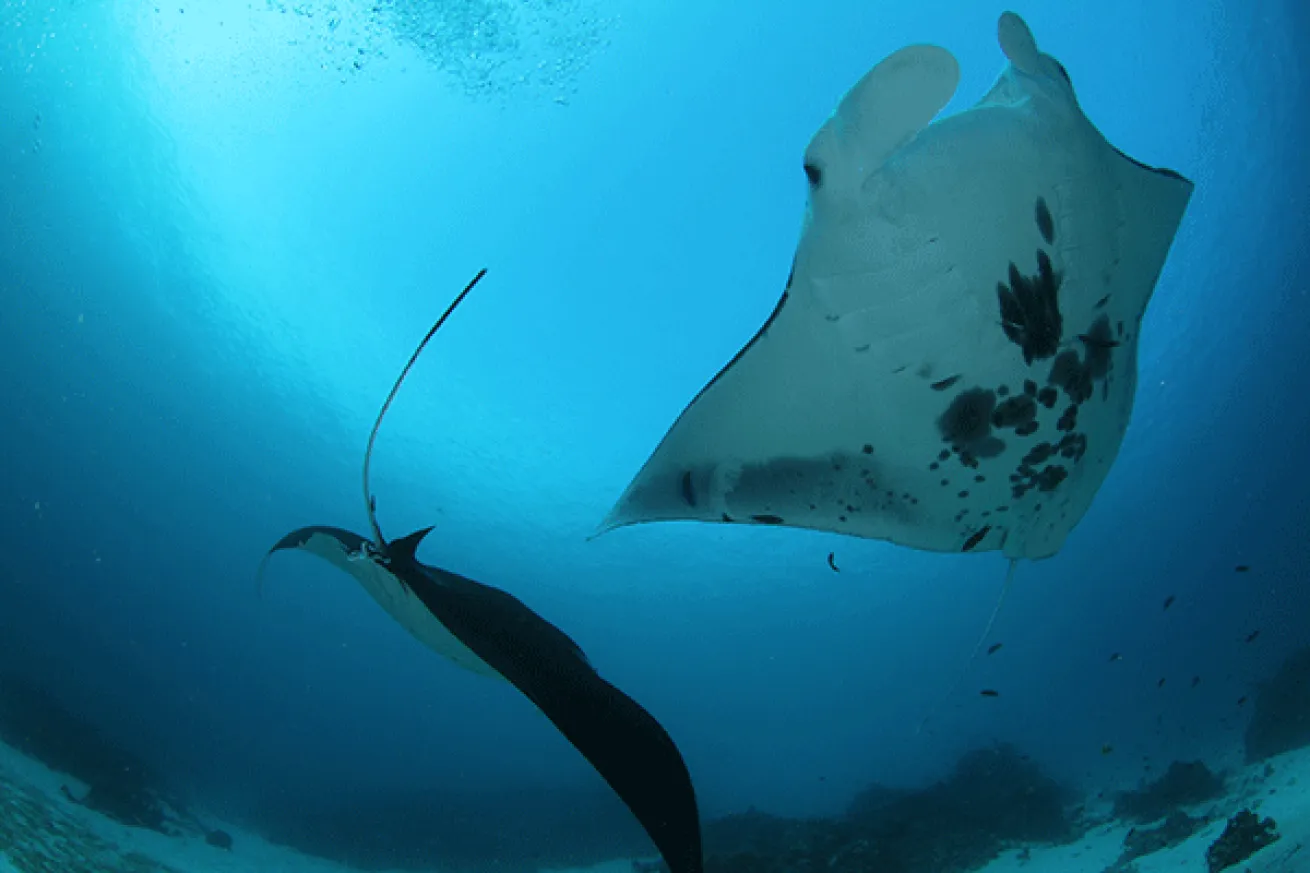
Annie CrawleyThere are two types of manta rays found in the ocean.
The mantas in the photo gallery are Manta alfredi. There are two known species of mantas, Manta alfredi, the common reef mantas, and Manta birostris, the oceanic mantas. You can tell the differences between the species by observing the spot patterns under their fifth gill on their undersides, or if you look just above the tail on the dorsal side. Manta alfredi have no remnant spine above the base of their tail like their cousin Manta birostris.
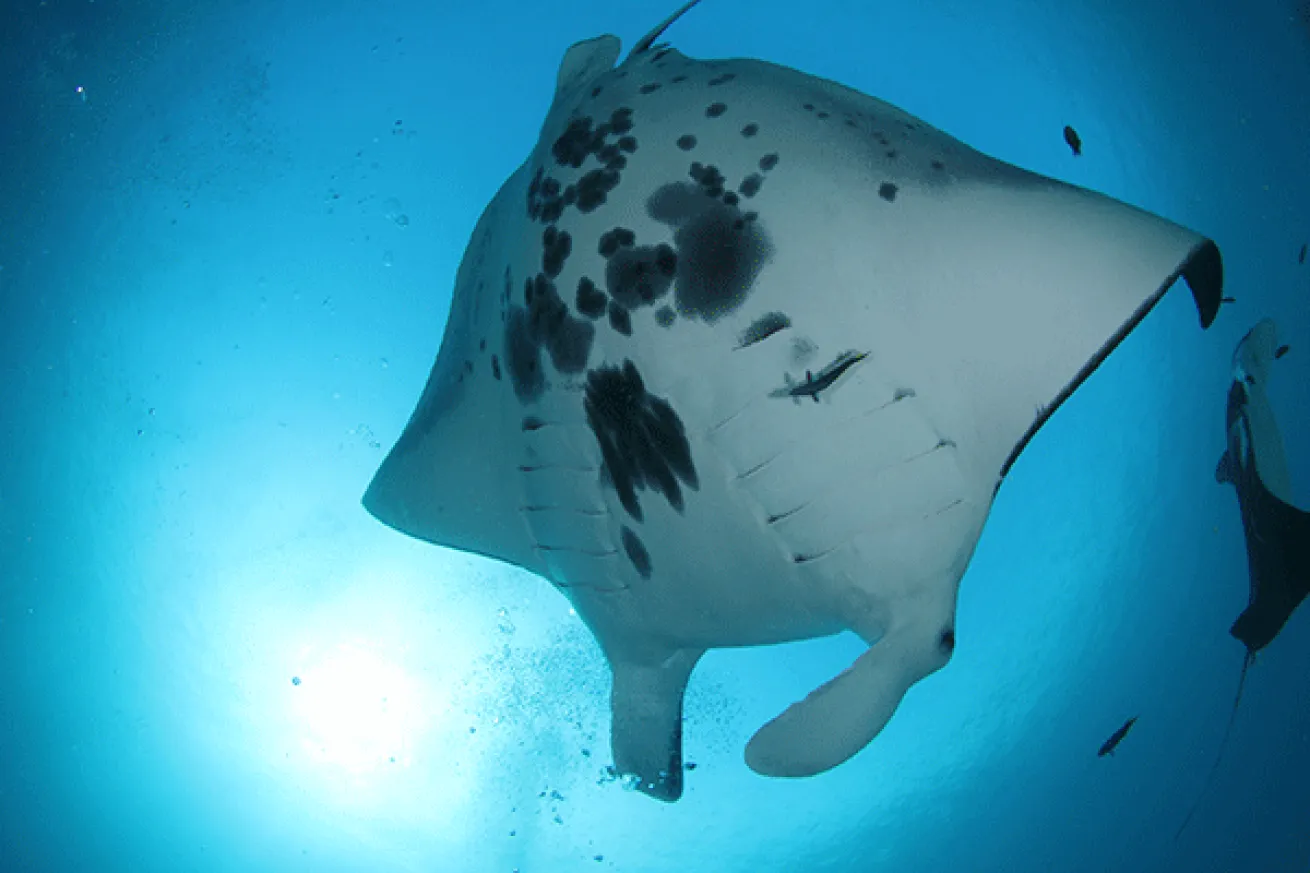
Annie CrawleyMantas can be identified by the markings on their undersides.
The ocean is less explored than outer space, and Raja Ampat is definitely one of the most magical places on Earth. The people of Raja Ampat understand the importance of a protection and live at one with nature, understanding their dependency upon a healthy ocean. Mantas are facing a lot of pressure with trans-migration and lack of enforcement because the size of the area is so large.
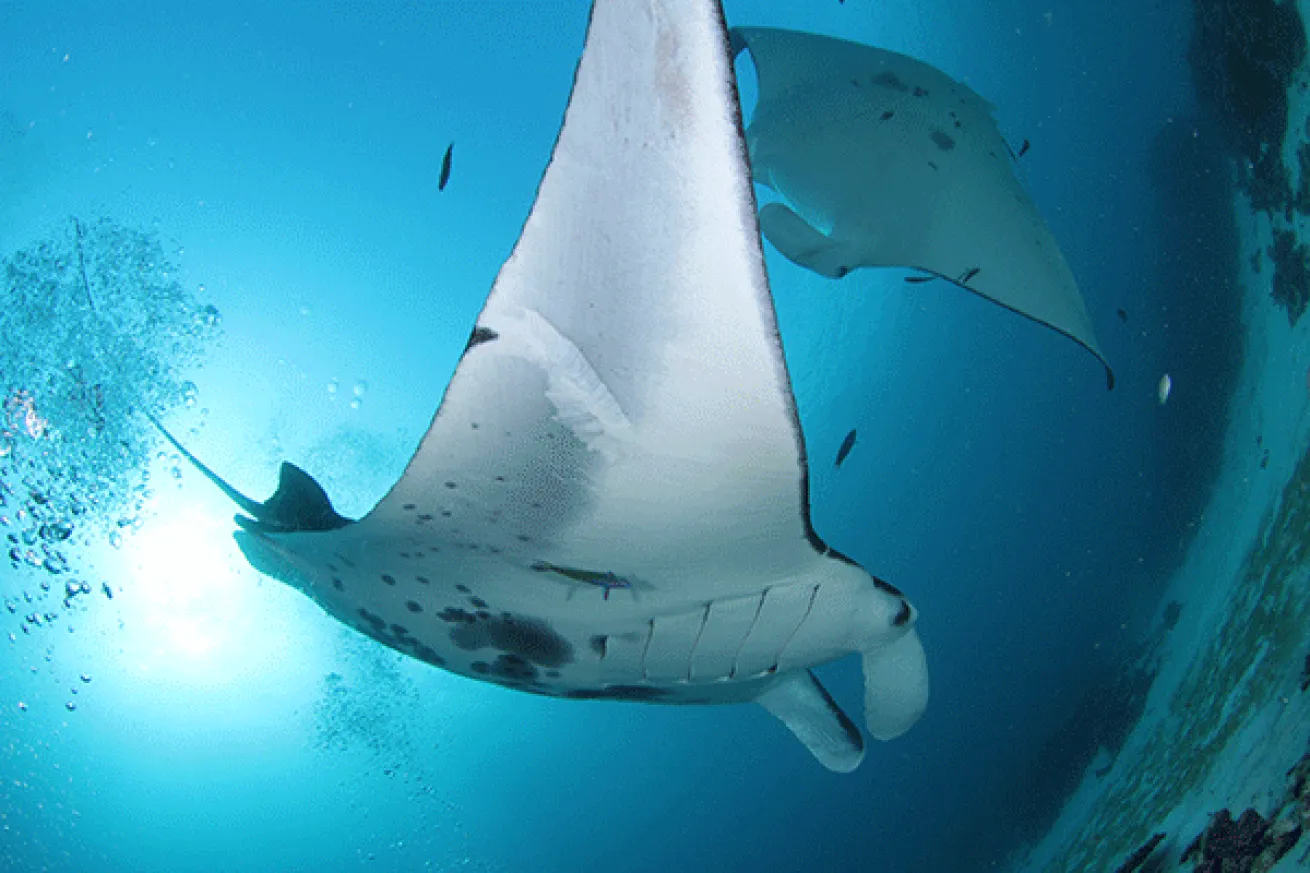
Annie CrawleyA graceful flyer.
FOR PHOTOGRAPHERS
Shooting pelagic animals can be challenging for many reasons. On this dive, I had early morning light with a sandy bottom and divers who not always could control their buoyancy. There were a lot of particles in the water, both because Indonesian waters have many nutrients and from the divers kicking up sand. I took images with both my strobes turned on and turned off. I often do this with pelagic animals if there are particles in the water and they are far away because of the potential backscatter. I always meter and set my camera exposure for the blue-water background in manual mode with my strobes in manual too. Sometimes we get a bit of luck. I was fortunate that when the mantas swam overhead, I had turned on my strobes in anticipation. This image would have been different if my strobes were not kissing them with light. Whenever shooting pelagic animals, I encourage you to turn your strobes on and off.
Camera Specs: The images were taken with a Canon 7D in a Subal housing with 2 Inon strobes.
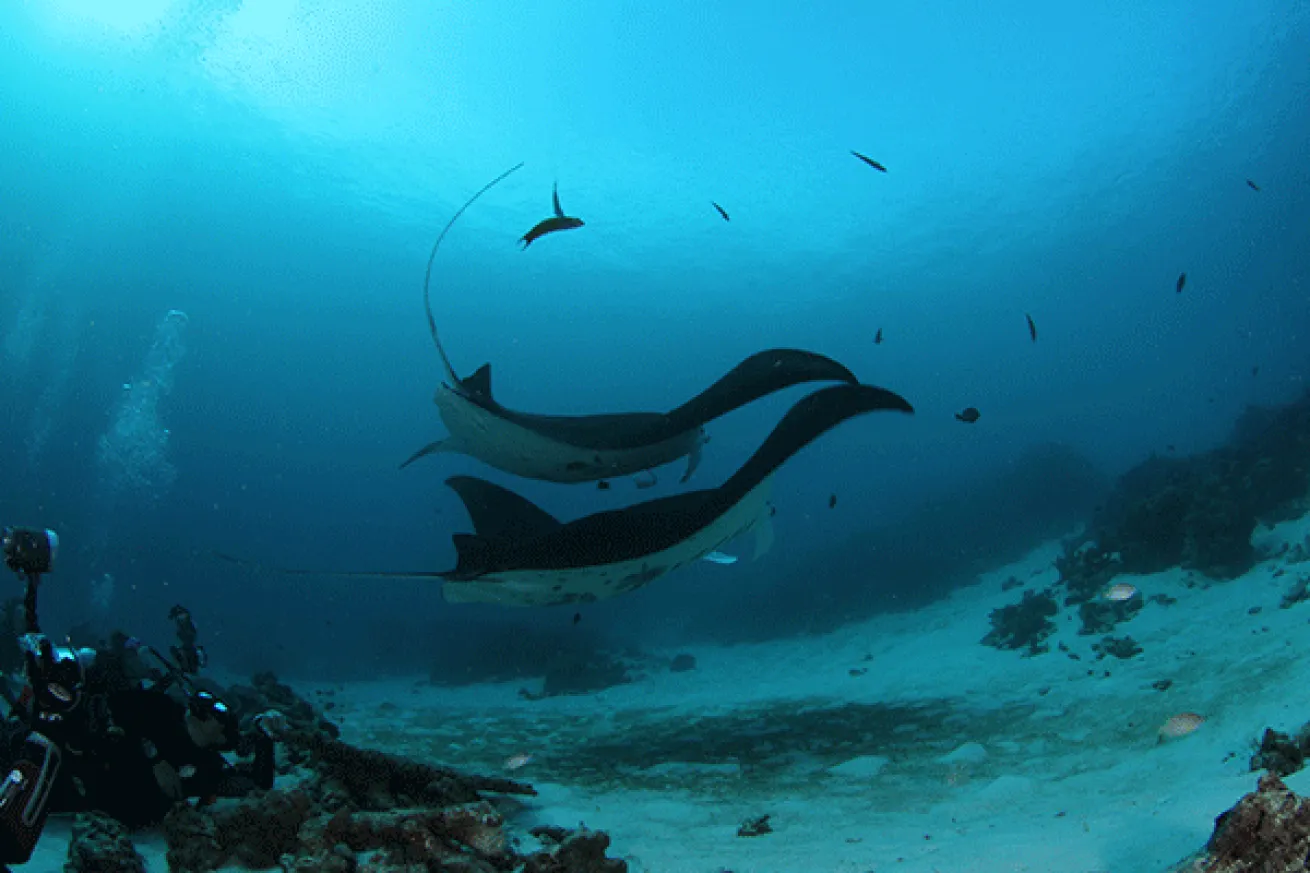
Annie CrawleyObserve the rules for encounters at Manta Sandy — and be patient — and you will be rewarded with memorable photographs.
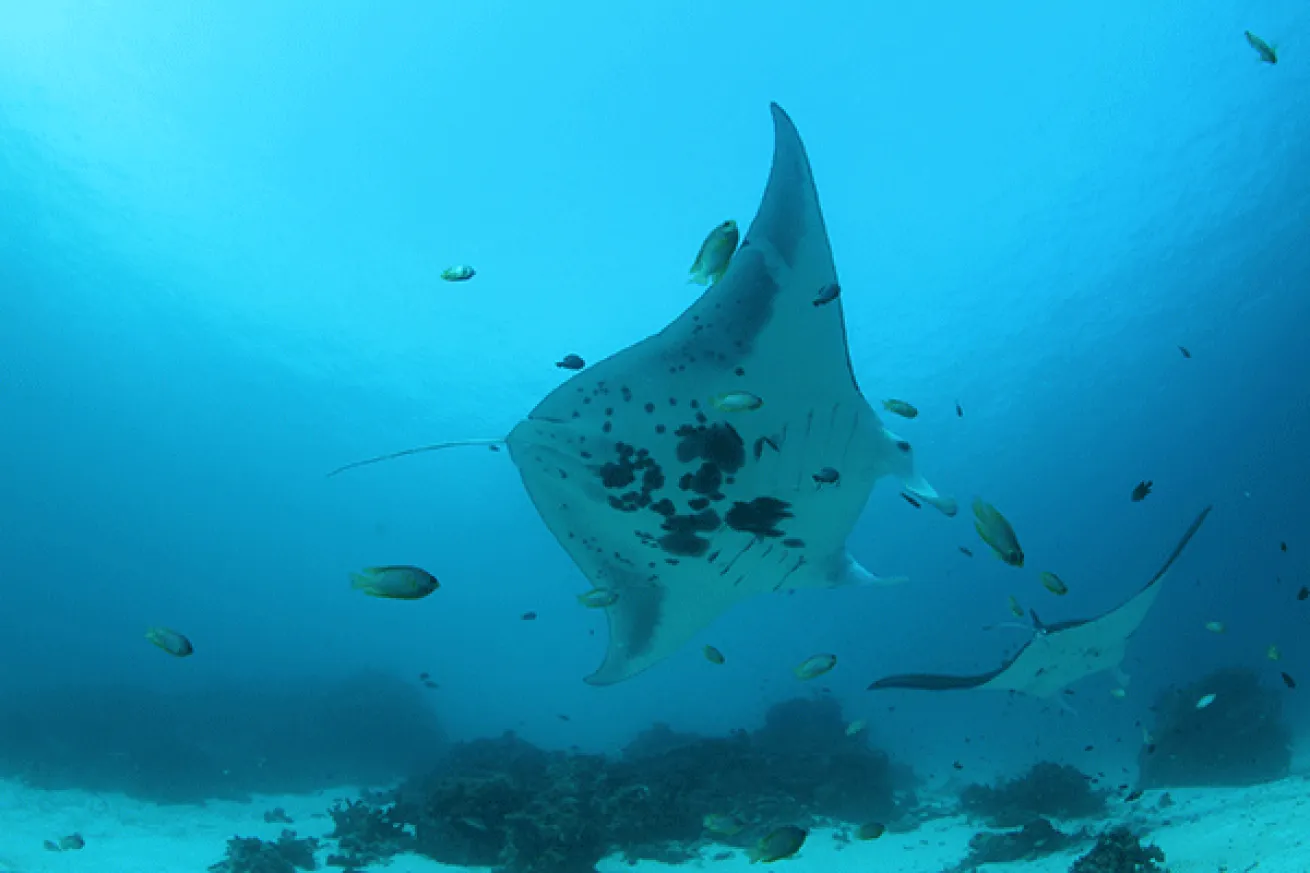
Annie CrawleyWitnessing this show can feel as if you're watching a manta ballet.
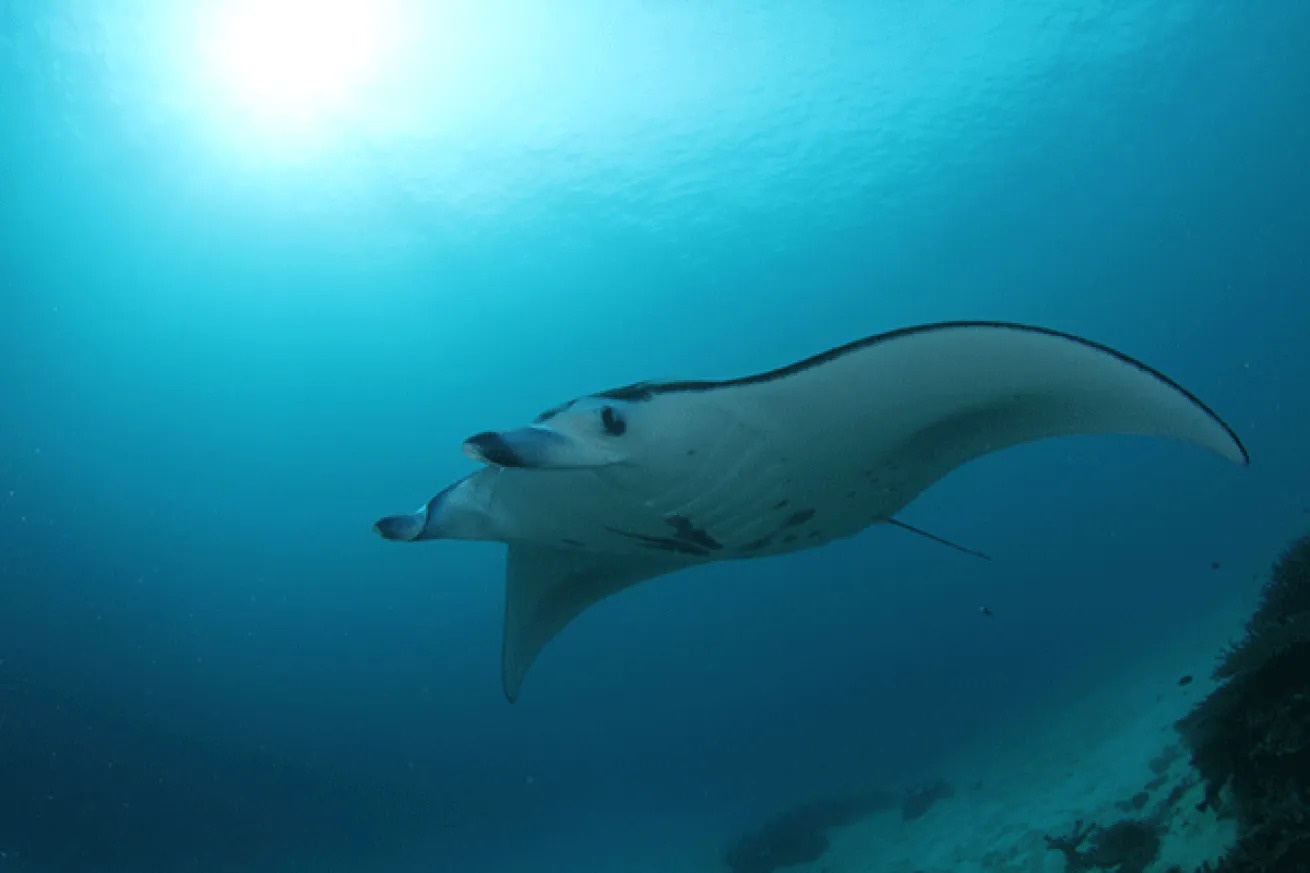
Annie CrawleyGetting a bit of sunlight in your photograph can add drama.
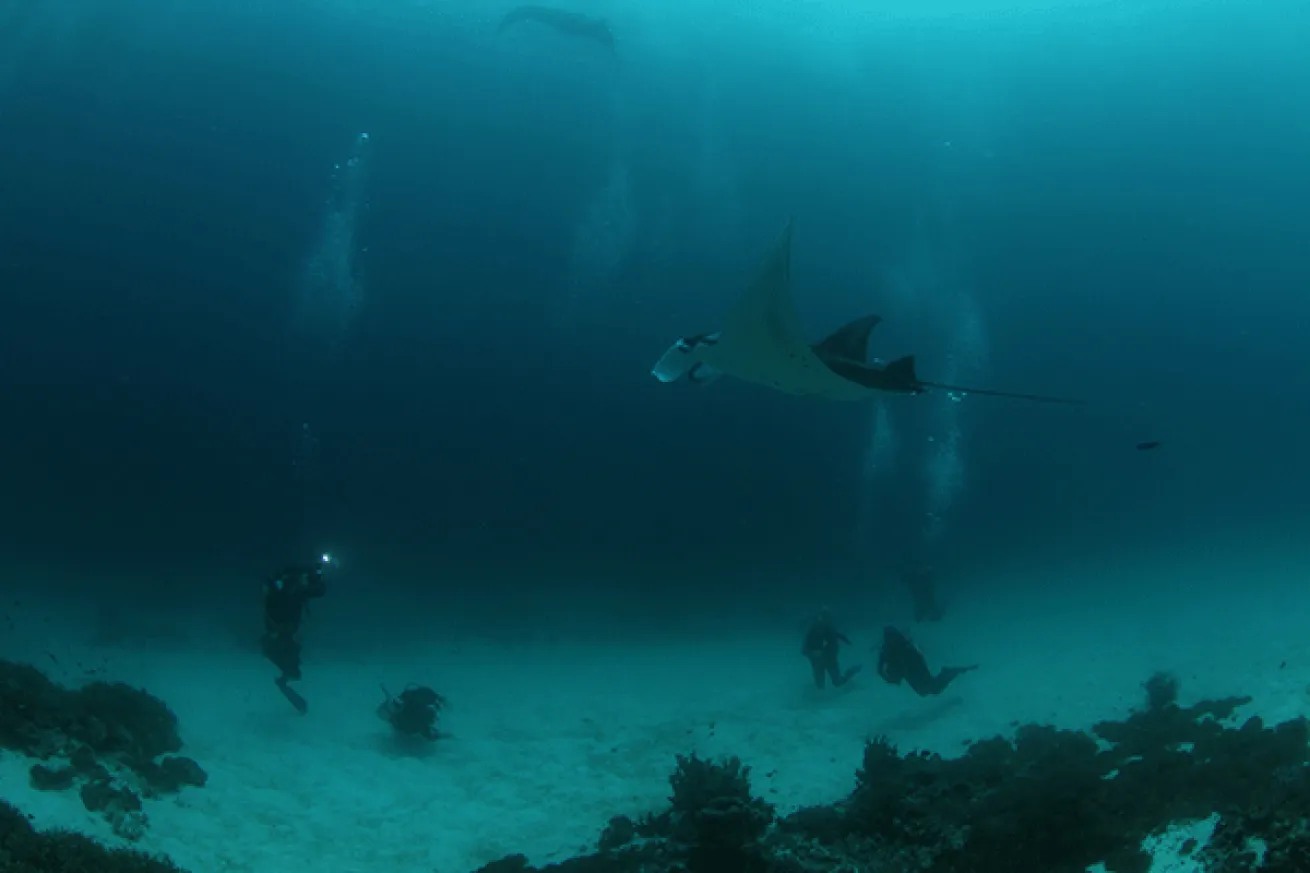
Annie CrawleyMany mantas showed up when I was there, but sometimes, the mantas are a no-show, which can be disappointing.
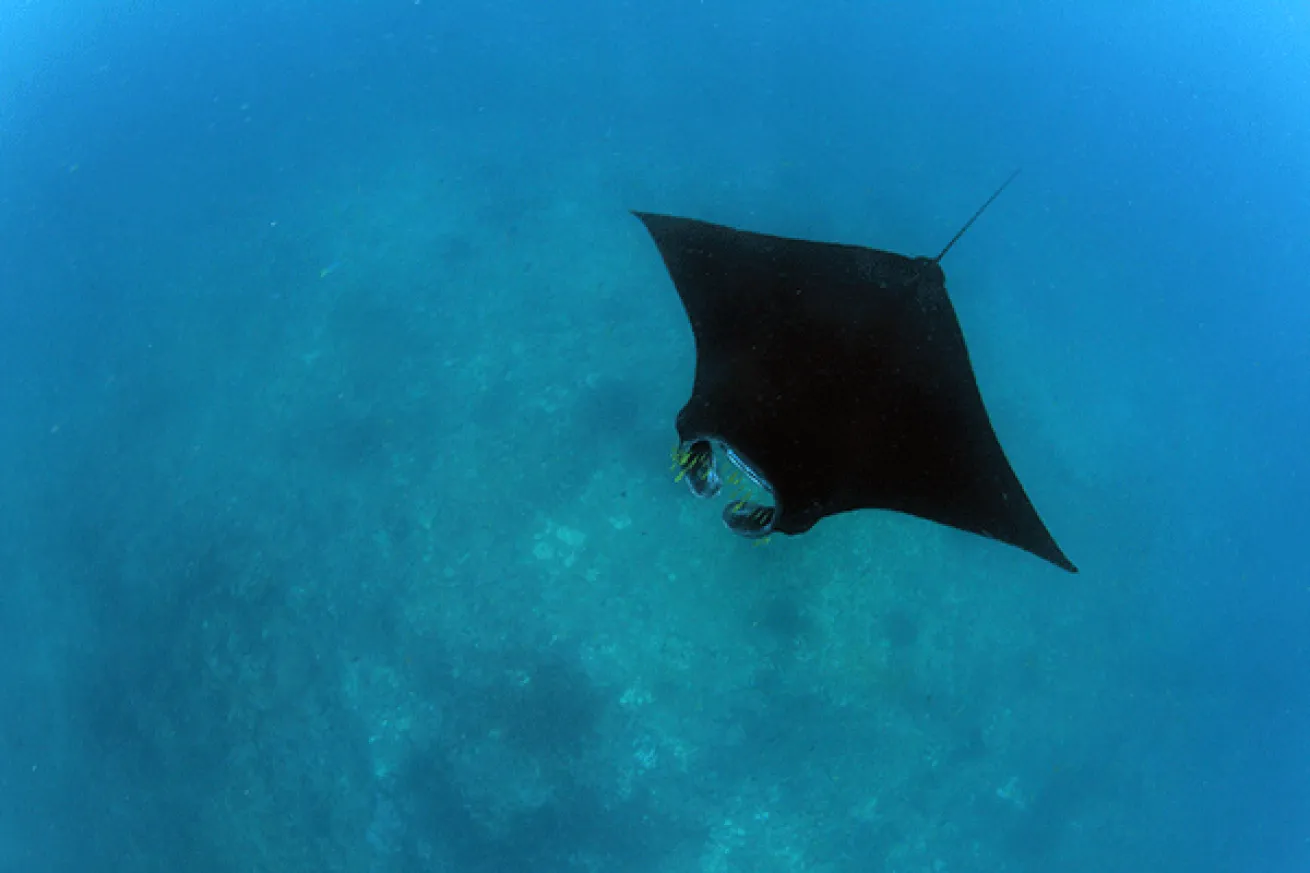
Annie CrawleyManta Sandy is just one of the manta cleaning stations in Indonesia, but it is one of the world's best.
Annie Crawley, AKA "Ocean Annie," has become one of America’s leading ocean-environmental educators. Founder of Dive Into Your Imagination, her company changes the way a new generation views the ocean. As an underwater cinematographer and educator, Annie has created a series of award-winning books, DVDs and motivational art series.


