

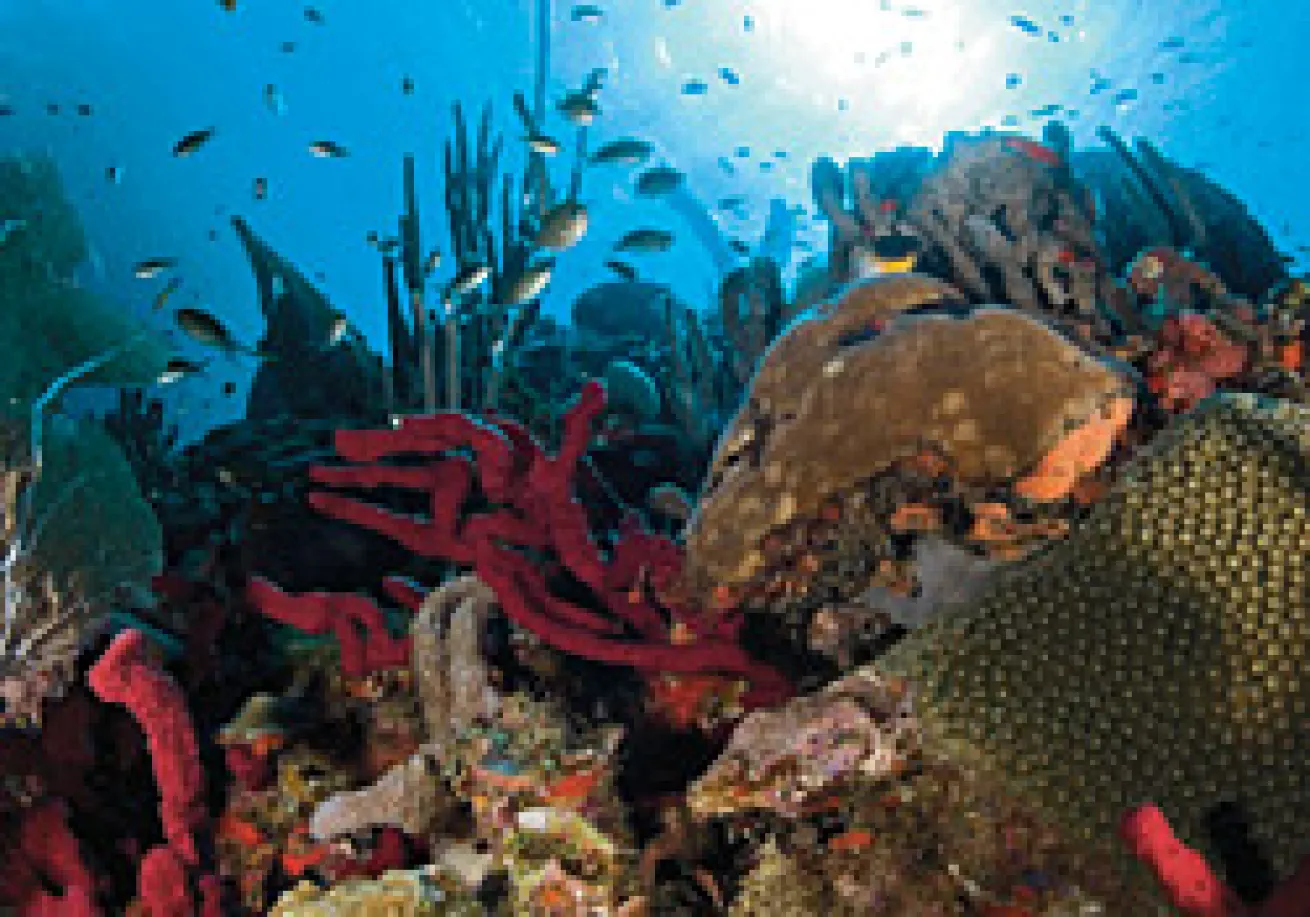
From the second we backrolled into the enormous school of brown chromis swarming like locusts just beneath the surface, I knew that Fish Mouth was going to be one of my all-time favorite dives. Equalizing furiously and dropping fast to find the bottom, I broke through the dense cloud, only to find myself in an equally thick school of black durgon. At about 40 feet, the curtain of fish parted at last to reveal a colorful sloping reef.
Located off Isle de Quatre in the swath of Eastern Caribbean between Grenada and St. Vincent known as the Grenadines, Fish Mouth is a stunning mix of healthy hard corals, colorful sponges and waving gorgonians. But the best part was the blistering three-and-a-half-knot current. For the next 20 minutes we jetted along, angling into the stream or ducking behind small boulders to look for moray eels, to go eyeball to eyeball with wary cardinalfish and to admire a seemingly endless school of creole wrasse that cascaded down the slope and around coral heads like a flowing river.
Then everything changed. Current and reef parted ways — the gust of water elbowing left; the reef becoming more vertical and angling to the right — and we lurched to a sudden stop inside a steep-sided amphitheater of calm, still water. When we surfaced and climbed back aboard the tender, an awestruck silence soon gave way to excited stories of the dive. Mottley, our divemaster, wore a satisfied, knowing smile and simply nodded agreement when my buddy summed it all up: "That was unbelievable!"
Grenada
I admit it: When I drew this assignment my first thought was: "Grenada? Didn't the U.S. send troops there once?" My second thought was, "Didn't it get hammered by a hurricane back in 2004?"
The answer to both those questions is yes, but if that's all you know about this rarely explored corner of the Caribbean, you're mired in the past. For the record: The 1983 U.S. military intervention (which restored democratic elections after a Marxist military coup) is ancient history, and the damage from Hurricane Ivan has long since been repaired. After a week of exhilarating diving, I'm ready to tell you: Grenada and the Grenadines should be your next "must see" Caribbean destination. It has all the elements — warm, clear water, beautiful reefs, great marine life, and some truly amazing wrecks — to turn the heads of jaded "been there, done that" divers.
One day of diving with Peter Seupel, the operations director of Aquanauts dive center at True Blue Bay Resort, is all it took to change my way of thinking about Grenada. The island has more than 30 named dive sites conveniently clustered along its southern tip — none more than a 30-minute boat ride away regardless of whether they fall on the Caribbean or Atlantic sides of the island. Purple Rain is a beautiful example of the Caribbean side. With a maximum depth of 80 feet, it's a healthy collection of brain, star and pillar corals, decorated with colorful gorgonians and sponges and crowded with the usual reef fish suspects. Shark Reef on the Atlantic side has many of the same elements, just in different proportions. The current was stronger, there were more soft corals than hard ones, and from the nurse sharks napping in small coral caves to moray eels slithering across the reef in broad daylight, the marine life was bigger and bolder.
The other big surprise was the wealth of wreck diving. I'd heard about the Bianca C, the 600-foot luxury liner that holds the title of the Caribbean's largest wreck, but discovered there are many more sunken vessels to explore. Throw in a two-tank day trip to Isle de Ronde, an uninhabited rock off the island's north end, and you have more than enough underwater excitement to fill a week's worth of land-based diving.

The Grenadines
The Grenadines is a chain of more than two dozen islands stretching north to St. Vincent. On our itinerary was a stop at Mayreau Island and the nearby Tobago Cays. The low islets with palm-studded beaches (movie buffs may even be able to identify Petit Tabac, the island where Elizabeth Swann and Capt. Jack Sparrow were marooned in the first Pirates of the Caribbean) were a stark contrast to the towering rock islands we'd been diving for much of the cruise. They're also protected by a series of fringing horseshoe-shaped reefs, so when we dropped into Mayreau Channel, the current was just strong enough to carry us along in a surreal, dreamlike fashion. Adding to the gentle ambience was the reef itself, deep coral canyons made all the more colorful by the abundance of light reflected off the white sand.
And then everything changed. Suddenly, everyone was signaling frantically to each other and kicking like mad for a deep corner of the reef. There, wedged inside a crevice barely big enough to contain them, were five of the biggest Caribbean spiny lobster you could ever hope to see.
Back on board the tender, we compared estimates on just how big those monsters of the deep had to be. Then the boat fell silent for a minute and it was my turn to give the summation. "That," I said smiling, "was unbelievable!"

Grenada Topside
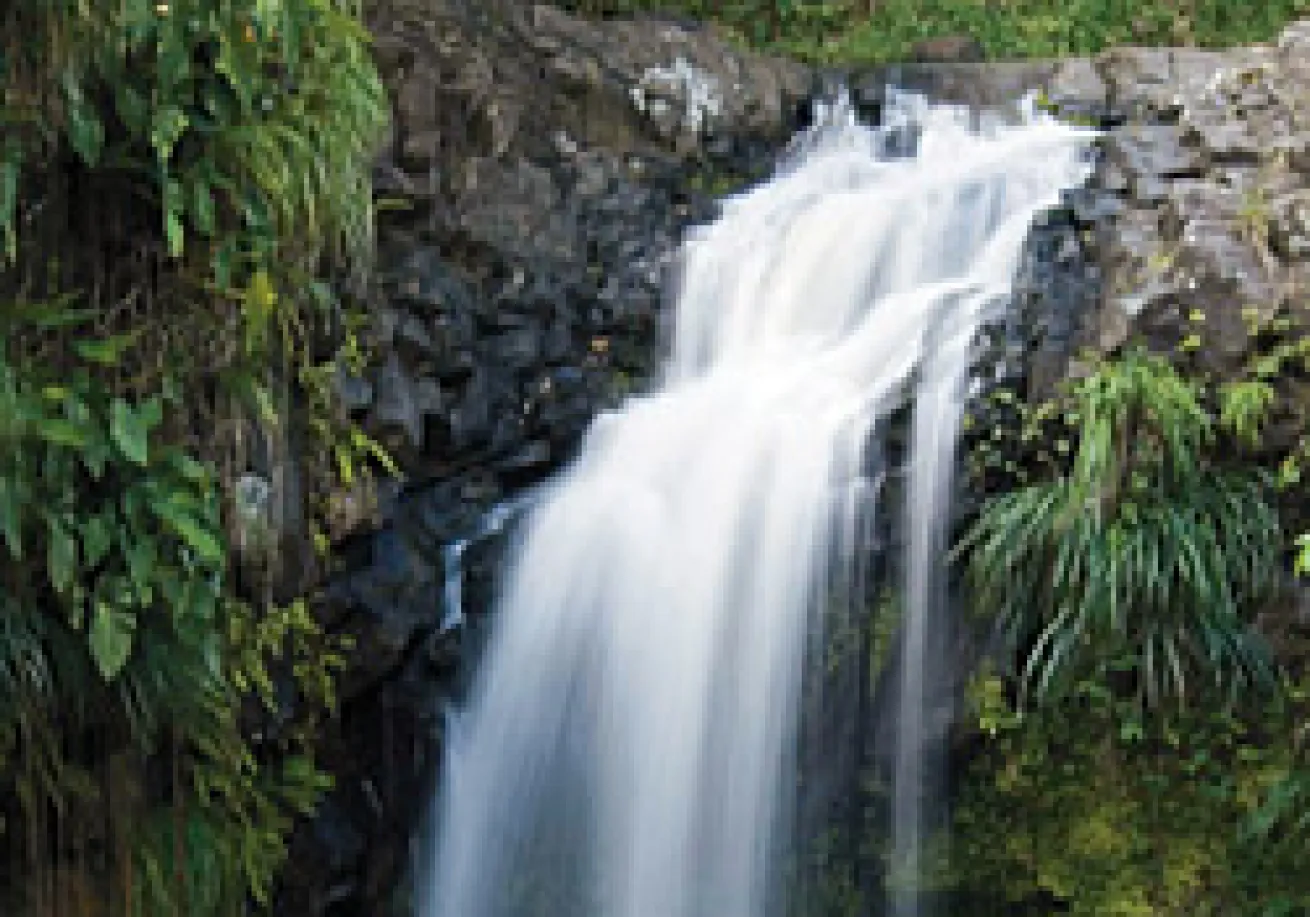
Plan to spend some time touring the topside attractions as well. Grenada is a mountainous island covered with a lush central tract of rainforest. Known as the Spice Island, it produces nutmeg, cloves, cinnamon, mace and cocoa in abundance. The whole island is only 21 miles long by 12 miles wide, so even if you have only an afternoon to spare you can hire a guide and cover a lot of ground. Most guided tours start in St. George's, a city of pastel-colored buildings, and include a visit to historic Fort George (built in 1705), which commands the best view of the harbor. Other popular stops include: Annandale Falls, a postcard-perfect waterfall framed by elephant ear plants; Grand Etang National Park, a forest preserve and bird sanctuary that's home to a 36-acre crater lake; River Antoine Rum Distillery, a living museum where you can see raw sugar cane transformed into a potent rum; and Grand Anse, a two-mile crescent of golden sand considered one of the very best in the entire Caribbean. And, of course, no tour of the Spice Island would be complete without a stop at a spice shop where you can load up on tasty and fragrant souvenirs. For more information, visit www.grenadagrenadines.com.

Wrecks Of Grenada
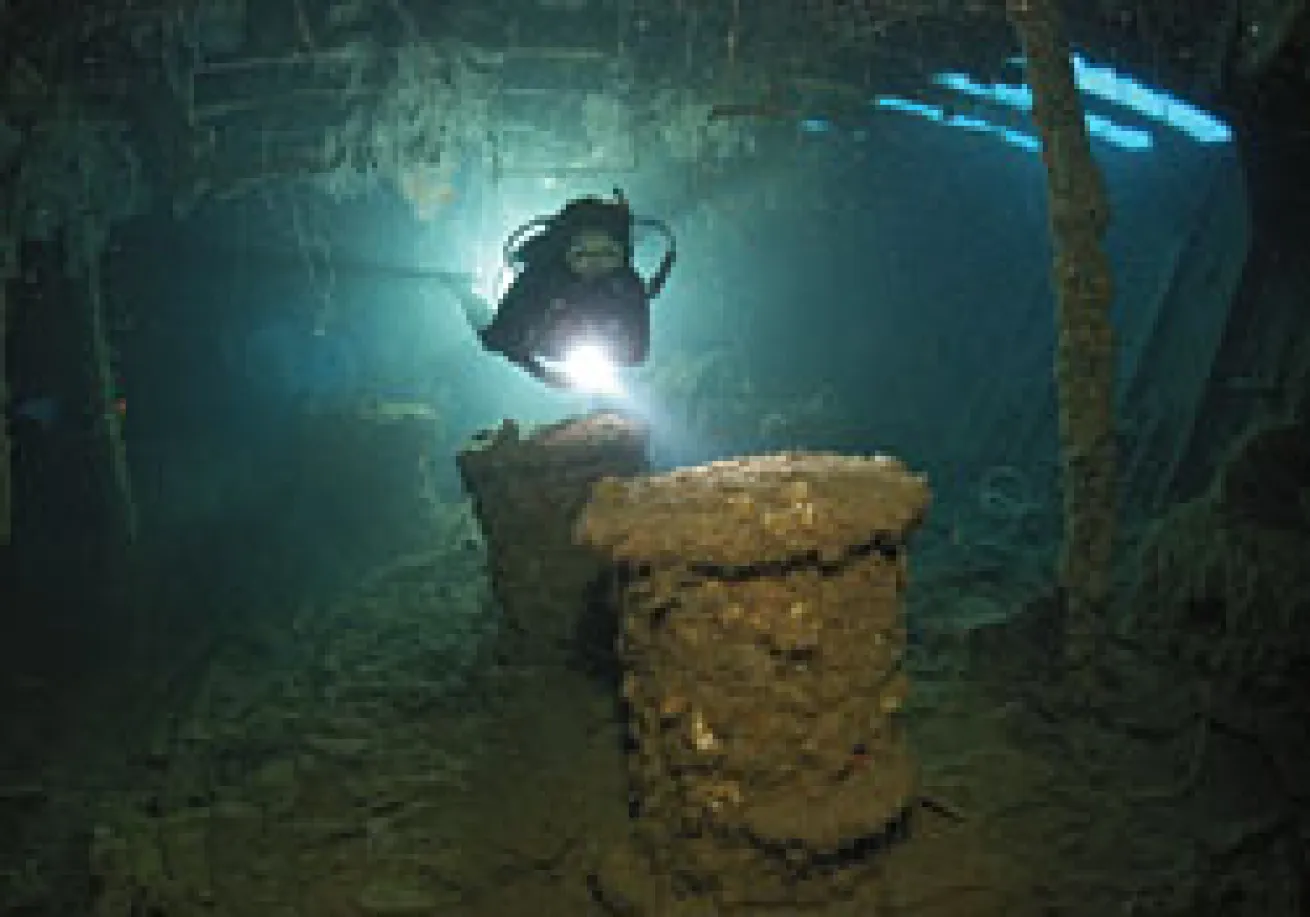
Diving the Bianca C, the "Titanic of the Caribbean," should be at the top of every diver's list of things to do before you die. The signature wreck of Grenada is a 600-foot luxury liner that sank on Oct. 22, 1961, when a fire broke out aboard the vessel. Islanders helped shuttle passengers and crew to safety and only two lives were lost before the ship was towed to its current location and allowed to sink. The vessel came to rest upright on a sand bottom creating a great wreck with abundant opportunities for recreational and technical divers alike — the top of the bow is at 90 feet, the keel at 165. Given the depth and the strong currents that sweep the wreck, this should be considered an advanced dive. Also on the roster of great Grenada wreck dives is the Shakem, a homely cement freighter turned into a living work of art by a heavy growth of telesto soft corals — the wreck is so heavily overgrown that it's hard to believe it sank only five years ago. The Hema 1 was an inter-island freighter that sank in 2005 landing on her port side. She, too, is well on the way to sporting a dense layer of growth. On the Atlantic side of Grenada, the wrecks of the King Mitch and San Juan are also heavily encrusted, but come with a bonus: excellent odds of seeing rays and nurse sharks.
InDepth
Dive Conditions: Drift diving is the norm when diving Grenada and the Grenadines as the islands are swept by the powerful Guyana Current. Depending on the site, currents can range from a gentle drift to a blistering three-and-a-half knots. Expect visibility between 30 and 100 feet depending on the site and season. Water temperatures range from winter lows of 79 degrees to summer highs of 84.
Weather: Temperatures range from 75 to 87 degrees. June to December is the rainy season, resulting in brief rain showers that blow through quickly. Diving and visibility are usually unaffected.
Documents: A valid passport and return ticket are required.
Language: English.
Time: Grenada is in the Atlantic Standard Time Zone.
Health: Tap water is considered safe to drink. Bottled water is available.
Dive Safety: The nearest recompression chambers are in Barbados and Trinidad, both about 30 minutes away by air ambulance.
Currency: Grenada and the Grenadines use the Eastern Caribbean dollar, which is set at a fixed exchange rate of EC$2.67 to US$1. U.S. currency is also frequently accepted, though your change will be given in EC. Credit cards can be used almost anywhere.
Electricity: Standard voltage is 220 volts/50 cycles and outlets are built for British standard three-pronged plugs. You'll need a Type G adapter and transformer for U.S. standard 110-volt devices. Some resorts (True Blue Bay Resort being one) also provide U.S. standard outlets.


