

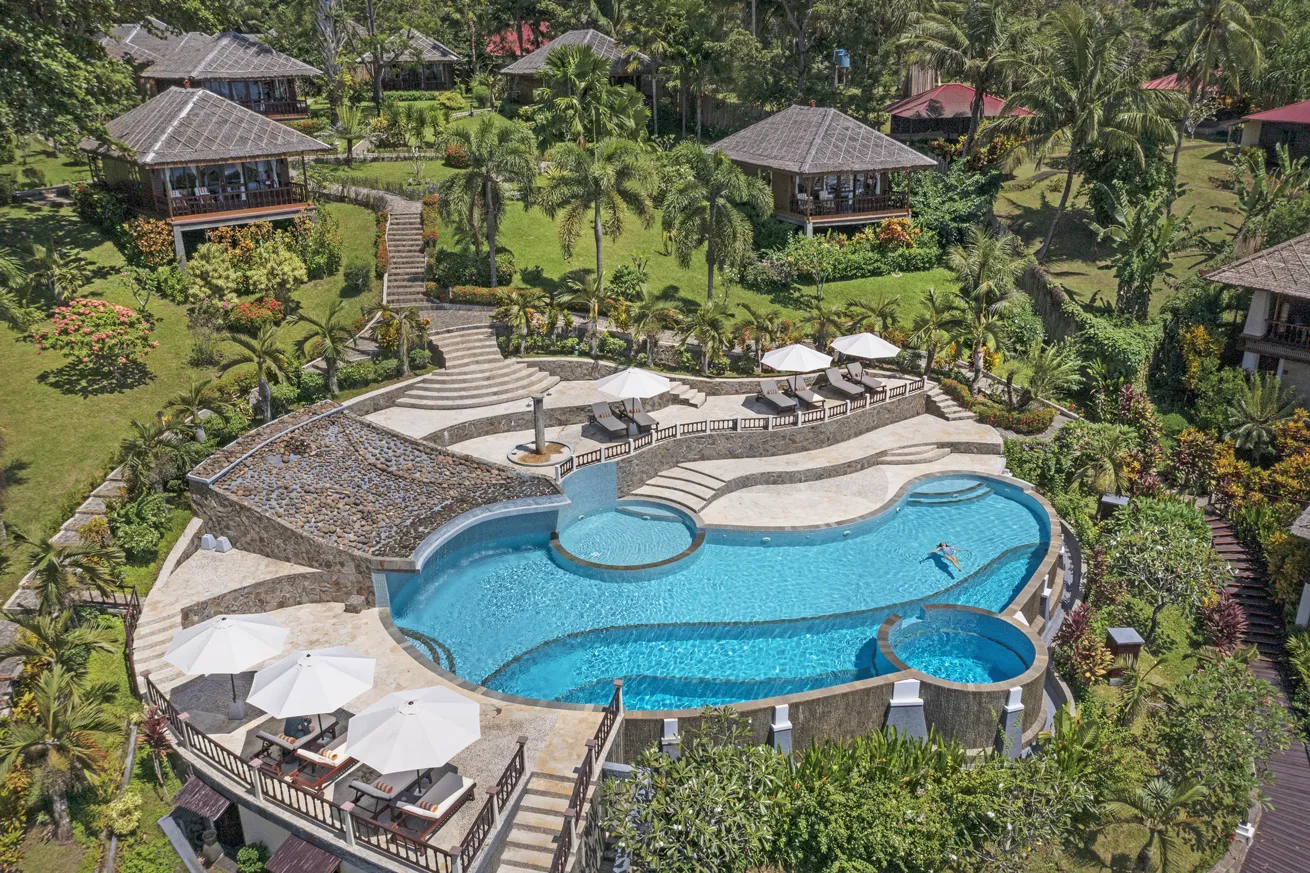
Courtesy Bunaken Oasis Dive Resort & SpaThe pool is ideal for a little post-dive relaxation
Off the northern tip of Sulawesi, the 3-square-mile island of Bunaken sits at the heart of one of the most biologically rich stretches of ocean on Earth. And one of the five islands within Bunaken National Marine Park is a launch pad for more than 90 dive sites along coral walls—some that dramatically rise from depths of 5,000 feet, stretching to mere feet beneath the surface. For divers accustomed to headlines about reefs in distress, it offers something increasingly rare: a marine environment that is measurably holding its own.
Wildlife photographer Michael Aw spent eight months shooting the reefs for a pictorial almanac, Beneath Bunaken, which documented the reef for three decades. It makes Bunaken’s resilience visceral. In 1992, it was a good day if you saw a turtle; today, you’re unlucky if you don’t see 20.
Bunaken Oasis Dive Resort and Spa is at the heart of this recovery story.
Elaine and Simon Wallace arrived in Bunaken as divers, not developers. They came on a recommendation, were enchanted by the marine park and noticed something missing—a luxurious place to stay.
A few bottles of Bintang (the local beer) later, the Wallaces and their business partner at the time purchased their first parcel of land in 2012—6.7 acres of pure jungle—and began to design a resort around its natural environment.
Related Reading: Diving to Protect Cozumel's Splendid Toadfish
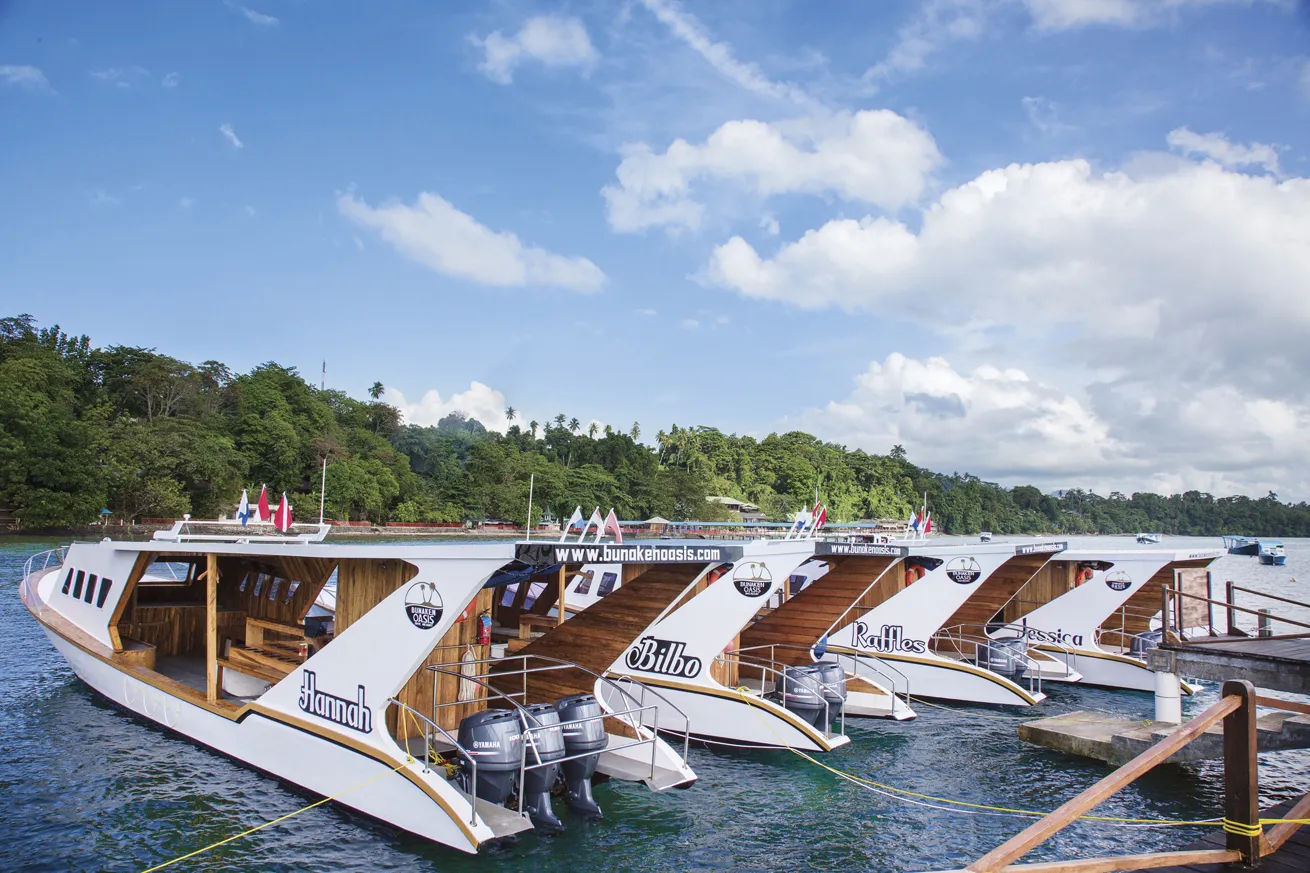
Courtesy Bunaken Oasis Dive Resort & SpaThe resort’s fleet of dive boats
“We felt that what was out at sea deserved something so much better,” Elaine recalls. “And if we’re going to do it, we’re going to go big.”
This approach paid off. In 2025, the resort was named the World’s Leading Dive Resort at the World Travel Awards. Today, Bunaken Oasis spans just over 17 acres.
“We designed it from the top down in terms of sustainability and minimizing its footprint,” Elaine says.
The entire property runs on potable-standard plumbing. Fresh water is produced on site by watermakers and filtered through multiple UV and carbon stages. There is no single-use plastic in sight; guests are given reusable water bottles on arrival. At the other end of the cycle, the resort processes all waste through a closed organic system, leaving the resort’s only output as clean groundwater. The charcoal used in filtration is sourced from burnt coconut shells, a byproduct of the local copra industry—completing a circular loop that connects the resort to the regional economy.
Construction followed the same logic. Cottages were built using a traditional prefabricated wooden design, with all timber ordered under government license. Every piece of furniture is made on site by the resort’s carpenters, as are many of the resort’s boats. Carpentry apprentices from the local high school use offcuts from the resort’s workshop for the community, like building chairs for the island’s schools.
“We’ve designed things to last as long as possible, so they don’t end up in a landfill,” Elaine says. The lampshades, which are cast in fiberglass, were chosen because they won’t rot or rust.
Even the resort’s jetty is “a wonky shape,” as Elaine describes it, because it was routed to avoid touching any coral.
“We’re proud to be an ethical resort,” she says. “One that has a positive impact on its environment rather than one that has been designed to minimize its impact.”
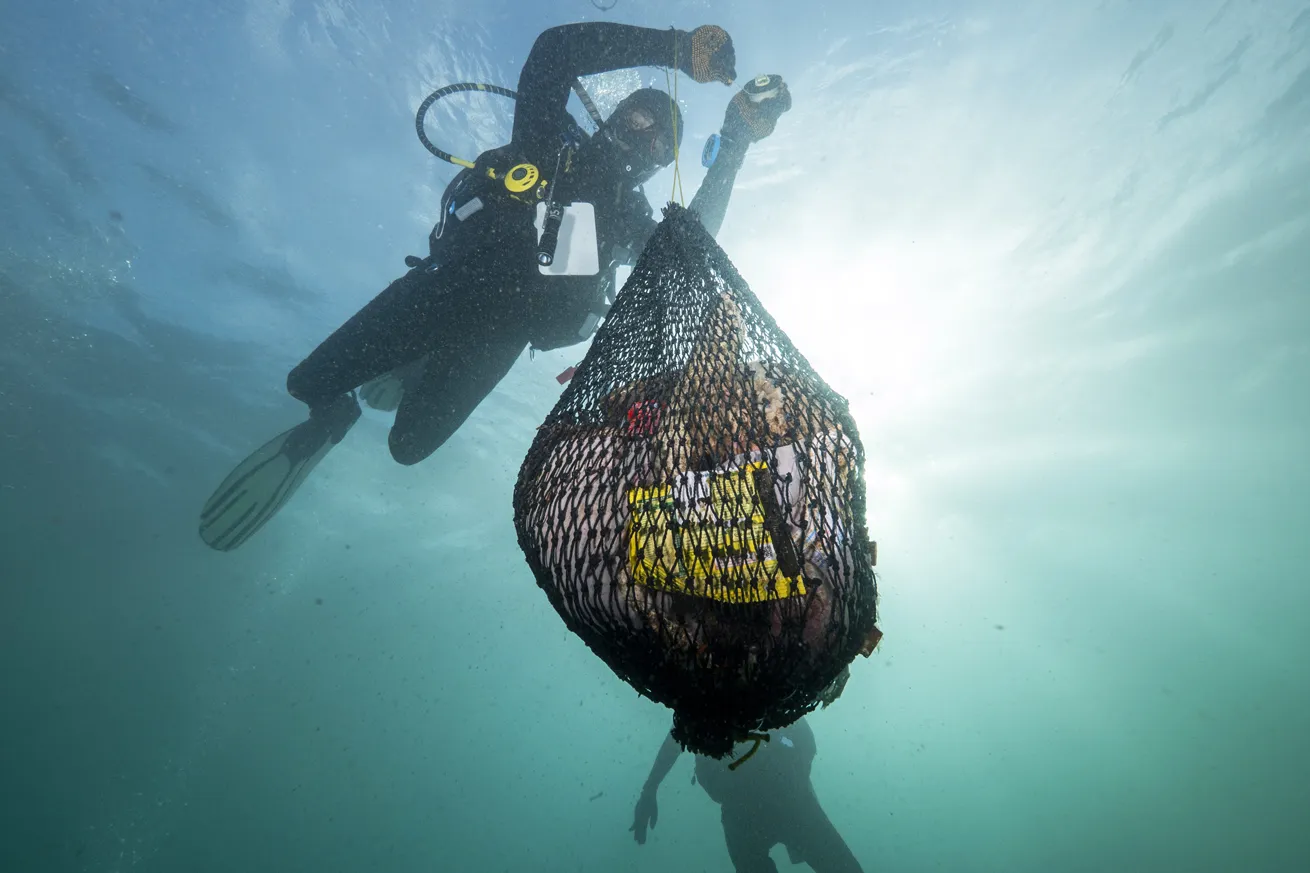
Courtesy Bunaken Oasis Dive Resort & SpaA diver hauls trash from the ocean.
The resort employs over 100 people to staff its 12 cottages. Most staff are from the island, and every employee earns above the national minimum wage and receives private healthcare. During the COVID-19 pandemic, when the resort had zero income for over two years, every employee was kept on. Around 70 percent of the original team is still there today. A portion of revenue each month is channeled into island projects—rebuilding a subsiding school wall, repairing a church roof, sponsoring the local football league, hosting blood drives and veterinary visits for the island’s dogs and cats.
Young people from surrounding villages can also participate in a six-month dive guide training program, taking them from zero experience to rescue-diver level.
“They don’t just learn to dive—they learn how to run a dive center,” Elaine says. The best graduates earn divemaster internships at Bunaken itself, with a pathway to PADI Instructor for top students.
Bunaken’s greatest environmental challenge arrives with the rain. The island’s geography funnels runoff from the highlands, carrying plastic that has been dumped in rivers upstream. When the rainy season peaks, that debris ends up on the beach. Bunaken Oasis has been fighting back on multiple fronts.
The resort is a central partner of the No-Trash Triangle Initiative (NTTI), a nonprofit that booms rivers in Manado to intercept waste before it reaches the sea, runs sorting centers on the mainland, and places collection bins in villages across the island. In 2025, NTTI collected and recycled more than 121,000 pounds of plastic waste from Bunaken and its four neighboring islands.
Bunaken Oasis sponsors the organization, facilitates transport for their educators to reach island schools and offers accommodations. Beach cleanups happen daily, with waste sorted on site and sent back to Manado in compostable cassava-starch bags.
The Indonesian Throughflow, a massive oceanic current running between Sulawesi and Borneo, is partially to blame for bringing beach debris, but it also delivers nutrient-dense water year-round, driving the marine diversity that makes the park so remarkable.
Related Reading: Protecting Bali's Lush Reefs
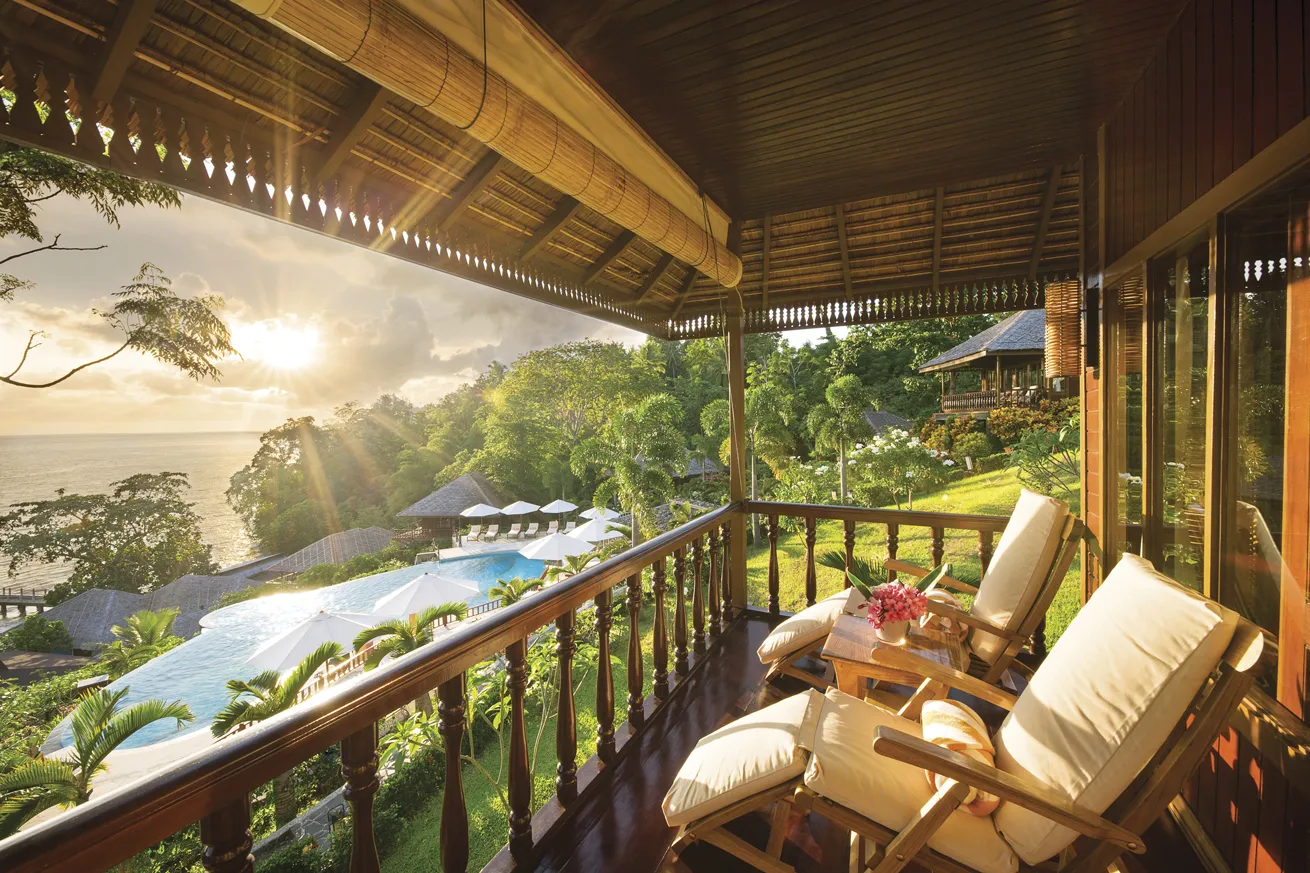
Courtesy Bunaken Oasis Dive Resort & SpaSunsets here are best enjoyed from your private balcony.
Highlights include Turtle City, a cluster of dive sites where encounters with green turtles are so frequent that early TripAdvisor reviewers described the experience as “diving in turtle soup”—a phrase that briefly tanked bookings until the Wallaces politely nudged reviewers to update their language. Whale sharks make the rare appearance, and an orca was once spotted chasing a juvenile mola mola just beyond the resort’s jetty.
Barracuda Point is another beloved dive site. “If you see the barracuda, it’s a big tornado—a tempest of them,” Elaine says. “If you don’t, it’s an hour of your life you won’t get back, because you’re on a rock.”
The resort also supports Dive Against Debris and Green Fins initiatives—and it was one of the first PADI Eco Resorts in the region. Guest divers can participate in citizen science documentation alongside local guides, helping to build the marine biodiversity records that underpin the park’s long-term management. For those seeking greater challenge, the resort operates tec diving programs, with closed-circuit rebreather tec certifications held by senior staff.
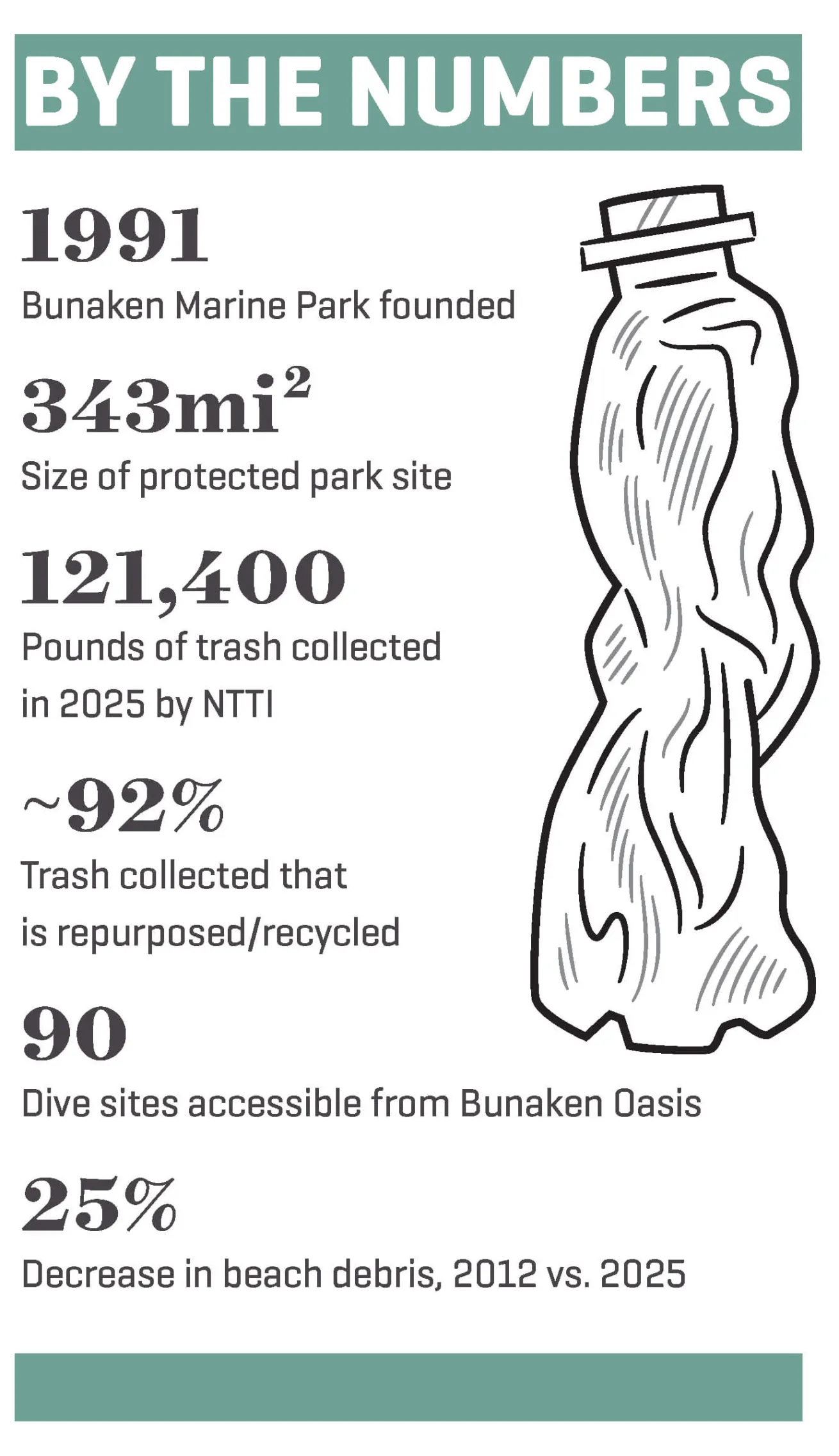
Illustration: Tim Eggert
Bunaken Oasis makes the case that ethical travel and genuine luxury are not mutually exclusive. The toiletries in the villas are from Sensatia, a Balinese company that grows its own ingredients—bought in bulk, refilled in-house, with containers returned for reuse. Laundry is complimentary, run through neutralized water to prevent environmental discharge. Compostable tumble-dryer sheets ensure towels are soft and plush. And the restaurant serves a multicourse a la carte menu that changes daily, largely sourced from the resort’s organic garden and local fishermen who fish solely outside the marine park.
Bunaken Oasis is on the higher end of the price point for area resorts, but that’s not exactly a mistake.
“We’re proud of being an expensive resort. That money goes into the community, goes into the schools, goes into the infrastructure,” Elaine says. “We’ve never taken a single penny out of Oasis. Everything goes back in.”


