


Alex MustardNatural light in cenote images communicates the essence of this environment. Try to include a scuba diver or free diver for scale. Cenotes are dark places, so you might need to increase your camera’s ISO and open the aperture to keep the shutter speed faster than 1/90 sec for sharp results without using a flash. (Chac Mool Cenote)
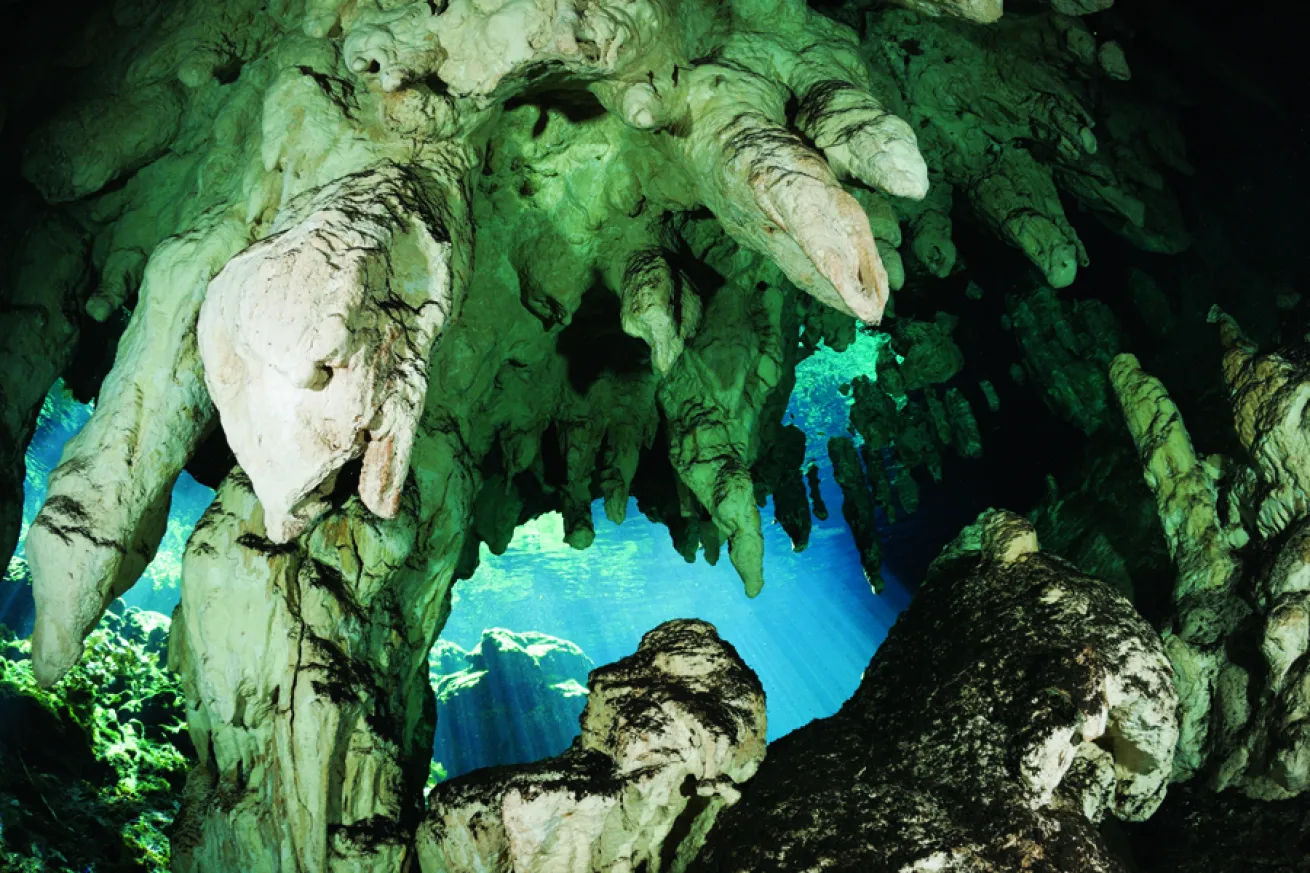
Reinhard DirscherlDramatic formations of stalactites and stalagmites are classic photographic subjects inside caverns. Despite the efforts in getting to them, your work is not done simply by framing them up and shooting. Being wide-angle subjects, your images need depth. You have two options. The simplest is to look for formations you can frame against the opening of the cenote, using a long exposure to let the background shine through. The alternative is setting up off-camera strobes to light up more of the cave behind the subject.
(Gran Cenote)
Camera: Canon EOS1 Ds Mark 3 // Housing: Seacam lens 15mm fisheye // Strobes: Dual Seacam 150 D //
Settings:_ f/9, 1/30 sec, ISO 400_
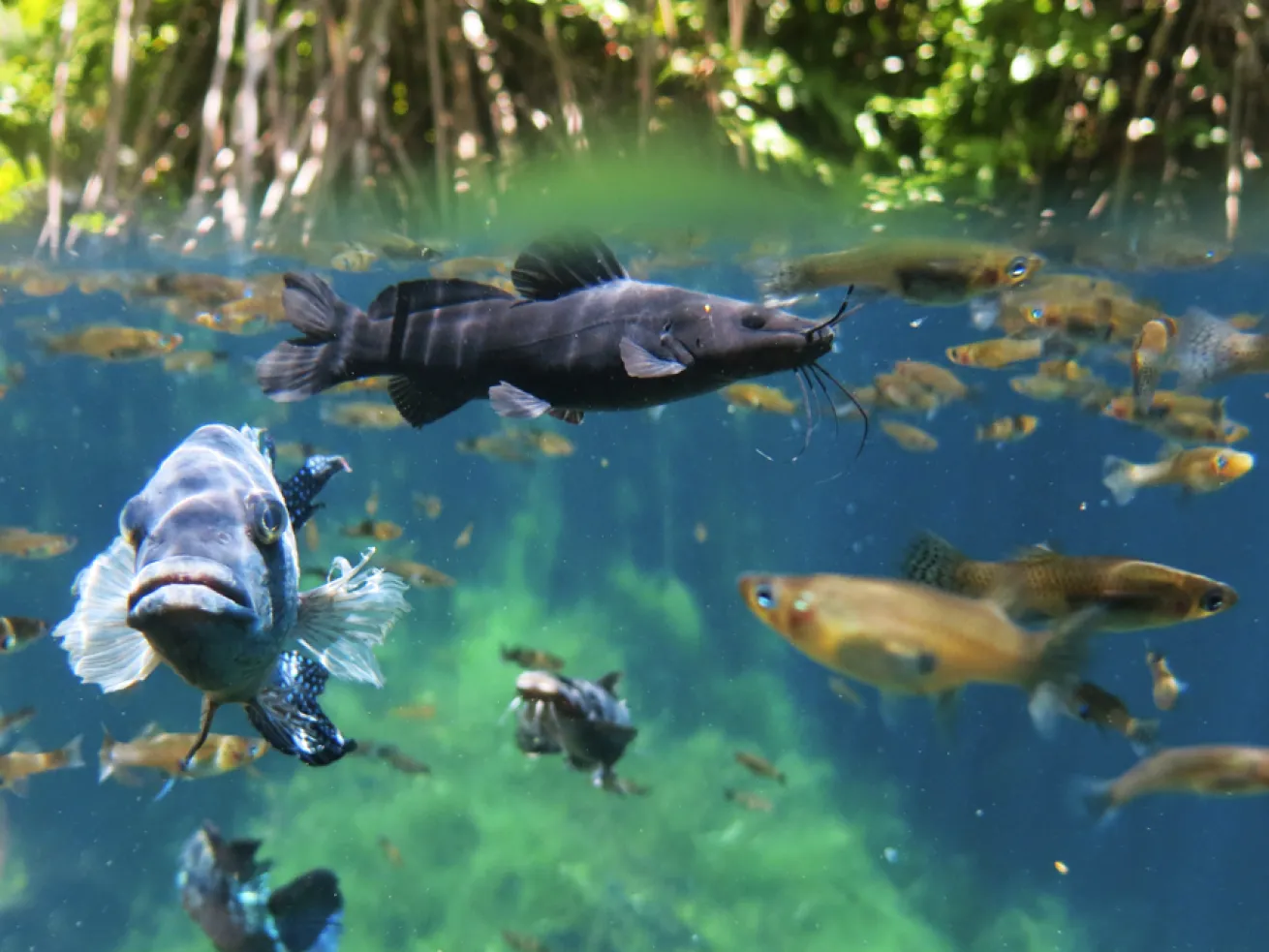
Sarah Sellars/iStockMany cenote pools are filled with life, and offer subjects and behaviors that we can’t shoot in the ocean. Water lilies are one of my favorite freshwater subjects, especially the famous pink ones in Carwash Cenote. You’ll also find sailfin mollies, which give birth to live young, and several species of cichlids, which not only guard their eggs, but also look after their small fry in tightly packed schools. You might even see aquatic reptiles, like turtles and crocodiles. Freshwater life is not always as easily approached as reef fish, so go slowly and be patient.
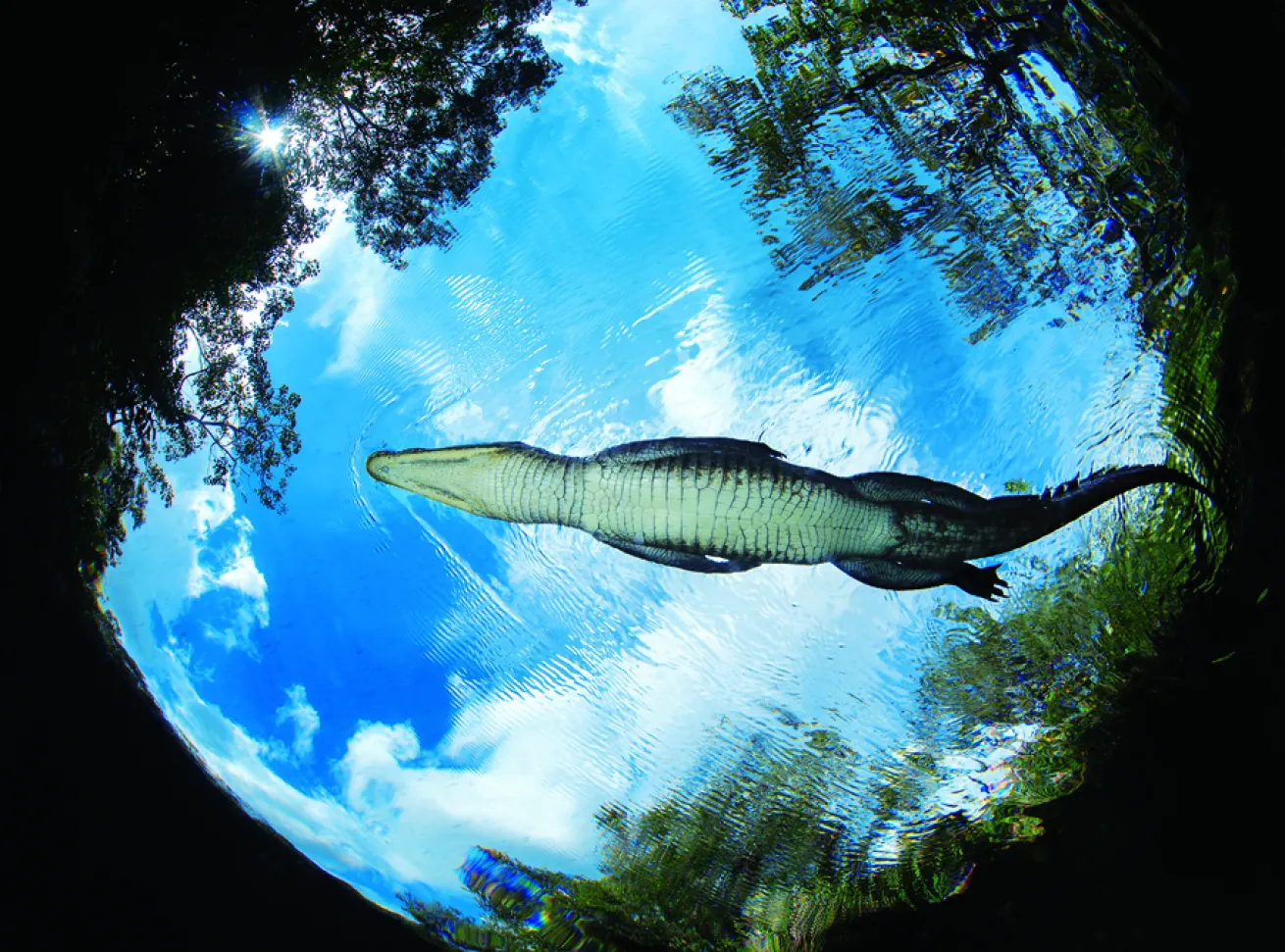
Luis Javier SandovalSnell’s window is the circular frame that we see when we shoot up to the surface with a fisheye lens. It is the boundary between the view transmitted from the world above and the view reflected from underwater. Since cenotes are calm and dark, the boundary is usually well defined, especially when we expose for the sky. This is a lovely frame for subjects, either lit with flash or photographed as a silhouette. As well as being graphic and attractive, Snell’s window allows us to make use of subject matter from above the surface, incorporating overhanging trees, blue sky and clouds. Wait for a sunny day, however, because cloudy skies are not attractive.
(Morelet's crocodile, Car Wash Cenote)
Camera:__ **Nikon D7000 // **Housing: Aquatica // Lens: Tokina 10-17 mm fisheye // Strobes: Dual Sea and Sea YS120 //
Settings: f/11, 1/200sec, ISO 160 // Location: Tulum, Riviera Maya, Mexico
Few environments are as exciting — or as challenging — for underwater photographers as the sinkholes and underground caverns typified by Mexico’s cenotes or Florida’s freshwater springs. The seemingly limitless visibility, combined with abundant and unusual aquatic life and striking cave formations, makes them perfect for underwater photography.
The mirror-calm surface of the water also plays a major role in many special images, focusing light into sharply diffracted beams and allowing us to shoot reflections, split-level pictures or to take images looking up through a Snell’s window.
The most dramatic rock formations are usually deep underground, and you should always be aware that heading out of sight of the entrance is strictly the reserve of those with specific cave-diving certification. Cenotes still offer plentiful photographic options that are accessible for all; in fact, the most interesting light is always near the entrance.
I love the peaceful ambience created by the light filtering down through the still water. The key is to shoot from the dark to the light. The more strobe you use, the less atmosphere you will capture. So turn off your strobes, and shoot plenty of images that evoke the feeling of cenote diving.
So You Want to Be a Cavern Diver?
If you’re jonesing to be a subterranean explorer, start with PADI’s Cavern Diver course. During your first open-water dive, you’ll practice line handling, reel use and emergency procedures without entering a cavern. For your next three dives, you’ll dive into the cavern, staying within the light zone and 130 feet total distance from the surface. PADI.com
For more expert underwater photography tips, tricks, & advice, check out:


