

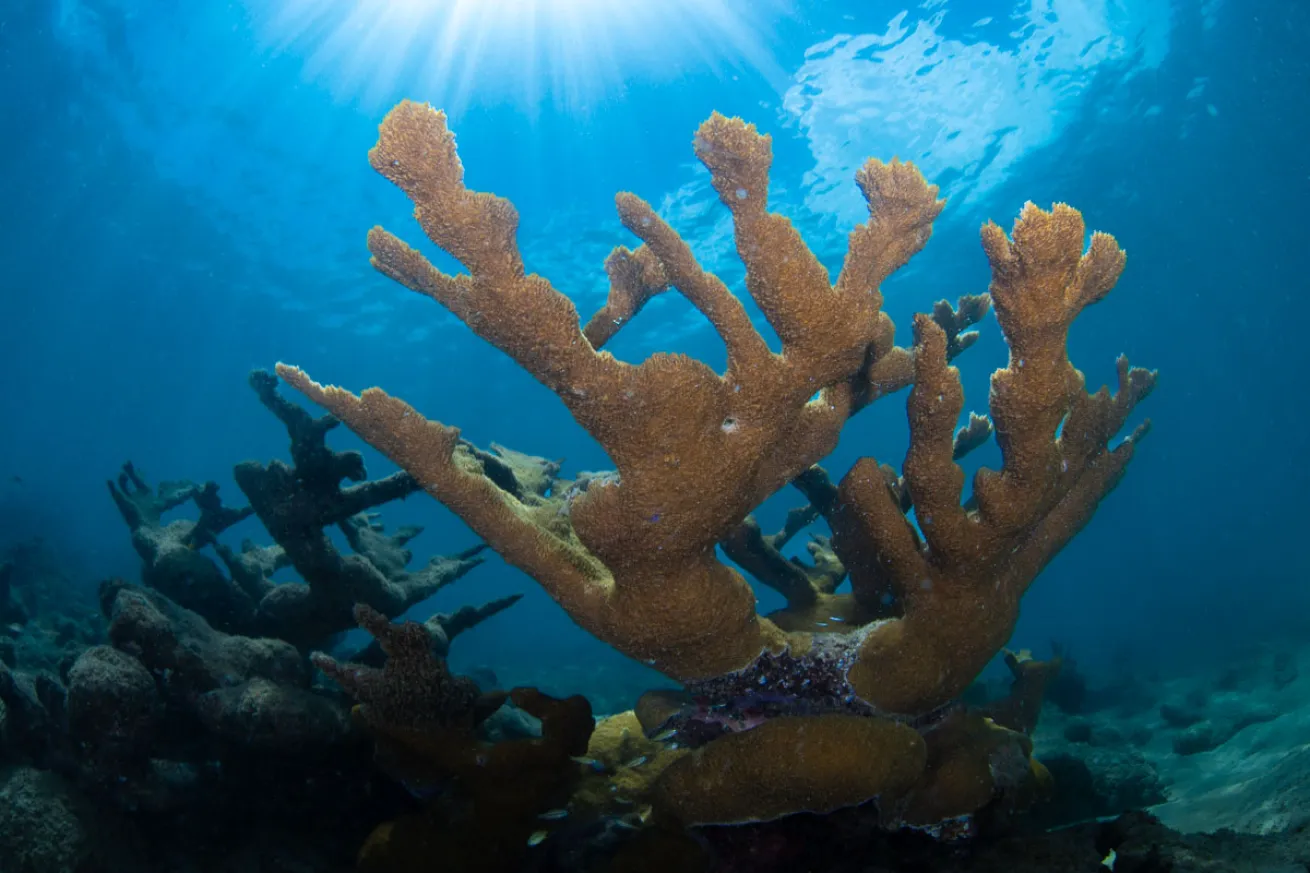
Gabriel JensenA healthy forest of elkhorn coral thrives at Tres Palmas Marine Reserve.
Puerto Rico’s northwest coastline is a goldmine for divers looking to break away from the usual Caribbean circuit. Here, DIY minded divers find a refreshing blend of culture, biodiversity and underwater adventure without the passport requirements or high costs associated with many international dive trips. Whether it’s the endangered elkhorn coral gardens of Rincón or the surreal nighttime blackwater like shore dives of Aguadilla’s Crash Boat Beach, the region delivers something distinct.
Why Puerto Rico?
As a U.S. territory, Puerto Rico uses the U.S. dollar, doesn’t require a passport for U.S. citizens and has year-round warm waters typically in the mid-80s Fahrenheit (29 degrees Celsius). Cheap, frequent flights and familiar logistics make it an easy choice on paper, yet it remains under the radar for many divers.
Related Reading: Best Destinations for Wreck Diving
Unlike destinations with turnkey dive resorts, Puerto Rico rewards independent travelers. The island is large and diverse, so choosing a region and building your itinerary around your interests is key. With its mix of shore and boat diving, rejection of formality and topside jungle attractions, the island’s northwest coast is ideal for those willing to rent a car, explore a little and lean into the adventure.
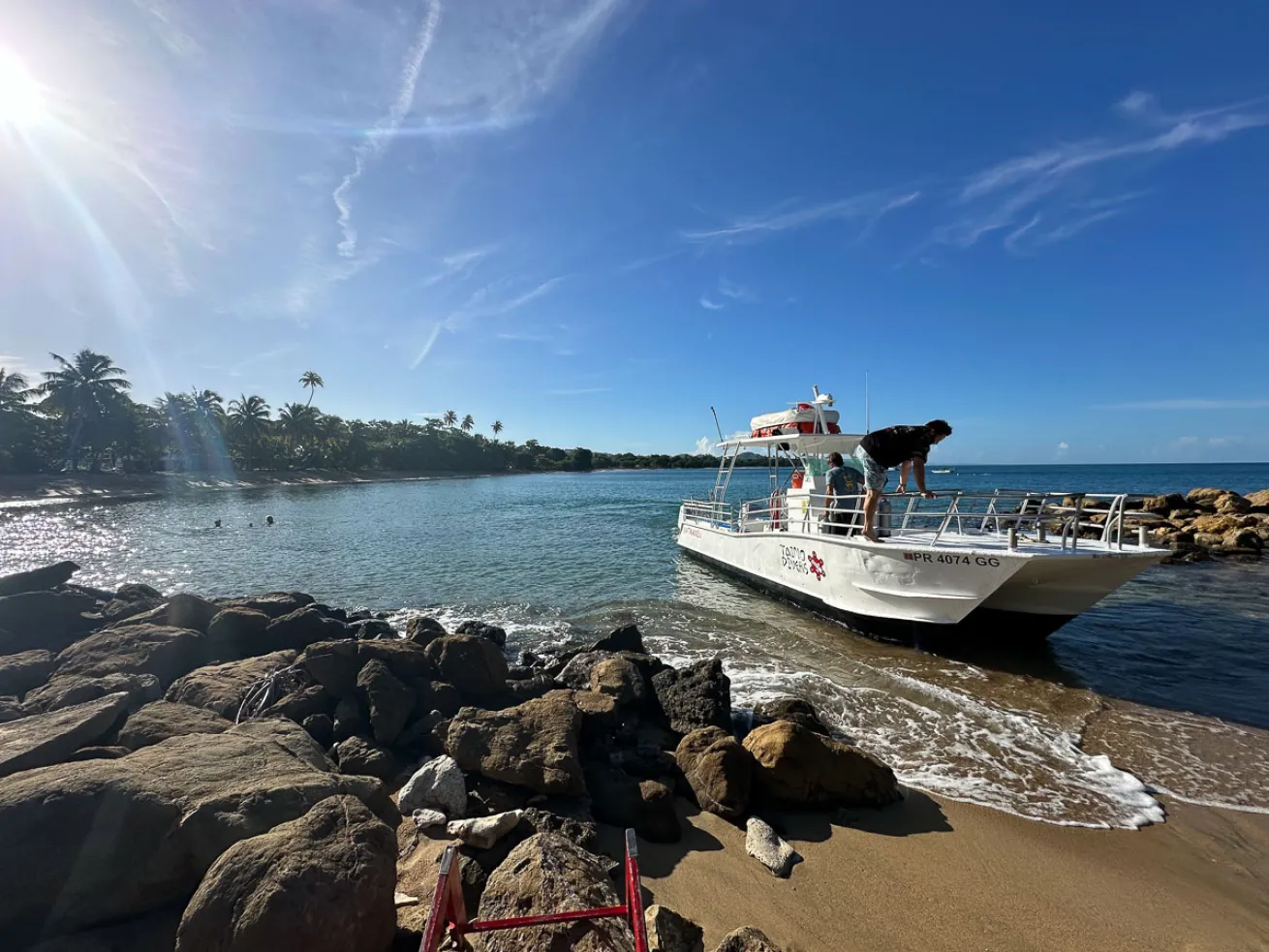
Gabriel JensenWith no formal marina, boats like Katmandu launch right from the beach.
Why Rincón Makes a Great Base
Rincón is often described as Puerto Rico’s answer to surfing hotspots like Tulum or Bali. Known for its laid-back energy, local art, and barefoot charm, it has earned a reputation as a trendy haven for surfers, divers and beachside yogis alike.
You’ll fly into Aguadilla’s BQN airport, where all the major car rental companies are available. Since rideshares are scarce outside San Juan, having a rental car is really the best way to get around. The roads are paved and easy to drive, just like the mainland, aside from a few sandy beachside parking lots.
Watching one of Rincón's glowing sunsets over the Mona Passage is a perfect reminder that you're diving along the edge of the Puerto Rican Trench, where deep Atlantic water swells up and past the island's western tip.
Staying in Rincón means easy access to dive operators catering to different styles of diving. Island Style Charters delivers adventurous panga-based trips to the outer reefs off Rincón’s coast. Rincón Diving & Snorkeling is a full-service PADI 5-Star Dive Center offering gear rentals, guided shore dives, tech services, training and eco tourism programs. Taino Divers, a longtime local favorite, provides daily reef trips and custom charters to Desecheo Island.
There are also trendy boutique hotels, casual restaurants and a welcoming pace of life that makes post-dive downtime as enjoyable as the dives themselves. With no formal marina, dive boats like Taino Divers’ Katmandu and Island Style Charters’ Grace Regina launch right off the beach. Gear is loaded fireman style, often through the surf, which adds a sense of old-school adventure to each dive trip.
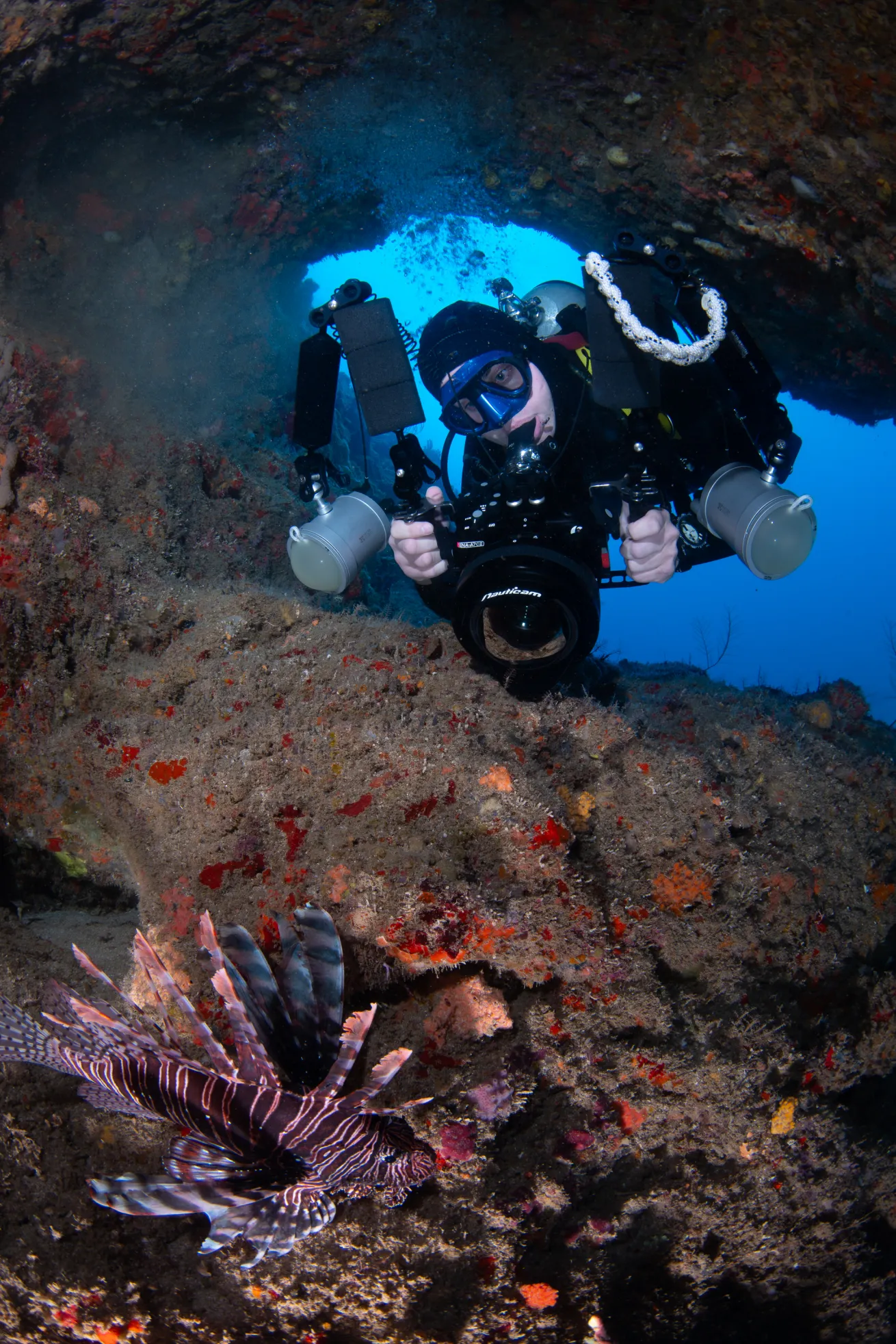
Gabriel JensenLionfish remain common on Puerto Rico’s northwest reefs, and are numerous in the area's undersea caves.
Tres Palmas Marine Reserve: Coral Forests and Easy Entry
Just minutes from the town plaza, Tres Palmas Marine Reserve protects one of the best remaining stands of elkhorn coral (Acropora palmata) in the northern Caribbean. Some of the remaining colonies are the size of trucks. Divers and freedivers explore the reef from shore via Steps Beach or by boat to access the deeper outer reef.
The site is shallow and clear, perfect for split-shots of corals and palm trees. Rubble zones offer macro opportunities for nudibranchs, crabs and other small life, while nurse sharks and lobsters find shelter in the coral day and night. The coral heads are enormous, and the surrounding reef teems with juvenile grunts and damselfish.
Because of the site's accessibility and biodiversity, locals return here again and again. It’s also a great place to spot passing pods of dolphins, especially on days with good visibility.
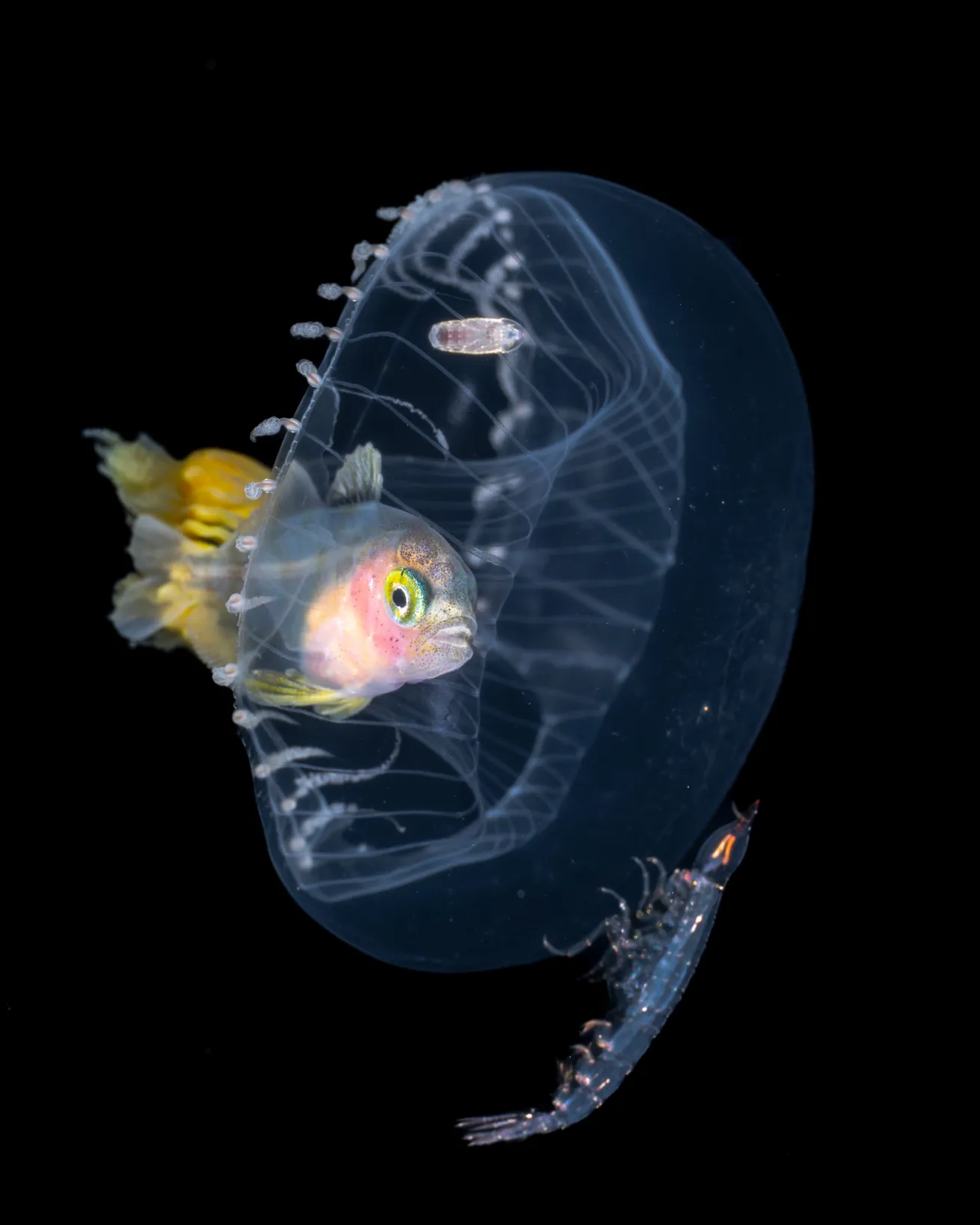
Gabriel JensenClassic blackwater subjects like driftfish hiding inside of jellyfish can be found at night right off the beach in Aguadilla.
Crash Boat Beach: A Critter Spotter’s Heaven
About half an hour north in the city of Aguadilla, Crash Boat Beach hosts a collapsed military pier that has been turned into an artificial reef. Coral-encrusted pilings attract snapper, sea turtles, baitballs, tarpon, and the occasional frogfish. The superstructure, surrounding sand, and seagrass flats make for excellent muck diving. Daytime dives often turn up curious macro subjects like gobies, jawfish, pipefish and decorator crabs hiding in plain sight. Seahorses and stargazers are occasionally reported, and lionfish tend to hang close to the structure.
At night, the site transforms. Due to its proximity to the Puerto Rican Trench, the incoming tide pulls in planktonic life from the deep ocean. My jaw practically hit the sand when I witnessed pelagic nudibranchs, larval octopuses, and translucent crustaceans drifting just off the beach. No downlines are needed here! The old pier structure acts as a collection point for classic blackwater species you normally need to go on a boat to find.
Local divers often bring multiple tanks and shore dive well into the night. The pier's remnants act as a natural filter, drawing in everything from baby crustaceans to radiolarians. On particularly active nights it's not unheard of to find dozens of juvenile octopuses landing in your hair and on your dive light.
Related Reading: The Best Dive Destinations for Macro Photography


