

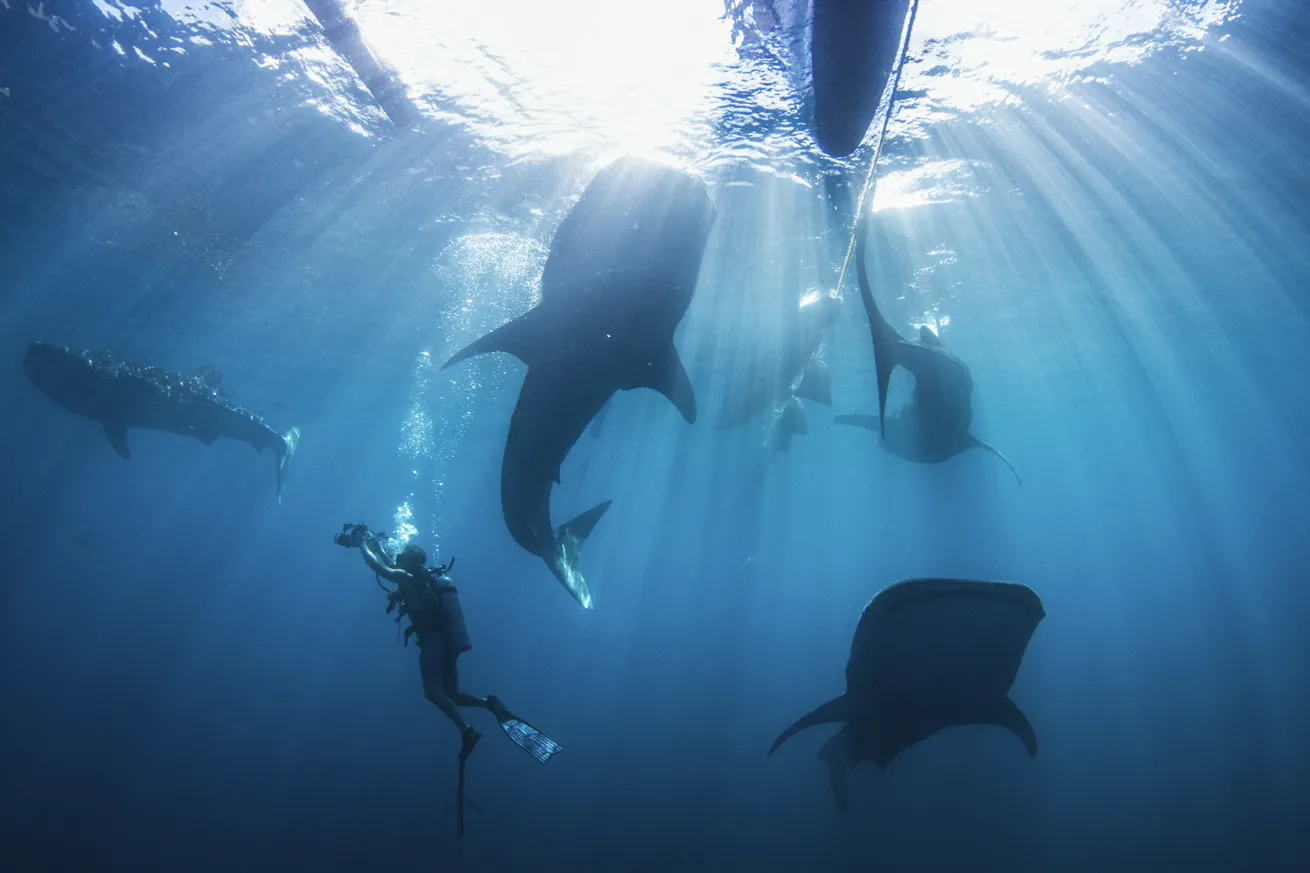
PADILove sharks? Now you can help protect them.
Many divers’ most unforgettable moments underwater include spectacular encounters with sharks and rays.
But according to data from the IUCN, overfishing has driven more than one-third (37.5 percent) of shark and ray species to be classified as threatened with extinction.
How Divers and Ocean-Goers Can Help Protect Sharks
PADI and the PADI AWARE Foundation have advocated for the protection of sharks and rays for decades. And now, they’re calling on the global dive community—the eyes and ears of the ocean—to help monitor health and population sizes of shark and ray species.
“Scientists and researchers around the world are already conducting critical work to better understand and protect sharks and rays,” says Ian Campbell, director of programs and policy at PADI AWARE Foundation. “However, there are still very few scalable monitoring systems capable of tracking long-term trends and evaluating whether conservation measures are working over time—particularly for highly migratory species.”
Enter the PADI Global Shark & Ray Census, a new program to get divers involved in data collection to further the conservation of these species. The census focuses on species-specific population tracking, with a goal of collecting and monitoring information on the distribution and health of shark and ray populations at local and global levels.
Any diver can record sightings and log them in PADI’s Conservation Action Portal. But PADI has also created an AWARE Shark & Ray Conservation Specialty course to teach divers more about these animals, including the threats they face and the solutions helping to protect them.
What is the PADI AWARE Shark & Ray Conservation Course?
The course is designed to shape divers’ understanding and perspectives of sharks and rays, to dispel misinformation and to engage in citizen science diving opportunities that can help protect vulnerable species.
During the course, divers learn how to conduct standardized survey dives, identify key species and collect and report data on species sightings (or lack thereof) in a way that’s useful to scientists, policymakers and conservation leaders.
“As divers, we are all intimately aware of how reefs everywhere are under constant pressure,” says Nate Sterns, a master instructor at Islamorada Dive Center, which will offer the course. “When we have the chance to make a difference with something as simple as reporting data and educating divers, it really is in our best interest to continue what we are already excited to do: hang out with and talk about sharks and rays.”
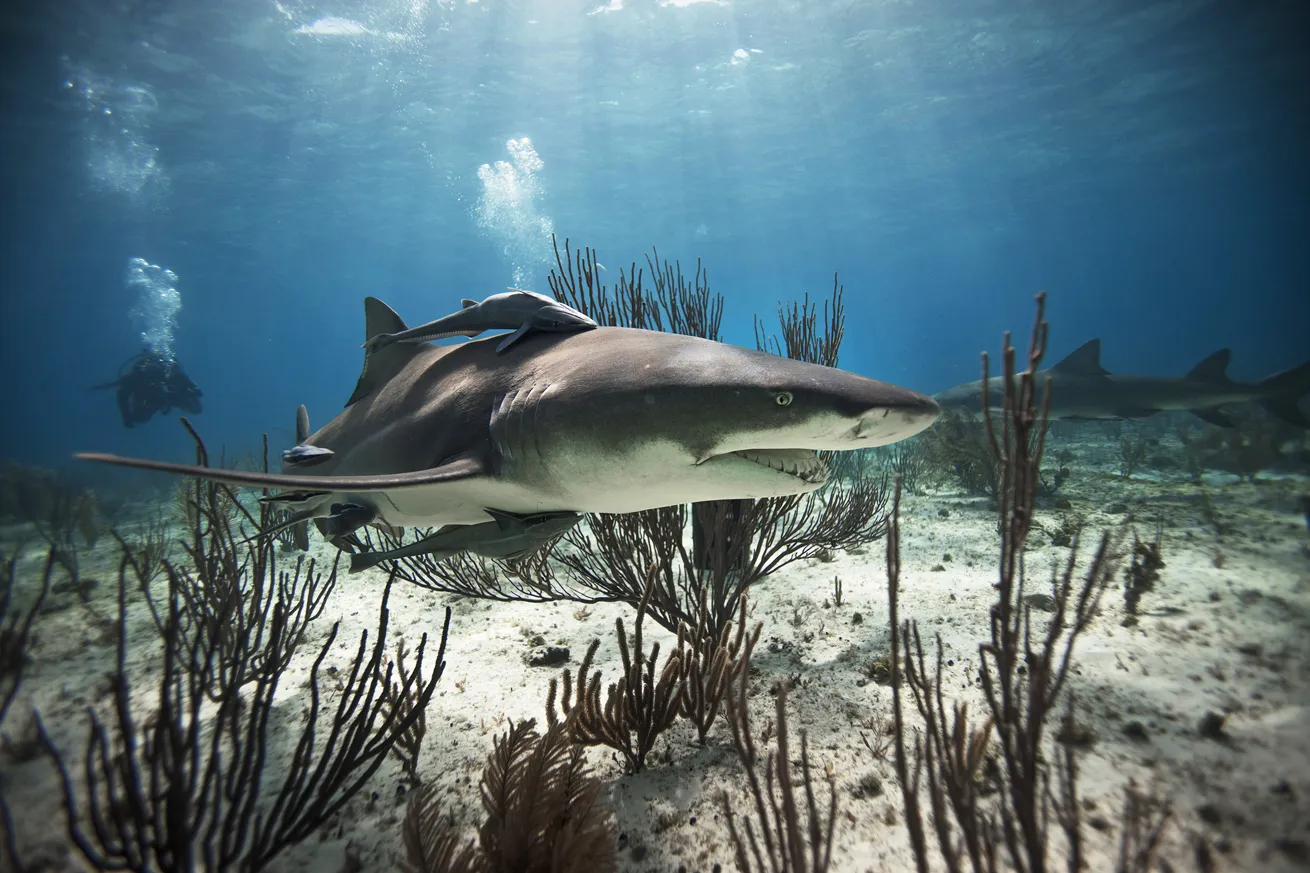
PADIDuring the course, divers will learn all about species such as whale and lemon sharks.
Contribute Data to the Shark & Ray Census
Even if you don’t take the PADI AWARE Shark & Ray Conservation Specialty, you can contribute observations to the Global Shark & Ray Census.
When you encounter a shark or ray (or notice the absence of these species at a certain site), note as many of the following details as possible. Then visit the PADI AWARE app or website, log into your account and submit your census form with this data:
- Site name and location
- Date of encounter
- Start and end times
- Depth of the animal
- Water temperature
- Average visibility range
- Ecosystem (kelp, coral reef, sandy bottom, etc.)
- Species (if identifiable)
- Notes such as visible injuries/scars, unusual behavior, etc.
Having a standard submission form allows the data to easily flow into a centralized database that can be accessed by researchers who are tracking populations. Their insights can be used by governments and NGOs to monitor and improve conservation efforts, develop and expand marine protected areas, advance sustainable and responsible shark and ray tourism, and more.
Not Just for Divers
Data can be collected from anywhere around the world, and it’s not limited to in-water encounters. If you’re topside—say walking along a harbor or on a boat, paddleboard or kayak—and see a shark or ray, you can report your sighting.
The census is supported by Swiss prestige watchmaker Blancpain and is being conducted in collaboration with James Cook University, one of the world’s premier shark and ray research institutes. Researchers in JCU’s Fish and Fisheries Lab, led by Dr. Andrew Chin, will help ensure scientific integrity of the collected data through regular analysis and reporting.
“The Global Shark & Ray Census has the potential to become one of the world’s largest diver-powered marine monitoring efforts, and we’re excited to see divers everywhere begin contributing meaningful data for ocean protection,” Campbell says.
Courses are being conducted worldwide starting June 2026. To find a dive shop near you and sign up for the PADI AWARE Shark & Ray Conservation Specialty, visit padi.com/aware/sharks.


