


Keone Drew PhotographyA diver explores the crystal clear blue waters, framed by the entrance of Ginnie Ballroom.
Northwest of Gainesville, Florida, lies a hidden gem treasured by the local dive community: Ginnie Springs, home to a camping-swimming-paddling-diving park along the Santa Fe River. Divers can choose from three different sites to refine their skills, including drift diving, cavern diving or even straightforward open-water diving in warm spring water.
“Ginnie Springs has some of the clearest water you can find in Florida,” says Jimmy Gadomski, captain and tec instructor with Florida Technical Diving.
Water temperatures consistently hover in the low 70s all year, which is warm for divers used to colder waters but chilly for visitors from farther south, like Melissa Johnson, director of marketing at Pura Vida Divers in Riviera Beach, Florida. The area holds a special family history for Johnson, who loves that divers and non-divers alike can find multiple ways to enjoy themselves at the springs.

Courtesy Melissa JohnsonGinnie Springs dive site includes multiple caverns and caves, including Devil's Eye.
“Oddly enough for a dive pro, I've never dived Ginnie Springs. But I've been snorkeling there since I was a little girl. My first visit to Ginnie Springs was a family trip in the late ’90s before I was a certified diver. I remember watching my scuba-certified parents descend into the crystal-clear water as my brothers and I snorkeled on the surface. To this day, snorkeling through bubble streams in the early morning hours is one of my favorite ways to enjoy the springs.”
Related Reading: 23 Underwater Cameras, Lights and Accessories for Divers

Courtesy Melissa JohnsonJustin Newton prepares for a cave dive at Ginnie Springs.
Diving Ginnie Springs
“Ginnie receives not only regular visitors from Florida for cave diving, but divers from all over the world,” says Justin Newton, retail manager at Pura Vida Divers and PADI Tec Trimix Instructor. Newton completed his first cavern course at Ginnie Springs in 2017 and later became a Cavern Instructor, though he does not currently teach this specialty.
“My first dives after my intro cert were around the 700-foot range into Ginnie,” Newton says. “For a new cave diver, this is a challenging and adventurous dive, being 80 feet deep and 700 linear feet away from the cave entrance. Further training and experience allowed me to gradually expand my limits, and I now routinely make dives up to 1 mile into Ginnie. These dives require complex planning and lots of experience and training.”
“For divers interested in experiencing overhead environments, whether cavern or cave, this is the place to do it. Ginnie Ballroom is a great spot for a diver's first experience with caverns and overhead environments,” says Dara Epstein, a PADI Advanced Open Water and Enriched Air Nitrox diver who chronicles her stories across social media. “Just don't forget to bring your flashlight!”
Open-water divers are permitted to bring lights into the Ballroom, a basin reaching 50 feet deep and deemed safe enough for divers who don’t yet have their cavern certification.
“There's a grate at the back of Ginnie Ballroom, where 35 million gallons of water per day come rushing through—don't forget to do the obligatory Superman pose down there!” Epstein continues.
Down the river at the Devil’s Spring System—made up of three smaller sites called Devil’s Ear, Devil’s Eye and Little Devil—only certified cavern or cave divers may bring dive lights. This deters inexperienced divers from venturing into areas that pose a risk without advanced training.
Related Reading: Best Destinations for Caves and Caverns

Keone Drew PhotographyGinnie Ballroom is accessible to all certified divers, often giving one their first glimpse of cavern and cave diving.
“The Devil’s cave system is one of the most decorated and famous caves in cave country and one of my favorite spots to cave dive when passing through,” says Gadomski. “For cave divers exploring Ginnie for the first time, I would recommend going with someone familiar with the cave. The flow in the cave can be very strong, and knowing how to get through the first few sections comfortably is important. Look at the cave map, make a plan and take things slow.”
With visibility stretching over 40 feet in the summer, the Santa Fe River offers a drift from the Devil’s Spring System to the Ginnie Spring (the length of about three football fields) as yet another option for divers.
The park is open year-round. Although divers are encouraged to come in the spring and early fall for best visibility, don’t discount Florida winters when exploring Ginnie Spring: While visiting the springs for the first time in nearly 20 years, Epstein was surprised to find exceptional visibility on a dreary day in January: “We had the entire site to ourselves—perfectly clear water, and we didn't have to share the cavern with anyone else,” says Epstein. “Rainy winter days can be amazing here!”
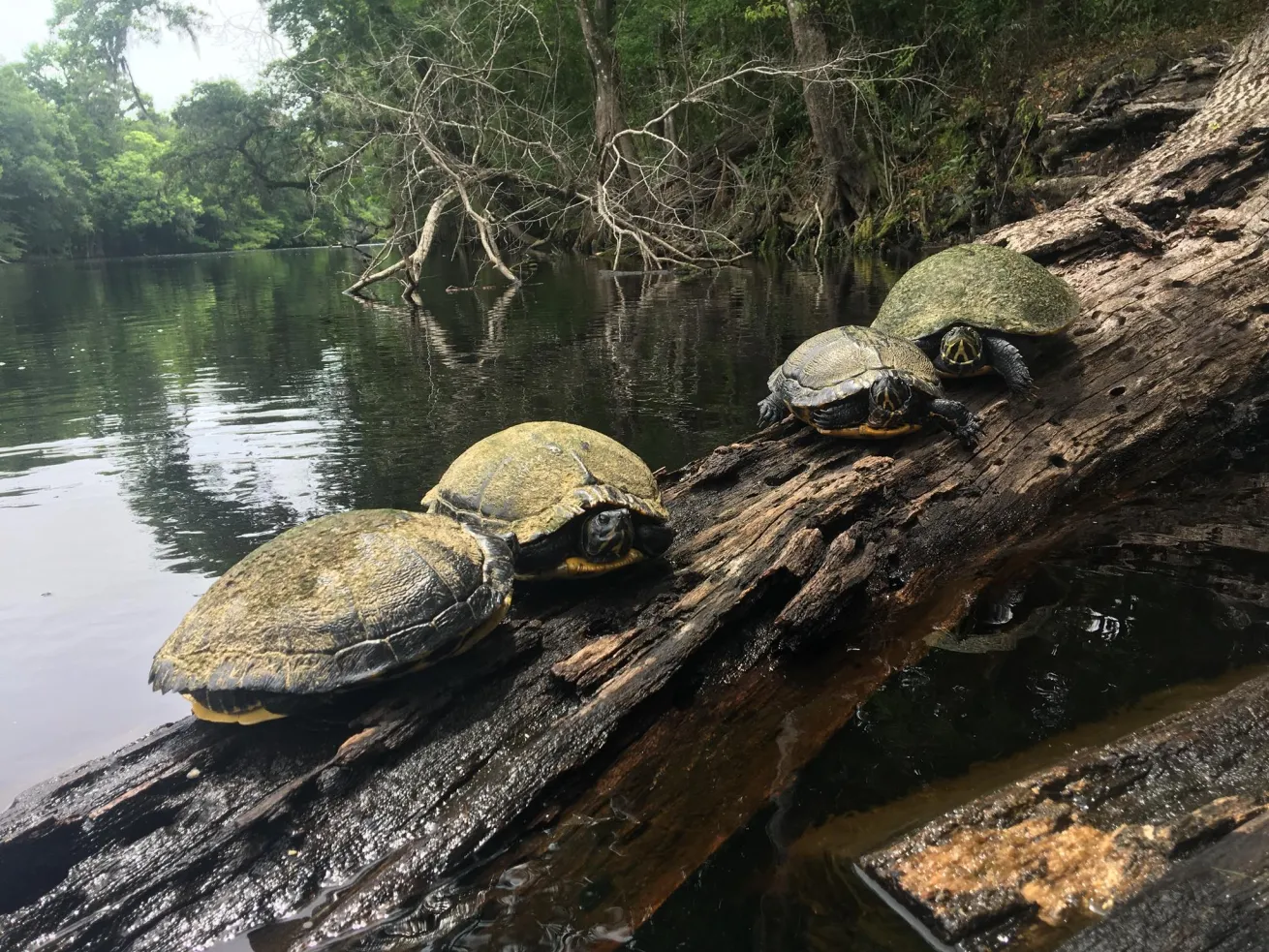
Courtesy Melissa JohnsonThe freshwater ecosystem is home to many animals, including multiple species of turtles and fish.
Community Vibes
Opportunities to explore caves and caverns have cultivated a community heavily interested in those areas. “The cave community is fairly small and full of like-minded individuals who find the challenge and thrill of cave diving to be very rewarding,” says Newton. “It is not uncommon to repeatedly run into the same divers you have met on previous visits. There are also great cave instructors who regularly teach at Ginnie Springs.”
The park’s full-service, onsite rental shop offers training and emphasizes safety by outlining clear rules about diving at the springs and nuances for the many different cave and cavern sites throughout the park.
Gadomski recommends taking the time to explore the Devil Spring System over multiple visits: “There is so much to see that it will take lots of dives to see the many areas the cave has to offer.”
Related Reading: Dive Travel Guide: 38 Places to Dive in 2025
Shutterstock/Microfile.org
Cassidy Vincent
Site Spotlight North American River Otter
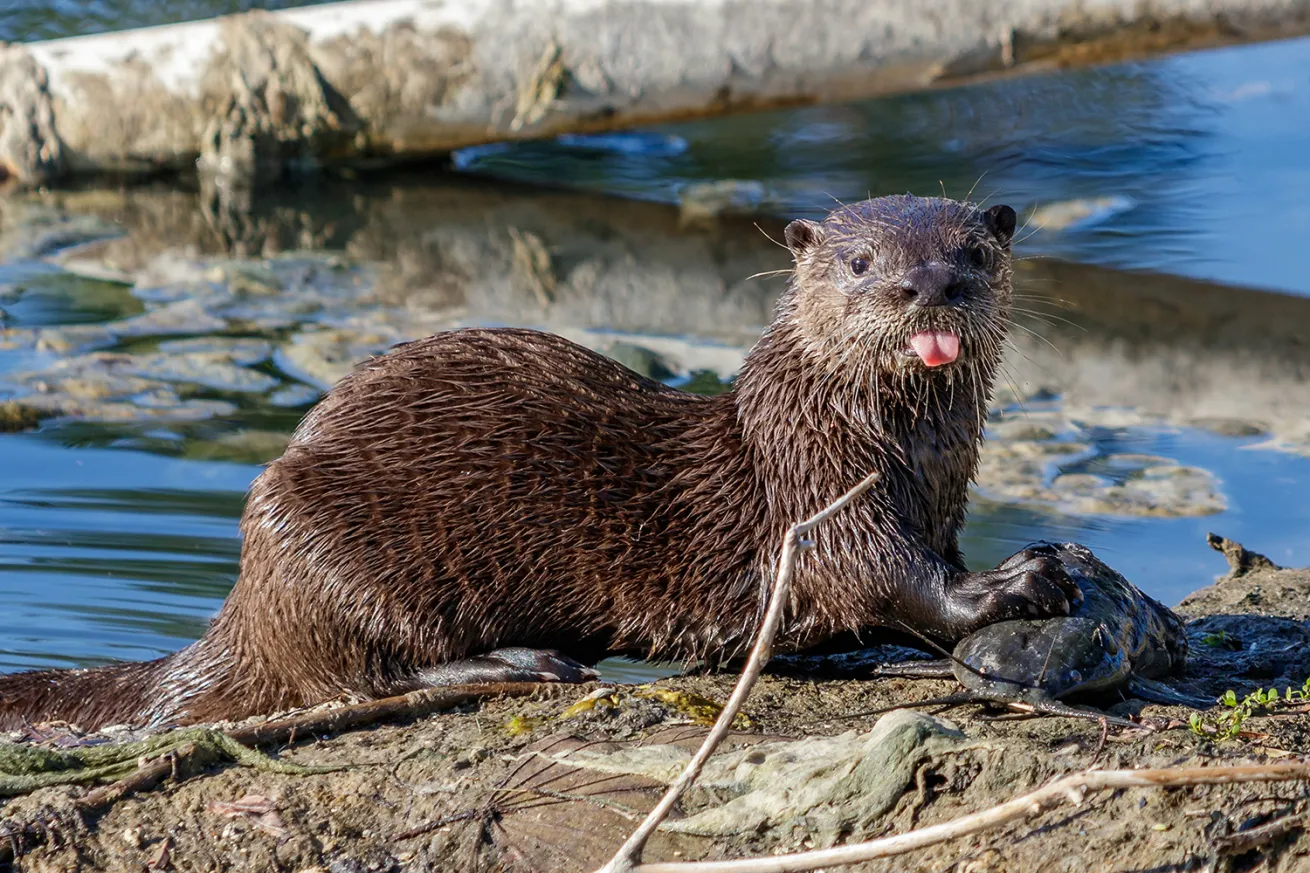
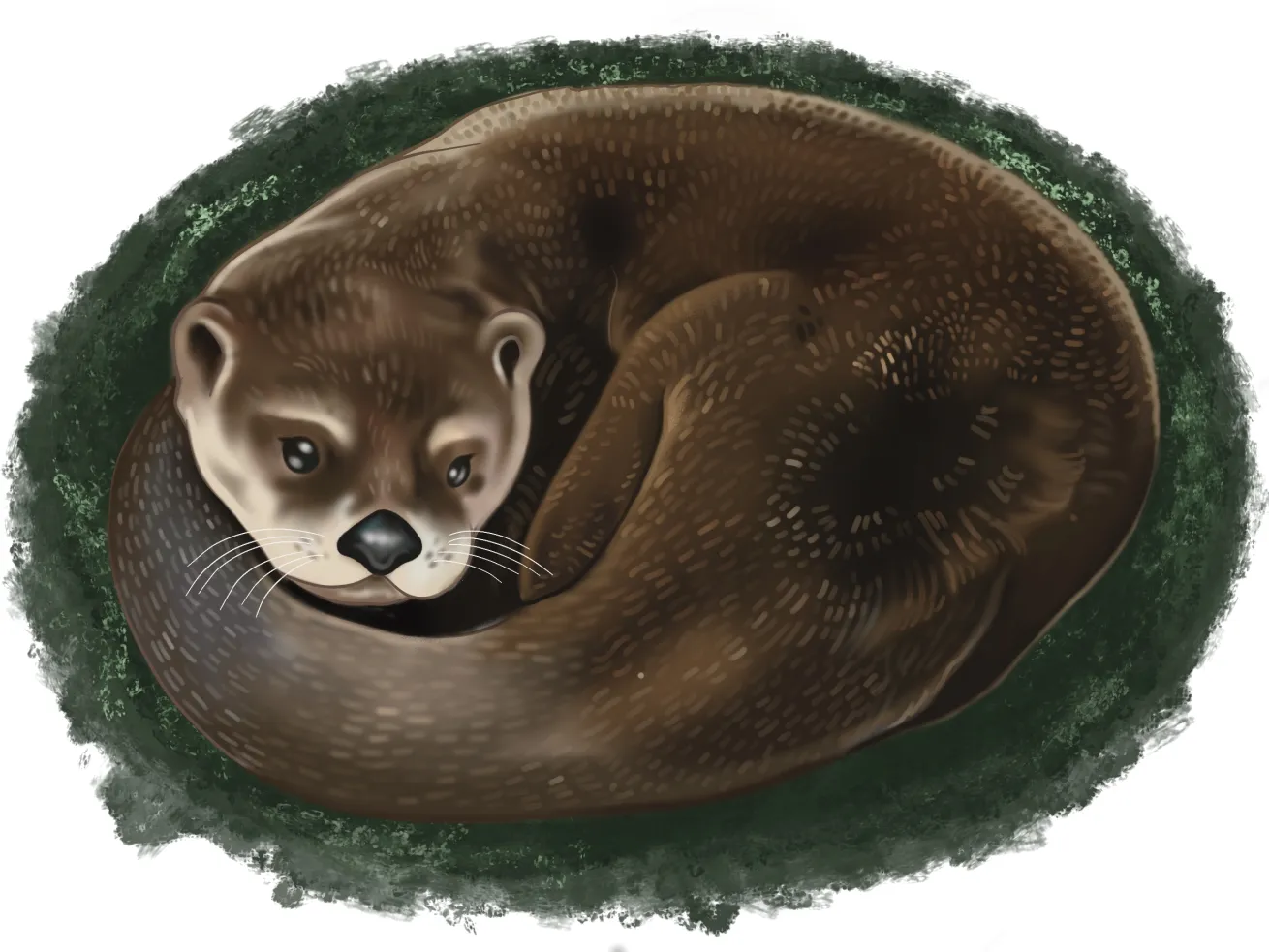
The North American river otter (Lontra canadensis) is one of Johnson’s favorite wildlife encounters at the springs. “On a quiet day, you might spot them frolicking in the springs or curled up and napping along the bank,” Johnson says. “They are elusive, so it's really a treat when you see them.”
Most active at dawn or dusk, these otters grow to about three feet long and weigh between 18 and 25 pounds. They are very playful and social with each other, living in groups that burrow at the water’s edge—and they are also interior decorators, making their homes cozier by lining them with leaves. From their burrows, otters have an ideal base from which they hunt for food in the water and on land. They eat everything from insects to fish to birds. River otters play an important role in the ecosystem as predators, keeping prey in check. Across North America, threats to this species include poaching and habitat loss.
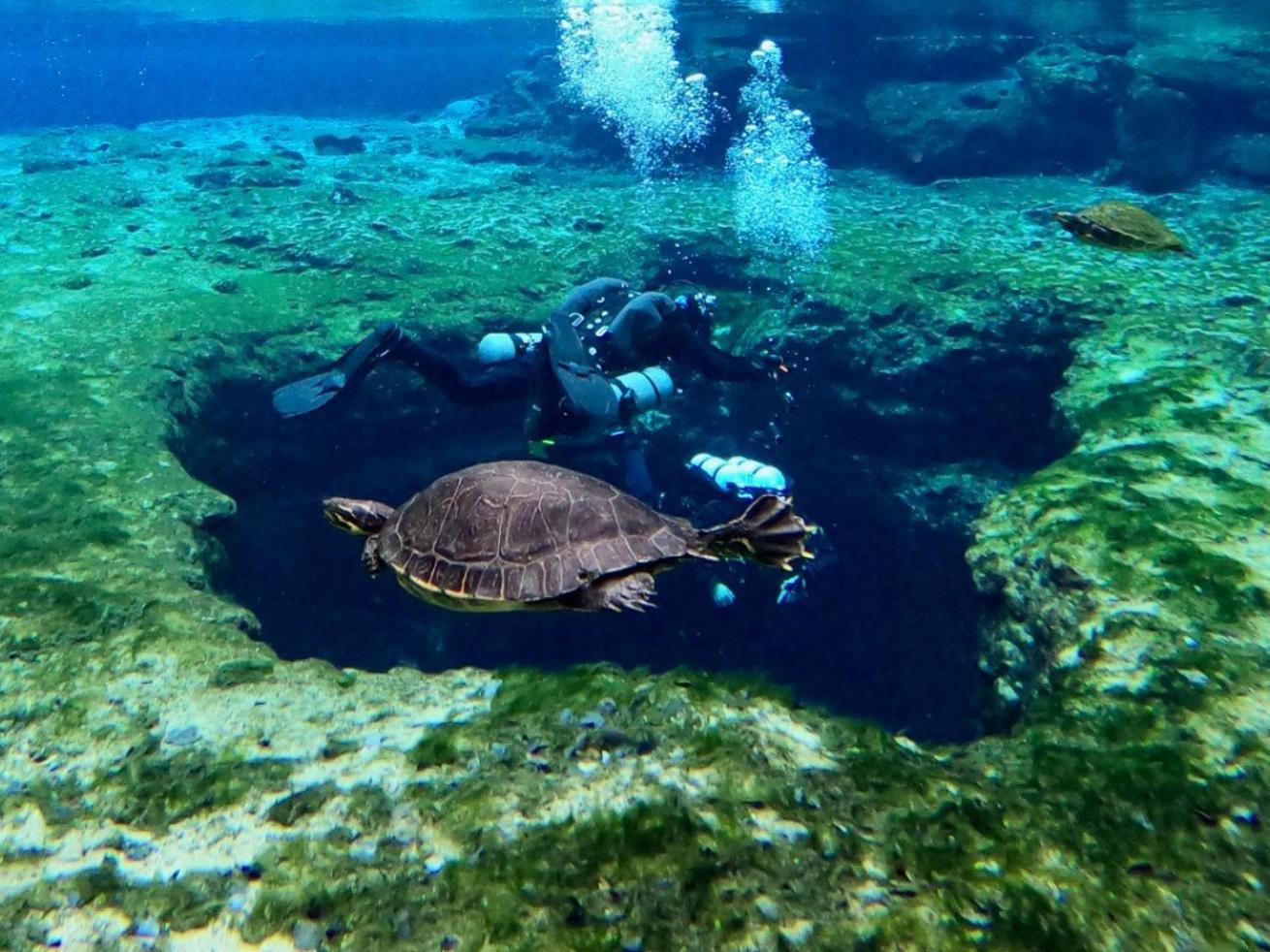
Courtesy Melissa JohnsonA turtle swims above divers as they descend into Devil's Eye cave system.
Need to Know Diving Ginnie Springs
Certification
PADI Advanced Open Water divers are eligible to take the PADI Cavern Diver Specialty course.
When to Visit
The springs are open year-round, with consistent temps in the 70s.
Plan Your Visit
All divers must have a buddy and a dive flag and float are required if diving in the river.
Contact
Ginnie Springs


