

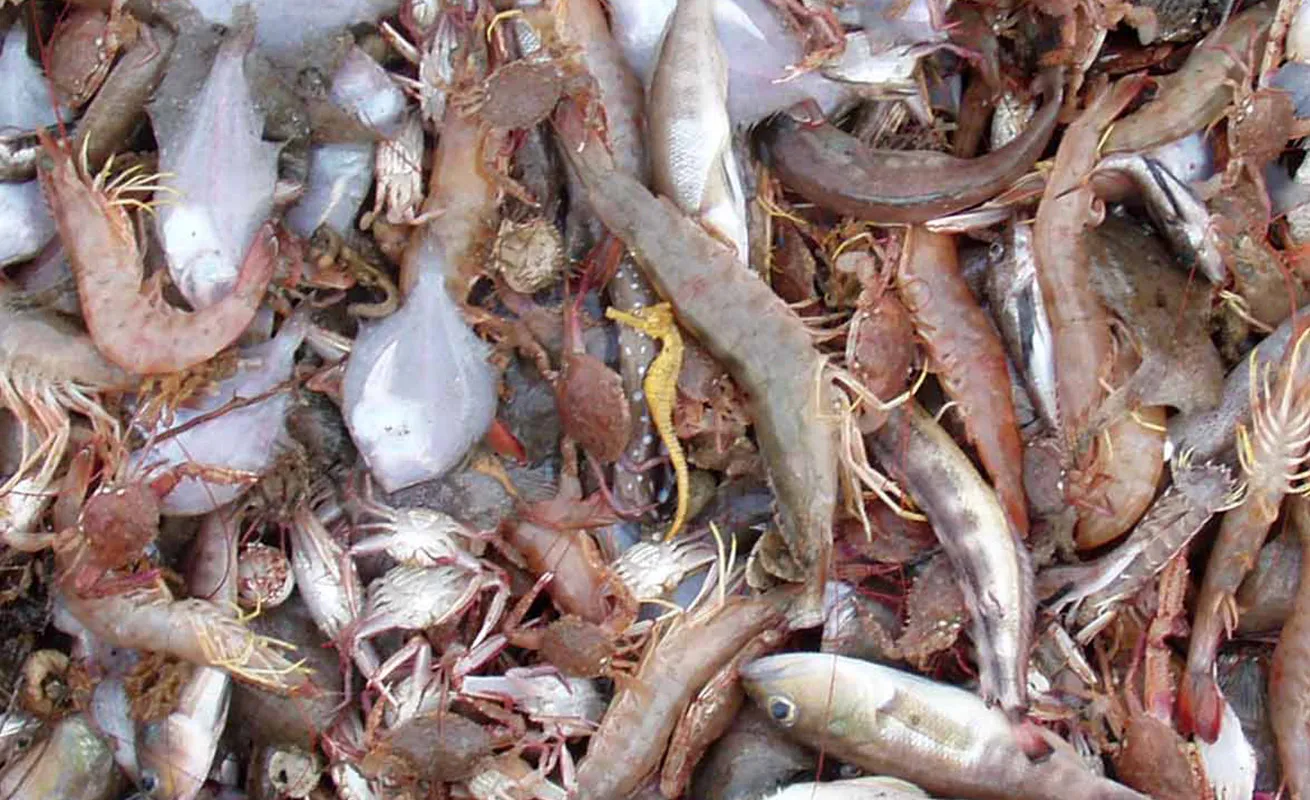
Courtesy Project Seahorse/Sarah FosterSeahorse in bycatch from Mexican shrimp trawler.
Seahorses and their relatives, the pipefish and sea dragons, are some of the most beloved small marine animals that divers encounter. “They’re some of the most fantastic, quirky, iconic fishes, some of the most charismatic animals in the ocean,” says Dr. Amanda Vincent, a professor at the University of British Columbia and the leader of Project Seahorse. “We use them as flagship species; we use them as ways to attract people and engage people in caring about ocean life in general and doing something to help.”
Unfortunately, many species of seahorses and their relatives face very serious conservation challenges, with many species assessed as threatened with extinction. Their most serious threat is being caught as bycatch, especially by non-selective fisheries like bottom trawling.
“Imagine your favorite forest hillside, and imagine helicopters dropping a massive net between them and dragging it across the forest, knocking down every tree in its path, catching every butterfly, every bear, every bee—that’s what bottom trawling does to the ocean,” continues Dr. Vincent. Since seahorses are slow-moving, they can’t get out of the way and are often caught by these bottom trawls (which in the wrong place can be extremely destructive, but can be managed sustainably).
Related Reading: In Search of Leafy Sea Dragons
While people don’t eat seahorses, like many species of bycatch, they are ground up into fish meal or fish oil, which is sometimes used as feed for aquaculture and sometimes sold as nutritional supplements. Dried seahorses are also sold as tourist curios or used in traditional Chinese medicine as a natural Viagra. Coastal habitat loss, including the development of real estate, is also a big conservation challenge.
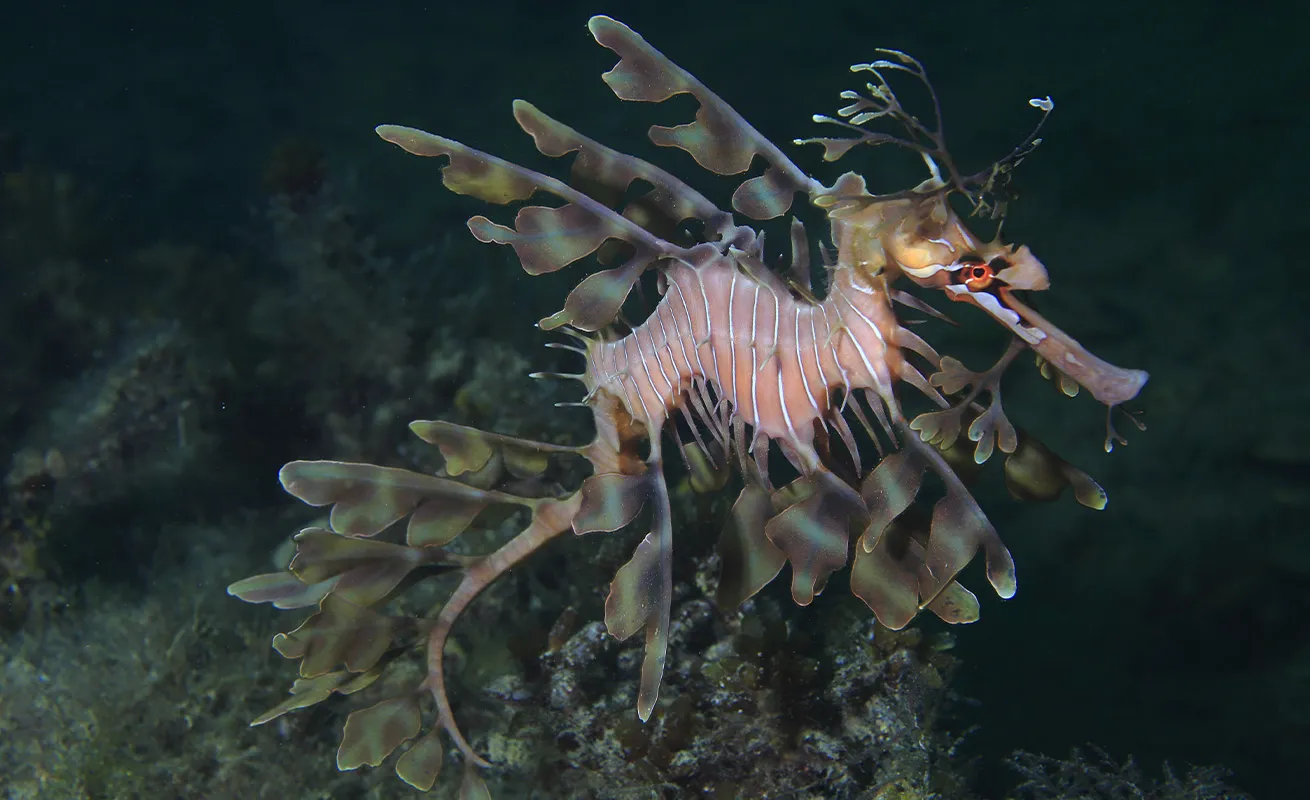
Shutterstock.com/Thierry EidenweilA leafy sea dragon swimming in Australian waters.
Project Seahorse, a coalition of researchers and conservation organizations studying and working to protect these animals, is here to help save seahorses. Their team studies threats to these amazing animals from an interdisciplinary perspective, and works to find evidence-based, data-driven conservation solutions that help humans as well.
“We regard the world as an onion,” Dr. Vincent says. “If you take a cross section of an onion and stick seahorses in the center, we realize that to do anything good for seahorses, you have to pay attention to their habitats and ecosystems. But for that to amount to anything, you need to reduce the pressure imposed by fishing and coastal developers, so we work with people and pay attention to the well-being of these human communities.”
There are lots of things that the Project Seahorse team says we can do to help seahorses and their relatives, both at the individual level and at the government policy level. As an individual, make good choices by supporting sustainable seafood that doesn’t include threatened seahorses as bycatch, and support elected leaders who push for science-based conservation policy change.
At the national and global policy levels, they’re working to ensure that new marine protected areas, including those called for by the 30x30 initiative to fully protect 30% of the ocean by 2030, include coastal habitats used by seahorses. Notably, these solutions will help lots of beloved marine animals and not just seahorses- remember what Dr. Vincent said about using seahorses as flagship species?
If we can save seahorses, we also save the many other beloved, or ecologically important but unknown, animals that live in their same habitats and face the same threats!
Related Reading: Fantastic Fathers of the Sea
To learn more, please visit Project Seahorse’s website, which has tools for you to follow along with their important work, including ways to donate (https://projectseahorse.org/saving-seahorses/seahorse-faqs/).
Courtesy David ShiffmanImage of David Shiffman
Dr. David Shiffman is a marine conservation biologist specializing in the ecology and conservation of sharks. An award-winning public science educator, David has spoken to thousands of people around the world about marine biology and conservation and has bylines with the Washington Post, Scientific American, New Scientist, Gizmodo and more. Follow him on @WhySharksMatter on Twitter, Facebook and Instagram, where he’s always happy to answer any questions about sharks.
The views expressed in this article are those of David Shiffman, and not necessarily the views Scuba Diving magazine.


