

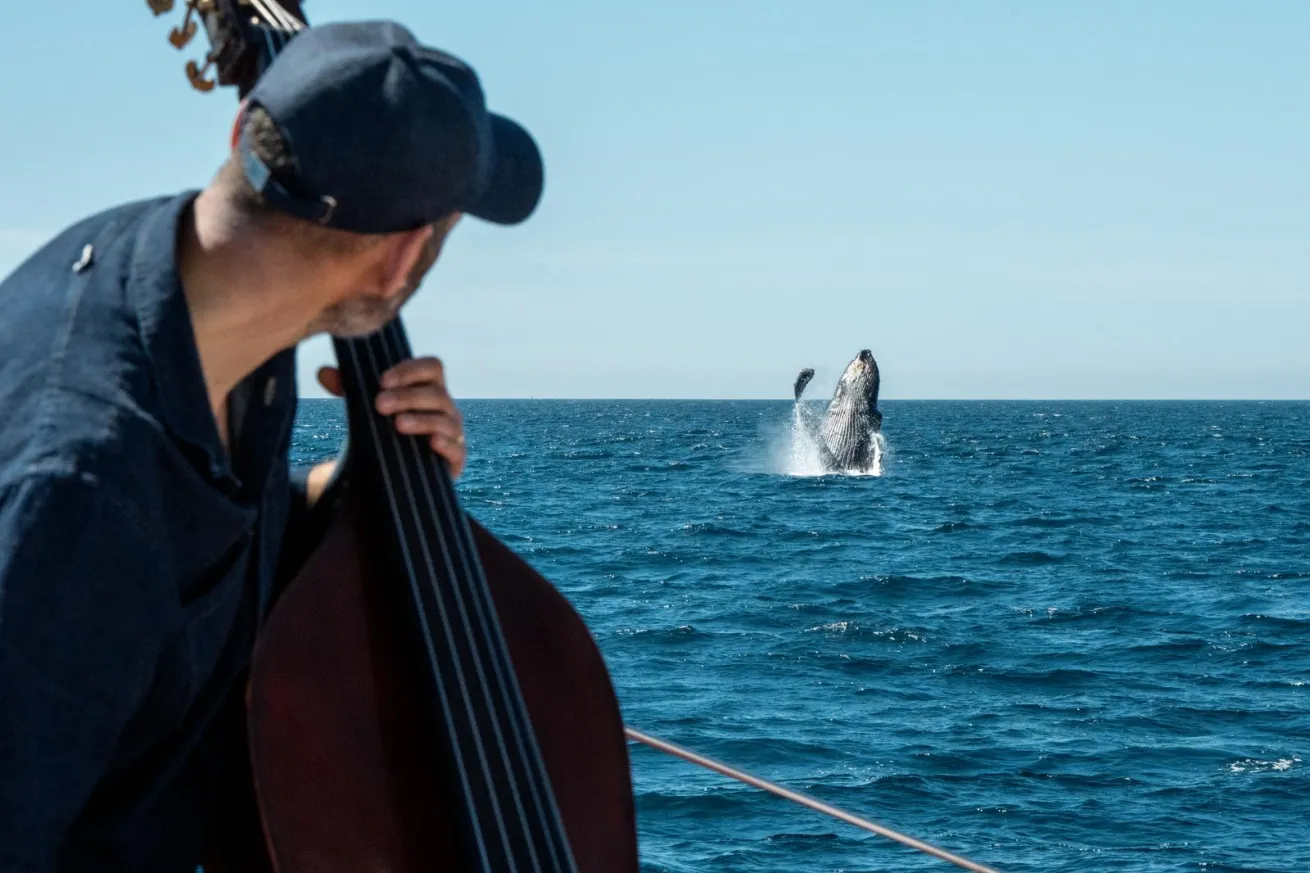
Courtesy Andy MannGarth Stevenson playing bass with humpback whales.
At the southern tip of Mexico’s Baja California peninsula, in one of the world’s most extraordinary seas, an unusual concert unfolded. High-quality hydrophones aboard a small boat allowed an audience to hear humpback whales singing live, while Canadian double bassist Garth Stevenson played on the bow of the boat, improvising a tune in real time. The result was an ocean symphony: a tribute to the richness of this ecosystem and a heartfelt call to safeguard it.
The performance was born from a desire to capture people’s attention and start a conversation about marine protected areas—especially in the Gulf of California and its incredible biodiversity—with something universally understood and deeply moving. Gabriela Gómez, director of Fomares, the fund dedicated to protecting Mexico’s seas, had the idea to use music. The premise: no lyrics, so the ocean could be heard as its own voice.
“Combining human music with the music of the sea amplifies the message that we are interdependent,” Gomez says. “These seas need stronger protection. This song is a call to protect these vital waters before it’s too late.”
Every year, between December and April, humpback whales migrate from Alaska to Mexico to breed and give birth. During this period, males sing to attract females or to compete with other males. Their vocalizations form a complex system, structured almost like a musical composition. An entire population of whales sings the same song, which gradually evolves throughout the season. Just as the whales travel and transform, Stevenson and his music do, too.
Related Reading: Where Do Humpback Whales Give Birth?
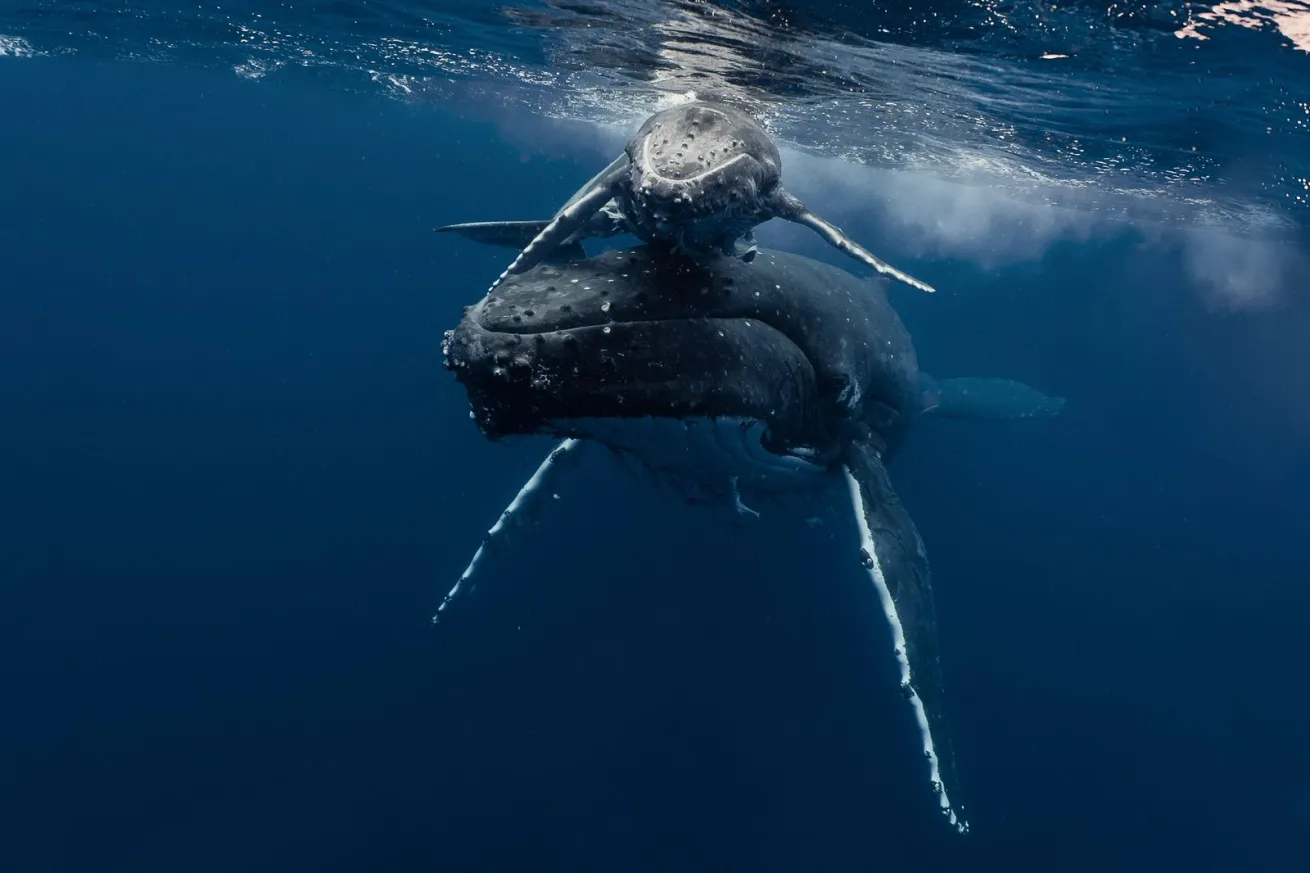
Maru Brito (Orgcas)Mother and calf humpback whales migrate from Alaska to Mexico between December and April to give birth and reproduce.
Composing With Nature
In 2010, Garth Stevenson traveled to Antarctica as a musician for a film project. Renowned whale researcher Roger Payne, the first person to record humpback whale sounds in the 1960s, was also on board. With Payne’s album Songs of the Humpback Whale, the world finally heard their voices, playing a key role in the global movement to save the whales, which continues to this day.
“One day, between South Georgia and Antarctica, I gave a concert on deck, imitating whale calls on the bass,” Stevenson recalls of that 2010 expedition. “Minutes later, 12 sei whales appeared and swam alongside our vessel.”
The following summer, in British Columbia, a group of humpbacks stayed close to his kayak for 45 minutes. “Antarctica was a ‘wow’ moment for my music, but British Columbia was a spiritual one,” he says.
In 2018, off the coast of North Carolina, he heard sperm whales clicking through a hydrophone. That was when he started dreaming about performing a concert with them.
Related Reading: Why La Paz Should Be Your Next Dive Trip
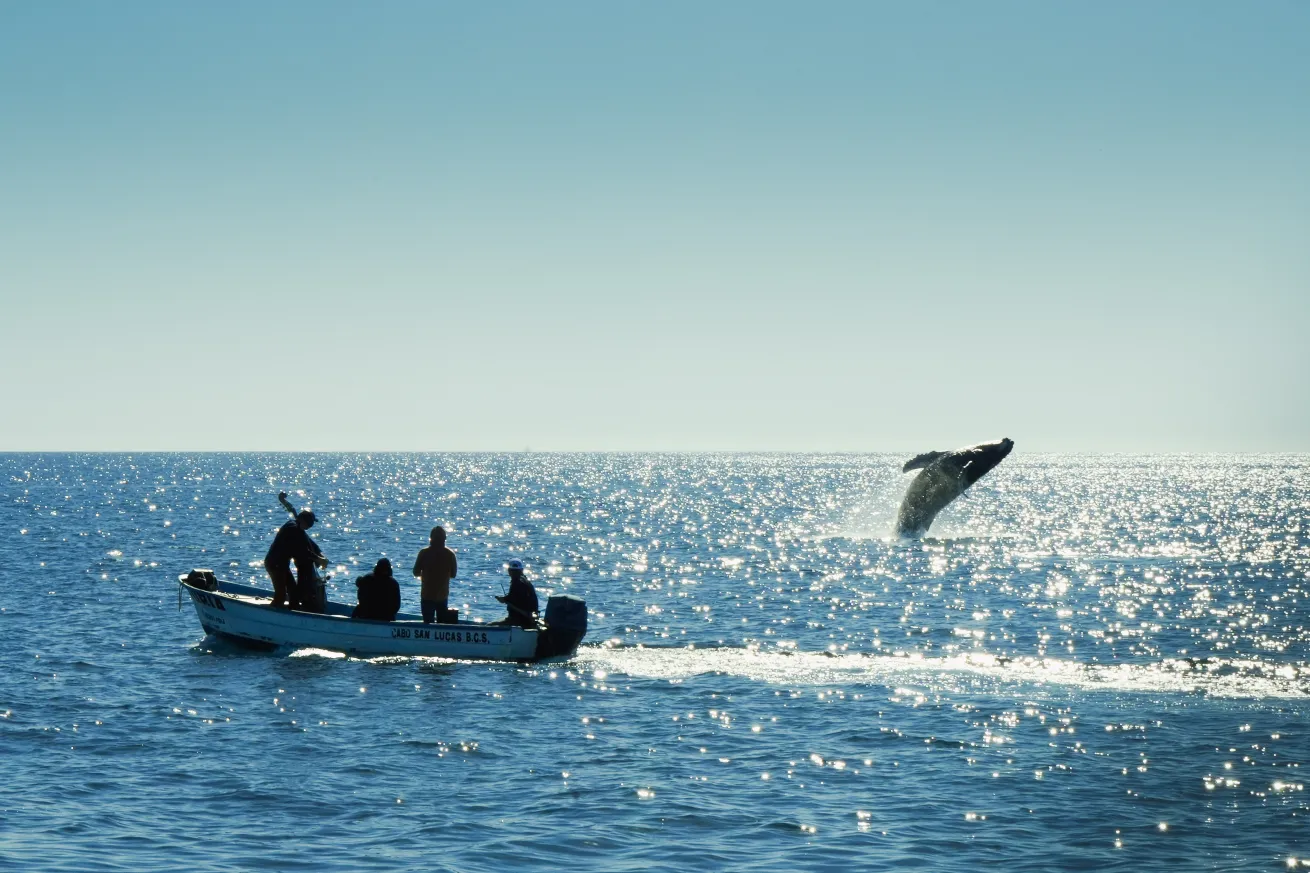
Natalia CarbonellStevenson performs on a local fishing boat as a humpback whale breaches nearby.
The Concert
Stevenson admits he had never prepared so much for a concert. Most sound equipment and instruments are ruined by water, so he built waterproof cases for all electronics and even for his bass. He planned for every possible scenario, bringing backups and repair materials and arriving in Cabo San Lucas five before the weekend of performances to practice with the whales. At first, he could only identify a lead voice, but the more he listened, the more layers he uncovered.
There was no fixed schedule. Stevenson’s crew and a small audience set out from the pier at 7 a.m. to search for whales. Everything depended on the wind, the sea and of course the whales. When they found the right spot, they stopped the boat, shut off the engines, and lowered the hydrophone, which was connected to a speaker beside Stevenson and his bass. Around him, attendees were captivated first by the whale songs.
After a few minutes, Stevenson joined in.
“I reacted to [the whales],” he says. “I listened and responded in the same or different notes. Sometimes we would sync up, but I won’t claim I was communicating with whales. Still, my stomach told me something was happening.”
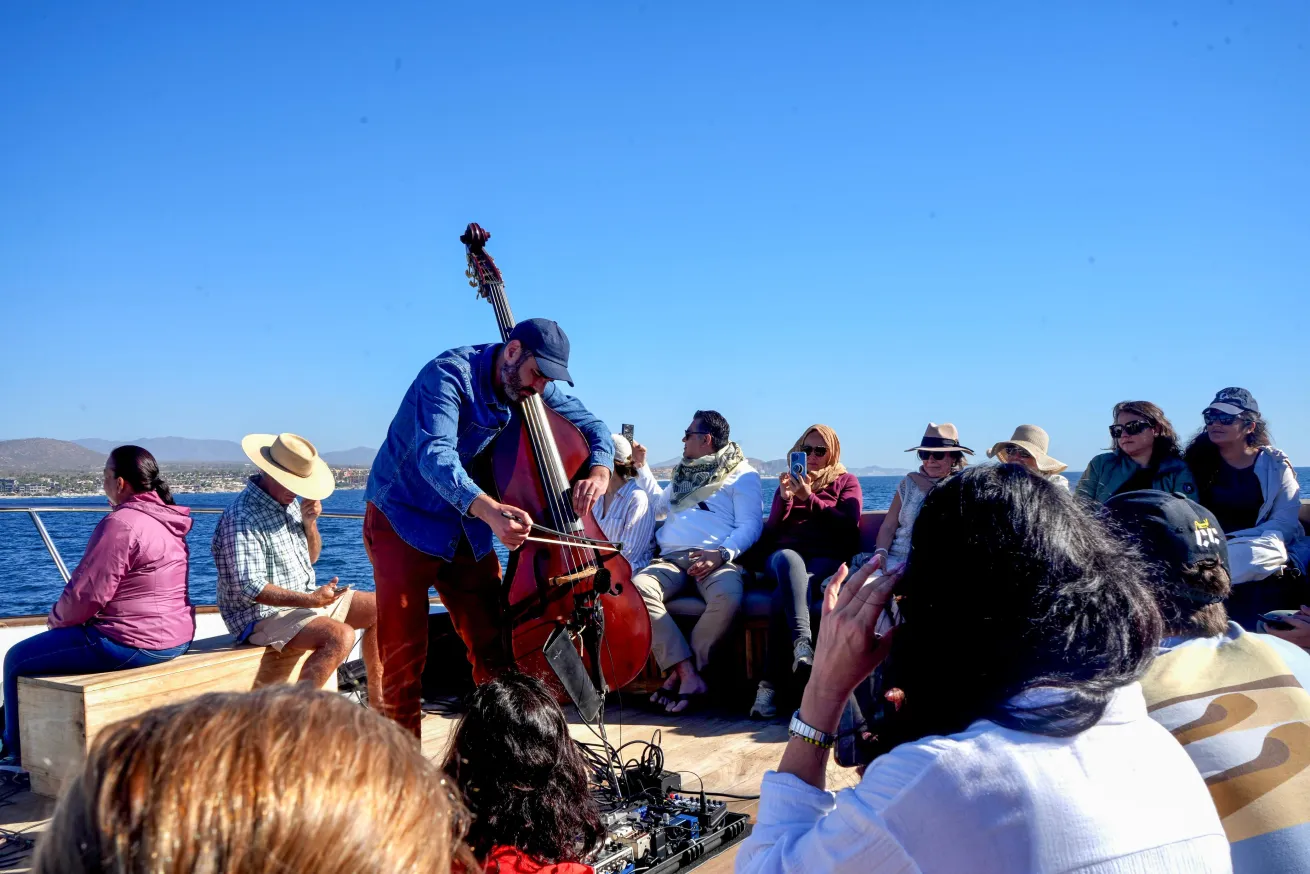
Natalia CarbonellStevenson performs a live concert on board with the public.
Although he enjoys playing in nature alone, what Stevenson says he truly loves is sharing those moments with people and watching their reactions. His favorite moment was when people heard the whales for the first time. “Most were completely blown away,” he says.
“It was magical,” Gómez adds. “We achieved our goal. I think everyone felt that connection with nature, a broader understanding of life on this planet.”
Related Reading: How to Become a Whale Defender
There were many unforgettable moments during the project, but one stood out. During rehearsals a few days before the concert, as the sun went down, it was just Stevenson and Captain Ernesto on the boat. Although they couldn’t see any whales, they heard many of them through the hydrophone, and he was struck by how far sound can travel.
“[It’s] so moving when you’re making music,” he says. “With echoes, I could imagine the landscape, the underwater mountains. In that moment, I felt everything was aligned—the whales, the weather, the ocean.”
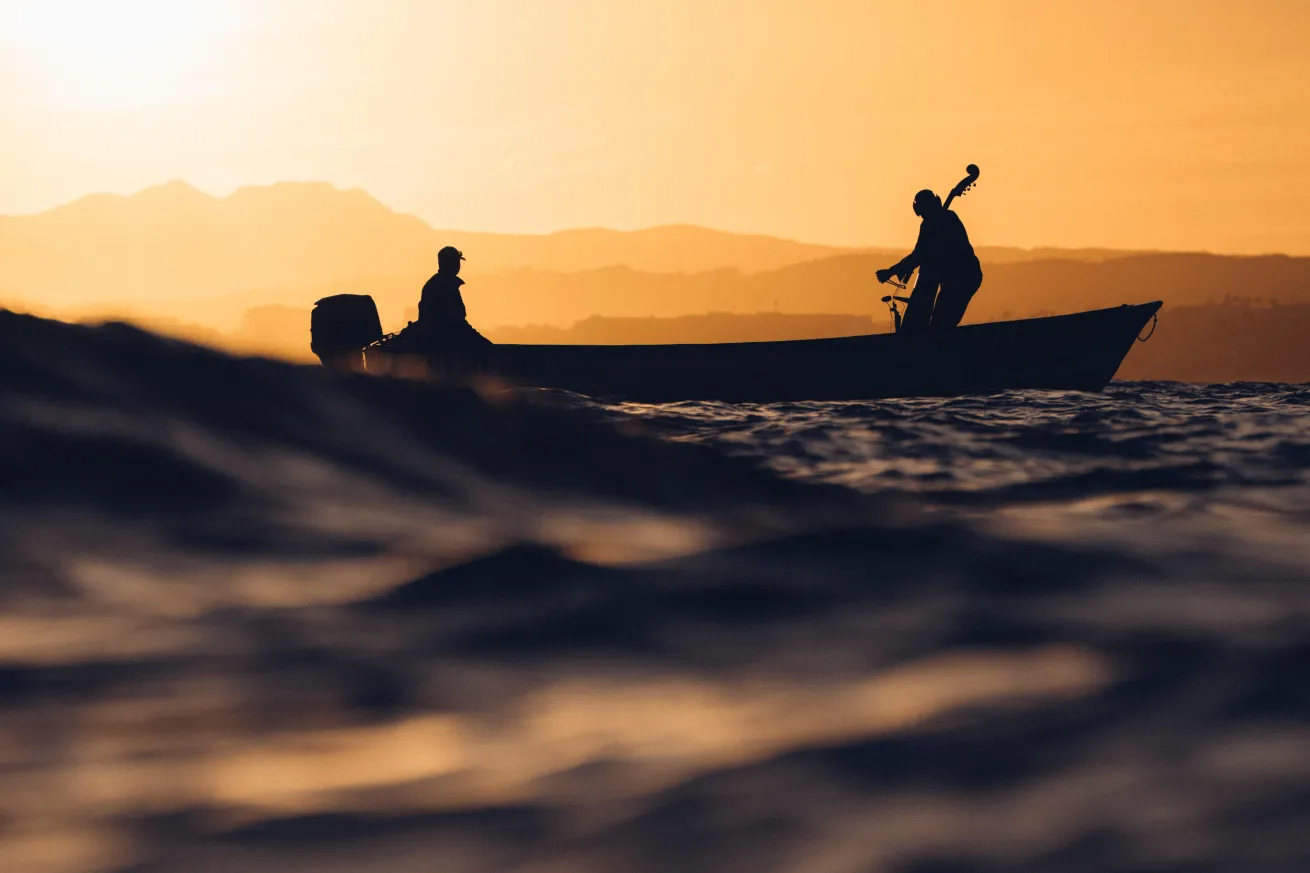
Andy MannThere were many unforgettable moments, but one stood out for Stevenson: a double bass concert at sunset.
The Song and Film
The new piece composed at sea is called Dos Mares, in honor of a proposed large-scale marine protected area in Baja California Sur that would safeguard more than 600 species. Humpback whales are indispensable to the ecosystem and to the local economy, which relies on tourism. Their main threats are collisions with vessels and entanglement in fishing nets.
The entire experience was documented in a short film, Ocean Symphony. It explores the connection between music, whale calls, biodiversity and local fishermen. The film was directed by Andy Mann, with cinematography by Maru Brito of Orgcas and Alonso Rodríguez of Mares de México, in collaboration with Cristina Mittermeier and Paul Nicklen.
Related Reading: Orgcas: The Women Uniting to Save Sharks
The official release of the song and documentary was held on May 29 at a gala event in Mexico City. In October, an immersive experience opened at the Natural History Museum of Mexico City, and both works will be available to the public within the next few months.
The reception has exceeded expectations. By popular demand, there is now a possibility of repeating the concert at sea during the next migration season in February.
“I don’t want to just be the guy who plays with whales,” Stevenson says. “Years ago, I saw an interview with Roger Payne, and he said that we must bring art together with science to bring the emotional component into it. I want to use music to raise awareness and protect nature.”


