

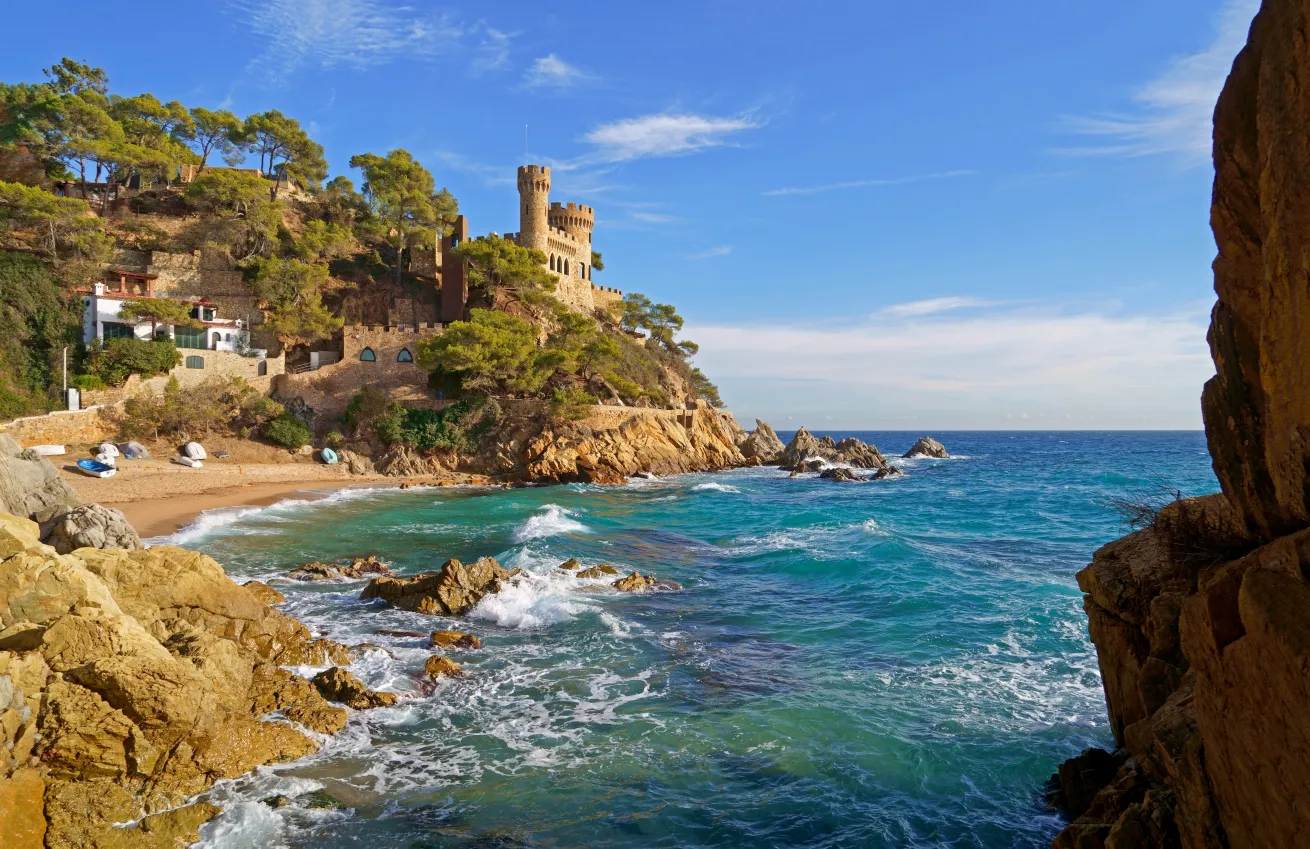
Shutterstock/AprilphotoThe Costa Brava coastline is complete with stunning rockscapes, enchanging castles and mesmerizing diving.
Floating in the reflection of a sail-shaped skyscraper, I had a smile on my face that wouldn’t go away. I felt incredibly proud to have just completed my PADI Open Water course on an urban beach with Underwater Barcelona, a dive shop on the busy beaches of the Catalan capital, where I had been living for a few years. That day, my focus was on getting comfortable with basic underwater skills, but in due time, I would have my sights on one of my favorite places to get away to when I need a break from the city, the Costa Brava.
It’s a region I’ve researched thoroughly as a guidebook author for Lonely Planet, bussing and hiking along the coast between fishing villages and pine-covered beaches. I became obsessed with seeing it as thoroughly as possible, hating to leave any town unvisited or seaside restaurant untaste-tested. From the few snorkeling sessions that I squeezed in before becoming a diver, I knew that there was an underside to the coast that only a certification could get me to. Not only is it home to one of the best diving destinations in Spain, but it is also full of wonderful dive sites with wrecks, reefs, and rolling meadows of posidonia seagrass. Here’s what you need to know if you’re planning a dive trip to the Costa Brava.
The Medes Islands are the Must-Dive Destination
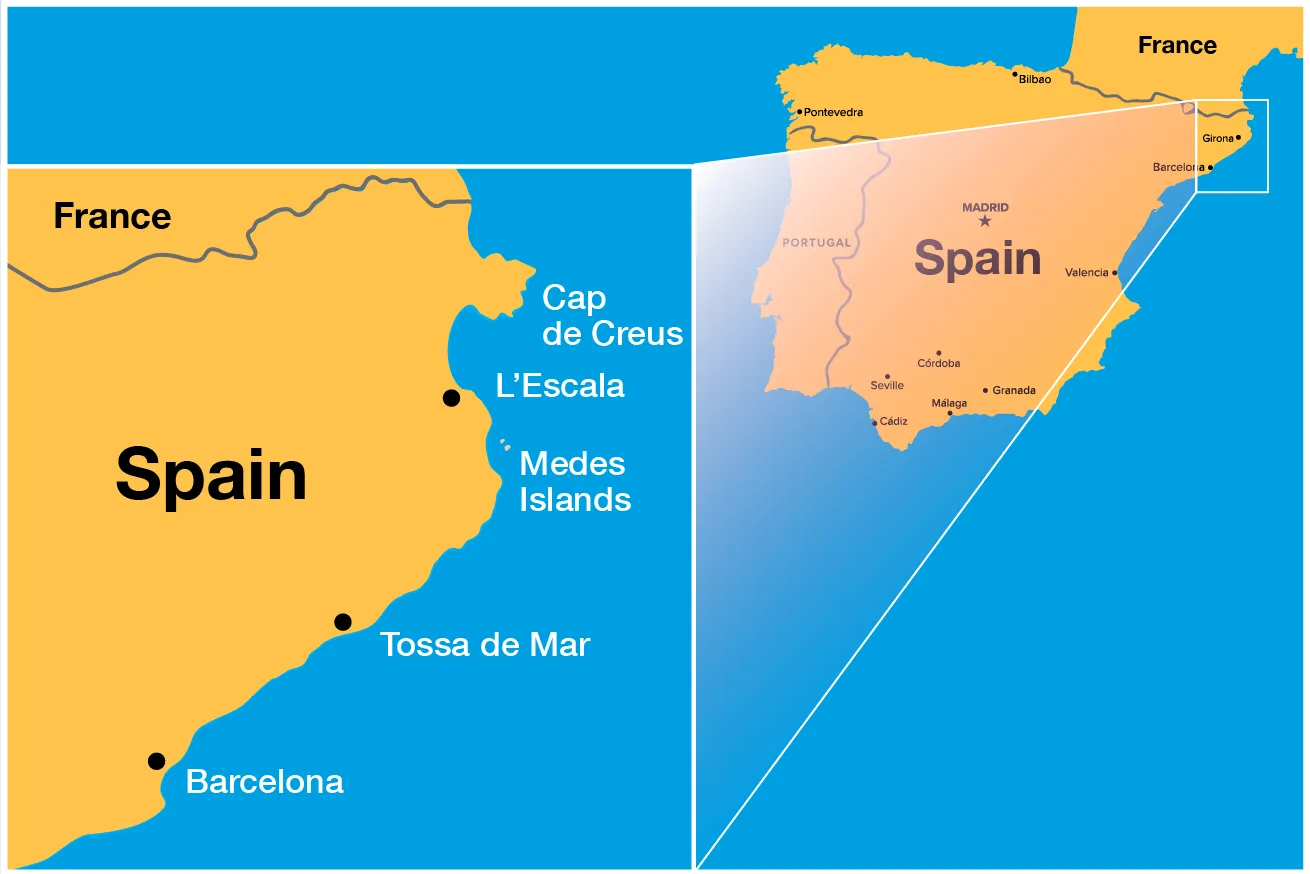
The Costa Brava stretches from the long sandy beaches of Blanes to the craggy peninsula of the Cap de Creus, and there is only one set of islands you can visit from the coast, which also happens to be the prime diving destination.
Within minutes of descending our first dive site Carai Bernat, I saw a giant grouper (Epinephelus marginatus) hovering around the reef wall covered in soft coral. This massive mottle-patterned fish with bulging eyes and big lips took me by surprise with its size and friendly demeanour, despite warnings from the guides to keep my fingers tucked away lest the groupers confuse them with sausages. They can grow up to 130 pounds and are known as the kings of the Medes Islands. One of the best nature reserves for scuba diving in the Western Mediterranean, this well-protected seven-island archipelago is located just a mile offshore from the town of L’Estartit.
Related Reading: A Lush Dive Sanctuary on Cozumel's Coast
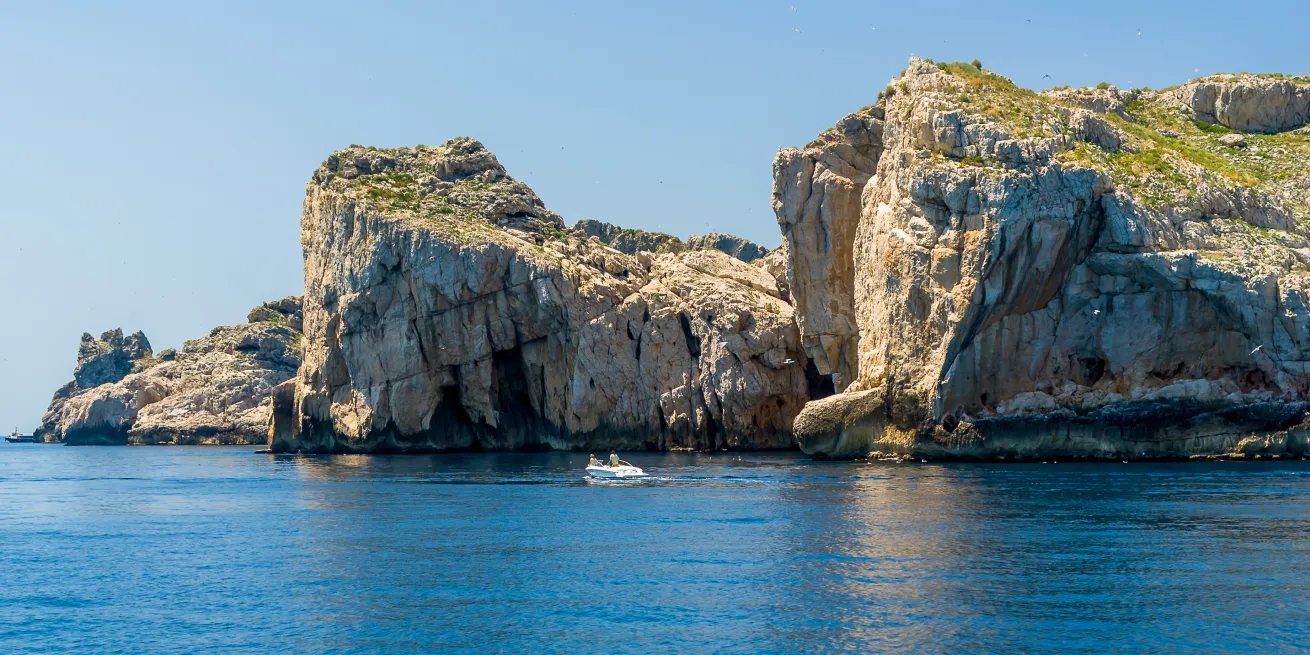
Shutterstock/Dziorek RafalThe Medes Islands boast the best diving along the Costa Brava.
The Medes Islands are the most popular diving destination on the Costa Brava with a harbor buzzing with boats heavy with freshly-filled tanks and eager wetsuit-clad explorers. With many shops like El Rei de Mar and Calypso Diving to help you access the islands’ 14 dive sites like the beginner-friendly Salpatxot, where I saw many moray eels peeking their heads out of their holes, to more technical cave dives like Dofí Nord, a lobster-filled set of tunnels named for a dolphin statue placed at one of the cave entrances. I swam alongside large coral-covered walls, looking diligently for octopus hiding in their holes but occasionally was distracted by the swaying of the posidonia seagrass holding strong against the day’s current.
The biodiversity of the islands is strictly protected, so diving is regulated with a cap on daily visitors and open only to certified divers, with Open Water Divers and Advanced Open Water Divers with less than 50 dives required to have a guide. Snorkeling is allowed, but anyone who wants to do a try-dive will do it along the coast, not in the islands.
Hotels near the harbor in L’Estartit start at about 100 euros per night, but if you rent a car, you can take advantage of accommodation like Càmping Castell Montgrí, which is a typical camping resort in Spain that offers fully-equipped bungalows and has pools and restaurants catered to family holidays. For the post-dive munchies, pick up a butifarra (a typical Catalan sausage) sandwich from Can Lluís, a local delicatessen, to try some great homestyle Catalan food like cannelones, a type of stuffed pasta.
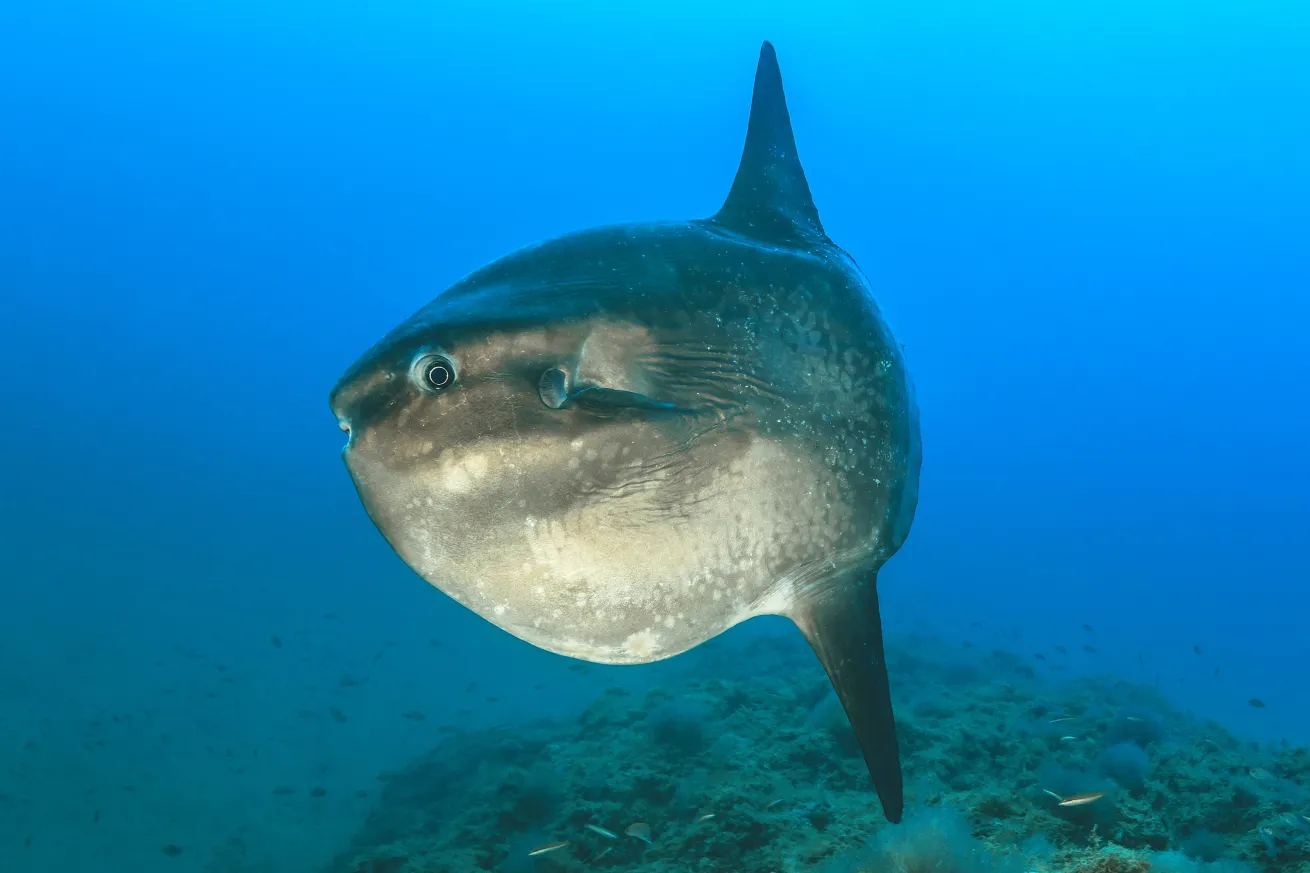
Shutterstock/David CarboMola mola can be found in the waters surrounding the Costa Brava.
Where to Dive and Vacation on the Costa Brava
You could spend a week diving in the Medes Islands, but the Costa Brava has many more beautiful destinations between the French border and Barcelona. All along the coast, you will find posidonia, the Mediterranean’s vital seagrass covering the seabeds, and if you get very lucky, you may be able to spot the mola mola, or sun fish, the heaviest bony fish in the world.
Tossa de Mar
One of the most popular day trip destinations from Barcelona is Tossa de Mar, a picturesque town with an iconic tower decorating the seaside skyline. Dive shops like Dream Dive have over two dozen sites you can try, including a beginner-friendly shore dive at Platja Mar Menuda. It takes about 90 minutes to get here from Barcelona, so you should come for a day trip between sightseeing or stay a while in one of the seafront hotels or youth hostels. There is plenty to explore in the medieval village and beautiful coves, where a snorkel would be worth bringing along for any post-dive beach time.
L’Escala
Located on the other side of the Montgrí Nature Reserve from L’Estartit, this is the ideal destination to pair with a trip to the Medes Islands. It is also famous for ancient Greek ruins that sit just north of town at Empúries. There are a few dive shops like Mateua Dive near Playa de Montgó that can bring you to sites along the coast like Baix de Cols, a great spot for beginners, surrounding a lone-standing pinnacle with a short swim-through tunnel underneath. Keep an eye out for barracuda and lobsters.
Related Reading: Best Islands to Dive in French Polynesia
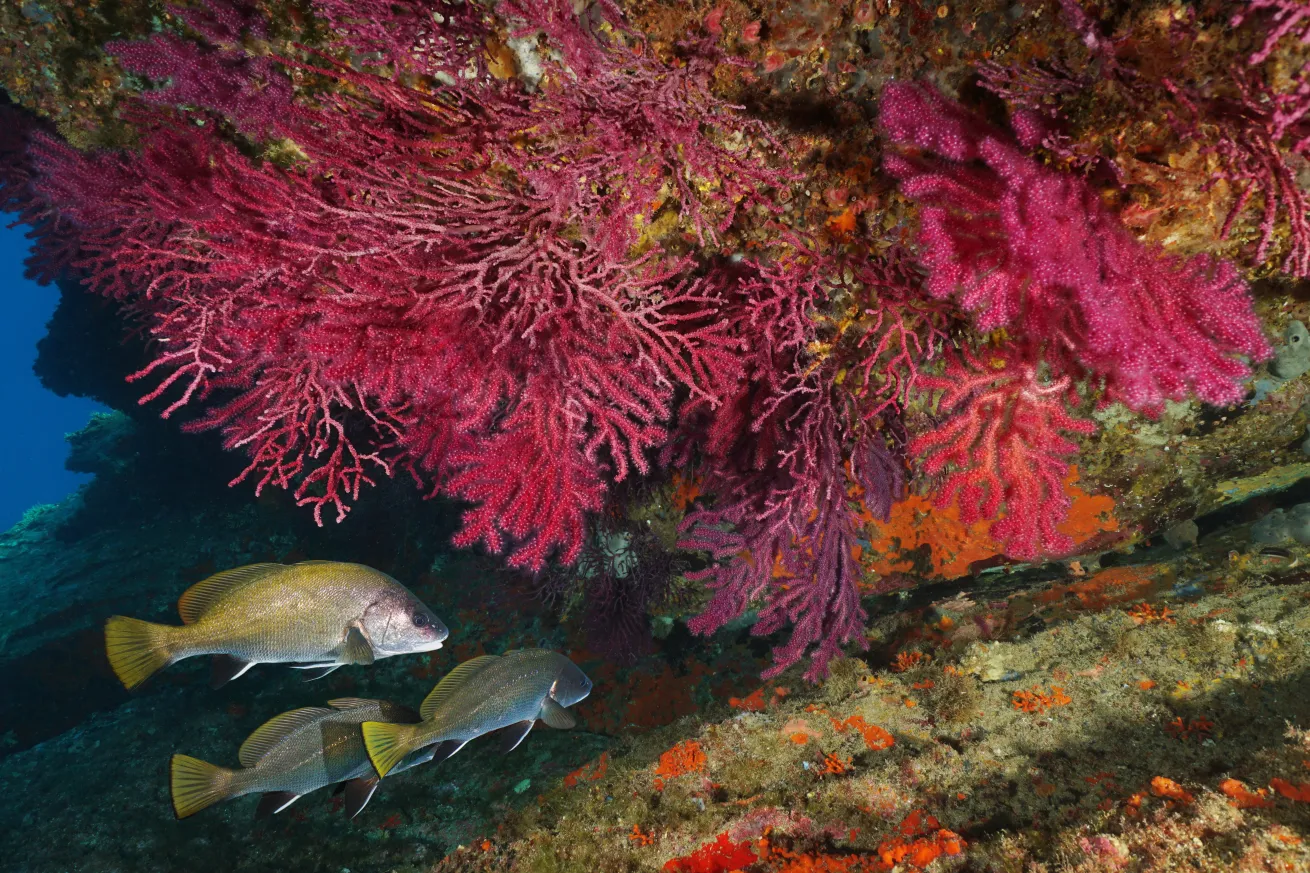
Shutterstock/DamseaMake sure to bring a light when diving the Costa Brava to illuminate the brightly colored gorgonians and other marine life.
Cap de Creus
At the northernmost point of the Costa Brava, this peninsula is defined by the rugged landscape that has been shaped by the fierce Tramuntana winds that fly off the eastern end of the Pyrenees mountains. There are a few places to base yourself for a beach and dive trip here, like the canal-carved town of Empuriabrava, the family-friendly beaches of Roses, or the chic, tucked-away village of Cadaqués, which is most famous for being the former home of artist Salvador Dalí. The latter is my favorite town in the Costa Brava, one I could visit over and over again for the art galleries and fantastic food at restaurants like Compartir—and now, for diving.
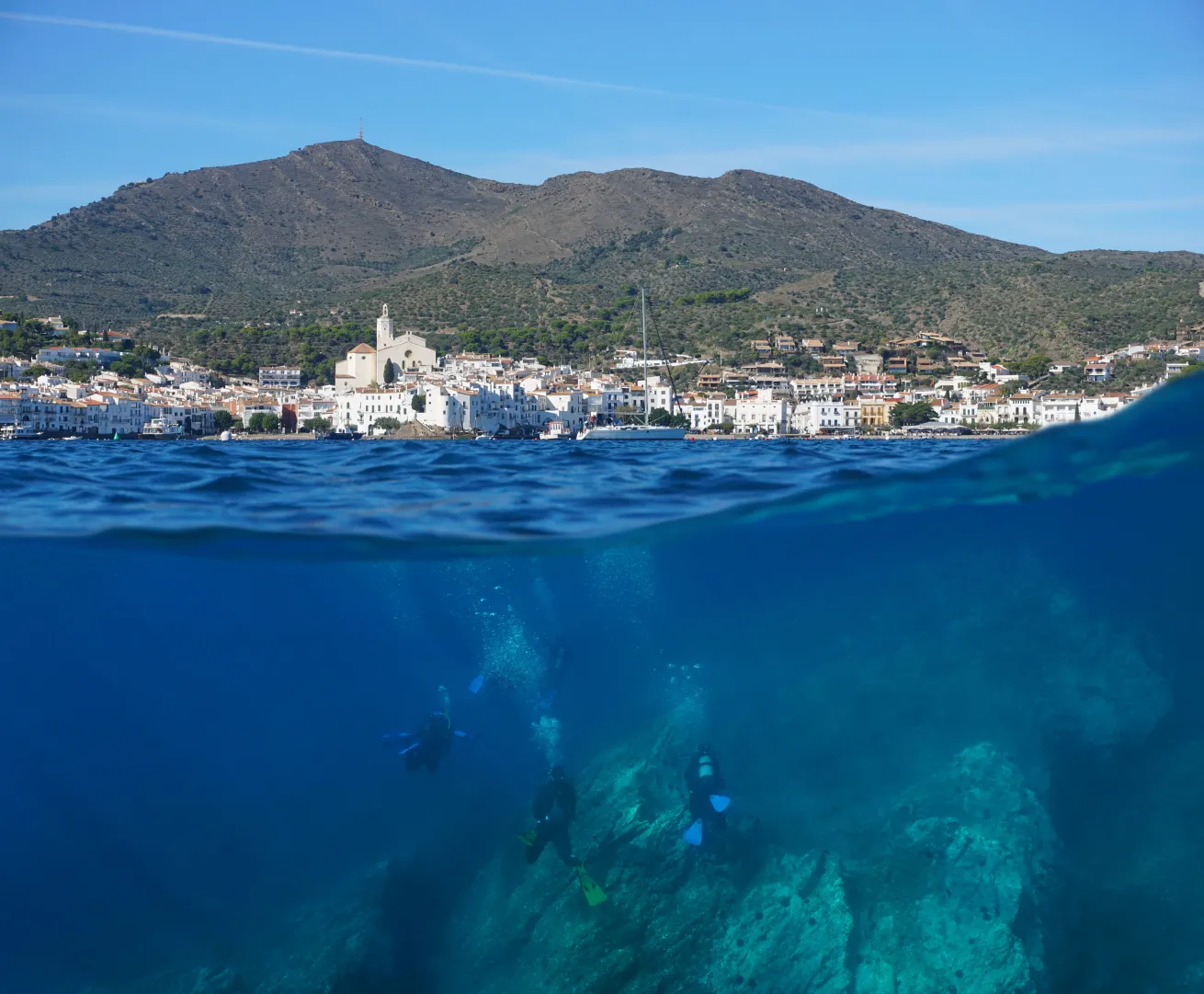
Shutterstock/DamseaDiving the Catalonia coastline is complete with stunning views above and below.
Head out with Cadaqués divers to get a boat out to the coast where you can explore the rocky coves and dive sites defined by small islets like Es Forcats. Or, stay with Euro-Divers in Cala Joncols, a dive resort located on a remote cove. For me, the Cap de Creus was a landmark moment of diving my first wreck, the Melchuca, a cargo ship that sank off the coast of Cala Montjoí after a storm in 1968.
Hovering over the surface of the underwater ruin, I could study how the algae had grown over the boards and how the sea had petrified the cargo still lying in its hold. Unlike many of the archeological sites I had visited up above, this felt like a private piece of history that told the story beyond and below the coastline that has been a constant backdrop to so many of my favorite travel moments.


