

Steven P. Hughes
Ron’s Age: 27
Experience: Open Water Diver with 60+ Dives
Health: Poor Diet and Lack of Exercise; Recently Diagnosed with Asthma and High Blood Pressure
Carl and Ron were old high school buddies who hadn’t seen each other in years. They earned their Open Water Diver certifications on a joint family trip to Baja California when they were 17. Now in their late 20s, Ron suggested a 10-year reunion trip. Carl agreed and met Ron for a long weekend in the sun.
Ron booked a boat dive during the trip, which surprised Carl, as Ron had mentioned that he’d neglected diet and exercise after graduating from college and was recently diagnosed with asthma and high blood pressure. Carl asked Ron if he would be OK doing something so strenuous, and Ron waved away the concern, saying that on boat dives, “you barely have to do anything.”
The Risk of Diving While Seasick
The next morning, they joined the other passengers at the dock and headed out to the dive site. During the journey, rough seas caused Ron to get seasick. He was vomiting and sweating heavily. At the dive site, Carl suggested that they sit out the dive. Ron insisted that they do the dive and said he would feel much better once he was under the waves instead of on top of them.
Related Reading: Treating a Case of Spinal Decompression Sickness
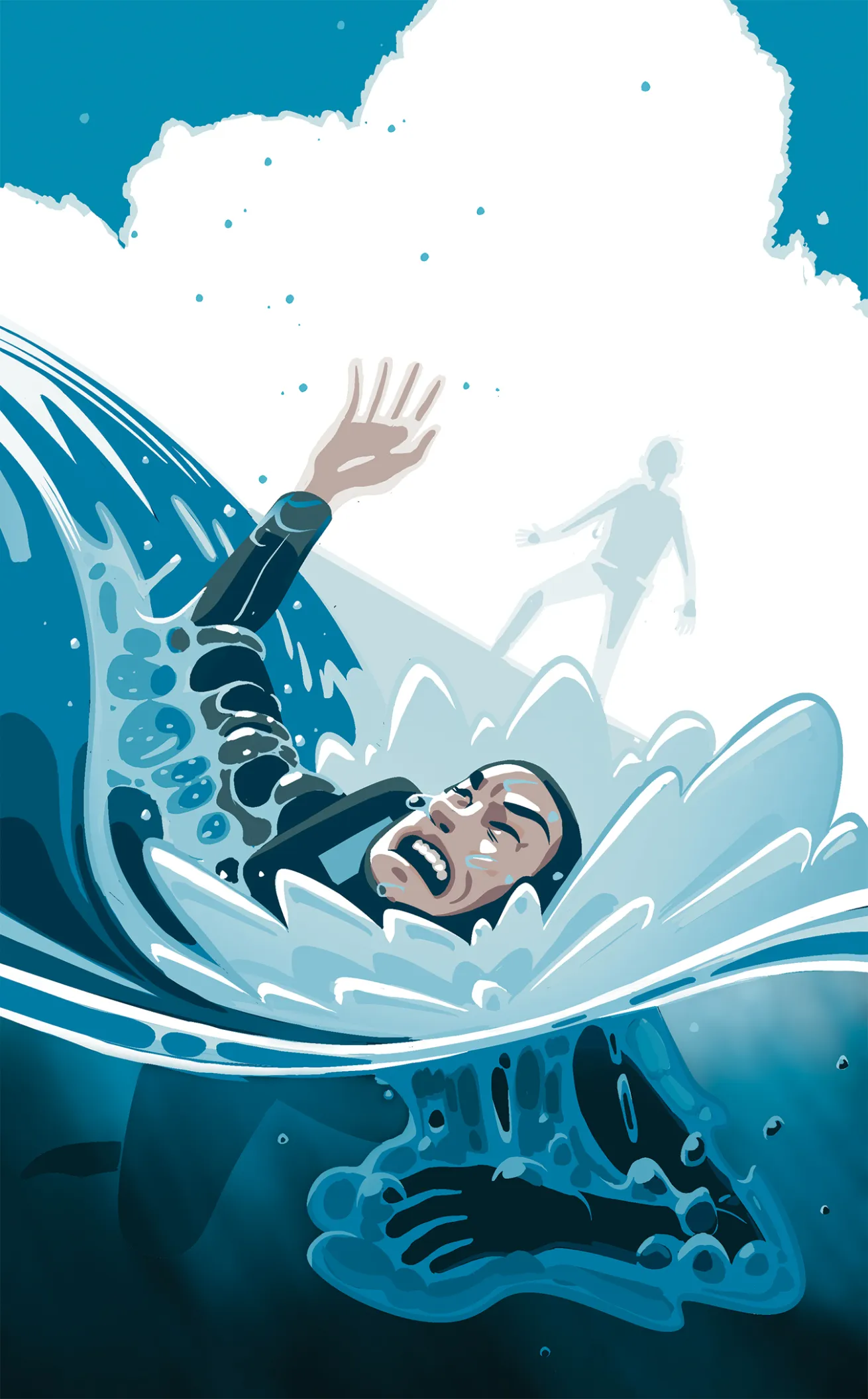
IN HIS PANIC, RON GRABBED AT CARL AND DRAGGED THEM BOTH UNDERWATER.
The boat crew had to help Ron get his BCD and fins on, as the rocking made it difficult for him to navigate his rental gear. Carl entered the water first and watched from the surface as Ron made his giant stride off the boat.
Almost immediately upon entering the water, Ron started flailing his arms and splashing.
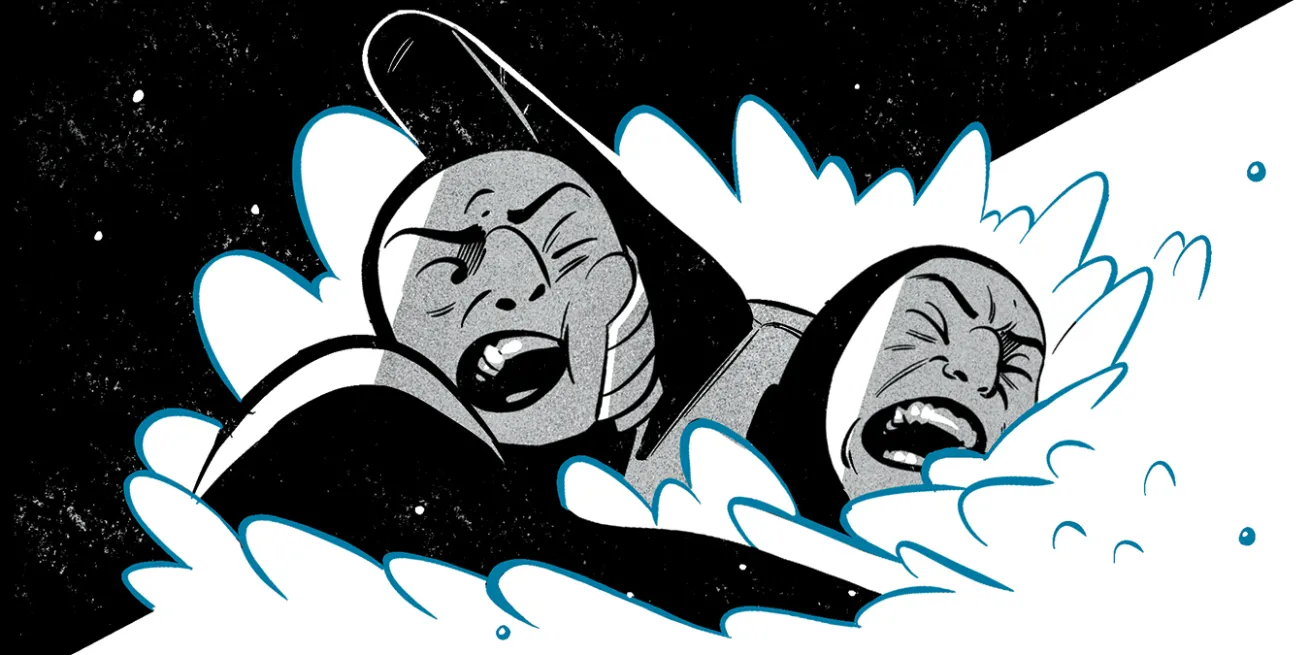
To Carl, it seemed like his friend was panicking. He froze as he saw Ron pull off his own mask and drop his regulator from his mouth as his head dipped underwater. Ron had forgotten to inflate his BCD, and his weights were pulling him under. Coming out of his momentary shock, Carl quickly swam over to Ron and tried to inflate his BCD for him. But in his panicked state, Ron grabbed at Carl and dragged them both underwater.
Carl managed to add more air to his own BCD and brought them both to the surface. He told Ron to calm down, but they sank again after a new round of thrashing. Finally, Carl was able to reach Ron’s inflator hose, ensure he was properly buoyant, and get him to float on his back as he struggled to catch his breath.
One of the divemasters joined them in the water and persuaded Ron to put his regulator back in his mouth as he towed him back to the side of the boat.
Related Reading: When to Replace Scuba Diving Gear (If Your Old Kit Still Works)
Steven P. Hughes
As they got to the foot of the ladder, Ron lost consciousness. Carl helped the crew get Ron back onto the boat safely. They transported him to the hospital as quickly as possible, but when they arrived, Ron was pronounced dead.
An autopsy found that, in addition to asthma and high blood pressure, Ron’s yearslong lack of exercise and poor diet put him at high risk for arrhythmias and chest pain, especially with exertion. During his panicked episode, Ron’s heart had stopped briefly, leading to his blackout. The official cause of death was listed as drowning.
Related Reading: What Happens When You Vape and Dive
Lessons for Life
1. Diving is a physical activity, and divers must understand their limits before attempting to dive. A sedentary lifestyle and unhealthy diet may present complications that can be exacerbated with exertion or while underwater. If you are unsure about your ability to dive safely, talk to your doctor or a Divers Alert Network (DAN) professional.
2. Divers should not undertake a dive if they have signs or symptoms of distress, including severe seasickness and vomiting.
3. If you have been recently diagnosed with a condition, ensure you’re managing the condition effectively before attempting to dive. Again, talk to your doctor to ensure you’re clear to dive.


