

Lauren Rebbeck
Dear Annie,
I’ve had the same BCD and reg set for about 10 years. It still works just fine, and I get it serviced regularly. But I’m wondering if it’s time for a new set. Does dive gear have a life expectancy? And is newer gear that much different?
—Window Shopping
Dear Window Shopping,
Thanks so much for this question. When you’ve been diving with the same gear for 10 years, it almost feels like your best buddy—you know how it fits, how it reacts, how it supports you underwater. And when you take care of your equipment and service it regularly, it can last a very long time.
With that said, all dive gear has a life expectancy. Regulators can last 10 or more years; depending on materials, BCDs can last eight to 15 years; and dive computers are usually good for 5 to 10 years before technology catches up.
The longevity of your equipment also depends on what you invested in to begin with, how many dives you make a year and what kind of upgrades are on the market. Not all dive equipment is created equally.
Related Reading: Solo Traveler’s Guide to Scuba Diving
Other gear considerations have to do with your personal dive style. Have you changed as a diver in the past 10 years, and does your equipment still suit your diving? Are you more advanced, wanting more technical gear? Or, conversely, have you become interested in only warm-water, easy diving and want a basic setup? Has your body shape changed? If you have lost or gained weight, you’ll want to check your BCD for proper fit and lift.
Is Newer Gear Really Better?
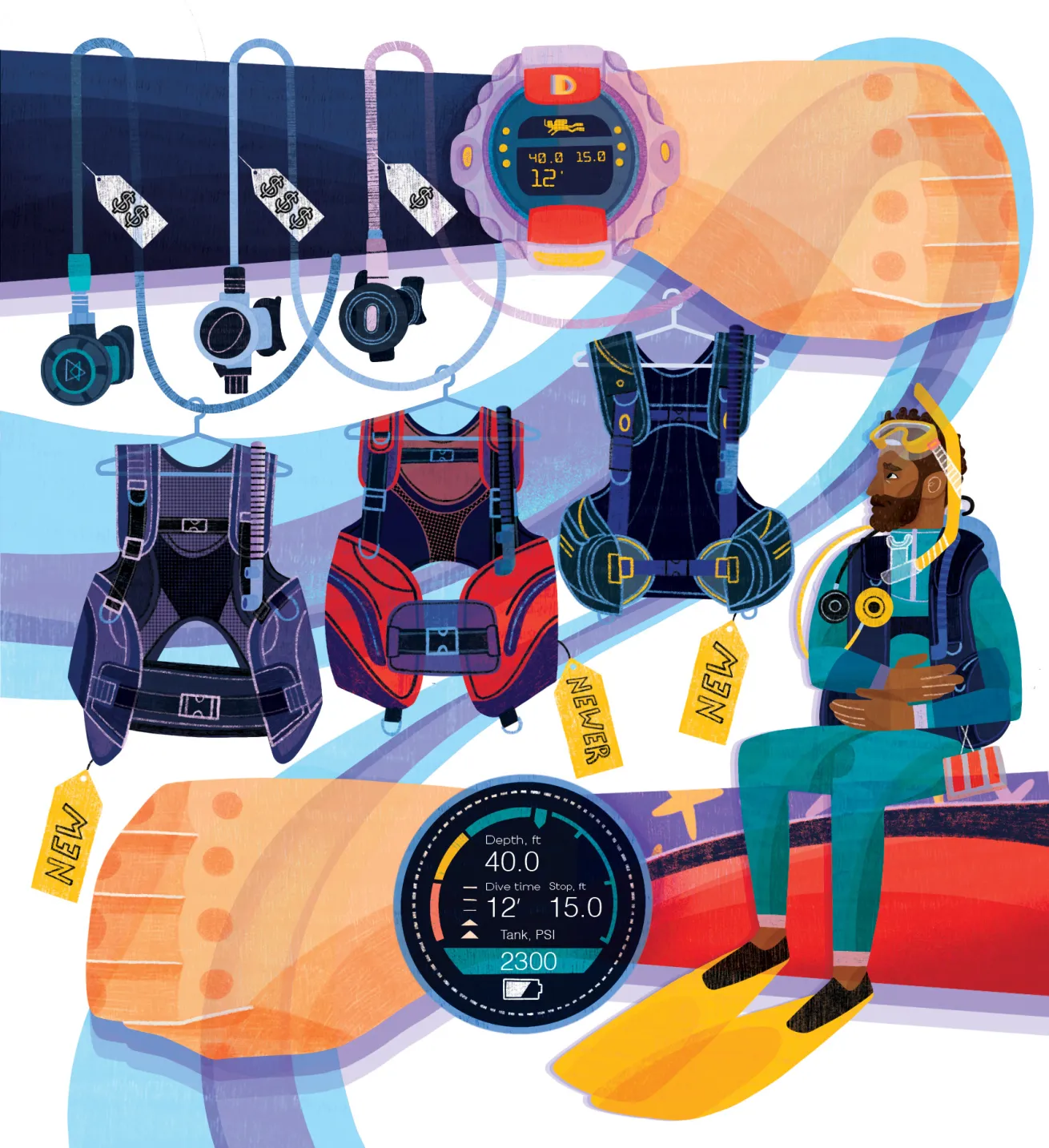
Absolutely—especially compared to 10 years ago. Manufacturers have made big leaps in materials, weight reduction, breathability and comfort.
Modern BCDs are more streamlined and customizable for size, fit and color. Some feature modular designs that allow divers to swap out straps, weight pockets and back plates to suit any style of diving. Others are designed for lightweight travel or use sustainable fabrics. Backplate/wing combos, sidemount rigs and other kinds of buoyancy compensators have moved beyond the tec-diving space and are now popular, mainstream options for recreational divers.
The top priority for all regulators has always been ease of breathing. Manufacturers are constantly upgrading their product lines, designing regulators to breathe smoother and perform better in extreme conditions. With that said, consult your local dive shop before upgrading. Bring your reg in and compare it to other models. The pros will help you decide whether it’s time for something new. Consider taking the PADI Equipment Specialist course to learn more about the functionality of regulators and how your gear works.
Computers have transformed entirely, now including bright displays, intuitive interfaces, air integration, and features that make planning and logging dives online easier. Watch-style dive computers have become popular as technology improves—travelers love the smaller interface and health integrations.
New gear does not make you a better diver, but it can make diving more enjoyable, more comfortable and sometimes even safer.
My Advice
If your current setup is still performing well for the kind of diving you do, there’s no rush. But if you’re feeling the limits of your equipment—or you’re simply ready to invest in tools that support the diver you’ve become—upgrading can be an incredible boost to your underwater experience.
Related Reading: How Do I Choose a Dive Light?

Color technology has changed too. Gone are the days we all have to look the same, wearing black with whatever splash of color is in season. I love when divers mix and match colos and combos so that they’re not only comfortable underwater but look and feel great as well.
Every piece of dive gear we choose is a reflection of how we dive, who we are as divers and the environments we’re exposed to. When you’re ready, choose equipment that supports the way you move through our underwater world.
I’m always going to encourage you to not only window shop, but get in the pool and try on the wide variety of gear that’s transformed our industry in the past 10 years. And when you do, take a pic and tag @ScubaDivingMag on Instagram so we can see it too!

Ask Annie
PADI Master Scuba Diver Trainer Annie Crawley answers your most pressing questions about dive etiquette, training qualms and gear analysis with zero judgment and a whole lot of lived experience.
Instagram: @anniecrawley_oceanannie
YouTube:youtube.com/anniecrawley
Email your queries to [email protected].


