

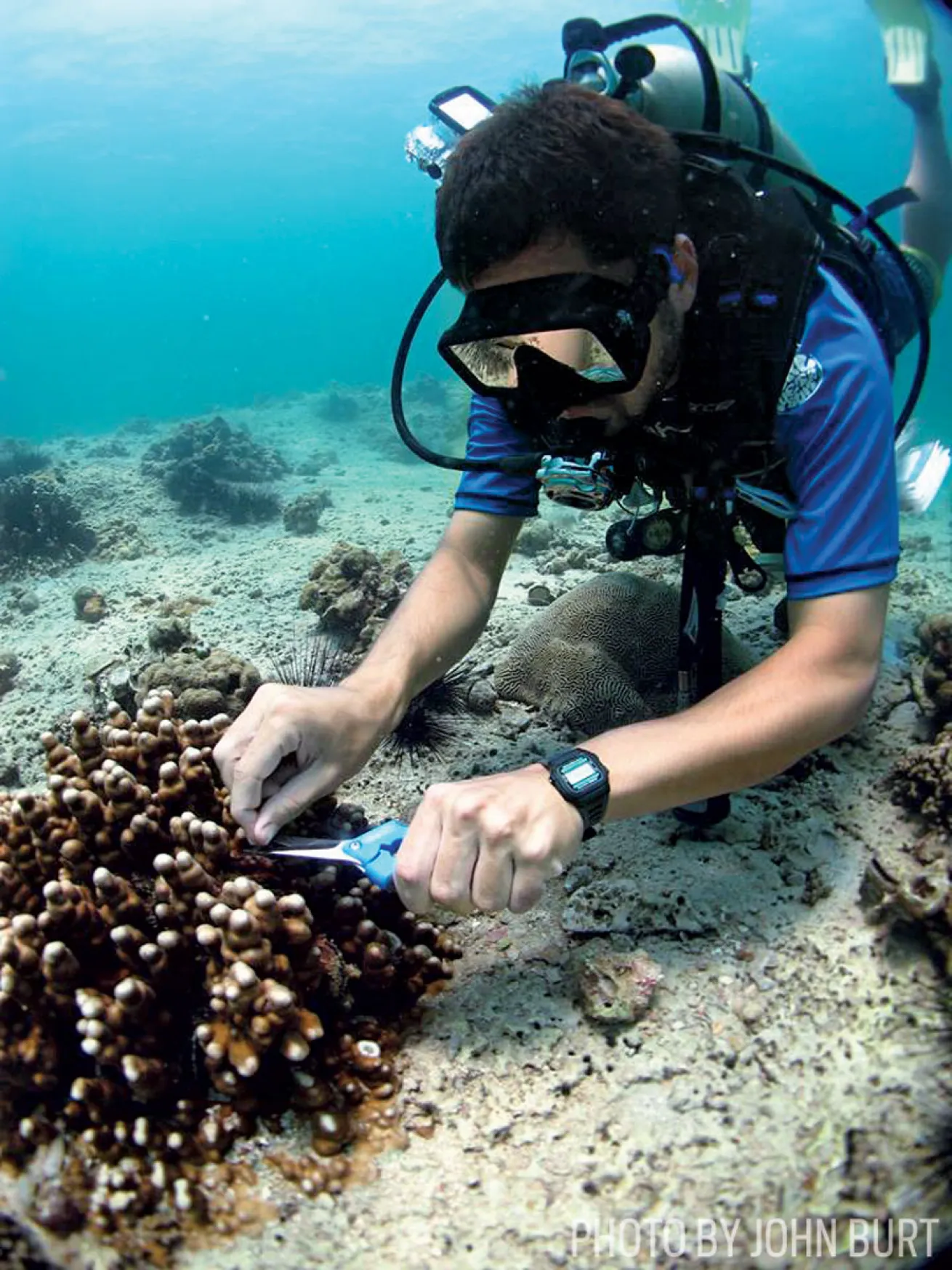
John BurtNew Algae Discovery
This species of algae helps coral brave the blazing-hot Persian Gulf
A thermotolerant algae species has been found in Persian Gulf reefs, and it’s helping native coral survive its very hot waters.
While most corals can only tolerate water temperatures up to 84 degrees, Persian Gulf (aka Arabian Gulf) corals — with the help of the algae Symbiodinium thermophilum — can survive in far hotter conditions.
“The waters of the Arabian Gulf reach over 35 degrees C (95 degrees F) each summer, which would be lethal to corals in most of the world,” says researcher John Burt, biology professor at New York University’s Abu Dhabi branch. “It’s also several degrees above that which is expected for much of the tropics in the coming century.”
Burt’s team concluded that this distinct species of algae has ecologically and genetically evolved as a result of the extreme water temperatures in the Persian Gulf.
“We are still investigating the mechanisms that allow this species of coral-associated algae to perform so well at high temperatures, and the results of that research are forthcoming,” says Burt.
Burt and his team hope this discovery will have positive implications for not only the six coral species that receive the algae’s protection, but also for the survival of the area reefs as a whole, especially as the effects of global warming lead to higher chances of mass coral-bleaching events, which can be caused by even a small increase in water temperatures.
“This species can provide a lot of insight into how coral-associated algae can adapt to extreme temperatures,” says Burt, “and potentially, to whether a species with such high thermal tolerance could provide hope for reefs in a future threatened by climate change.”


