

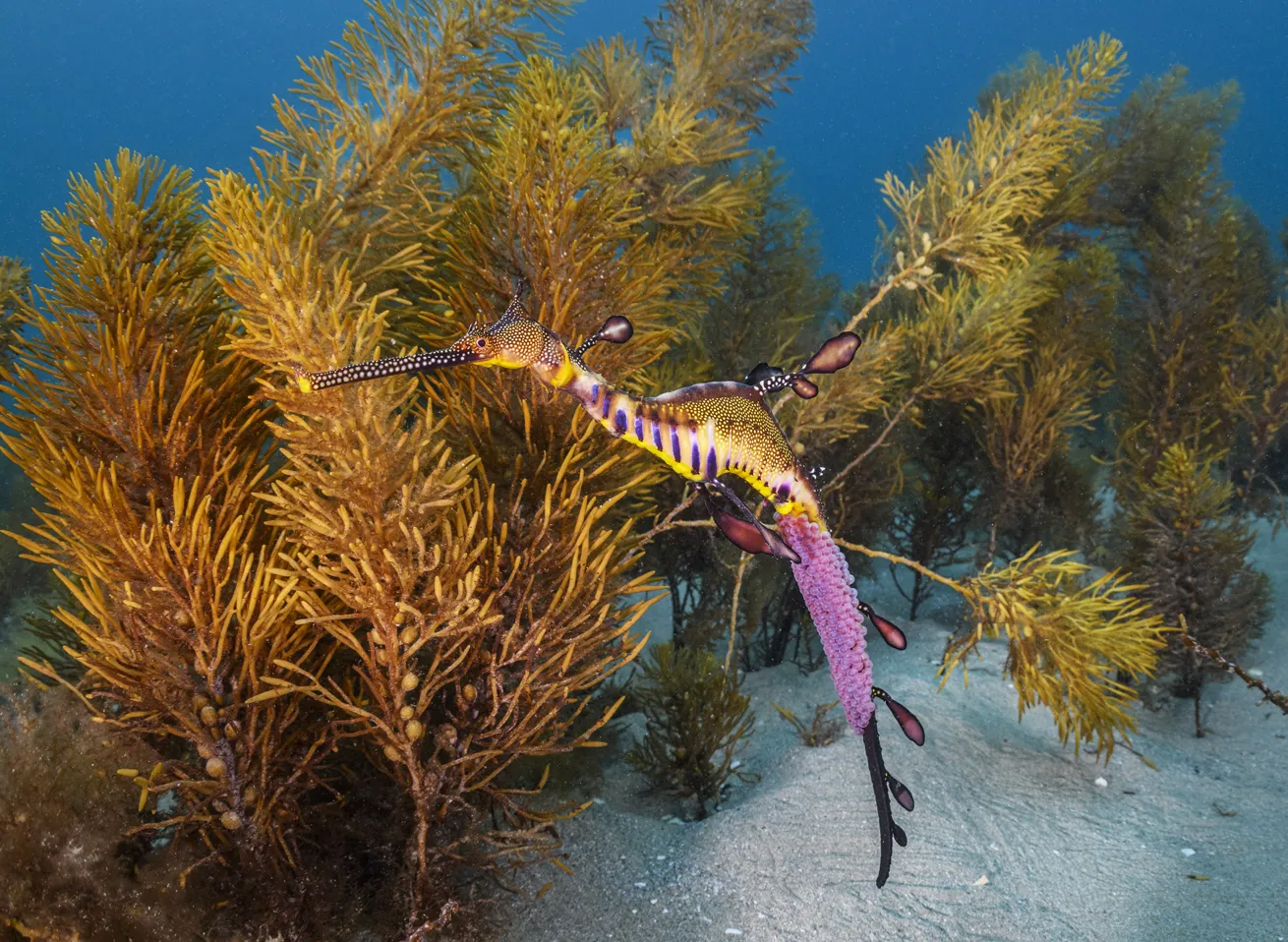
Brandon ColeA male leafy seadragon carries a clutch of purplish eggs on the underside of its tail.
I’m often asked how I execute trips for my work, especially by underwater photographers and critter hunters who hope to explore distant destinations that aren’t so accessible that you can simply book a liveaboard and then relax on autopilot. For example, enjoying a memorable diving expedition along southern Australia’s shores requires that you address the fundamental questions of where, what, when, how and with whom. Answering the last “W” of journalism—why—is the easy part.
For a sense of how I plan a trip, here are some notes from my last successful expedition to the Mornington Peninsula in southern Australia.
Where
I’ve chosen the seaside suburb of Rye as my base of operations. Just a 90-minute drive south of Melbourne, Rye has an excellent dive shop and is very close to three incredible jetties (Rye, Blairgowrie and Portsea) that reach out into Port Phillip Bay. A fourth, Flinders, is on the Peninsula’s southern side, providing a superb alternative.
What
These jetties are homes, feeding and breeding grounds for a diversity of sea life. In waters just 5 to 25 feet deep, you can find weird fish and cryptic crustaceans, sea stars, stingrays and cephalopods. At Rye Jetty, I spied a blue-ringed octopus near rotting timbers, pale octopuses in PVC pipes, and big-belly seahorses among sponges and algae. I photographed fiddler rays and spider crabs at Blairgowrie by day, mating bobtail squid and sleepy leatherjackets by night. On a 2019 shoot, Flinders was weedy seadragon nirvana.
Portsea held that honor last year. In one remarkable day, I logged eight hours over three dives using 15-liter tanks. I used the opportunity to capture new pictures of proud, pregnant dragon papas brooding fresh clutches of purple eggs! When visibility was best (during a falling tide that flattened the surge) I shot wide-angle environmental portraits with a fisheye lens, then a 28–70mm behind my WACP water contact optic. As light faded and the water became murkier, I switched to a 105mm macro for tight images of the eggs.
Related Reading: Guide to Bonfire Diving Photography
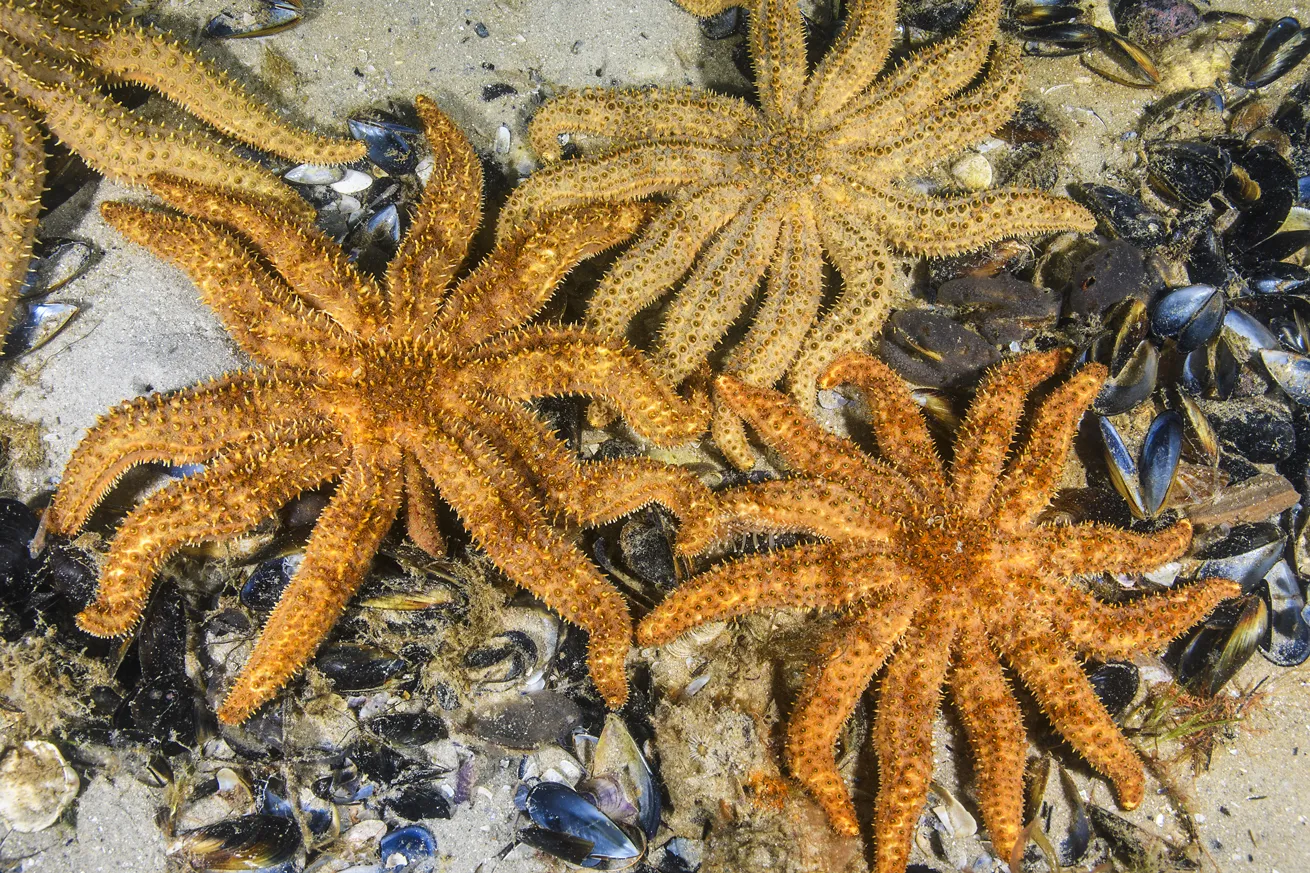
Brandon ColeThe eleven-armed sea star is endemic to Australia and can often be found under a jetty feeding on mussels.
When
You can dive these jetties year-round. In December (summer in Australia), I used a 7 mm wetsuit for the 65-degree water. In June (winter), a drysuit made dives lasting longer than two hours possible in 55 degrees. A pier’s “divability” depends on the day’s conditions, not the season. Strong winds and big swell from the north destroy visibility and create surge at Rye, Blairgowrie and Portsea. Dive Flinders on such a day.
My last trip focused on male weedy seadragons carrying eggs. This happens from October to January. Spider crab aggregation is May through July. Peak timing for both can vary slightly each year.
How
The Mornington Peninsula is perfect for a drive-and-dive adventure. Fly to Melbourne, rent a car and dive. Personal fitness helps here. As does jetty architecture. Instead of making the long swim—it’s nearly 1,500 feet to Rye Pier’s end—walk on top of the pier and descend stairs to the platform at sea level. Use a cart to pull your dive gear and camera.
Underwater, I go slowly and look everywhere: at pylons, on the sand, in seaweed, under pieces of wood. Many creatures are masters of camouflage. When over open sand or in a field of seagrass, I use a compass to conduct a grid search.
Related Reading: The Organization Helping to Protect Seahorses, Sea Dragons and Pipefish
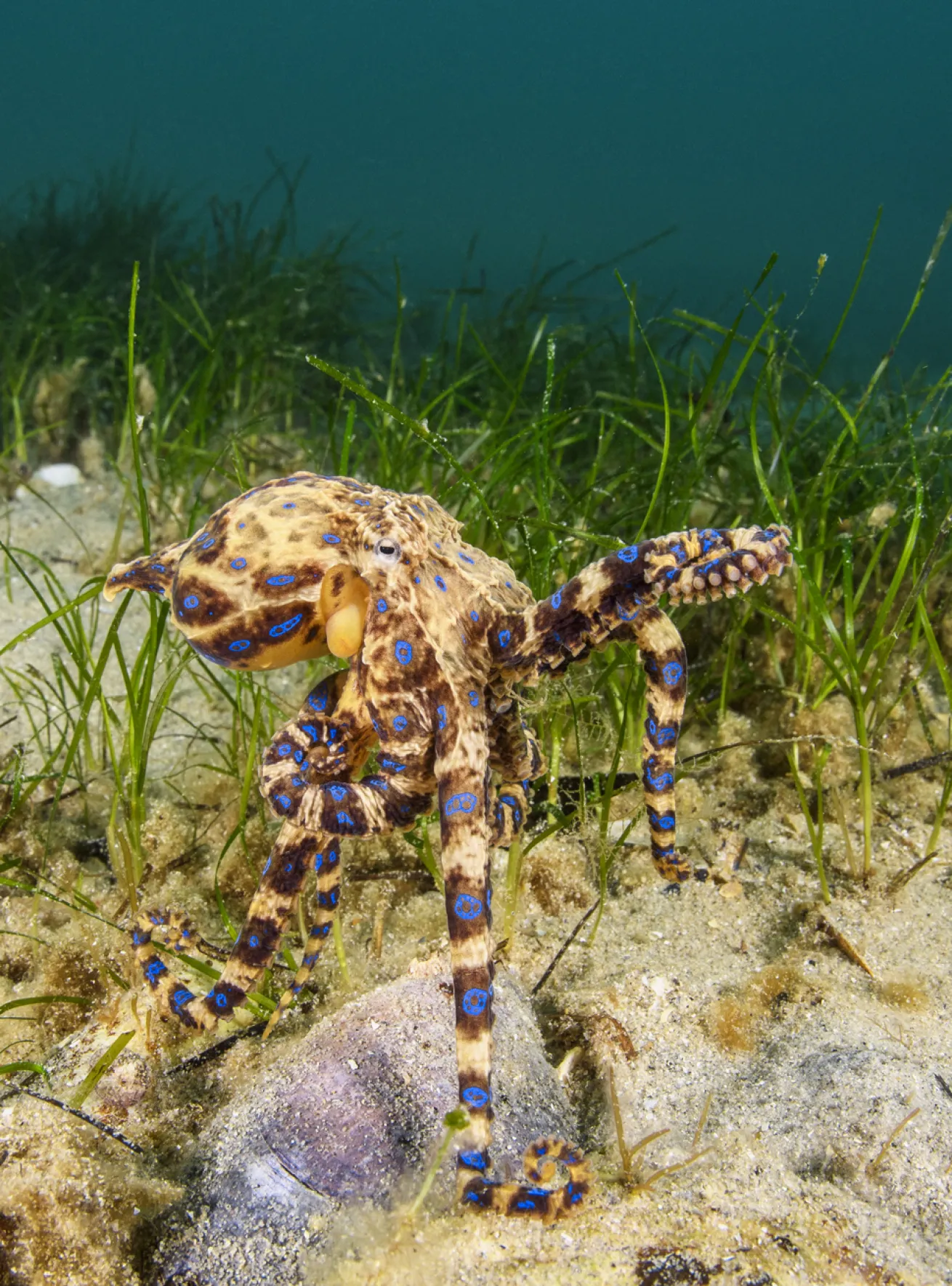
Brandon ColeA blue-ringed octopus about the size of a human palm displays its iridescent markings among the seafloor’s rubble.
With Whom
Research began long before I arrived. Following local divers on social media, I learned heaps about the area’s sites and critters, and valuable intel including best night-diving spots, seadragon pregnancy time, which jetty to dive based on various conditions, where blue-ringed octopuses like to hide, optimal camera equipment and more. I rented gear and hired a private guide from the Scuba Dive Shop (aka Scuba Doctor), a full-service PADI-affiliated dive center in Rye. Having an expert locate cryptic species was a wise investment and instrumental to my success.
Why
The fascinating and unique marine life living under, around and on these extraordinary artificial reefs—plus, the bonus that this is affordable and generally easy diving—is all the reason you need to start planning your own expedition to explore down under the jetties in Oz.
Related Reading: Best Destinations for Macro Diving
FAQ's Diving in Melbourne, Austrlia
What type of gear do you recommend?
Buy a cart/wagon and cable lock from a hardware store in Melbourne. Secure it to the jetty railing while you’re underwater.
Are there any safety precautions to know about?
Jetties are often packed with active fishermen. Be very careful when diving outside the jetty’s shadow. Whenever possible, swim directly underneath the pier to avoid their lines, hooks and ire. Some jetties have areas off limits to divers and swimmers due to boat traffic.
What marine life can I expect to see?
Watch seadragons from a distance for a few minutes to let them become comfortable with your presence. When you do approach more closely, take a few shots and then back off for a bit before repeating.
What certification do I need to dive Melbourne, Australia?
You’ll need your PADI Dry Suit Diver cert for wintertime diving.
Where to stay?
Look on Airbnb for a small house or cottage. Such properties are usually more diver-friendly than hotels, offering more space, a kitchen, maybe a washer and dryer, and often a yard in which to rinse and dry your scuba kit before flying home.
What is a suggested budget for this trip?
Port Philip Bay has boat diving, but “shore” diving the jetties is less expensive, you can dive as long as you want and there are more exotic critters.


