

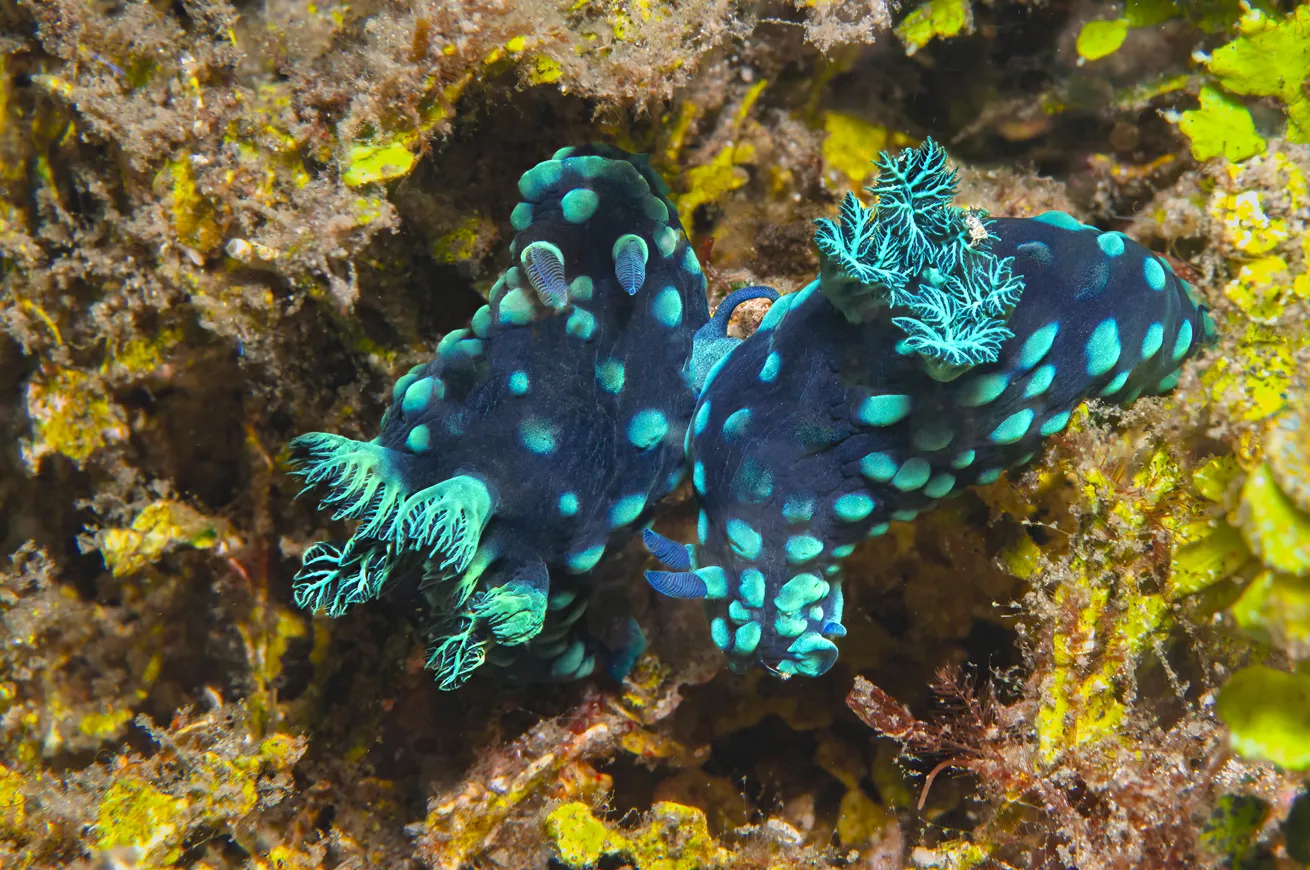
Shutterstock/XlchenNembrotha cristata nudibranchs on a reef in macro haven Lembeh, Indonesia.
When it comes to the small stuff, divers know the thrill is real. From neon nudibranchs and camouflaged frogfish to pygmy seahorses clinging to sea fans, macro diving rewards patience, sharp eyes and a well-tuned camera. Some of the world's best diving involves taking a closer look—because the ocean's most bizarre and beautiful creatures hide in plain sight.
Every year, Scuba Diving readers cast their votes for the destinations that deliver the best critter encounters on the planet—and this year's Readers Choice picks for best macro diving do not disappoint. Whether you're hunting mimic octopus on black volcanic sand or searching shallow muck sites for ghost pipefish at dusk, the destinations on this list are proven hotspots for underwater photographers and critter enthusiasts alike. Read on to see which destinations earned the top spots, as chosen by you.
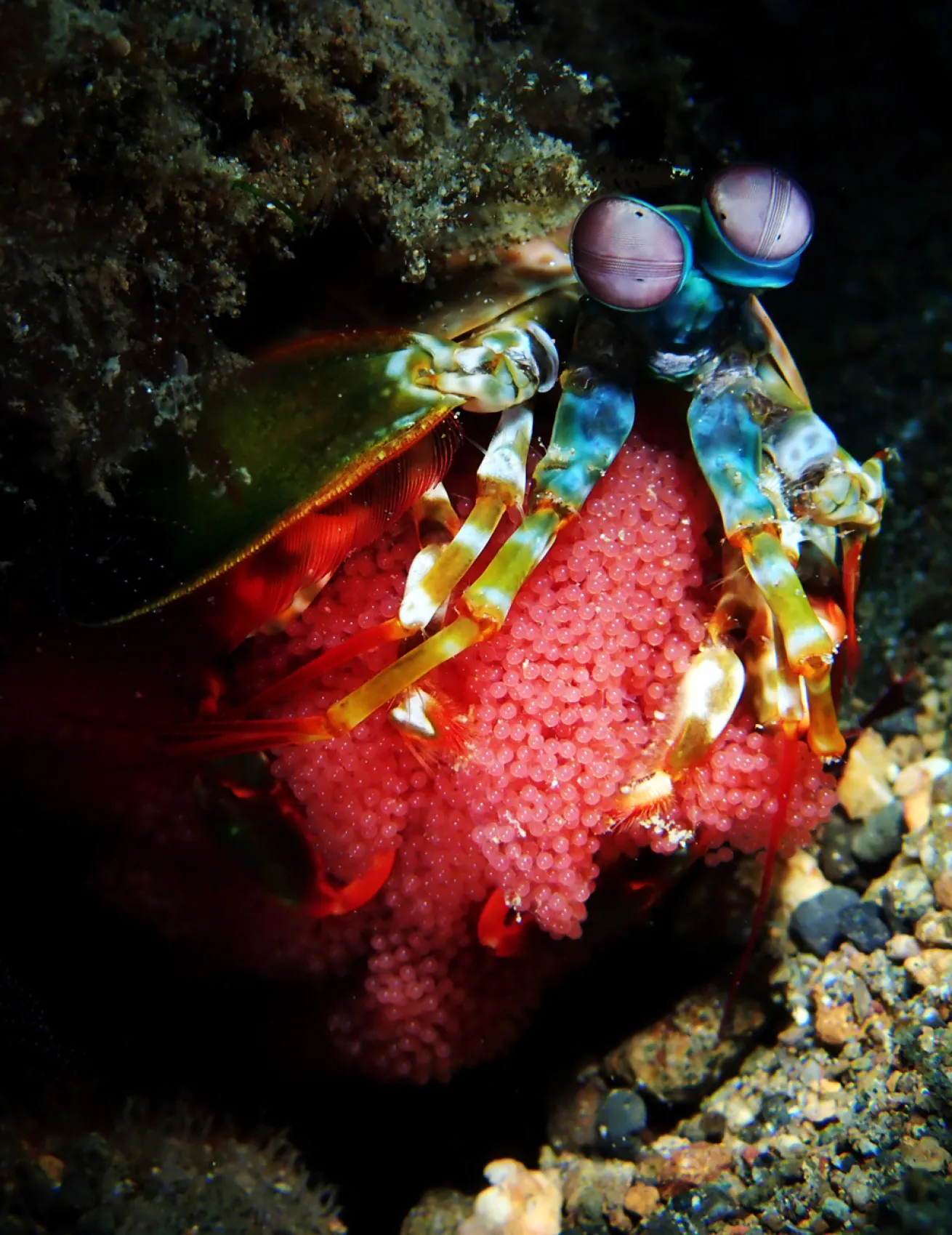
Shutterstock/BurdosA rainbow-hued mantis shrimp diligently protects its precious eggs.
St. Eustatius
The green, rugged island, just 15 minutes by plane from St. Maarten, is favored by divers for its healthy mix of experiences, from the purpose-sunk 330-foot Charlie Brown artificial reef to coral-covered ledges sheltering schooling glass-eye sweepers and French grunts. Macro hunters will revel in discovering myriad delights, from seahorses to sailfin blennies. Statia, as it’s commonly called, is unique in the Caribbean for offering a version of muck diving.
The island is volcanic, with gray-black sand that creates a nutrient-rich haven in which the small stuff thrives. These sandy patches are home to mantis shrimp, sailfin blennies, yellow-headed jawfish and so much more.
Frequently Asked Questions About Macro Diving in Eustatius
WHEN TO GO Dry season extends from December through May, offering better visibility. Cooler air temperatures also make for a more pleasant experience hiking the Quill, the island’s volcano, beloved by birders for its Antillean crested hummingbirds and purple-throated Caribs.
DON’T MISS Blue Bead Hole is legendary primarily for blue beads—small, hard-to-find tokens used as currency by the island’s enslaved population in the 17th and 18th centuries. Shifting sands have revealed thousands of such beads over the past few decades. Today, beads are still found, but the most likely quarry are macro critters.
CREATURE SPOTLIGHT Sailfin blennies are notoriously shy. Keep from shining your light down into their burrows. Their black bodies can be easy to spot, but the fish won’t raise its sail unless divers stay low and keep a distance of a few feet. Only then will it flick and reveal its black dorsal fin.
GEAR A dive light increases your ability to spot details and contrasts. Plastic magnifying glasses also prove helpful, as do metal pointing sticks to help distinguish species of interest to fellow divers.
REQUIREMENTS The PADI Fish ID course teaches divers how to describe what they’re seeing. It’s imperative to learn the names of fins, body shapes and coloration patterns to understand fish-identification books and dive guide briefings about marine life.
INSIDER TIP St. Eustatius National Parks Foundation manages three national parks, including Boven National Park, home to the Quill. This organization provides guided hikes on request, which should be submitted a couple of days in advance.
HOW TO BOOK Scubaqua Dive Center offers daily guided boat dives, dive instruction, night diving and privately guided dives.
CONTACT scubaqua.com
Related Reading: Trending Dive Spots: Blue Bead Hole
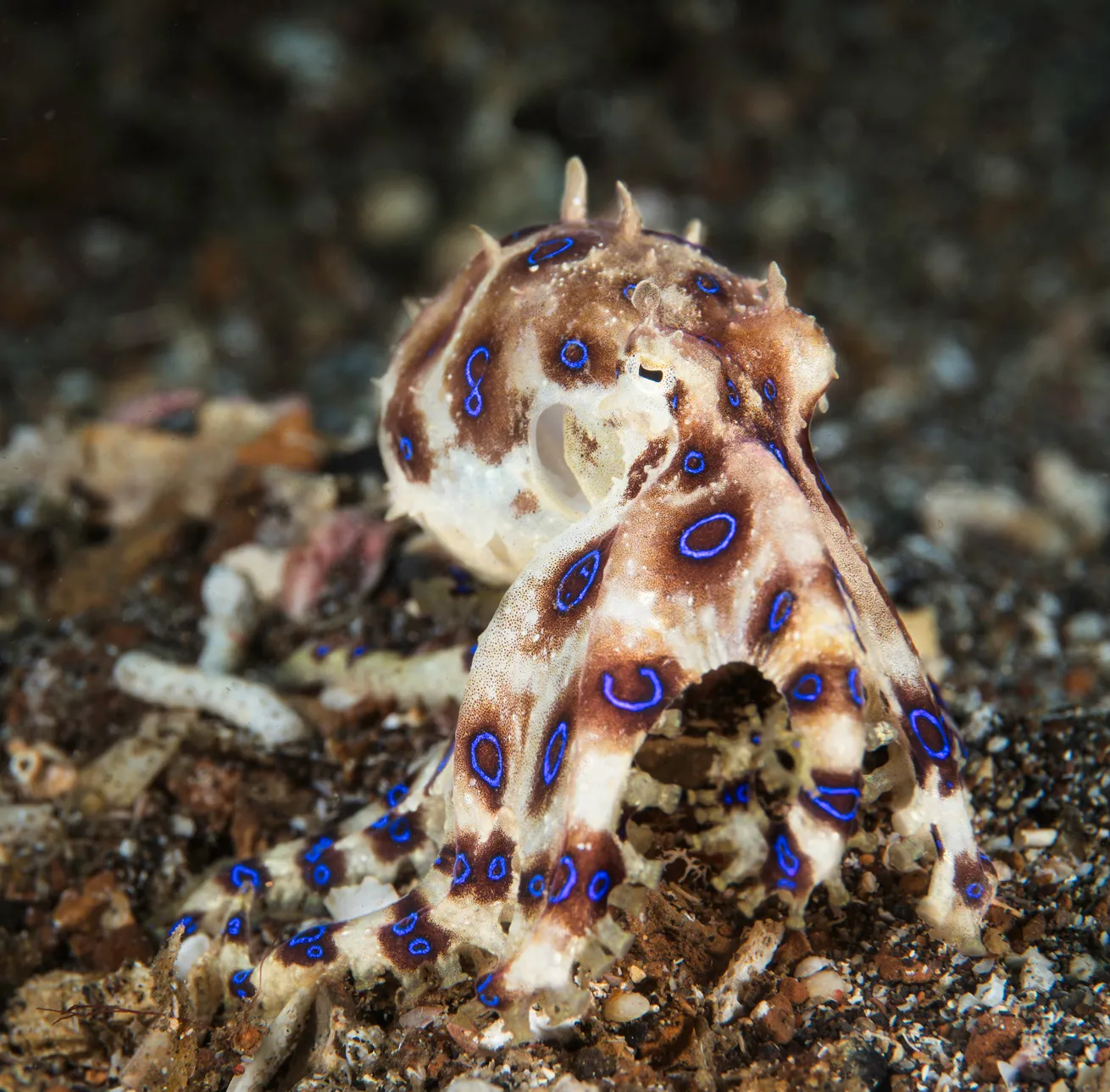
Shutterstock/Ingo LA blue-ringed octopus in Indonesia’s Lembeh Strait. At no more than 8 inches in length, these critters can prove difficult to spot in the muck.
Indonesia
Divers who seek out the small stuff are best served targeting the Maluku islands of Ambon and Halmahera for their endemic species and myriad nudibranchs; Raja Ampat for rare macro finds such as ornate ghost pipefish; Komodo and Flores for muck dives with bobtail squid, frogfish and rare octopus species; and North Sulawesi, hailed as the muck diving capital of the world.
The latter, a ribbon of land protruding from the north shore, is especially rich in macro curiosities.
Frequently Asked Questions About Macro Diving in Indonesia
WHEN TO GO Several bodies of water converge across Indonesia. Thus, each island and each sea has seasonal variability. For North Sulawesi, the dry season falls March to November, bringing calmer seas and clearer water.
DON’T MISS The reefs of Fukui Point on the southwest coast of Bunaken Island are riddled with nooks and crevices. Every dive is a veritable Easter egg hunt for species such as hairy frogfish, rhinopias scorpionfish, stargazer fish and even the blue-ringed octopus.
CREATURE SPOTLIGHT The blue-ringed octopus can be found throughout Indonesia, Papua New Guinea and the Philippines. It’s nocturnal and hard to locate thanks to its 5-to 8-inch size. This highly venomous species only flashes its signature blue rings when stressed.
GEAR Read up and familiarize yourself with the who’s who of these dynamic reefs. Cozy up with Coral Reefs Indonesia and Reef Creature Identification: Creatures before the trip.
REQUIREMENTS Night diving among the muck is an out-of-this-world experience. Take the PADI Night Diver specialty course if you haven’t already. Keep your focus on the creatures of intrigue, not any apprehension about diving after dusk.
INSIDER TIP In North Sulawesi, check out the Pasar Bersehati market to sample local fruits such as mangosteen and shop for crafts made by the local Minahasan people.
HOW TO BOOK Siladen Resort & Spa offers boutique, villa-style accommodations and three dives daily, plus night dives by request.
CONTACT siladen.com
Related Reading: One Week in Komodo Reminded Me Why I Dive
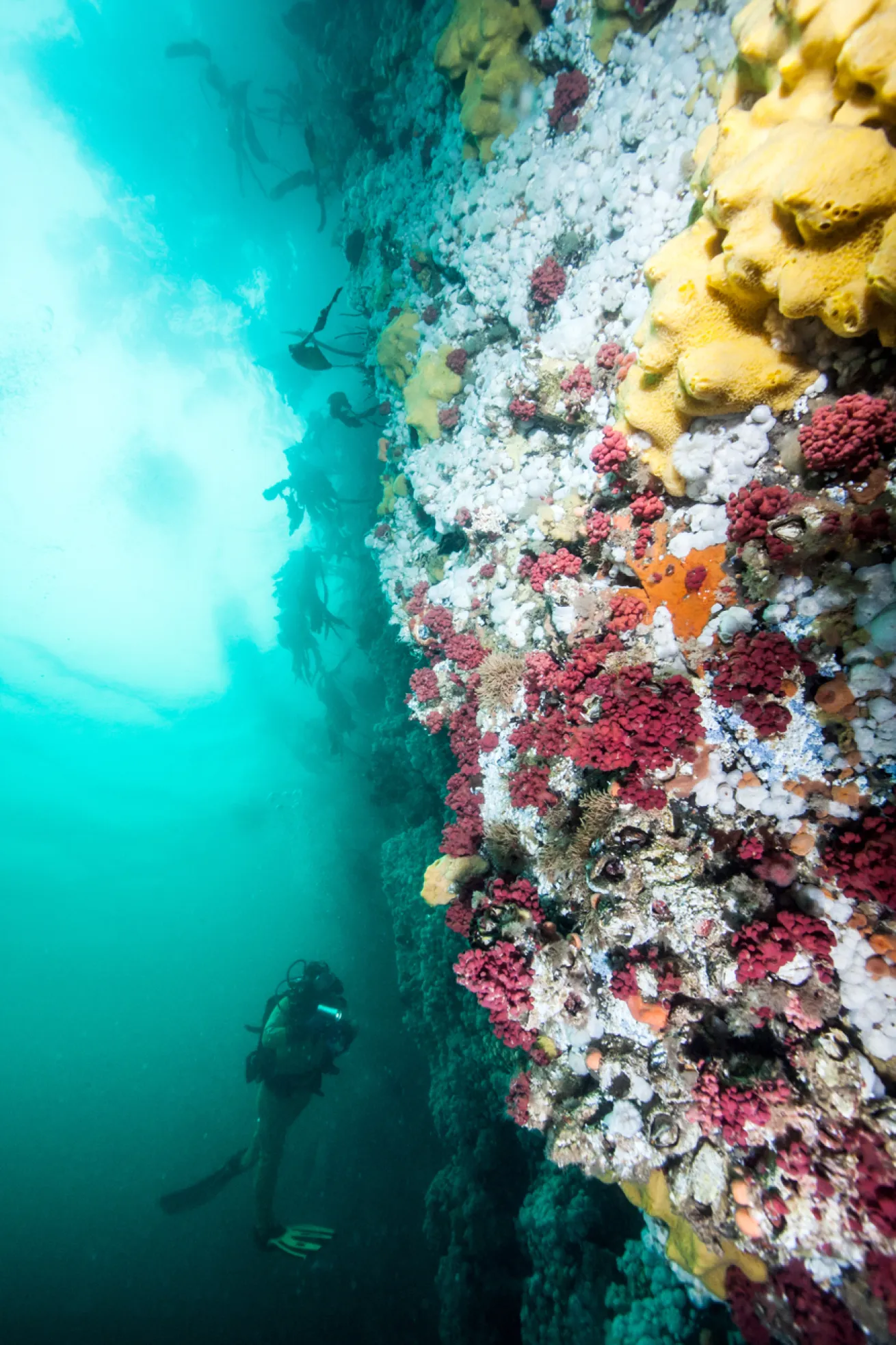
Stunning sheer walls teeming with life are found throughout British Columbia, Canada.
British Columbia
If North America handed out superlatives, Canada’s westernmost province would sweep several categories, boasting sheer walls and some of the largest, most charismatic marine life—as well as some of the smallest. Most of the area’s diving is found around Vancouver Island. Here, divers court encounters with the famed giant Pacific octopus and the parades of macro life thriving among the kelp forests and anemone-covered walls.
Frequently Asked Questions About Macro Diving in British Columbia
WHEN TO GO June through September brings warmer water temps in the 50s and 60s—friendlier for those new to cold-water diving.
DON’T MISS Plan an excursion to hidden gems such as Baynes Sound near Denman Island. Several local operators frequent this site, home to sculpin, nudibranchs and the pygmy octopus.
CREATURE SPOTLIGHT Most of the area’s hype centers on the giant Pacific octopus, which can span 15 feet from arm tip to arm tip. At the complete opposite end of the spectrum is the pygmy octopus—with a body the size of a golf ball. Like many octopus species, these guys like to shelter in bottles and under rocks and shells.
GEAR Even at its warmest in the summer, the waters of Vancouver Island are considered cold-water diving. Drysuits are recommended, if not essential.
REQUIREMENTS Taking the PADI Dry Suit Diver course builds your ability to find neutral buoyancy while essentially encased in a balloon—a skill that comes with experience.
INSIDER TIP If traveling from June through September, head to Saanich Inlet near the community of Brentwood Bay or Clayoquot Sound near the municipality of Tofino to kayak among bioluminescence on moonless nights.
HOW TO BOOK Local operators, such as Pacific Pro Dive on Vancouver Island, offer boat dives and guided shore dives. Private-island resorts give you easy access to more remote sites.
CONTACT pacificprodive.com
Related Reading: What It's Like to Be an Octopus Researcher
READERS CHOICE AWARDS 2026
This year we surveyed 8,729 readers on their favorite destinations, resorts, operators and liveaboards, awarding their top picks across a variety of categories. Our Readers Choice travel feature highlights the first-place destinations in each global region and offers a taste of what makes each a reader favorite.
➜ Click here** to see all Readers Choice award-winning resorts, operators and liveaboards.**


