


Shutterstock/Vavea PhotographyLagoon and corals in the lagoon of Moorea, French Polynesia.
Moorea has long held sway over starry-eyed honeymooners who compare the island’s shape to that of a heart. (We see a three-toed dinosaur footprint.) Even Charles Darwin was infected, describing Moorea as “a picture in a frame.” The comely island also helped shape Darwin’s theory on how coral islands form, but that’s another story.
Despite Moorea’s obvious charms, we were advised to dive elsewhere in French Polynesia. “Moorea’s trashed,” we were told. “Hit the Tuamotus instead; the diving is still pristine there.”
That rubbed us the wrong way, and we dug a little deeper. Yes, the conscience-free travel years took their toll on Moorea, and reckless treatment of the reefs (careless anchor drops, seashells sold by the seashore, overfishing) left scars. But travel (and diving) should never be parasitic: ravaging one destination before dismissing it as “trashed” and moving onto the next. We have a responsibility to repair damage we’ve wrought.
And that’s what’s happening in Moorea. Quietly, without fanfare, Moorea is experiencing a resurgence of conservation initiatives from locals determined to save their beautiful home. It’s working. We found reefs teeming with smaller fish, turtles and a surprisingly healthy population of sharks (blacktip reef, sicklefin lemon and gray reef).
Add your own note to Moorea’s redemption song—now’s the time to visit.
Related Reading: Diver-Operated Microscope Give Insight Into Coral Bleaching
Beautiful Above and Below
Moorea’s jagged profile, with jade-green mountains spiking nearly 4,000 feet, is a breath-catcher, and it’s just as beautiful underwater. The naysayers who dismissed Moorea as a diving destination can eat their words. The water was clear and warm, with surge but minimal current, holding an abundance of hard coral, brightly-colored reef fish, hawksbill and green turtles and numerous blacktip reef sharks and lemon sharks. Although the inner lagoon has been affected by bleaching, there is evidence of recovery, and the outer lagoons are in good condition, with about 20 percent within a marine protected area.
Top Dive Sites in Moorea
Most dives are a 10-minute boat ride past the breakers on sloping reefs with hard coral beds, cut through by channels. The channels tend to be deeper, and are especially conducive to spotting sharks. This is one of Moorea’s appeals: There is something for more experienced divers, as well as new, beginner, or out-of-practice divers.
Tiki holds robust hard coral gardens and is a great spot to share the water with sharks. We descended through a cloud of vampire triggerfish, circled by blacktip reef sharks, to a depth of around 62 feet on the fringing reef. Grey reef sharks cruised the deeper water, while further up the sloping reef we found plenty of fish—paddletail snapper, peacock grouper and a new favorite: the vibrant and inquisitive lemonpeel angelfish.
Taotoi has a series of coral ridges you can swim up and over, often surprising sleeping hawksbill and green turtles that have nestled in for a rest. In between are sandy channels, so depth fluctuates from 33 feet to 62 feet, making for a fun, swoopy dive.
Related Reading: Best Islands to Dive in French Polynesia
One of the main channels leading into the lagoon is Lemon Shark Valley. As the name suggests, this spot is a favorite with lemonsharks. At the top of the trench is a sloping reef with more resting turtles.
There are even wall dives, like Coral Wall, which has plenty of overhangs and holes for macro life and more turtles.
(Tip: If you want to explore more of French Polynesia, from lazy lagoons to roaring, shark-filled drifts, look into Air Tahiti’s Multi-Islands Pass, along with the eDivingPass, a shareable pass that is valid for one year and valid at more than 40 dive centers on 16 islands and four archipelagos.)
Get a Different Perspective
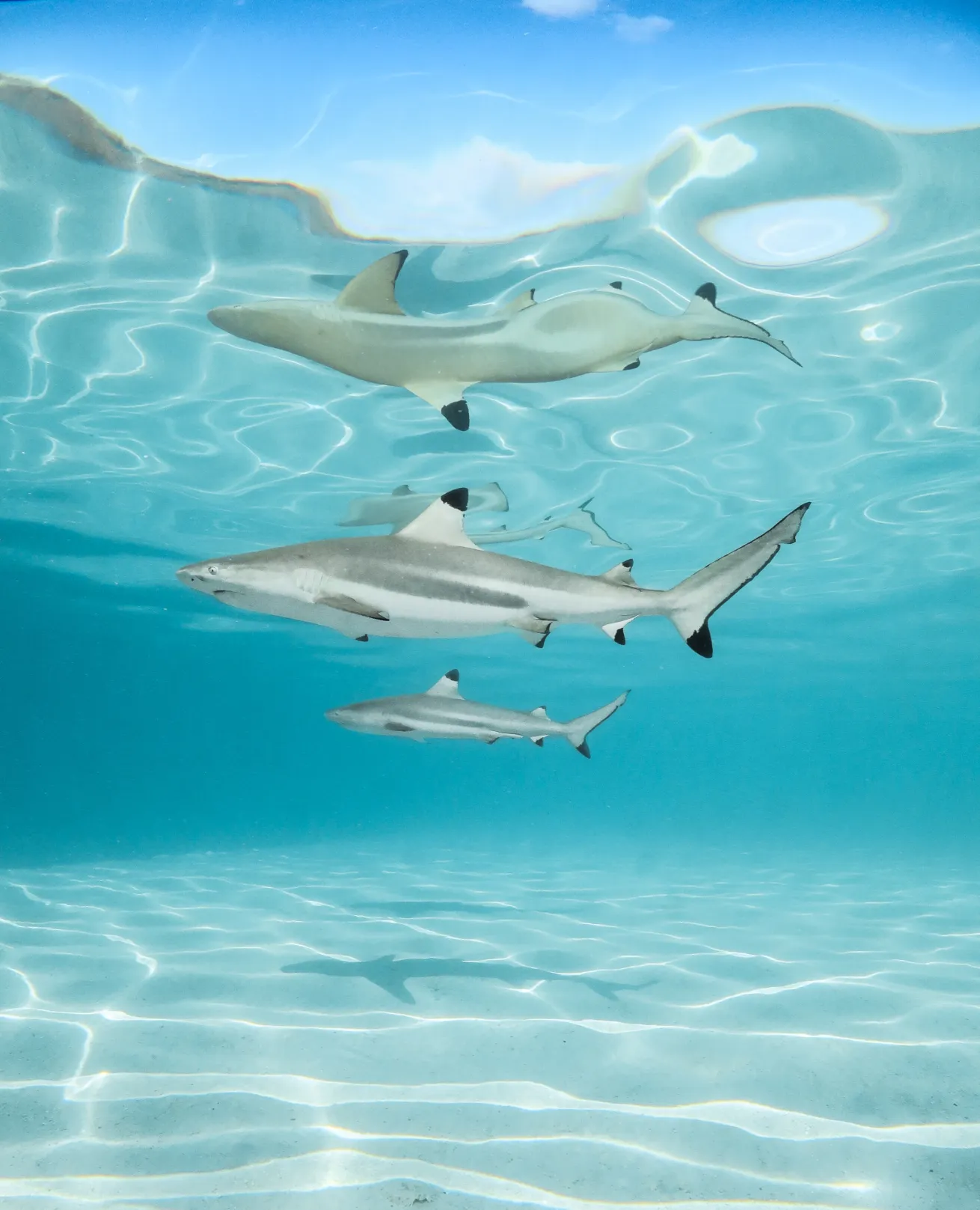
Shutterstock/JOHANLETANGBlacktip reef sharks and their shadows in Moorea, French polynesia
The landscape is just as riveting topside, and there are a variety of hiking trails to explore this 51-square-mile island, leading to picture-in-a-frame vistas. The Pass of Three Coconuts is popular, but not to be taken lightly, with an elevation gain of 850 feet to panoramic views. The Pass of Three Pines is easier, winding through forests and past 13th-century archaeological structures to a lookout point, where three pine trees outline a magnificent view of Cook’s Bay.
(Tip: Expect rain, wear mosquito repellent and closed-toe shoes. Both hikes are around four-hours round-trip; guided treks available.)
Visitors can also take part in Moorea’s cultural resurgence. Moorea Maori Tours, a locally owned and operated business, takes visitors out on an immersive cultural experience, tailored around traditional Polynesian culture, food, and experiences.
Related Reading: Diving French Polynesia’s Tuamotu Islands
The Coral Gardeners
However, the real story here is the conservation work being done throughout the island—like The Coral Gardeners, for example.
We first met The Coral Gardeners when they were a passionate grassroots project run out of the founder’s parents’ basement. This inspirational group of local young men and women grew up surfing the waters surrounding Moorea.
“In 2014, when I was 16-years-old, I noticed our surf breaks were changing,” said founder and president Titouan Bernicot. “We started freediving to take a look and see what’s happening, and we noticed the reefs were damaged. So, we decided to do something about it.”
We have lost half of the world’s coral reefs since the 1950s. Reefs are lifeblood: they are home to 25 percent of all marine animals and plants. They absorb 97 percent of a wave’s energy, buffering coastlines. More than 500 million people rely on reefs for food, income, and coastal protection. Without healthy reefs, we don’t have a healthy ocean—and bear in mind that at least 50 percent of the oxygen we breathe comes from the sea.
The Coral Gardeners’ passion project has since matured into a mission to “revolutionize ocean conservation and create a global movement to save the world’s coral reefs through active reef restoration, awareness activities, and innovative solutions”.
At the time of writing, the Coral Gardeners have:
Grown and planted more than 200,000 corals in French Polynesia, Fiji, and Thailand.
Harnessed a social media movement, with 1+ million Instagram followers and the support of everyone from Dr. Sylvia Earle to Aquaman.
Gone global, raising awareness around the world, from schools to the United Nations.
Visitors to Moorea book an ‘Xperience’ with The Coral Gardeners to tour the nurseries and be a coral gardener for a day. You can also adopt a coral and track its progression.
“Hopefully one day soon we’ll be out of a job,” Titouan laughed. “When the reefs are healthy, and the ocean is valued and protected. I’m not going to stop until I help make that happen.”
Need to Know
When to Go: This is the Southern Hemisphere climate we dream about on dreary winter days: a daily average of 80°F and plenty of sun, cooled by steadily blowing Trade Winds. July to November is humpback whale season; November to March has regular tropical showers, with the heaviest in February. Avoid cruise ship season (January through April).
Dive Conditions: Visibility is usually 100+ feet. Water temperatures are around 77 degrees in winter and 82 degrees in summer. Depths average 82 feet. Suitable for divers of all levels and a great destination for new divers.
Operators: There are a number of PADI dive shops on Moorea, which makes it easy to find one convenient to your location and dive goals. Check out Scubapiti Moorea (a locally owned diving center offering snorkeling, diving, dive training, and whale excursions), Nemo’z Diving Center (also offering snorkeling, diving, dive training, and whale excursions, as well as offshore diving for experienced divers and free Nitrox), Moorea Fun Dive (offering diving and dive training), and Ia Ora Diving, located on the east coast and based out of the Sofitel Kia Ora Resort. (They also offer diving, dive training, and whale excursions).
Travel Tips: International flights arrive at Tahiti’s Faa’a International Airport. It’s a 15-minute flight or 30-minute ferry crossing to Moorea, both operating regularly. Self-driving is the best way to explore. It can be more cost-effective to rent a car on Tahiti and take it across on the ferry rather than renting on Moorea.
Make a Difference: The Coral Gardeners began as a passionate grassroots coral reef restoration project in Moorea. They’ve now evolved into a revolution, a team of mobilized young men and women adept at harnessing social media and driven to make a difference. Along with raising awareness, the Coral Gardeners have grown and planted more than 200,000 corals in French Polynesia, Fiji, and Thailand. What can you do? Join the movement and spread the word about what’s happening in the ocean. Book an experience with the team if you’re visiting Moorea. Adopt a coral or buy merch. Donate. (Committed, ongoing funding—especially—would be a huge help to them.) This is a worthwhile project.
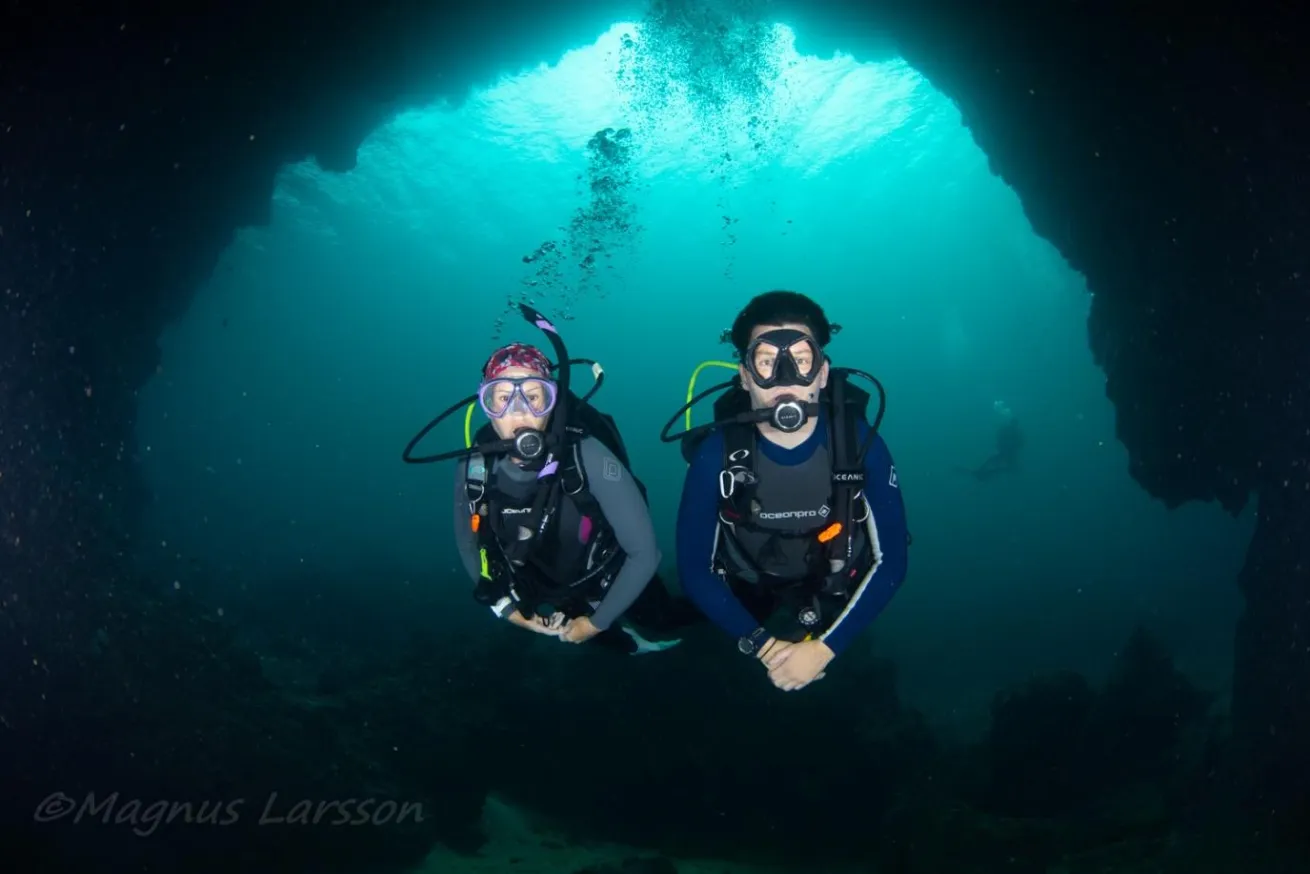
Carrie Miller and Chris Taylor
To create their unique National Geographic book, A Diver’s Guide to the World: Remarkable Dive Travel Destinations Above and Beneath the Surface, dive travel experts Carrie Miller and Chris Taylor traveled to 50 inspirational locations around the world, spending more than 250 hours underwater. Carrie is also the author of 100 Dives of a Lifetime: The World's Ultimate Underwater Destinations. @beneaththesurfacemedia; @carriemiller_writer.


