

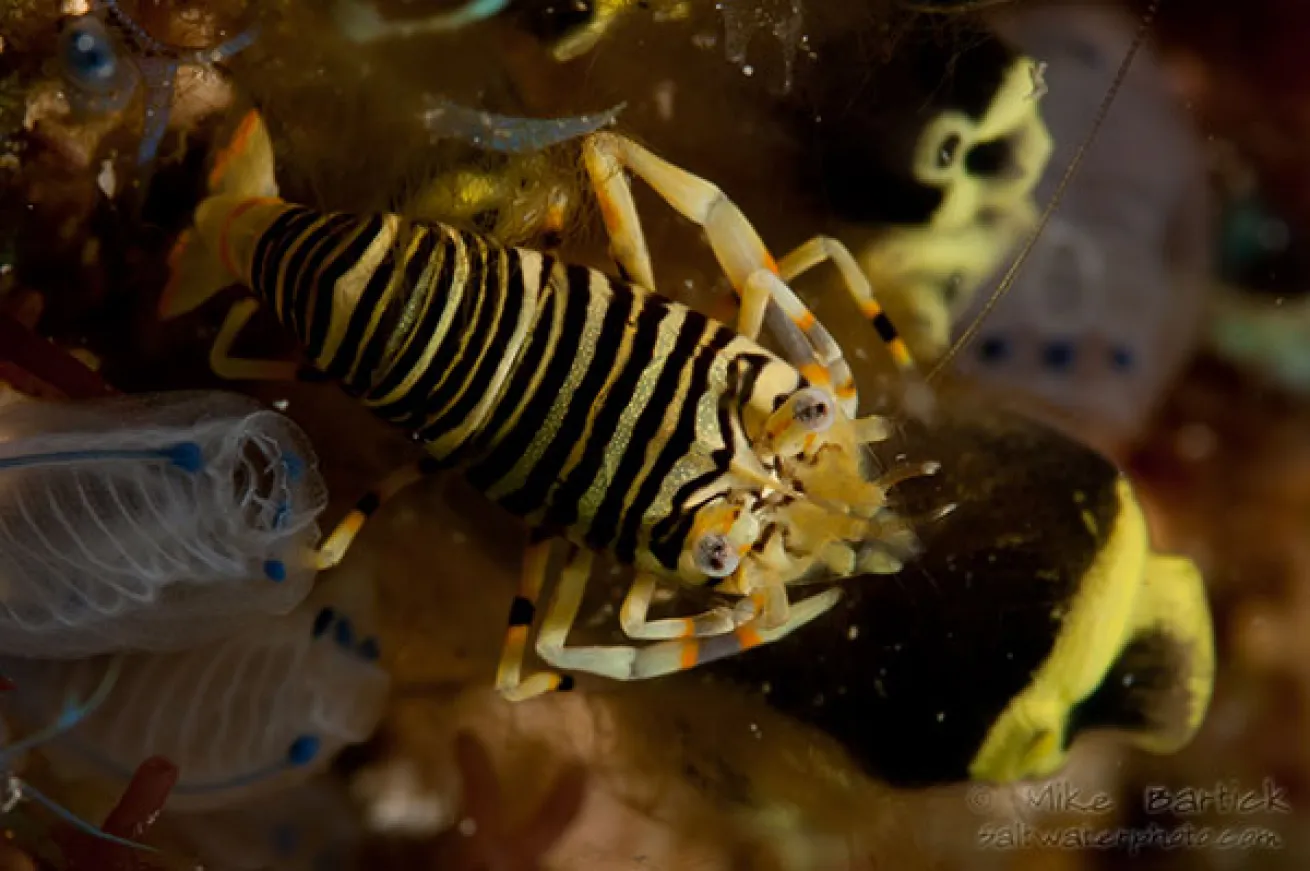
Mike BartickBumblebee shrimp (Gnathophylum americanum) are an echinoderm feeder that prefers Asteroida sea stars. The sea stars in this class are particularly harmful to their ecosystems as they can populate unchecked and consume fields of hard coral growth driving other sea life away. Shrimp like the bumblebee play an important role in keeping the reef systems in balance and are a strong indicator species of a reef system in check.
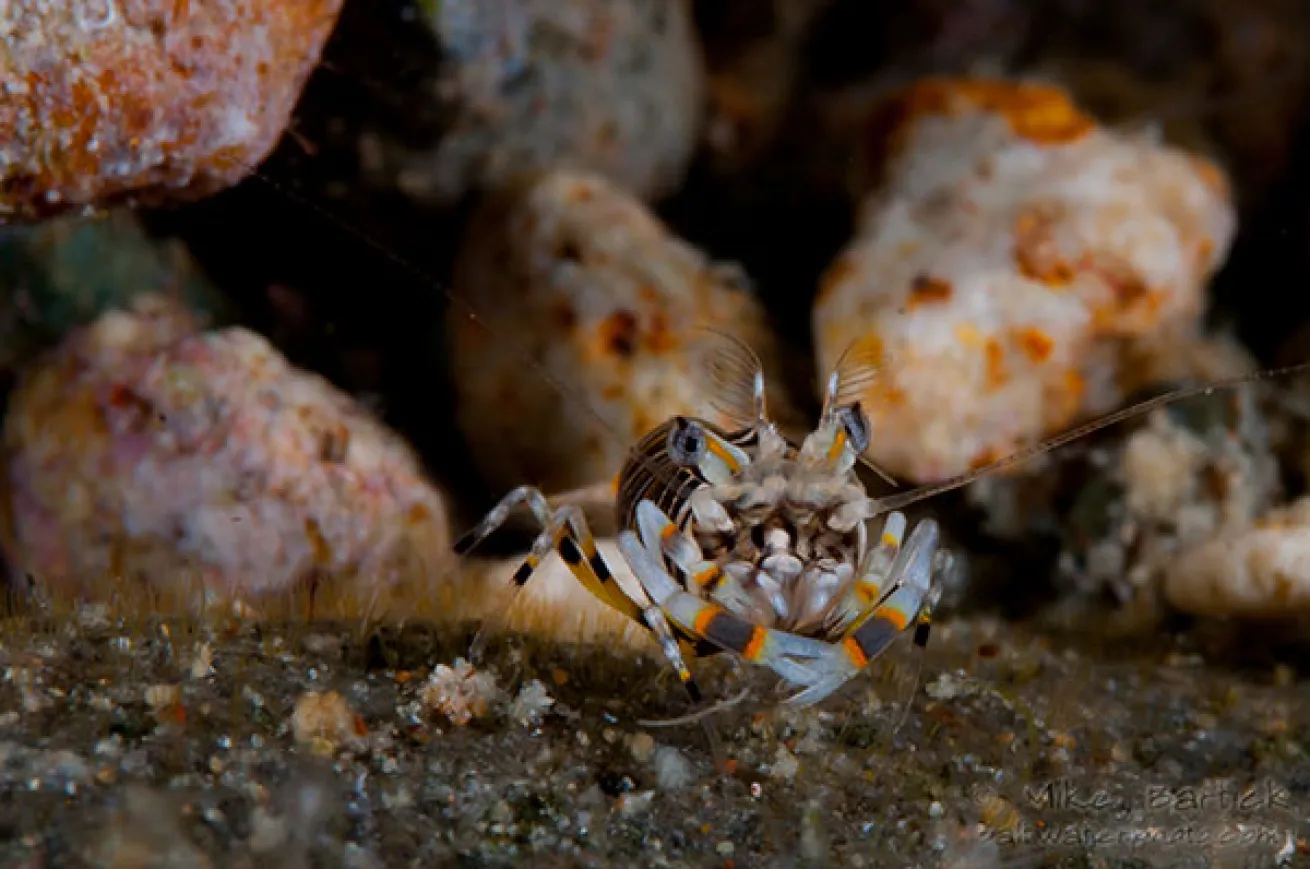
Mike BartickWorking with a guide to photograph these fast-moving and uncooperative subjects is very important. Wrasse are always on the hunt for an easy meal, so if you're attempting to photograph these defenseless creatures be aware of the constant danger and always try protect them.
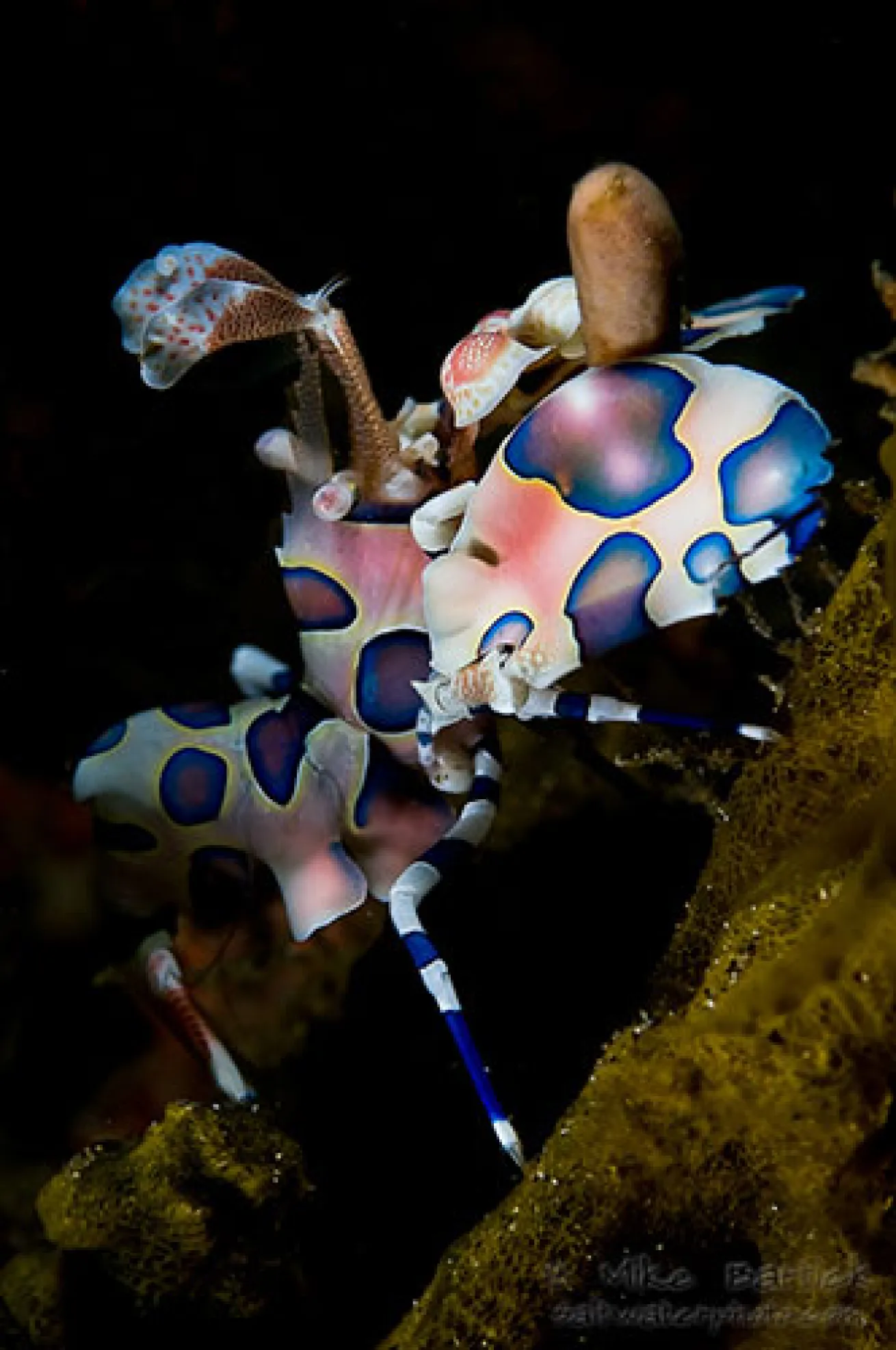
Mike BartickHarlequin shrimp scientifically described in the late 1800s as Hymenocera picta are another Asteroida feeder. While they prefer to eat the blue or pink sea stars, they also consume the veracious crown of thorns. While these sea stars are under attack, it slows their consumption of hard corals. The Harleys will actually drag the smaller sea stars to a place where they can feed on it over several days, keeping them alive as they do so.
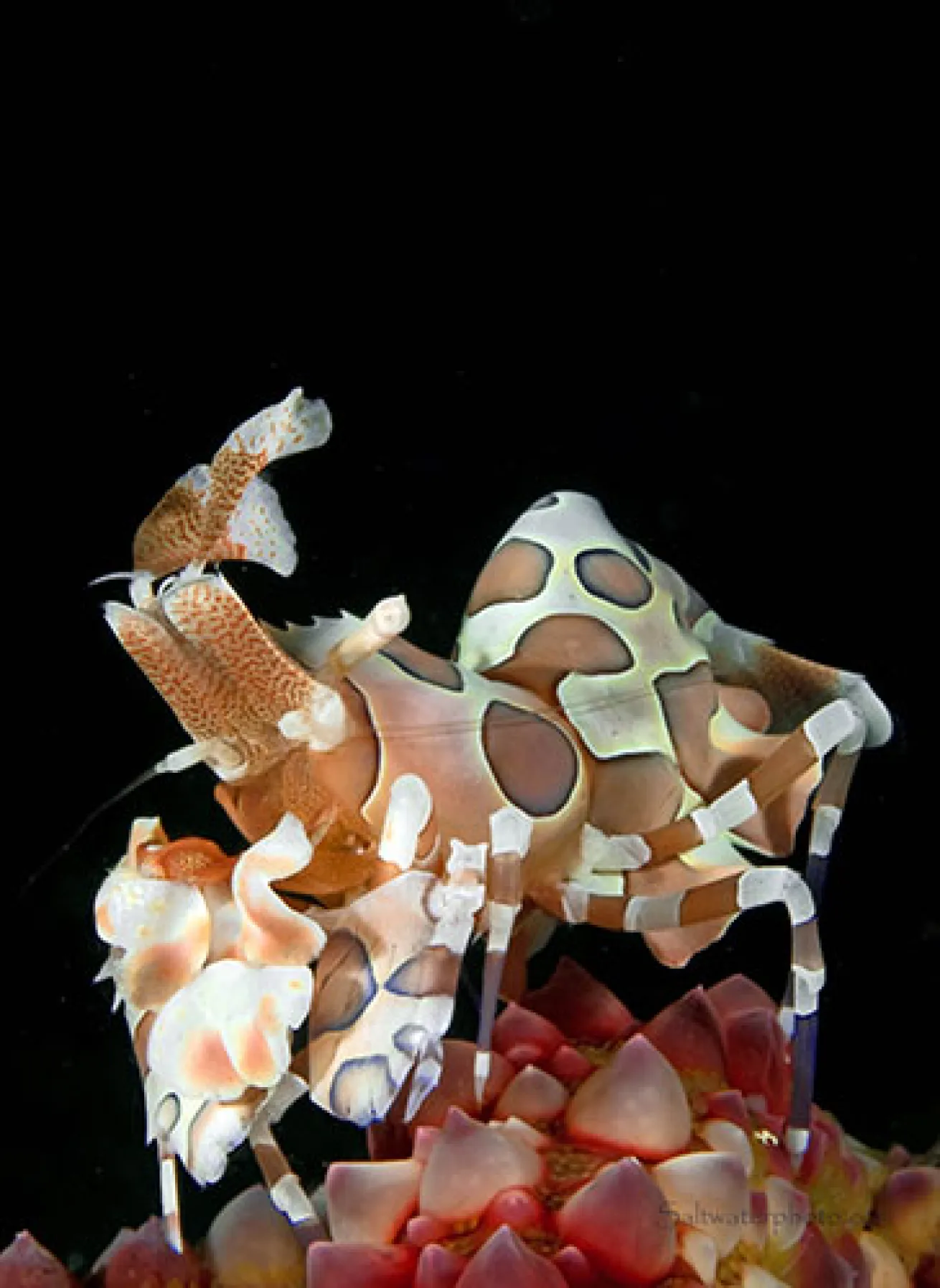
Mike BartickPink harlequin shrimps acquire their color from their food source, pink star stars.
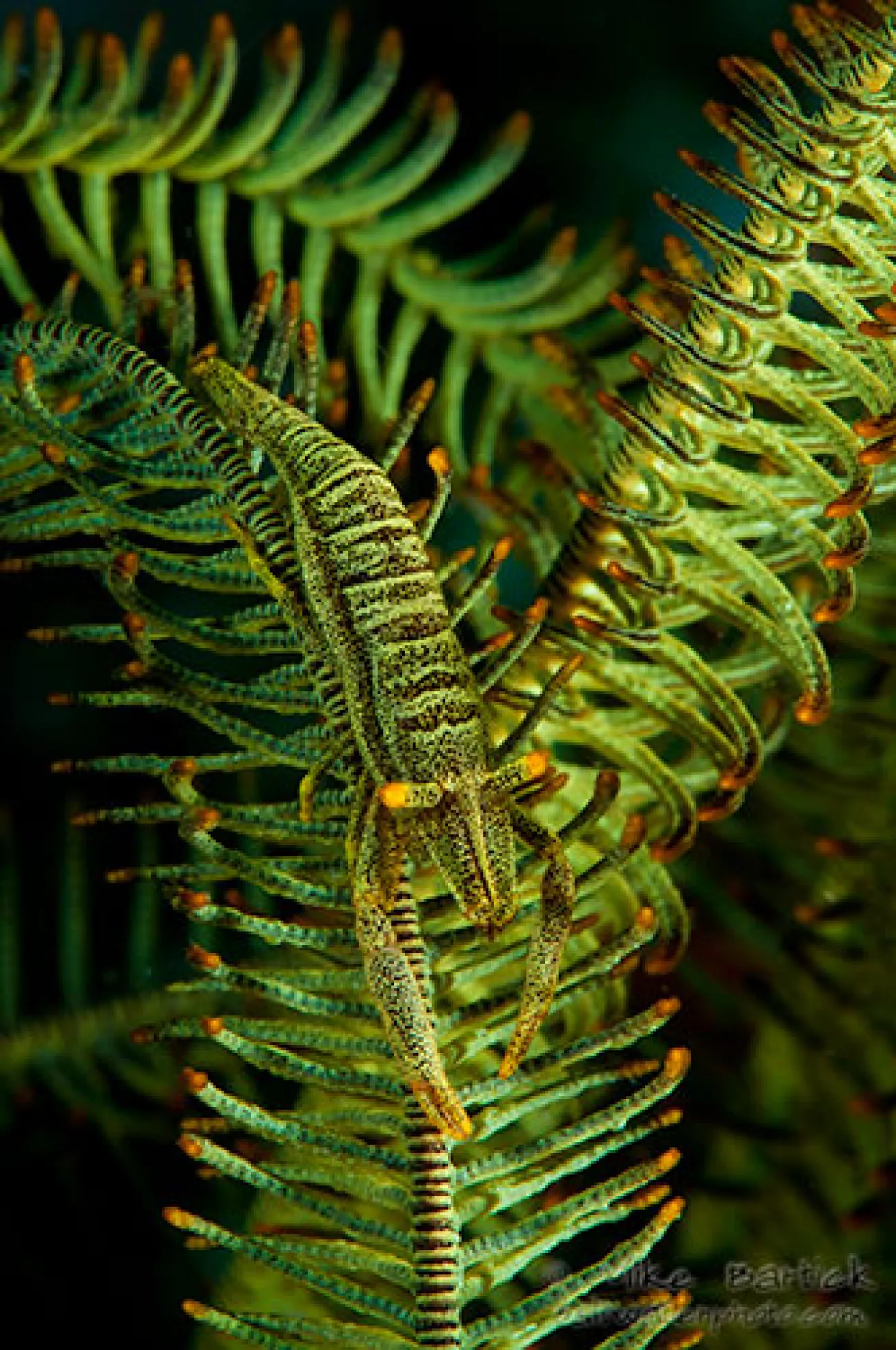
Mike BartickPartner shrimp live in symbiosis with other sea creatures such as anemones, coral and crinoids — to name a few — and are categorized into several subfamilies. The crinoid shrimp can be as colorful as the crinoids they live on, which makes them a prime subject for photographers. The green crinoid shrimp are particularly beautiful and very hard to find — adding to the fun.
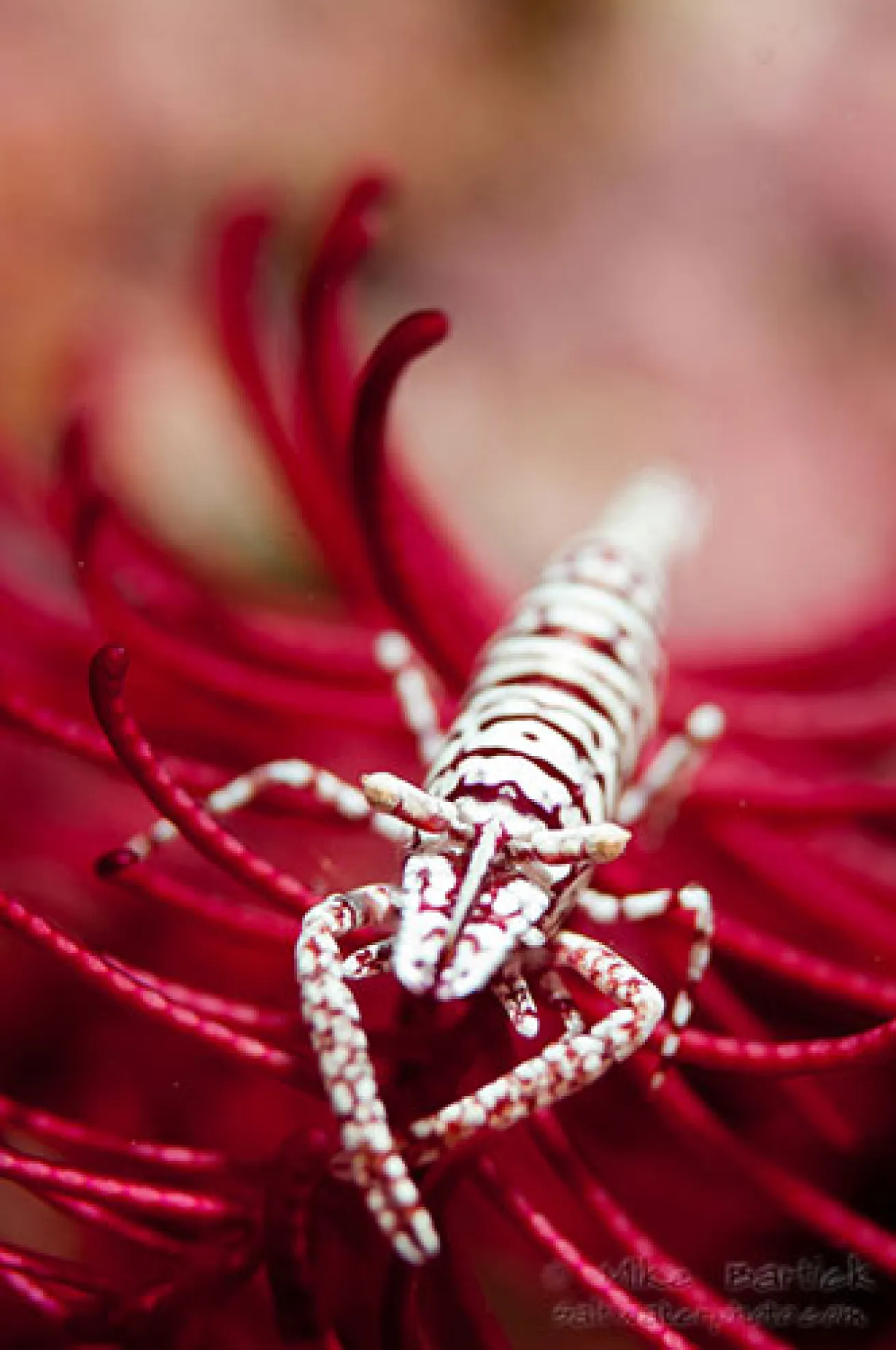
Mike BartickThe partner shrimp pose no threat to the crinoid and help it to stay clean by consuming other small organisms that may try to attack or collect on the crinoid.
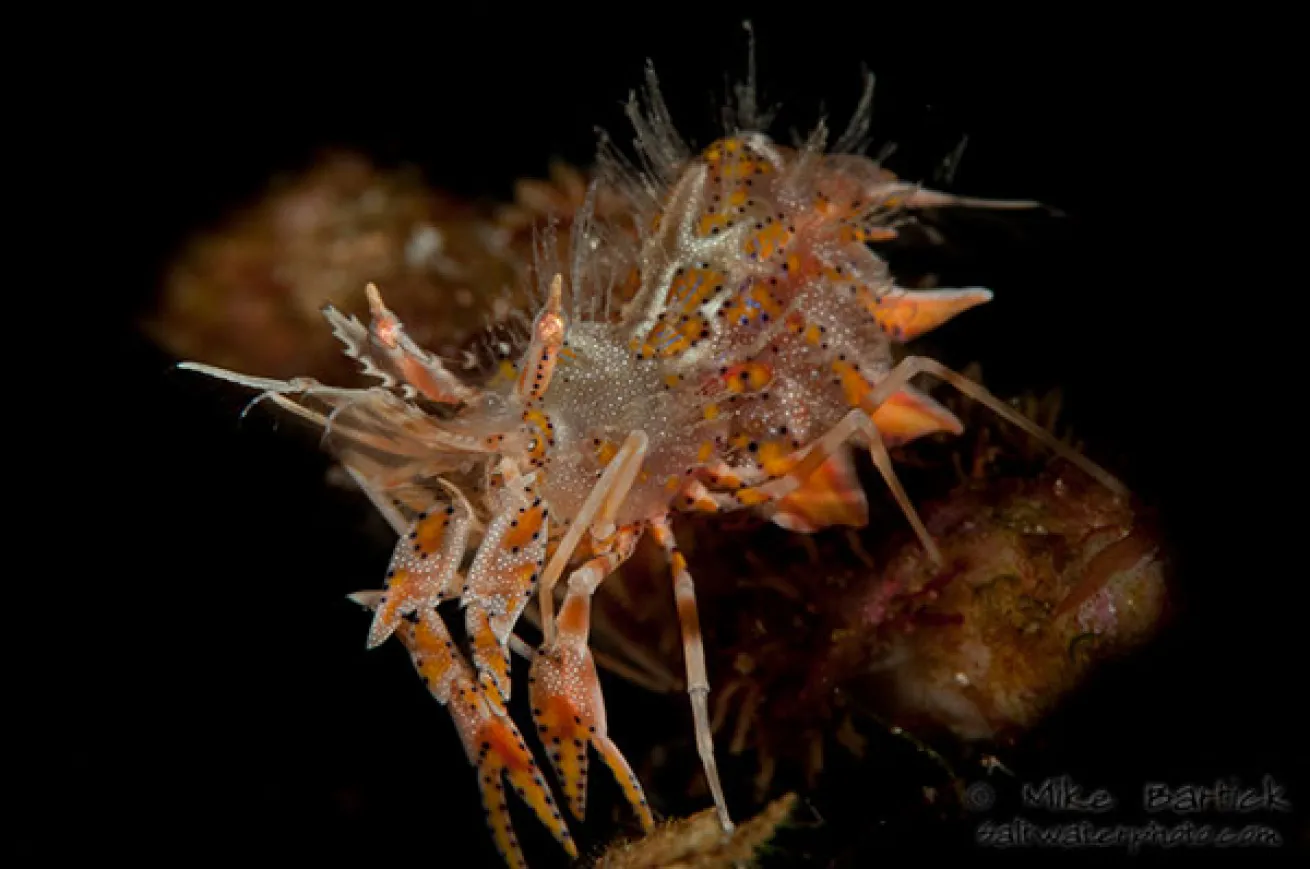
Mike BartickTiger shrimp are not only difficult to pronounce but hard to photograph. Their unusual and gaudy appearance, coloration and body detail make them a prized find. Covered with sharp spines, they tend to blend perfectly when hiding. Often found in sponge, dead coral, beneath ledges or at the base of crinoids, these are a very difficult shrimp to locate, but tend to inhabit the same area for a long period of time.
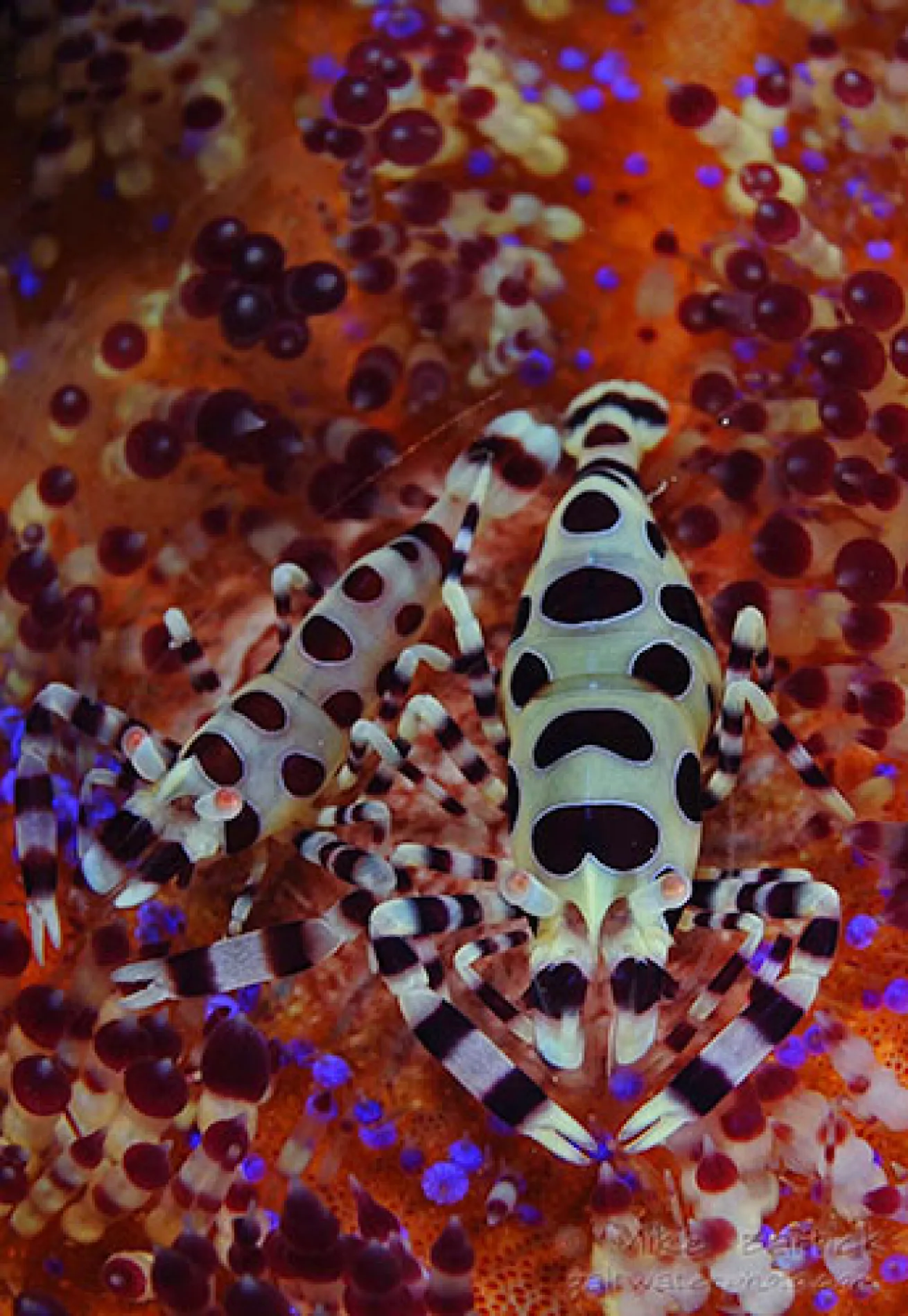
Mike BartickFire urchins are a wonderful host for crabs and shrimp, although caution must be exercized while you're working with them —they can deliver a nasty, burning sting. The Colemani shrimp, discovered and named after Neville Coleman, are a really beautiful example of commensal shrimp. They are usually found in pairs, living for a long period of time as they're protected from predation by the venomous urchin.
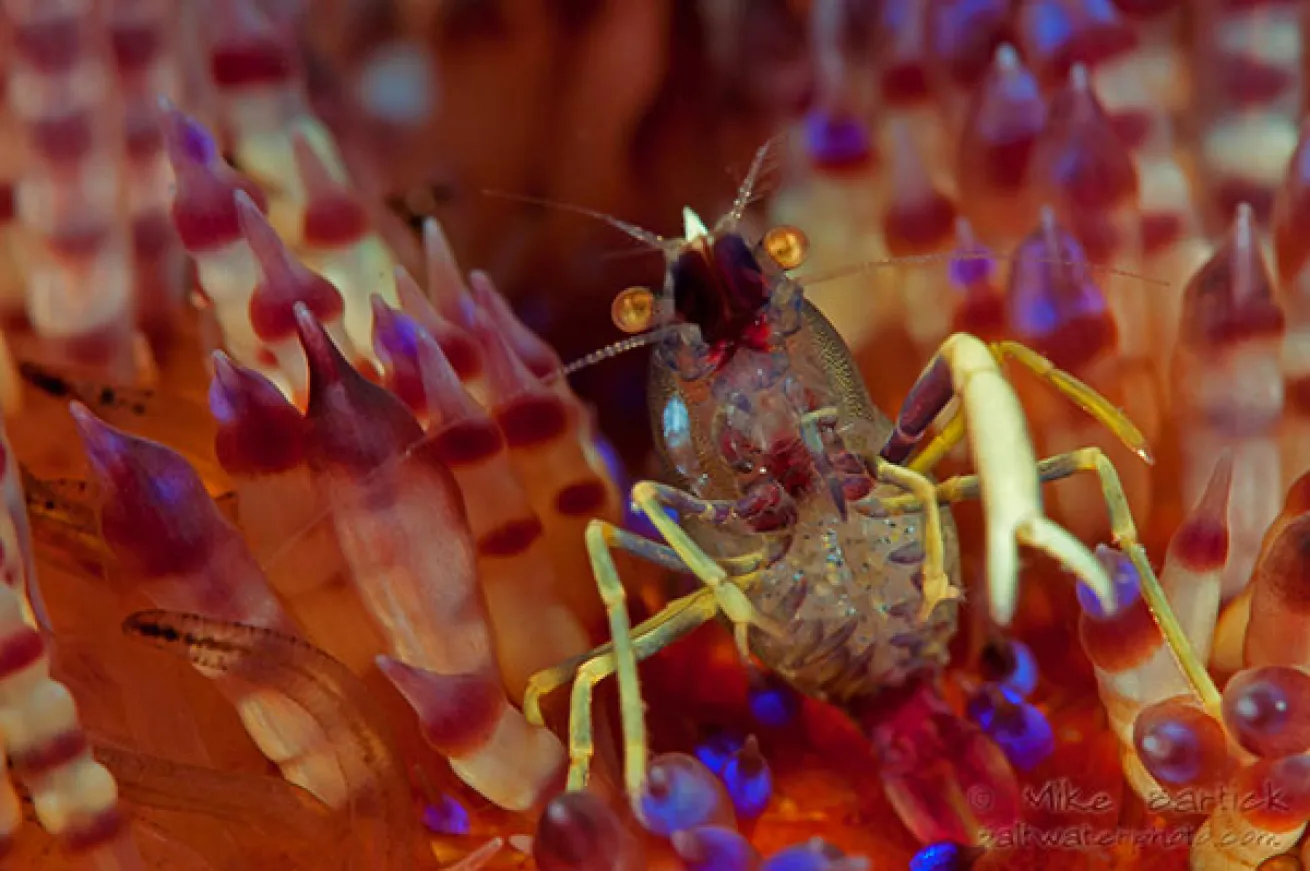
Mike BartickBrooks commensal shrimp resemble a squat lobster as they tend to lean back on their tails. They are also found living on fire urchins. This one actually has eggs tucked underneath and is held in place by its chelipeds (or pincers).
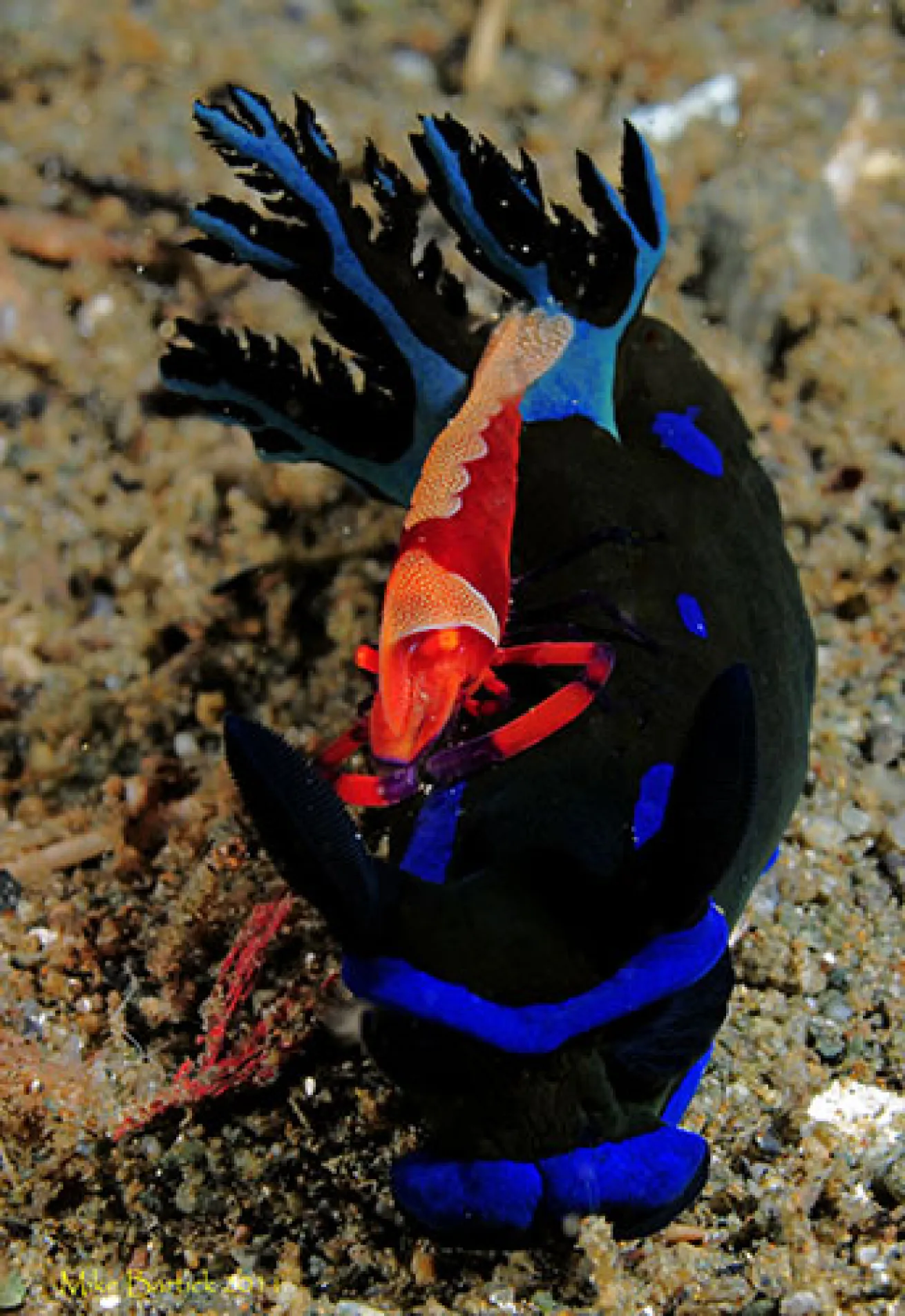
Mike BartickImperial shrimp (Pereclimenis imperator) are perhaps one of the most commonly seen commensal shrimp and are found on an assortment of different organisms like sea cucumbers and nudibranchs. This one has nearly outgrown its host but is still tolerated serving an important purpose. As long as the shrimp remains on this Nudibranch it should remain relatively safe, taking advantage of the Nudibranchs colors to stave off predators it cleans the Nudibranchs gill tuft and anus collecting organic matter to snack on!
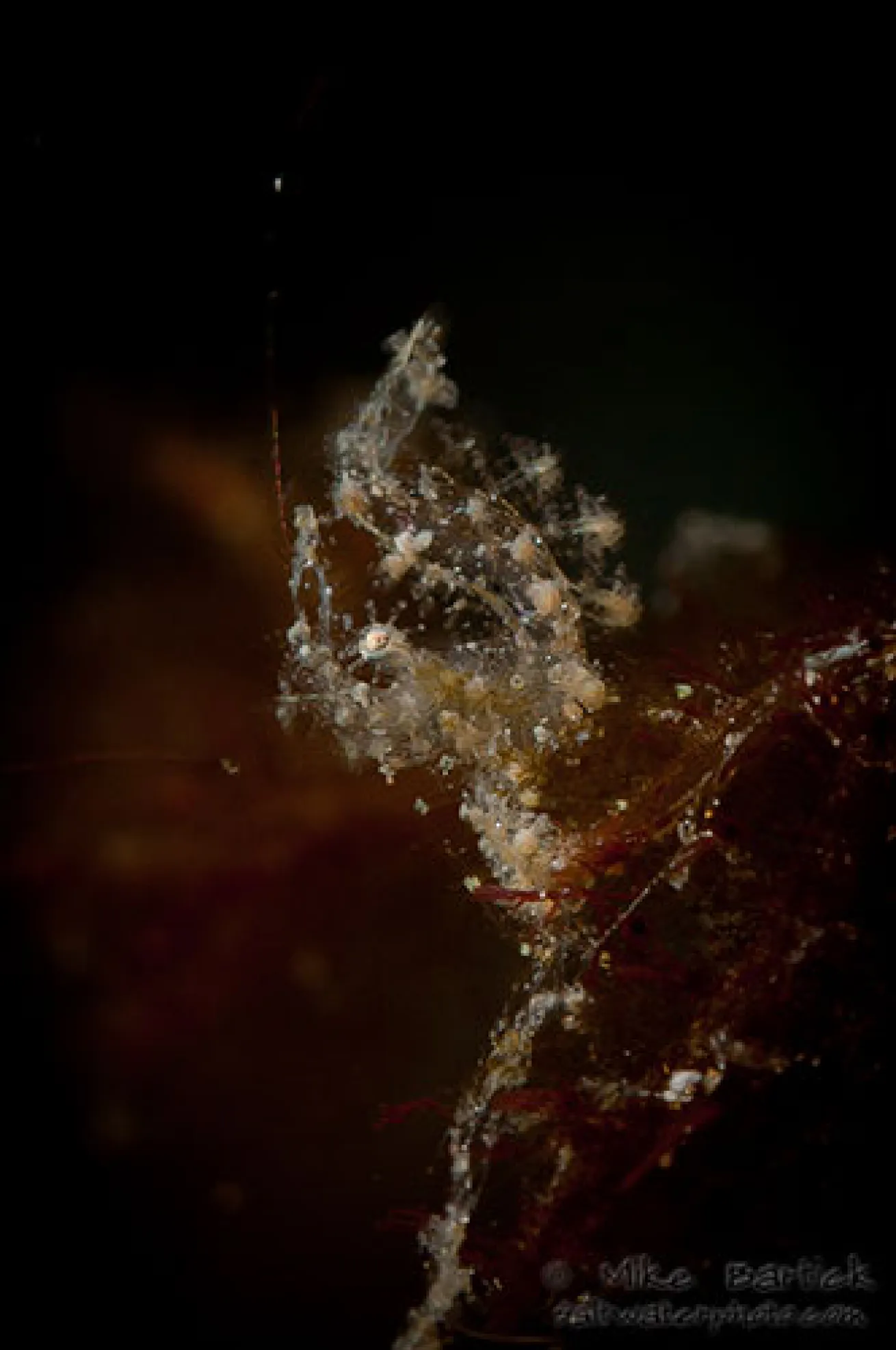
Mike BartickThis tiny little shrimp was found much deeper than the rest and was living on soft coral Phycocaris simulans. The star around the eye is common for the broken back shrimp, which adds to the difficulty of a proper I.D.
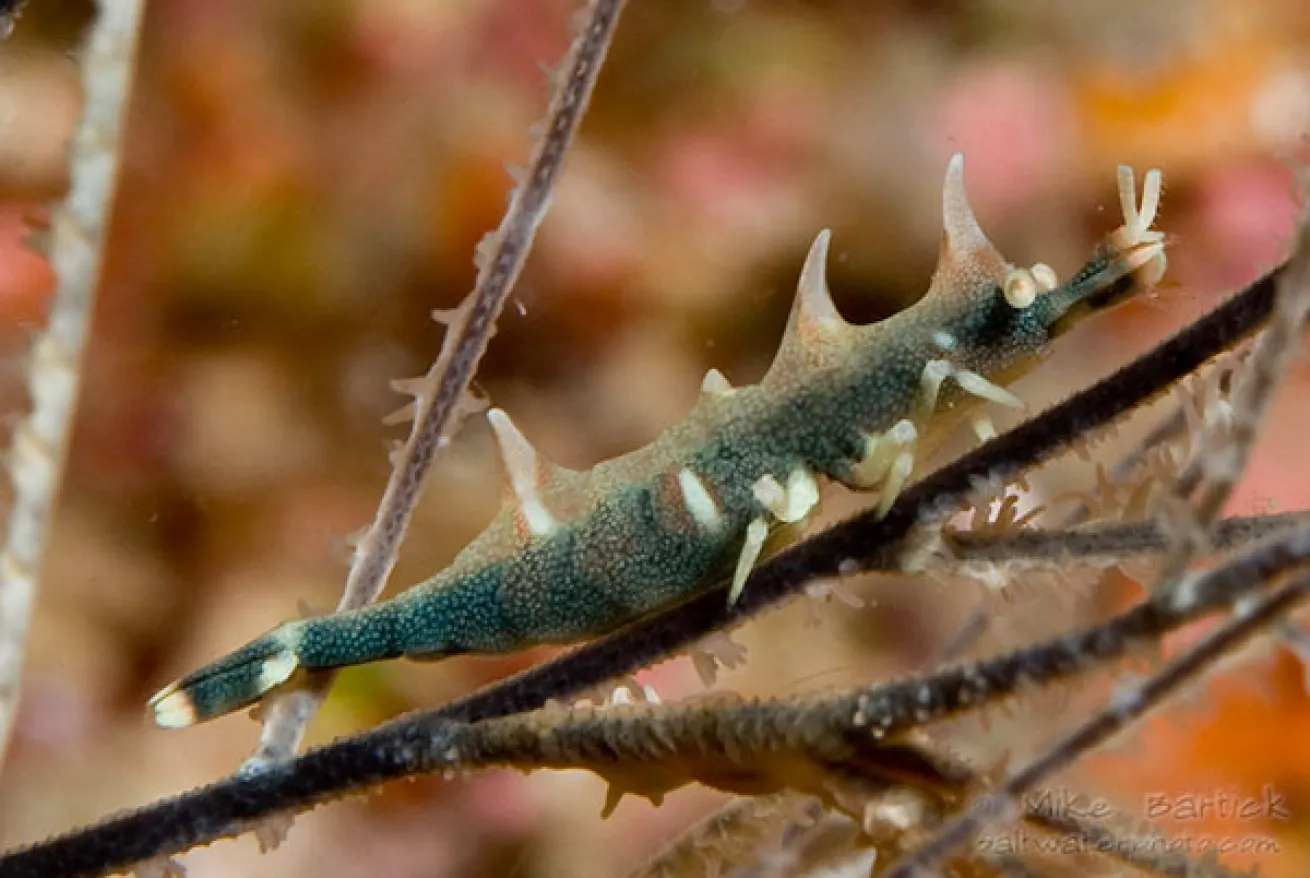
Mike BartickHorned or Dragon shrimp (Miropandalus hardingi) are my new favorite shrimp to find. After several years of looking for a Green Dragon shrimp with little success, I finally decided to look on a different colored gorgonian and immediately found my first one.
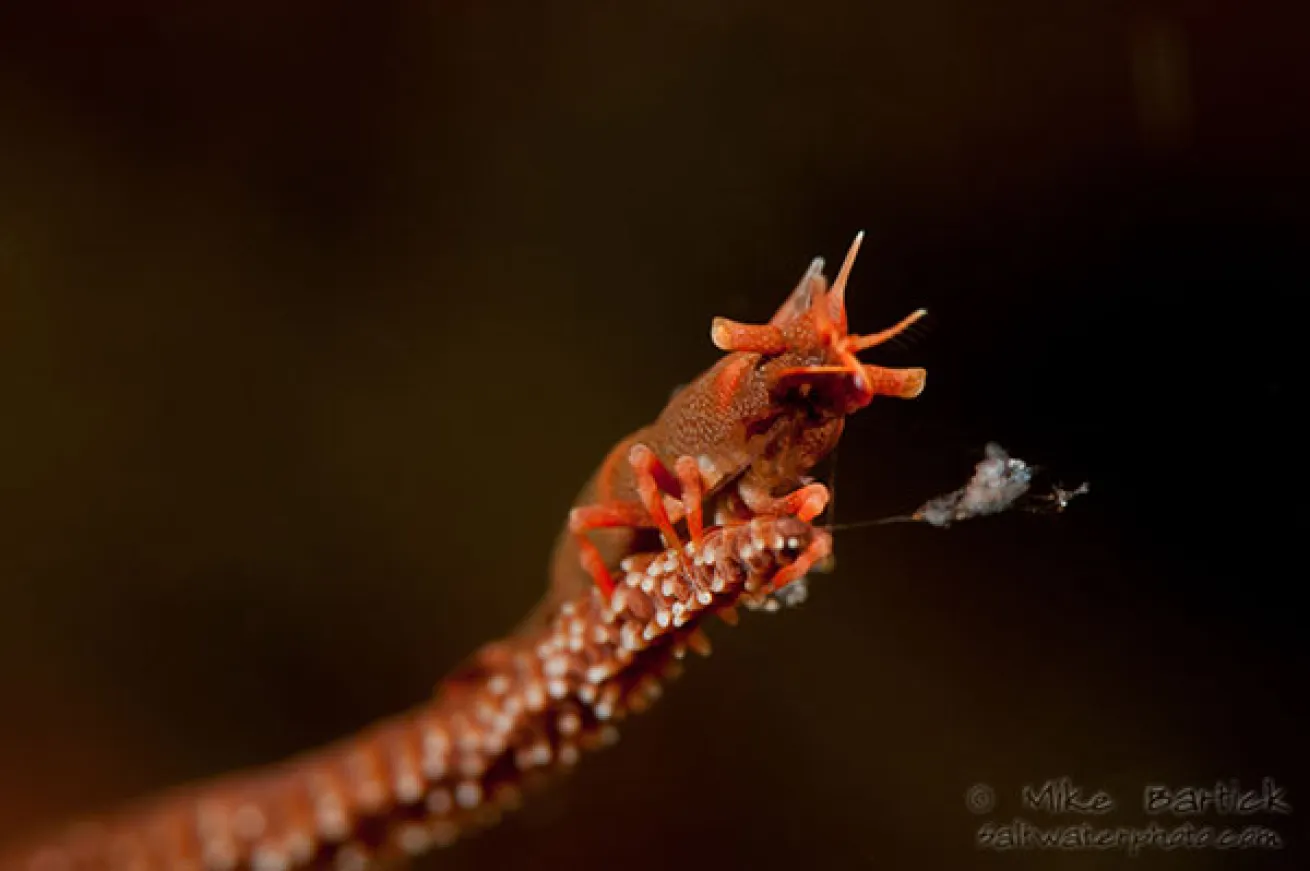
Mike BartickRed Dragon shrimp are found exclusively on brown gorgonians. Its size helps it to remain undetected and its unusual camouflage perfectly mimics the gorgonian on which they live. Red Dragons are regarded as very rare and their sloth-like movements help them to remain cryptic to humans and predatory fish.
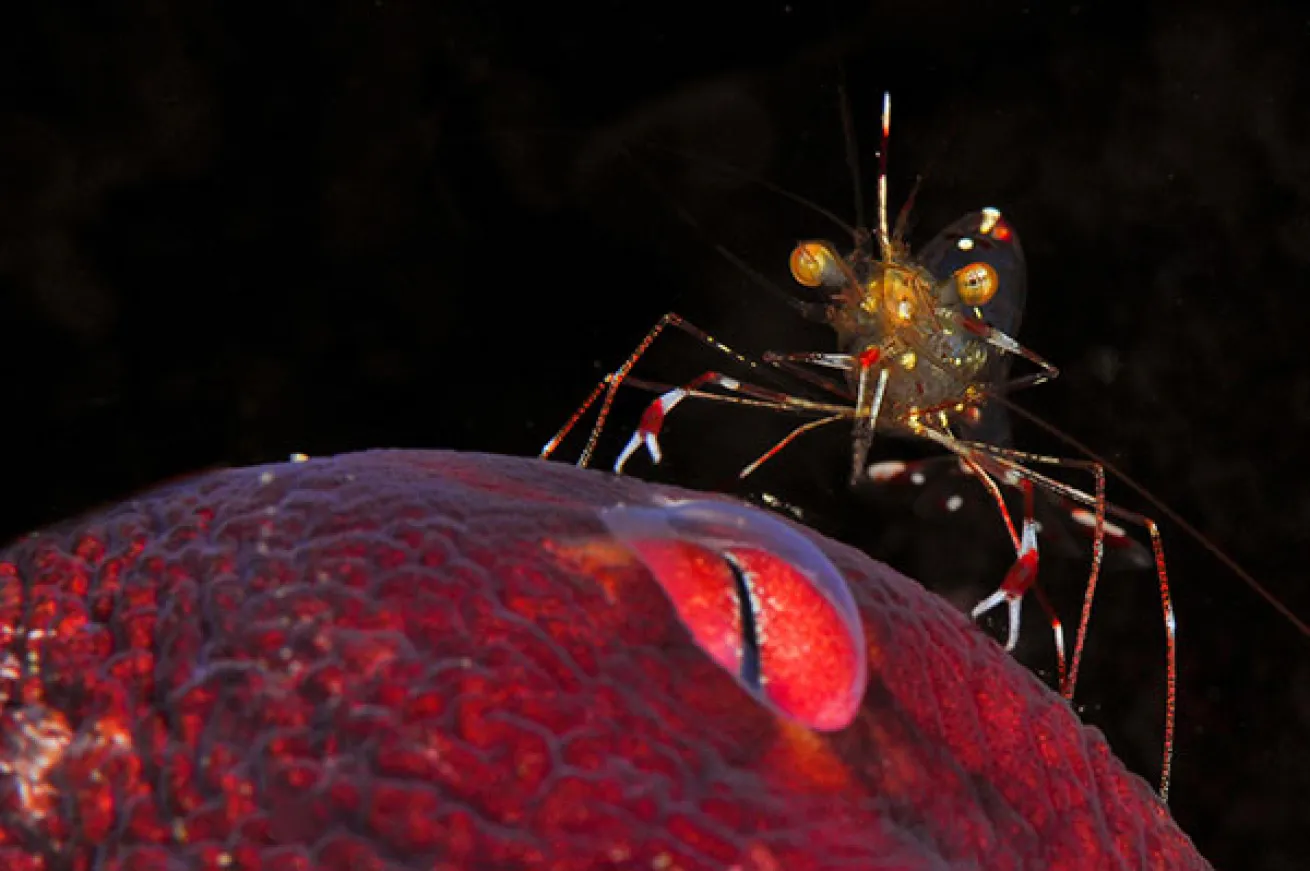
Mike BartickI really enjoyed capturing this final photo. It’s a cleaner shrimp on the eye of a larger octopus. I noticed the octopus living on a wall of one of the nearby dive sites, Kirby's Rock. The cleaner shrimp were all around the shy octopus, but when I approached, this one would duck back into its hole. I focused and exposed an area aroung the general distance of the octopus before moving in close — and then finally, was able to capture this photo. I repeated the step several times, but only had this one shot for all my efforts.
Often ignored and overlooked, crustaceans are the glue that binds our oceans' ecosystems together. From the microscopic krill that feed the largest of marine mammals to cleaner shrimps that help keep marine life healthy, these little "insects of the deep" should be held in high regard.
The family of crustaceans falls under the phylum Arthropoda, which is actually lumped together with many land-based insects and comprises a family of more than 45,000 described creatures. More are being discovered regularly and are being added to this rapidly expanding family as we push away from the terrestrial shoreline and explore our underwater world.
Falling into a category that I like to call “beyond the holy grail,” many of these critters come into play after the yawning frogfish, seahorses and other oddities have been photographed. Shooting photos of them can be very easy to do and can be accomplished by photographers possessing any level of skill or using any type of camera. In fact, compact cameras tend to do better then the SLRs purely because of the depth of field.
However, If it’s high-resolution, detailed photos you're after, then you'll need the photo equipment that produce super sharp and super macro images. Super macro has exploded in popularity over the past few years, exposing some of the smaller more highly decorated critters in all of their full-framed glory. The critters in this write-up are just a few of the amazing shrimp finds that are out there. Working with a guide is vital to locate these tiny and delicate creatures, so that you can successfully photograph them.
A word of caution should be expressed here: please remember to always protect the shrimp from ever-present predators, do not destroy the hosts and please do not relocate your subject, as they tend to be habitat specific.
_Mike Bartick was born and raised in Southern California, not far from the ocean in Huntington Beach. After finding his first nudibranch on an Open Water checkout dive, he was immediately hooked on diving. Bartick, who splits his time between the Indo-Pacific and the Eastern Pacific as a freelance photographer, photojournalist and field guide, shoots with a Nikon D300 and D300s, Sea and Sea housings, and YS-D1 and YS 250 pro strobes. To see more of his work, visit saltwaterphoto.com. _


