

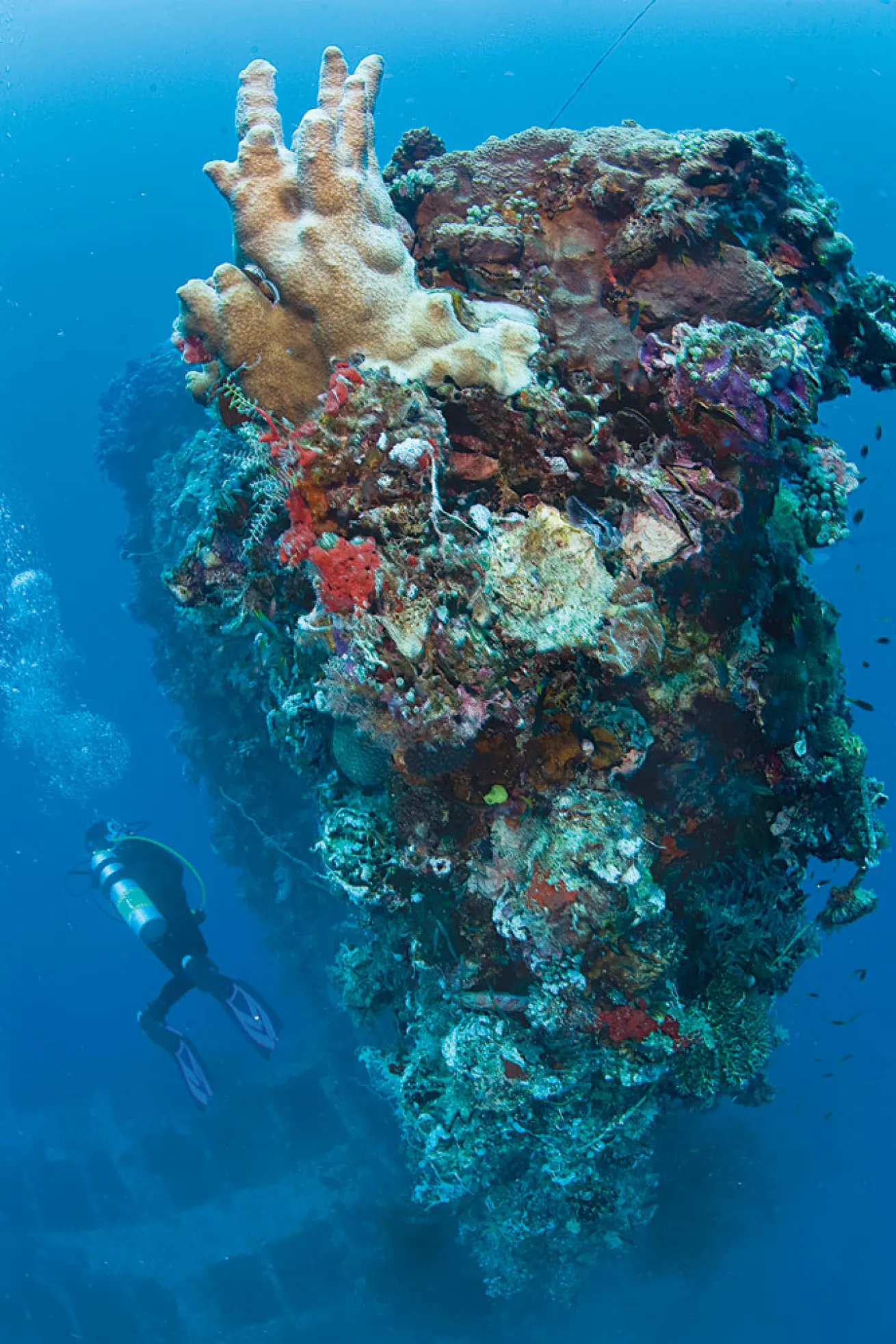
Ethan DanielsThe colorful kingpost of the Chuyo Maru — although Palau’s natural coral reefs are its main attraction for divers, the collection of shipwrecks, most from World War II, also provide habitat for fish, and serve as flourishing artificial reefs.

Ethan DanielsProtected from wave action by the surrounding islands, healthy hard corals thrive in Palau’s shallow lagoon.
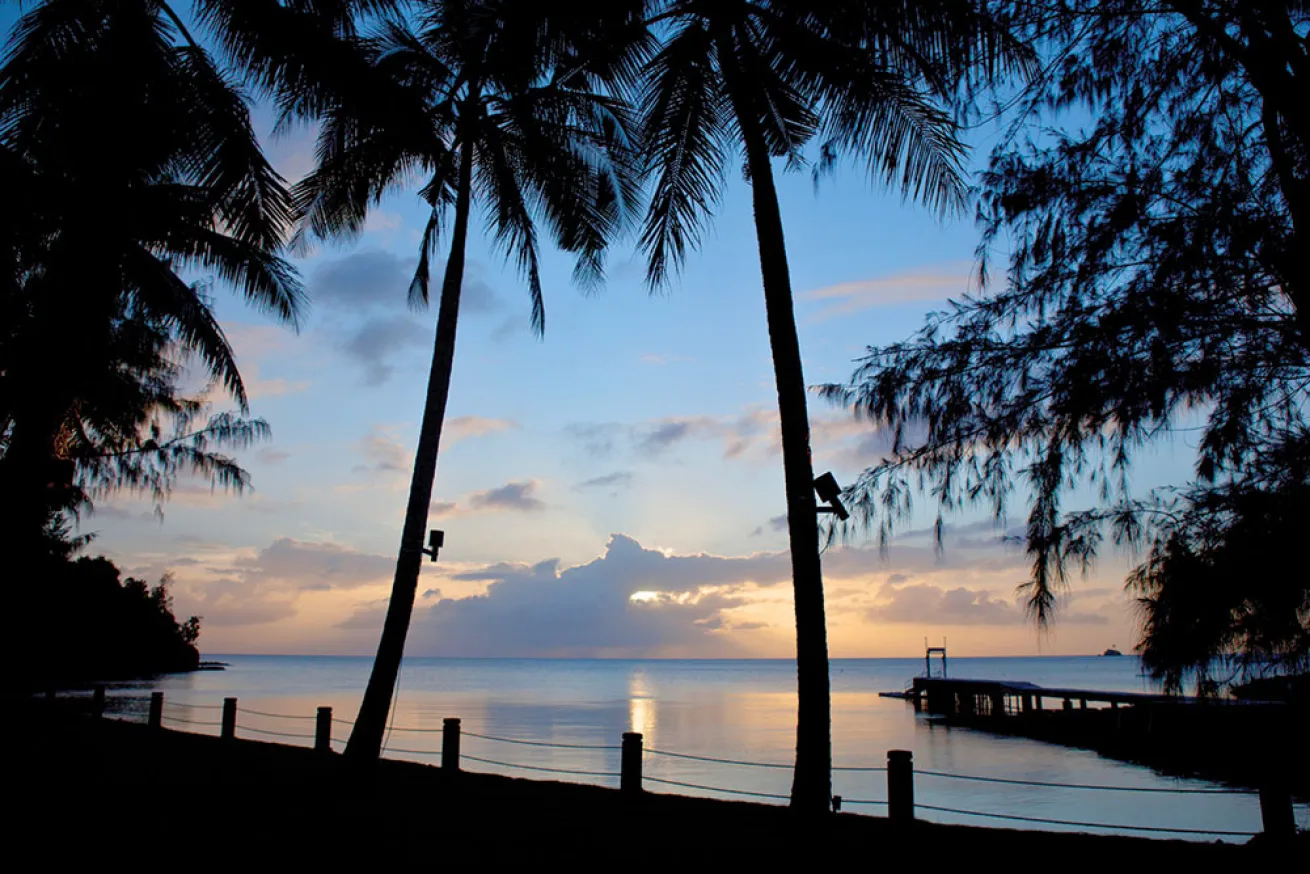
Ethan DanielsThe sun sets over a tranquil sea.

Ethan DanielsMimicking a waterlogged mangrove leaf in color and pattern, a juvenile broadclub cuttlefish swims just below the surface of the lagoon.

Ethan DanielsA fishing vessel in Palau’s in-ner lagoon sank during an intense storm three decades ago.

Ethan DanielsVibrant rope sponges decorate a submerged mangrove root.

Ethan DanielsA sea of jellyfish in iconic Jellyfish Lake.

Ethan DanielsUplifted more than 30 million years ago, the Rock Islands have eroded over time into a vast maze that surrounds an idyllic lagoon.

Ethan DanielsThe warm, clear waters of Palau’s lagoon support habitats that are perfect for many species. Here, a detail of a Tridacna giant clam.

Ethan DanielsMandarinfish are easy to spot under cloudy conditions or at dusk.

Ethan DanielsLate-afternoon sunlight illuminates a blue sea star clinging to a shallow reef.

Ethan DanielsA school of fish peruse the blue waters of Palau.
Palau was formed from dark volcanic rock and the uplifted bones of ancient coral reefs. Much like other island nations in Micronesia, Palau above the waterline is swathed in luxuriant green vegetation, but below the surface, it really stands apart. Perched at the edge of the Coral Triangle, the islands shelter more than 1,500 species of fish, 700 species of corals and anemones, and countless other invertebrates. The archipelago’s extensive mangroves, sea-grass beds, marine lakes and coral reefs constitute a diving utopia. From giant, charismatic megafauna to micro invertebrates, there is always something new to discover in Palau’s waters.
Understandably, nearly all divers are most energized by the big shark dives and vertical walls of Palau’s barrier reef, but I also love investigating the secrets offered by the lagoon. In the end, I’ve found there is only one answer that solves the quandary of where and how to spend precious underwater time in Palau: Keep coming back.
Divers Guide to Palau
Average water temp: 83 degrees F
What to wear: 3 mm full wetsuit or shorty
Average viz: 60 to 100 feet
When to go: Year-round; high season is November to May
For more information, go to sportdiver.com/palau.
Diver’s Day Off
There’s more to your vacation than diving.
(We know, we’re just saying that.) For those days when you can’t dive, discover Palau’s topside attractions.
Day 1: Explore the inner lagoon by kayak. There’s no better way to take in the jade-colored Rock Islands and their many secrets than by silently paddling through the natural maze — don’t forget your snorkel gear.
Day 2: Hike up an old trail, built by the Japanese army through tropical limestone forest and past war relics, to the German Lighthouse on top of Ngeruktabel Island, where views of the eastern reefs are breathtaking. Take time to snorkel along the edge of Lighthouse Channel on the way back to Koror, and finish the day dining on Japanese cuisine at Dragon Tei restaurant.
Day 3: Explore Palau’s largest island, Babeldaob, by car. With a relatively new paved road that circles the entire island, you can visit waterfalls, walk ancient stone paths through the lush jungle, and check out traditional Palauan men’s houses all in the same day.


