

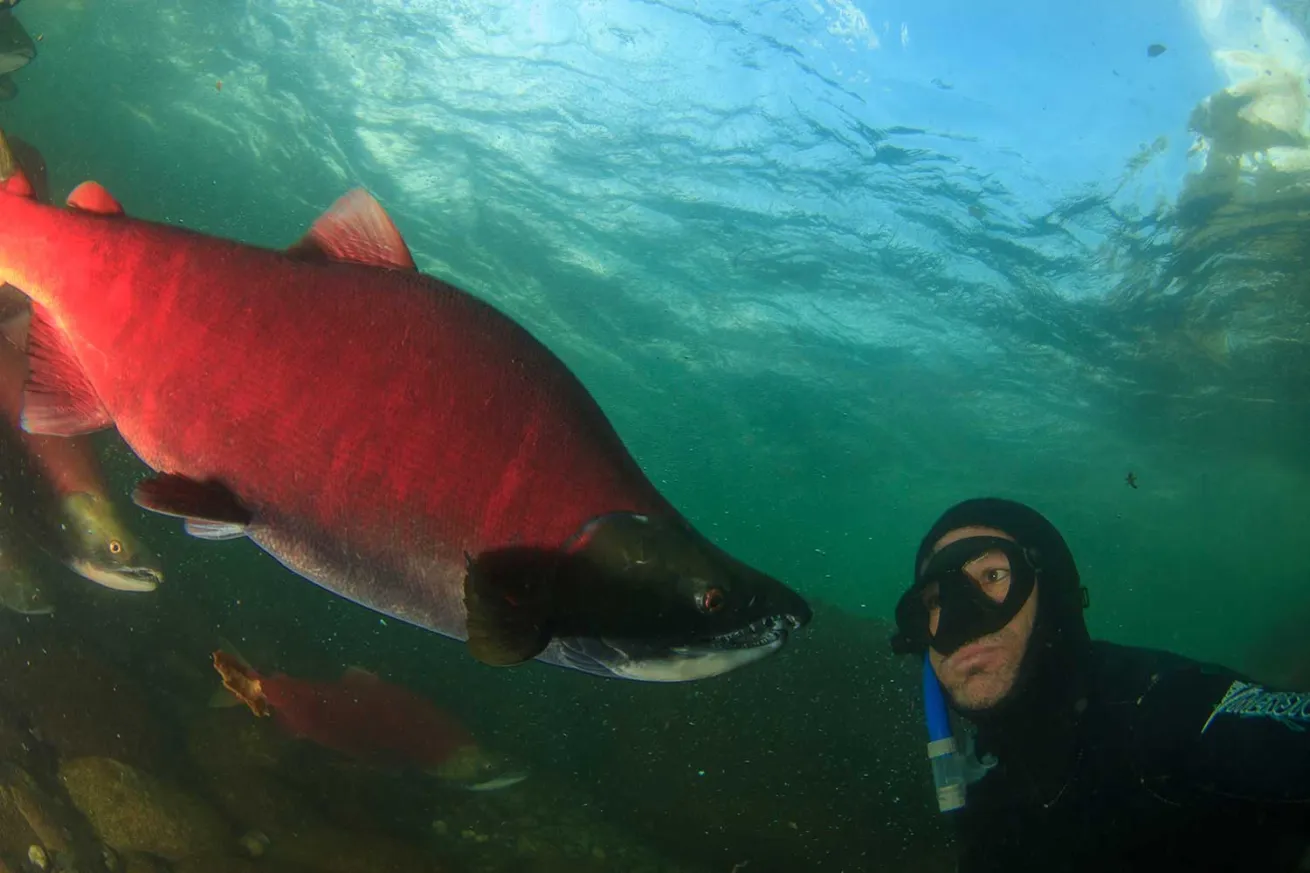
Josh HumbertEach autumn, the world’s most concentrated sockeye salmon run flows up Canada’s 7.5-mile-long Adams River in British Columbia. Uniquely, divers can book commercial trips to plunge into this kaleidoscopic migration of moss- and cherry-colored fish
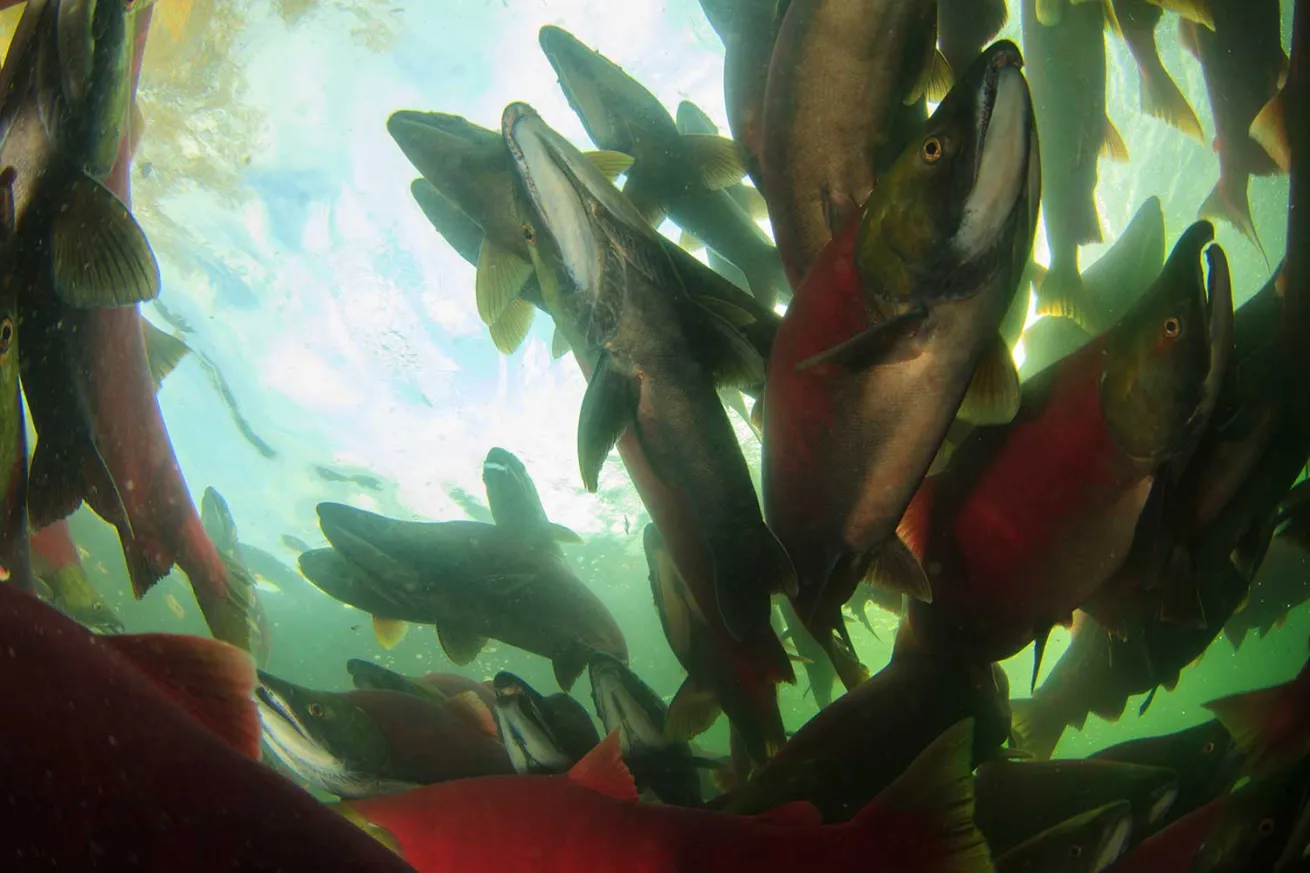
Josh HumbertThese sockeye have swum 2,500-miles between here and the Gulf of Alaska, navigating by magnetic fields and the scent of their home waters. For 17 days, they have thrashed upriver, surviving a 300-mile mosh pit of rapids and predators. Over 99.9% never make it this far.
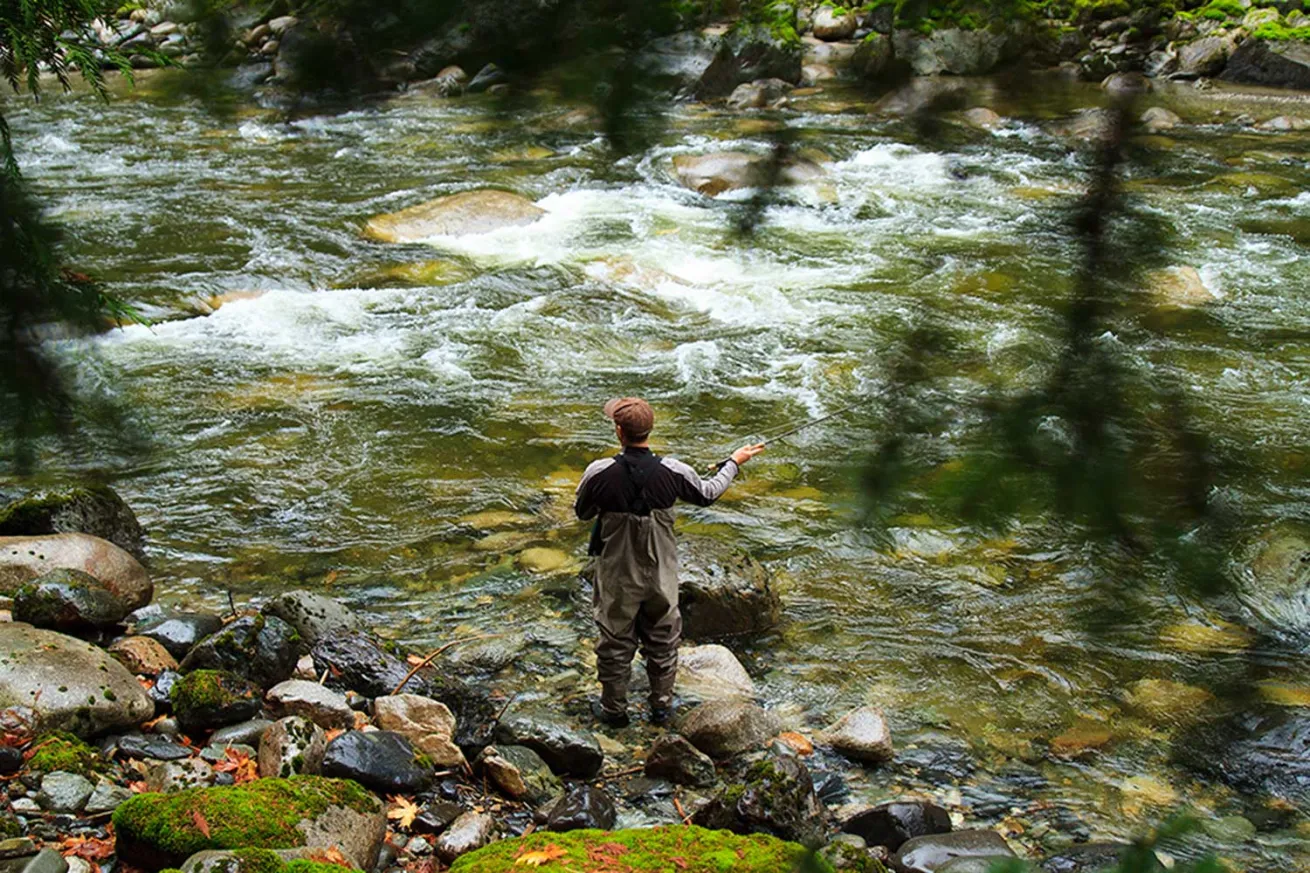
Josh HumbertFive hours northeast of Vancouver sprawls “The Shuswap,” a region of long lakes and forested crags. Here John Gilman fly-fishes for rainbow trout. “They eat the salmon eggs and smolt (the minnows) and grow mega-size,” he says. “I hooked something big, but it blew my reel off.”
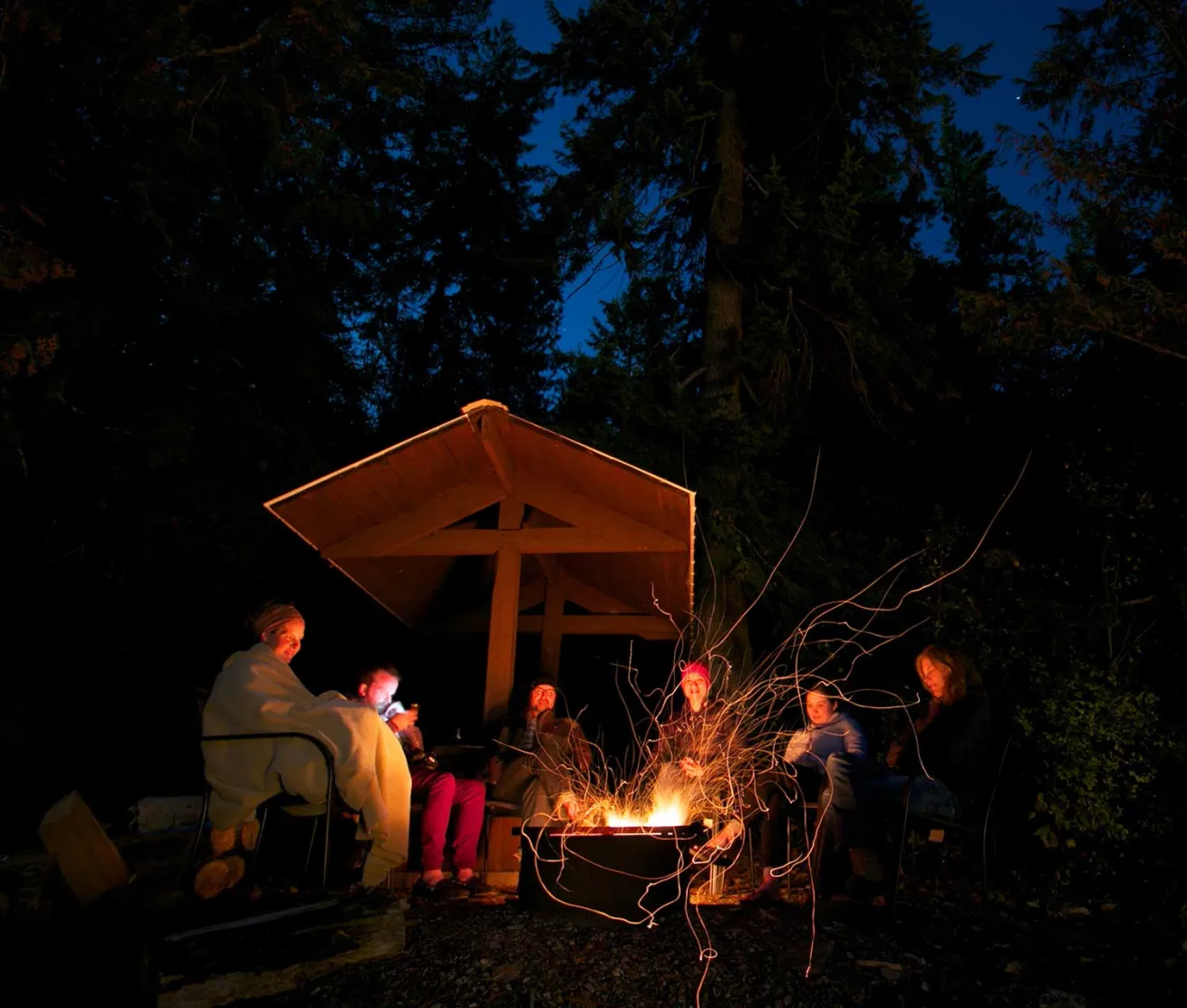
Amanda CastlemanHot, bright summers make houseboating popular on Shuswap Lake, a marine provincial park shaped like a pirate-flag’s crossbones. Here cruisers relax at a shoreline fire pit.
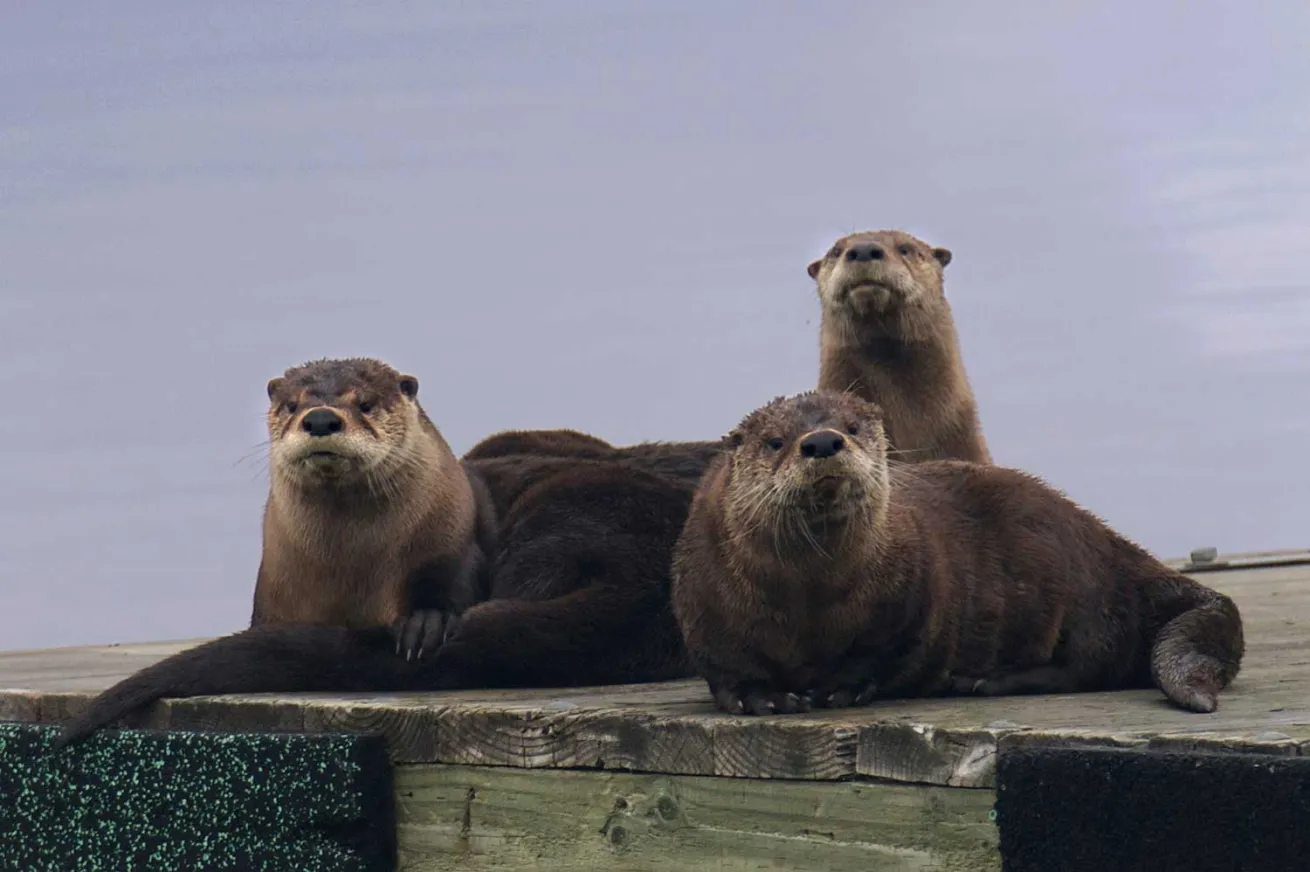
Amanda CastlemanOtters cavort on inland Canada’s longest curved, wooden wharf. This Salmon Arm landmark overlooks a bird sanctuary and ecological reserve. Stretch your legs here after dinner or desert at the legendary Shuswap Pie Company, which stars on the Food Network’s You Gotta Eat Here this February.
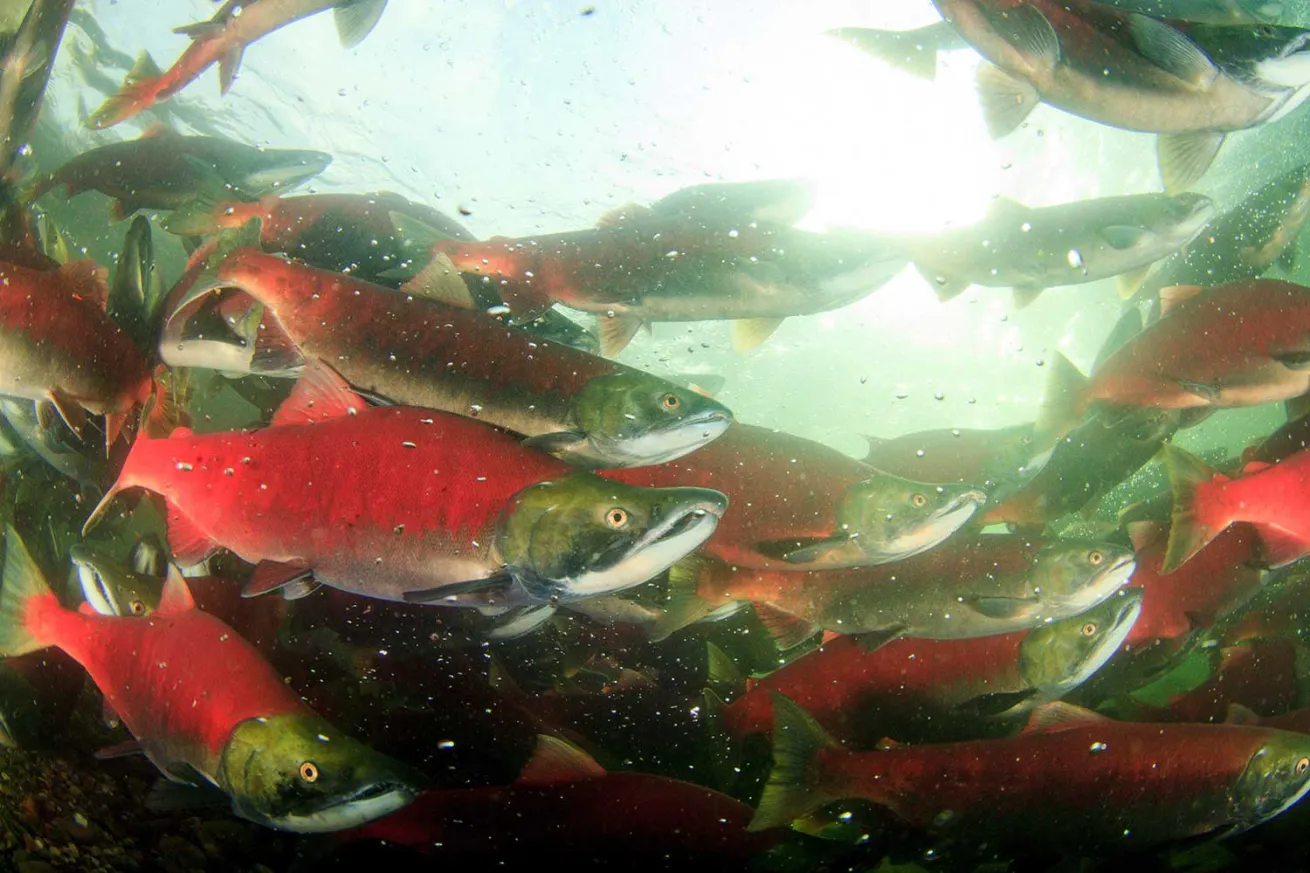
Josh HumbertEvery four years, the Adams River run peaks, as millions of sockeyes crowd upstream between late-September and late-October. They’ll surge again in 2018, but more than 100,000 should return this year. Catch a glimpse from Roderick Haig-Brown Provincial Park’s accessible platforms, set among Douglas firs and gold-leafed birch trees.
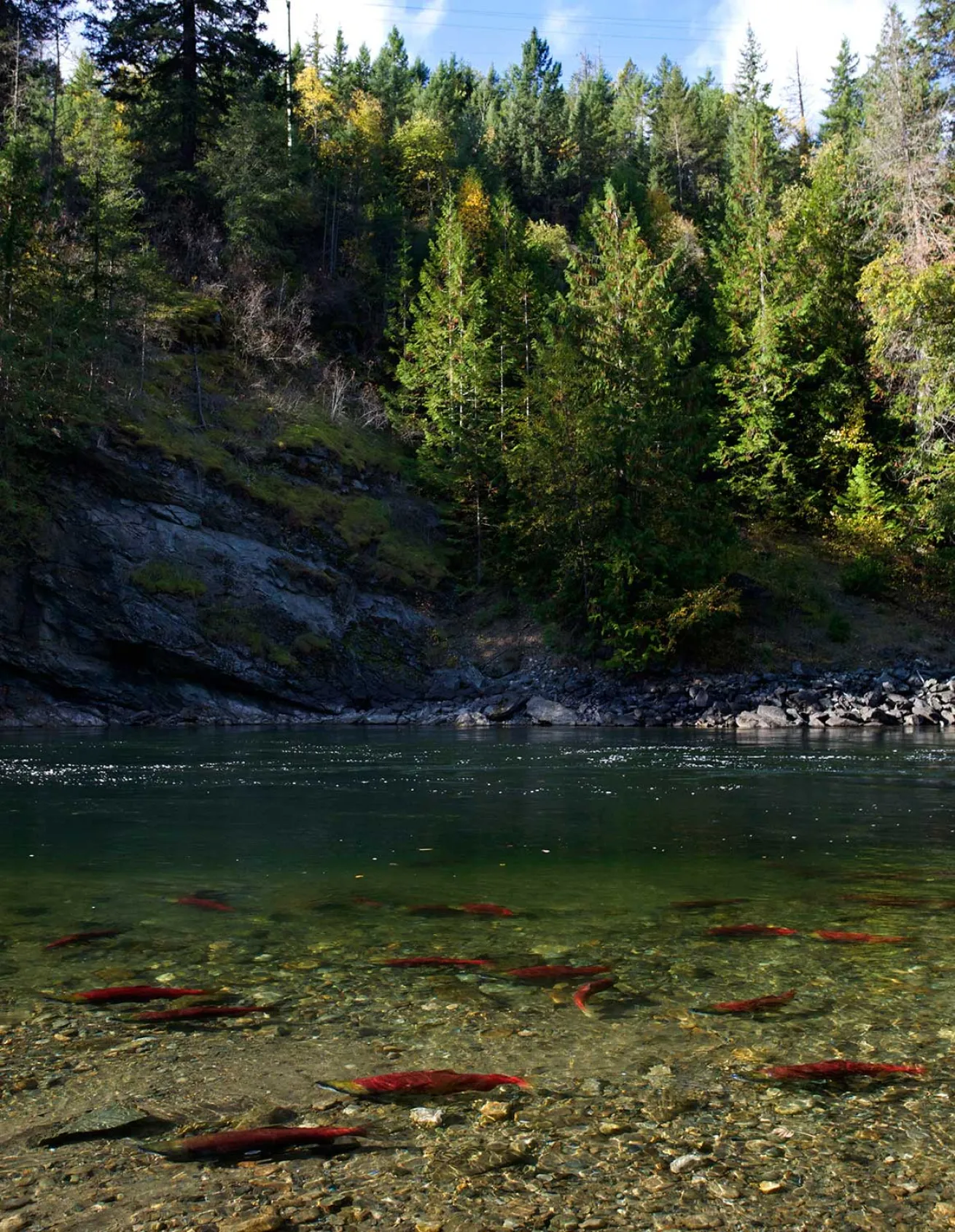
Amanda CastlemanUp the Adams River Canyon Trail, the gorge constricts, finally narrowing to a 15-foot-wide chute of whitewater. Bright as Chinese lanterns, salmon flirt in its jade-green pools, seemingly oblivious to their dead cousins, heaped in bleached mounds below. Jo
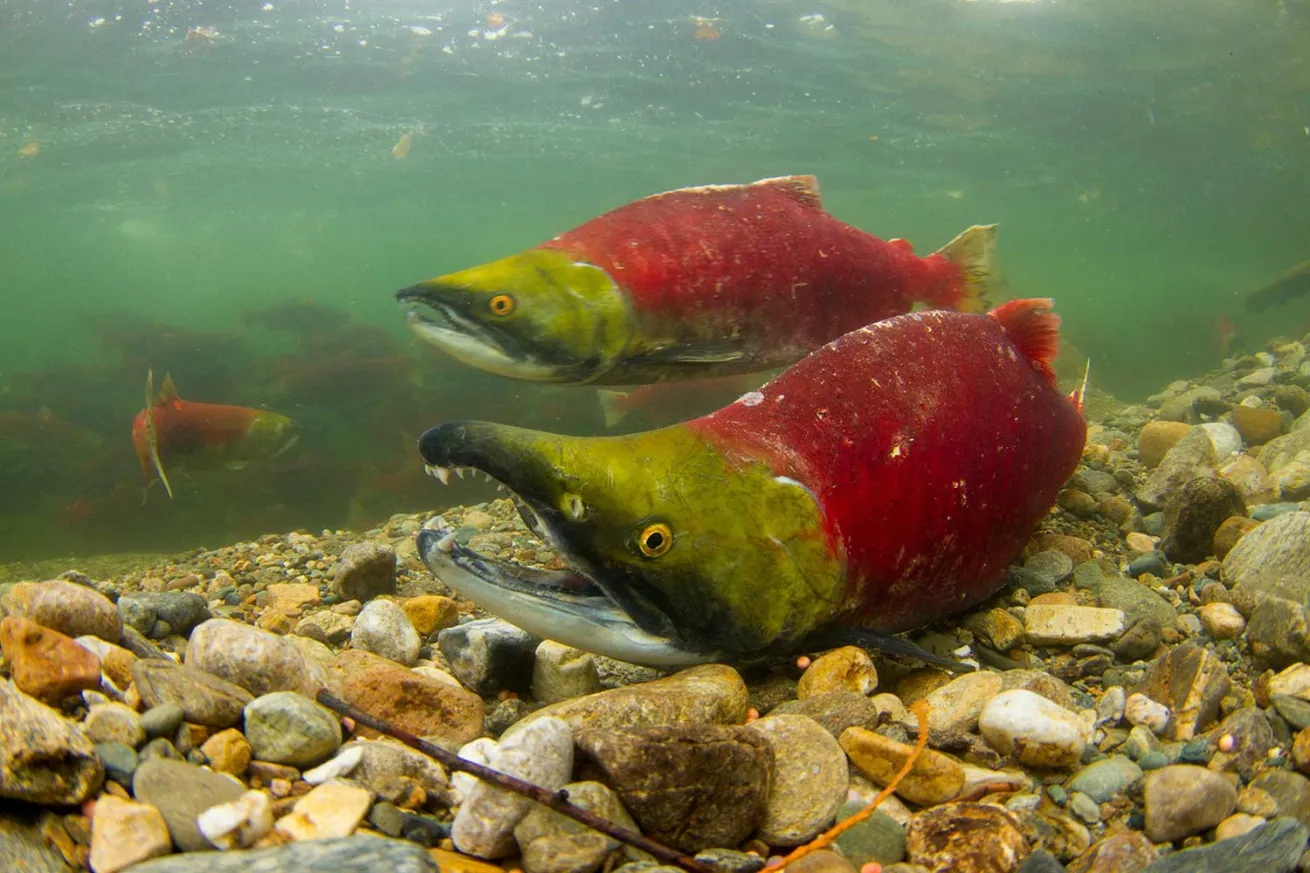
Josh HumbertMassive sockeye schools congregate in Shuswap Lake, waiting for open space in the spawning grounds. Divers should stay shallow, in only 10 to 15 feet, to best see the schools.
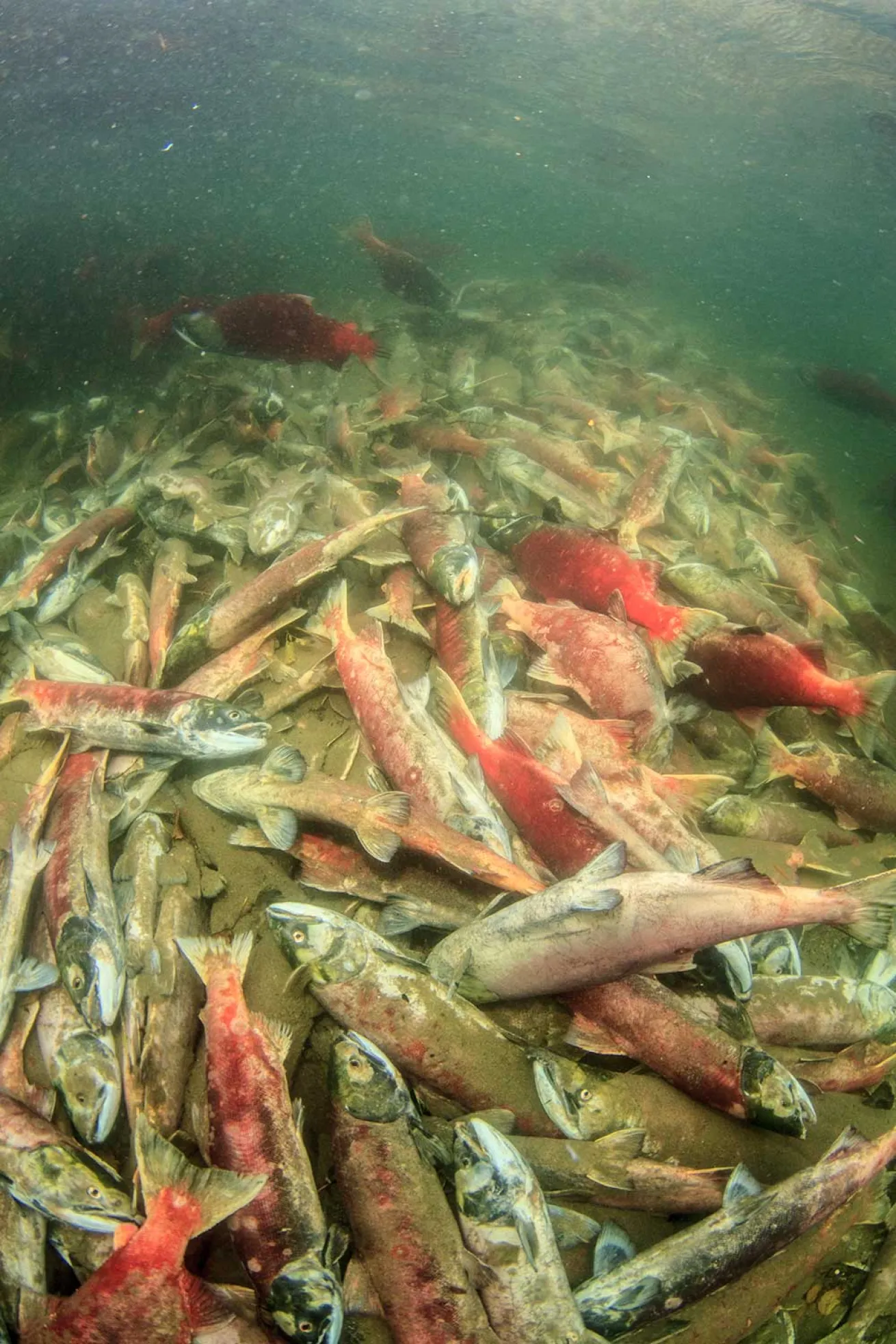
Josh HumbertAs the salmon spawn and die, they fuel the Pacific Northwest’s ecology, delivering rich marine nutrients to land-locked plants and animals. "We are a salmon nation: our energy, passion and people all run off the fish," explains Len Vanderstar, director of Friends of Wild Salmon. “The rivers are the arteries of our existence.”
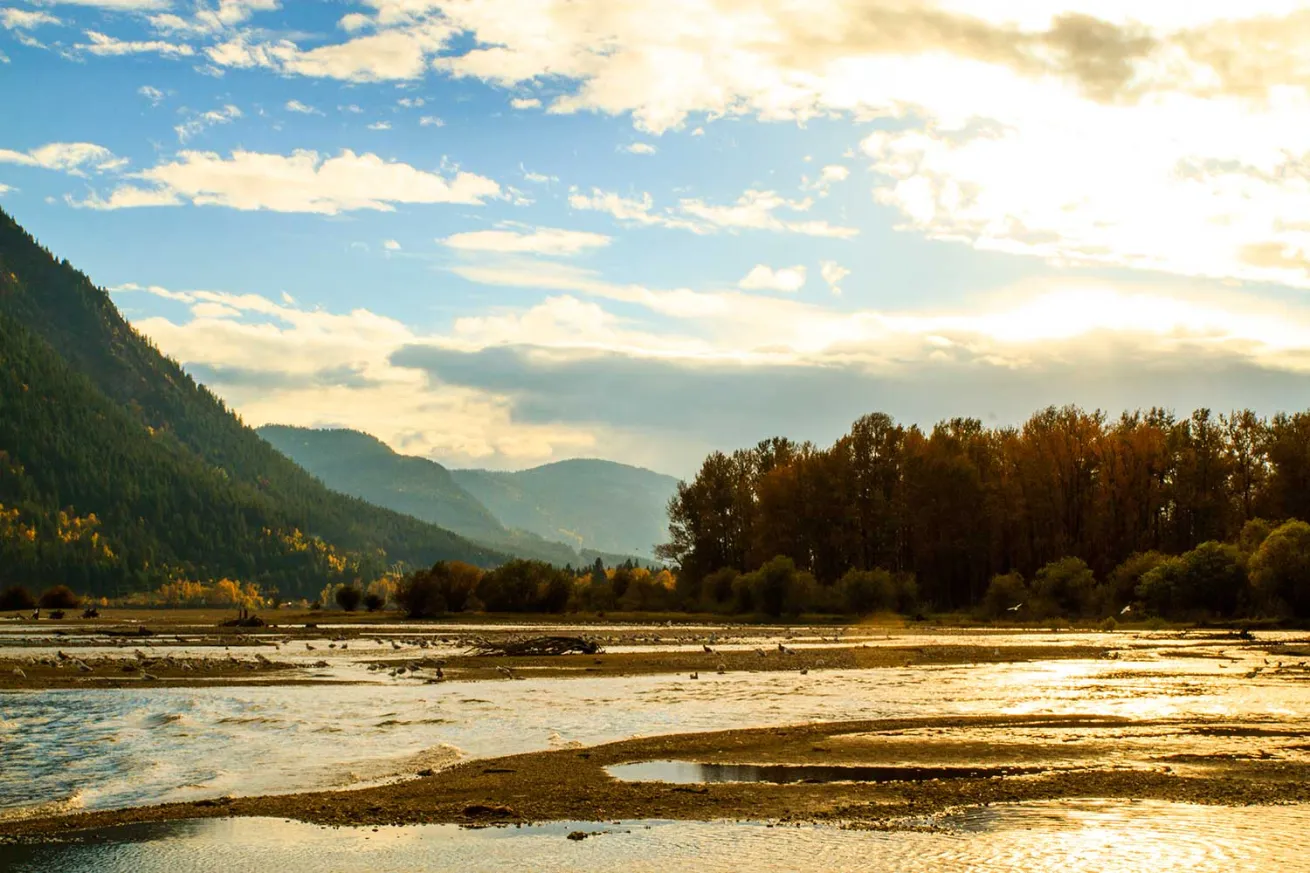
Josh HumbertThe Adams River’s mouth provides a staging ground for divers to suit up in the 60+ pounds of gear needed for the 54°F water. The spot also offers great views of Squilax (Black Bear) Mountain.
Sockeye salmon swirl like a kaleidoscope in British Columbia’s Shuswap Lake. Born here, they’ve battled 2,500 miles to Alaska and back.
Divers can book trips to the 54-degree jade-colored lake, dropping 20 feet into the world’s most concentrated salmon run. Clouds of sockeye — hundreds thick — obscure the light and shy away from exhaled bubbles. On your inhale, one might brush past on its epic journey upstream to spawn, die and refuel the ecosystem.
**When To Go:
** The run peaks every October; 2015 should see more than 100,000 fish return.


