

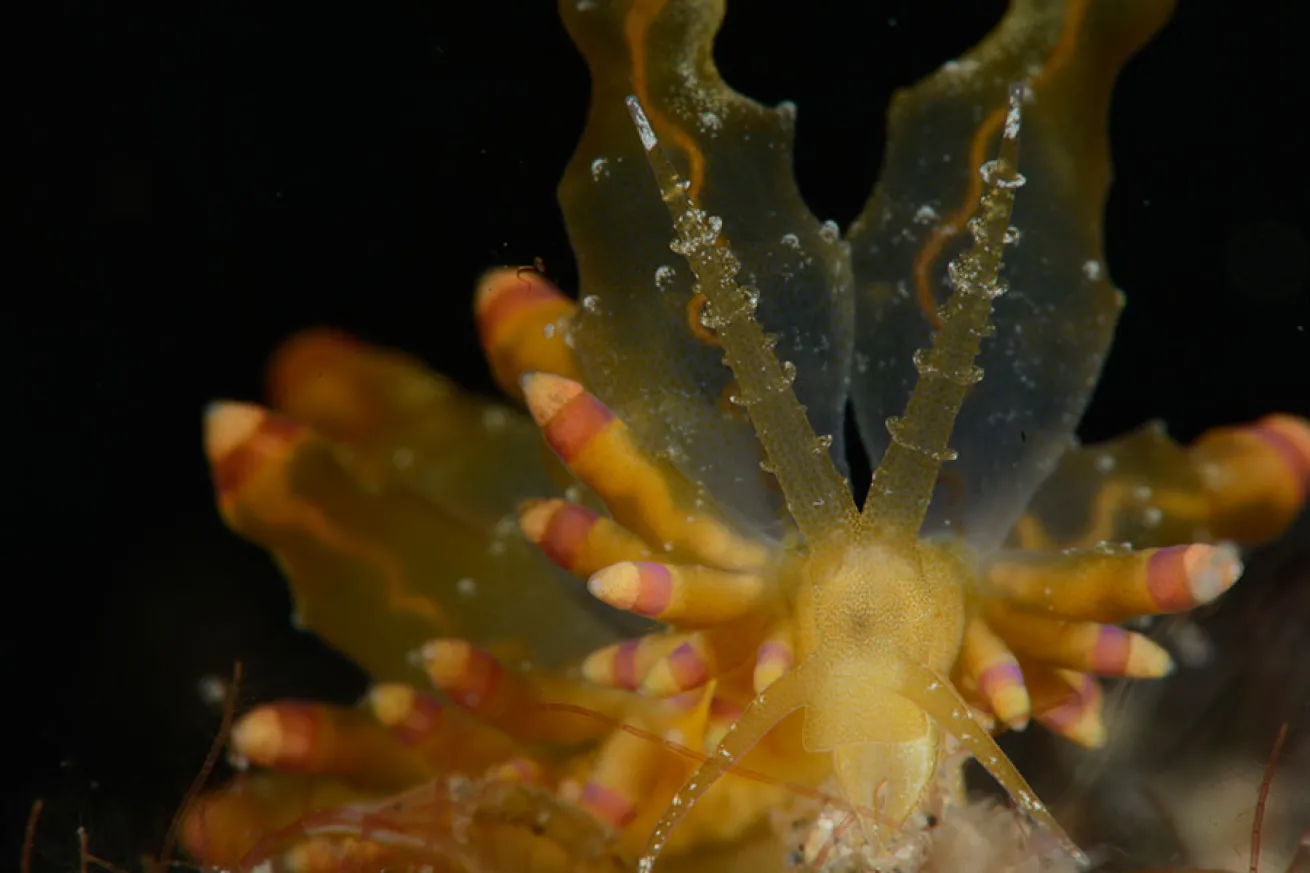
Mike BartickThe translucent bodies of some nudibranchs make for very interesting images. The strobe flash plays off the critter in a variety of different ways that can reveal some intricate body structures. When shooting the more translucent nudis, like this Eubranchus sp., getting low and shooting up helps to separate it from a messy background.
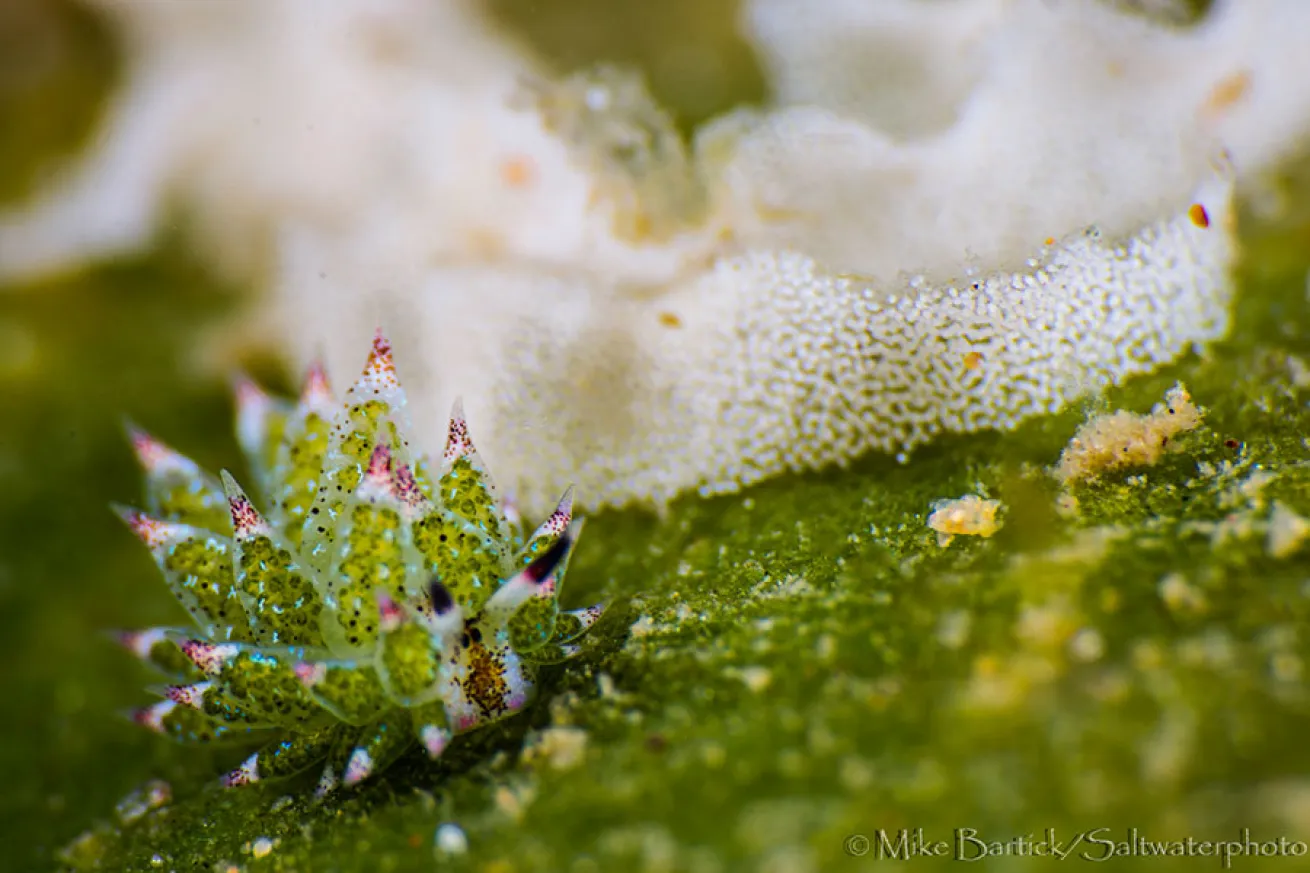
Mike BartickWith a face like this, the Costasiella kuroshimae is hard to resist. Found in depths that range from shallow estuaries to deeper sand flats, these nudis are found mostly on the single blade of green algae known as Udotea sp. The eggs in the background do not belong to this nudi but work well as a size reference.
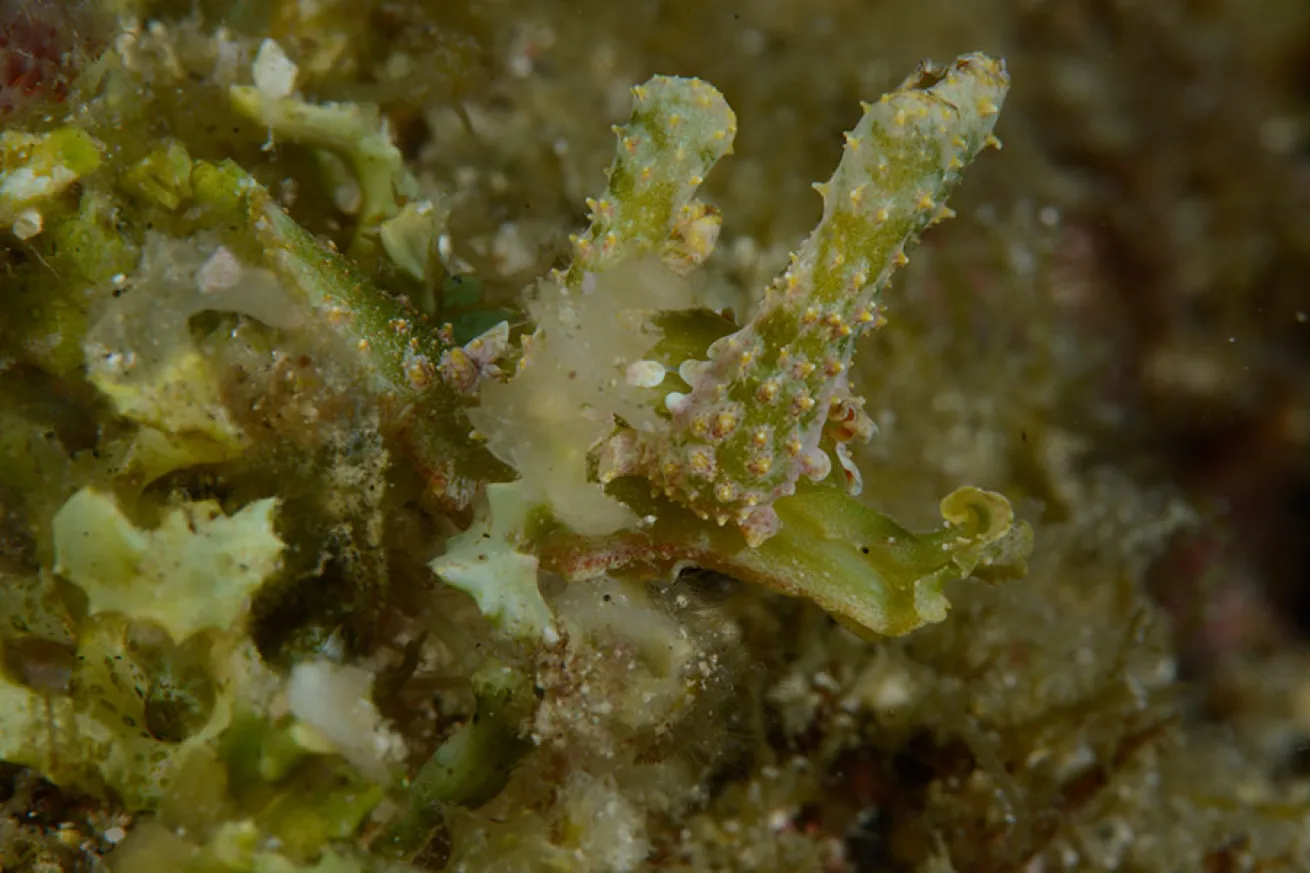
Mike BartickWith camouflage so effective that they actually mimic their hosts, nudibranchs like the Lobiger sp. are extremely difficult to spot. Having a guide that specializes in nudis is essential when it comes to finding any of these well-disguised animals. Only a few millimeters long in length, their shell is exposed yet masked by cerata, or outgrowths on the surface of their bodies. This particular species is actually a sacoglossa, or sap-sucking sea slug.
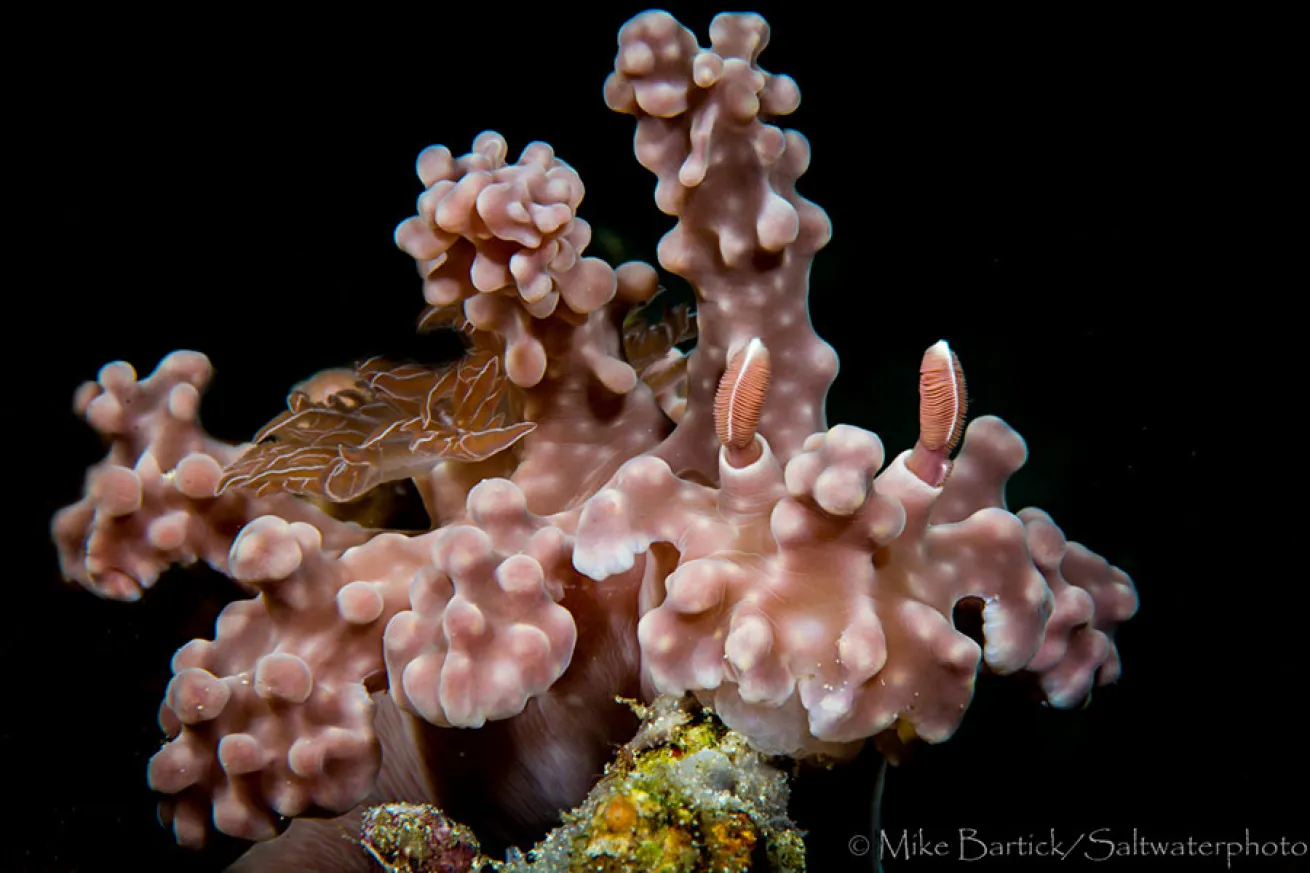
Mike BartickBecause of expert mimicry, many of the nudis in this class could easily go undetected forever. Once found, the description process begins, but one subject of a specific species isn’t enough to do the trick. The recently re-described Ceratosoma alleni, now known as_ Miamira alleni,_ reminds us__ that science should be thought of as a living and breathing discipline. __
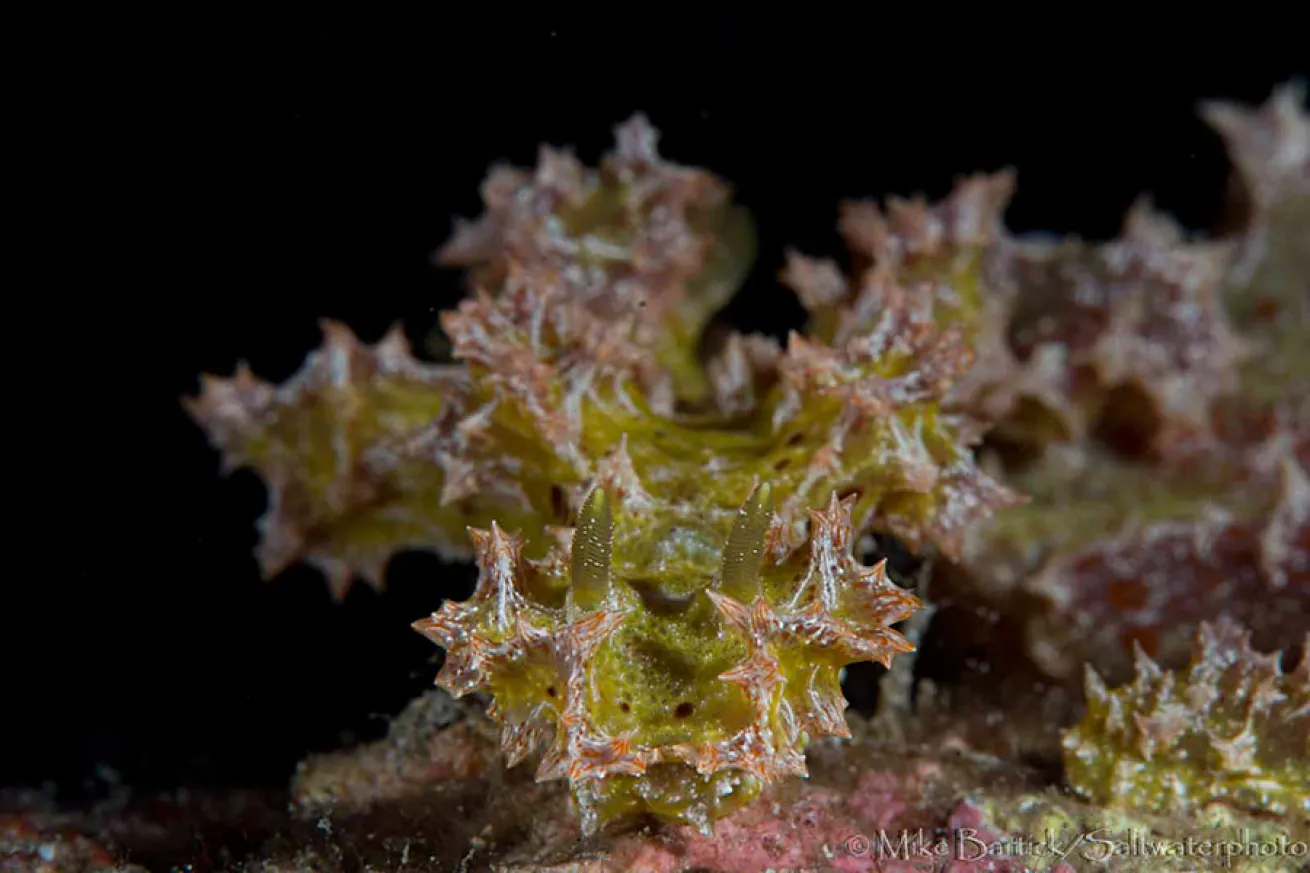
Mike BartickAnother prime example of animal mimicry, the Miamira moloch, is found in algae and almost exclusively on night dives. Many nudis are nocturnal and feed mainly at night.__
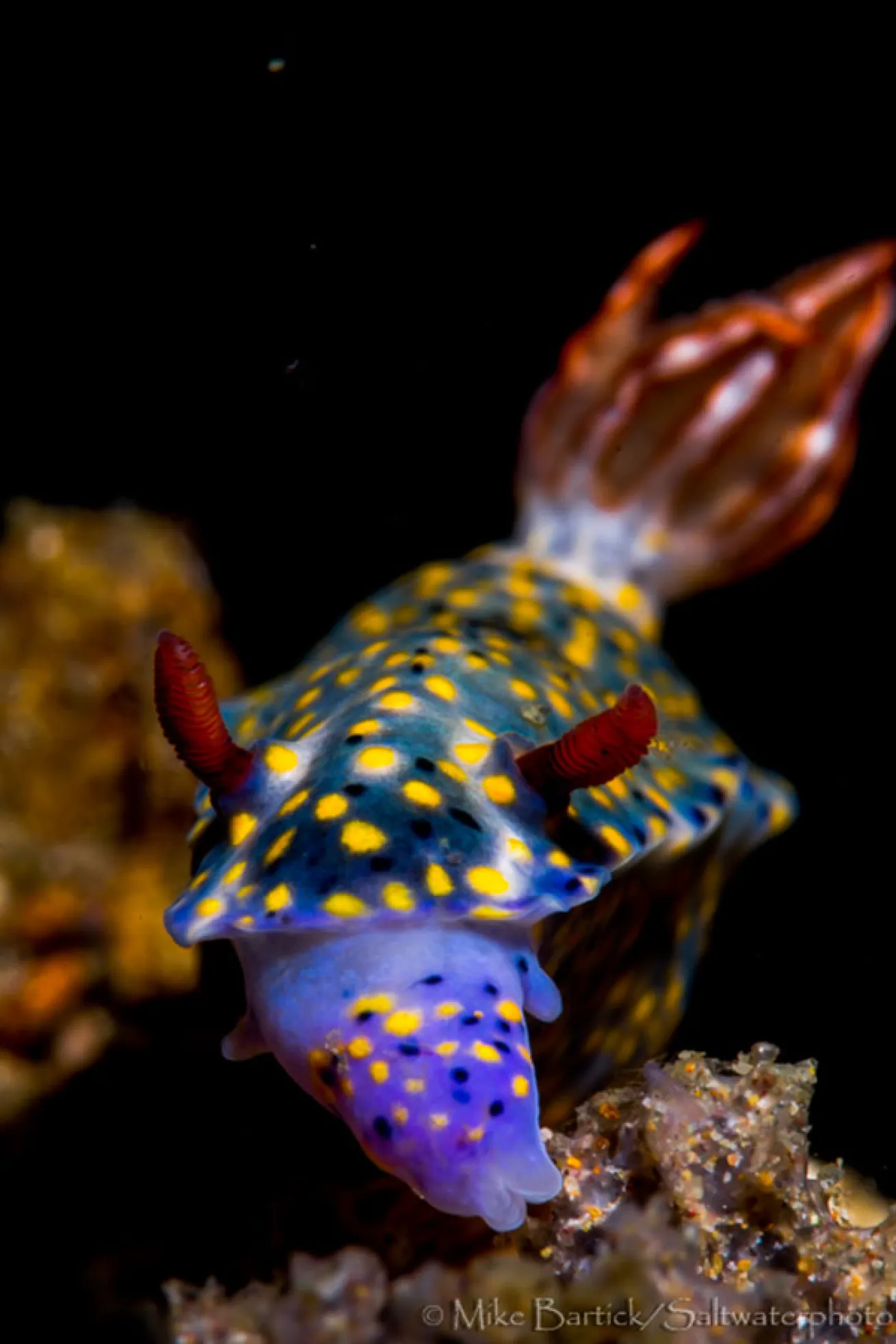
Mike BartickThe mouths of many nudibranchs extend when they feed; some actually use an acid-like saliva that dissolves their prey, which allows them to drink their meal. Others rasp on their food source with crude teeth that resemble sandpaper.__
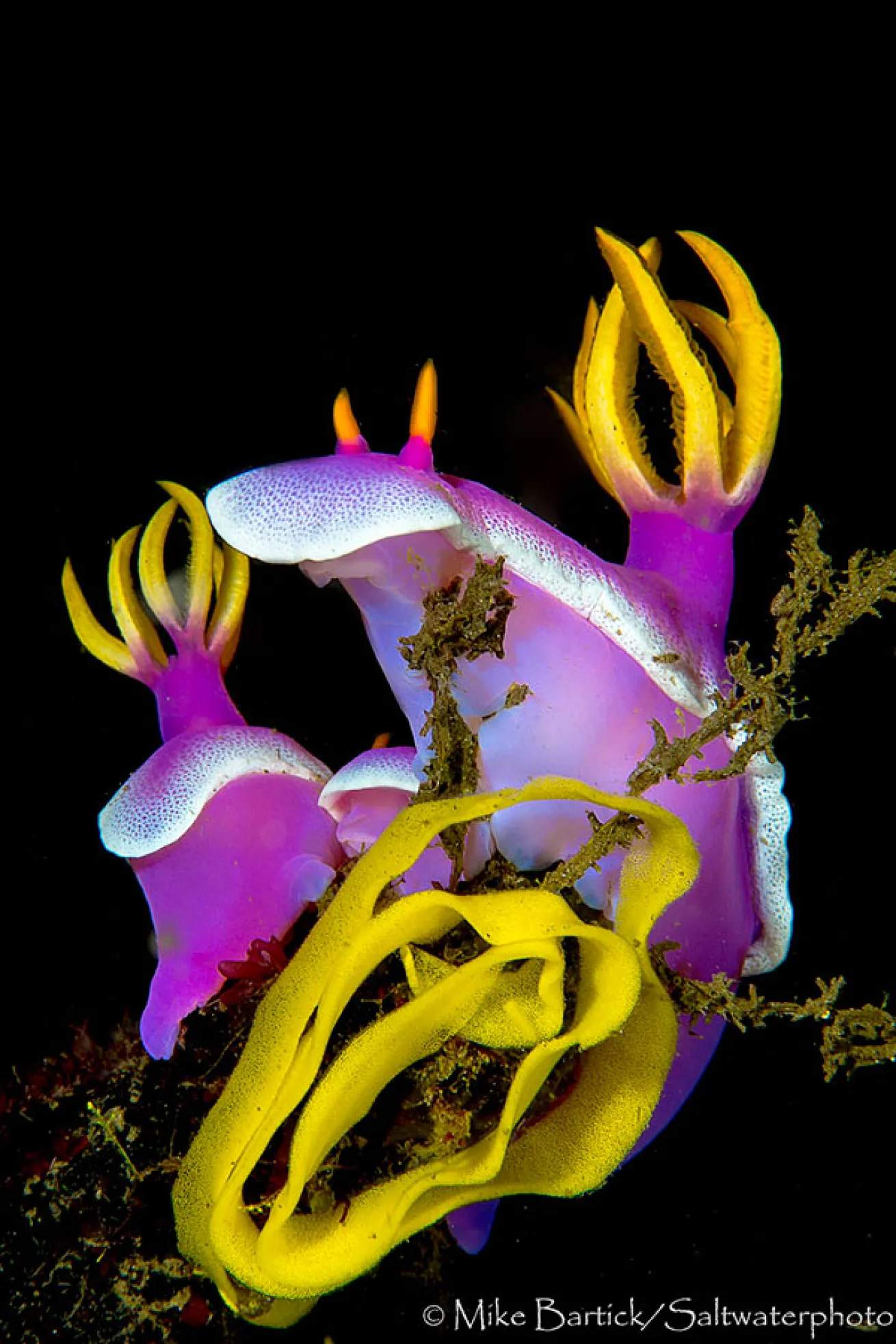
Mike BartickThree Hypselodoris apolegma found together here on an egg ribbon. Their vibrant, nearly neon colors make them hard to miss and can often be seen from a fair distance. Paying close attention to your strobe angle helps create a black background and decreases backscatter.
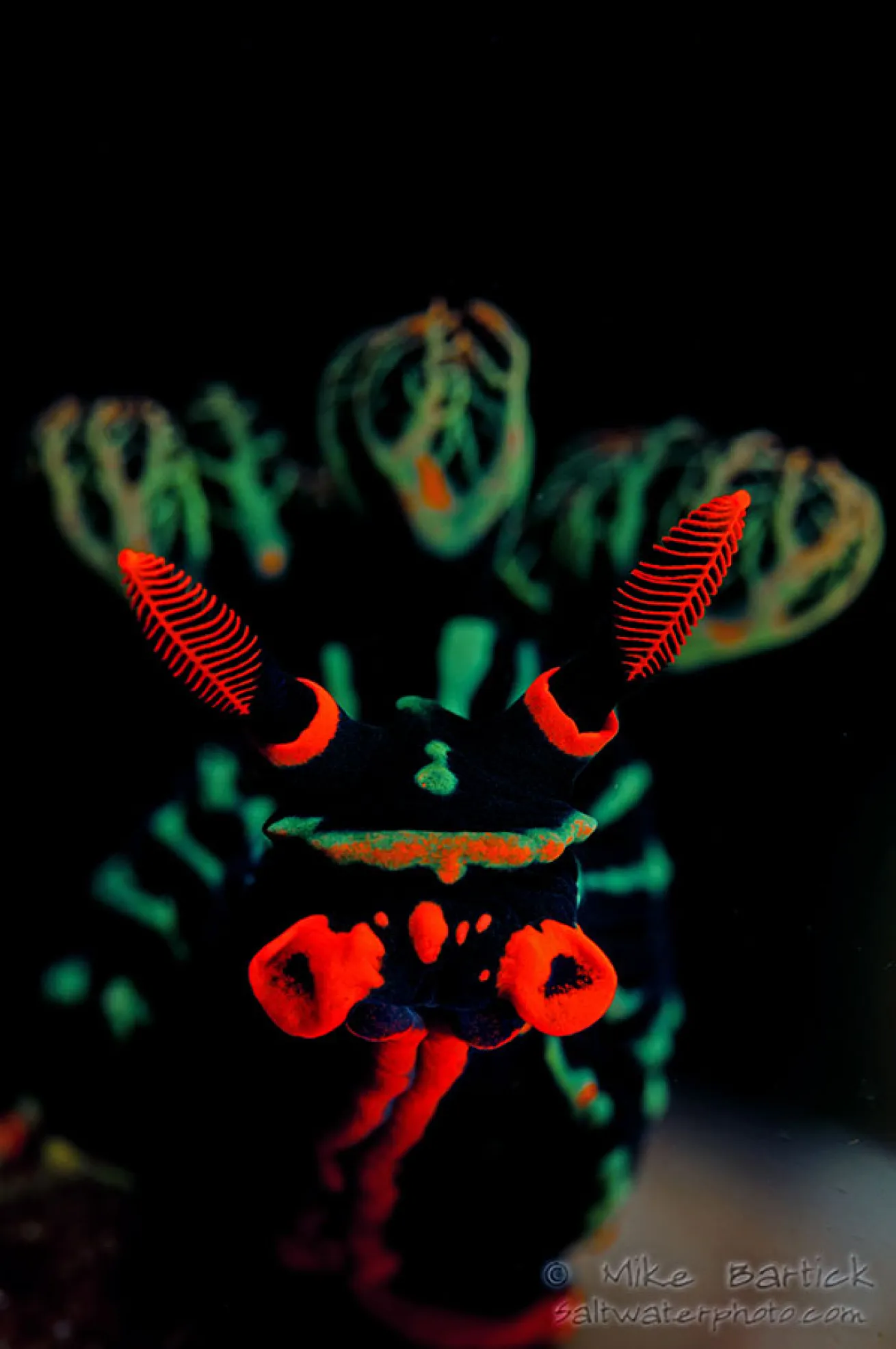
Mike BartickNudibranch symmetry can be very impressive when shot head-on. Although it is a common subject, don’t ignore the Nembrotha kubaryana. It’s a showstopper, with bright, glowing green longitudinal lines, orange rhinophores, an orange foot and distinct facial features.__
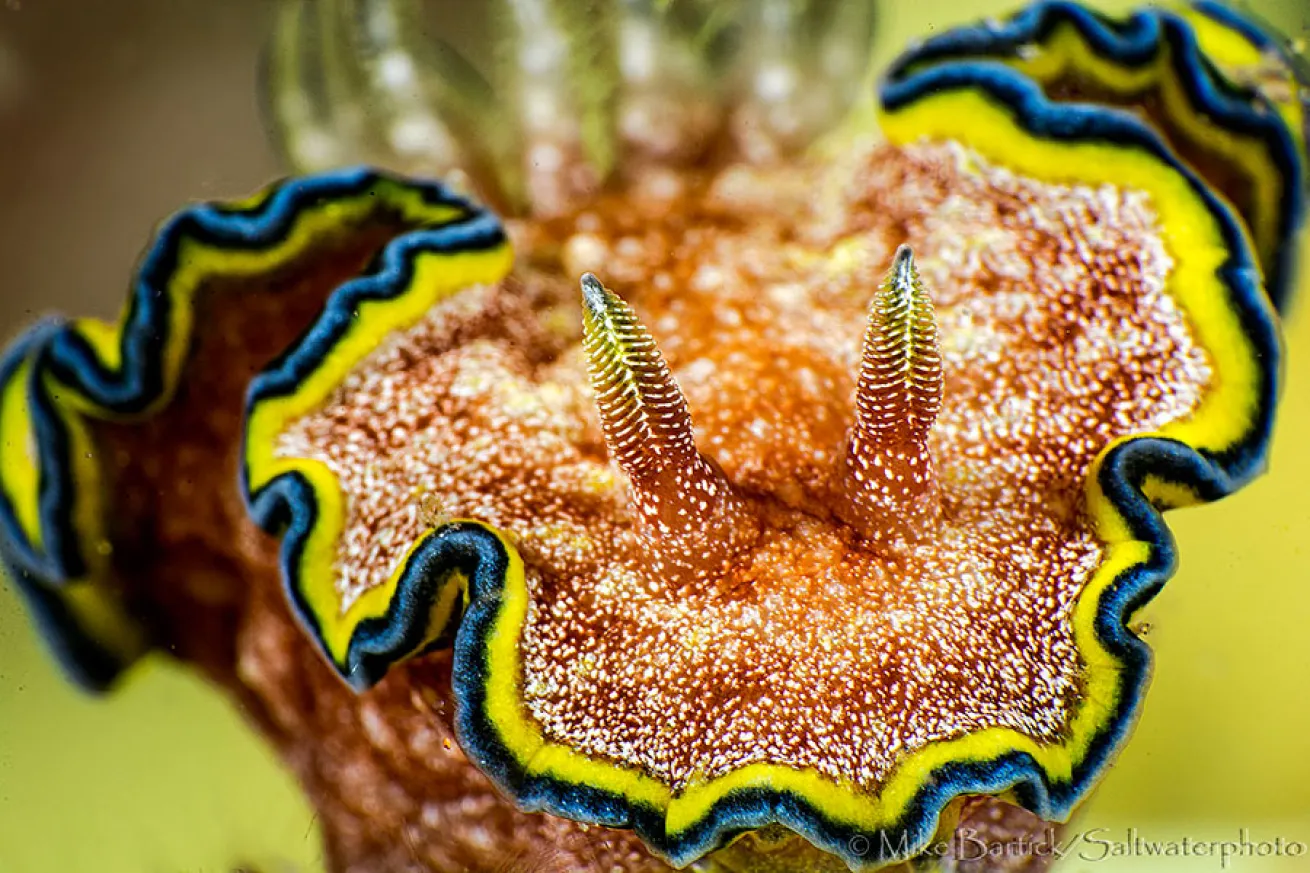
Mike BartickUsing high-powered macro lenses helps make smaller nudis large enough to fill the frame. The details are more pronounced and the depth of field becomes very narrow. This helps to turn a distracting background into something more interesting_._
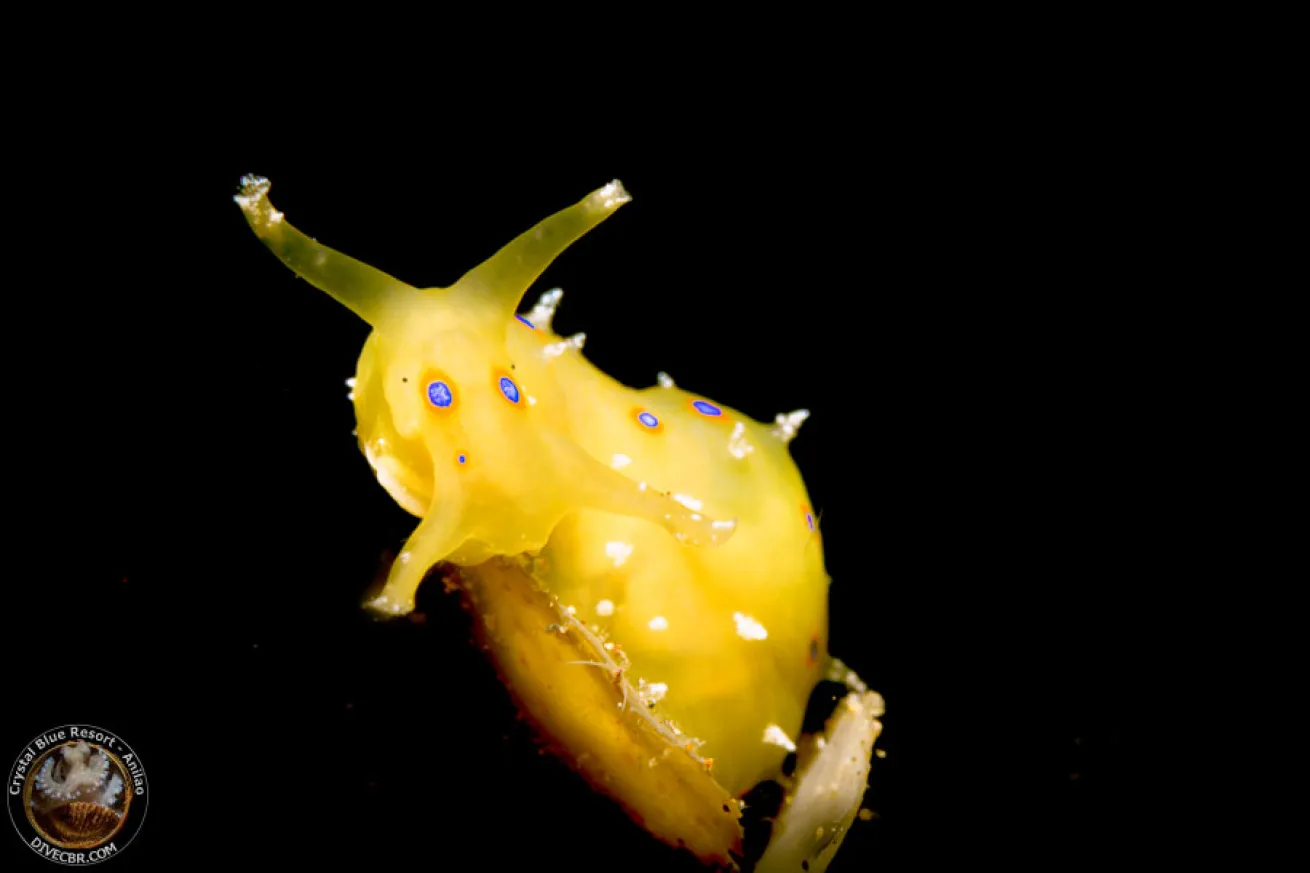
Mike BartickBlue rings aren’t just for octopus anymore. The bright colors on this sacoglossa popped out immediately once my light panned over it unexpectedly. The two false eyespots on the front pushed the cute factor through the roof for me as I watched it move in the slight current.__
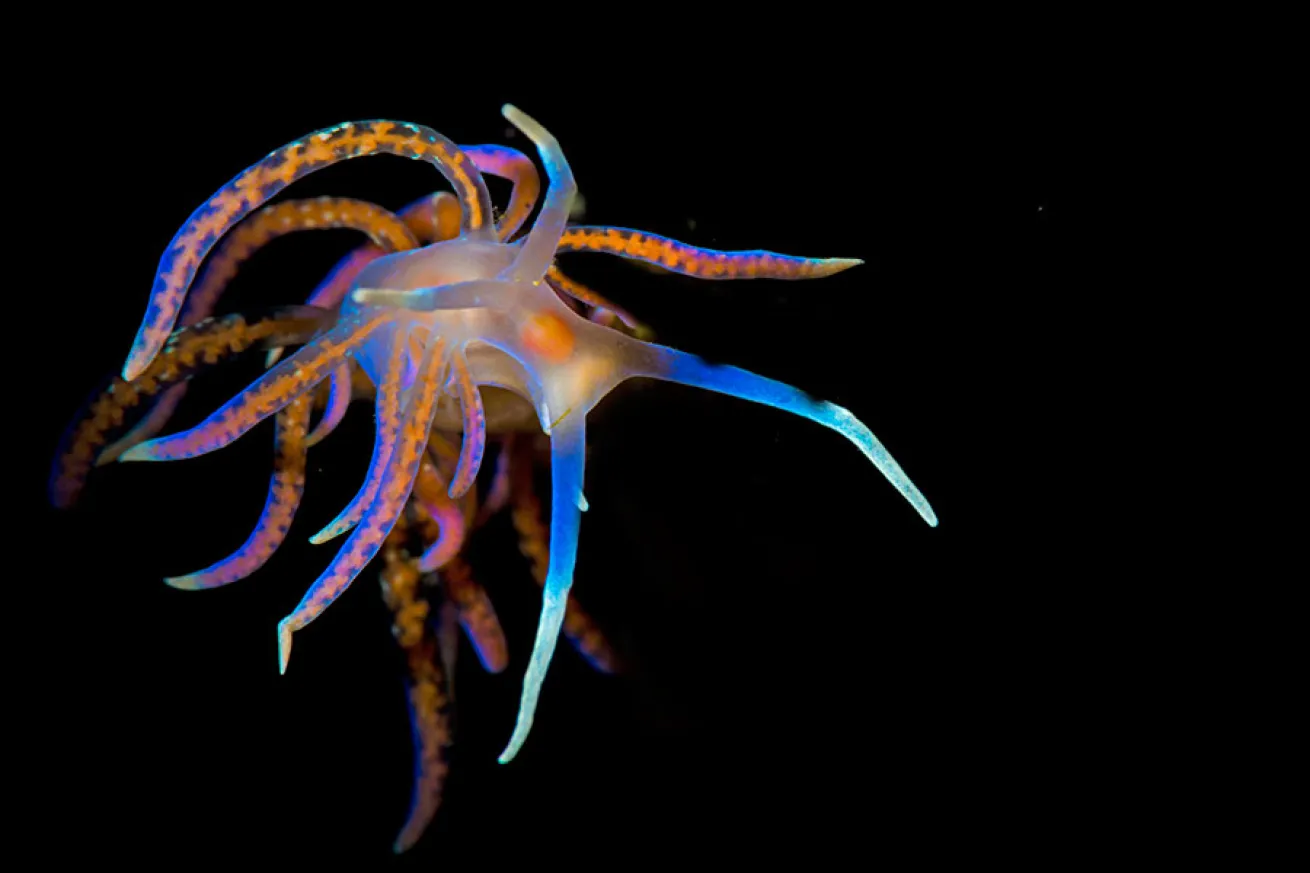
Mike BartickLighting is everything with nudibranchs; using a snoot is the perfect way to illuminate them. Angle in your strobes or use single-strobe lighting to create a glow and the coveted black background.
Called the world’s most diverse group of animals nudibranch_s/ _opisthobranchs successfully fuse art and science in a way that few other creatures do. Their slow movements and curious mating habits, defense systems and other ecological characteristics have created addicts of divers, obsessed photographers and naturalists worldwide.
Nudis can be found in all of the world’s oceans if one looks hard enough, but the Indo-Pacific diver needn’t look very hard at all to find these show-stopping critters. Nudibranchs are reliably present in abundant numbers and, depending on the available food source, many common to rare species can be found year round. Places like Anilao in the Philippines and Lembeh Strait, parts of Bali, Komodo National Park and Ambon in Indonesia have all proven to be some of the best places for spotting the most unusual nudibranchs in Southeast Asia and the Indo-Pacific. For the best nudi-hunting experience, remember to do a little research prior to departing and plan for the proper lenses and/or diopters to help make the most of your nudi adventure.
Nudibranchs are not only fun and interesting to find but they also make compelling photography subjects. The can be challenging to shoot, however, as they tend to move along faster than expected. Remember the first three rules when planning your next nudi hunt to ensure success: location, location, location.


