

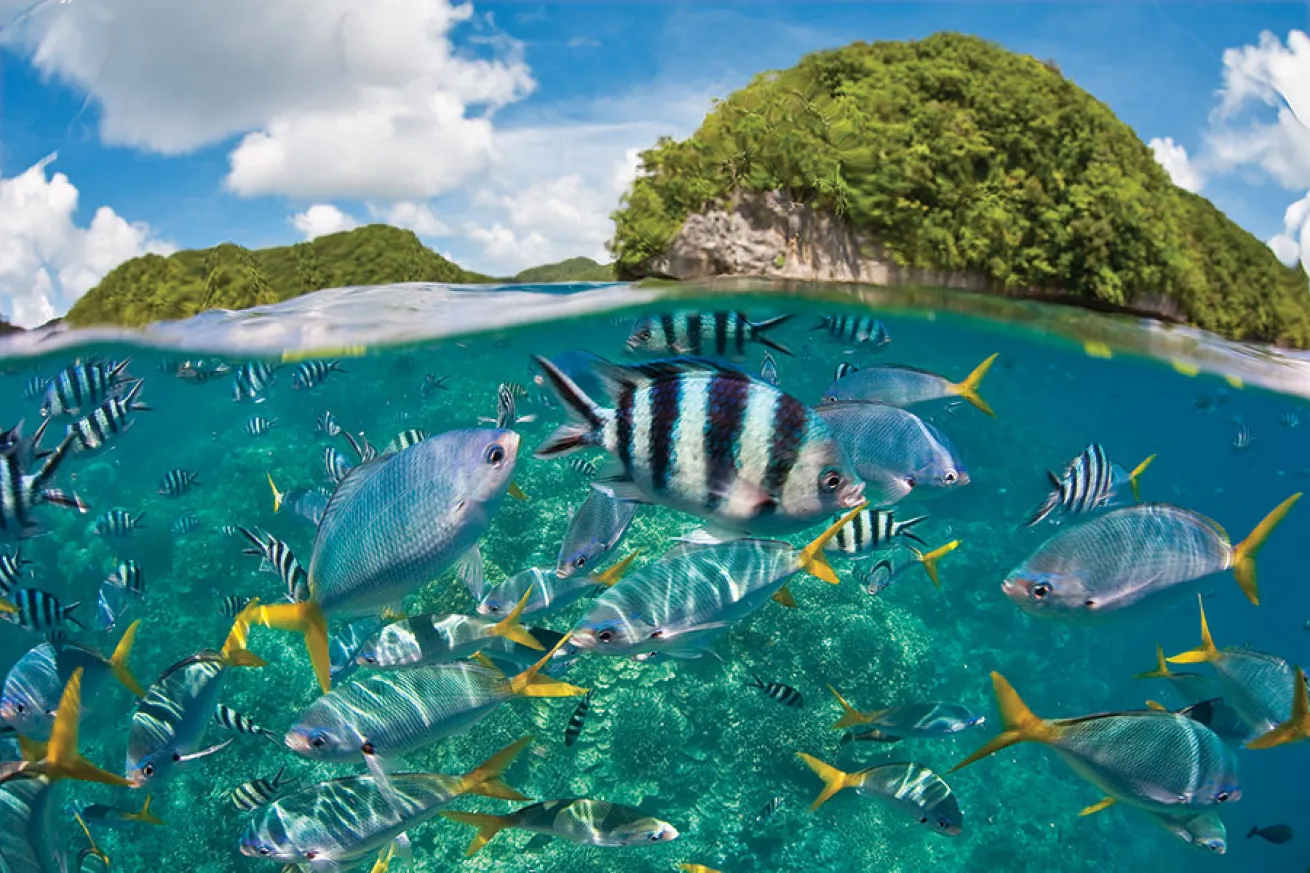
Ethan Daniels/ Seapics.com
Palau isn’t just home to stunning reefs, it’s also the first nation to ban industrial fishing within its roughly 247,000-square-mile territory, which surrounds 177 square miles of islands.
It takes money to sustain a marine-protected area (MPA) roughly the size of France, so the small nation turned to the modern-day practice of -crowdfunding, or collecting funds from public donors. The 2014 campaign, Stand with Palau, raised $53,872. We spoke with Aaron Korman, formerly Palau’s deputy ambassador to the U.N. and a founder of the Fund for a Sustainable Palau.
Q: How did the idea form?
A: Ambassador Stuart Beck, Palau’s ambassador for oceans and seas, came up with [it]. We knew that people around the world want healthier oceans but are limited in what they can do [individually]. By supporting the campaign, [they] -participate directly … and spur international action, just as Palau did when it established the world’s first shark sanctuary.
Q: **How did it go? **
A: It was a tremendous success. We received support from people as far away as Brazil, and funding from more than 400 donors. Those people will hopefully visit Palau, continue supporting its conservation, and be inspired to take [more] innovative action to save the oceans.
Q: Where will the money be spent?
A: The Fund for a -Sustainable Palau will work with local organizations to fund projects that further the sanctuary — education, conservation, or monitoring and surveillance.
Q: Any future plans to use crowdfunding for government programs?
A: No plans yet, but it’s possible.
Q: **Could crowdfunding change how governments and conservation groups fund conservation efforts? **
A: Crowdfunding has incredible potential. It’s not just funding. The campaign brought together a new group of people whose active engagement is critical to saving the oceans. We hope supporters will continue spreading the word that we need to protect the oceans.


