

Aleksandra Bartnicka
Aleksandra Bartnicka
Aleksandra Bartnicka
Aleksandra Bartnicka
Aleksandra Bartnicka
Aleksandra Bartnicka
Aleksandra Bartnicka
Aleksandra Bartnicka
Aleksandra Bartnicka
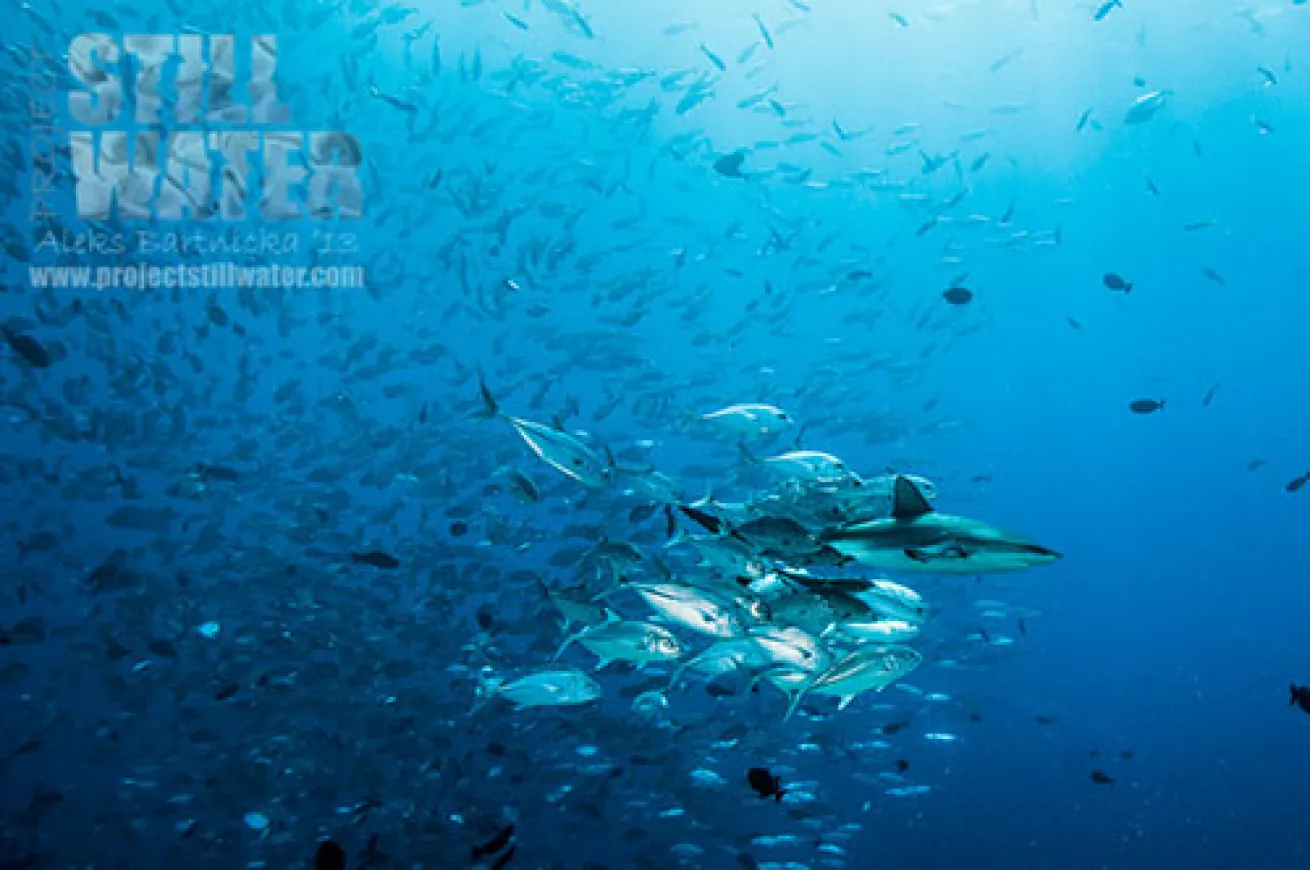
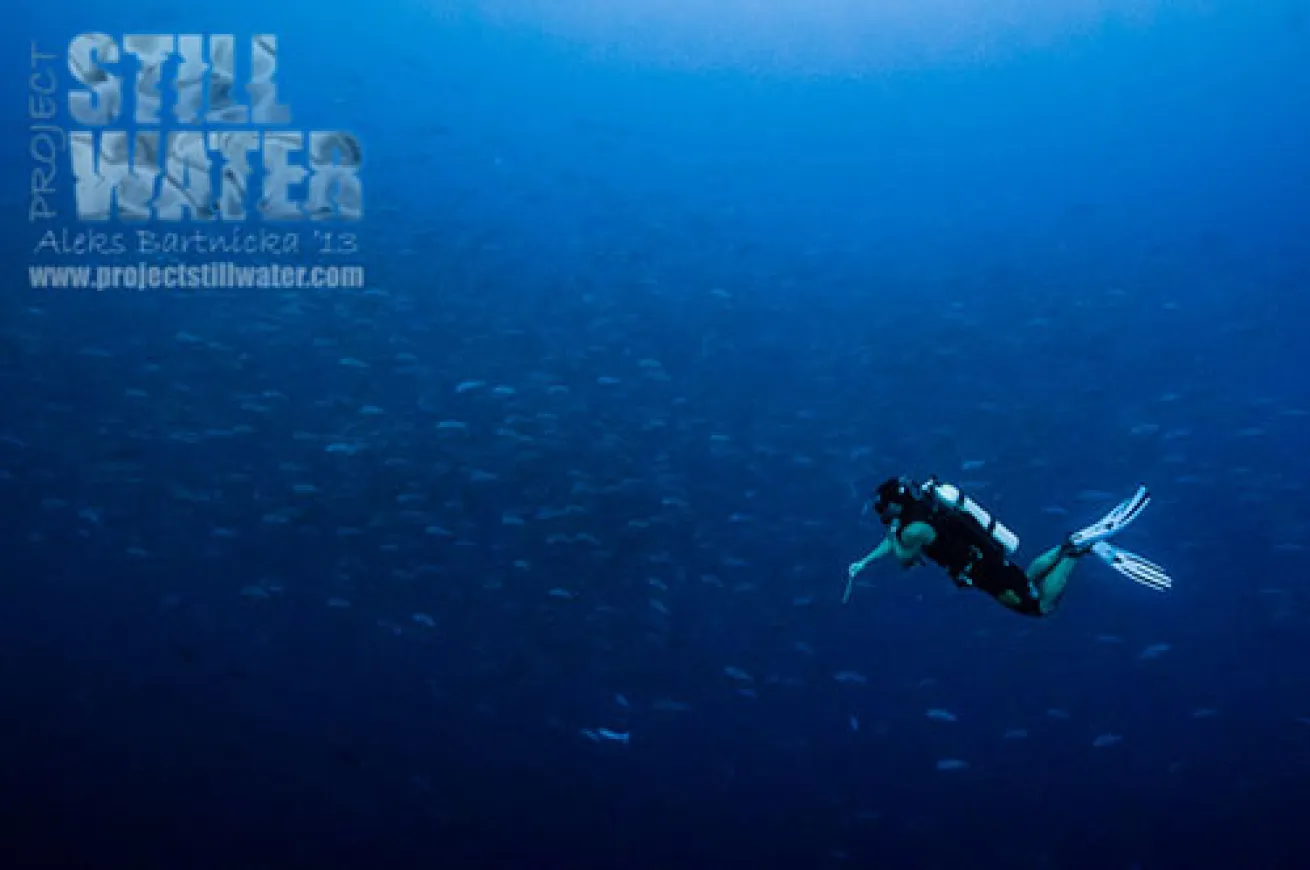
Many an article has been written about Palau. And for good reason: it’s one of the most popular dive destinations in the World. It’s also one of the most diverse, known for action-packed sites like Blue Corner, where you get to hook in to the edge of the reef and watch grey reef sharks glide on the currents through enormous schools of big-eye jacks; Ulong Channel, where you drift past one of the world’s biggest patches of lettuce coral and giant clams; German Channel, where you watch mantas feeding and getting cleaned; or the countless World War II wrecks, still filled with artifacts.
All of those sites can be easily reached by boat from a dive shop in Palau’s capital city of Koror, or from a resort on one of the islands.
The ease of getting there and diving sites well explored has its drawbacks: in peak season (November through February), you’ll be surrounded by dozens of other divers, and if you’re a photographer, you might need to wait in line to get that anemone shot (although on these rich reefs, there’s a good chance another one is just around the corner).
There is an upside however. Because of the traffic on these popular sites, the rest of Palau stays pretty quiet. For such a tiny nation, where most of its income comes from dive tourism, it’s surprising how little we know about what it has to offer, both on land and underwater. That being said, in the last couple years Palau has been “rediscovered” and more exploration options have popped up since I was last on the island.
I’m lucky enough to have lived on Palau for three years, with a chance to explore the islands with some of the local experts. After a four-year absence, I visited Palau and got a chance to rediscover this enchanting place myself.
Unique Diving
Having done over 900 dives in Palau I thought I knew it well. Most of the famous dive sites are tide dependent, meaning they are at their best in the current going the right direction. That way you can fly like a kite over Blue Corner or speed through Ulong Channel. But talking to Richard Barnden of Unique Dive Expeditions made me realize there is more to it.
The right place is only part of the equation that makes a great dive site. Knowing the tides and how to read them is another. Finding those truly unique dives takes real work and knowledge followed by months of testing theories. And timing is everything.
“It’s not about luck,” Richard says. “You can predict when things are going to happen based on the moon phases and times of day”.
Unique Dive Expeditions has it down to the minute. Catering to the world’s top photographers and underwater enthusiasts, Richard and his crew head out to witness spectacular events like the spawning of bumphead parrotfish or red snapper.
There are only a few specific locations where these take place. It’s not an everyday occurrence either – spawning aggregations only happen at certain times during the moon cycle.
The boat leaves the dock before sunrise and you back-roll into dark, eerie water. As soon as you’re submerged adrenalin takes over. The current can be quite strong – you need to rely on your guide to enter the water at the right place and time, so you don’t get swept off the dive site. Getting to the bottom is only the beginning – now you need to find the aggregation, and that depends on your timing. Everything comes down to the knowledge and experience of your guide and if you’re five minutes late – you'll miss it. However, if you jump in exactly right, the experience is well worth the effort.
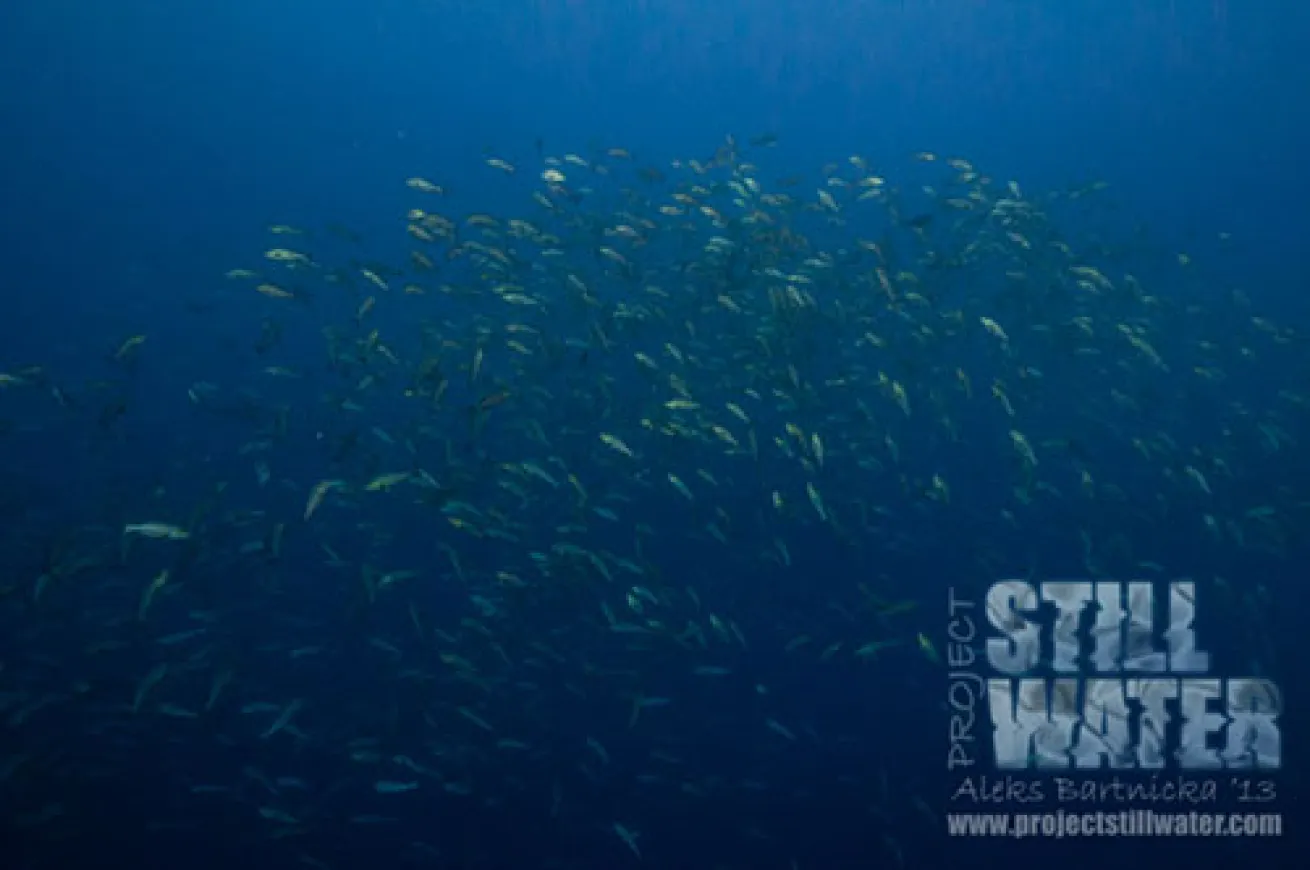
Hundreds of snapper swarm together, building up like a tornado and falling apart again. If the incredible amount of fish in the water isn’t enough, add 10-foot-long long bull sharks cruising through the dark. Makes getting up before dawn worth it.
Once the sun comes up, the show is over. At least on this dive, because the rest of the reef is just waking up and the action continues.
Unconstrained by a dive shop’s timetable, Unique Dive Expeditions will take you to German Channel on the exact right tide, maximizing the possibility of diving with feeding mantas. And not just one or two, but possibly a dozen, making barrel rolls and flying through the water, so close to the camera lens, you have to back up to fit them in the frame. Add huge schools of jacks and fusiliers to the mix, and you won’t want to get out of the water.
Crazy, Wonderful Muck Diving
There are many dive sites to visit or explore, but one of the most overlooked is right by the bar. So before you’re done with the day and order a beer put your gear on and jump in.
Bottom Time Bar and Grill is located at Sam’s Tours’ dock, where UDE launches its trips. The dock is a surprisingly busy dive site. Palau is not known for muck diving, but here the black silty sand covers the bottom, making a habitat for all kinds of weird and beautiful creatures.
If you came to Palau to look for the incredibly colorful mandarinfish, no need to look further. Right by the bar’s wall, in five feet of water, you will find plenty. Dive in at dusk if you want to see the elusive fish perform their mating ritual. The male and the female will get together and swim up into the water to spawn and in the blink of an eye retreat between the rocks. This goes on for about 15 minutes, so timing is everything. Count on your guide to point you toward the best photo spots.
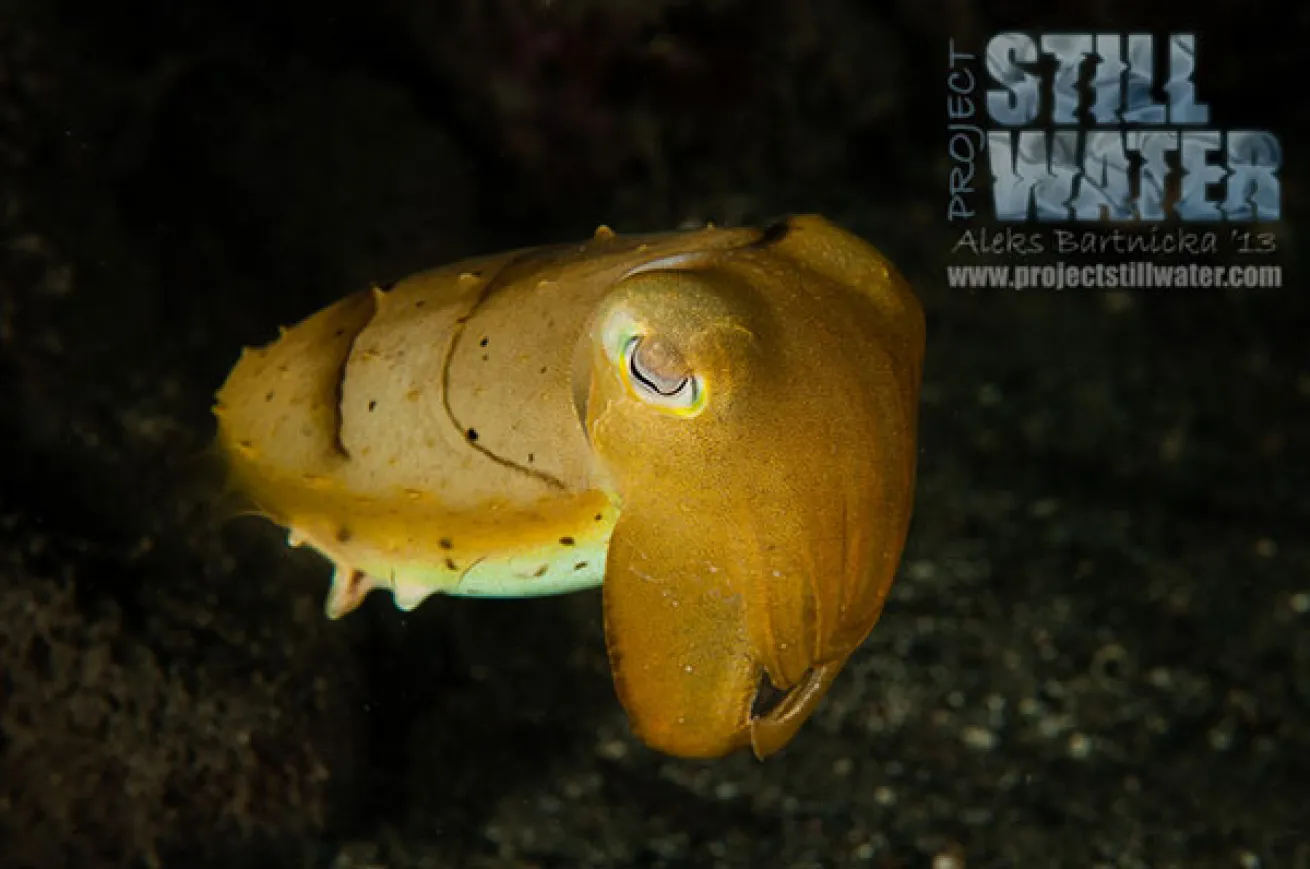
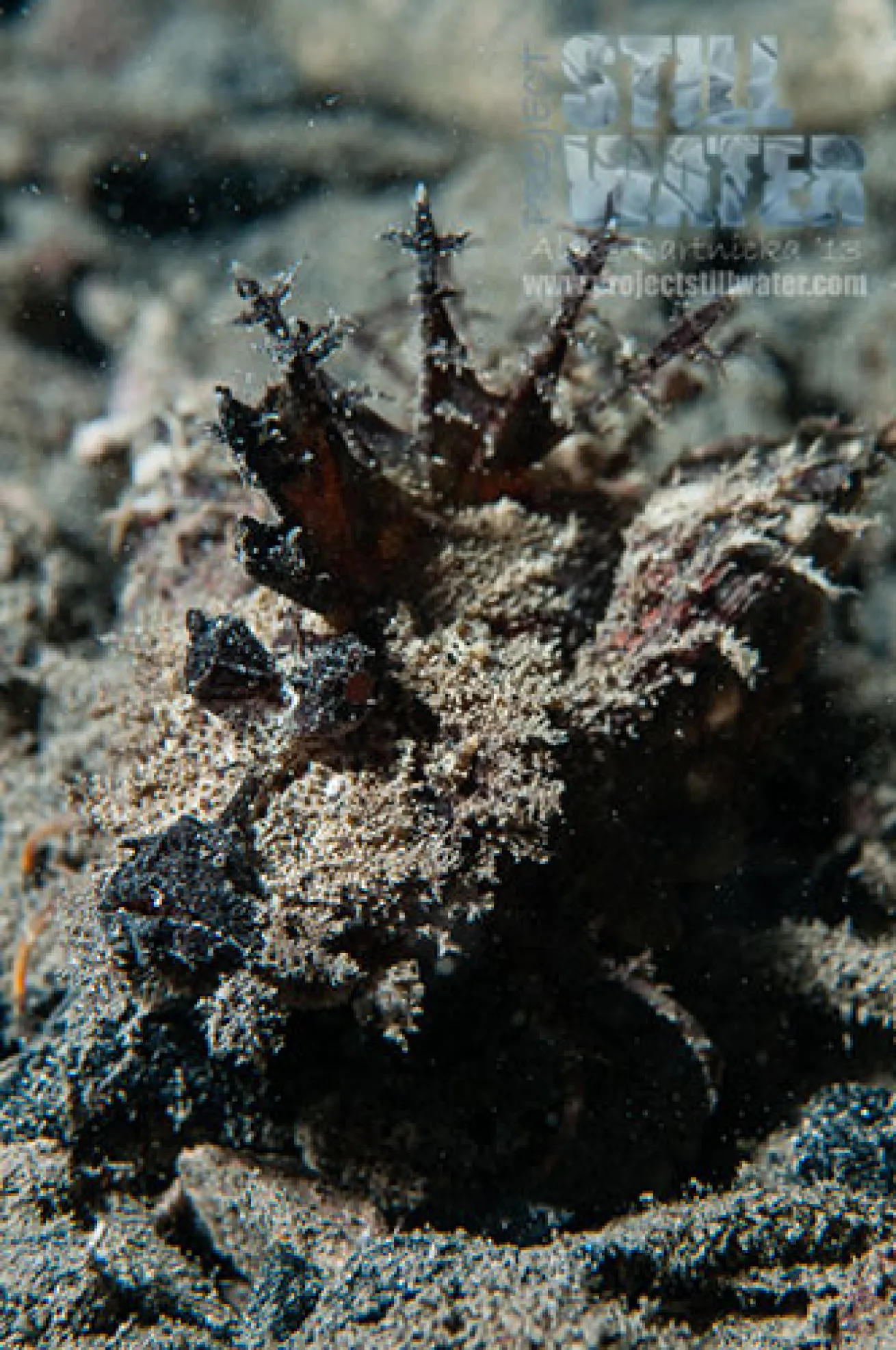
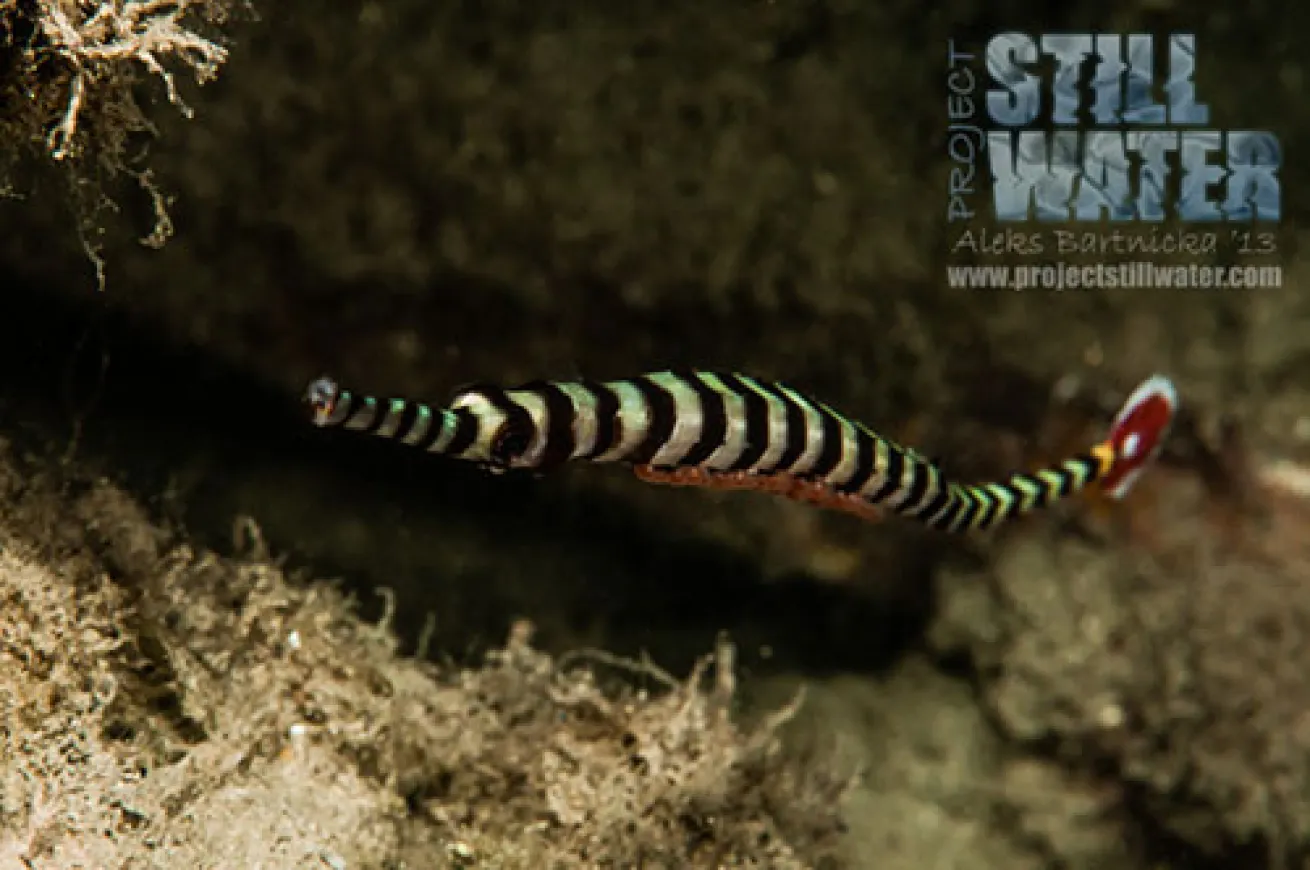
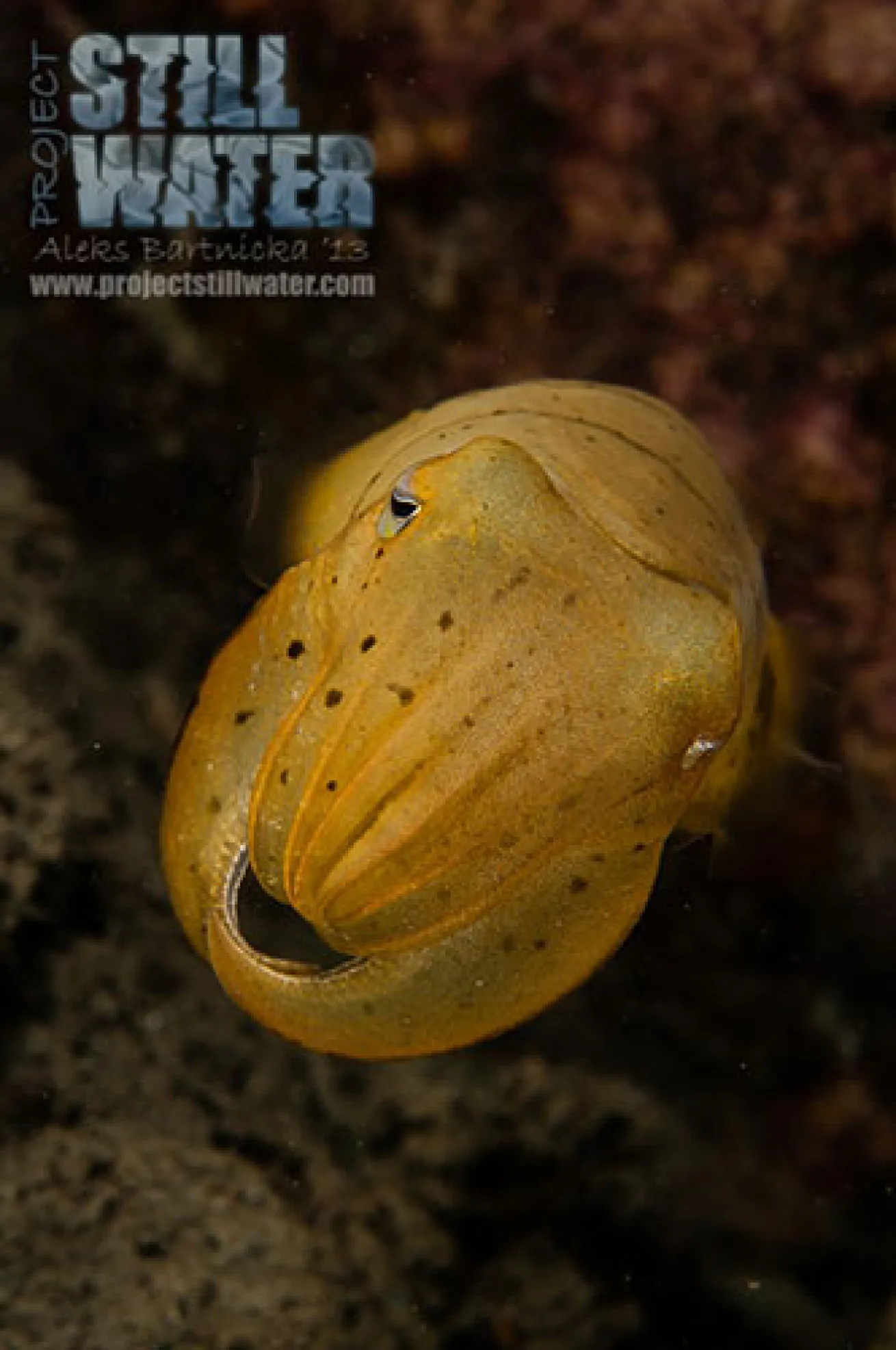
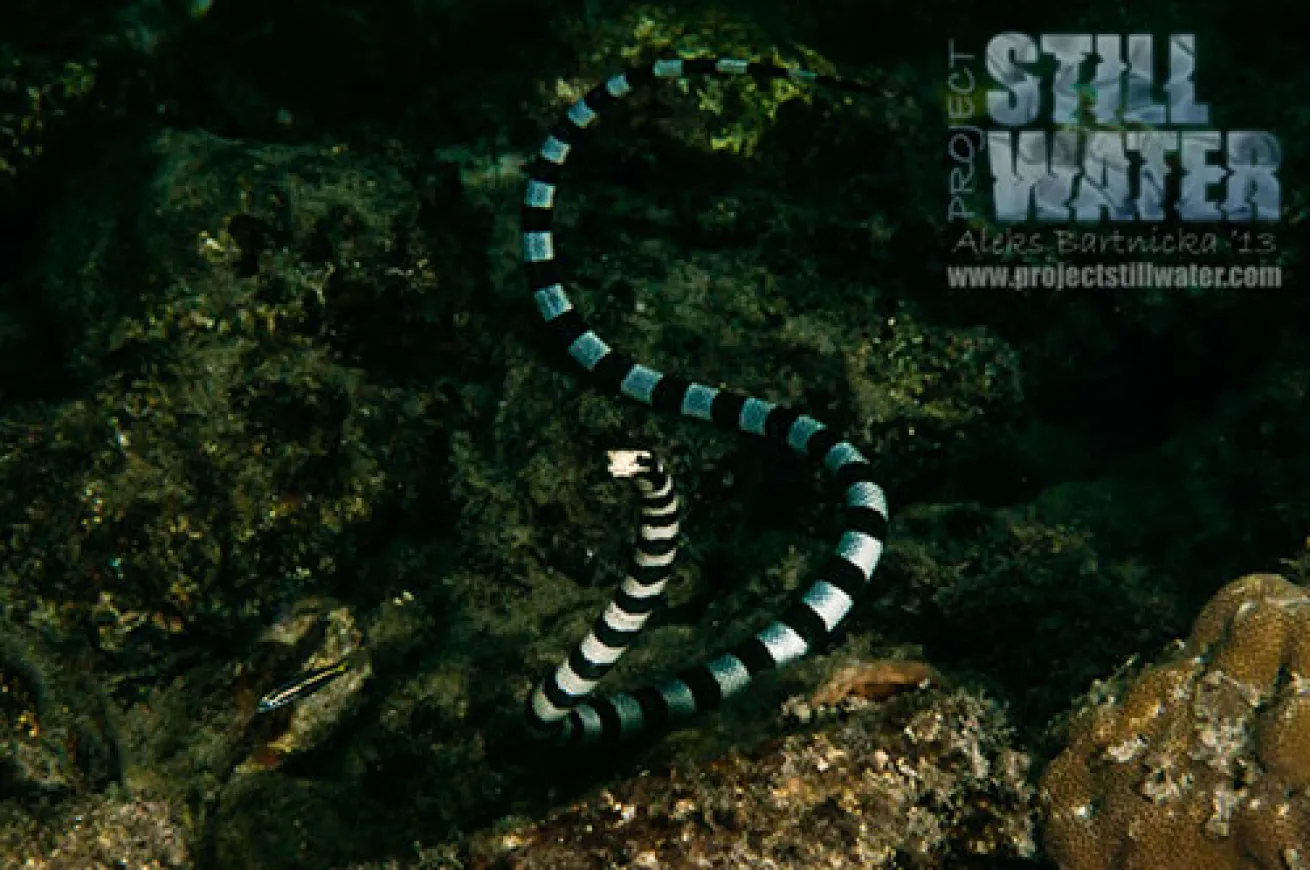
Mandarinfish may be the highlight of the dive, but there is a lot more going on. As a matter of fact, you can witness an entire circle of life. From tiny ringed pipefish carrying eggs on their bellies and juvenile cuttlefish swimming by to banded sea krait hunting, it all happens here. Watch your buoyancy carefully, because the bottom is home to numerous creatures, like venomous devil scorpionfish, crocodilefish, shrimp and a variety of nudibranchs.
The dock is an impressive dive before the sun sets as well. Right under the surface you can find flatworms and juvenile spadefish, while down deeper, a school of anchovies is being hunted by trevally and mackerel.
Take in the Quiet
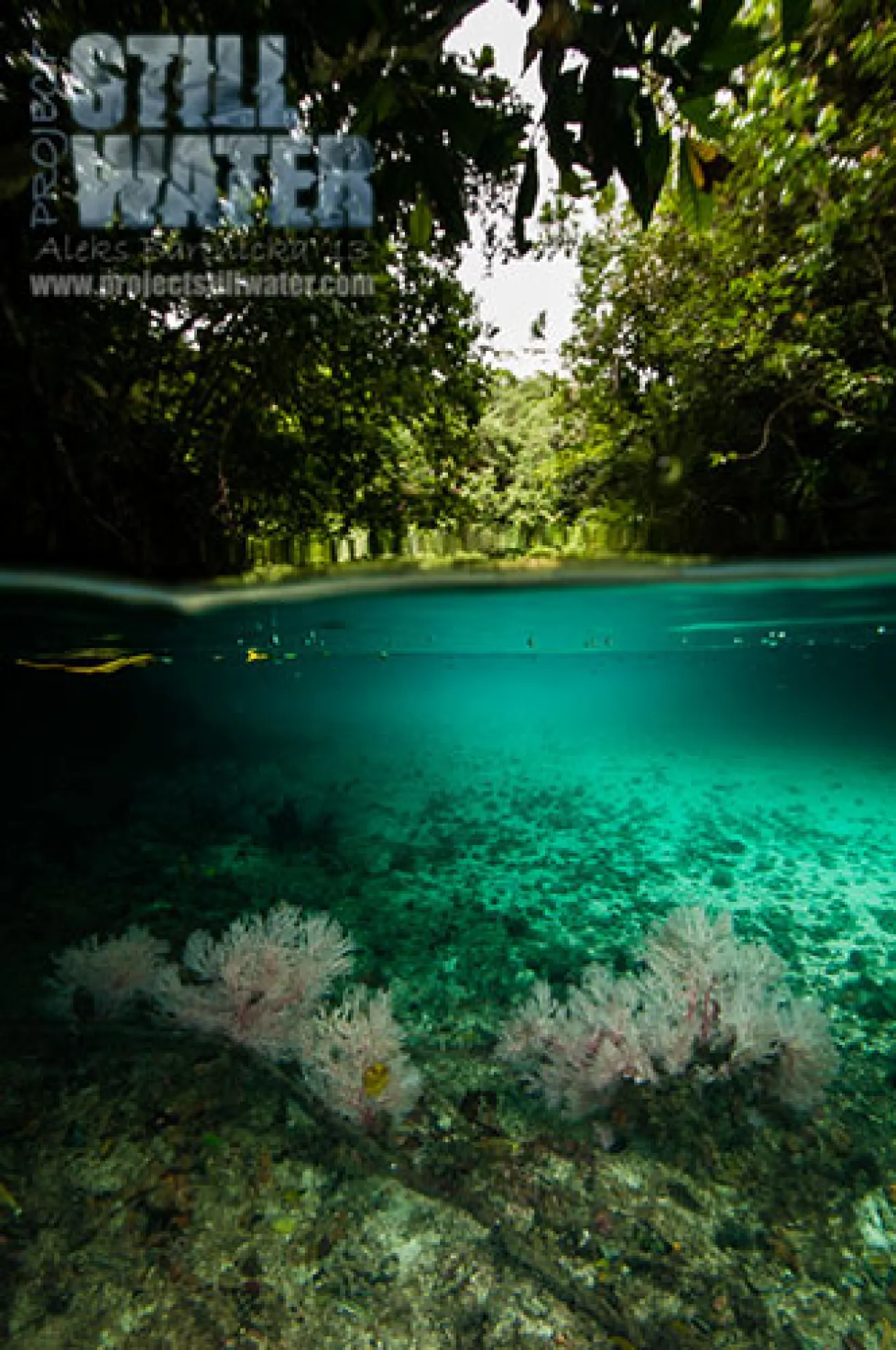
The beaches off main diving routes are crowded at lunchtime and there is always the sound of boat engines in the background. But this archipelago consists of hundreds of little islands, hidden lagoons and secret marine lakes, where all you will hear is the call of bush warbler and your own breath in the snorkel. There are ruins of World War II bunkers, artifacts and many other mysteries the dense jungle on the rock islands keeps to itself.
All that just minutes away from the hustle and bustle of Koror and the best way to get there is in a kayak. In the little craft you can get much closer to the islands as well as paddle into lagoons or jump out and swim around. There’s a good chance you will have it all to yourself.
Palau is still a country of unexplored beauty that amazes at every turn. From macro to mantas, it has it all — and who knows what other secrets it hides?
For more information on Unique Dive Expeditions: [email protected].
Aleksandra Bartnicka has traveled the world as an underwater photographer. Originally from Warsaw, Poland, Aleks has lived and worked on Palau and is the former photo pro aboard the Aqua Cat in the Bahamas. To see more of her work and read her blog, visit Project Stillwater.


