

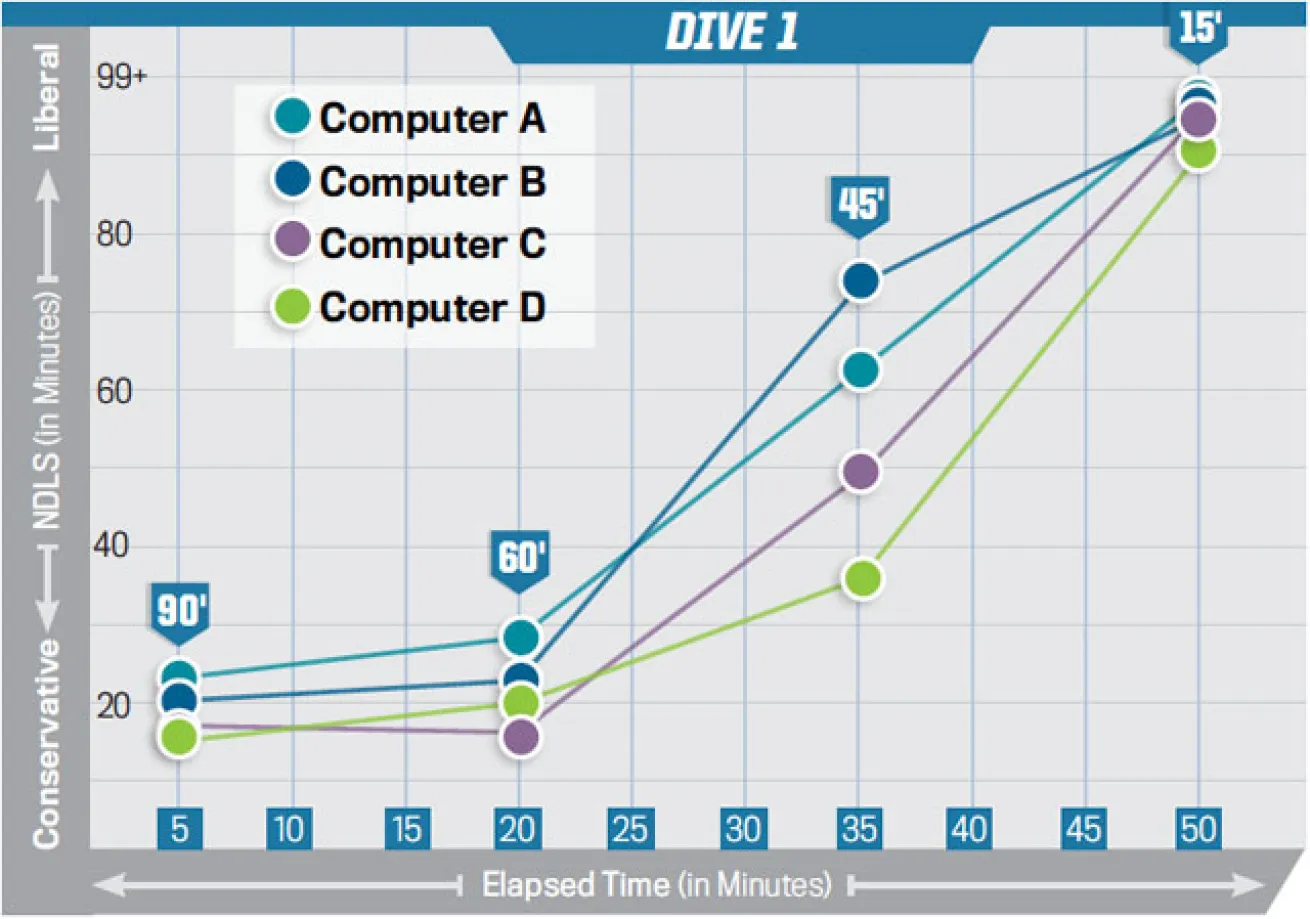
Sport Diver MagazineA graph that shows how four computers can differ in their time-to-deco calculations.
An algorithm is the mathematical formula a dive computer uses that factors in real-time measurements of depth, gas mix, time at depth — and, depending on the algorithm, potentially lots of other data, such as the water temperature and the remaining pressure in your cylinder — to calculate how long you can stay underwater with a reasonable degree of assurance that you won’t get hit with decompression sickness (DCS).
There are a number of different algorithms used in dive computers, each with its own proprietary computations, and its own “liberal” or “conservative” leanings. Computers that use more-conservative algorithms lessen the risk or likelihood of DCS by limiting dive time. Computers that use more-liberal algorithms provide the opportunity for longer dive times but, of course, more time spent at depth also increases the risk of DCS. In general, dive computers use only a handful of algorithms, but they've been modified to varying degrees by dive-gear manufacturers, based on theories of how a diver absorbs and eliminates inert gases. For example, the Haldanean algorithm is based on the work of J.S. Haldane, a pioneer of decompression theory. Haldane's theory grouped the body's thousands of different tissues into theoretical tissue compartments, each with a different rate for absorbing and releasing inert gas. He also believed that gas was always released at the same rate at which it was absorbed. The theory does not account for the presence of tiny "silent bubbles" formed during ascent that can slow off-gassing, so Haldanean algorithms, unless specifically modified, tend to be very liberal in adding no-decompression time during ascents.
It is important to understand that a computer's algorithm is entirely arbitrary in that it cannot measure the actual physical processes that are taking place in your body when you're diving. What a dive computer does is the same as a decompression table, but it is able to perform a continuous calculation of the partial pressure of inert gases that have been dissolved in your body's tissues based on your dive profile — specifically, your depth and time. Based on these calculations, the computer estimates when a direct ascent is no longer possible — such as when you'd have to make an emergency ascent to the surface with no safety stop — and indicates what decompression stops are needed based on the profile of the dive up to that time.
The computer's algorithm cannot take into account your age, previous decompression illness injury, your body type, whether you consumed alcohol before the dive, dehydration, and other factors such as whether you have patent foramen ovale. Some dive computers compensate for temperature and workload by having sensors that monitor ambient temperature and cylinder pressure changes. In other words, while dive computers have definitely made the sport of scuba diving safer, they cannot guarantee that you'll never get bent. Ultimately, you must decide what constitutes a safe profile and build in safety margins.
So which is best? A younger, physically fit, somewhat-aggressive diver might prefer a more liberal algorithm that maximizes his bottom time, while an older, perhaps not-quite-as-fit diver might want to go more conservative to increase his safety cushion. It really depends on the individual diver’s comfort level.
Want more info???
Looking for a new dive computer? Check out our guide to 4 Things You Need to Know About Choosing a Dive Computer!
What's a dive computer? We can help! Read All About Dive Computers here!
There are so many dive computers to choose from! Check out the best dive computers in 2017.


