

It's a fish-eat-fish world out there (or a fish-eat-parasite world). Point is, there's a lot of snacking going on. Be it an opportunistic whale shark that's formed a partnership with fishermen, a painted frogfish using a homemade lure or a team of striped marlin herding prey together, what's for dinner is a question universal to all of us.
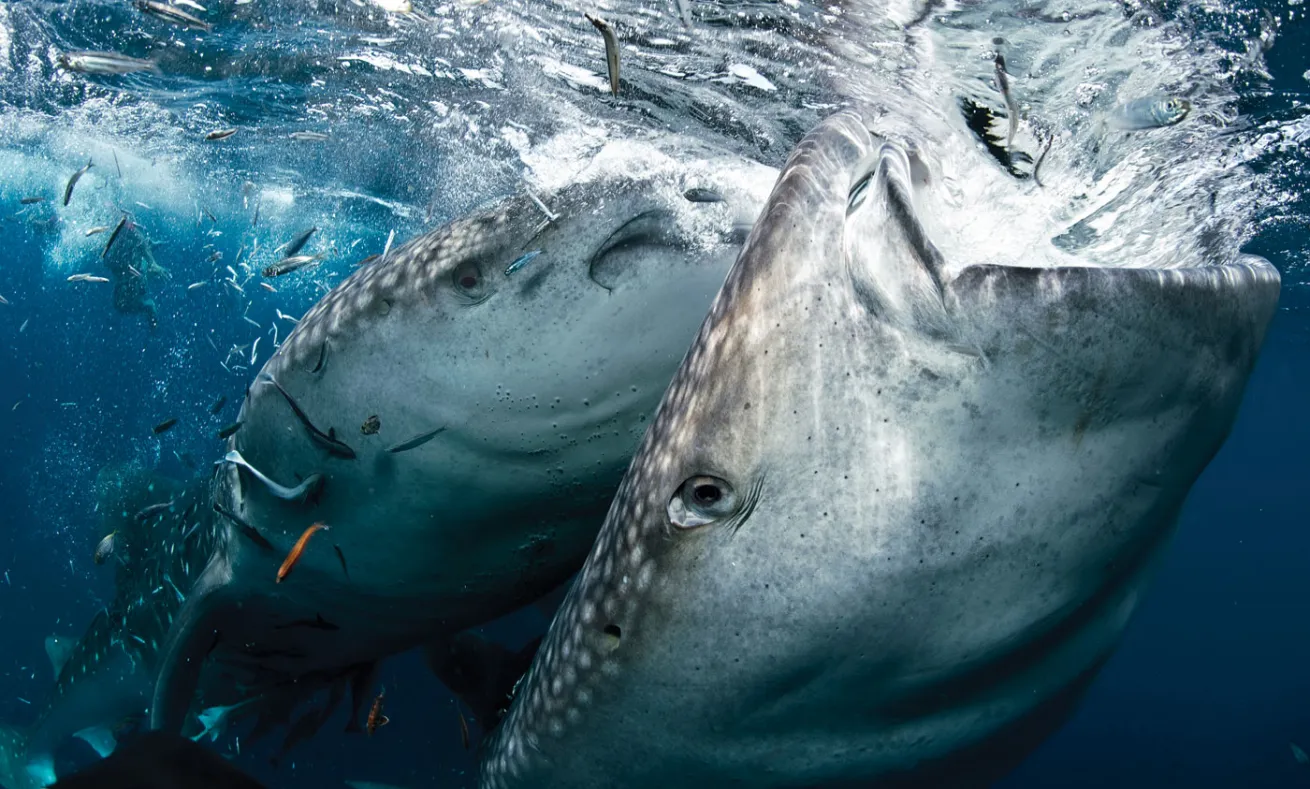
Michael AwFree Lunch!
Years ago, resident whale sharks in Cenderawasih Bay, West Papua, learned that they could get an easy meal when local fishermen on bagans, or floating fishing platforms, threw dead fish overboard. The fishermen consider the sharks good luck, and the sharks, which normally feed on plankton, happily gulp down the predawn breakfast.
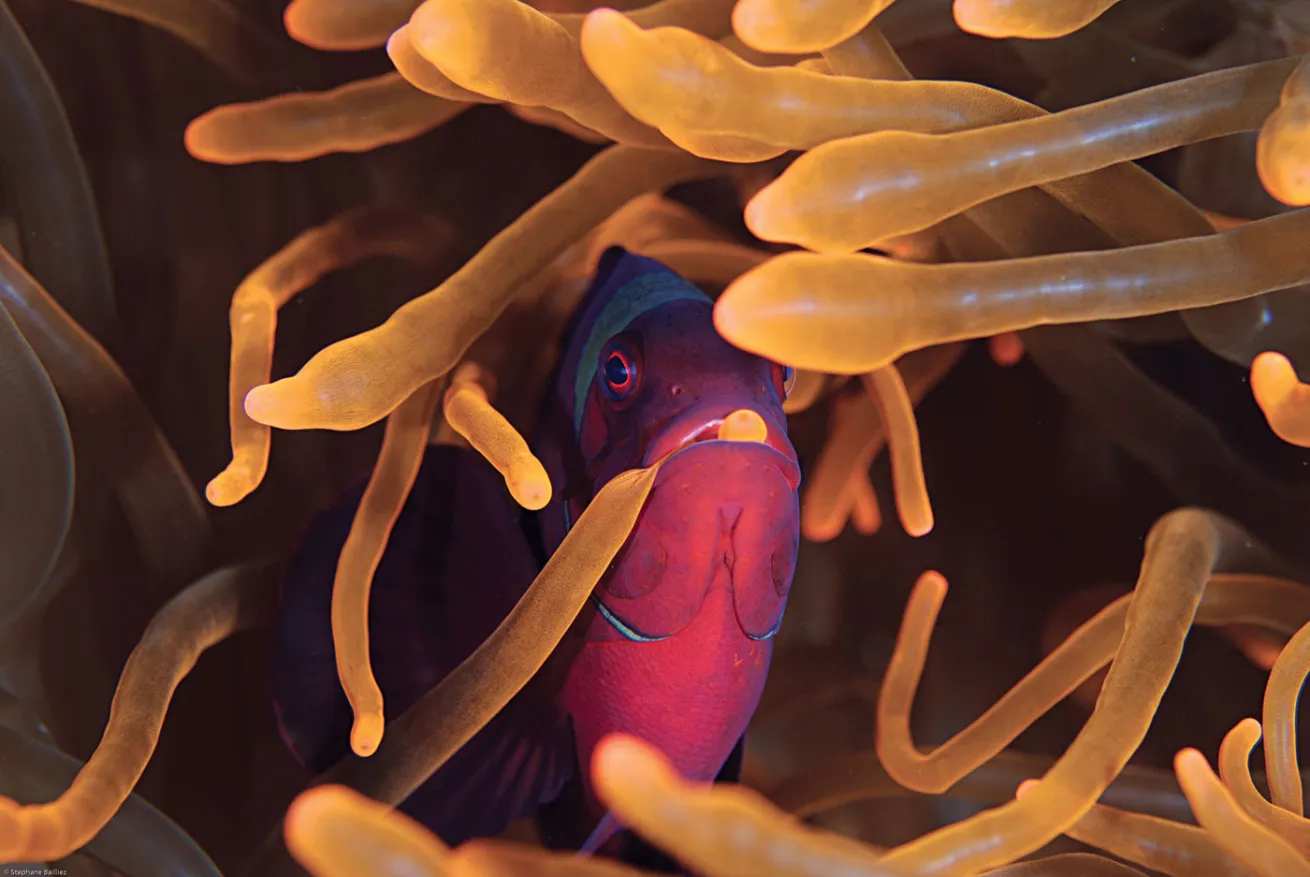
Stephane BailliezFriends With Benefits
Enjoying a symbiotic relationship with a bulb-tentacle sea anemone, this spinecheek anemonefish in Komodo, Indonesia, cleans parasites from the anemone and feeds on its host’s dead tentacles. Returning the favor, the anemone shelters the fish from predators.
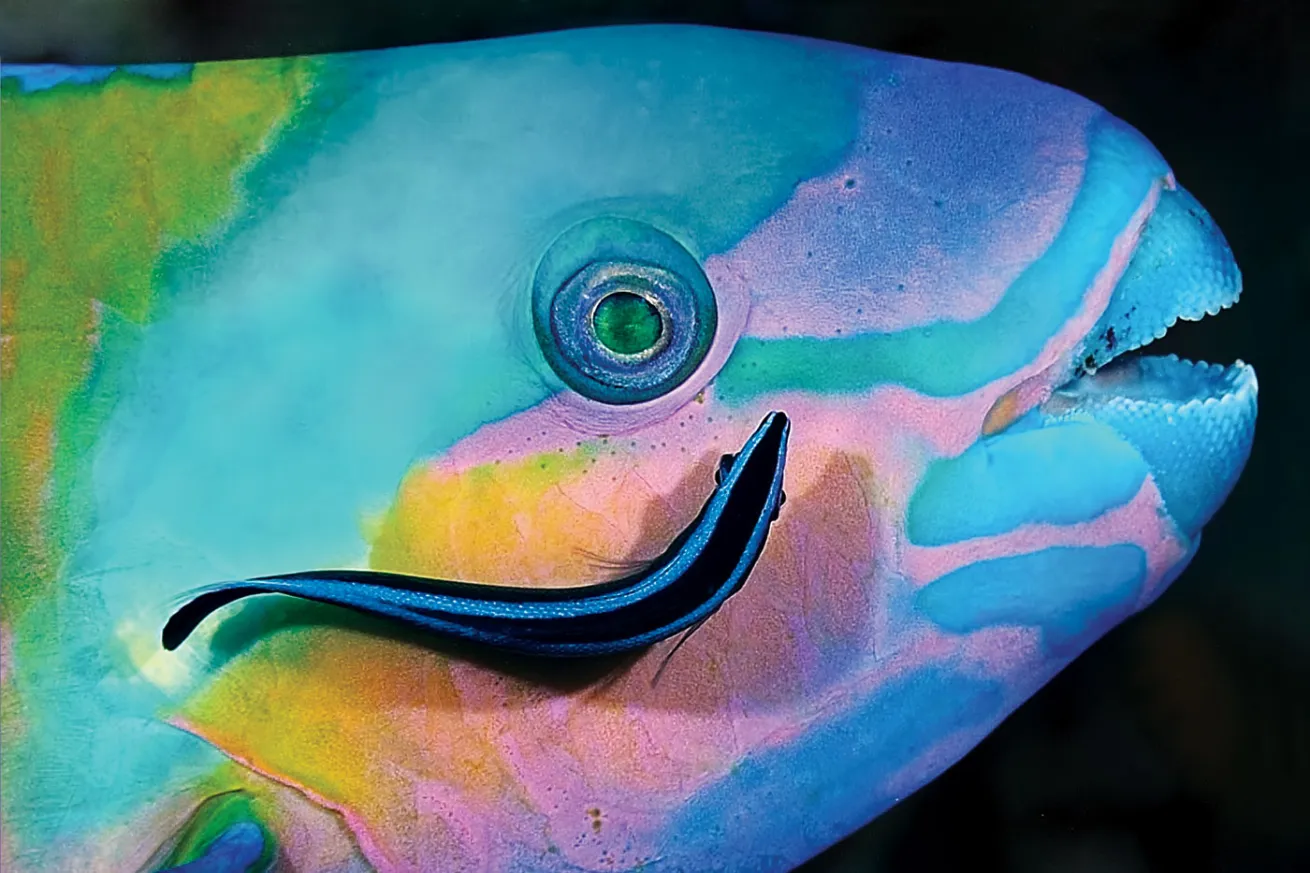
Gabriele DonatiFish Facial
In another case where mealtime doesn’t have to spell demise for one of the parties — except the parasites — this Red Sea parrotfish and the cleaner wrasse on its cheek also enjoy a symbiotic relationship. The parrotfish gets a skin cleaning while the wrasse gets a solid meal.
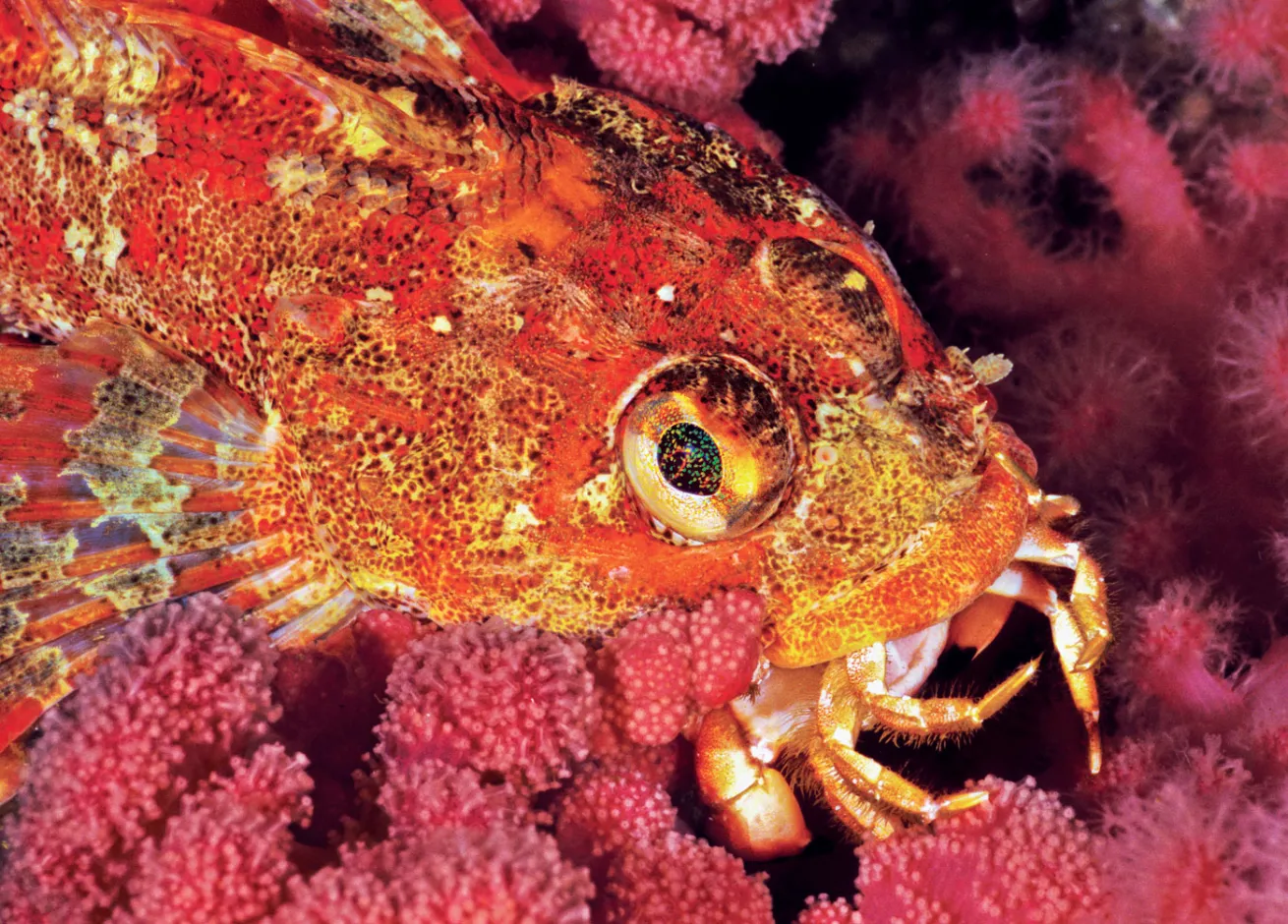
Doug PerrineDisappearing Act
A red Irish lord in chilly Queen Charlotte Strait, British Columbia, is having difficulty swallowing its favorite prey, the pygmy rock crab. Unfortunate sideways orientation combined with the crab’s grip on the fish’s upper lip mean that this meal might not come so easily.
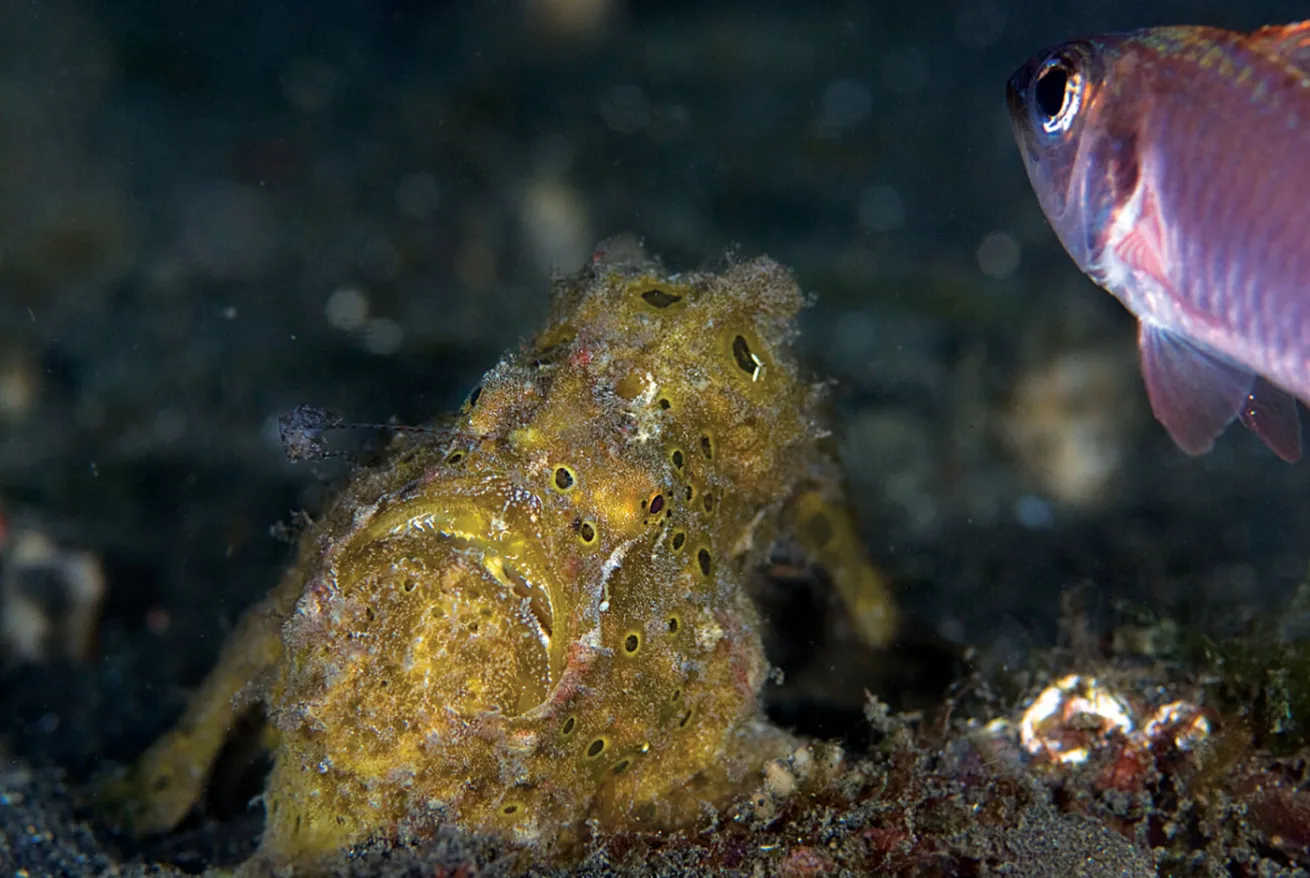
Jason Isley/ScubaZooFish On — Part 1
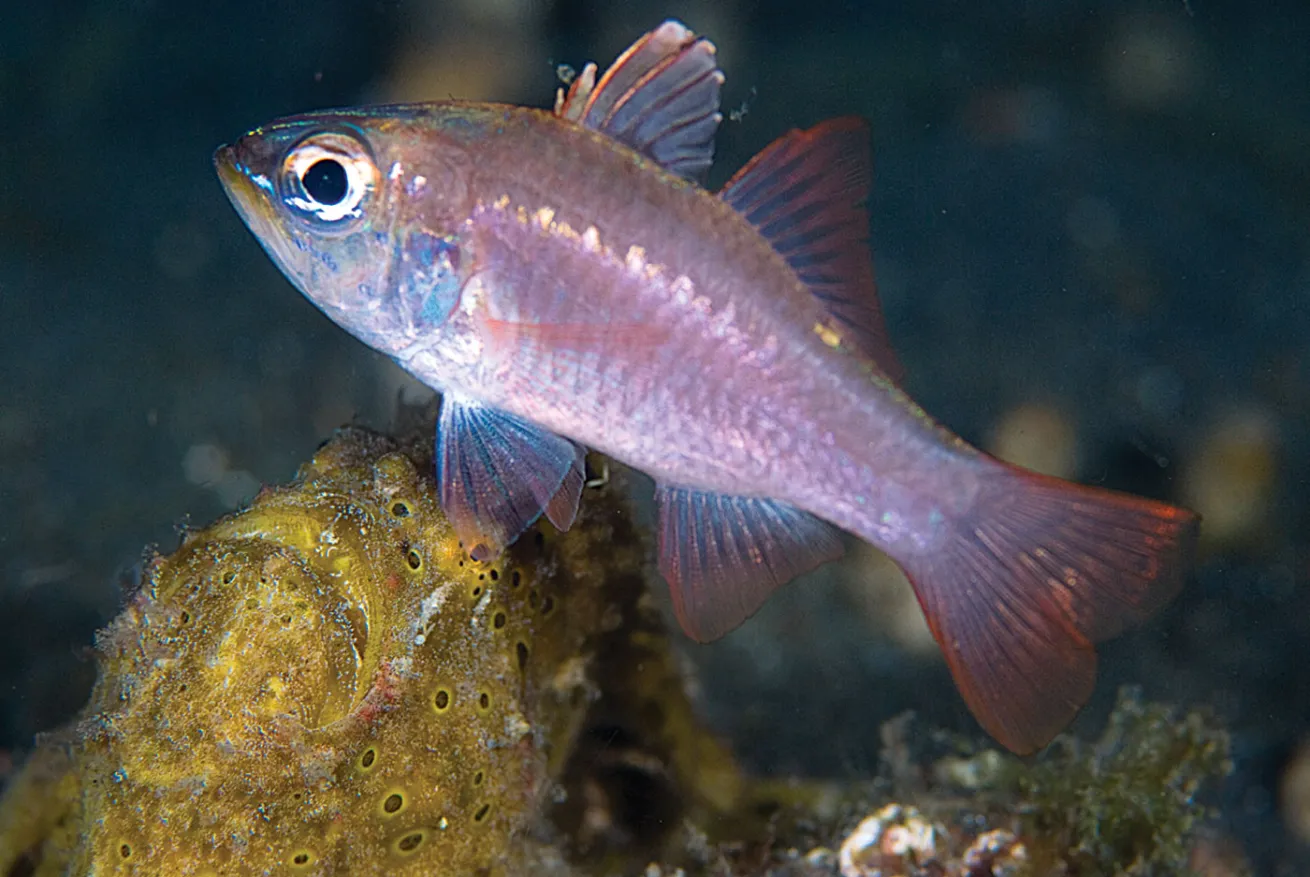
Jason Isley/ScubaZooFish On — Part 2
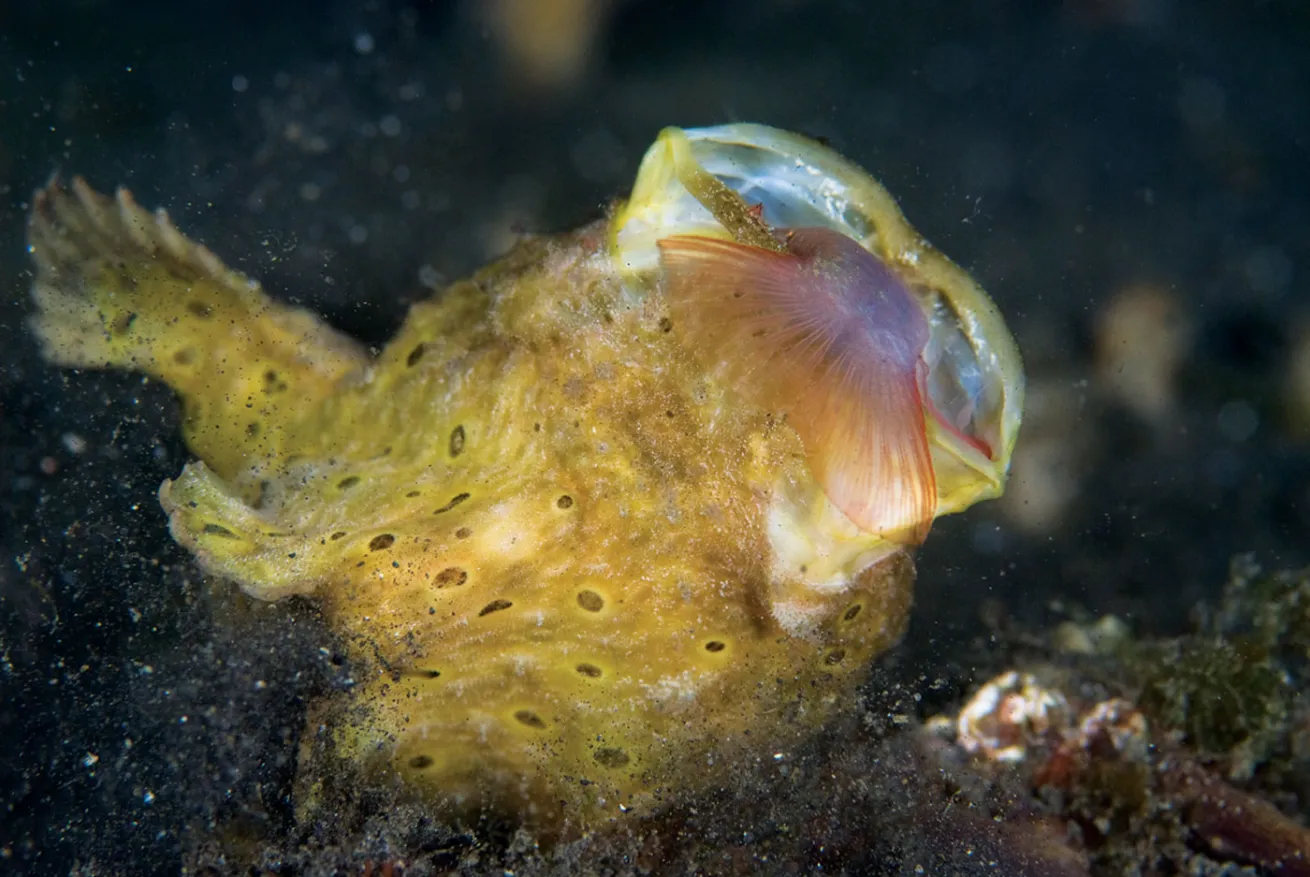
Jason Isley/ScubaZooFish On — Part 3
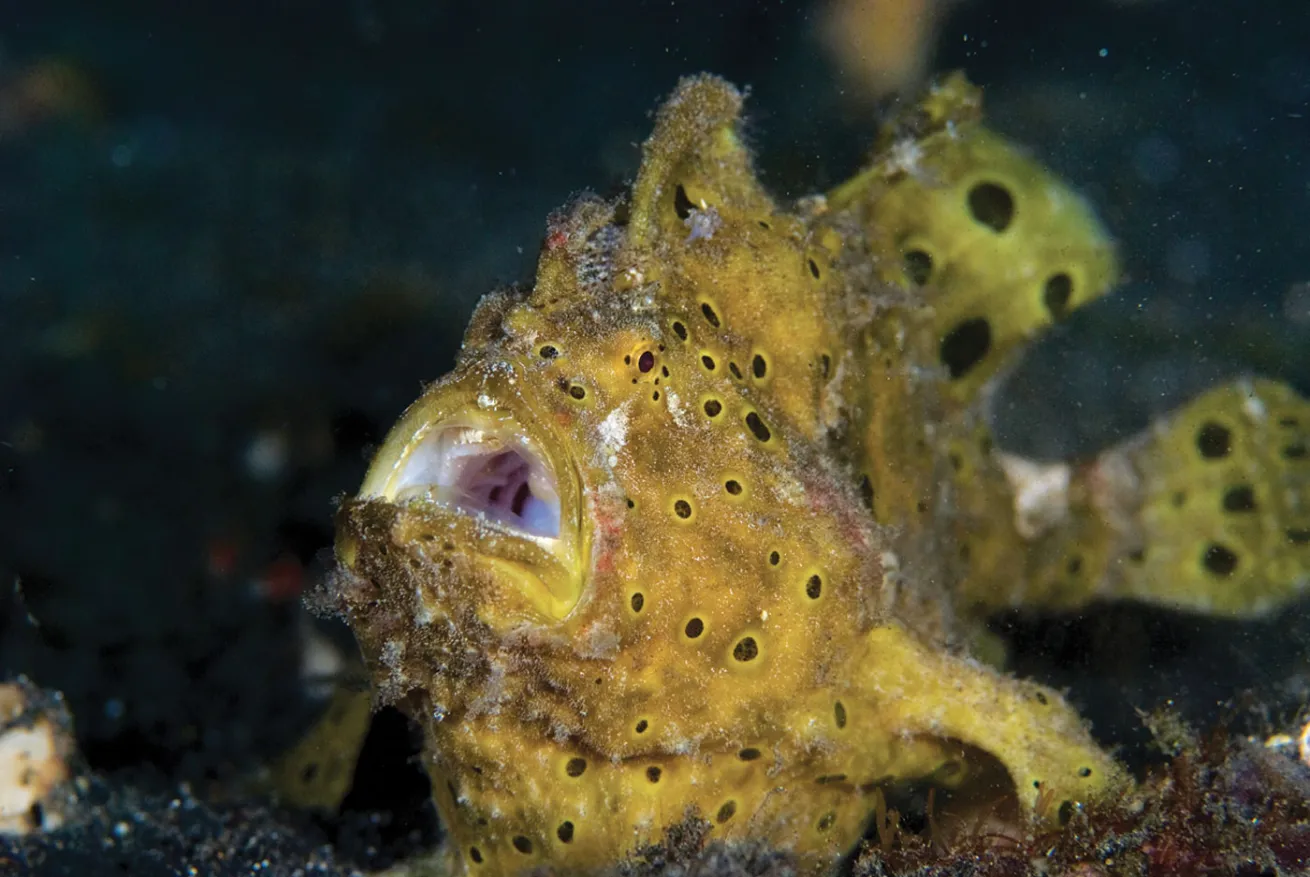
Jason Isley/ScubaZooFish On — Part 4
Perfectly camouflaged, a frogfish in Lembeh Strait, Indonesia, ambushes its prey by using a technique called aggressive mimicry. Some frogfish have a lure that resembles a worm on a long filament attached to the head. The frogfish shakes it to attract prey, like this cardinalfish, which was hoping for an easy meal but instead became the entrée.
Tony WuUnveiled
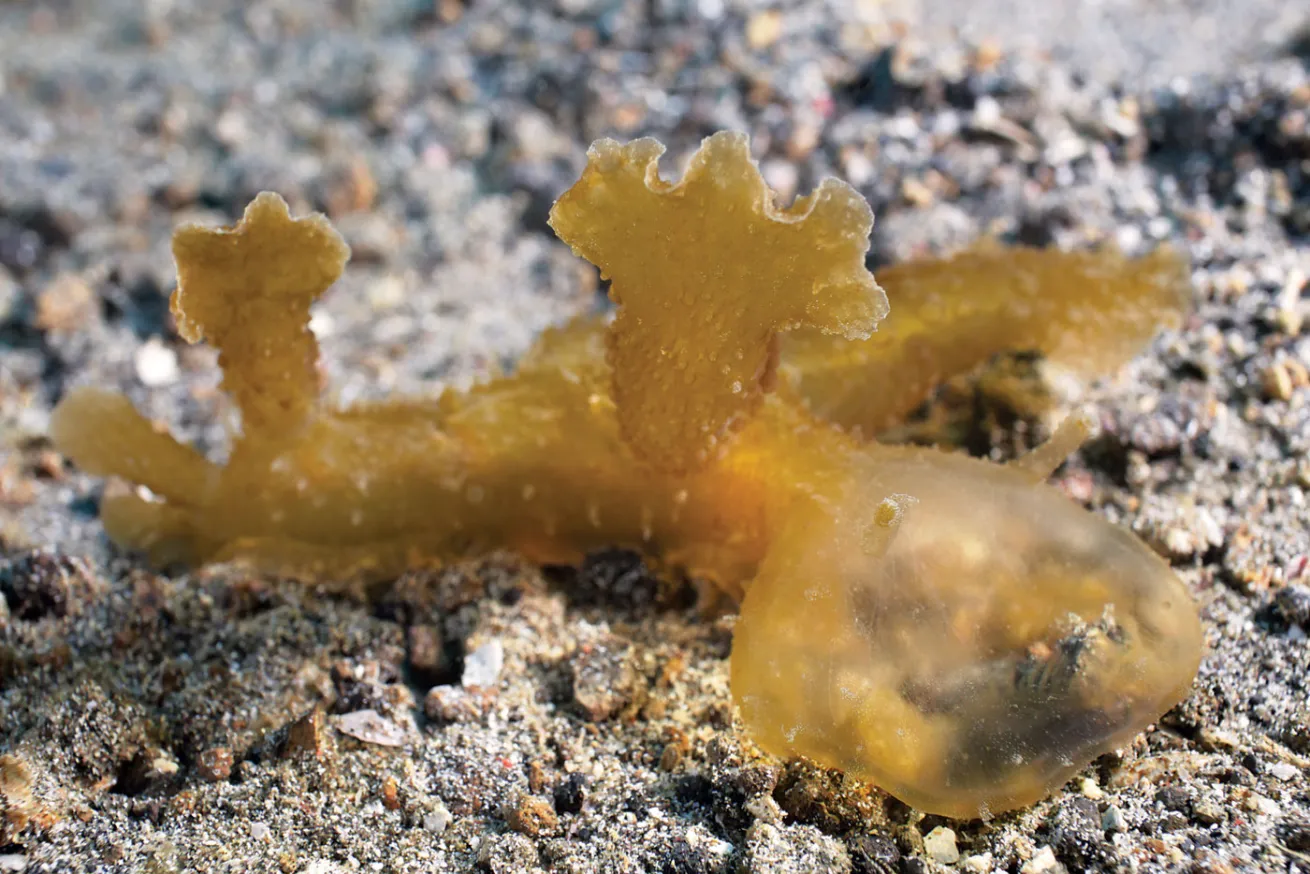
Most nudibranchs are sought after by underwater photographers because of their vivid coloration. Melibe nudibranchs like this one in Lembeh Strait, Indonesia, wow us in a different way: They wander the substrate, preying on crustaceans and other small animals, and then “throw” their oral veil over an area and gobble up whatever gets caught.
Doug PerrineThat's What Friends Are For
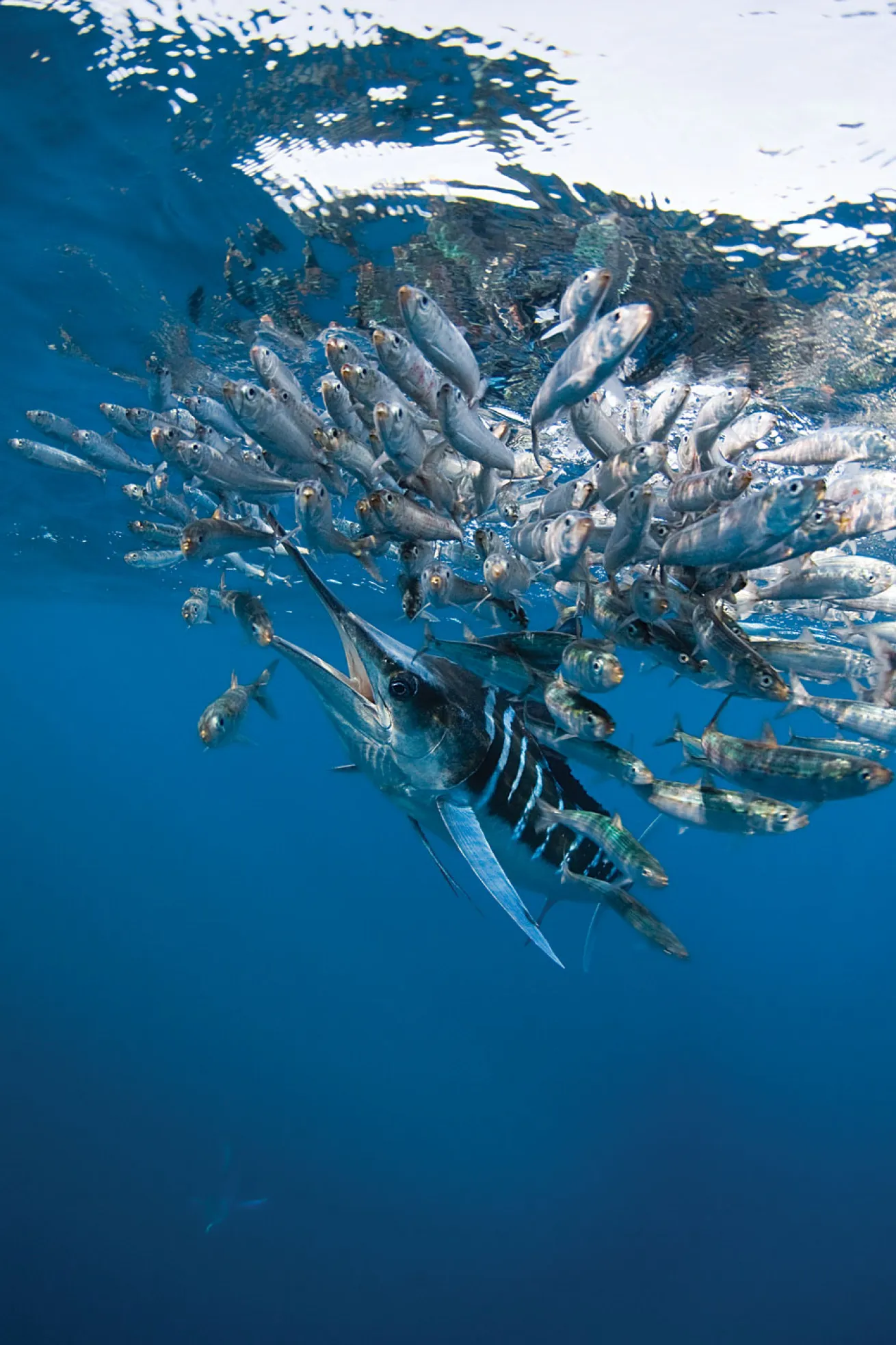
Striped marlin like this one in Baja, Mexico, work together to herd shoals of fish like these sardines into baitballs, and then take turns darting in to feed. When excited by prey, striped marlin change the color of their cobalt-blue stripes to phosphorescent blue or lavender, possibly as a way to break up their large, dark silhouette and confuse their prey.


