

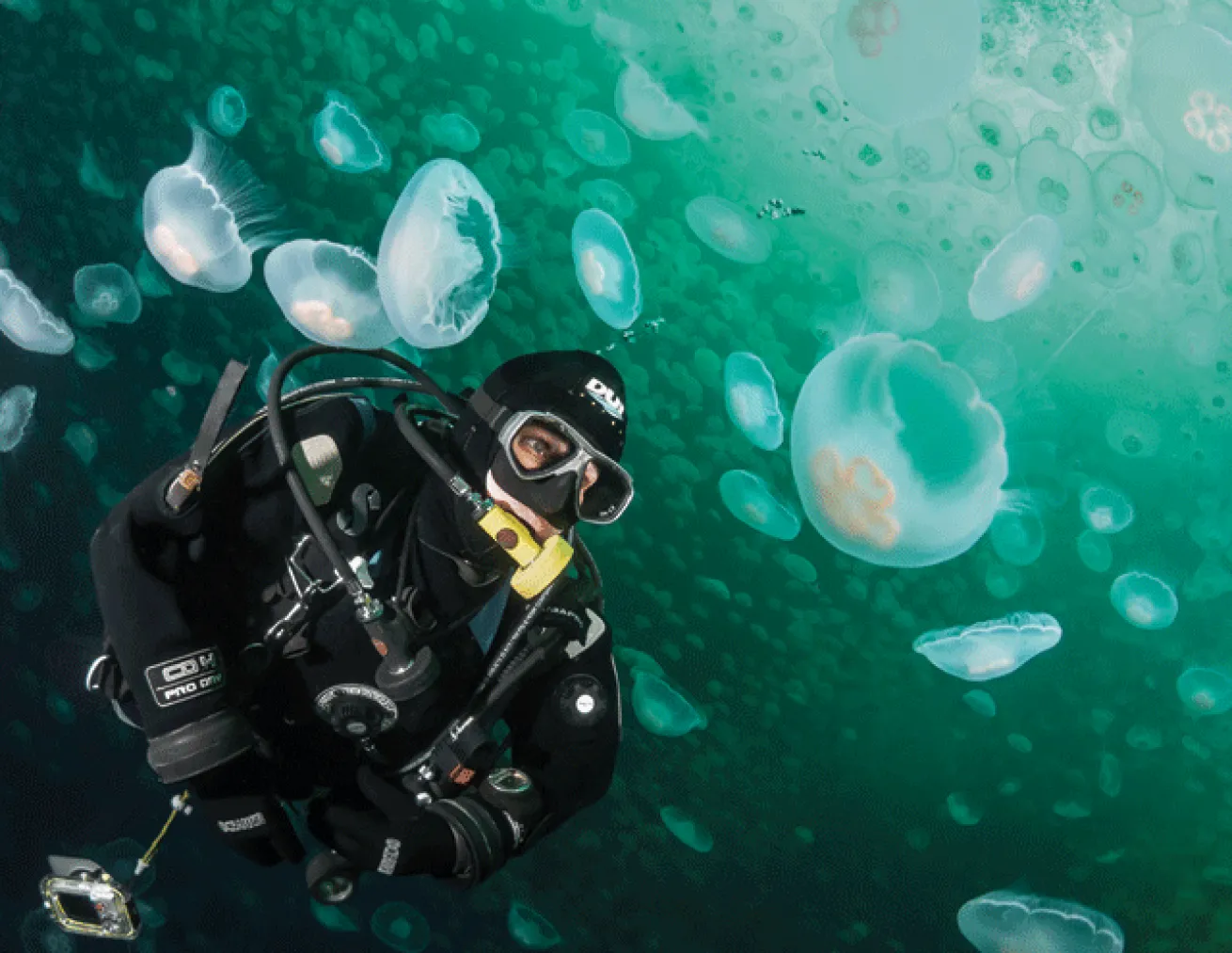
Jo-Ann WilkinsThis remarkable site off Alaska's Baranof Island is simply known as the jellyfish dive.
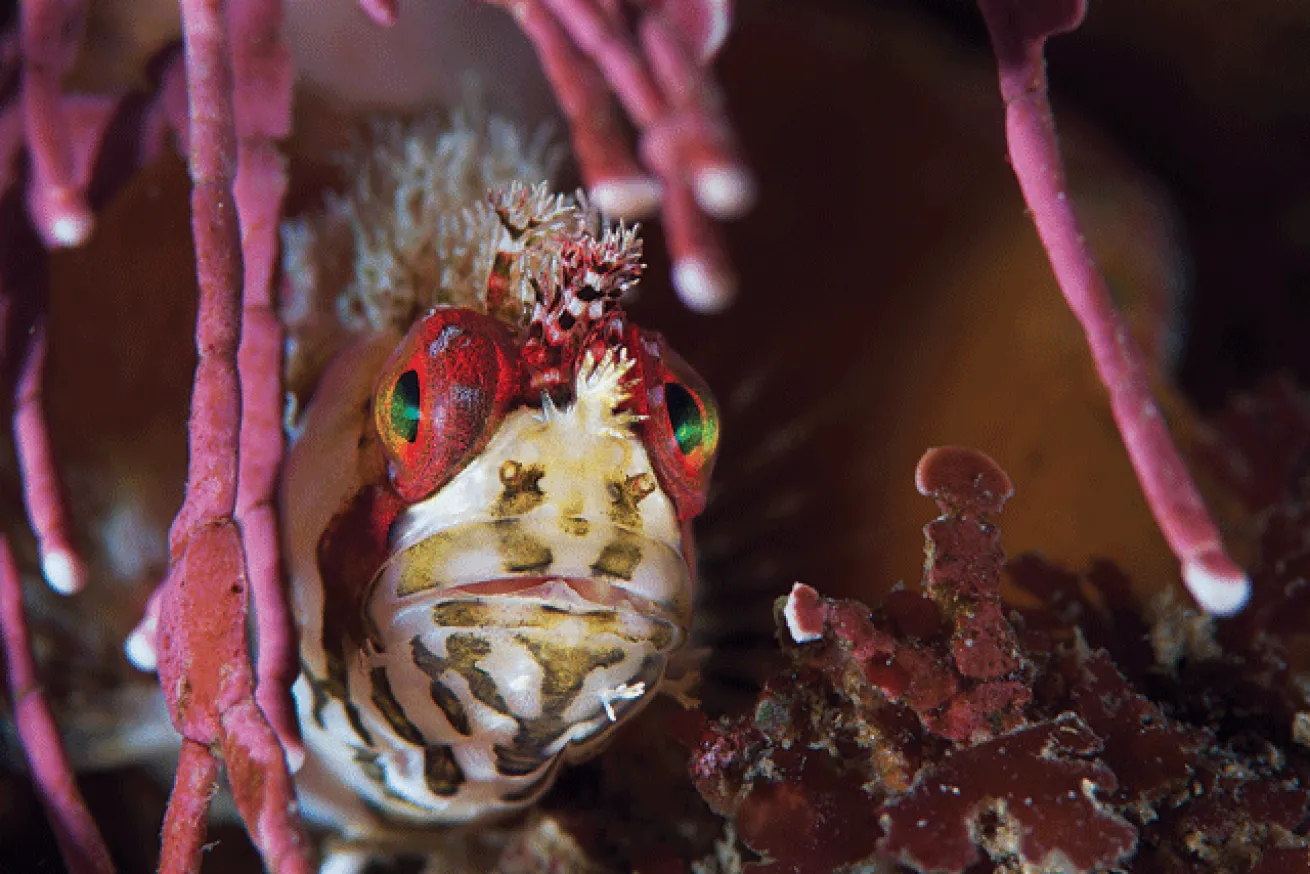
Clinton BauderMossy-head warbonnet at one of northern California's most popular dive sites, Point Lobos.
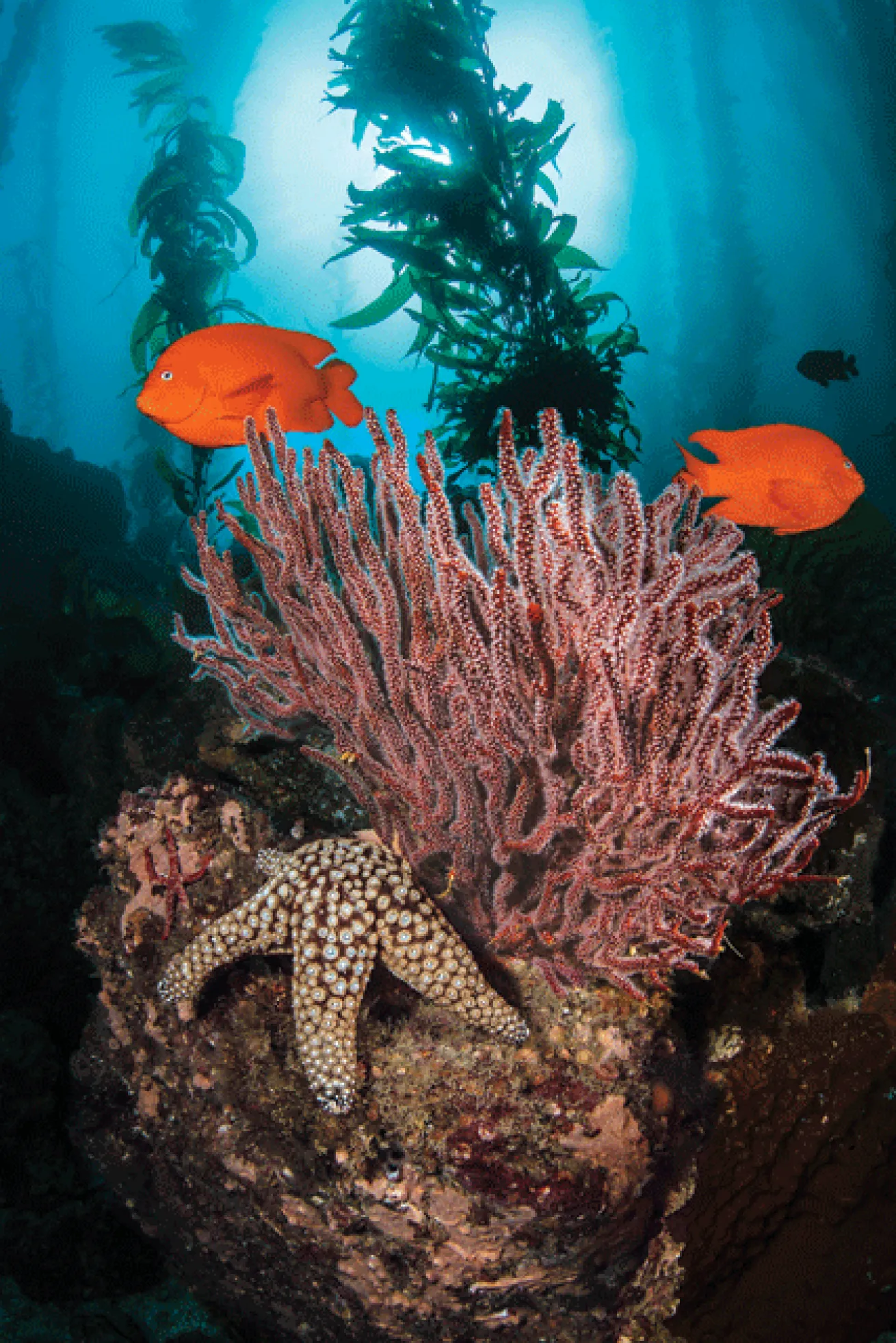
Andrew SallmonBright-orange garibaldi criss-cross a gorgonian sea fan at Ship Rock, Santa Barbara.
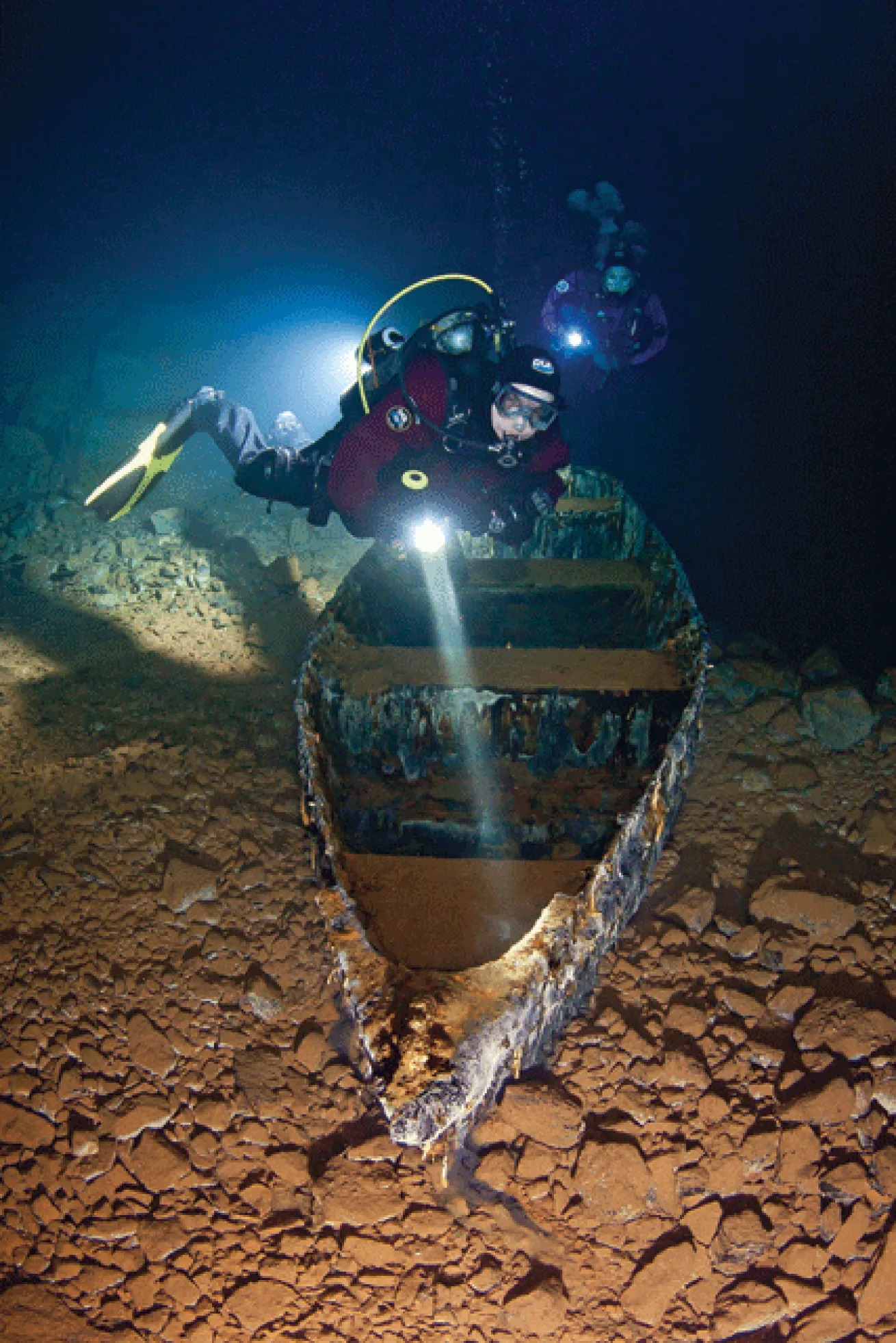
Andy MorrisonA wreck dive can be logged under 100 feet of rock at Missouri's Bonne Terre Mine, as divers may encounter an old tar boat.
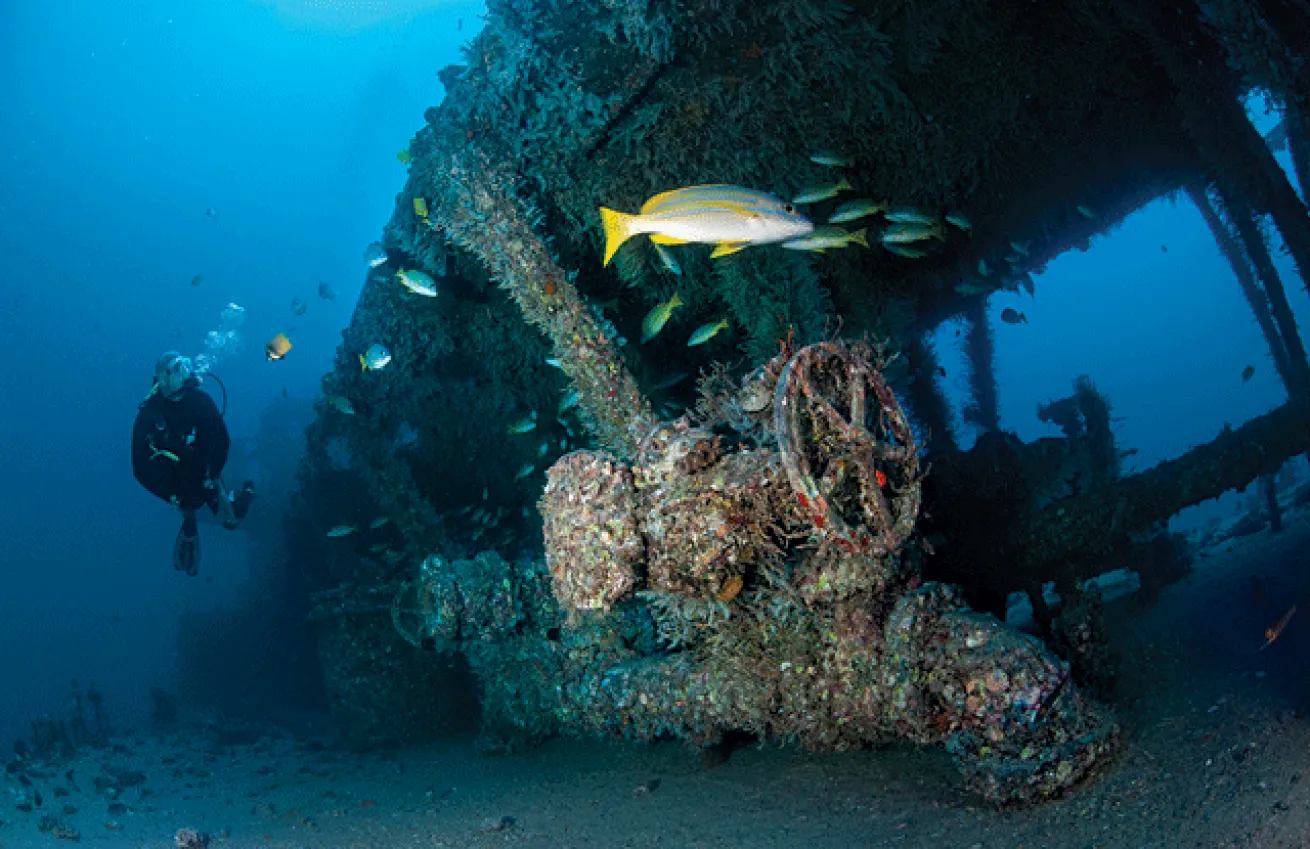
Chuck BabbittThe Waikiki wrecks, including YO-257, can be dived in a single morning.
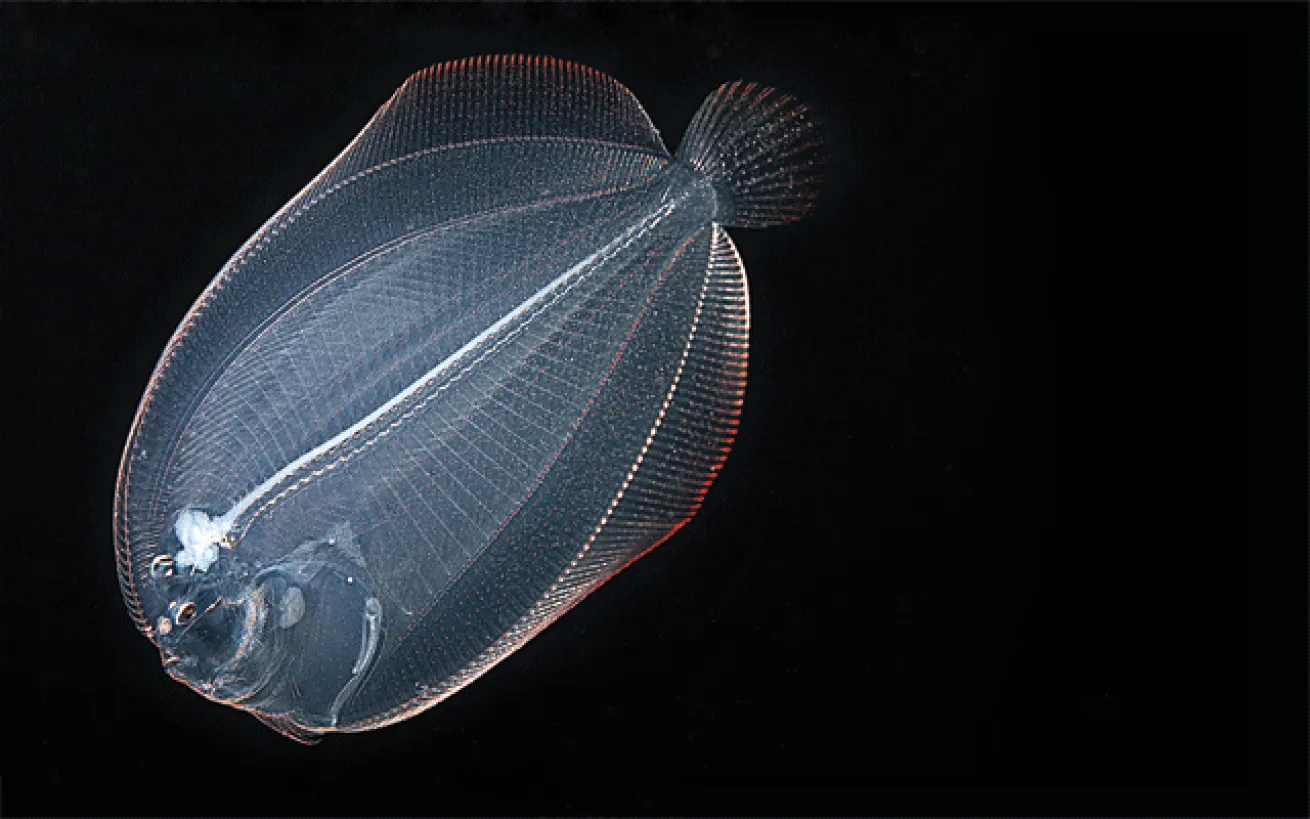
Doug PerrinePlanktonic larval left-eyed flounder found on the Pelagic Magic dive off Kona.
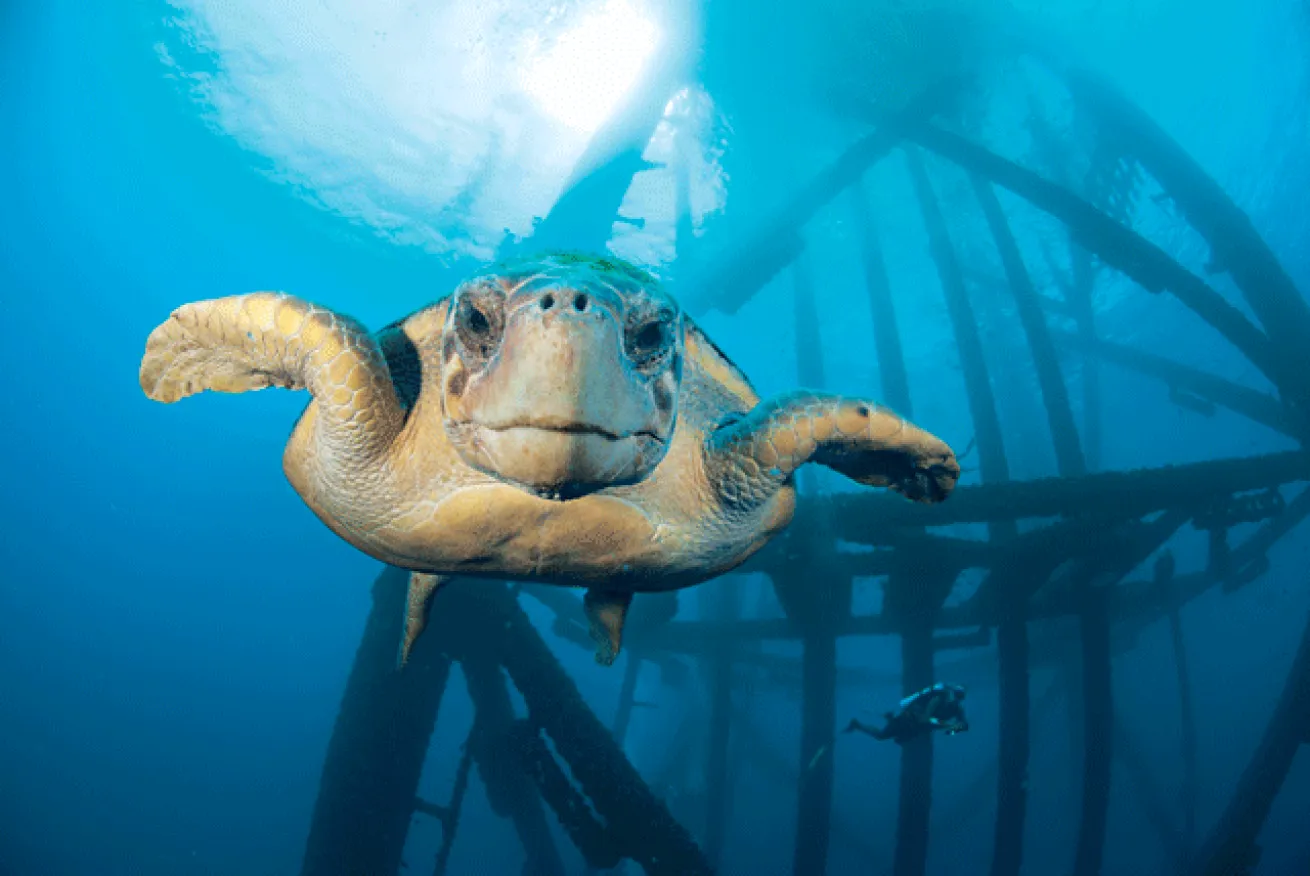
Jesse CancelmoA turtle pops by for a visit on an artificial reef off Texas' East Bank.
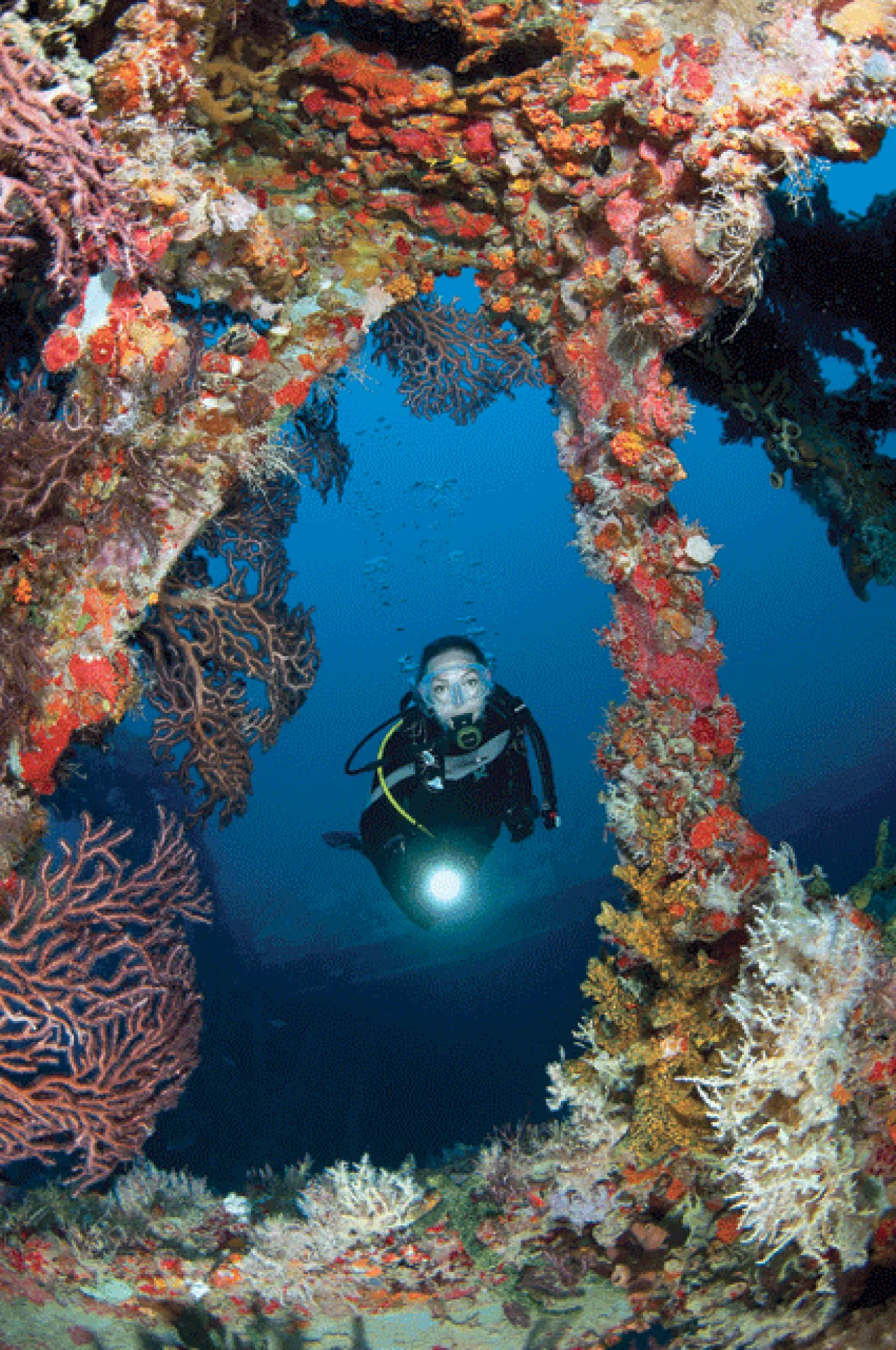
Tanya G. BurnettTerry Ward checks out the encrusting crane on the Spiegel Grove wreck in the Florida Keys.
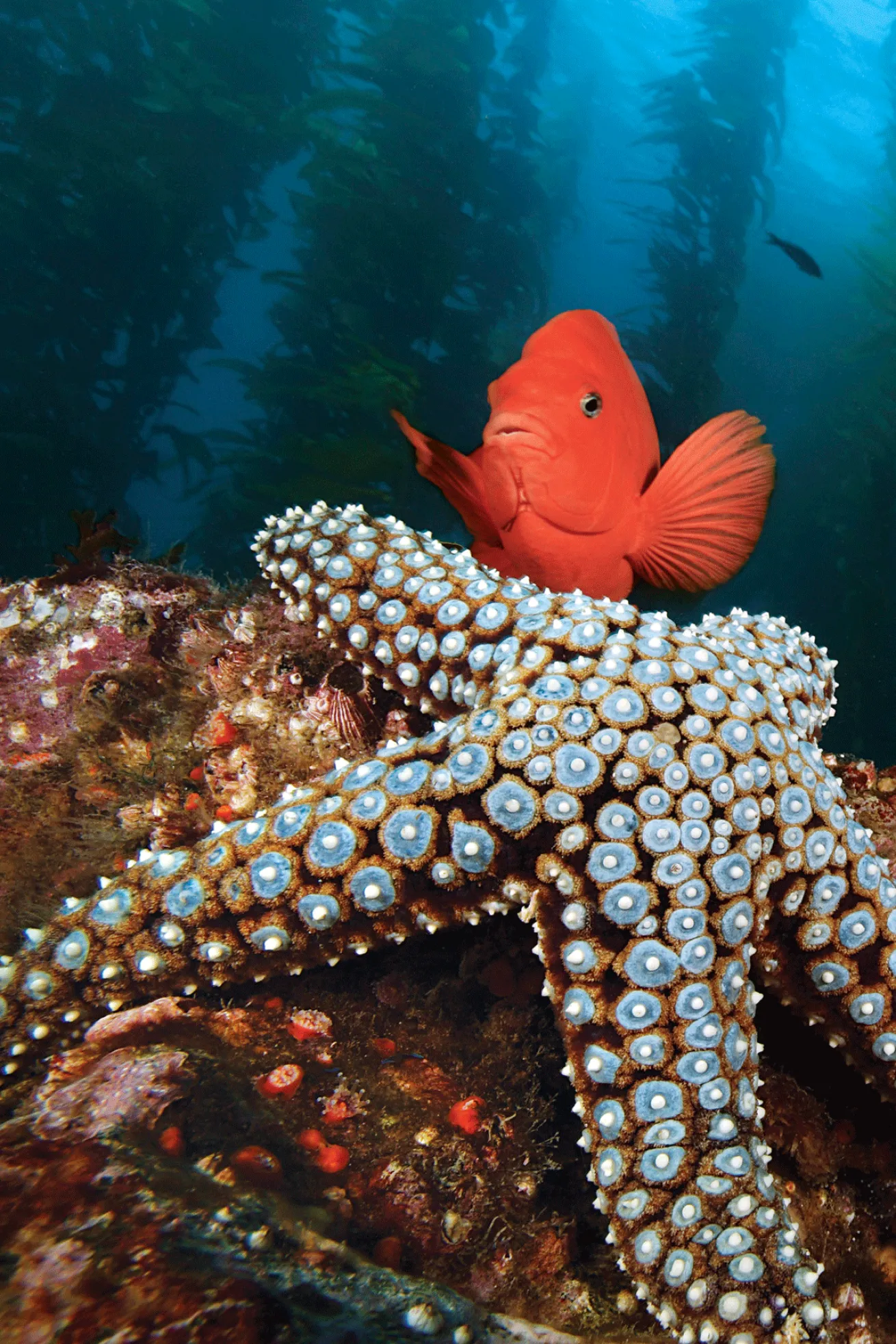
Mirko ZanniGaribaldi and sea star in a California kelp forest.
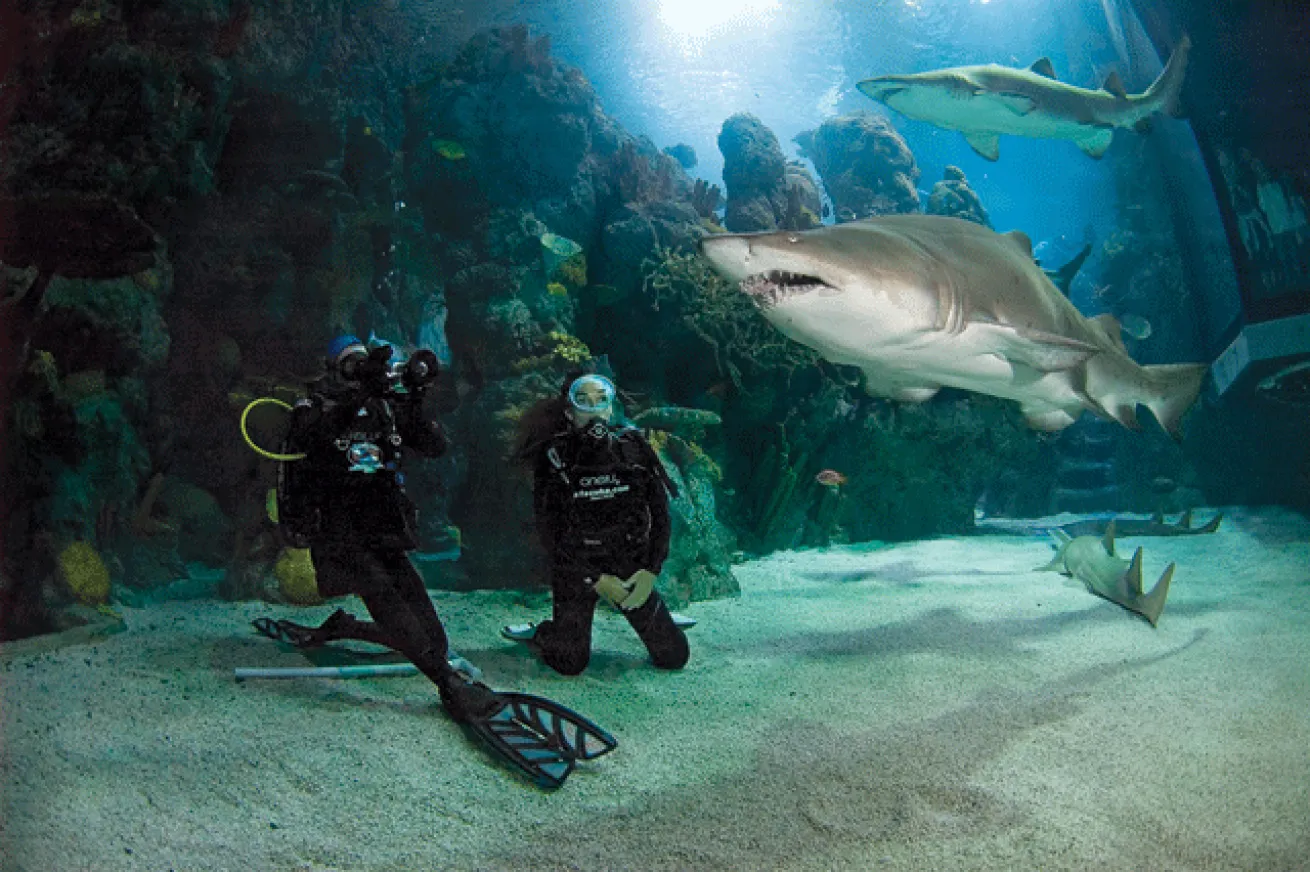
Andrew SallmonDive with sand tiger sharks at Denver's Downtown Aquarium.
To dive the best, you have to know what to ask for. We’ve compiled a list of our favorite haunts — the sites in our backyards and those we have to travel to because they’re worth it. These are some of the best-known sites in the 50 states — reliable, while offering idyllic conditions and frequent encounters with charismatic, colorful and surprising marine life.
These 20 great American sites are so awesome, you’ll want to dive them again and again. (Which is a good thing, as there’s a strong likelihood you live near one.)
WILD WEST
1. Point Lobos State Marine Conservation Area in Monterey, California
The Point Lobos State Marine Conservation Area allows no more than 30 divers a day; reservations can be made up to 60 days in advance. The restrictions may prove a challenge for impromptu types, but the reward is a pristine playground. “There’s so much there you won’t see in Monterey Bay,” including harbor seals, abalone, leopard sharks and rock cod, says Glenn Bernasconi, owner of the Aquarius II Dive Shop.
Conditions can be favorable year-round; navigation is always easy, as rock formations run parallel to the U-shaped cove’s beaches. When visibility extends to 80 feet, encounters will be all the more memorable. “You can see leopard sharks swimming through sand channels; normally they get spooked when you get close, but with good viz, you’re far enough away.”
2. Wyckoff Ledge in Santa Barbara, California
Wyckoff Ledge, off San Miguel Island, couldn’t be better suited for macro photography. It’s home to a big diversity of small species thanks to the convergence of warm and cold currents, creating nutrient-rich water without the “brrr” factor. San Miguel is also a seal rookery, so encounters with big, curious mammals are nearly guaranteed. And the topography offers a wide relief of terrain and smaller crevasses. Throughout is a super-lush kelp forest for which California is famous. Overall, the factors come together in a way that leaves even the hardest-to-please member of your dive group smiling.
3. Vertical Awareness in Niihau, Hawaii
Vertical Awareness is a pinnacle found off Niihau, the seventh-largest Hawaiian island, 17.5 miles southwest of Kauai. “This is where you find the heavy hitters,” says Kyle Ingram, general manager at Kauai-based Seasport Divers , of the site Vertical Awareness. Monk seals, an endangered species, are high on most visitors’ must-see lists, and they’re almost always encountered there. So are sharks — be they sandbar, gray reef, blacktip or even whale. On occasion, manta rays and even pilot and Blainville beaked whales can be sighted.
4. Keystone Jetty in Bellingham, Washington
Currents present the greatest challenge to the uninitiated. Those unfamiliar with pinpointing slack tides should dive with an instructor. Then it’s a cakewalk through one of the most common places to encounter a giant Pacific octopus out of its den, cruising around. Put in at Fort Casey State Park to dive the jetty, home to a wall blanketed with white anemones. This small area is habitat to a wide variety of cold-water curiosities, including wolf eels, huge lingcod, rockfish, decorator war bonnets, mossy-head war bonnets and every local variety of nudibranch. One of the biggest highlights — literally — is a “lingcod the size of a Volkswagen bus,” says Charlynn Andrews, owner of Gone Diving.
Because of the dense marine life, dive slowly and look in every nook to reap the full benefit of what this site offers.
5. Ship Rock in Santa Catalina Island, California
You’ll get everything you’re looking for in a California kelp dive at this site: lots of garibaldi, sheephead, Pacific octopuses, leopard sharks and angel sharks. Ship Rock lies more than two miles off Santa Catalina Island, where, thanks to greater water exchange, the visibility is much clearer than nearer-shore sites. The kelp forests here are healthier, growing to epic proportions. The namesake feature juts from the surface and falls sharply into the abyss, making for a dramatic dive along ledges and canyons. The site is also a veritable waypoint for passing pelagics, from yellowtail tuna to sunfish. That variety is what makes Ship Rock so amazing: All of this life you would otherwise see only in open water, and yet you’re only 22 miles southwest of Los Angeles.
6. Jellyfish Dive in Baranof Island, Alaska
“This rivals any jelly diving you can do in the world,” says Mike Lever, owner of the Nautilus Explorer, which used to run charters here. “Massive columns of moon jellies extend 80 feet deep,” he says of what is found at a Baranof Island site known simply as the jellyfish dive or Smudges, first found with guest and underwater cinematographer Howard Hall in 2008. Like the famous jellies in Palau’s Jellyfish Lake, these similarly sized jellyfish too are harmless. (The waters are slightly colder than Palau’s lake, however.)
“It’s a solid organic mass,” says Lever, adding that “the topside scenery is beyond anything you can imagine: a high-sided fjord with a snow-covered glacier, waterfalls and grizzly bears. What can I say? Alaska is very much an adventure.”
7. The Waikiki Wrecks in Oahu, Hawaii
Most divers count themselves lucky to dive one great wreck a day. In Oahu, you have the opportunity to dive three, all in the same morning. The Waikiki Wrecks, as they’re known, include the former oiler YO-257, former fishing boat San Pedro, and a smuggler’s ship, the Sea Tiger. The wrecks themselves are a warren of nooks and crannies home to everything from frogfish to morays, eagle rays to whitetip sharks (on the San Pedro). And all three are about 15 minutes by boat from the Kewalo Basin Harbor — the YO-257 and San Pedro can be explored on a single dive — so you can be back on Waikiki Beach in time for that surf lesson.
NORTHEAST
8. USS San Diego in New York, New York
The sight of Atlantic spadefish (and so many of them!) might surprise first-timers at USS San Diego — until they realize that the Gulf Stream can sweep as far north as Long Island. Exactly what caused the explosion that sank the 504-foot-long ship 13-and-a-half miles south of Fire Island remains unknown — although German U-boats are suspected. On July 18, 1918, the New York-bound ship disappeared, sent to its watery grave in just 28 minutes. The armored cruiser, protected under the National Register, now lies inverted in a manageable (though time-limiting) 110 feet of water. Its quickly deteriorating structure — home to black sea bass, lobsters and invertebrates — means its time as a dive site is also limited.
9. U-853 in Quaker Hill, Connecticut
We’ll never know whether the captain of U-853 received the 1945 cease-fire order, or if he did and ignored it. The German vessel torpedoed Black Point before American warships retaliated. The war grave for 55 men lies seven miles east of Block Island, Rhode Island. “It’s dark until you reach 90 feet,” says Sharon Teel, PADI Master Scuba Diver Trainer, of the descent. “When you’re 20 feet above the wreck, the whole thing becomes apparent — boom!” She’s referring to the Northeast visibility, which is notoriously low, often less than 20 feet. In many ways, the limited visibility helps divers train their eyes on small patches, allowing them to see more of the sculpin, fluke, flounder and other flatfish that call this storied wreck home.
10. Porthole Wreck in Ocean City, Maryland
You might not think of Maryland as a hotbed of wreck diving, but it is. A whole row of portholes is still under the sand at this Ocean City site: the Porthole Wreck, aka Gordon C. Cooke. It’s a site whose coordinates are widely known and shared among artifact hunters. It lies roughly 18 miles off Ocean City, Maryland, starting at a depth of just 70 feet. The bulky freighter sank in 1946, and yet it still provides excitement for those who experience a rush at the sight of brass. Non-booty collectors will appreciate the intact but upside-down stern section, and its abundance of black sea bass, flounder and lobsters.
11. Stolt Dagali in Point Pleasant Beach, New Jersey
Fog and a navigational error sunk the 583-foot-long, vegetable-oil-carrying Stolt Dagali tanker on Thanksgiving 1964. The luxury liner SS Shalom sliced through the tanker, immediately sinking the stern with 19 men trapped inside. Thanks to its watertight compartments, the bow was salvaged and still sailed until recently. The wreck’s stern lies 16 miles from the Shark River Inlet in Belmar, New Jersey. Capt. Rich Benevento, owner of John Jack Charters, says that wreck expert John Chatterton has chosen this site for penetration-training courses because it’s easy to enter and navigate the hallways, cabins, and storage areas. Benevento says that it’s an especially good proving ground, as “the stairways are horizontal — that can get confusing.”
MIDWEST & TEXAS
12. Bonne Terre Mine in Bonne Terre, Missouri
The world just ended: It’s a fate we know from The Twilight Zone and other post-apocalyptic stories. It’s also one we can dive. As if preparing for a nuclear holocaust, the miners of Bonne Terre Mine fled the three square miles of tunnels once resources were exhausted. “Once they abandoned the mine,” says Doug Goergens, owner of the site, “they shut off the pumps, and everything flooded,” becoming a feast for divers.
Picks and shovels lie everywhere. Guides will lead you through the 24 numbered paths to ore cars, a machine shop, geology labs, offices, a movie theater that once played safety films, and the drinking fountain outside a locker room. And, yes, the iconic structure of the elevator shaft remains.
13. Straits of Mackinac in Chicago, Illinois
Storms flattened most of Lake Michigan’s real shipwrecks, as the shallow depths offered little protection. Before the Straits of Mackinac artificial reef was downed in 2003, divers had to descend much deeper to find something so large and intact. The 204-foot-long former steam-powered car ferry — a 55-minute boat ride from downtown Chicago — sits upright between 60 and 80 feet. Experienced divers can penetrate from bow to stern.
“What I like most is to start in the galley, where a full-blown kitchen with the crew’s mess is,” says Jim Gentile, owner of Windy City Diving. “Then I head to the stern, passing eight staterooms. Walking — er, swimming — down the hallway, you can imagine what it was like when the crew worked aboard.”
14. Flower Gardens NMS East Bank in Freeport, Texas
“You can open a guidebook for fish in the Gulf and find every one on the Flower Gardens,” says Fling Charters’ Capt. Bland Ellen of Texas’ most famed dive destination. Ellen isn’t just talking about blennies and small stuff: These coral covered sites, 100 miles from shore, draw in spinner, silky, whale and hammerhead sharks. In addition to mantas, he’s even seen a sunfish — just once.
Would-be scuba-diving visitors need to prepare for two realities: It’s an eight-hour run from Freeport to East Bank, and currents can be onerous. They can also disappear. “The only guarantee in the Gulf is that there is no guarantee,” says Ellen. And while he’s referring to conditions, he could just as easily be talking of the wild-card nature of this outpost where, at any moment, something massive might drop by.
15. Dunderberg in Ann Arbor, Michigan
“It’s a serene wreck, so few people visit,” says Joe Cloutier of Huron Scuba. Not many see the well-preserved three-masted schooner — sunk in 1868 in Lake Huron — due to its depth: The railing lies 130 feet below the surface. Those who appreciate that few wooden wrecks remain in the world will treasure this site, a 15-minute boat ride from Harbor Beach. For Cloutier, Dunderberg’s highlights are the ship’s lines, windlass and anchor chains. “I can picture myself steering that ship real easy,” he says.
SOUTHEAST
16. USCG Spar in Morehead, North Carolina
“I have had to move out of their way many times,” says Olympus Dive Center’s Jon Belisario, of the sand tiger sharks at Spar. The site is largely popular for two reasons: Divers are almost guaranteed to see between five and 20 sharks — and nothing in the sea lurks like a sand tiger. “I don’t know if they’re exceptionally lazy, but I wouldn’t call them curious,” he says of the fact that the sharks don’t spook.
Second, the purpose-sunk cutter is an ideal site for penetration training. “It’s one of those Hollywood wrecks — very intact and easy to navigate.”
17. Hyde in Wilmington, North Carolina
“Day in, day out, it’s one of the best bangs for your buck in North Carolina,” says Dustin Heath of Hyde. The 215-foot-long hopper dredge is the meatloaf of wrecks — it’s not the flashiest menu item, but it consistently satisfies. When diving this purpose-sunk wreck, you get good visibility and big-animal encounters.
Sand tigers are a fixture at the wreck, as are barracuda, grouper and other warm-water species. Souvenir fiends will appreciate the shark teeth scattered on the wreck and in the sand at 110 feet.
18. USNS General Hoyt S. Vandenberg in Key West, Florida
“You feel like a spider in the middle of its web,” Eric Schaaf, manager at Dive Key West, says of USNS General Hoyt S. Vandenburg's satellites, whose bases can be navigated by divers. That’s part of the appeal of this well-planned attraction, resting six miles off Key West in waters ranging from 80 to 140 feet. Organizers invested 10 years into the 2009 sinking. Much of the 520-foot-long retired Air Force missile-tracking ship can be penetrated, especially the main deck where light — aka exit points — is visible in many rooms and corridors. Schaaf recommends a passageway from which divers can peer into the engine room below.
19. USS Spiegel Grove in Key Largo, Florida
Nothing rewrites maritime history like a storm: In 2005, USS Spiegel Grove sank unexpectedly, six hours ahead of plan, landing on its side. Three years later, Hurricane Dennis righted the landing ship dock measuring 510 feet long — almost as much as two football fields.
The superstructure starts at about 60 feet, depending on tides. Strong currents frequently rake across the ship, making this an advanced dive. As one of the older purpose-reefs, Spiegel Grove is blanketed in corals, making it popular with life ranging from goliath grouper to barracuda to surgeonfish and damselfish.
20. Sea Emperor in West Palm Beach, Florida
Regardless of your photography skills, if you bring a camera to the Sea Emperor wreck (aka as Aquazoo) — a 15-minute boat ride from Boca Inlet — your photos and video will impress. The resident green moray eel is as fat as a log, and southern stingrays and goliath grouper relish close-ups. “One goliath grouper was talking to me,” says photographer Craig Dietrich, who has logged more than 80 dives at the site. “He kept touching my dome.”
The 171-foot-long barge rests in just 65 feet of water, so time is on your side to explore to your heart’s content. Surrounding the wreck is a collection of concrete pipes where wildlife hide. Says Dietrich, “Whenever anybody comes to town, it’s the first wreck I take them to.” Nearby are numerous other wrecks such as the United Caribbean, Capt. Dan and Hydro Atlantic.
Want to expand your horizon beyond the USA? Check out our picks for The World's Best Dive Sites!


