

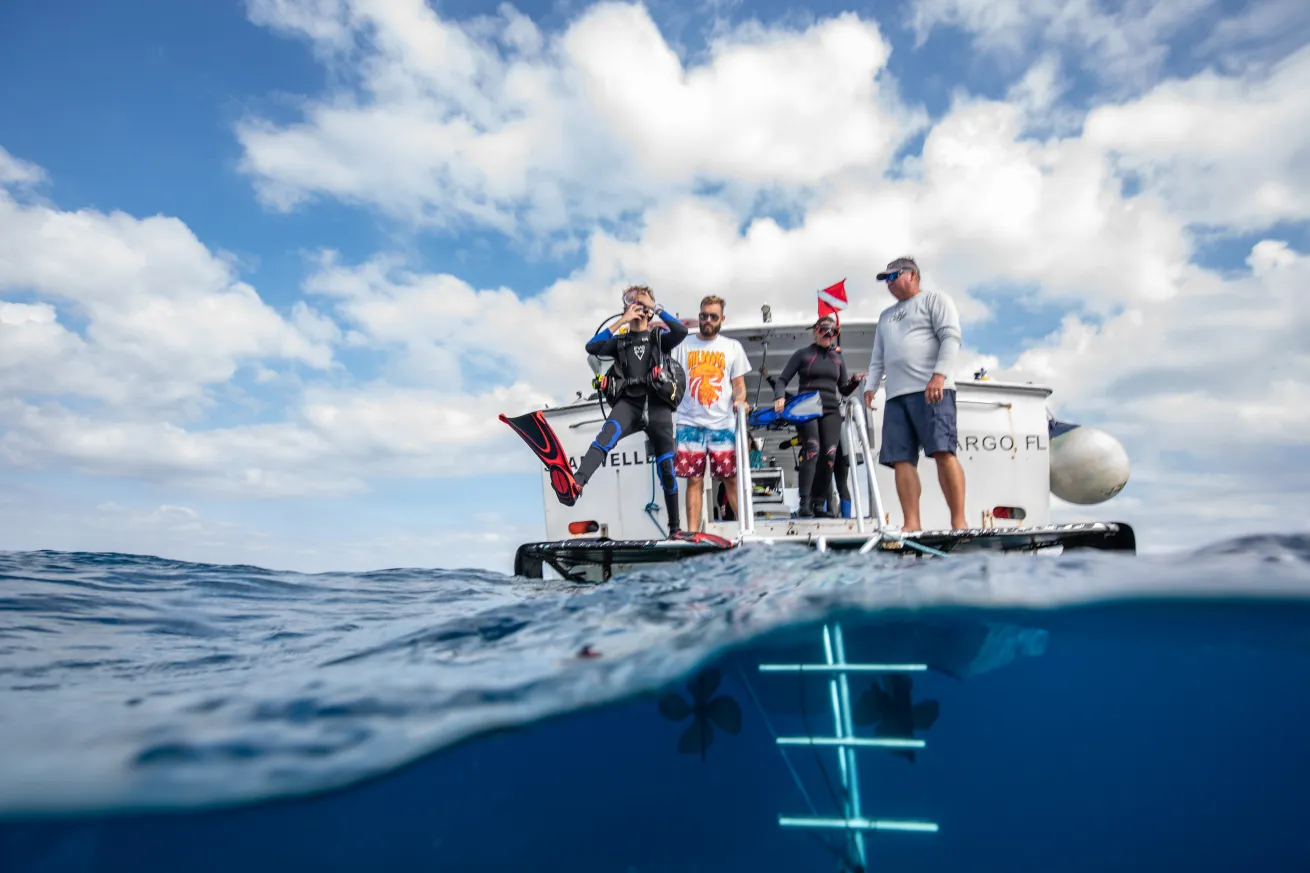
Kristin PaterakisWith the right training under an authorized PADI instructor, your kid will be leaping into the ocean with confidence.
There’s no better way for me to keep riding the high of an amazing dive trip than by sharing images and videos with friends and family, reliving the experience—especially with the littles in my life. (Let’s be real: They’re the ones who really get excited by all of my post-trip footage.)
It brings me so much joy when they go wide-eyed and a bit slack-jawed as they realize just how close those huge sharks were to their adventurous uncle.
I always like to remind them that, while I would never pressure them, should the day come that they ever choose to give diving a try, all they have to do is let their uncle know.
This is often received with a range of eager to tentative nods from the kiddos—and some arched eyebrows from parents and grandparents. I understand their hesitation, as diving is a serious sport that requires a lot of training.
But, introduced to it properly, it’s a sport that even little ones can enjoy. Here, we’re putting to (sea)bed three common concerns common among parents.
Related Reading: 3 Dive Destinations Perfect for Families
1. They’re Too Young
This is the most common response I hear when the topic comes up. But kids as young as 8 can start to explore scuba diving. The PADI Seal Team course introduces littles to diving by teaching basic skills like navigation and buoyancy—all within the safe confines of a swimming pool. For the slightly more adventurous, the PADI Bubblemaker course teaches many of the same skills, except in open water no more than 6 feet deep. Both courses will prepare them for their PADI Junior Open Water Diver certification.
Adapted from the standard PADI Open Water Diver course for younger divers, kids ages 10 and older can train to become full-fledged divers. Please note, there are safety limitations in place: Kids ages 10 to 11 can’t exceed depths of 40 feet, while 12- to 14-year-olds can dive to 60 feet. Both must dive with either a certified PADI professional or parent.
The certification can be upgraded to a full PADI Open Water Diver certification at age 15, no need to retake the course.
2. Gear is too Expensive
If you already dive, you know that purchasing a full dive kit is an investment, and it may give you pause. Kids already famously outgrow their everyday clothing in the blink of an eye—now add a dive kit to the mix? While a personal dive kit is nice and allows kids the benefit of becoming comfortable with their own gear, it’s not necessary.
Most dive operations have equipment available for rent; just be sure to call ahead to confirm the availability of children’s sizes. That being said, it is a good idea to invest in a personal mask and snorkel; the last thing anyone wants to contend with is a leaky mask, and this ensures your child will have one that fits properly.
Related Reading: Best Scuba Gear Recommendations for Kids
3. There’s Nobody to Dive With
It’s not every little one who is filled with a spirit as adventurous as those eager to visit the ocean’s depths. But there are ways for your kids to meet and dive with others their age. The easiest way is to reach out to your local dive shop and inquire about kid-friendly events, allowing your kids to build connections closer to home.
Additionally, with a whole family of divers, there’s an opportunity to transform regular vacations into dive trips, during which they can explore the world while honing their skills and making friends. Kids Sea Camp does the heavy lifting to connect travelers with family-friendly diving (and divers) around the world.
So no matter where you live, an age-appropriate dive buddy for your kid is within reach.


