

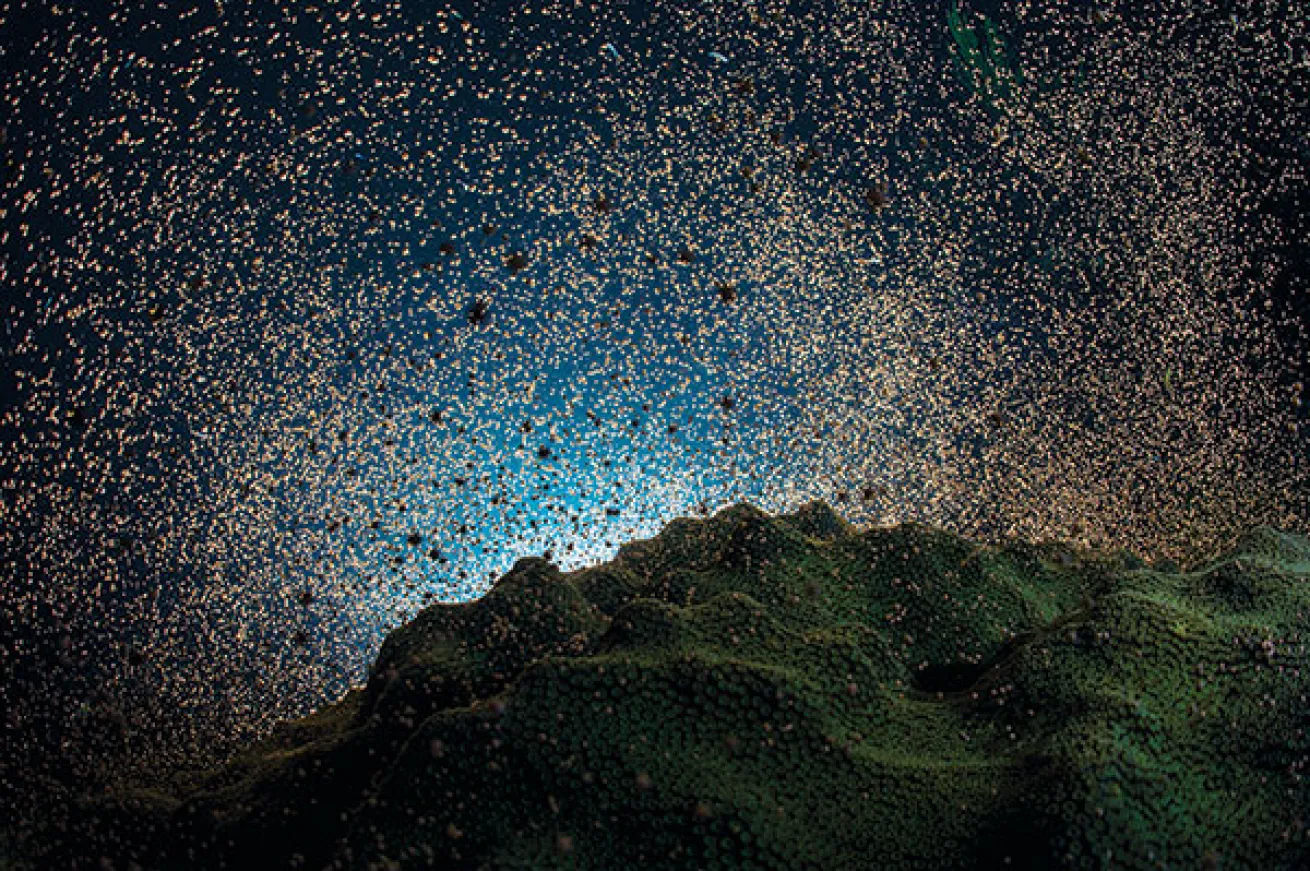
Alex MustardA little knowledge of your subject goes a long way. Recognizing the different species of coral and the signs that a coral is about to spawn allowed me to set up and be ready for this photo, capturing the peak of the action with the lighting I wanted.
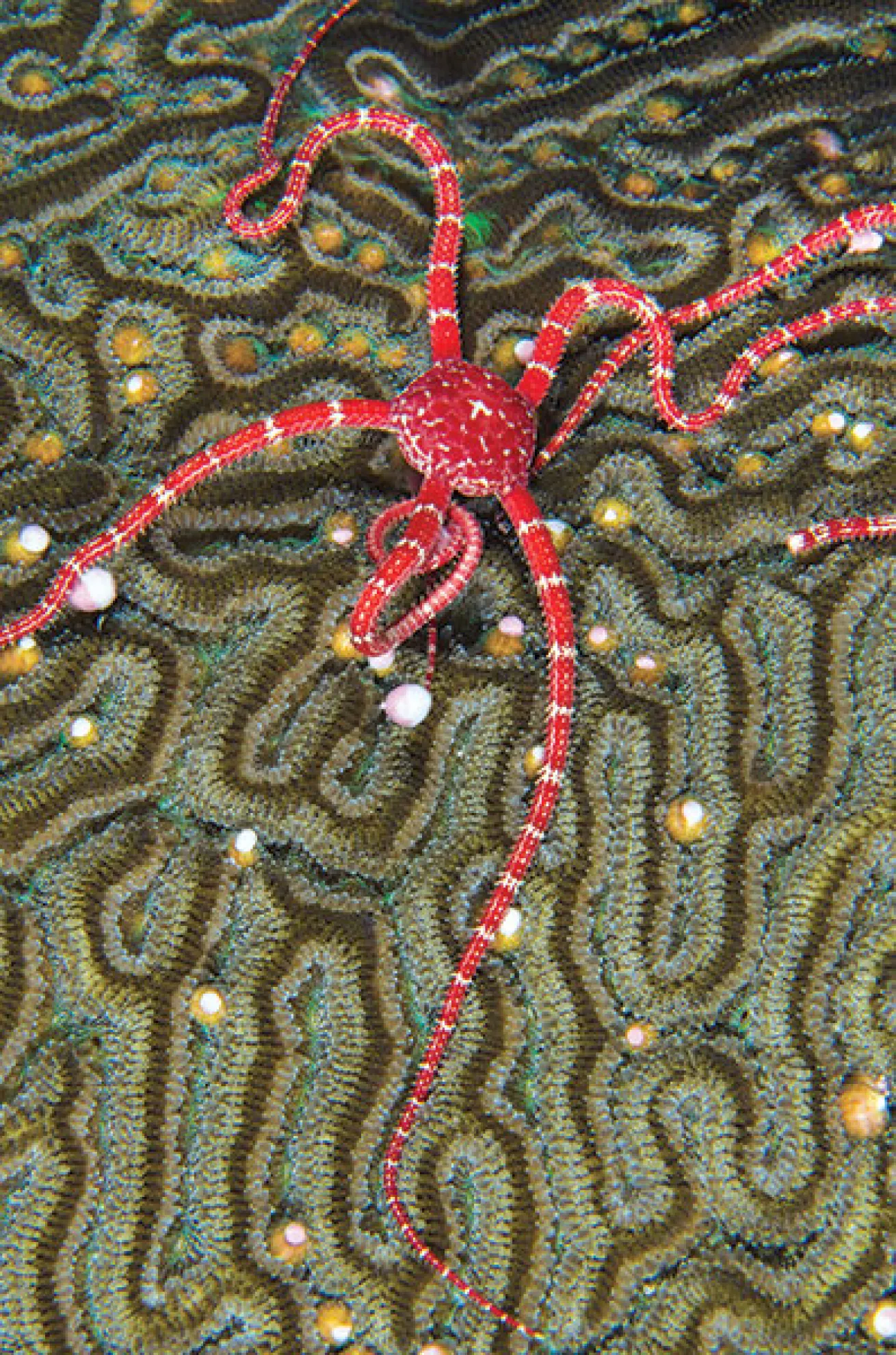
Alex MustardAfter spawning, try to photograph any egg predators, such as this brittlestar. After feasting on the corals' rich eggs, the brittlestars will often go on and spawn themselves. ** **
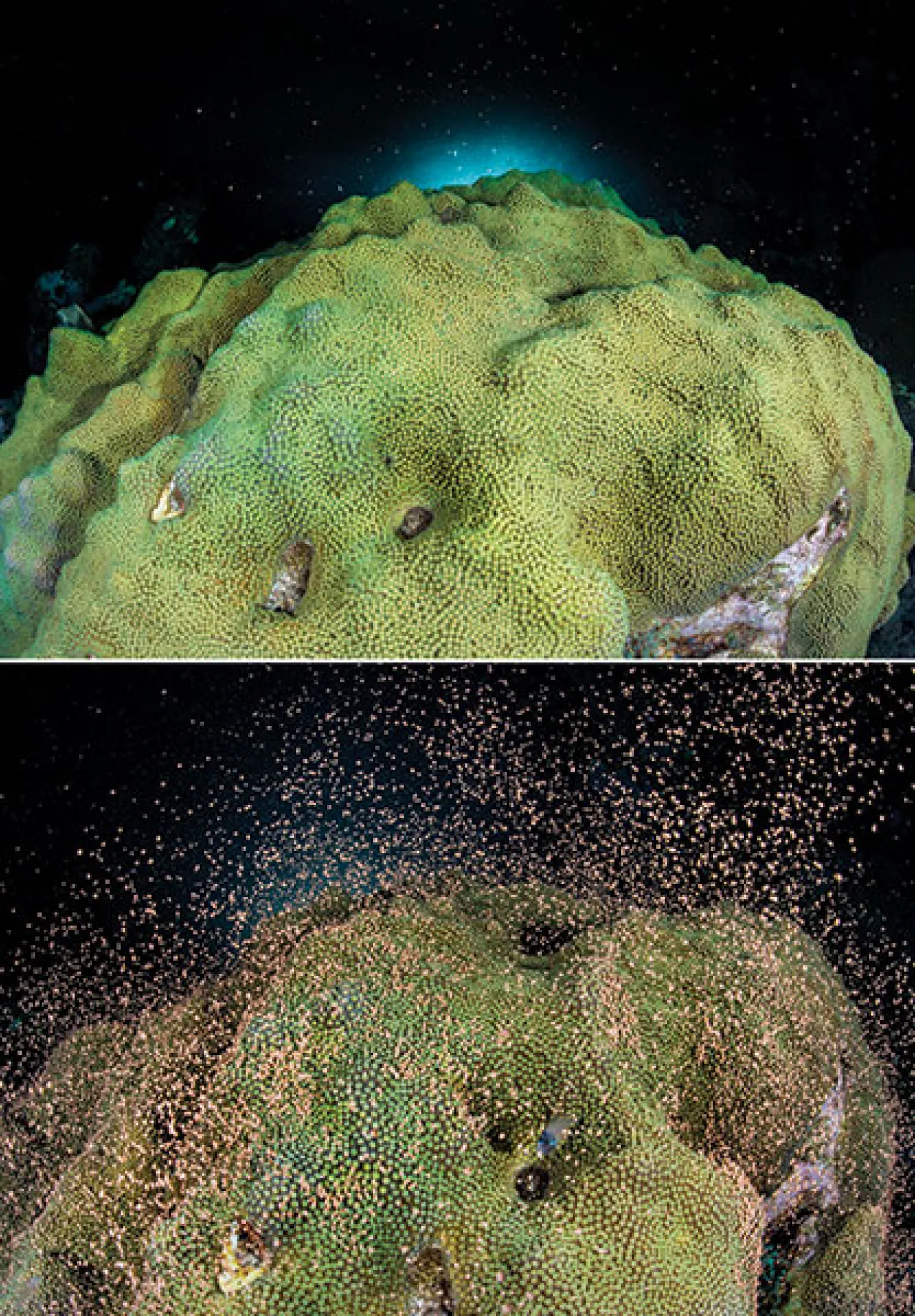
Alex MustardCoral spawning is a natural-history subject, so we should focus on telling the biological story in our photos. The money shot is, of course, the coral spawning, but there are interesting pre- and post-spawning images too. In many corals, it is possible to see the eggs in the polyps for about 10 minutes before they spawn.
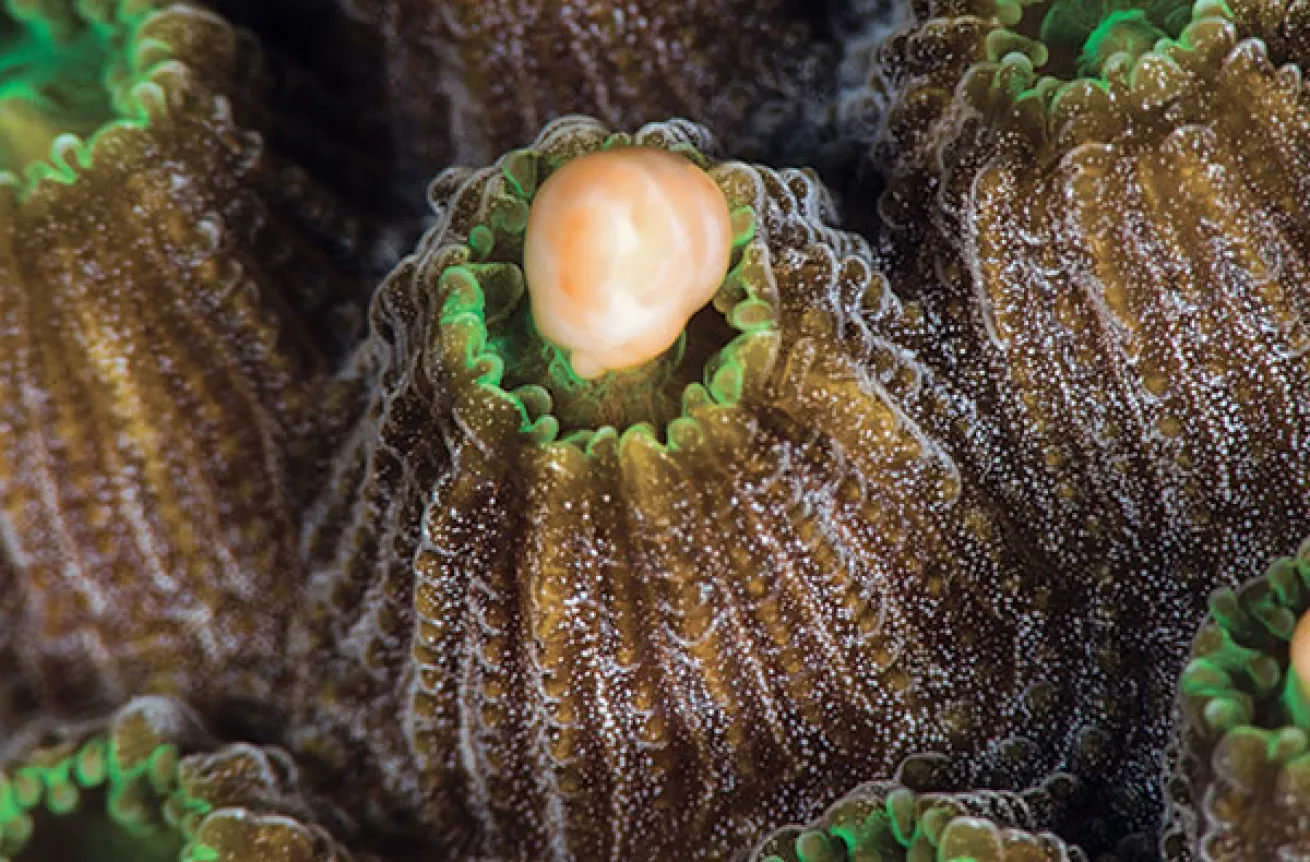
Alex MustardThis very high-magnification photo shows the exact moment of bundle release from a single polyp of mountainous star coral. The pink bundle is made up of eggs and sperm, and has just been squeezed out of the mouth of the polyp. We can't tell the story of a whole reef with just one lens; we must use a range from super-macro to wide-angle perspectives. However, with so many options and the pressure of no second chances to shoot an annual spawn, I have seen photographers put too much pressure on themselves during coral-spawning dives, and come back with very little. The trick is to make a plan and stick to it. Keep it simple. It's far better to get one excellent shot than to try to accomplish too much on one dive.
Camera: Nikon D7000, Nauticam housing | Lens: Nikon 105mm VR and Subsee +10 close-up lense | Strobes: 2 x INON Z240 | Settings: 1/320 @ f/36, ISO 200
Mass coral spawning is one of the wonders of the oceans and is rightly on many divers’ bucket lists. If you’re lucky enough to witness it, welcome to a select club.
The world had been introduced to Star Wars and Indiana Jones before marine biologists even learned that corals mate in synchronized mass spawnings. And even now, mass spawnings haven’t been discovered for all the world’s reef systems.
Mass spawning is such an elusive event because the majority of coral species spawn only once a year, and for many it lasts just a couple of seconds late at night, making preparation a must. Learn to recognize the key species and the signs that a coral is about to spawn. Shooting macro is much easier than wide angle at night, and is the better option on your first coral-spawning dive. There are good opportunities for both macro and super macro, so think about taking an external close-up lens with you.
Compact shooters have the advantage of being able to switch between macro and wide angle underwater, but the rest of us should consider wide angle once we’ve got some close-ups in the bag.
Scenic images are better at capturing the scale of mass spawning, but wide angle at night is much harder than during the day. The main challenge is illuminating a big scene evenly, when the only light source is your strobes.
Getting photos of coral spawning isn’t easy, but get it right and you’ll never look at coral reefs the same way again.
BEGINNER TIPS
Don't dive too early Many corals spawn late at night, but predictions are usually accurate to within a few minutes. Dive boats head out, and people get impatient and jump in. It is dark and exciting; some divers use their air faster than they expect and run out before the main event even begins. To get the shots, you must time your dive precisely.
INTERMEDIATE TIPS
Shoot some video Coral spawning looks even better on video, so don’t forget to take more than stills. Almost every digital camera can now shoot video, or simply attach a GoPro to your rig. Most modern focus lights, like the SOLA line, provide plenty of light for movies. Shoot before, during and after clips to build a sequence.
ADVANCED TIPS
Practice makes perfect You might have shot plenty of night dives, but how often have you shot reef wide angles at night? If you are planning to shoot wide-angle scenes of spawning coral, then it is sensible to schedule a practice dive. Get it wrong with coral spawning, and you’ll have to wait 12 months for your next chance.
NIGHT MOVES
Bouyancy First Some divers seem to lose their basic skills at night, sinking into the reef or kicking corals. Considering this is the most important night of the year for the reef, be particularly careful.
Bright at Night Remember that at night, your LCD screen will look much brighter than you are used to, and it is easy to underexpose photos as a result. Check your exposures by using the histogram function when reviewing.
See the Light A good focus light is essential for night photography. Choose one with a wide, soft beam, so that it easily illuminates the scene you wish to frame. Mount it on your housing so you can aim it easily.
The Aftermath After spawning, try to photograph any egg predators, such as brittlestars. After feasting on the corals’ rich eggs, the brittlestars will often go on and spawn themselves.
Alex Mustard is a trained marine biologist who has been a full-time underwater photographer and author since 2004. After taking his first underwater shots at the age of 9, the U.K. native has become one of the world’s most creative underwater photographers. To view more of his work, visit amustard.com.


