

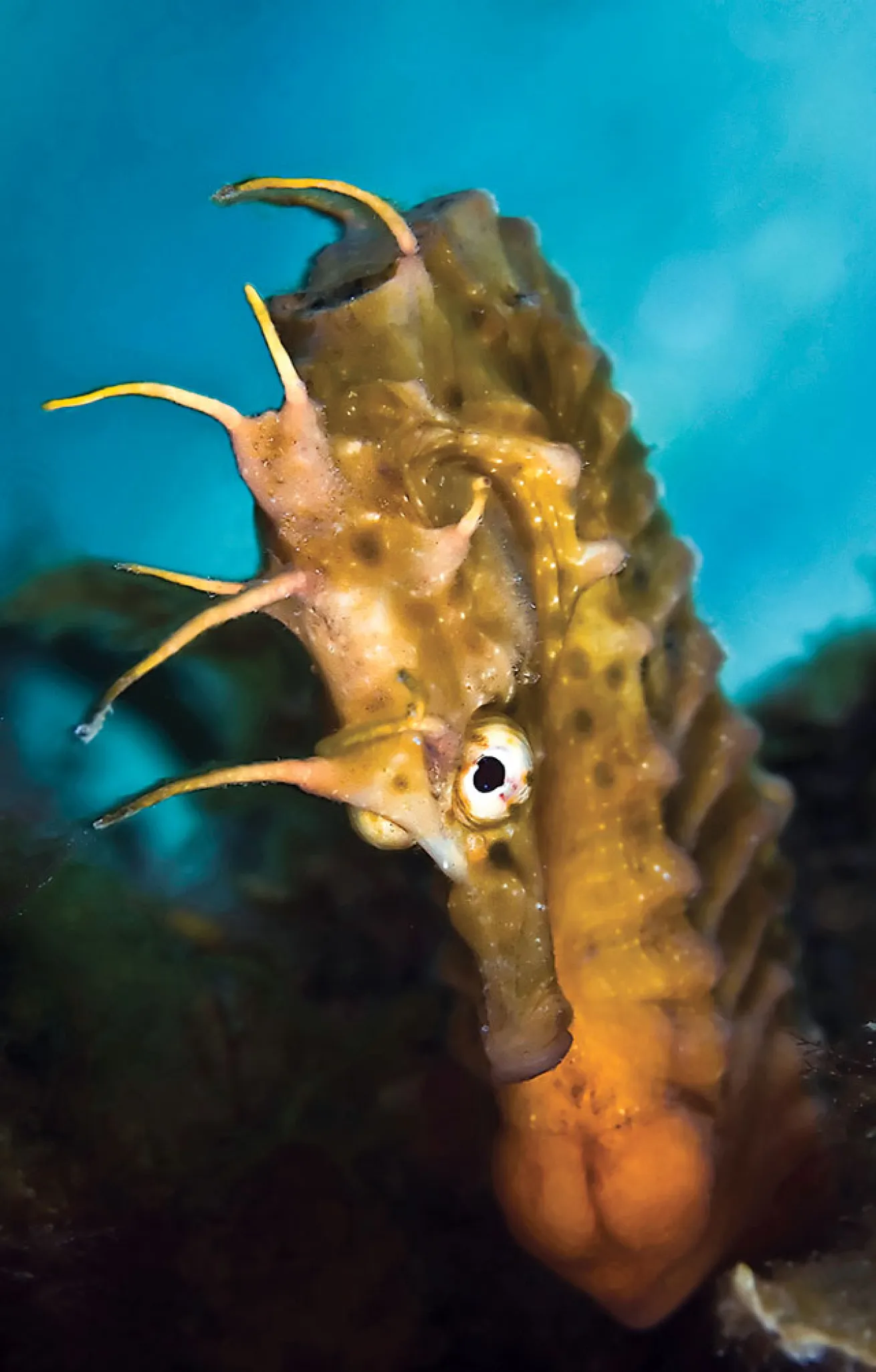
Matt TworkowskiFocus on Eyes
Seahorses are shy, so photos with great eye contact will always stand out. Seahorses are never going to look at the camera all the time, so my approach is to stay still and watch them through the viewfinder, taking photos only at the moment I get eye contact. I have even had success waggling my pinky up and down above the lens while everything else is motionless to pique their curiosity.
There is a simple rule to tell whether a picture has eye contact: If you have to ask, it doesn’t! Eye contact jumps out from the photograph and grabs the viewer’s attention instantly.
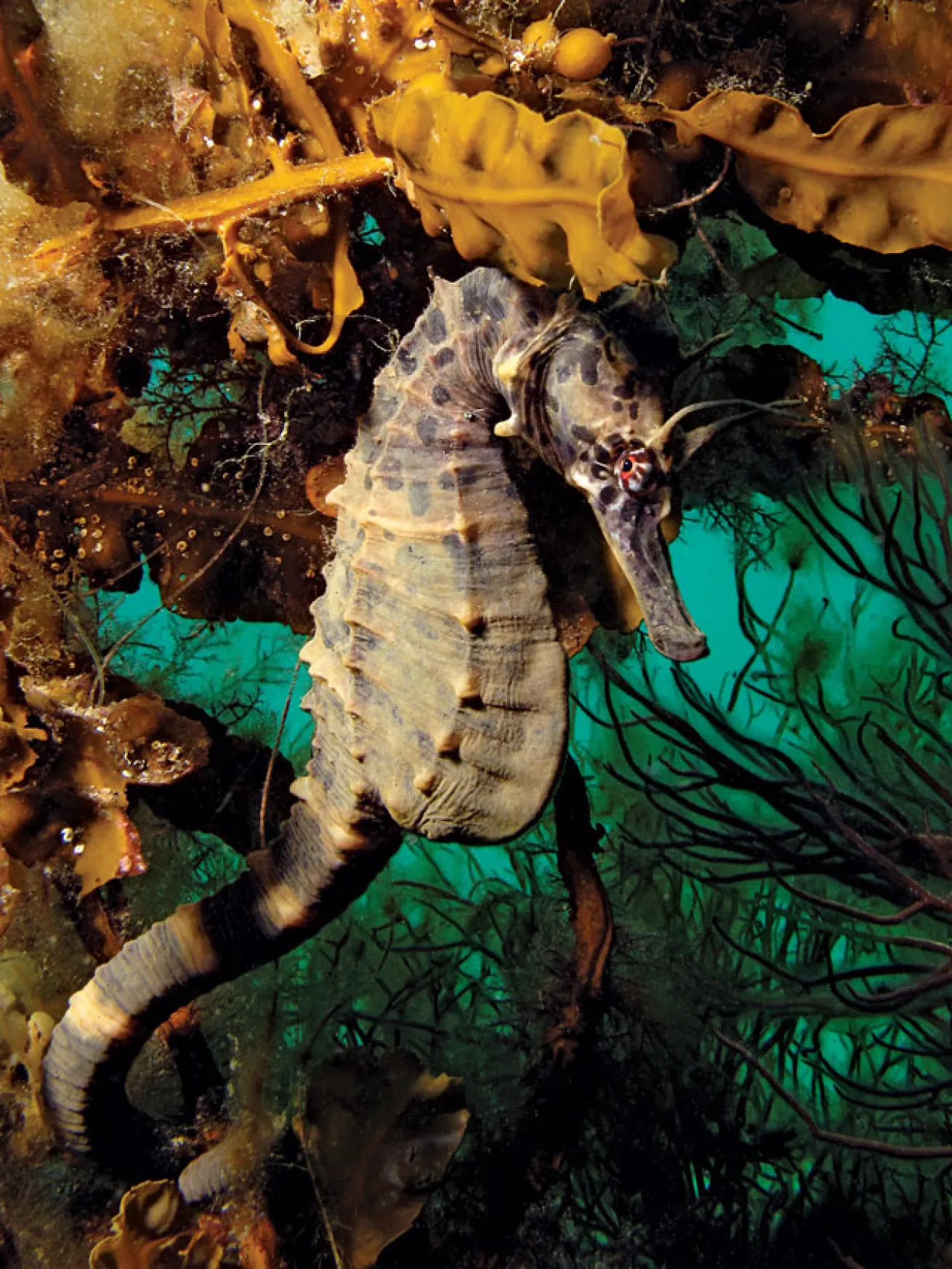
David EvansLight Creatively
Creative lighting can be an effective way of making a seahorse’s silhouette stand out from the background. Translucent ones or those with hairy filaments will look particularly impressive when backlit. Seahorses are too small to completely hide a strobe behind, so you should light them from behind but off to the side. Backlighting is more easily controlled with a strobe fitted with a snoot to constrain the beam.
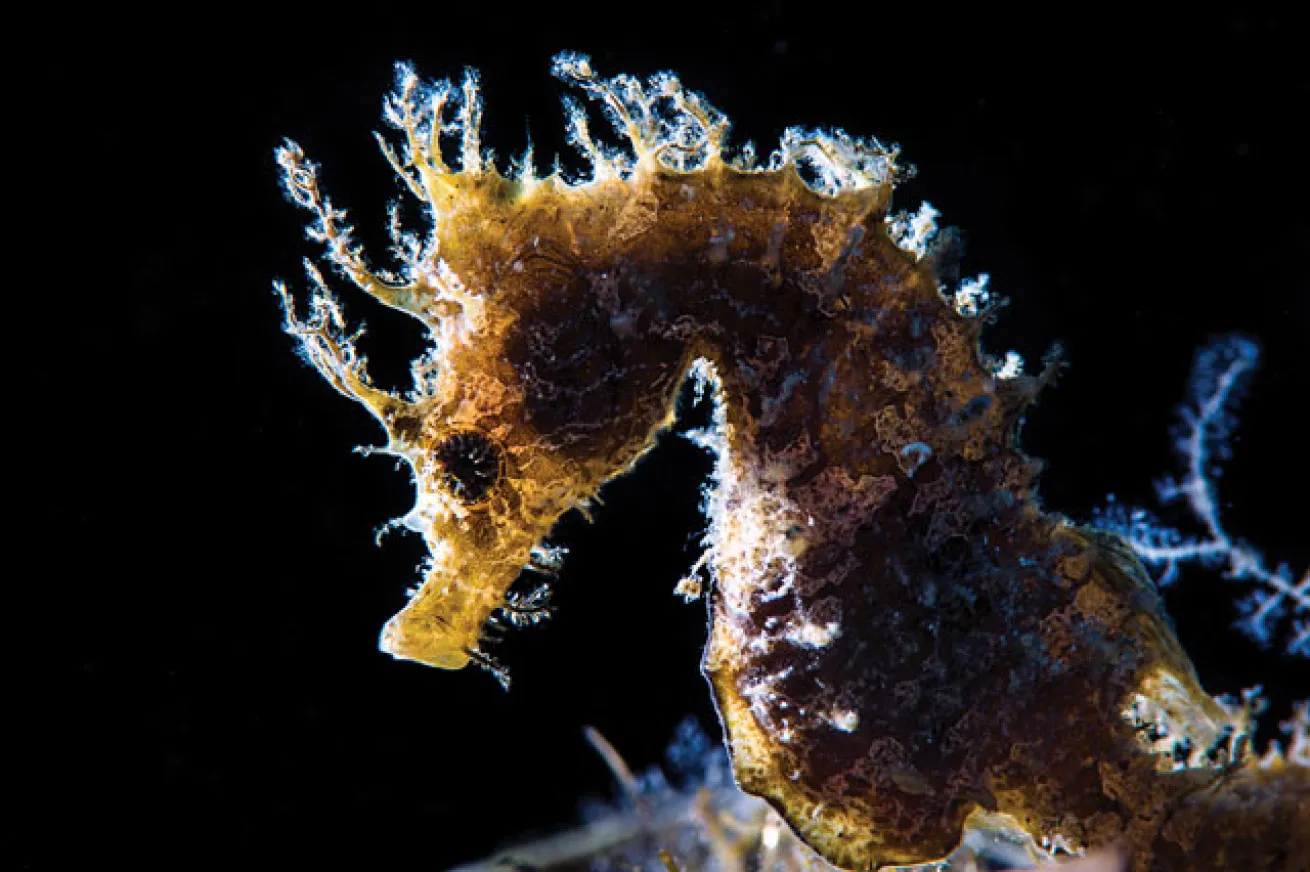
Alex MustardEmphasize Shape
Shooting a seahorse from the side is the best way to show its distinctive shape. Usually, when a seahorse holds on with its prehensile tail, its body will be slowly rotating. Try to time taking your photograph to capture the best body pose as it moves.
Ideally, you should frame a seahorse against a distant background, which will show its shape most clearly. When this isn’t possible, open the aperture to blur the background and make its shape pop out.
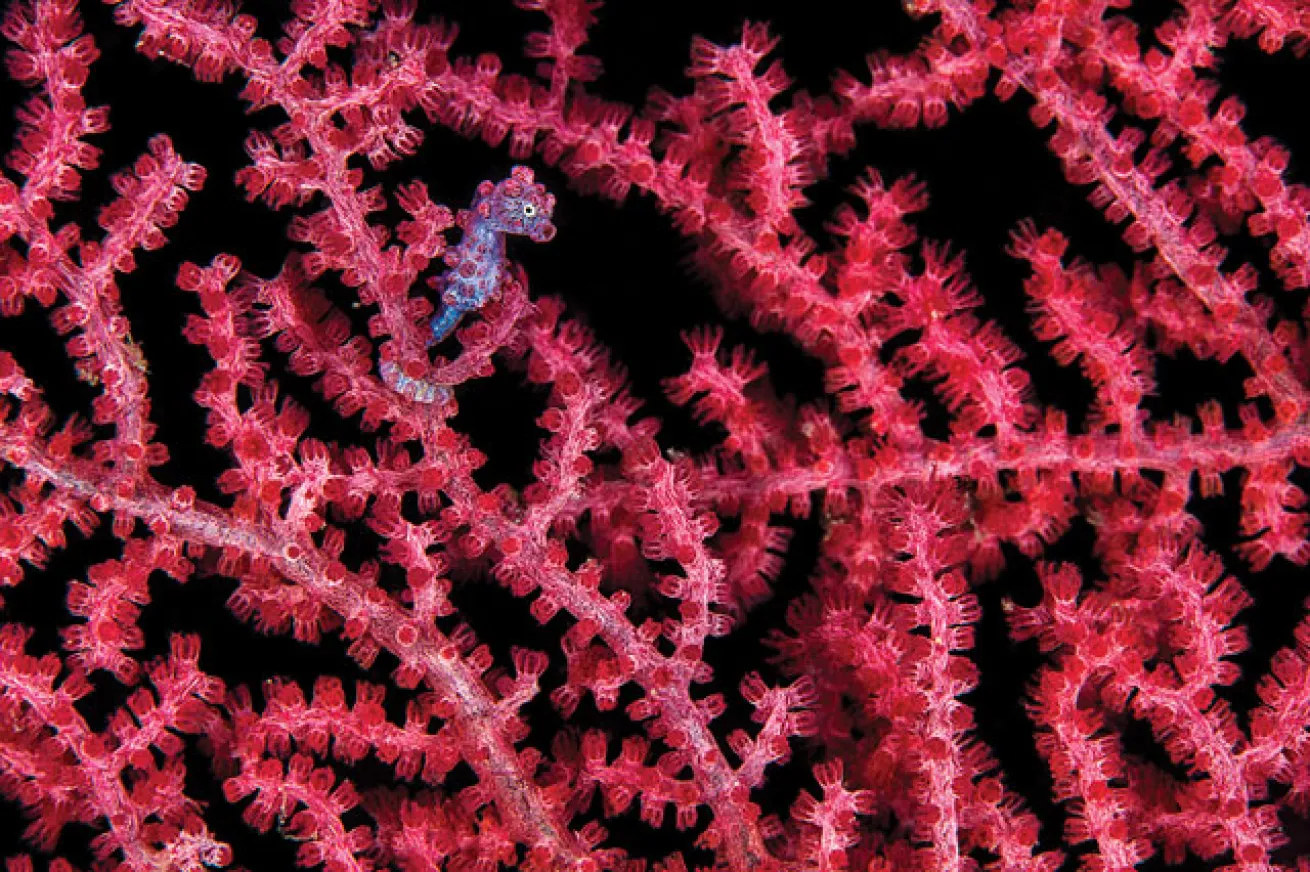
Alex MustardPygmies are the most popular seahorses, and many photographers show off their skills by shooting these tiny animals as big as possible. Instead, try shooting them small in the frame with an off-center composition. Giving them space emphasizes their diminutive size and their amazing adaptation to their habitat.
**Mission Possible: Photographing an Elusive Creature
**I’d wager that every diver can remember seeing his first seahorse, unless he’s still waiting to see one. These tiny creatures are one of the ocean’s A-list celebrities, instantly recognizable even to nondivers living thousands of miles from the ocean. Seahorses don’t inhabit every underwater environment, though; I’ve found them living mostly in sheltered bays without waves, and in surprisingly shallow water. If you want your seahorse pictures to deliver, it is important to capture their distinctive and characteristic shape. This presents a challenge, however, as seahorses are not always the most obliging subjects. They survive by remaining hidden, so patience is vital, first to find them and then to capture a pleasing pose. Even once you’ve spotted one, seahorses like to play coy, and are notorious for turning away from the camera. If I intend to photograph them, I make sure to use a long macro lens, and perhaps even add a teleconverter so I can shoot them from slightly farther away. Also, I never use a focus light because doing so is almost guaranteed to make them shy away. Strobes don’t seem to disturb them, though, and once I’ve won their trust, I’m usually rewarded with a great series of images.


