

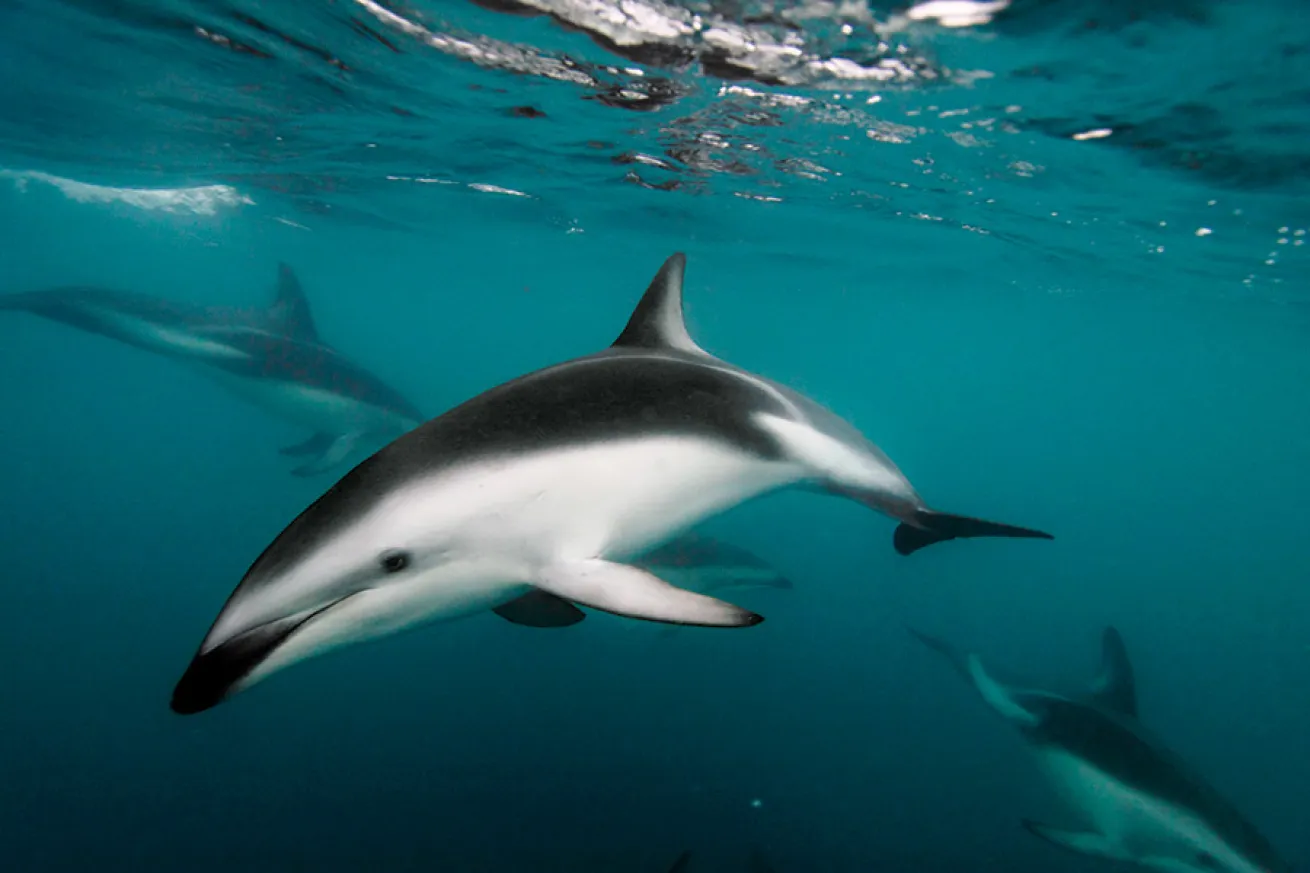
Hiroya Minakuchi/Minden Pictures
Citing the serious threats facing the world’s oceans, U.S. Secretary of State John Kerry announced plans for an international ocean conference this summer that will focus on expanding marine reserves.
In a video address to a conference hosted by National Geographic and The Economist, Kerry noted that less than 3 percent of the world’s oceans are protected. “Think about the progress we could make if just 10 percent of coastal and marine areas were protected,” Kerry told participants. The United Nations also recommends that nations set aside 10 percent of their territorial waters as marine reserves.
As if in response, both New Zealand and Chile announced the establishment of new marine reserves, setting aside a total of 1 million acres — roughly 1,000 square nautical miles.
In March, New Zealand’s conservation minister, Nick Smith, announced three new subantarctic marine reserves, banning fishing, mining, marine farming, and petroleum exploration in the waters surrounding the Antipodes Islands, Bounty Islands, and Campbell Island. Combined, these three reserves increase the total percentage of New Zealand’s protected oceans to 9.5 percent.
Chilean President Sebastian Pinera announced in February that 87,500 hectares of Chile’s waters will be reserved for scientific and recreational activities only; the Tic-Toc Marine National Park is the largest marine-protected area for the South American country. All industrial activities with the potential to harm local plant and animal life are no longer permitted in the reserve.


