

Alex Mustard
Alex Mustard
Alex Mustard
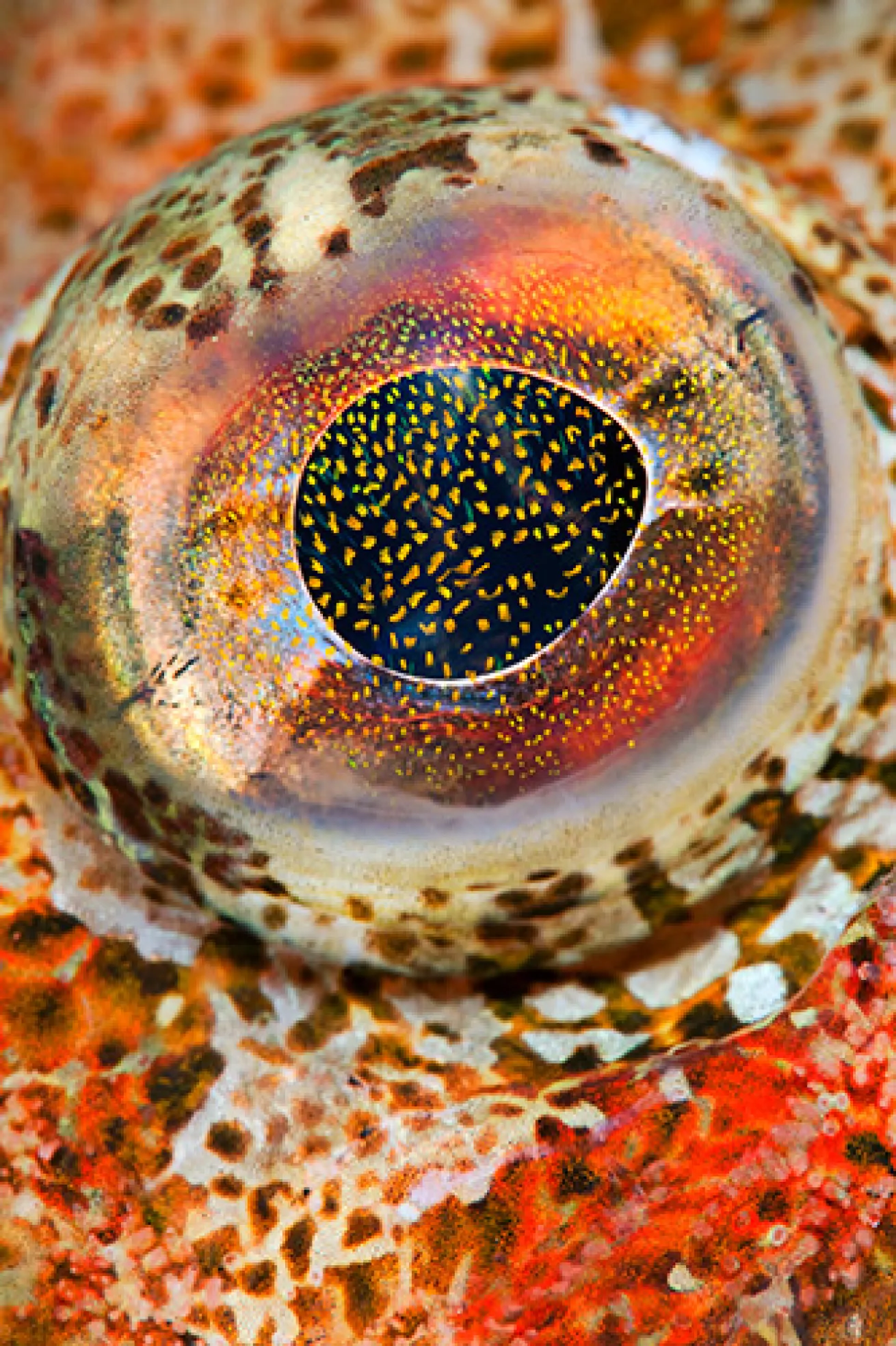
Eyes are impossible to ignore. They are the first things we’re drawn to in a portrait, and they dominate compositions. Eyes are naturally pleasing geometric shapes and, in many fish, surrounded by bright colors. If we can get the details right, an eye shot is a ready-made standout photo.
Getting close is usually the biggest challenge; choosing the right fish makes a big difference too. Slow-moving, site-attached and ambush predators are usually the best choices. But you can shoot eye images on larger, free-swimming fish too, if you find a particularly friendly individual.
It is essential to advance with slow movements and smooth, steady breathing. Once you have successfully “stalked” your quarry, it’s crucial to stay composed and wait an extra few moments for the subject to accept you. Only once you’re welcomed into the circle of trust can you make the most out of the opportunity.
Trust works both ways, though, and when you’re accepted by a subject, you should be worthy of that trust. When photographing eyes, be particularly mindful of your subject’s welfare. Taking photos of a fish’s eye won’t do any significant harm, but you should show restraint. Set your exposure and lighting away from the eye, and keep the number of pictures to an absolute minimum.
Taking images with care is particularly important if photographing sleeping fish (at night) or species noted to be sensitive, like cuttlefish, octopuses and seahorses. If the subject flinches after an eye shot, stop shooting and find something else.
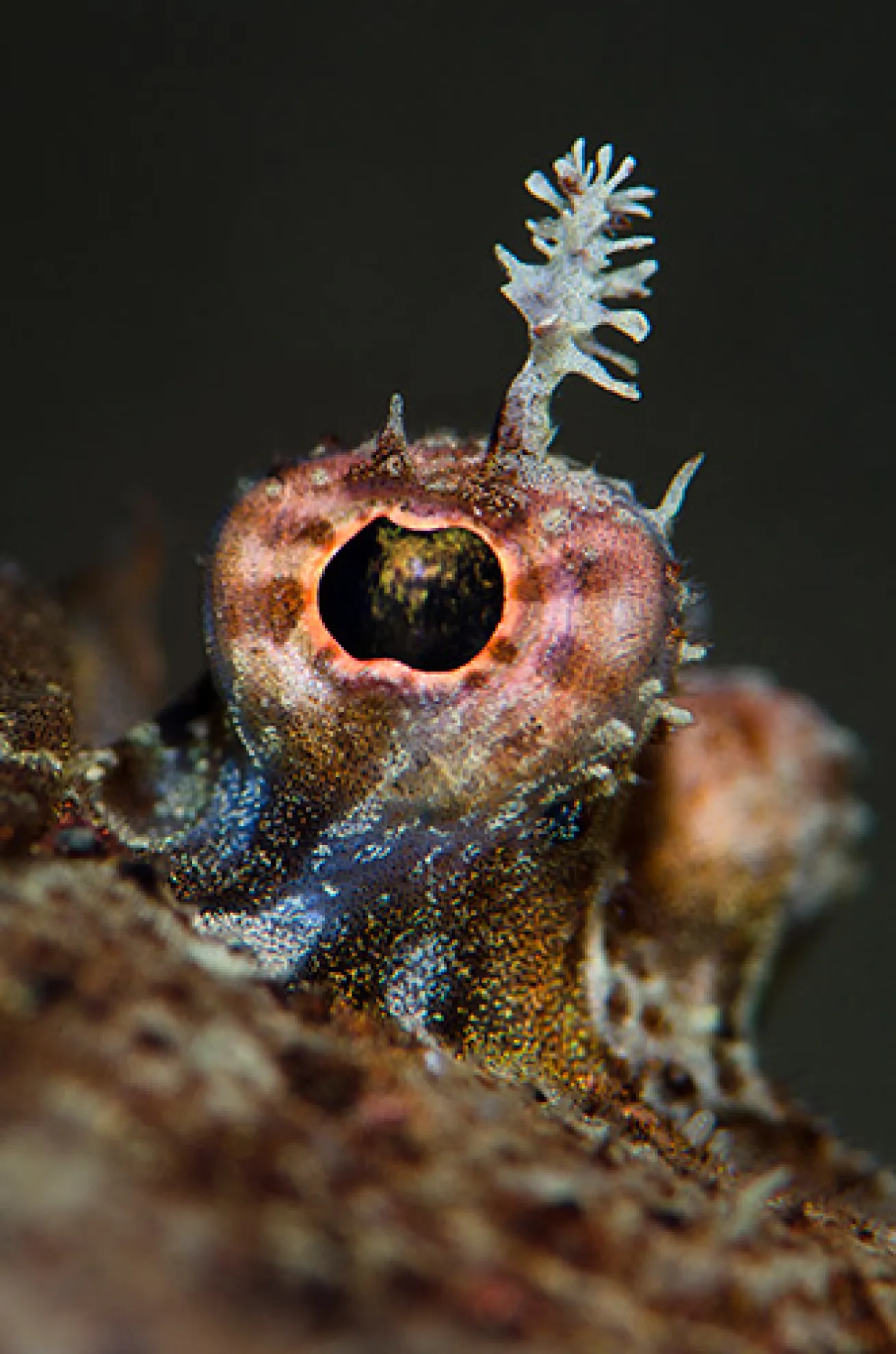
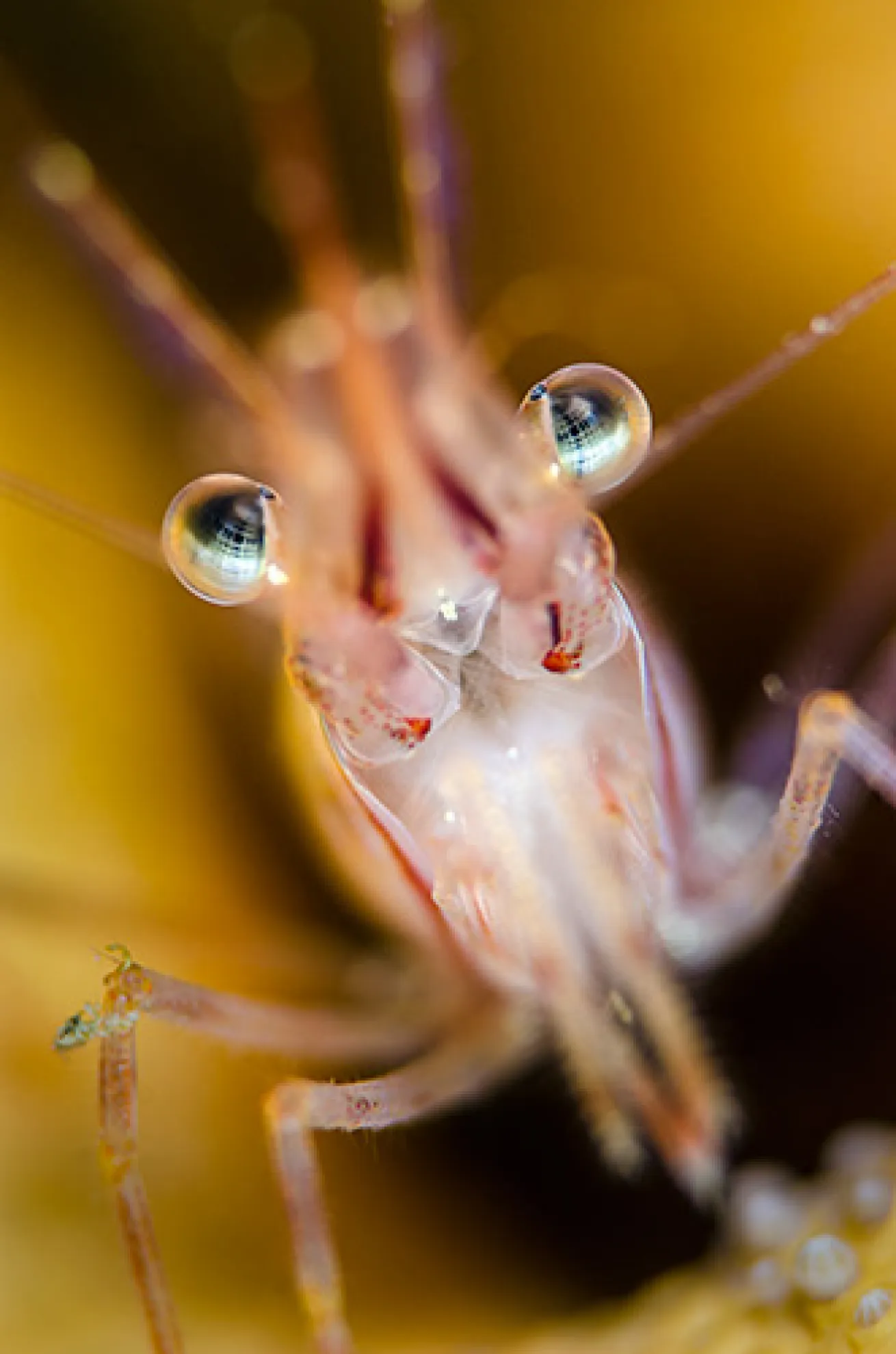
Fish-eye photos can often be very attractive, with colors ranging from the bright blues, greens and yellows of parrotfish to the deep red of bigeyes and soldierfish, which look as if they are permanently recovering from the last night of spring break. Other species have ornate growths around or over the eye. Many crustaceans have compound eyes, often on stalks, which might not have as much personality but score visually for weirdness. These often look best framed against a black or blurred background so the overall image jumps out.
BEGINNER TIPS
Fill the Frame. You want the eye to dominate the photo, so frame it against a background free from distractions. The best background is usually the creature itself, framed in such a way that the whole frame is filled. Be prepared to rotate the camera, often to an unusual angle, until you achieve this.
INTERMEDIATE TIPS
Shoot Off-Center. Eyes are usually spherical, and this strong geometric shape looks great in the center of the frame. But you want to be different, and so you don’t always want to compose this way. Try framing some shots with the eye positioned on the thirds, or go even more extreme with an edge-of-the-frame composition.
ADVANCED TIPS
Use a Single Strobe. Once most underwater photographers have purchased a second strobe, they rarely shoot with only one again. But eyes can look much better with a single light source, which introduces texture through small shadows and gives the eye a single catch of light, adding vitality to the pupil, which otherwise can look lifeless.
FOUR MORE EYE TIPS
1. I love shrimps, but they are messy. So I often photograph them with a shallow depth of field to blur those distracting arms, legs, claws and antennae, which strengthens the composition of my photo.
2. Normally I shoot high-magnification macro with the aperture closed to get as much depth of field as possible. But try opening up the aperture to see how it blurs both the background and foreground.
3. Eyes are the most important compositional element in a portrait, and nine times out of 10, a photo will still work if the nose is out of focus, as long as the eyes are sharp.
4. At the highest magnifications, I lock my focus and make the final, minute adjustments by rocking the camera slightly closer or farther away. But I’ll still take a handful of shots to be sure one is razor sharp.
Alex Mustard is a trained marine biologist who has been a full-time underwater photographer and author since 2004. After taking his first underwater shots at the age of 9, the U.K. native has become one of the world’s most creative underwater photographers, and a pioneer in digital imaging who enjoys sharing the techniques behind his shots. To view more of his work, visit amustard.com.


