

Schooling fish come in all colours, sizes, and characteristics. Here's a look at how the photographers at Scubazoo have mastered the art of photographing schooling fish.
Want to learn how to photograph schooling fish? Visit Scubazoo's article: How To Photograph Schooling Fish.
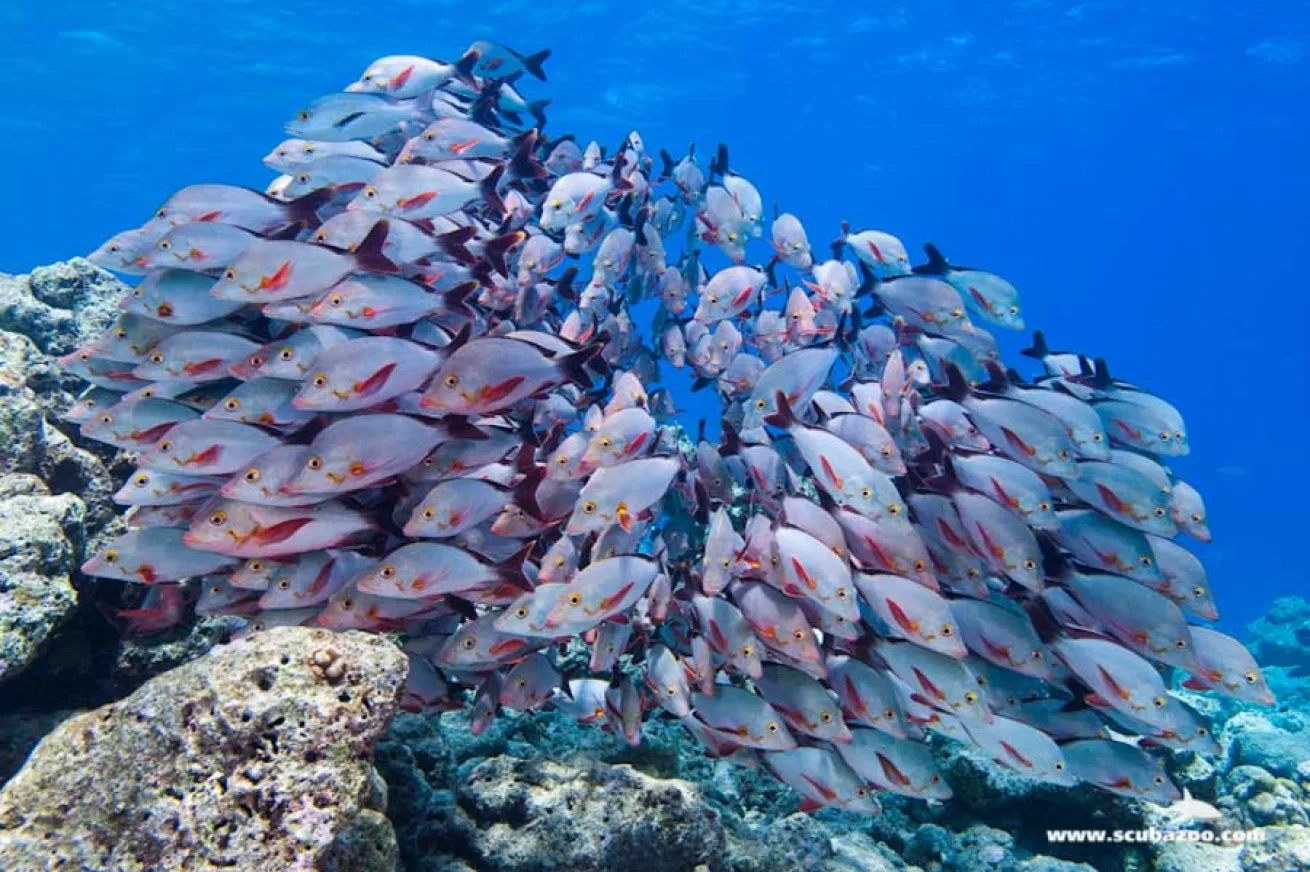
Jason Isley/ScubazooSETTINGS: Nikon D700, Nikon 17-35mm, 1/160s, f10, ISO200.
Spend time with a school of fish observing their pattern of movement and behaviour, and with a patient approach you should eventually be able to get a nice head-on shot like this.
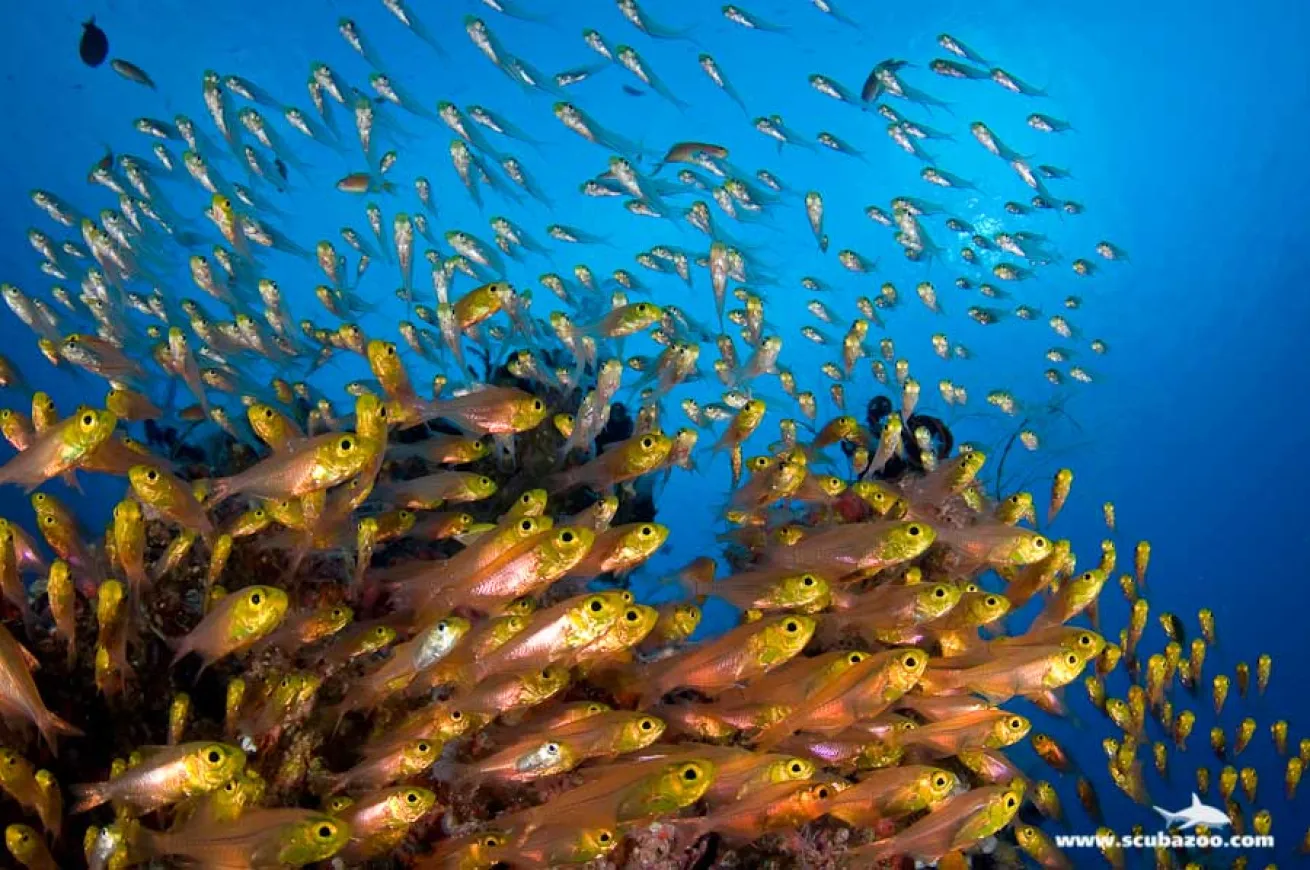
Christian Loader/ScubazooSETTINGS: Nikon D300, Tokina 10-17mm, 1/200s, f8, ISO200.
Glassfish form schools very close to the reef, next to coral bommies and under table corals, and are very easy to get close to.
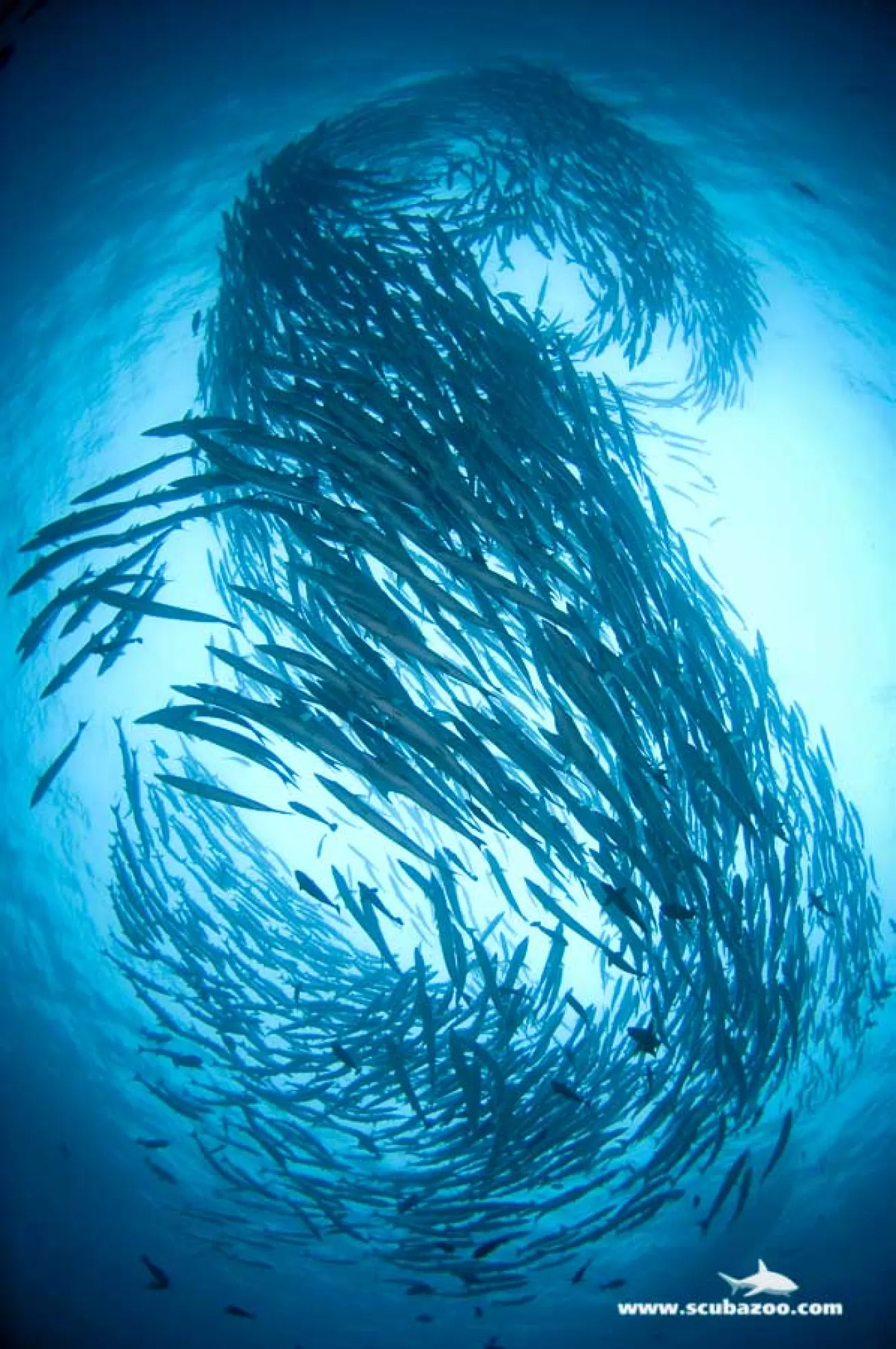
Jason Isley/ScubazooSETTINGS: Nikon D2Xs, Nikon 10.5mm, 1/200, f8, ISO100.
For a silhouette shot like this, use a fast shutter speed and high f-stop to avoid overexposing the bright surface. Holding your breath for a few seconds may also be necessary to avoid bubbles which would spook the neatly-formed school.
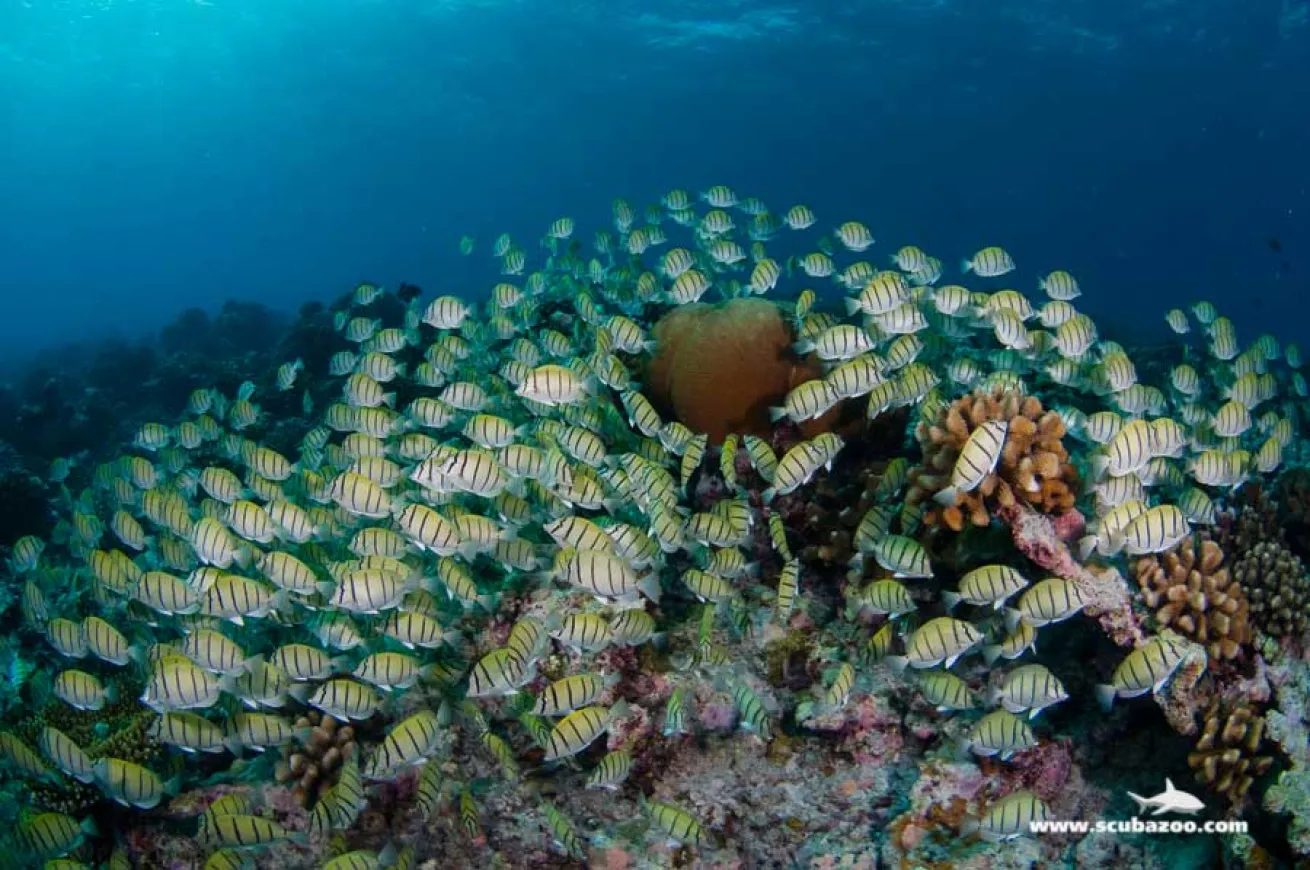
Christian Loader/ScubazooSETTINGS: Nikon D300, Tokina 10-17mm, 1/160s, f10, ISO200.
Speak to your local dive guide about what the best dive sites are to see schooling fish, and the optimal time to dive a particular site for this can depend on the time of day, and currents. Schools often stay in the same area allowing for repeated dives so you can get the best shots. Wrecks are also a haven for schooling fish, and worth enquiring about with your dive center.
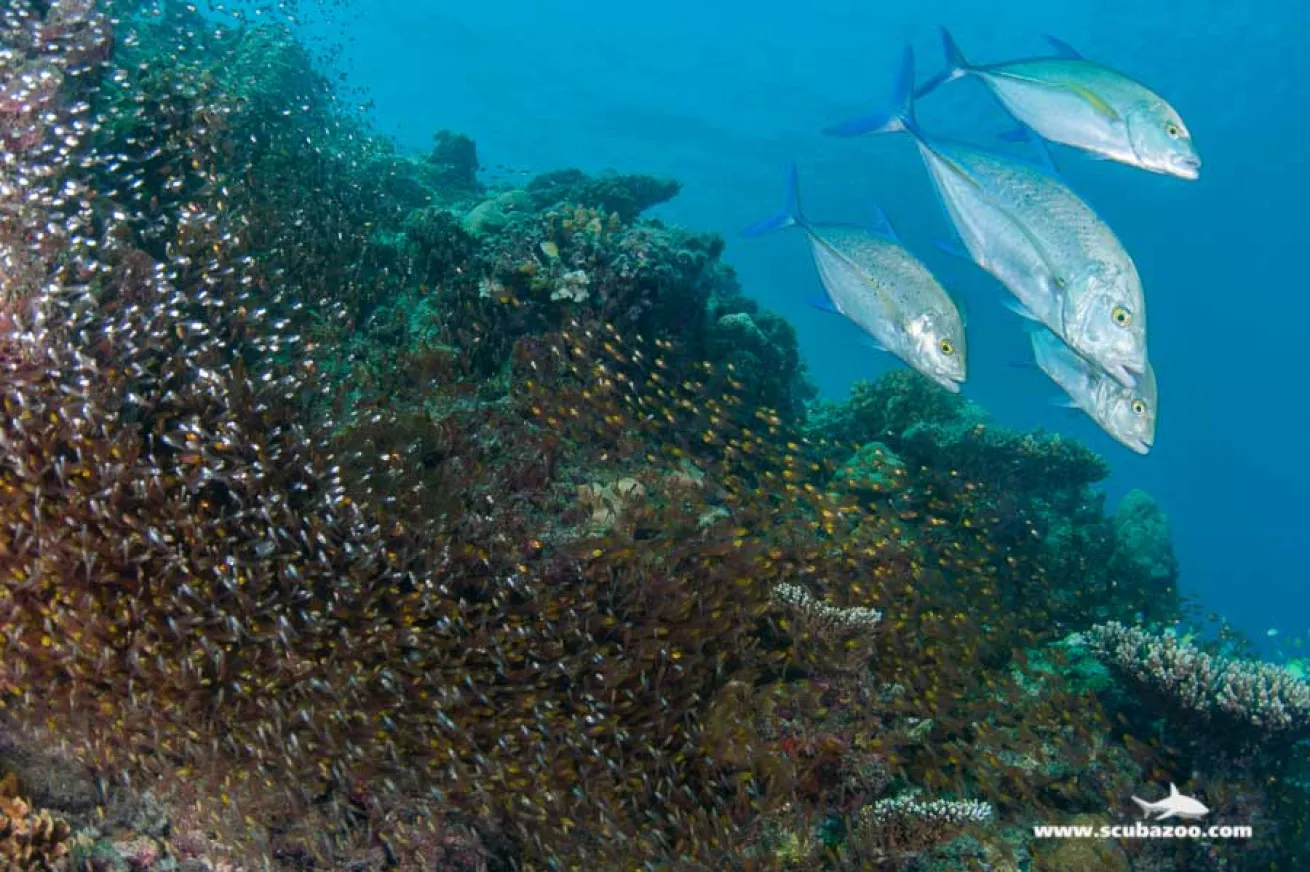
Jason Isley/ScubazooSETTINGS: Nikon D700, Nikon 10.5mm, 1/100s, f5, ISO200.
Where there are schools of small fish such as glassfish, baitfish, or sardines for example, then there are likely to be predators nearby too. Get into a decent position where you can isolate the passing predator against a clean background like blue water rather than the reef, and generally you'll need a fast shutter speed to capture these faster-moving fish.
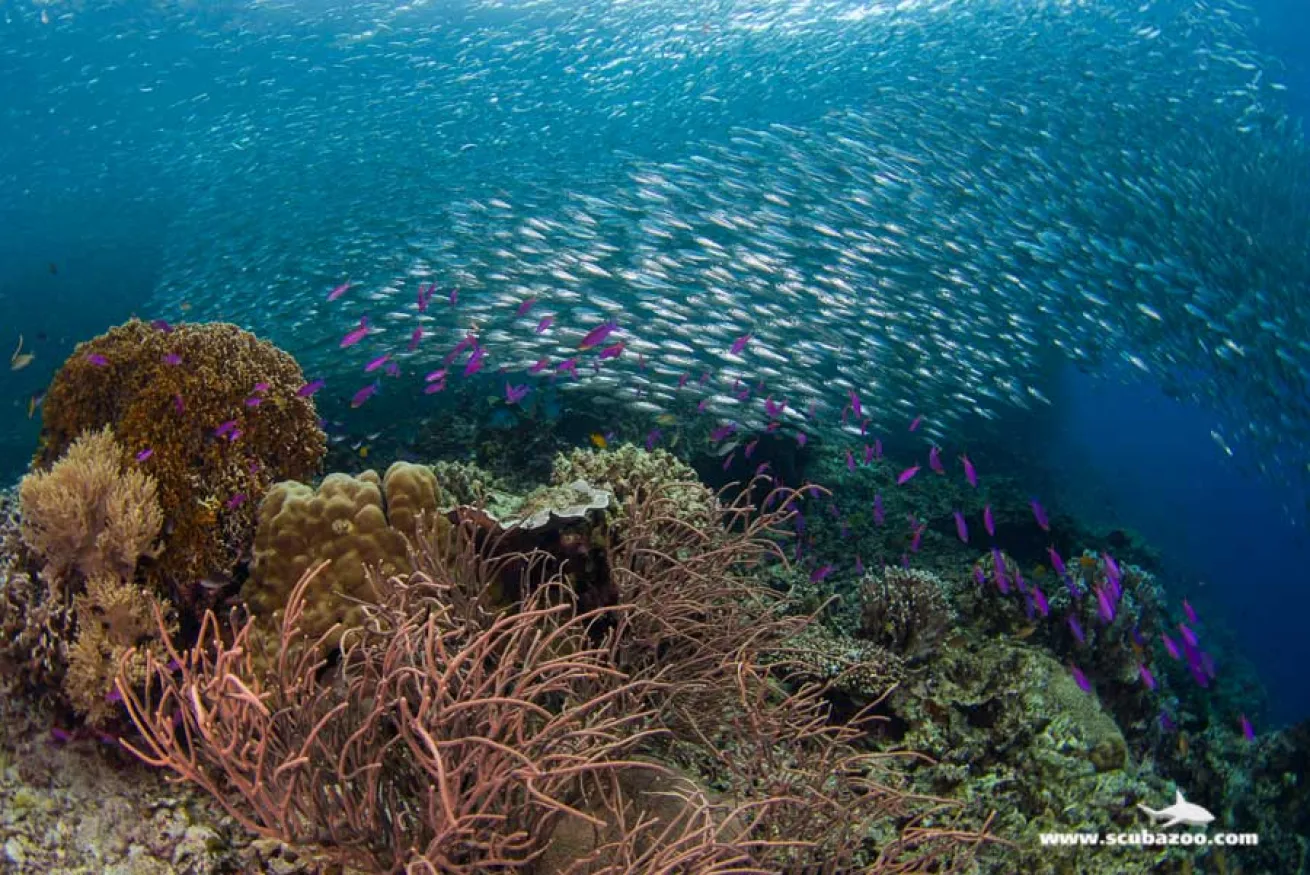
Jason Isley/ScubazooSETTINGS: Nikon D800, Tokina 10-17mm, 1.4x Teleconverter, 1/100s, f10, ISO200.
When shooting schools of fish close to the seabed, use a patch of the colourful reef for a nice foreground. Adjust your settings to expose for the foreground, but frame your shot so the school is still the focal subject of the image. This is a great way to add some rich colour to shots of silvery, colourless schools of fish.
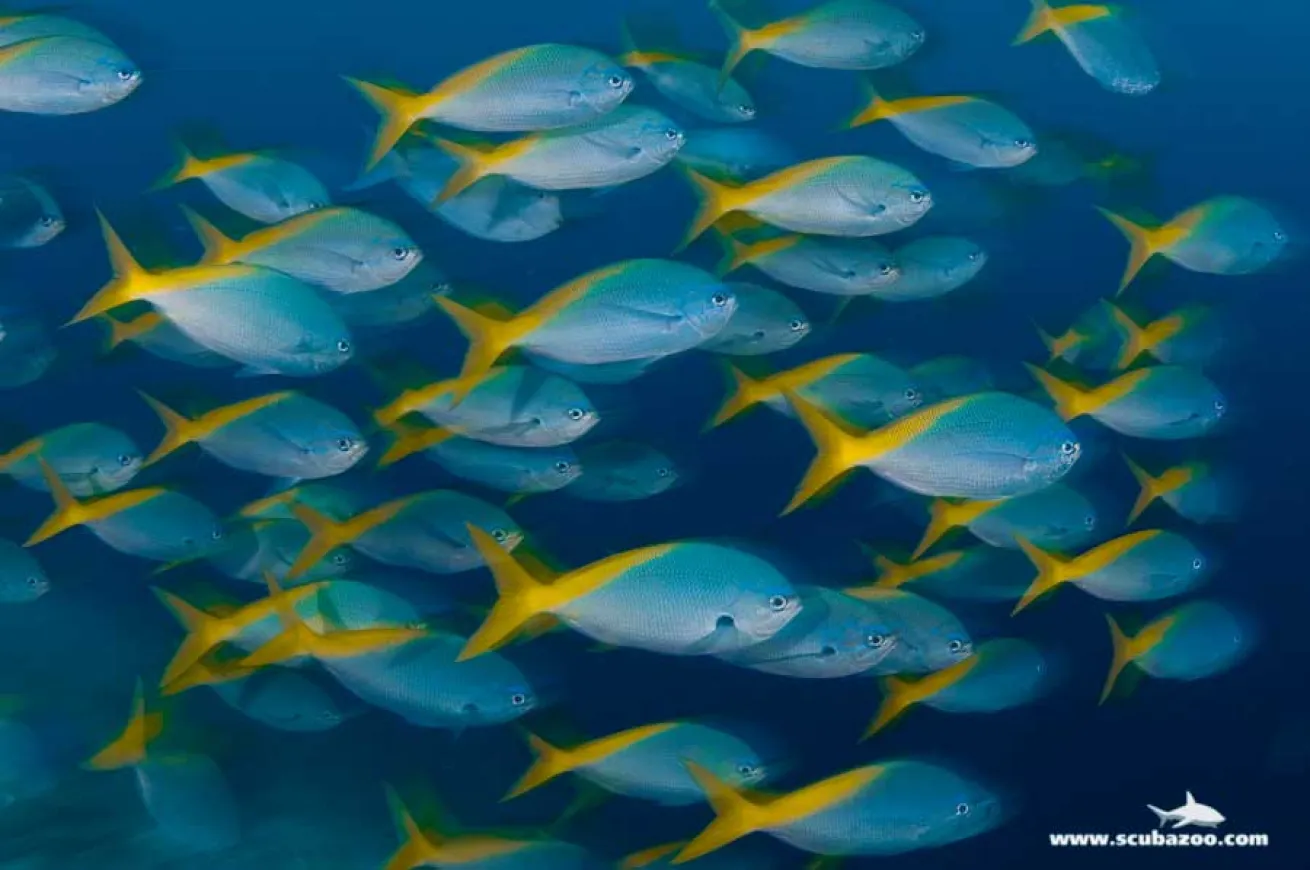
Christian Loader/ScubazooSETTINGS: Nikon D300, Tokina 10-17mm, 1/15s, f18, ISO100.
For a bit of creativity, add some movement to your image. Use a much slower shutter speed such as 1/10s – 1/30s, a high f-stop, high powered strobes, with the camera's flash set to 'rear curtain sync', while panning with the school as you take the shot – this creates motion blur, and can really liven up an image of schooling fish.
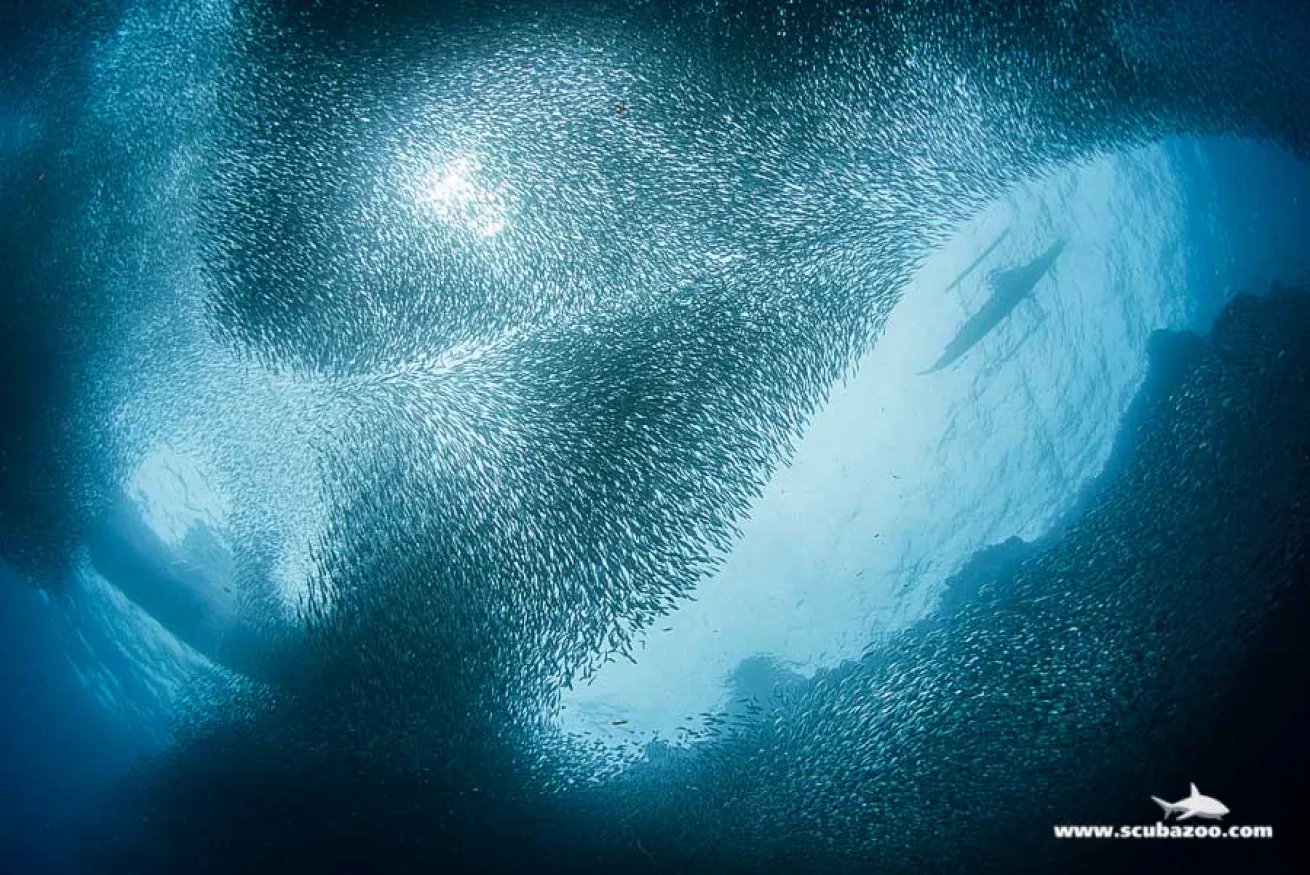
Christian Loader/ScubazooSETTINGS: Nikon D800, Tokina 10-17mm, 1.4x Teleconverter, 1/125s, f14, ISO250.
You'll generally want to get as close as possible when shooting most schools of fish. However, for immense schools like these sardines (or baitfish, barracuda, and trevally for example), you should shoot from further away to capture as much of the vast school as possible.
Jason Isley/ScubazooSETTINGS: Nikon D2Xs, Tokina 10-17mm, 1.4x Teleconverter, 1/160s, f8, ISO160.
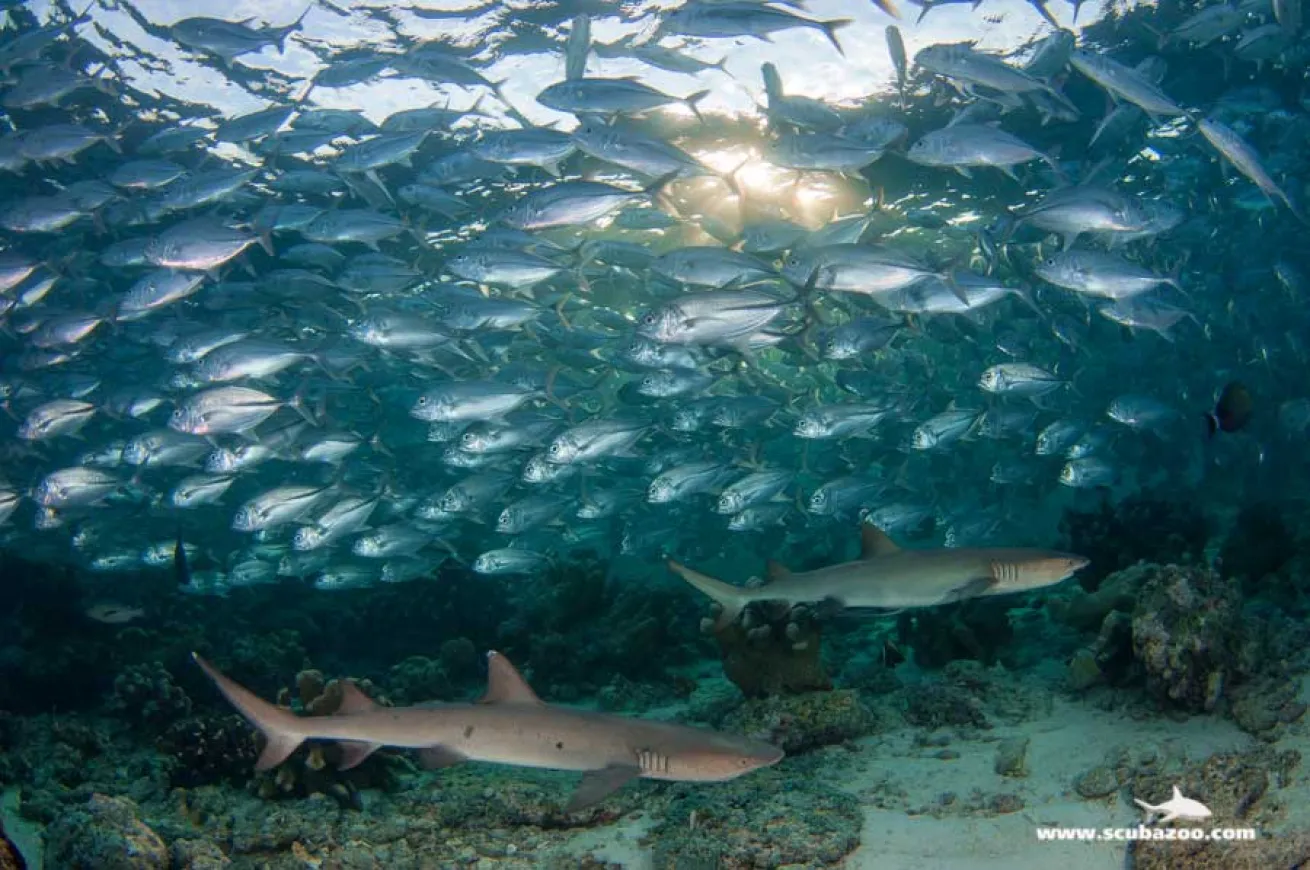
Diving a specific site for schooling fish at the right time of day can will offer you the most photogenic opportunities. Late afternoon sunlight with its warm glow is nicest for shooting wide-angle in the shallows, and at this dive site the resident schooling trevally form a tighter school as predators push them into shallower water as they begin to hunt.
Christian Loader/ScubazooSETTINGS: Nikon D300, Tokina 10-17mm, 1/320s, f7.1, ISO200.
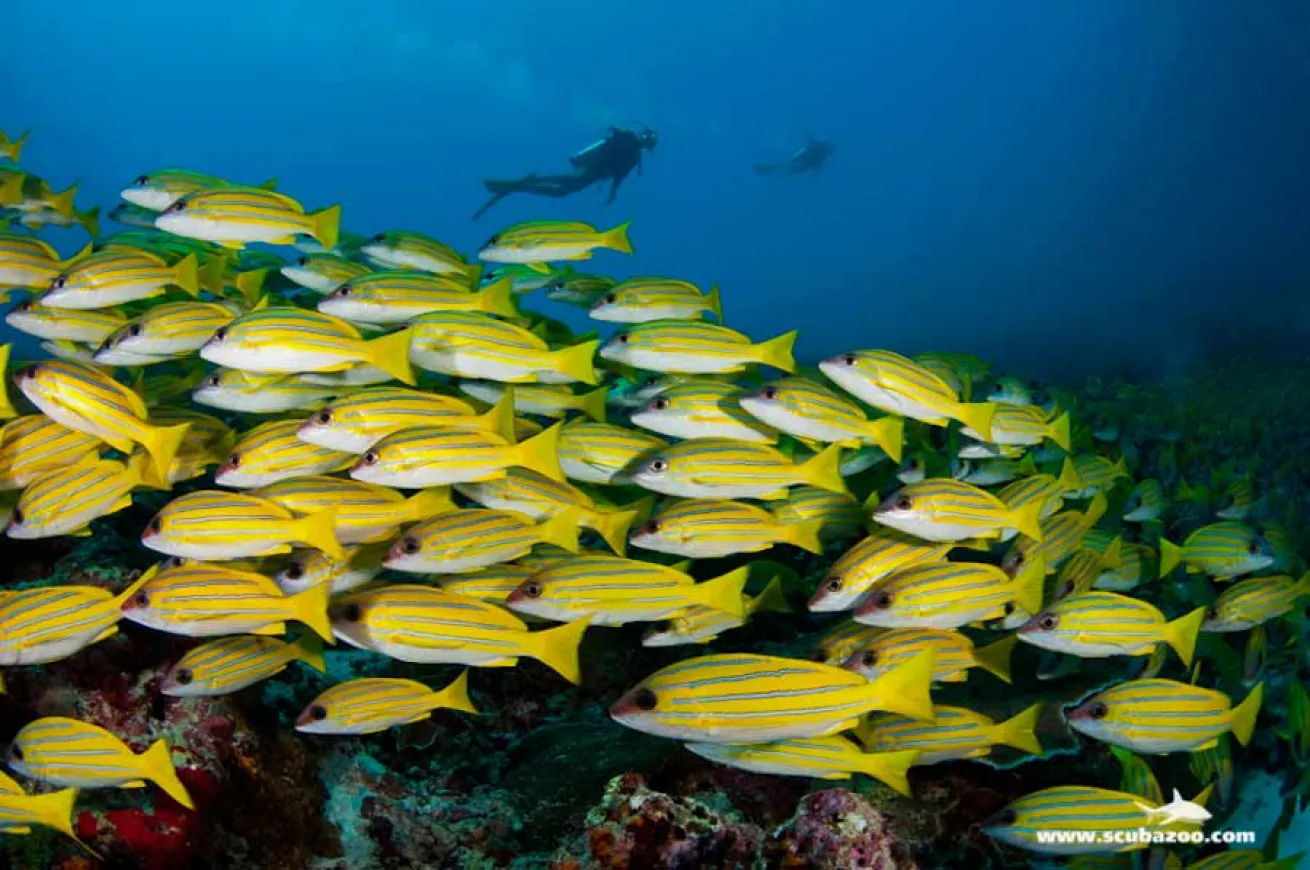
Adding a diver to your shot can nicely compliment a school of fish, but it's essential the diver be in the right part of the frame, and have good 'form' ie. a diver in the background facing side-on with legs and fins fairly straight, not swimming in the background towards you which makes them look like a distracting, nondescript blob. Have a chat with your buddy before the dive and go through various hand signals you'll use to direct them.
Adam Broadbent/ScubazooSETTINGS: Nikon D2Xs, Nikon 105mm, 1/250s, f8, ISO100.
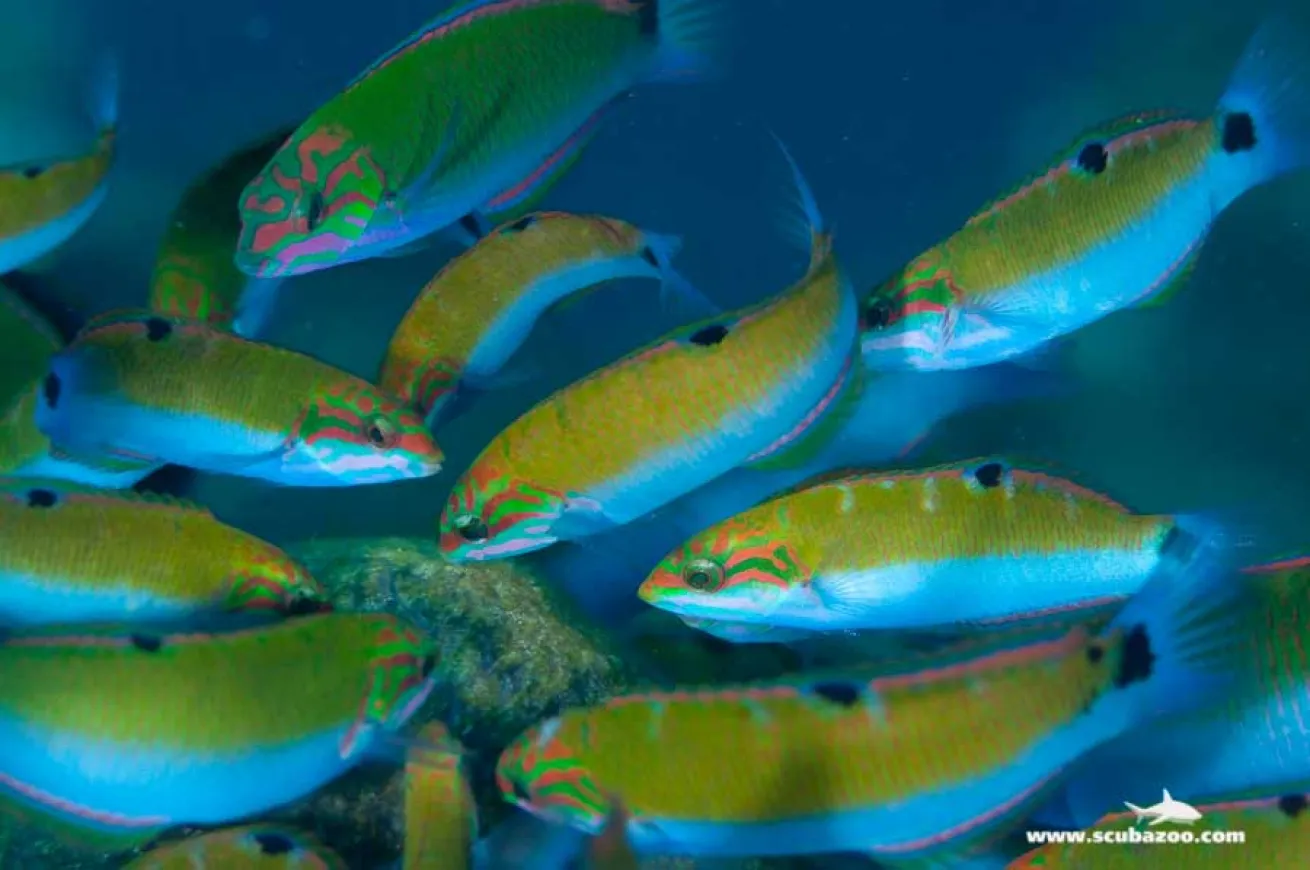
Most photographers will know how annoying it is being caught out with a macro set-up when a big school of fish come along – but you have to make the most with what you've got! Use your macro lens to shoot tighter compositions. Smaller species of schooling fish can often be seen grazing on the reef, such as surgeonfish, parrotfish or these wrasse for example.
Jason Isley/ScubazooSETTINGS: Nikon D2X, Nikon 10.5mm, 1/80s, f5.6, ISO100.
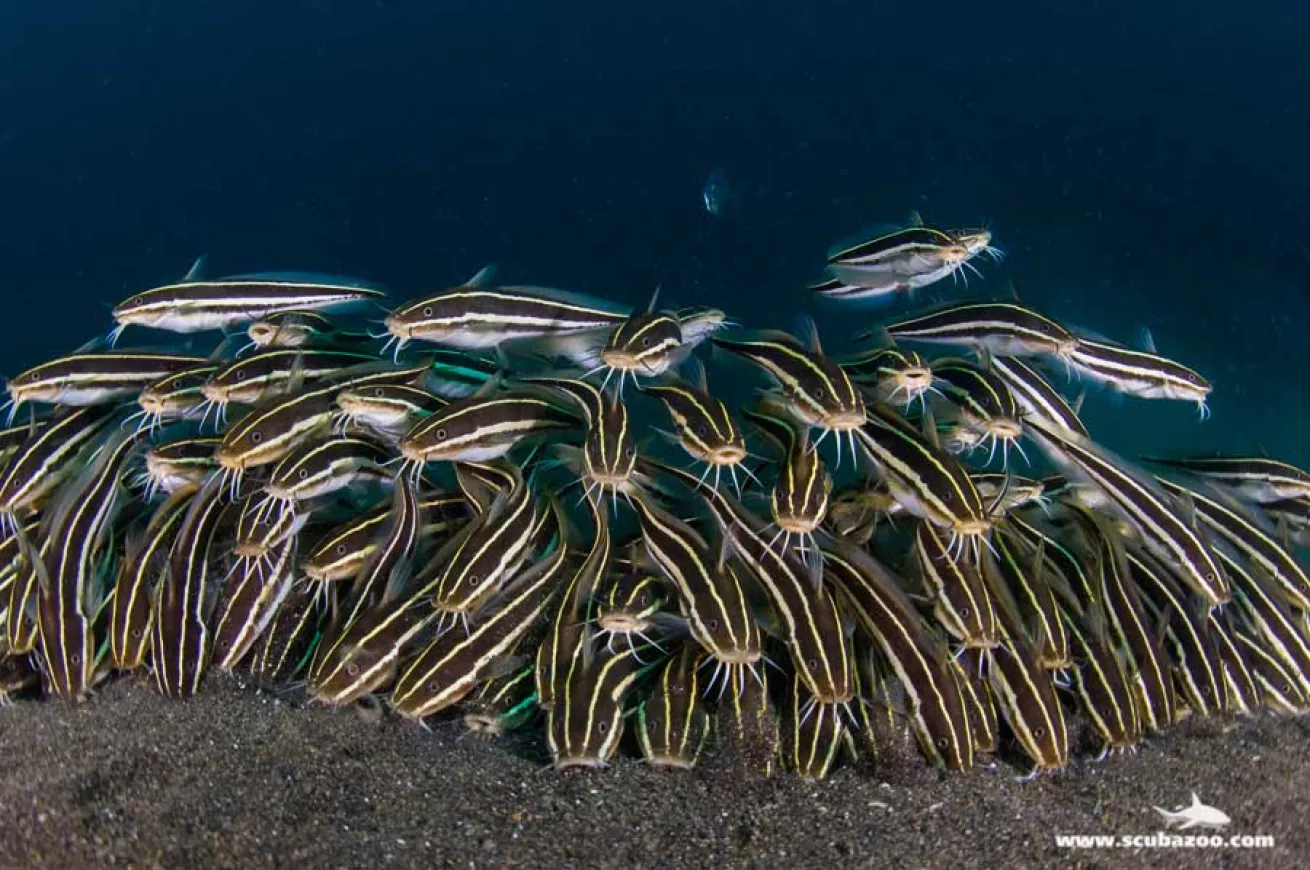
Schools of fish come in all different colours and sizes, each with their own schooling characteristics. Schools of these catfish are very easy to shoot close up as they scour the seabed, gulping in mouthfuls of sand. A school like this is perfect for shooting macro or wide-angle.


