

Jeff Yonover
Jeff Yonover
Jeff Yonover
Jeff Yonover
Jeff Yonover
Jeff Yonover
Jeff Yonover
Jeff Yonover
Jeff Yonover
Jeff Yonover
Jeff Yonover
Jeff Yonover
Jeff Yonover
Renowned as a sailing destination, the British Virgin Islands also offer an unforgettable dive slate, from wrecks and seamounts to reefs and caves. What is it like to combine sailing and diving in these fair isles? We decided to find out.
In the 20 years since I got my C-card, I’ve heard about the wreck of the Rhone no less than 573 times. In a region bursting with famous wrecks, the Rhone sits tall among them for its history and beauty. I’m finally about to see for myself. Despite an early departure, we’ve been warned that ours might not be the first boat there. Luck is with us, and only a small dinghy with a handful of snorkelers is there when we tie up to a buoy at Black Rock Point, marking the Rhone’s final resting place 80 feet below.
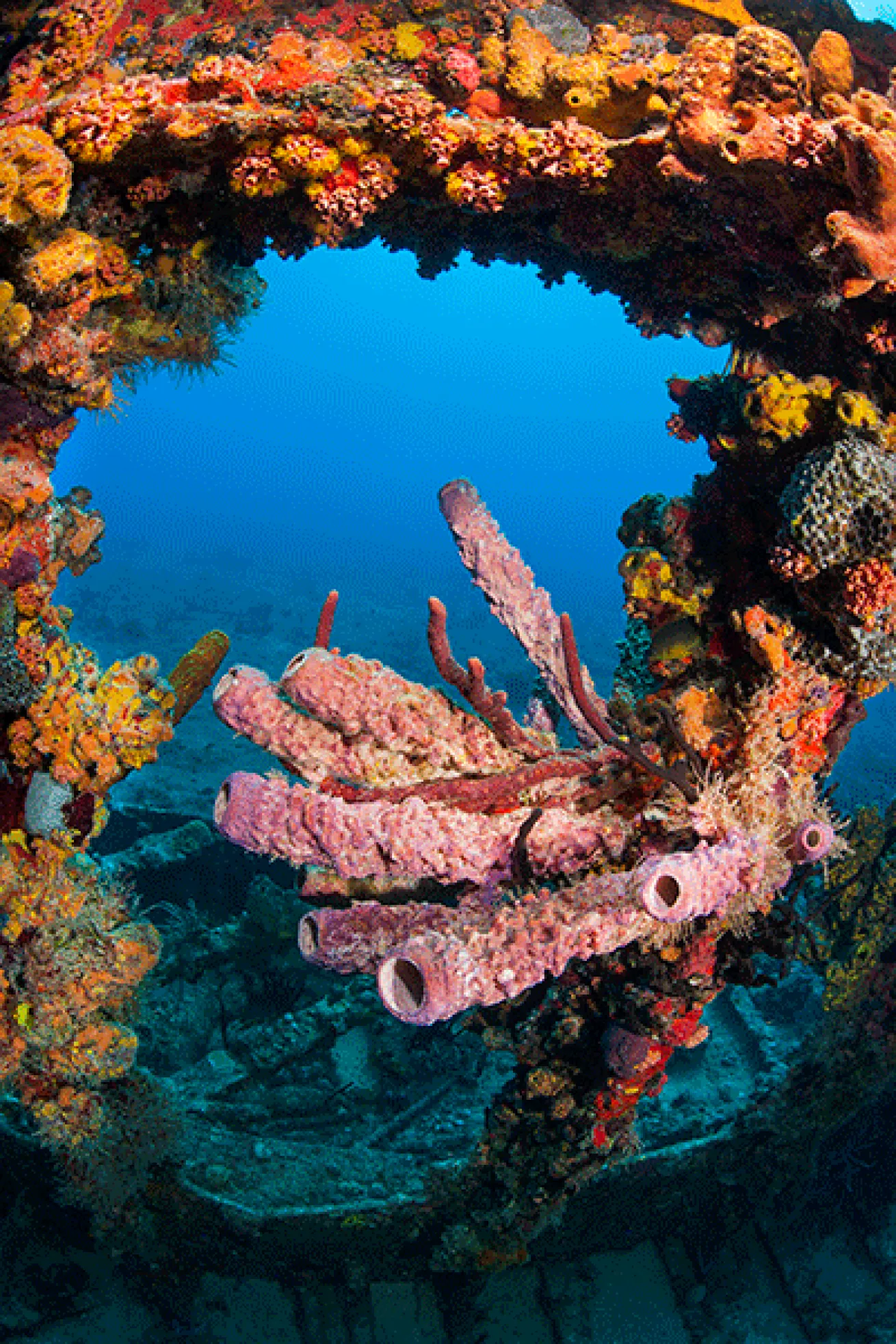
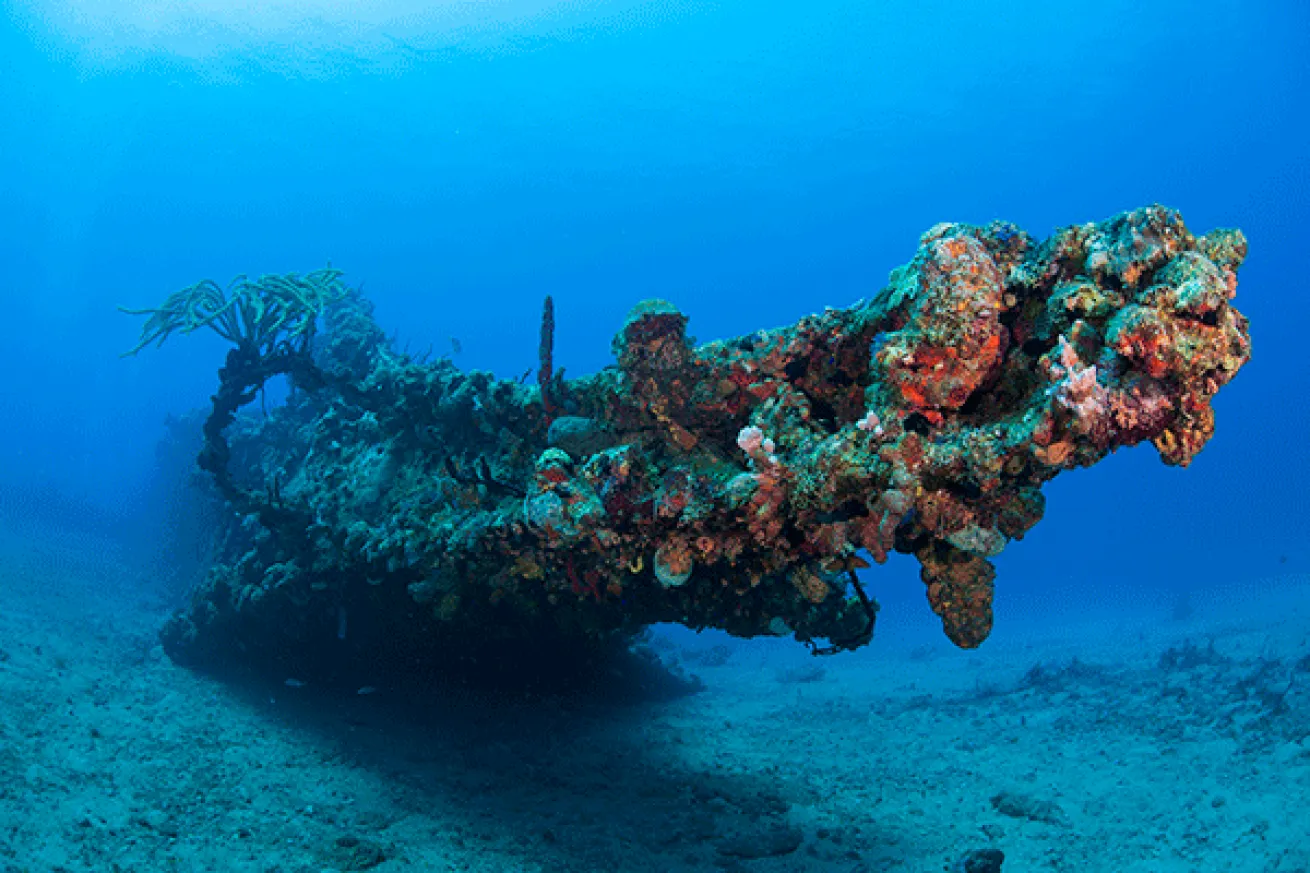
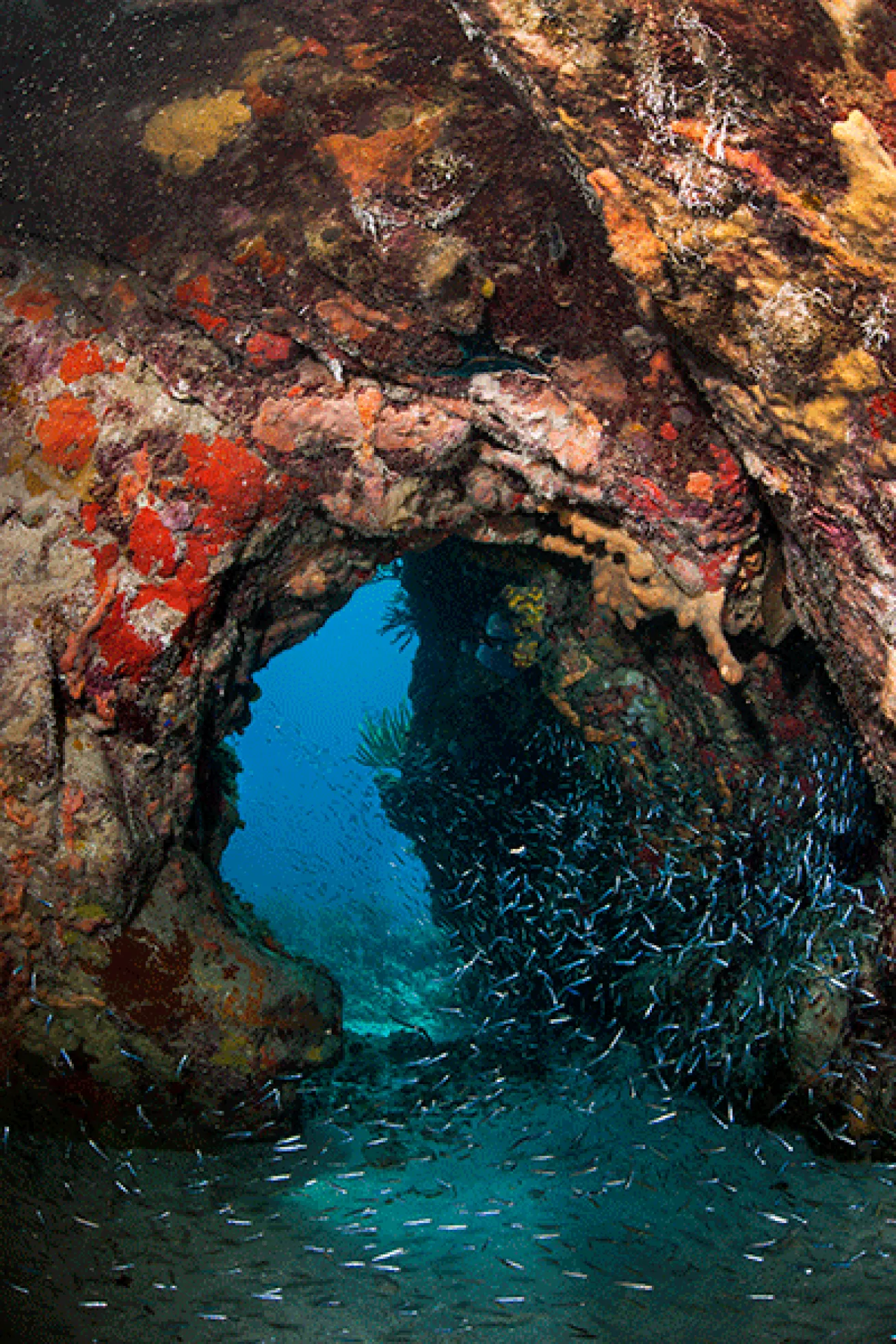
As we descend the line, the 150-foot-long bow is clearly visible. The Rhone is equal parts historical wreck and living reef. Lying on its side in 80 feet of water, the bow is encrusted with corals and sponges, and tiny silversides dance in the dim light inside the cavernous interior. Schools of grunts and snappers hug the hull, and barracudas are there, lurking.
Entering one of the hatches, I am reminded of the divemaster’s briefing, a dramatic retelling of how the ship met its fate, and it’s all I can think about. There is a lot to recommend about the Rhone — for starters, it’s in remarkable condition after 146 years on the bottom, and at night, filter-feeding orange cup corals open up and put on a showstopping spectacle — but at this moment, I am thinking about its crew and passengers, desperately seeking shelter during a powerful storm. Divers who love wrecks and their history are familiar with the frisson of emotion felt as history comes alive on a sunken vessel, especially when the story involves tales of human courage and the raging force of nature.
Powered by both sail and steam, the 310-foot Rhone was the flagship vessel of the Royal Mail Steam Packet Company and represented the best of 19th-century shipbuilding technology. Like the Titanic, it was considered unsinkable. On Oct. 19, 1867, the Rhone pulled into Peter Island’s Great Harbor alongside another ship, Conway. As the weather worsened, the two captains agreed it would be best to ride out the storm at Tortola’s Road Harbor. But it was too late. The Rhone’s massive anchor snagged on a coral head. The captain ordered his crew to cut it loose, and then attempted a run out to open sea. As the ship strained to get past Salt Island, towering waves pushed it into Black Rock Point, breaking the ship in half.
Even minus hurricanes and nor’easters, conditions can make the Rhone too tricky to dive. But on this day, the ocean is a gentle giant, and photographer Jeff Yonover and I encounter only a moderate current as we swim from the line to the bow, resplendent in colors, at 80 feet. The giant hooks lying on the seafloor are actually lifeboat davits.
Our second dive on the stern in 30 feet is current free, but two dive boats have joined us and a flotilla of dinghies are bobbing about; underwater, the dive has a party atmosphere. A full set of massive wrenches is still visible on the midsection. Groups of divers are happily exploring the 70-foot propeller shaft and the massive bronze prop. Swimming and sheltering among all this historic wreckage is a rich assortment of marine life, including schooling grunts, snappers, barracuda, morays, octopuses and lobsters. We look for the “lucky porthole,” a brass porthole that remains somewhat shiny, because divers — including me — rub it for good luck. There are also some black-and-white tiles in the southern midsection of the stern.
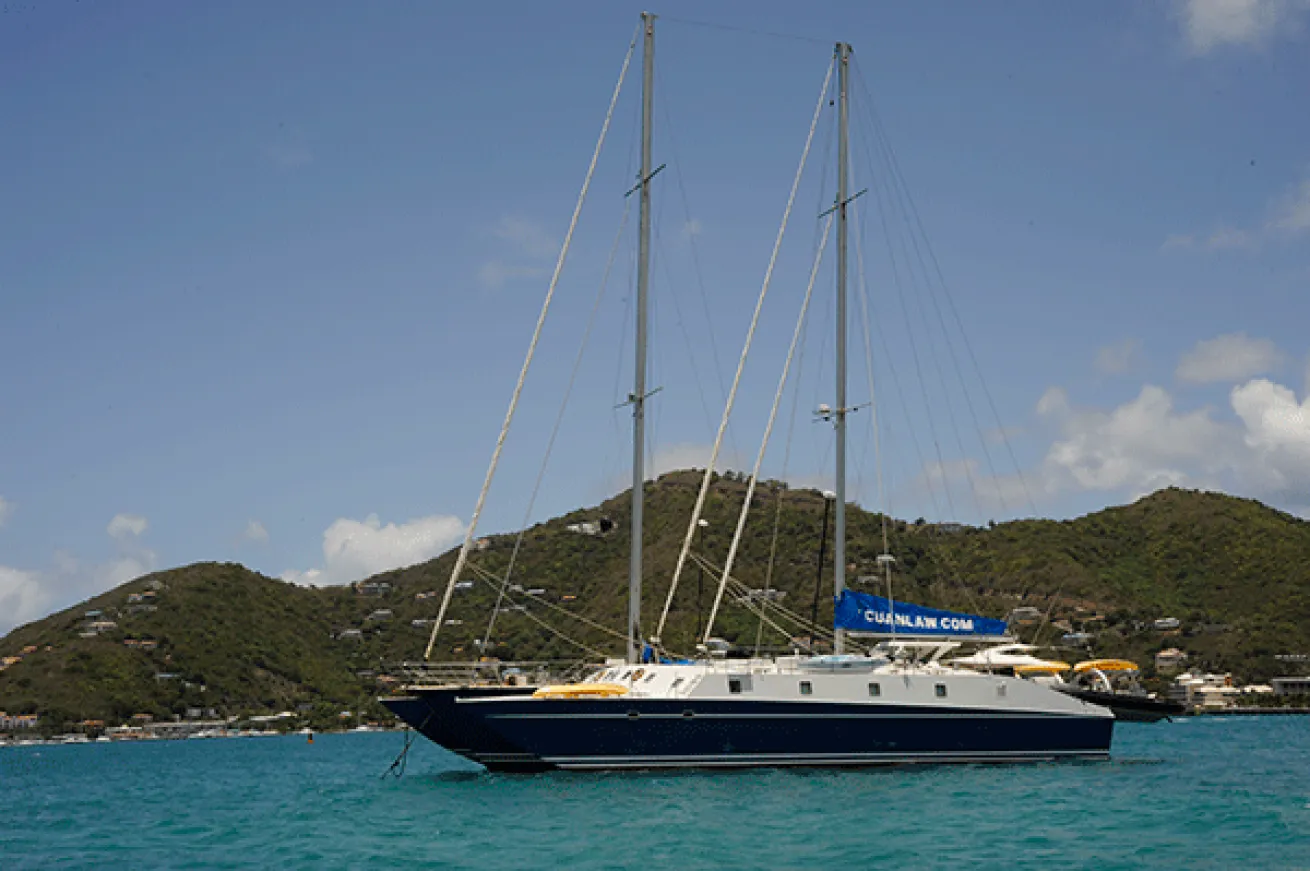
It’s somehow fitting that the BVI’s most popular dive is on an iron-hulled vessel that had the graceful lines of a sailing ship. Jeff and I are experiencing the diving off these islands from a beautiful sailboat, the Moorings’ 46-foot catamaran yacht, My Ann. The company has a fleet of motorboats and sailboats, and specializes in skipper-your-own or crewed vacations. We are doing the latter, and the two-person crew are PADI Instructors who effortlessly combine cooking gourmet meals, sailing to uncrowded coves, and serving as divemasters on the best sites the BVI has to offer.
We’ve also arranged to do some rendezvous diving: During our weeklong stay, both PADI Five Star Dive Center Sail Caribbean Divers and Dive BVI meet My Ann, and whisk us to the morning’s dive sites. All we have to do is eat another fabulous breakfast, and then transfer our gear and jump aboard when the dive boat pulls up alongside. (We’re experiencing how the other half lives!) The islands pioneered rendezvous diving when it became clear that the legions of sailors who come here aboard their own boats or on rented yachts often also wanted to do a bit of diving. Dive operators also pick up guests from the docks of various resorts scattered throughout the islands. Many of the dive shops have multiple office locations, and staff take care of coordinating the arrangements.
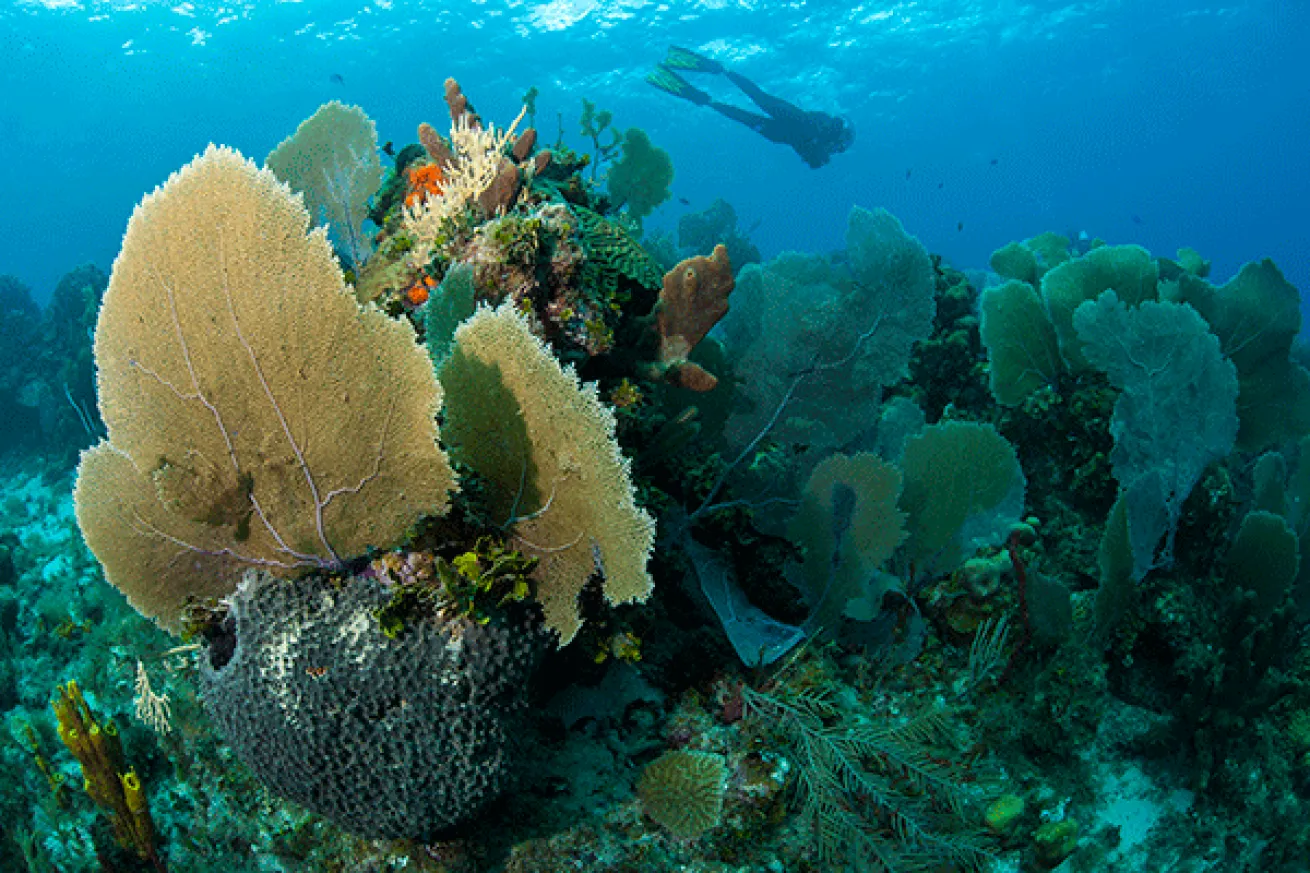
It’s impossible to be at sea on My Ann and not recognize the trio of forces that give the British Virgin Islands its jewellike natural beauty: a violent volcanic origin, the occasional tropical storm and geography. Dive sites in the BVI — and there are scores of them — are as varied as the rainbow of blues found in the Caribbean, from lush coral gardens on sloping reefs and mini walls to seamounts that rise from the seafloor and an underwater collection of sponge- and coral-covered wrecks. Another nicety for divers — in terms of access to dive sites — is how close most of the islands are to one another. Mainly arrayed on either side of Sir Francis Drake Channel, these hilly, emerald islands and their scenic, protected anchorages are the perfect backdrop for my “wish you were here” Facebook posts during the week.
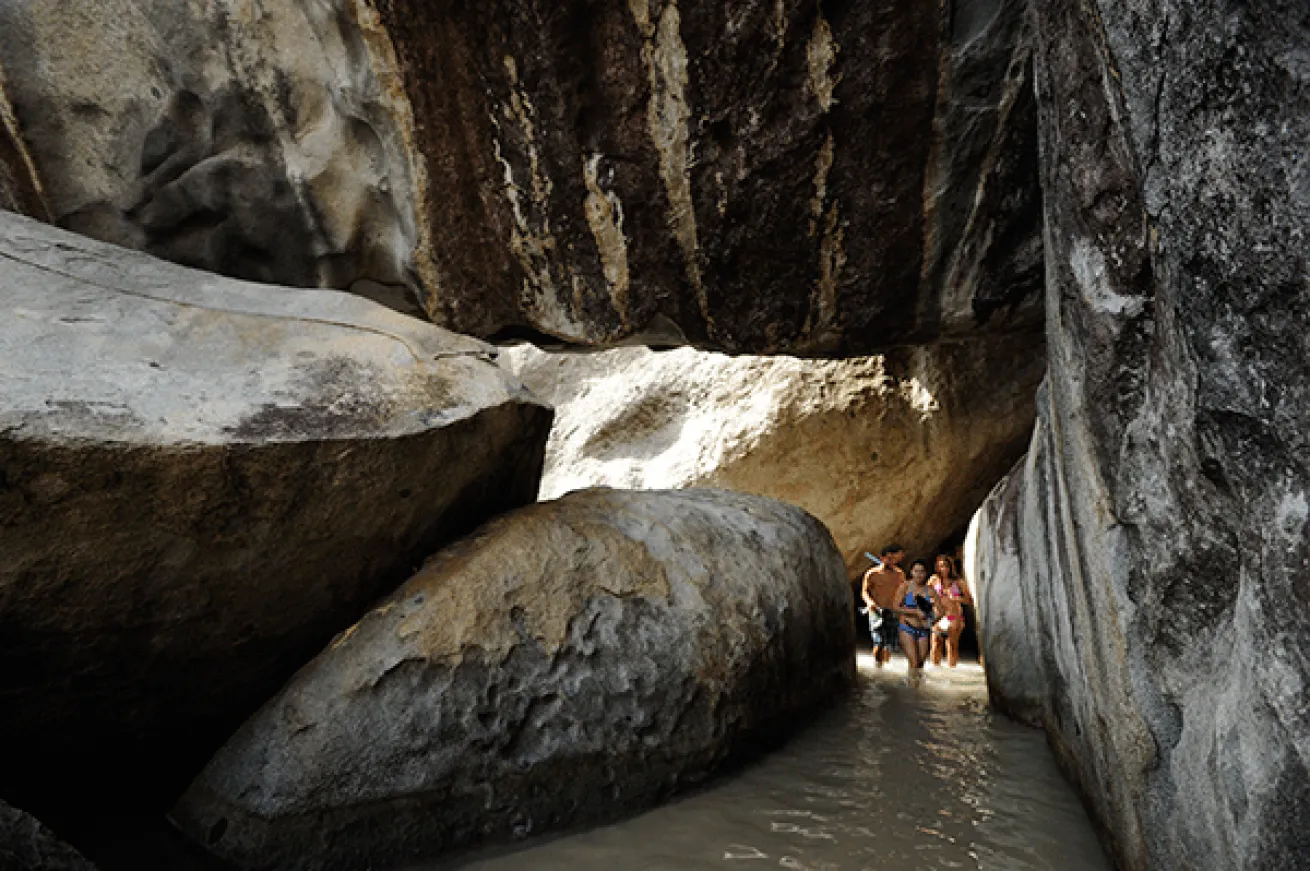
Much of the diving shares the same architecture as one landmark that’s been written about more times than Kate Middleton’s baby bump — the world-famous Baths, a collection of colossal granite boulders that form grottoes and pools on a Virgin Gorda beach. Joe’s Cave off West Dog Island is one example. After exploring the reef, we end the dive in a small cave filled with glassy sweepers. The chamber is a triangular crack with a narrow opening at the top, so it’s not truly an overhead environment. Light rays filtering down from above illuminate the coral-encrusted walls and huge boulders scattered along the bottom. It is magical.
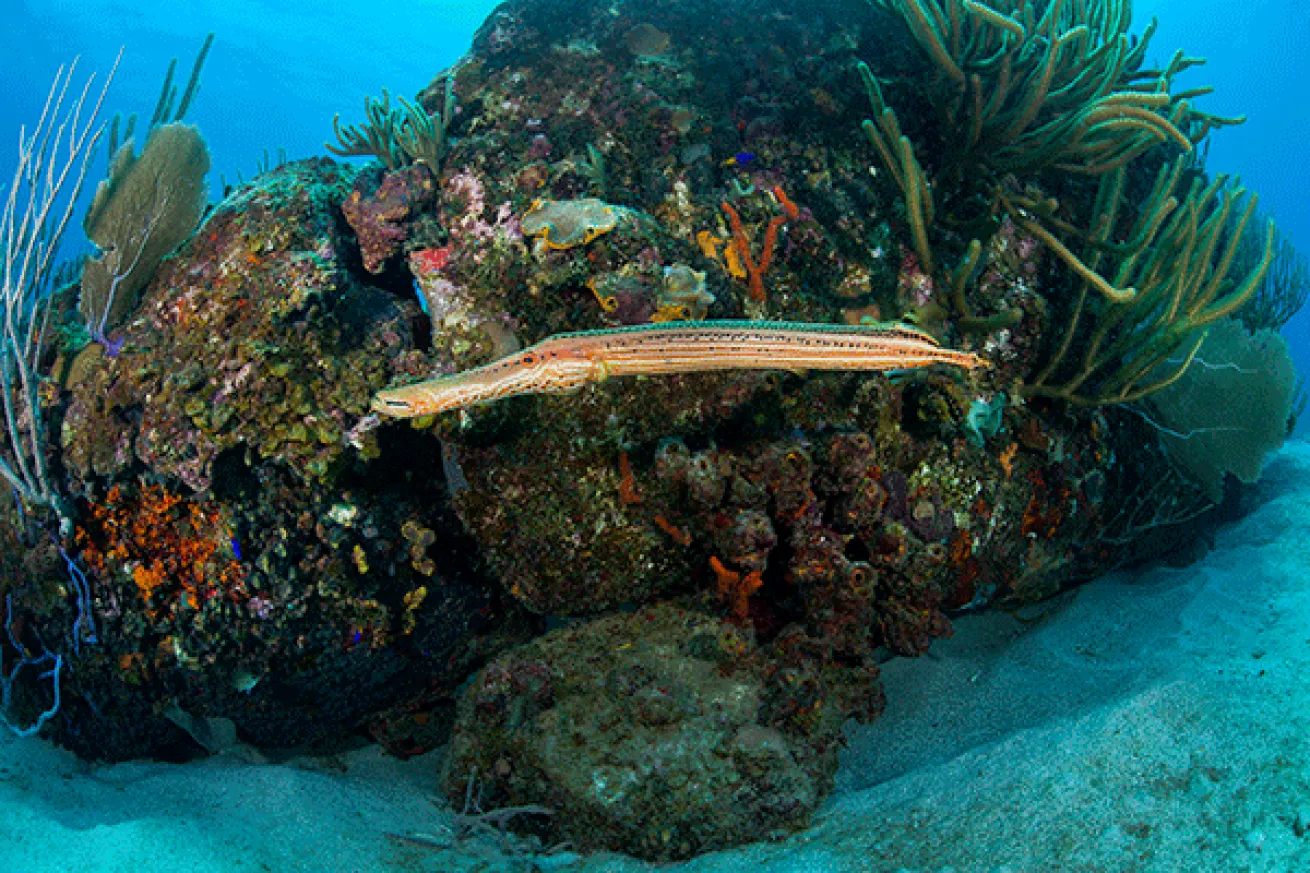
Large volcanic boulders punctuate the water off many of the islands. We’ve planned a two-tank morning on Thumb Rock and Vanishing Rock, huge formations off Cooper Island. We circumnavigate Thumb Rock first and see dozens of trumpetfish and plenty of other reef tropicals, from parrotfish to grunts and snappers. Vanishing Rock is aptly named; in the briefing, the divemaster points out the pinnacle just barely visible above the waterline and says, “Now you see it,” and when a wave washes over it, adds, “Now you don’t.” This shallow reef is sometimes undivable due to current; the morning we dive it, conditions are perfect. It’s packed with nesting sergeant majors, males furiously guarding their purple patches of eggs by swimming up to divers’ masks to keep them away.
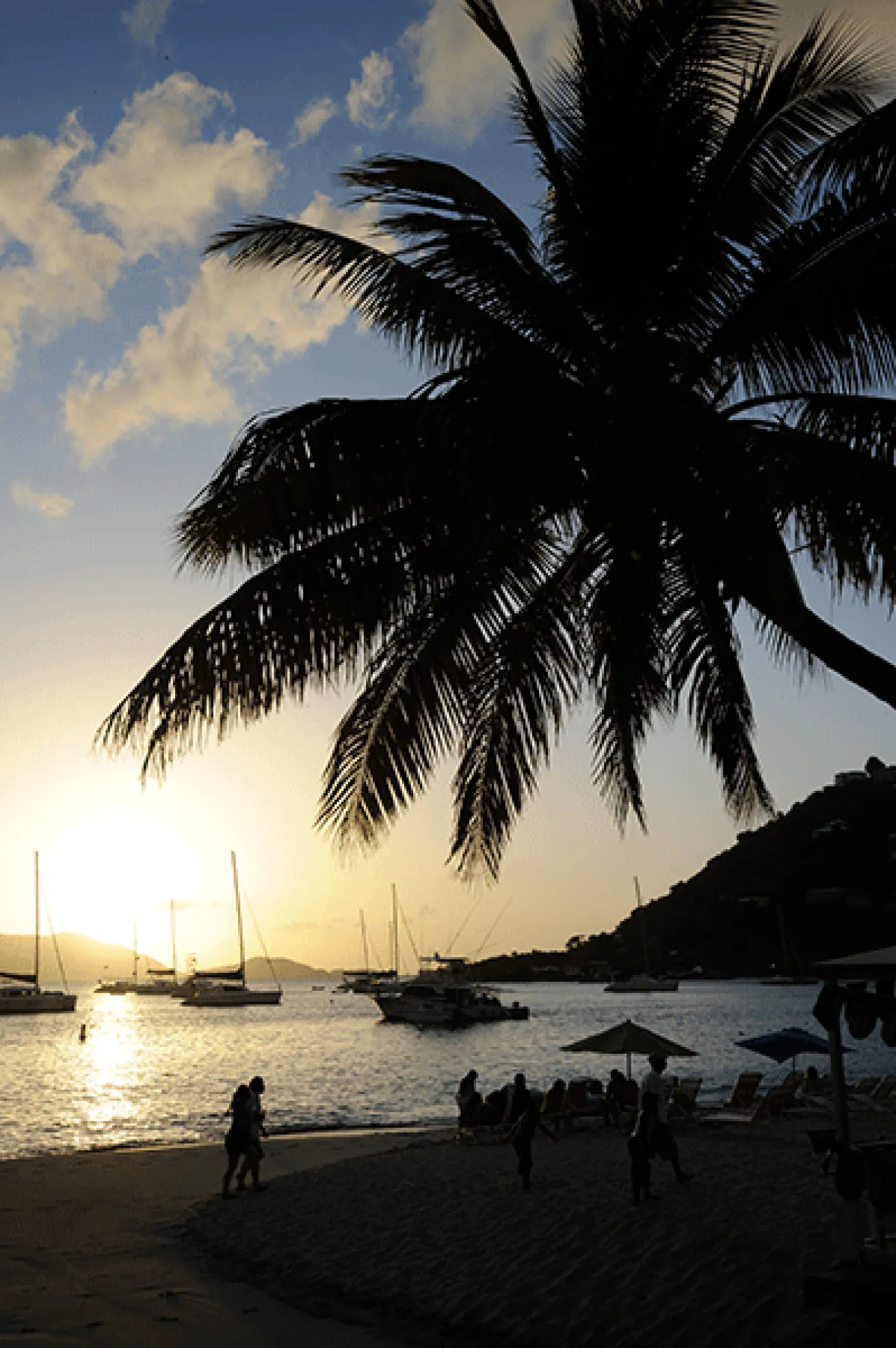
That afternoon, after a light lunch of salami, cheese and fruit, My Ann’s captain sets sail for Benure Bay off Norman Island, where we’ll spend the night. As the color from a fat orange sun pools into the Caribbean, we’re served dinner: beef tenderloin with a chocolate-infused sauce on a bed of mashed cauliflower topped with asparagus. Pinch me — I honestly can’t believe I’m here.
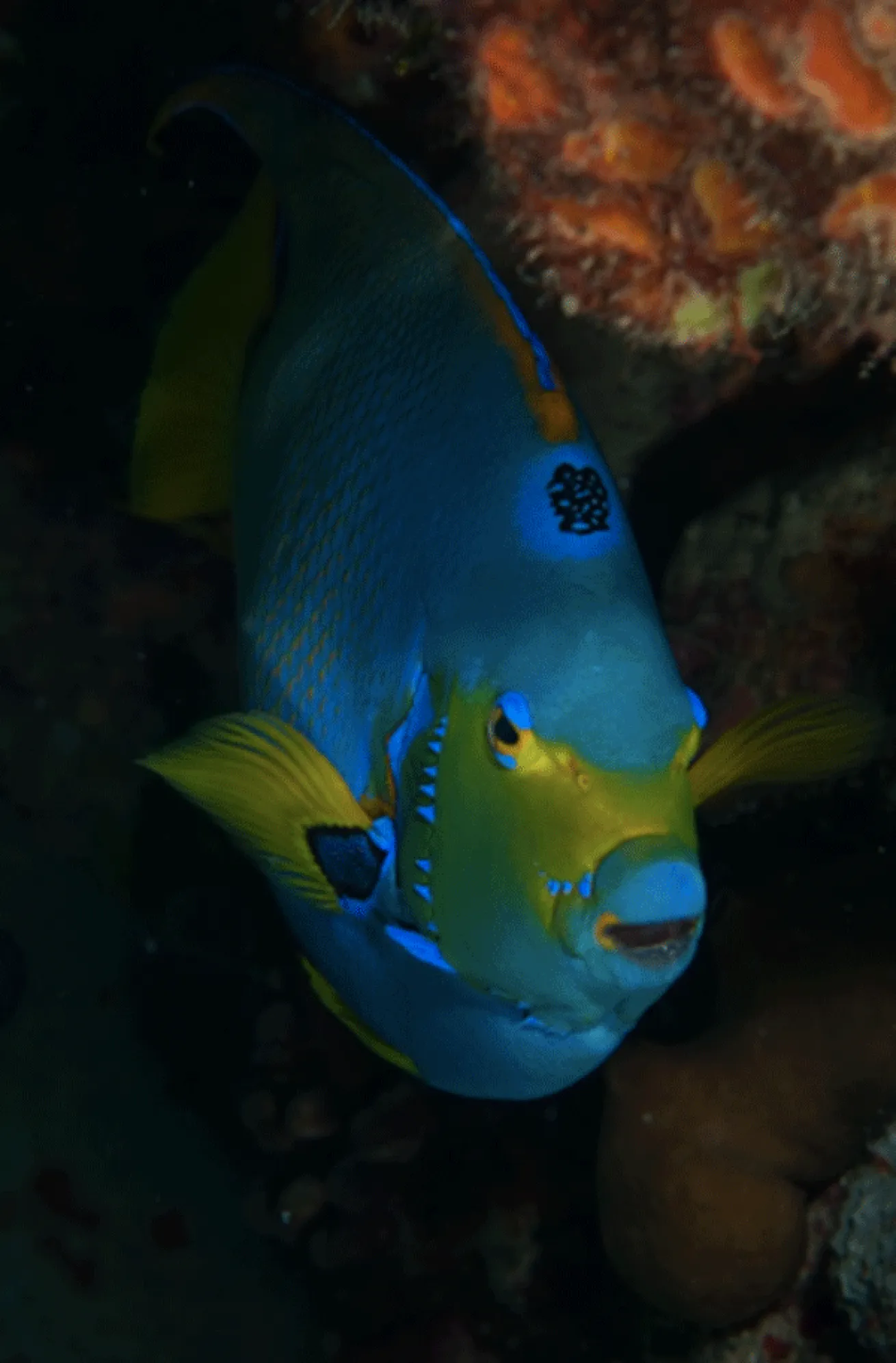
In the morning, we make a dive on Norman’s Spyglass Wall. Pirates once posted lookouts on Spyglass Hill, which overlooks the site, ready to attack unsuspecting prey. Underwater, the reef is a mini wall with numerous holes and pockets stuffed with reef tropicals, and decorated with branching sponges and large sea fans. We spot the largest Caribbean spiny lobster I’ve ever seen. It menaces us for a bit, then shoots off like a torpedo to find a quieter hiding place. We surface to a breakfast of cinnamon raisin French toast with caramelized bananas and syrup, all topped with crispy bacon. And then — you guessed it — we gear up for a dive at Rainbow Canyons. This shallow reef offers as much in the sand flats as it does on the reef. A garden of eels dances for us until we get too close, and they zip back into the sand. We also spot a couple of yellow jawfish.
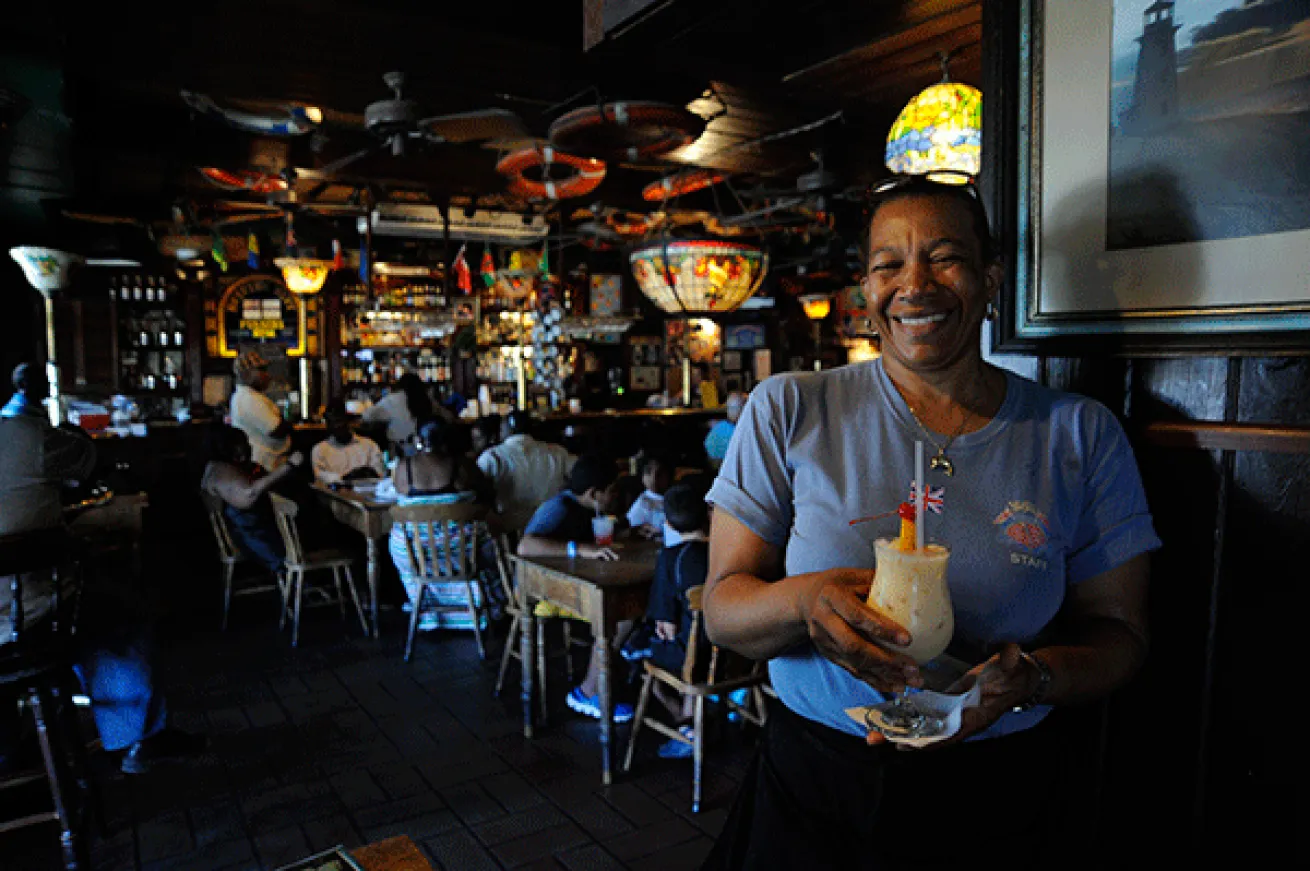
After the dive, My Ann heads to the Norman Island bay known as the Bight. We climb into the dinghy and motor the short distance to Willy T’s Floating Bar & Restaurant, a popular stop for yachties doing a bar-hopping-by-boat tour. The crowd is tame when we’re there, but this is a place known for rowdy revelries that include topless women, and the bar runs loops of photos to prove it. The original Willy T’s — a classic wooden Baltic Trader — sank on its mooring in 1995. That vessel was replaced by a 100-foot steel-hulled one with plenty of room for dinghies and small boats to tie up. On this afternoon, it’s a nice place to socialize with other sailors, get a basket of conch fritters served with a tangy sauce, have a Carib and enjoy the vista. If you have a Painkiller, don’t say I didn’t warn you — the bartenders here favor generous pours.
Our experience while at anchor in the Bight is typical of the atmosphere you’ll find at many of the anchorages sprinkled throughout the BVI. Never-ending blues all around as well as dinghies bustling to and fro, folks snorkeling in the shallows, sunbathers on the beach, and at least one beach bar to keep things lively. Other anchorages — like Mountain Point on Virgin Gorda, where we spend one night — are sheltered refuges. When we first arrive, we’re greeted by ruddy turnstones and little else, a stark contrast to the Bight. Jeff makes a night dive at the site known as Paul’s Grotto, and he’s immediately tailed by a posse of tarpon. It’s surgy in the shallows but lots to see near the boat. And afterward, it’s another lovely dinner; tonight it’s baked chicken in a ginger-infused wine sauce.
We spend the next couple of days rendezvousing with a handful of BVI dive operations, all first-rate. We choose to have My Ann get us to the docks — we meet PADI Five Star IDC Sail Caribbean Divers at Hodges Creek Marina on Tortola and Dive BVI at Yacht Harbour on Virgin Gorda — but both operations also pick up divers from their sailboats. It makes the ride out to the sites a bit longer, but we love the camaraderie that enlivens the sail-and-dive experience.
One of our favorite sites is Carrot Shoal, off the southwest tip of Peter Island. It’s an open-water site that our divemaster says is shaped “like a railroad train parked on an underwater platform.” The platform rises from a 60- to 70-foot bottom and levels off at 40 feet. It’s cut through in several places, which gives it the appearance of separate railway cars. We fin in and out of these cuts until we reach the end of the formation and find a low archway.
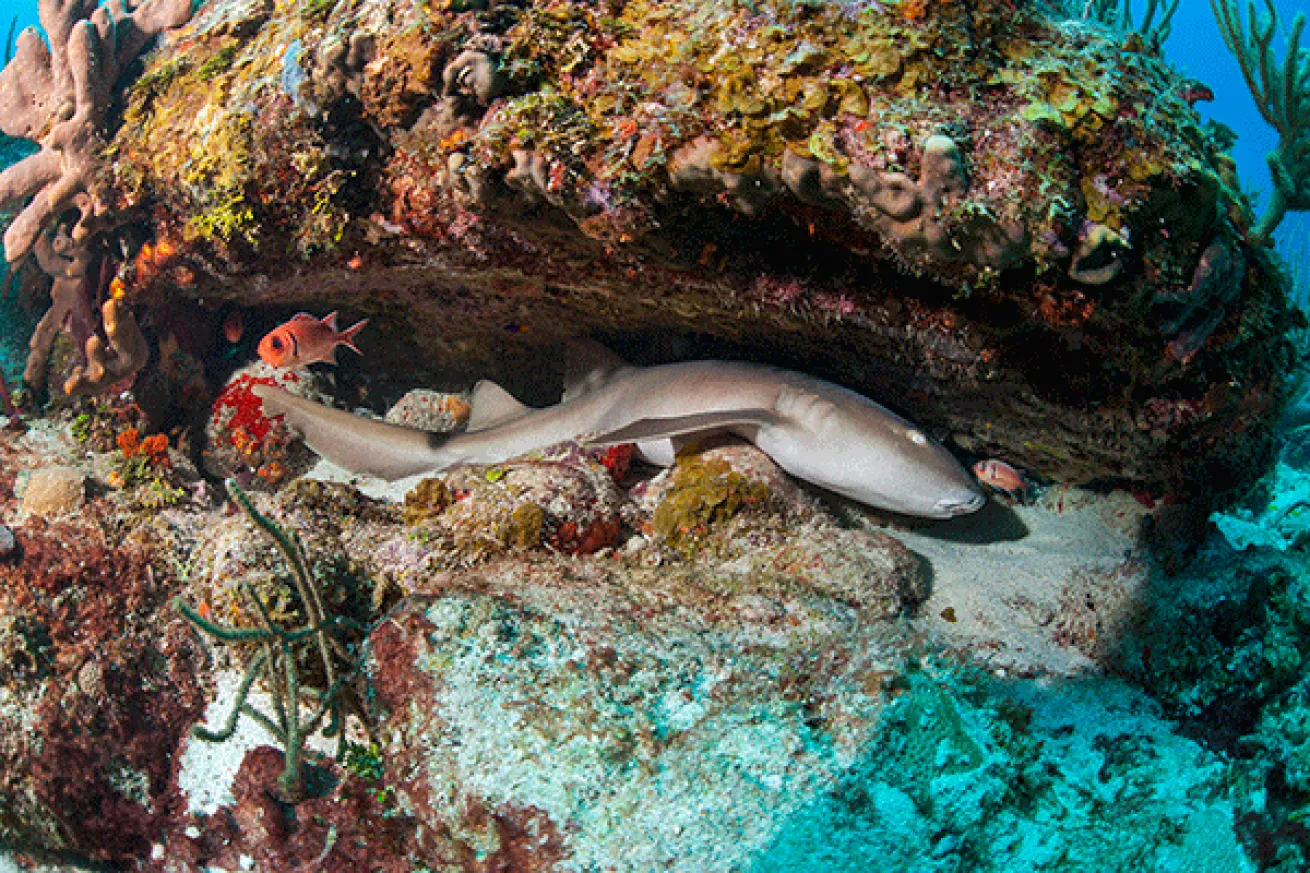
We discover a reward at every turn when we drop down on Angelfish Reef, on the lee side of Norman Island. A rocky maze of canyons and ridges, the site may have been named for its resident angelfish, but we bump into a number of beefy nurse sharks — some are napping, but others are surprisingly active. We also spend some time in a small cave stuffed with silversides and swimming with a curious juvenile hawksbill turtle.
The next day, when we’re given the briefing on Coral Gardens off Great Dog Island, the divemaster says, “We’ll see how the current is — if it’s not too strong, we’ll swim over to the Plane Wreck.” We explore the reef for a bit and find the current is negligible, so the divemaster motions for us to follow. The Plane Wreck is a former interisland commuter plane that never quite made it into the air during what turned out to be its final takeoff. BVI dive operators persuaded the government to let them move the fuselage (no wings or engines) and sink it off Great Dog. As soon as we arrive, three barracuda greet us, though they don’t hang around long. This is a fun wreck to explore, and we’re reluctant to leave it.
Our last day of diving is at Wreck Alley, an open-water collection of wrecks off Cooper Island: the Marie L, a cargo boat intentionally sunk in the early 1990s; Pat, a tugboat sunk a few years later; Beata, sunk in 2001; and Island Seal, sunk in 2009. The wrecks are relatively deep, in about 85 feet of water, so bottom time is limited, but they offer nice photo opportunities for shutterbugs, especially when conditions are good.
It’s often said about live-aboards that the routine is sleep-eat-dive-repeat. While this routine is also true aboard My Ann, there’s a loveliness about it that sets it apart. From the gourmet meals and special drinks to the mellow transits to beautiful anchorages, My Ann offers a luxurious way to experience the British Virgin Islands the way these islands were meant to be enjoyed — from the water. The week has sadly come to an end, but not before making me a lifetime BVI fan. I can’t wait to sample the diving and sailing lifestyle again — and some more meals aboard My Ann.
Special thanks to …
The Moorings (My Ann)
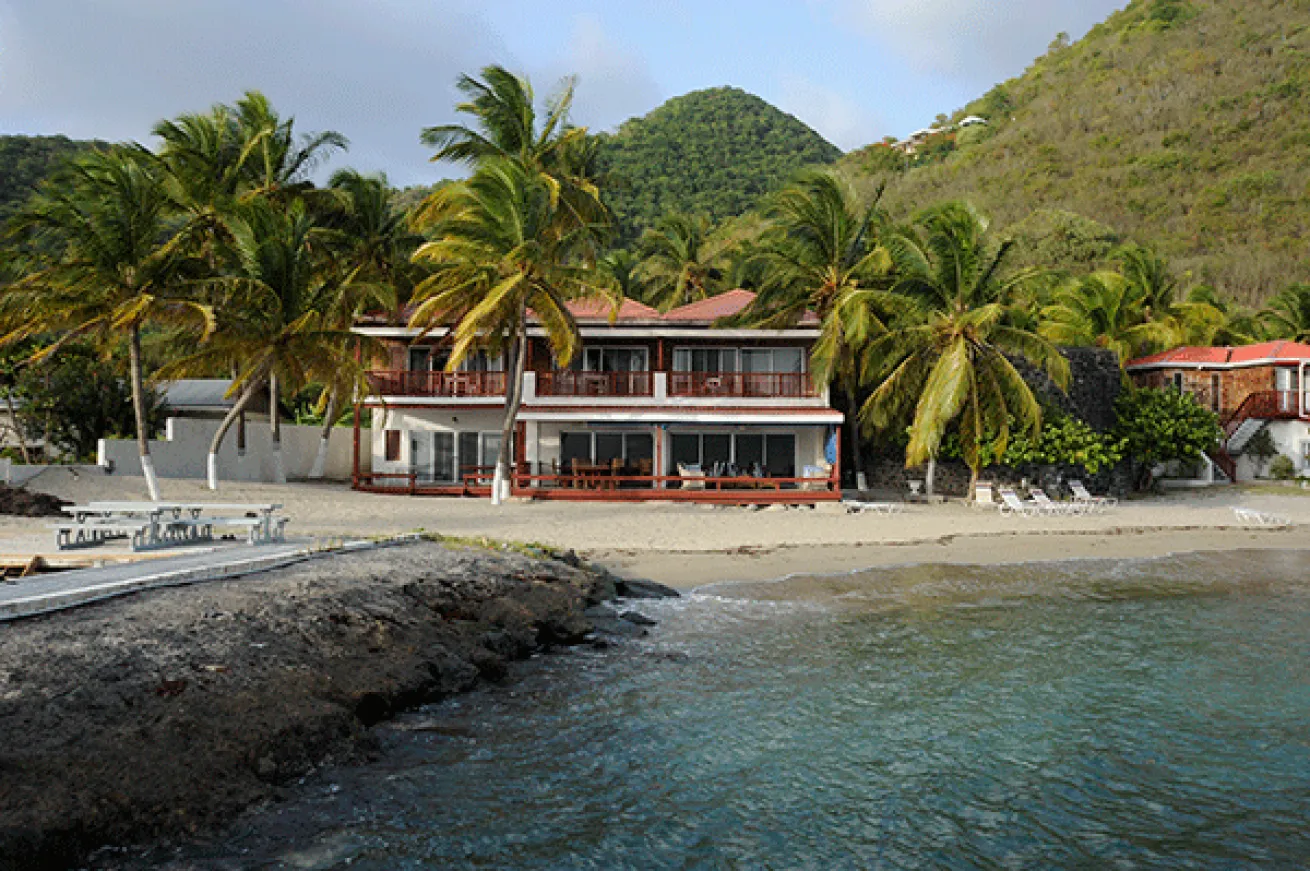
Fort Recovery Beachfront Villa & Suites Hotel
Sail Caribbean Divers
Dive BVI
Blue Water Divers


