

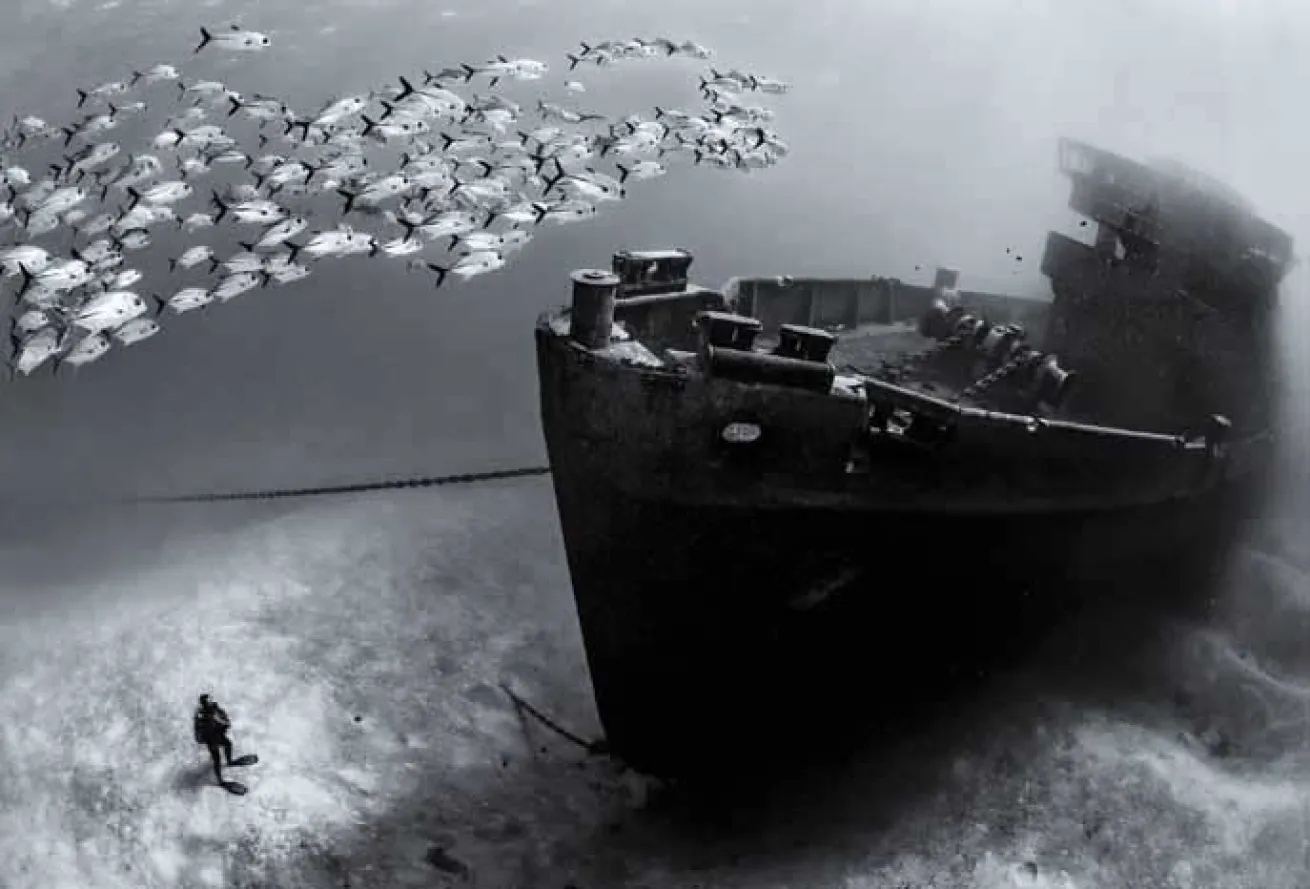
Alex MustardOne of the biggest draws of wreck diving — such as diving on Grand Cayman's Kittiwake — is that these structures are irresistible to marine and fish life. Solid surfaces are prime ocean real estate, and it doesn’t take long for life to cling to every inch of a new wreck.
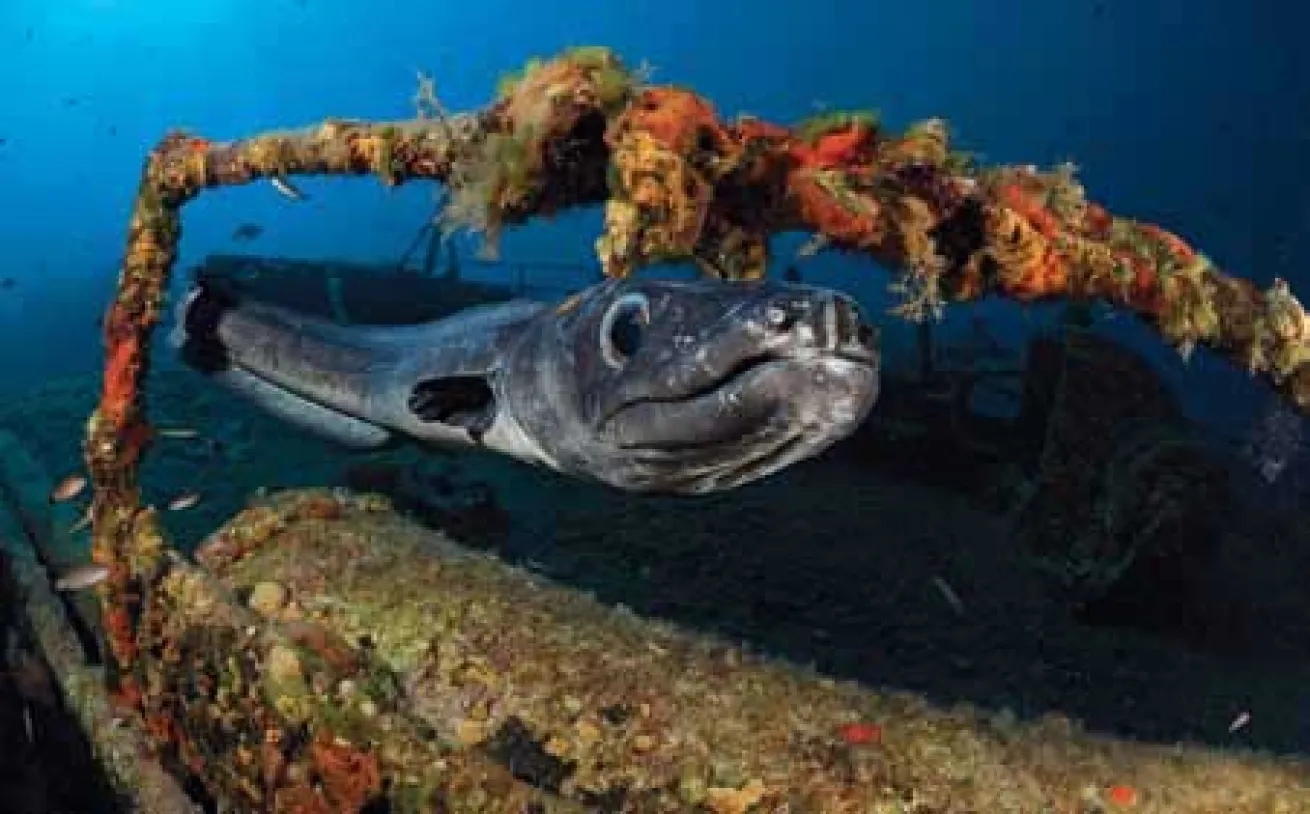
Many wrecks have particularly well- known residents, such as schooling jacks or a massive grouper, eel or barracuda. Research what animals to expect and add them to your shot list. The aim is to capture a portrait of the animal in its environment. It is important not to stuff the frame with only the primary subject; the wreck should be an equal partner in the composition.
Marine life not only communicates the ship’s reincarnation as a living reef, but it is also the stardust that transforms a dead-looking image of rusting metal into a sparkling, living composition.
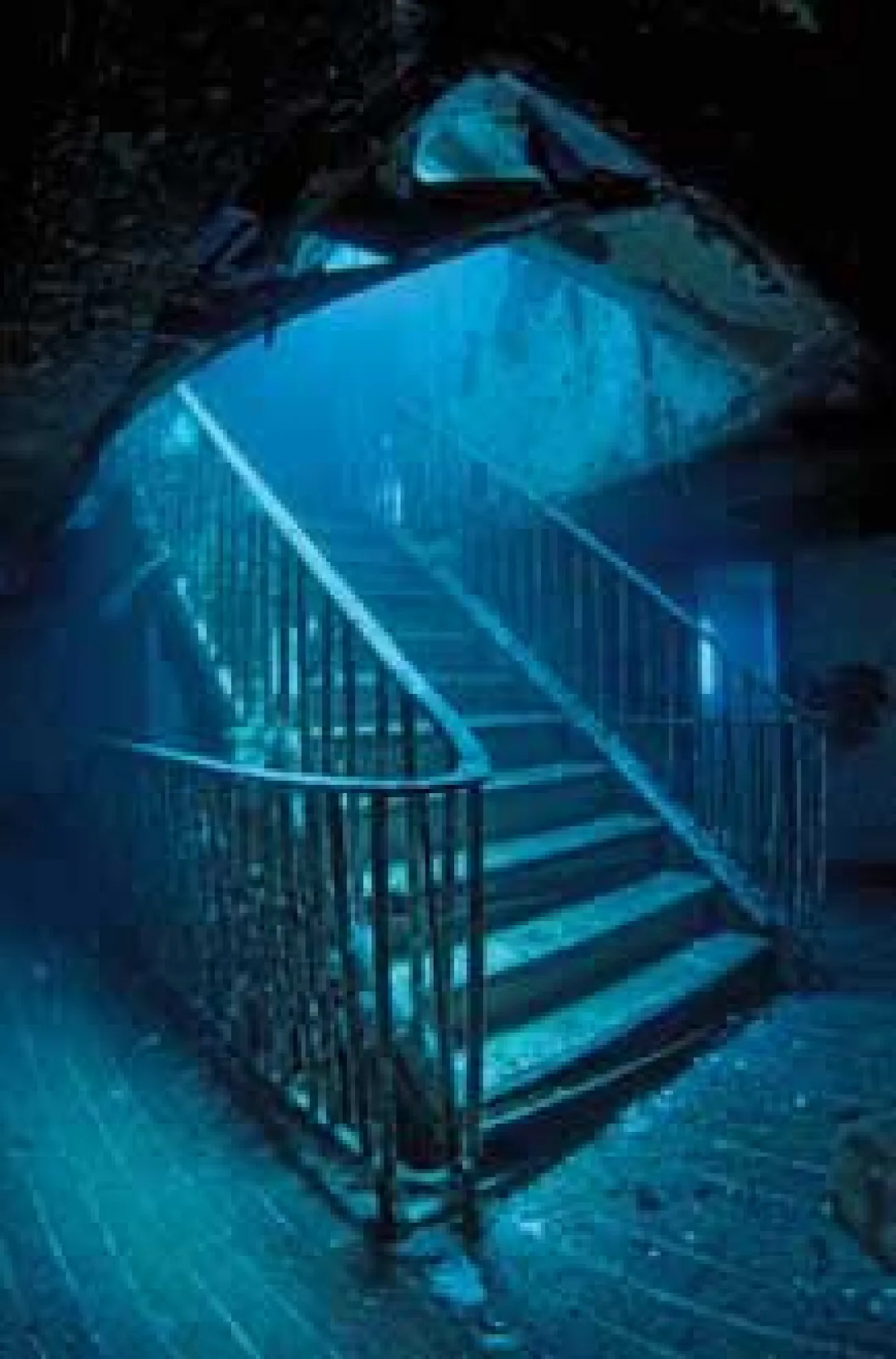
Alex MustardSome of the best images of wrecks are of their interior architecture. Look for areas where shafts of light break through cracks or openings in the wreck, and position yourself around that available light.
In general, ambient light — and using strobes only when necessary — creates an atmospheric effect. I take lots of photos inside wrecks without strobes. The key is to stay in the dark and shoot toward the light. Also consider tilting your camera slightly to get the beams on a pleasing diagonal.
Look for an interesting feature illuminated in a shaft of light. From there you can also light the subject with a kiss of strobe. But keep in mind, with strobe power, if you want atmosphere, less is more.
Alex MustardWhile many wrecks have compelling stories, the heart of their tales can usually be found in cargo or artifacts. This is especially true of war wrecks. Small items are easy to light with strobes; larger subjects, like military vehicles, are challenging, especially if they are found in dark, silty areas.
When lighting the whole scene with strobes, pay particular attention to strobe positioning and aiming. My preferred lighting setup is called rabbit ears, with my two strobes up on arms above my housing, creating an even pool of illumination across the subject.
Backscatter is also common in wrecks. The best way to minimize this effect is to avoid stirring up the sediment. Excellent buoyancy and fin control will be rewarded in your pictures.
Ships on the ocean floor share one thing in common — they each have a story to tell. Wreck dives provide the thrill of discovery, a three-dimensional diving challenge and, for underwater photographers, a chance to create dramatic images.
Often the best photo opportunity is the first. As a wreck looms into view, photographers have the chance to go for the “money” shot, that iconic image that features a large and recognizable section of the ship — such as the stern, bridge or bow — as it comes into view. These scenes are usually too large to light with a flash, so the first step is to turn off your strobes and expose the photos using only ambient light. If you’re using automatic exposure, dial in a bit of underexposure so the water stays a rich blue color.
In clear, shallow water, the ambient light will have a clear direction, so shoot with the sun behind you for colorful shots, and across the light for black-and-white. Monochrome images like the one above have more impact with large, shadowy shapes, an effect created by framing against the sun.
Most photographers don’t switch their cameras to black-and-white underwater; instead, they convert the files during processing. The best monochrome shots require using the light correctly. During postproduction, don’t be afraid to give black-and-white wreck shots a big boost in contrast.
Inside a wreck there are two main types of images to focus on: The first are interesting features of the ship or cargo, and the second are the views captured by looking out doorways, portholes and other openings. Most features are best lit with strobes, but when shooting interiors, try to find ambient light and then angle toward that light — the blue coming through will give the photos a visual depth.
Heading out on a wreck dive? Here's some Wreck Diving Gear to help you make the most of your dive.


