

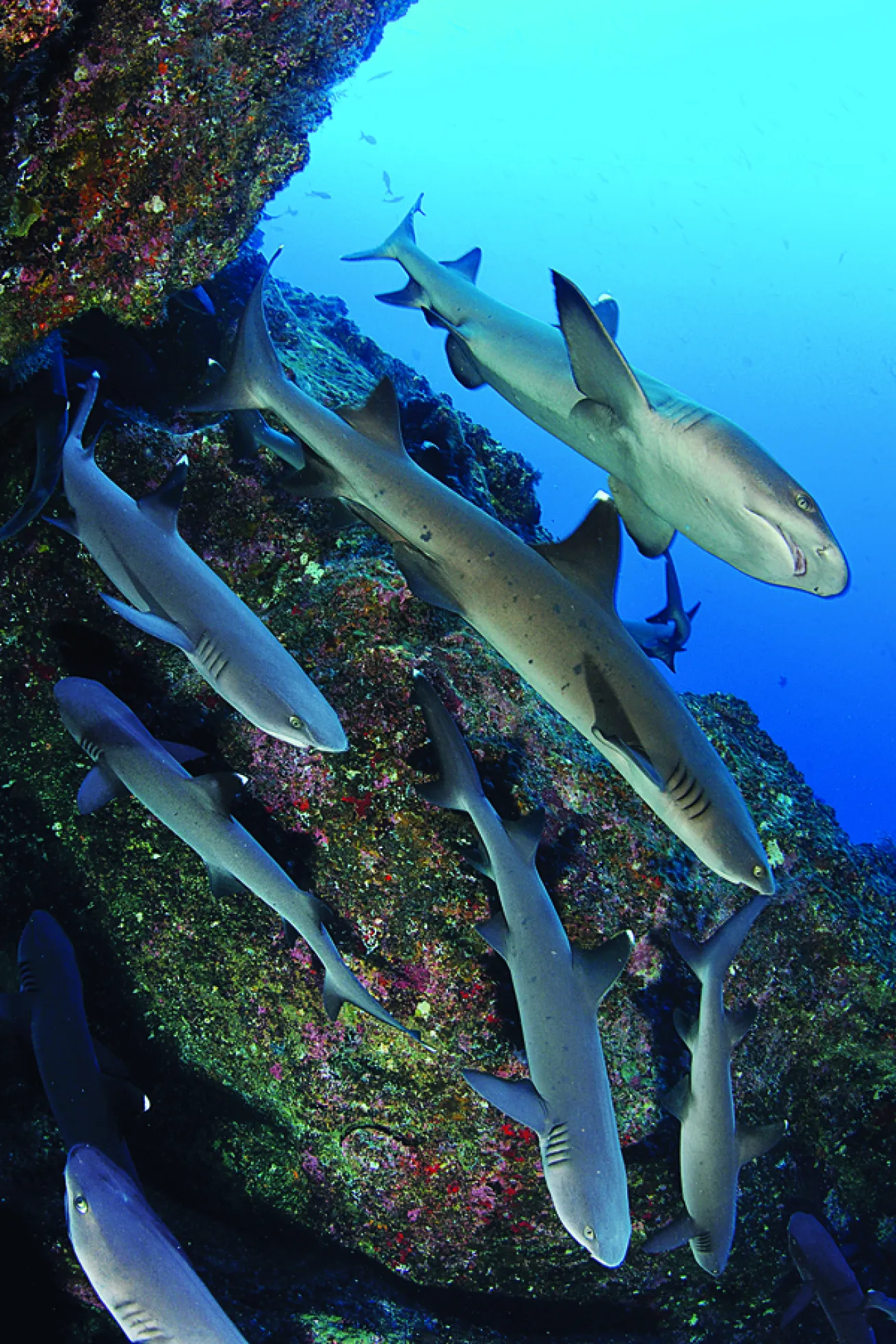
Damien MauricNATURAL BEHAVIOR
Baited dives are excellent for shark photography, but they don’t allow photographers to take every type of shark photo. Unbaited encounters can allow us to see and capture other aspects of shark behavior, and we can often see sharks schooling, hunting, being cleaned or even sleeping. When bait isn’t used, we might not be able to get as close to our subjects, so we need to set up our camera appropriately. Longer camera-to-subject distances mean increasing strobe power and putting strobes farther out from the camera on long arms. We should choose a faster shutter speed so we can open up the aperture to get plenty of strobe light in our image. Take care when selecting lenses: Standard wide-angles and even midrange zooms are often better than fisheye lenses when sharks are not baited and are keeping their distance.
Camera: Nikon D90 // Housing: Aquatica // Lens: Tokina 10-17mm fisheye // Strobes: 2x Ikelite DS160 // Settings: f/10, 1/60 sec, ISO 250
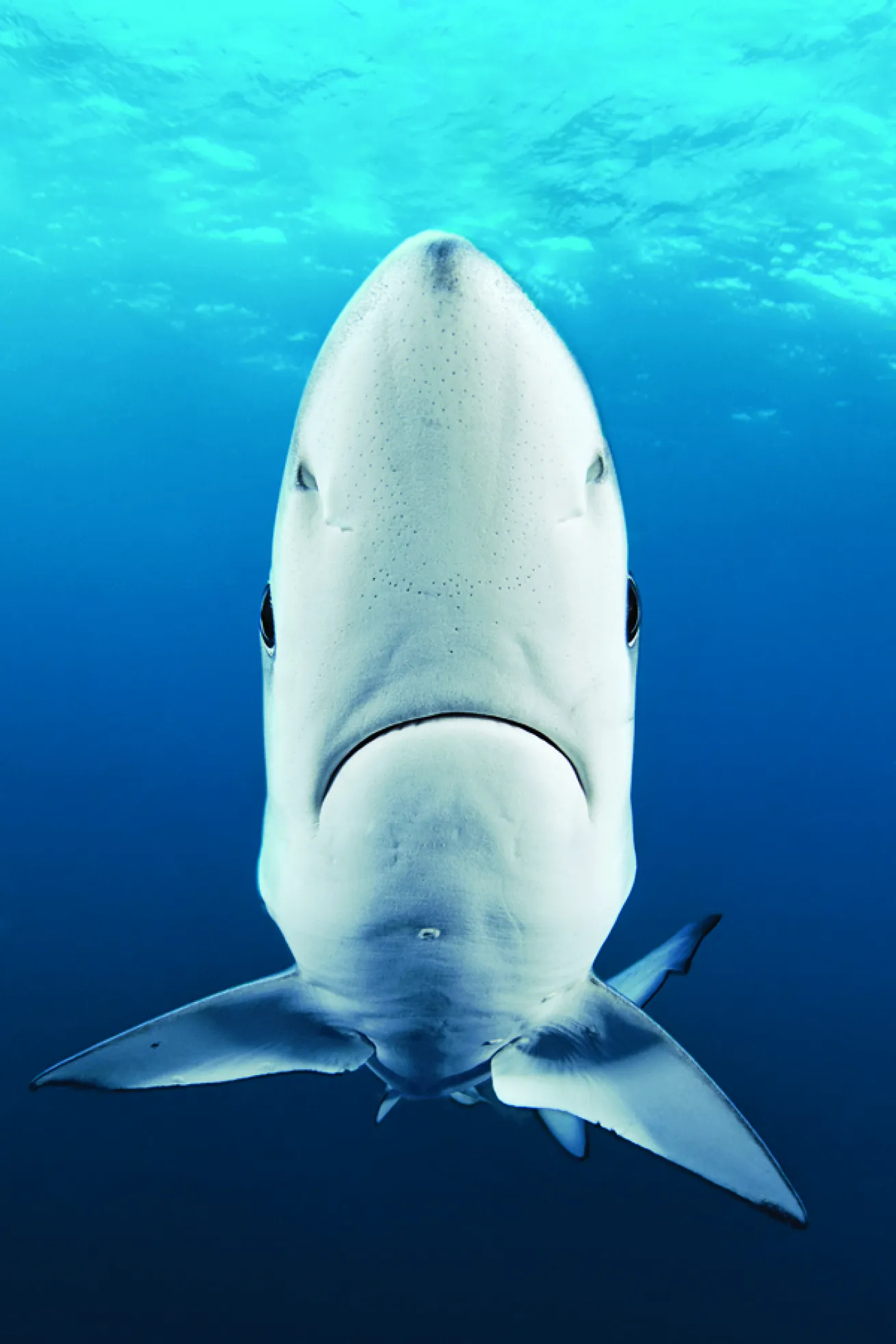
Tobias FriedrichSHARK PORTRAITS
Dramatic subjects make dramatic portraits. The key to memorable portraits is to think differently. Try different lighting or quirky framing or cropping. Photographers rarely snap vertical images of sharks, but these images are published quite regularly. A vertical format doesn’t naturally fit a shark, but this shape does fit magazine pages. Experiment with it. Images of sharks with mouths gaping tend to whip up anti-shark feelings and reinforce fear, even when that wasn’t the photographer’s intention.
Camera: Canon EO S 5D Mark II // Housing: UK-GERMANY // Lens: Canon 8-15mm fisheye // Strobes: 2x Ikelite DS-125 // Settings: f/10, 1/80 sec, ISO 400
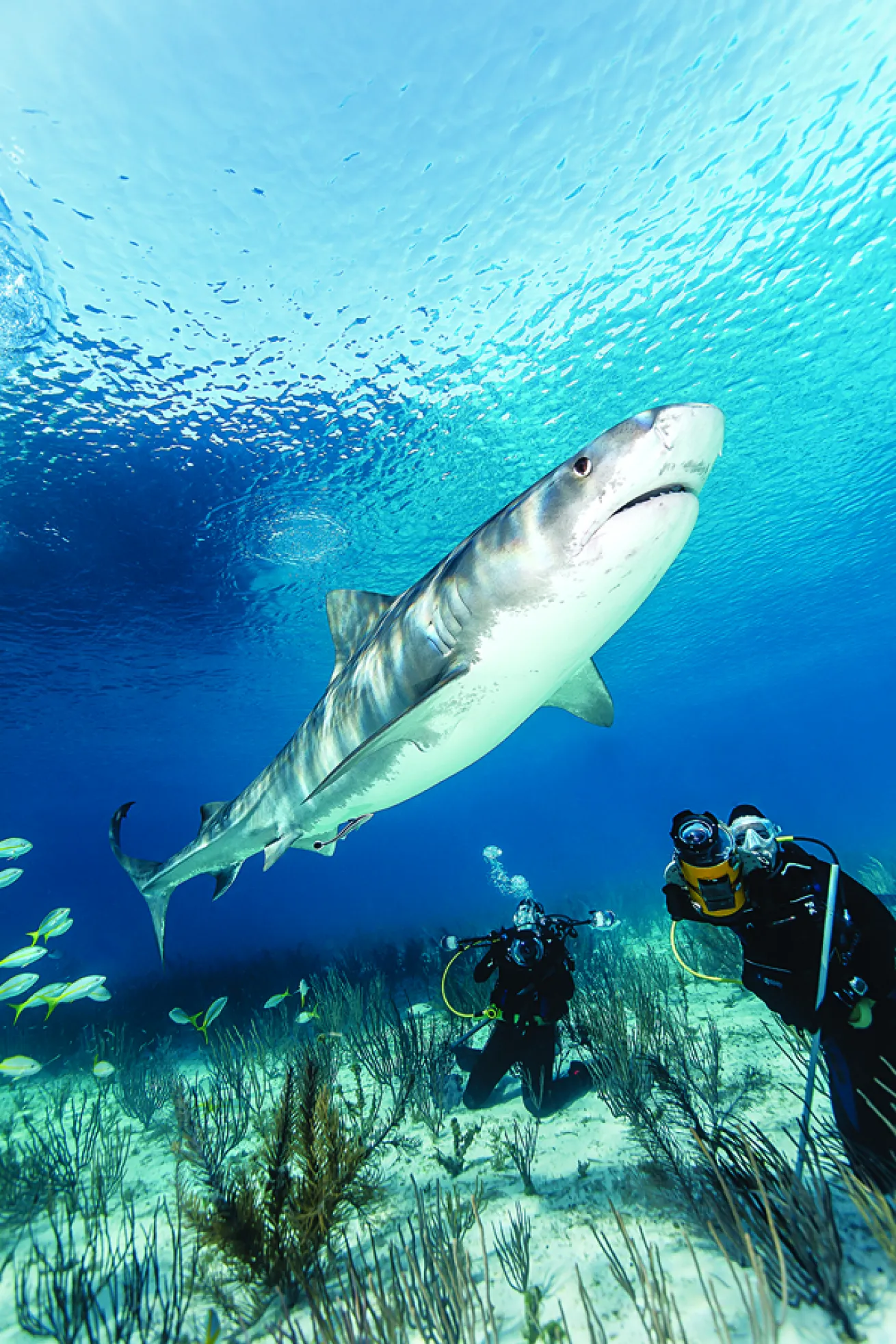
Andy SallmonINCLUDE DIVER INTERACTIONS
Shark diving is one of the most exciting underwater experiences you can have. Expect your heart to race and your air gauge to go down more quickly than usual. These experiences are all about the encounter, so including human subjects in our shots is important sometimes too. Images with people and sharks will always sell well because divers like to imagine themselves in the scene. But avoid images that feel like “man dominating beast.” It is much better to show an encounter on the animal’s terms.
Camera: Canon 5D // Housing: Sea and Sea // Lens: Canon 17-40mm zoom // Strobes: 2x Sea and Sea YS-250 // Settings: f/6.3, 1/200 sec, ISO 100
Check out this sage advice written by professional underwater photographer and trained marine biologist, Alex Mustard, as he provides tips and insights on how to optimize your shark photography images!
Want to learn more about shark photography with Alex Mustard? Check out Photography Tips: How to Take Pictures of Sharks!


