

Made up of more than 2,900 reefs and 900 idyllic islands, the Great Barrier Reef is one of the best-known dive destinations in the world. The reef system, a UNESCO World Heritage Site, stretches along the Australian coastline for more than 1,430 miles. It is the only living organism visible from space. Yet despite its size and protected status, the Great Barrier Reef is impacted by our changing climate, and reports of coral bleaching events and weather damage are abundant.
In April 2019, a report published in Nature confirmed coral reproduction on the Great Barrier Reef had declined by 89 percent, after repeated and severe bleaching events in 2016 and 2017 had limited the corals’ ability to recover.
But the news isn’t all bad. In July 2019, research published in Frontiers in Marine Science found that One Tree Island in the southern Great Barrier Reef, which was severely damaged by Cyclone Hamish in 2009 (destroying much of the island’s coral), has shown a dramatic recovery.
Discussing the state of the reef with local dive guides, it became clear the northern Great Barrier Reef is also recovering, and in certain areas, thriving.
Is the Great Barrier Reef still worth diving? Yes. It is just a matter of knowing where to dive.

Katae Olaree/ShutterstockColorful corals in shallow water on the Outer Great Barrier Reef.
Three of the Best Great Barrier Reef Systems to Dive
If you’re looking for the best Great Barrier Reef dive sites, visit the outer reefs. Far from day boats, these reef systems have vibrant coral reefs and diverse marine life.
Ribbon Reefs
The Ribbon Reefs system has numerous well-known dive sites that are in great condition.
Gotham City is often touted as an unmissable dive site, and the hype is absolutely true. If you’re doing a night dive there, make sure you’re the first to get in the water.
You’ll be rewarded with huge schools of jacks and trevally hunting by the light of your torch, plus numerous hunting whitetip reef sharks. The action is so fast it’s hard to keep track, so just shine your torch on the reef and watch the night unfold.
For meeting inquisitive diver-size potato cod, don’t miss Cod Hole. While there is some coral rubble at this site, you can still find beautiful shallow coral beds and plenty of reef fish.
The pinnacles at Lighthouse Bommie and Crack-a-Jack are both busy with marine life. These thriving pinnacles have schools of barracuda, marble rays, gray reef sharks, glassfish, lionfish, groupers and numerous soft corals. The seasonal migration of dwarf minke whales is one of the best reasons to dive Ribbon Reefs. You can snorkel with these whales, known to seek out human contact, for hours on end—in between your dives.
When to Dive Ribbon Reefs: June or July for minke whales and calm dive conditions. August for humpback whales.

Sebastien Burel/ShutterstockGiant potato cod at the Cod Hole on the Great Barrier Reef, Queensland, Australia
Far Northern Reefs
The rarely visited Far Northern Reefs take intrepid divers away from the tourist trail and offer some of the Great Barrier Reef’s best remote coral wall dives.
If you’re a fan of sea turtles, be sure to dive off Raine Island in the far north. Up to 60,000 adult female sea turtles migrate to Raine Island each year, meaning there are plenty of sea turtles to dive with. You might even see visiting tiger sharks while you’re there.
Make sure you leave some time to dive the wreck of the Pandora; the ship best known for being sent in search of mutineers aboard the British Royal Navy ship Bounty in 1790.
When to Dive the Far Northern Reefs: November for the start of the sea turtle breeding season.
Coral Sea Reefs
Head straight offshore from eastern Australia and you’ll be diving in the Coral Sea, where you can find the best pelagic action. The Coral Sea Reefs come highly recommended by local dive guides.
Bougainville Reef is best for big-fish encounters and has some caves. Visit nearby Osprey Reef to the north and you can dive with hundreds of sharks.
The healthy soft corals in both areas have resulted in very colorful reefs, and the visibility is almost endless.
One dive guide confidently suggested the dives at the Coral Sea Reefs are as good as those of Papua New Guinea.
When to Dive the Coral Sea Reefs: The weather is a gamble during September and October, but if you get lucky with calm conditions it’s the best month for water visibility—which can reach up to 200 feet at both Osprey and Bougainville.
What Else Can You Do in North Queensland?
When you’ve finished exploring the reefs, make sure you add a few days on to your vacation and visit some of North Queensland’s other highlights.
The Daintree Rainforest and Cape Tribulation, located in the Wet Tropics of Queensland UNESCO World Heritage Site, make a great day tour, during which you can visit this oldest continually surviving tropical rainforest in the world and walk along white-sand beaches.
Palm Cove and Trinity Beach just north of Cairns are two of Australia’s best-loved beaches, but they can get crowded. Stay at Clifton Beach, nestled between Palm Cove and Trinity, to enjoy a quieter and equally stunning beach and walk along the promenade to the resorts.
To end your trip on a high, make sure you take a low-level scenic flight over the Great Barrier Reef. You can spot marine life such as mantas and dugongs below you as you soar over the reefs. It’s the best way to gain some perspective about just how vast this precious reef system is.
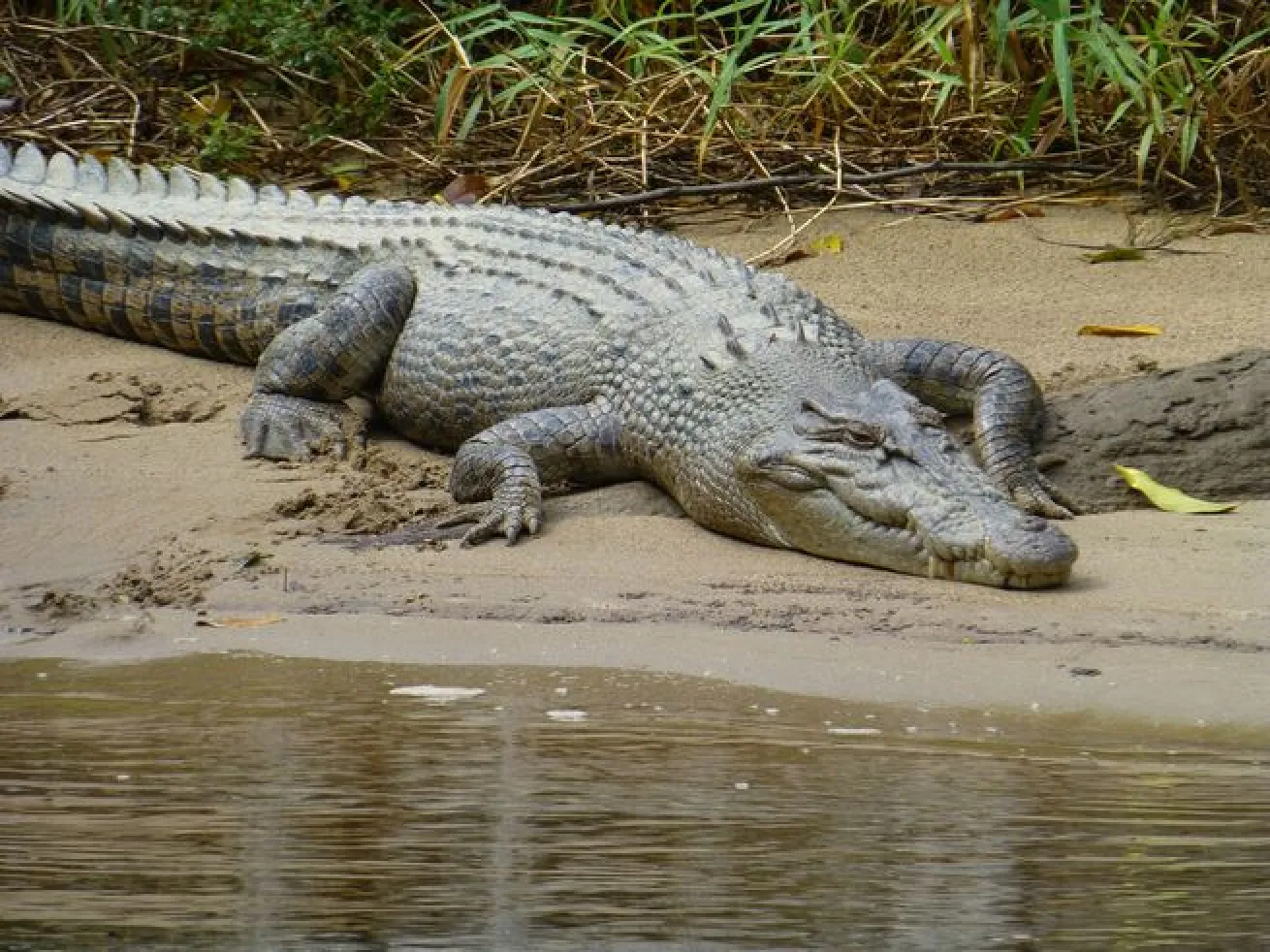
Christian Lehmann/ShutterstockAn Australian saltwater crocodile at Daintree River in Queensland, Australia.
Top Great Barrier Reef Travel Tips
• Take a multilayer suit for winter warmth. A 5 mm suit is fine, but 7 mm is ideal for surface snorkeling with whales for hours at a time.
• Be Croc Aware at North Queensland’s beaches and creeks. Crocodiles have a 10-foot strike zone, making it best to avoid the water’s edge.
• Leave plenty of time for your flight connections from Cairns. Cancellations can and do occur at this laid-back small destination.
• Australia’s MooGoo reef-safe sunscreen works very well in the harsh Australian sun and is available at most pharmacies.


