

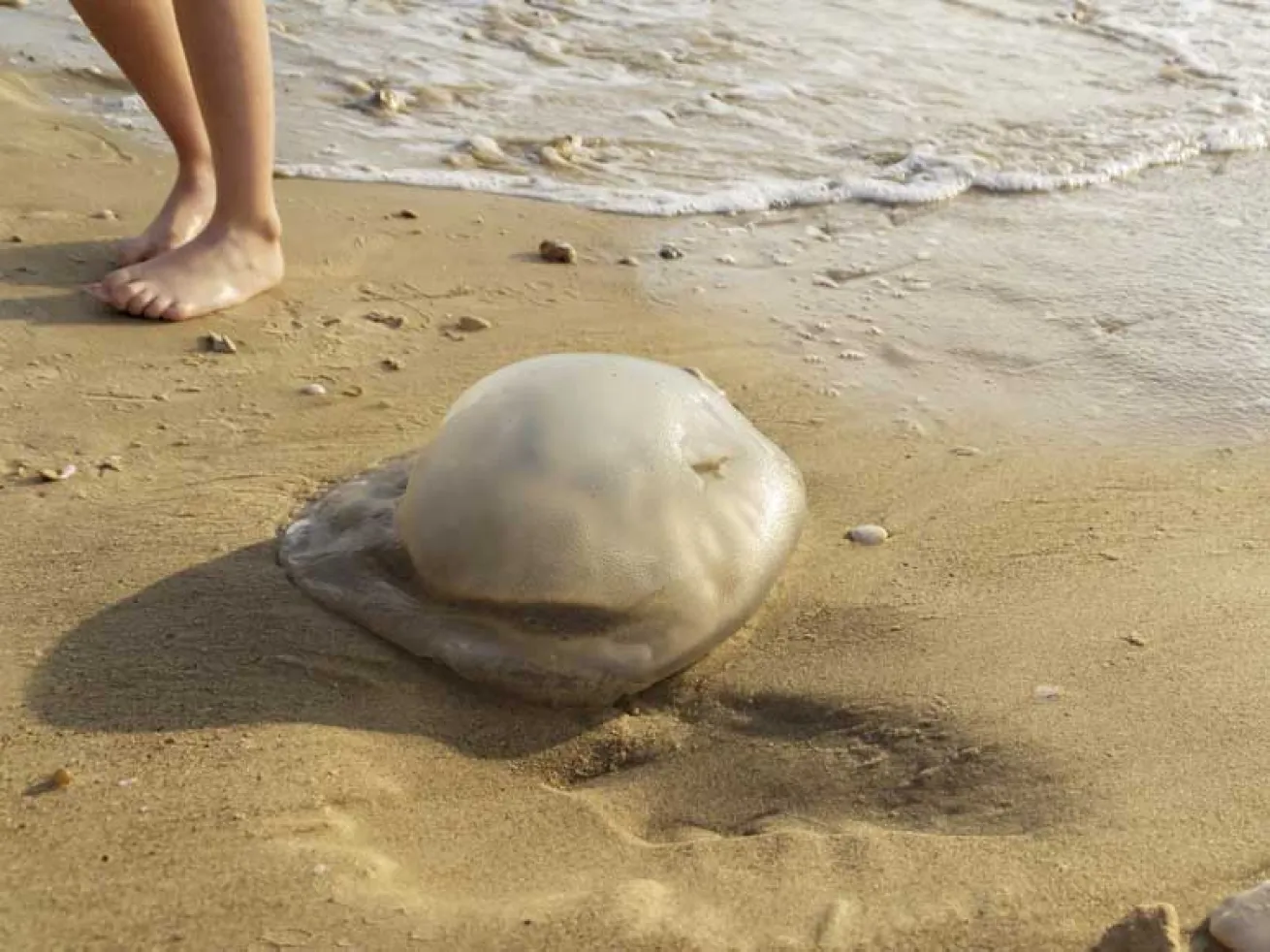
iStockphotoBe prepared for jellyfish stings
No one expects accidents to happen, which as they say, is why they’re called accidents. And let’s face it, the sea is a pretty unpredictable place. Stepping on stonefish, crossing paths with the long tendrils of a jellyfish, or just scraping yourself on the reef are common dive mishaps. Be prepared and you can minimize the damage and enjoy the rest of your dive.
Toss these 10 dive savers in your bag and hopefully you’ll never need them.
1. Fresh Water & Water Bottle: The first course of action is often flushing out the wounded area. Having fresh water and a squeezable sports bottle on hand make it an easy job.
2. Soap: To clean wounds.
3. Vinegar: Jellyfish (there are more than 9,000 kinds), fire coral (not actually coral but a member of the jelly family) and bristleworms are a few of the common culprits that can deliver a painful zing. Vinegar helps neutralize the venom from any remaining nematocysts (stingers). Note: NOT to be used for a Portuguese man of war. It can trigger remaining nematocysts to fire.
4. Tweezers. To remove large stingers, splinters, and other embedded items.
READ MORE: 10 Rules for Avoiding Dive Fatalities
5. Shaving kit: To scrape away fine bristles.
6. ACE bandage: Useful when you need compression (as in the case of a sprained ankle). It can also be helpful in the case of particularly toxic puncture wounds like those from a cone snail or stonefish. Wrap the affected area snugly (but not so tight as to cut off circulation) with an ACE bandage to slow the spread of venom.
7. Antibiotic ointment: To treat topical wounds after you’ve cleaned them.
8. Gauze pads/bandages: To cover wounds.
9. Over-the-counter pain reliever (ibuprofen, Tylenol): To relieve the pain/ stings
10. Duct Tape: Makes a good second skin over blisters.
Call 911 if ...
Even innocent injuries can turn deadly if you have an allergic or severe reaction. After any accident, watch for severe swelling, dizziness, blurred vision, breathing difficulties, weakness, muscle pain, cold sweat and a rapid heartbeat. If any occur, call 911 (or DAN's emergency hotline 919-684-4DAN if no emergency services are available) immediately. Injectible epinephrine can help calm allergic reactions. CPR may be necessary until help arrives.


