

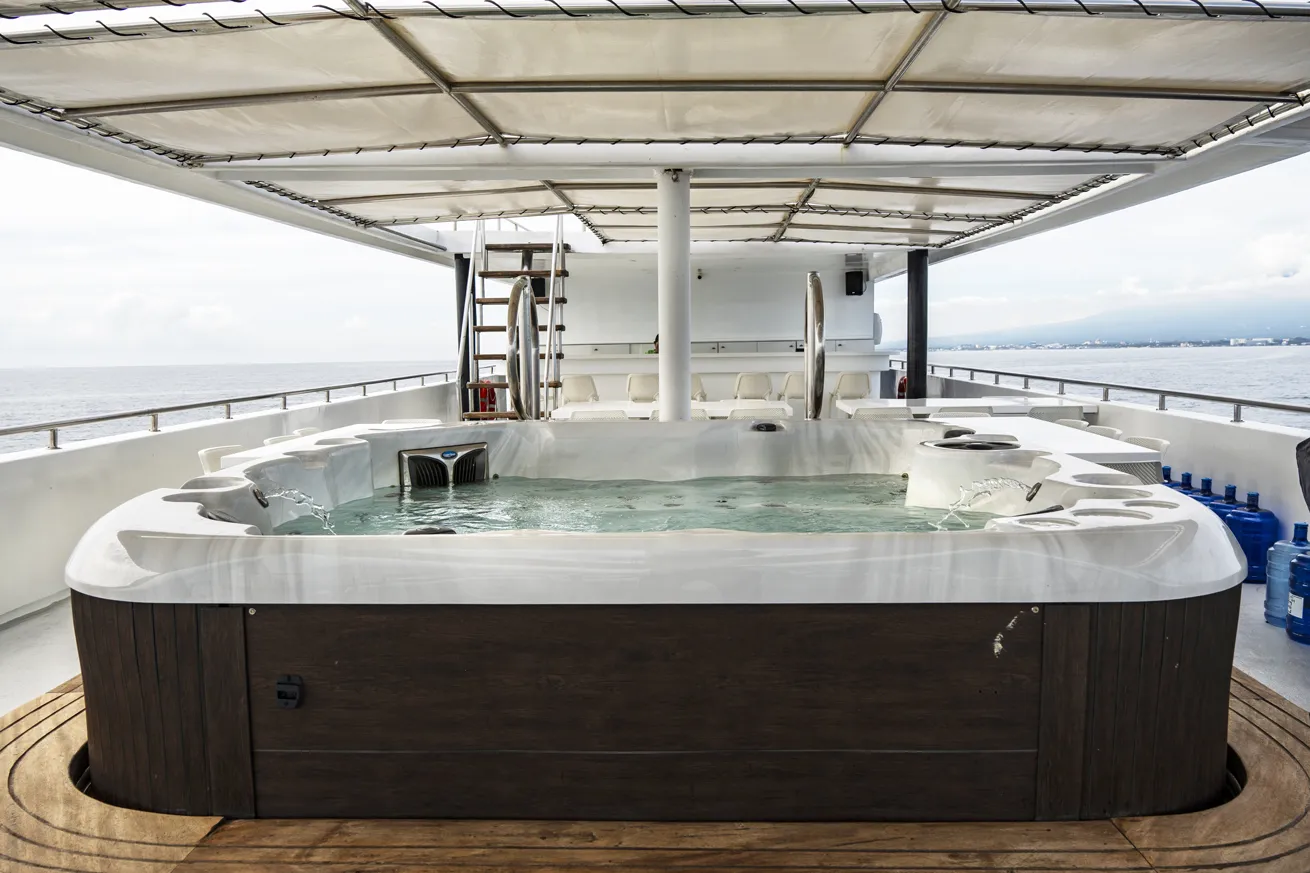
Francesca Page/Aggressor AdventuresLiveaboard hot tubs are a great way to relax after a long dive day. But soaking in hot water too soon after diving could increase your risk for DCS, making it wise to wait a few hours and use that time to rest and rehydrate.
Regardless of the temperature of the water you’re diving in, few things feel as soothing as sinking into the warmth of your liveaboard’s hot tub after a dive.
While relaxing your muscles with ocean views may seem like the perfect way to spend a surface interval, using hot tubs immediately after diving carries some increased risks.
Dangers of Using a Hot Tub After Scuba Diving
When you dive, the tissue in your body is placed under pressure and absorbs inert gasses like nitrogen.
As you begin to surface and that pressure is released, the gases escape from the tissue, dissolve in your blood, and make their way to your lungs, where they are ultimately exhaled. While much of this off-gassing occurs in the water during your ascent, the process takes time and continues on the surface well after a dive ends.
The heat from a hot tub or hot shower causes vasodilation (widening of blood vessels), leading to increased blood flow. This heat can also cause the gas dissolved within the blood to rapidly off-gas and form small bubbles.
While quicker off-gassing and boosted circulation may sound beneficial, if this process happens too quickly, it can also increase the risk of decompression sickness (DCS).
Why Heat Hits Harder After Repetitive Diving
There are several reasons this is especially concerning for liveaboard divers. First, many divers try to make the most of their time by diving as much as possible on a liveaboard. While not inherently a bad thing (in fact, I support it!), more bottom time increases how much gas accumulates in our bodies and, in turn, the risk of DCS.
Another consideration is that while liveaboards are extremely convenient for diving, access to definitive care may be more difficult if injuries occur in remote areas. Thus, we should build in additional layers of safety while on liveaboard adventures.
Building a Buffer of Safety
Delaying your hot-tub dip by a few hours adds one layer of safety.
Taking a “surface interval” between diving and soaking in a whirlpool spa gives the body additional time to offload gases at a more appropriate rate.
That way, even if the heat causes bubbles to form, there is less initial gas stored in the body to cause harm. Try not to engage in too much vigorous activity during this time either, as strenuous movement also promotes off-loading. Consider using your post-dive time to hydrate and grab a snack while debriefing with your dive buddies!
While there are no official guidelines on how long to wait between diving and immersing yourself in hotter water, most symptoms of DCS develop within six hours of surfacing. Thus, a delay of at least a few hours likely provides a healthy margin of safety—especially after deep dives, repetitive days of diving or decompression dives.
Adequate hydration is also important and should not be ignored. Hot tubs can contribute to significant water loss through sweat that you may not notice. To reduce the degree of dehydration— which can further reduce the risk of decompression sickness—drink plenty of water prior to entering and keep sessions short. For most hot tubs, the recommended soaking time is a maximum of 15 to 30 minutes.
Related Reading: Can I Scuba Dive While Taking a GLP-1?

Warning Signs Not to Ignore
If you develop symptoms such as joint pain, unusual fatigue, tingling or a “pins and needles” sensation in your limbs, dizziness, or skin irritation after diving—especially following heat exposure—treat it seriously.
Early symptoms of DCS can be subtle, and prompt evaluation is critical for your safety.
The Bottom Line
Hot tubs may feel great, but they’re not a risk-free post-dive activity—especially on liveaboards, where dive intensity and frequency are high.
The combination of residual nitrogen in the body, heat-induced circulation changes and dehydration can increase the risk of decompression sickness.
When in doubt, choose the safer alternative: hydrate, eat, rest and enjoy the sunset. The hot tub will still be there later—and your body will thank you for waiting.


