

Lauren Rebbeck
Dear Annie,
I typically take one vacation per year that’s completely centered on diving. I’ve always done destinations with dayboats or shore diving, but I’m considering booking a liveaboard this year. The only thing holding me back is the price tag—is a liveaboard really worth the splurge?
—Worth the Splurge
Dear Worth the Splurge,
Yes! If you love planning a vacation that’s completely centered on diving, a live-aboard is completely worth the splurge and something every diver should consider at least once (unless you become addicted).
Benefits of Liveaboard Diving
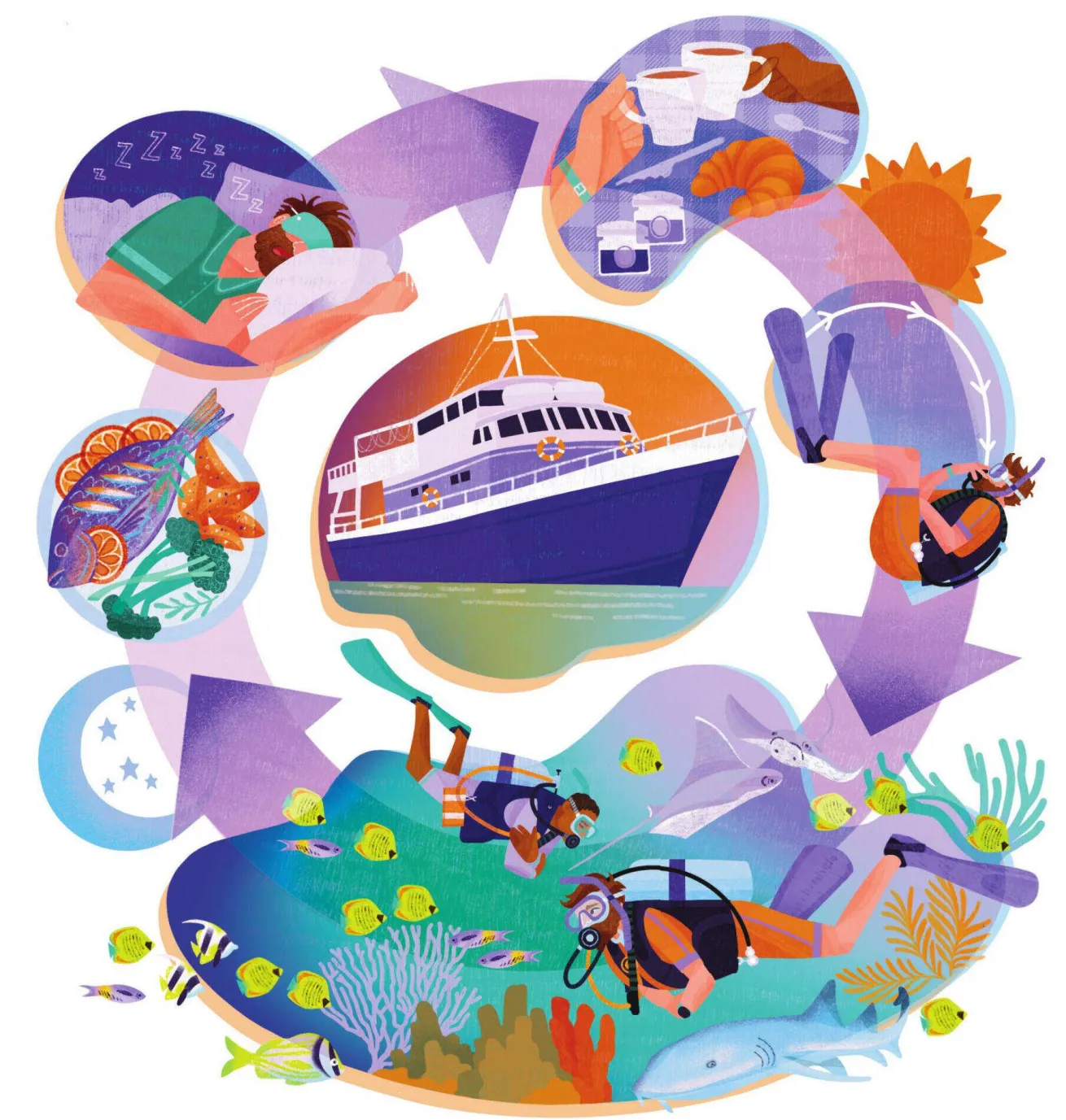
Liveaboard diving is one of the most immersive ways to experience the ocean, because your entire day revolves around diving. You wake up on the water, check the conditions, grab a light breakfast and giant-stride into the sea before most people on land are awake, let alone have had their coffee. Then you surface, eat a snack, rest for a bit and repeat.
It’s simple, focused and deeply satisfying. You’re also surrounded by a crew catering to guests who love diving as much as you do. It’s diving heaven for me!
Differences Between Liveaboard Versus Resort Diving
One of the biggest differences between liveaboard diving and resort or shore diving is how much territory you cover. When you’re land-based, you travel back and forth between sites within a shorter range. On a liveaboard, you move. While you’re eating, napping, reviewing images or updating your logbook, the boat repositions to the next reef, wall or seamount.
You experience an entire region underwater, not just the sites closest to shore. Often, every other dive is somewhere new, which keeps the excitement high all week.
Lauren Rebbeck
What to Expect on Dive Liveaboards
Most liveaboards operate on an all-inclusive model, so lodging, meals, diving, tanks and weights are bundled in the cost of the trip.
Nitrox may be included or offered as an add-on, so check ahead of time. With multiple dives a day, nitrox can make a big difference for bottom times.
Connect with your local dive shop to complete the PADI Enriched Air Diver course before you sail. While you’re at it, consider taking the PADI Boat Diver specialty course so you are familiar with boating terminology and procedures.
Once on board, there’s very little decision-making left to do—which is part of the excitement.
Life quickly falls into a rhythm. Early wake-up, light breakfast, dive. A full hot breakfast afterward, rest, second dive, lunch, maybe a nap or camera time, third dive, snacks, and depending on location, either a dusk dive before dinner or a night dive after.
It sounds like a lot—and it is—but you’re always in control. If your body needs a break, skip a dive. There’s no pressure to do them all. There are usually beanbags, deck chairs, couches or hammocks to lounge on, books to read, and incredible sunrises and sunsets to see topside. (And everything is worth a journal entry.)
Related Reading: Islands Born of Fire: One Week Diving Aboard Palau’s Black Pearl Liveaboard
You experience an entire region underwater, not just the sites closest to shore.
How to Prepare for a Liveaboard
Preparation matters, because you’re living at sea for several days. Pack rain gear, boat-friendly shoes and comfortable layers for warmth between dives. Even in warm climates, multiple dives over several days can leave you chilled. A dry bag, personal medications, and copies of certifications and insurance are essentials. If you have dietary restrictions, medical issues or allergies, communicate clearly before you go and bring a copy in English and the local language so you can share your needs with the crew on board.
Lifelong Friends
One of the things I love most about liveaboard diving is the community that forms at sea. Whether you arrive solo or with friends, you quickly connect with people who share the same passion for the ocean. By the end of the trip, you’ve shared sunrise dives, night dives, meals, laughter and stories that only divers truly understand. Underwater, we all speak the same language, and on your boat, the golden nuggets of your trip unite all.
Related Reading: 5 Tips for Liveaboard Diving With Kids
Lauren Rebbeck
How to Maximize Your Liveaboard Trip
Liveaboards aren’t the only way to dive, and they won’t replace every kind of trip. If you love exploring towns, spending time on land or setting your own schedule, a land-based vacation may suit you better. Or, plan extra time before or after the liveaboard for topside activities. If your goal is maximum time underwater and access to sites day-boats can’t reach, a liveaboard delivers experiences that cannot be matched.
Best Destinations for Liveaboards
Liveaboard destinations like the Galapagos, Cocos, Malpelo and the polar regions cater to experienced divers, while the Caribbean, South Pacific and parts of Europe offer options for newer divers as well. For your first liveaboard, choose your destination carefully, research operators thoroughly and be honest about your experience level. Read reviews, talk to divers who have been there and ask questions before you book. Once you step on board, relax into the rhythm and let the ocean take over.
How to Handle Sea Sickness on Liveaboards
If you’re worried about seasickness, talk with your doctor before you go and start taking any medication before you need it—not after symptoms begin. A little preparation can make the difference between struggling and loving the experience.
After years of exploring our world underwater, I still can’t wait to hear the words, “welcome aboard!” I look forward to hearing about your amazing first liveaboard experience.

Ask Annie
PADI Master Scuba Diver Trainer Annie Crawley answers your most pressing questions about dive etiquette, training qualms and gear analysis with zero judgment and a whole lot of lived experience.
Have a question for Annie? Send to [email protected] with the subject "Ask Annie".


