

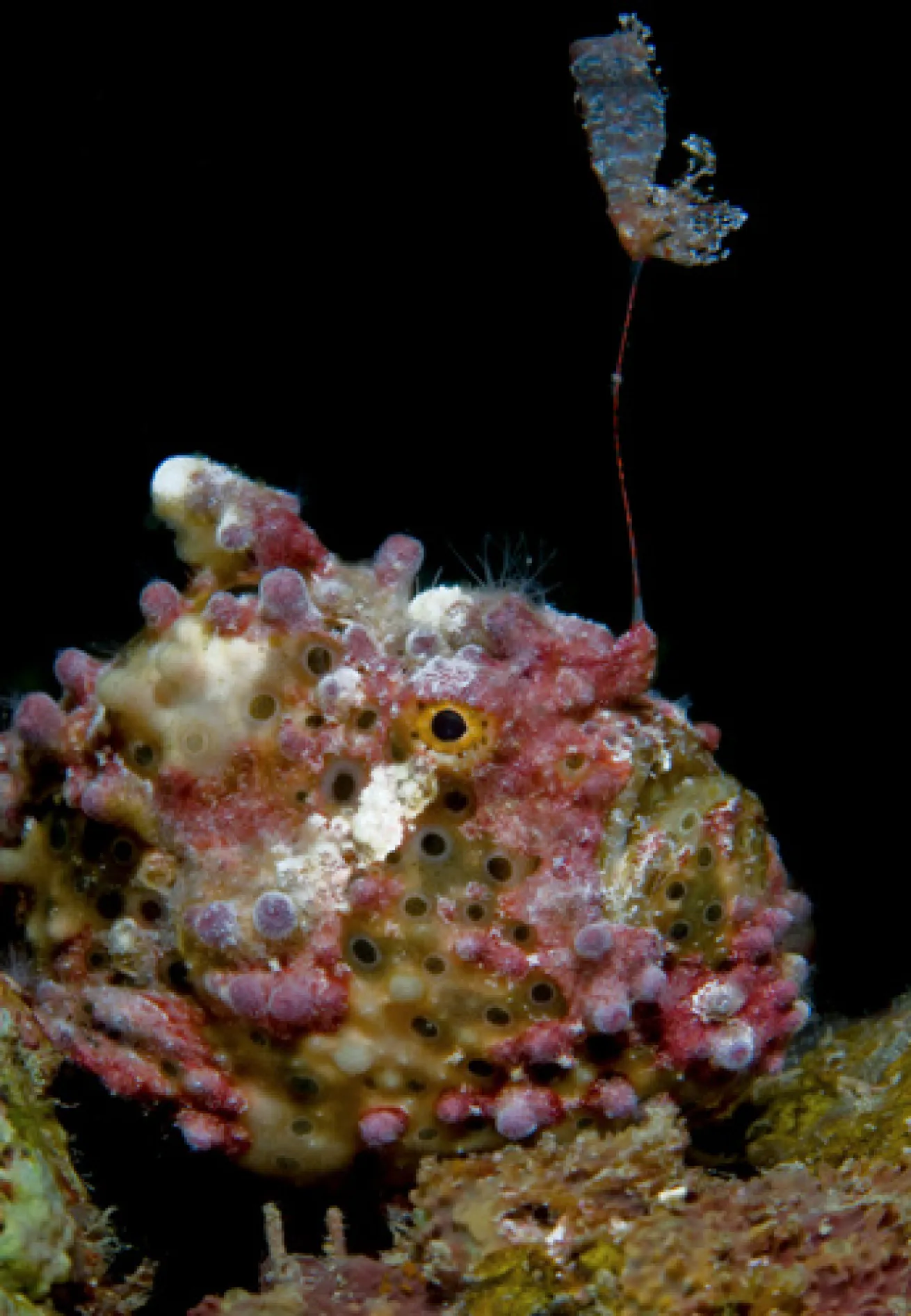
Mike BartickCaught in the act hunting for its next meal: A frogfish uses its rod and lure to excite and attract its prey by repeatedly extending and flicking its lure, creating an irresistible appearance of an easy snack. It’s the unique rod and lure that describes all frogfish in the order of Lophiiformes, and according to research, this suborder of antennae-bearing fish comprises 14 genera and more than 46 species worldwide.
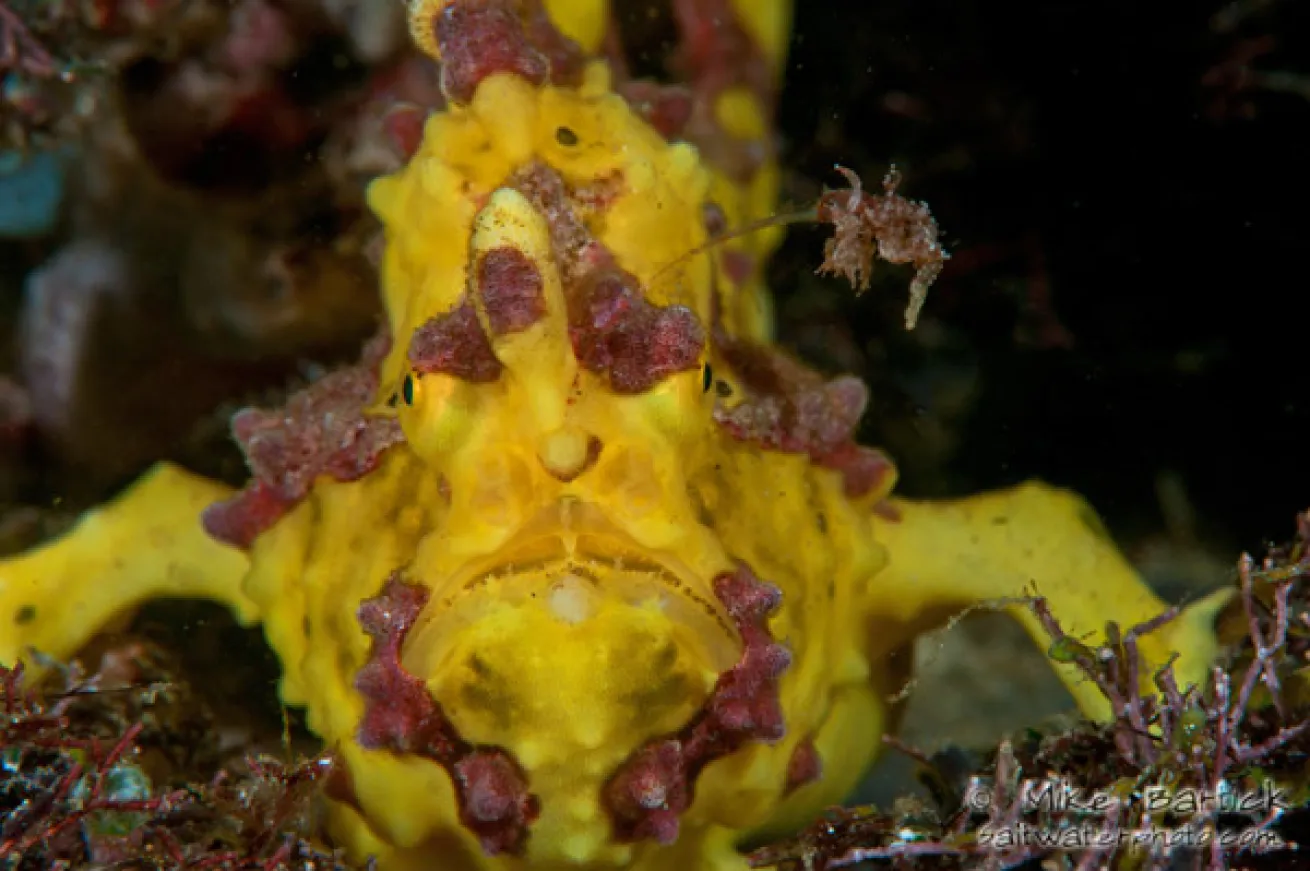
Mike BartickRanging in colour within the same species is not uncommon, and this can make it tough to properly identify frogfish. This yellow warty is squaring off with my lens port, evidently having had enough of my presence. Looking closely, you can see that the lure has sustained damage and is now bent to one side. Camouflage plays a key role in the survival and hunting tactics of frogfish. Their multi-coloured, multi-textured appearance helps them break up their body shape so that they resemble anything but a fish.
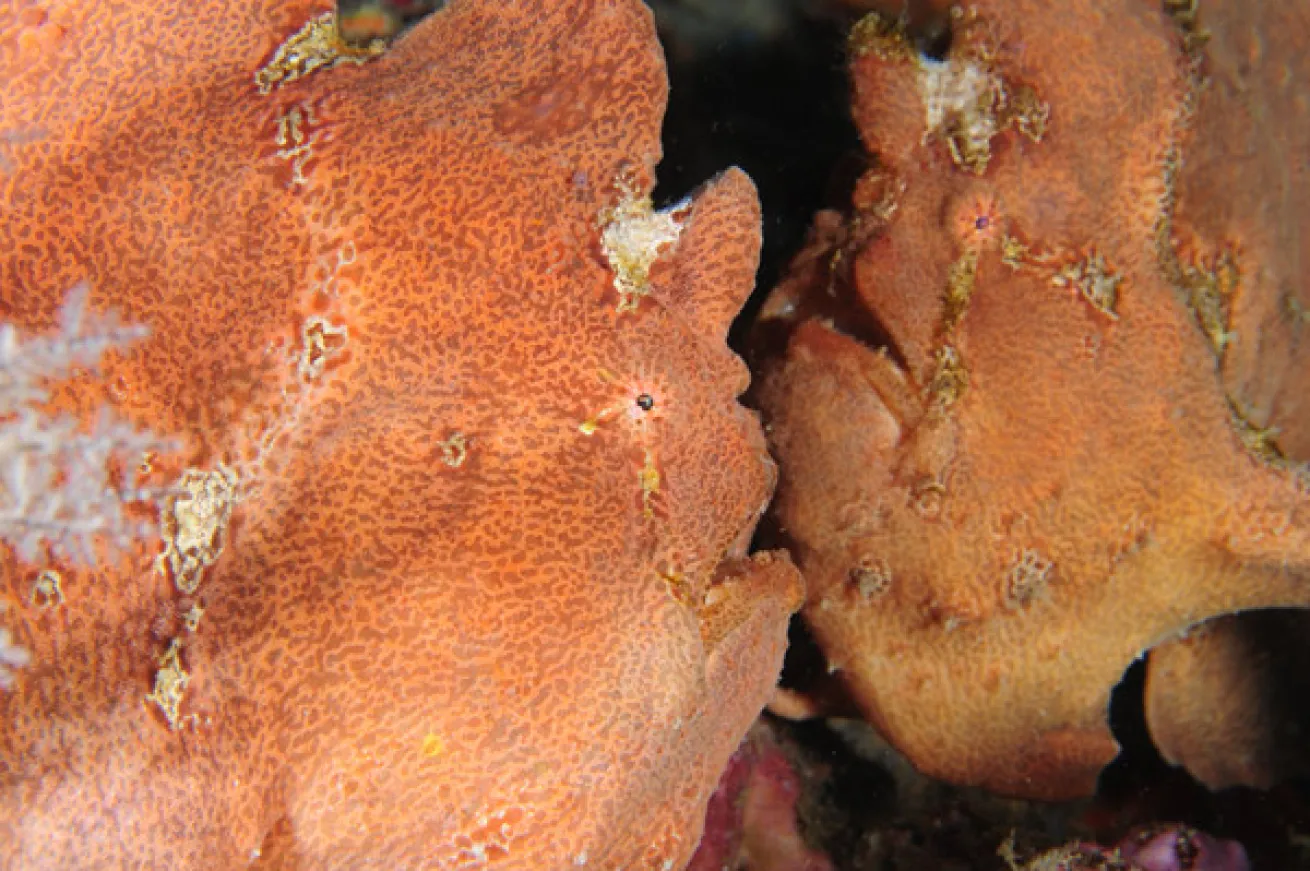
Mike BartickThe most common of the bunch is also the largest, and for this reason, they are probably the easiest to spot. Commerson’s frogfish can grow up to 45 centimetres when fully grown and prefer reefs and walls. I speculate that these two are probably males that haven’t reached maturity. They cohabitated on the same coral head in 30 metres of water for over a year and perhaps settled here during their larval state.
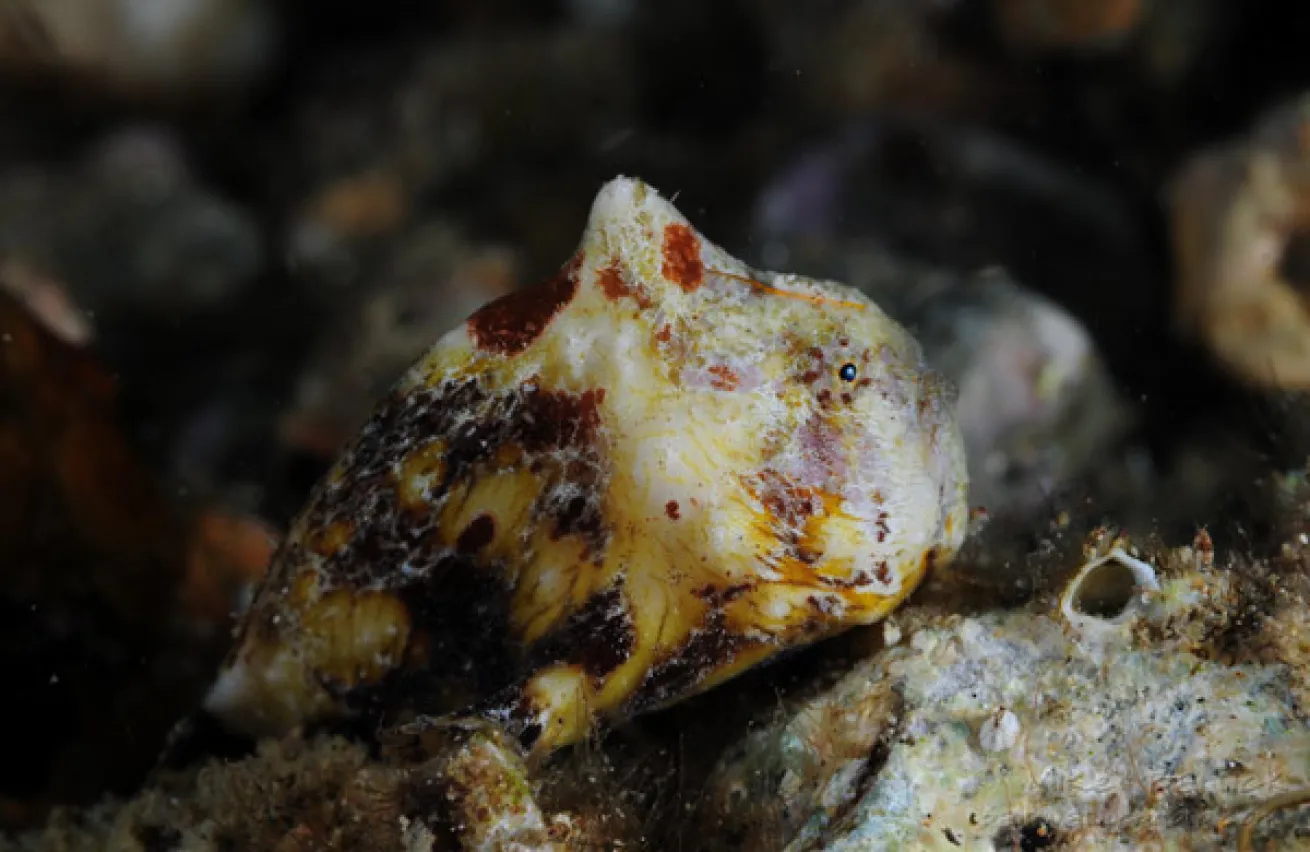
Mike BartickThe smallest adult frogfish is the miniscule pygmy frogfish, which when fully grown will reach a maximum size of 1.25 centimetres. Found living amongst rubble in the shallows near runoffs and estuaries. Most frogfish are from five to 10 centimetres in size when fully grown.
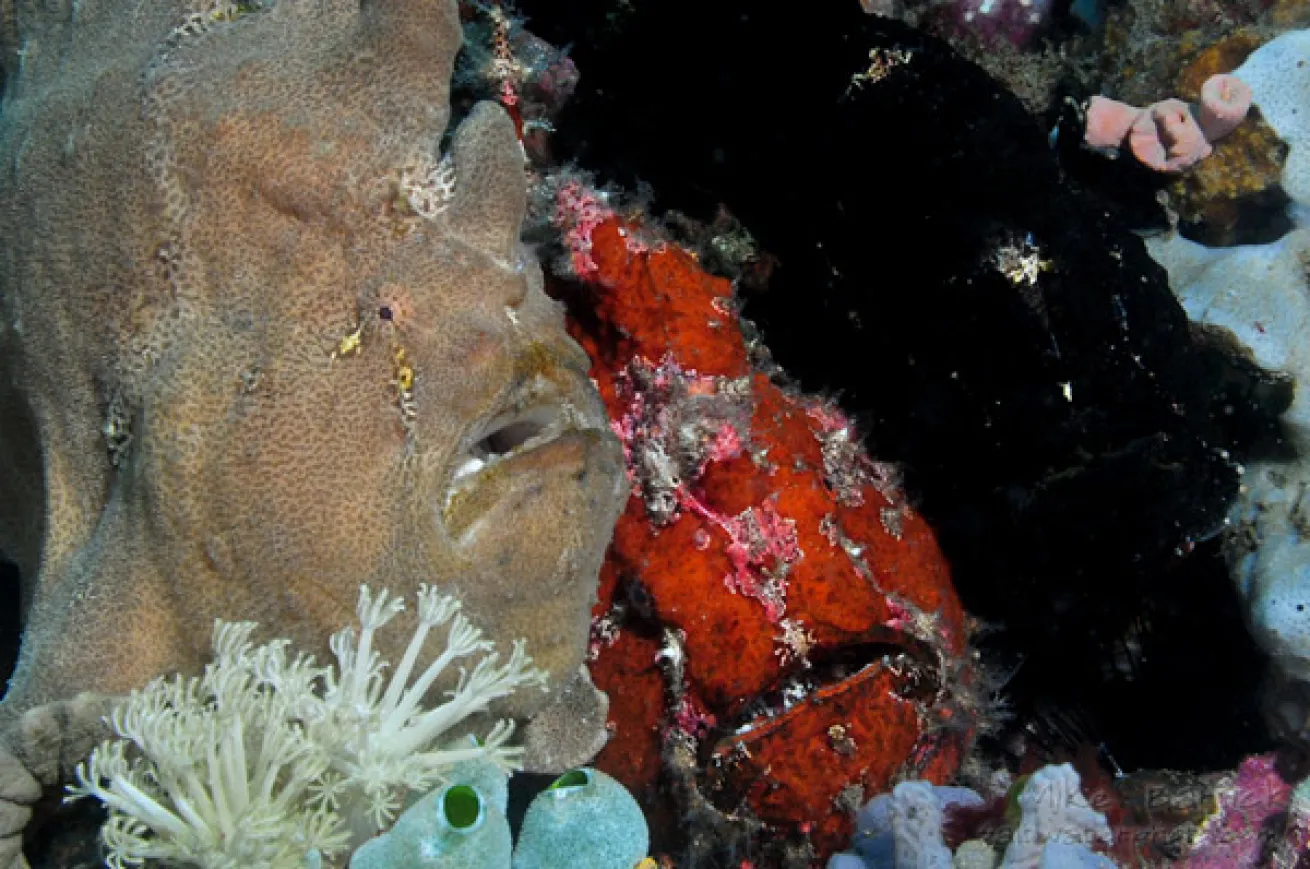
Mike BartickMating involves a selective process of courtship, mate blocking and a powerful pheromone released by the female to attract her suitors. But the actual act is accomplished by cast spawning. The process usually occurs during a full moon and is accompanied by a moderate current to help ensure a maximum survival rate of the eggs. The female swims towards the surface as the male assists by pushing her with all his might. As the gelatinous egg mass is released from the female it begins to unroll, forming a loose ribbon. The excited male releases his sperm, creating a milky cloud that binds with the sticky egg raft. From there, the eggs will drift until they begin to mature and become less buoyant and settle on the substrate. From the roughly 45,000 or so eggs released, very few are successfully fertilised and even fewer make it to the hatchling stage as they are often eaten by their siblings.
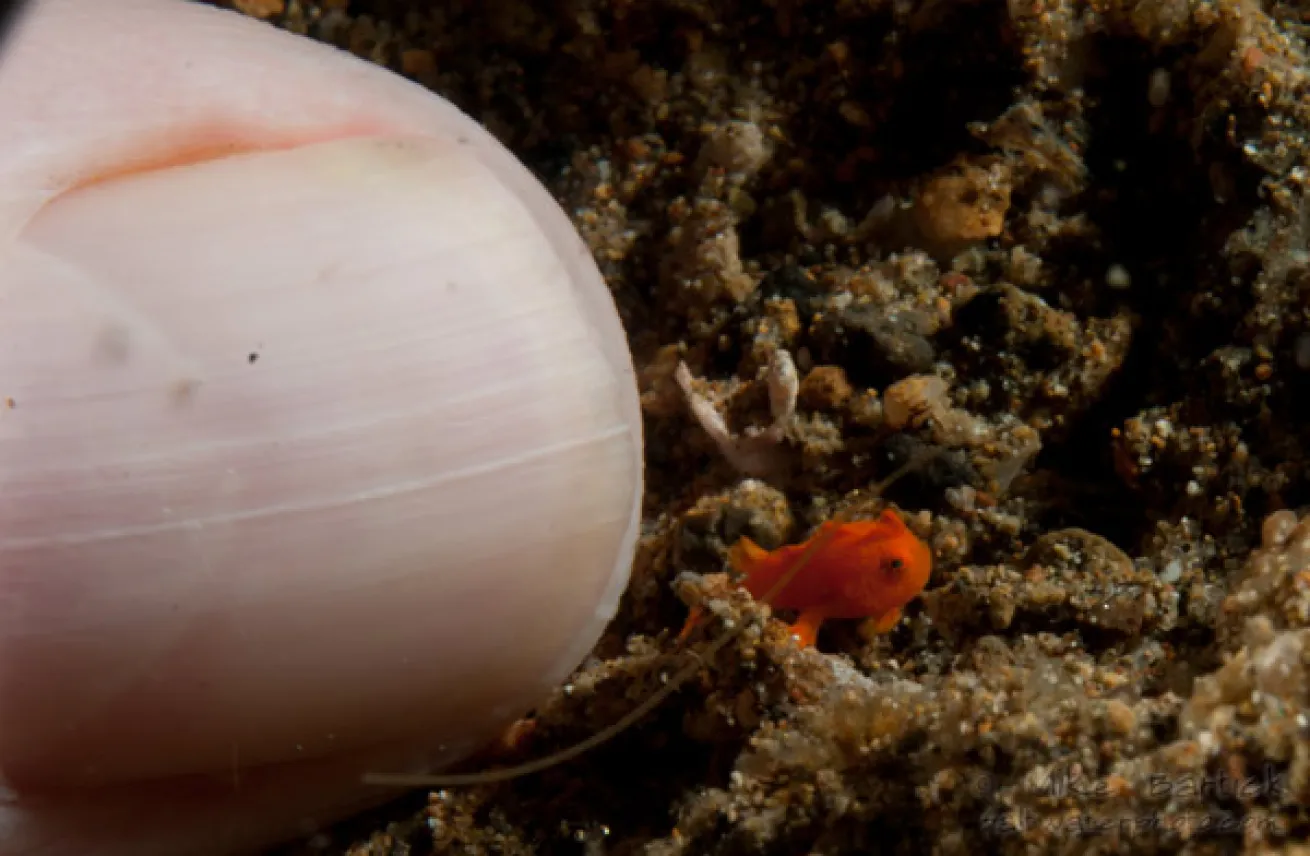
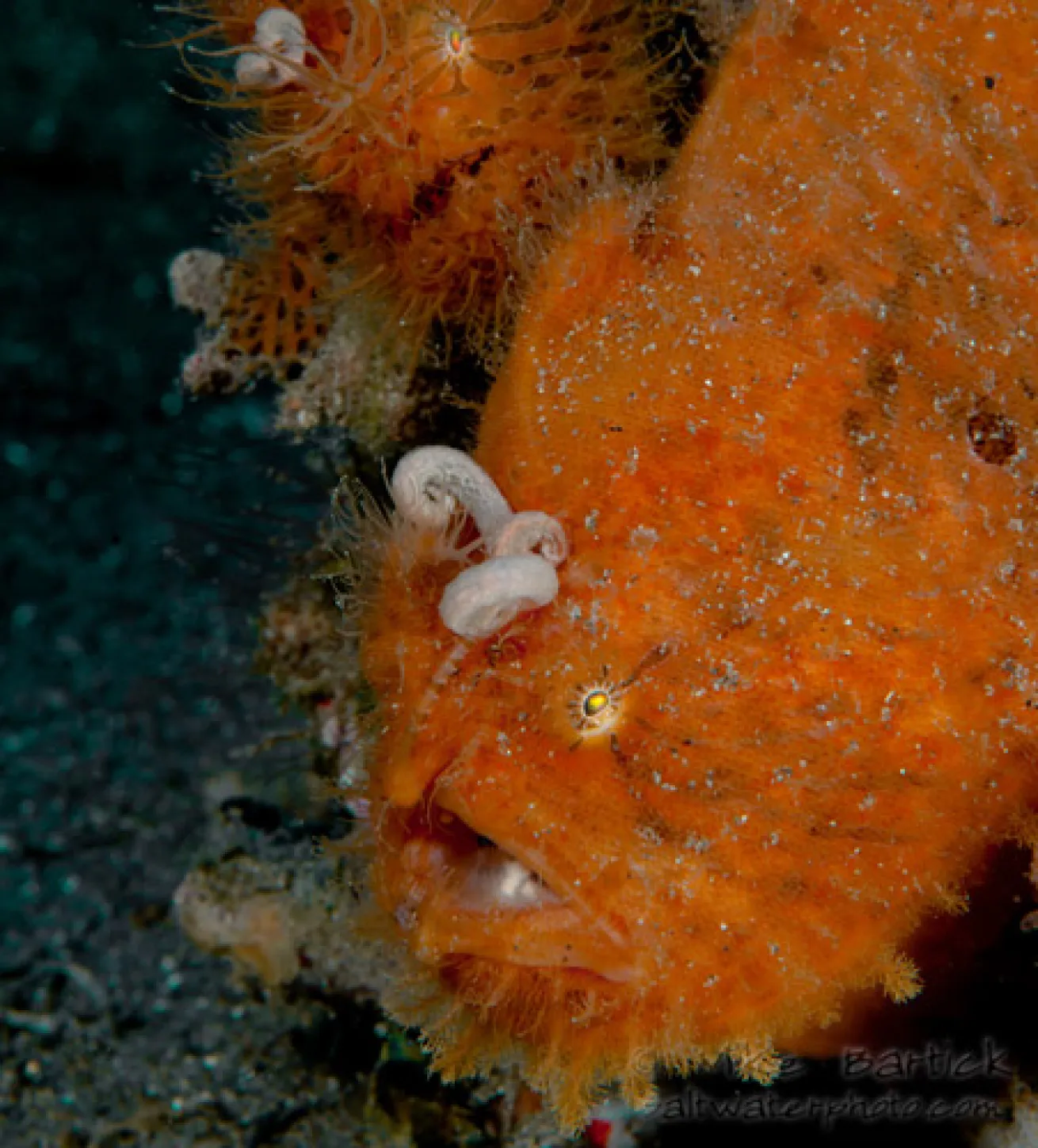
Mike BartickSoon after the juveniles emerge from their eggs they begin to hunt, consuming mysid shrimp from the sand for quick energy. The bright orange colouration possibly mimics poisonous flatworms in order to help them survive immediate predation.
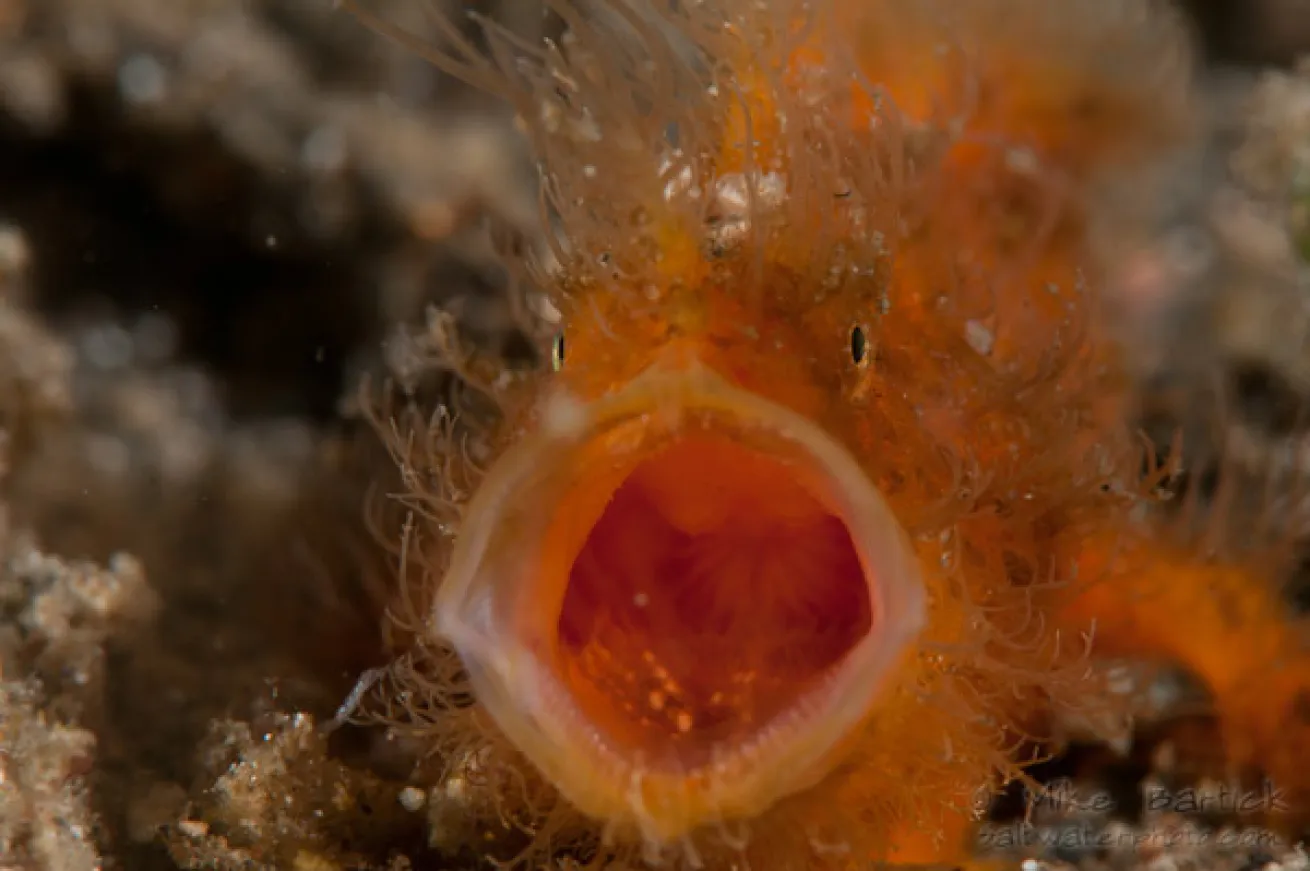
Mike BartickCamouflaged hunters, hairy frogfish are amongst the most sought-after critters worldwide and are considered a holy-grail find for photographers and divers alike. They can range from pink to black in colour, but typically have visible lines (striations) or stripes on their body. A. striatus is normally found on the substrate or perched just above it. They will live out their entire lifecycle here and have adapted some very unique survival tactics in the process, including an oversized worm-like lure, the use of pheromones to hunt, and its namesake hairy appendages. Yawning amongst all frogfish could be a display of stress or aggression or even an attempt at appearing larger than what they really are to ward off the paparazzi.
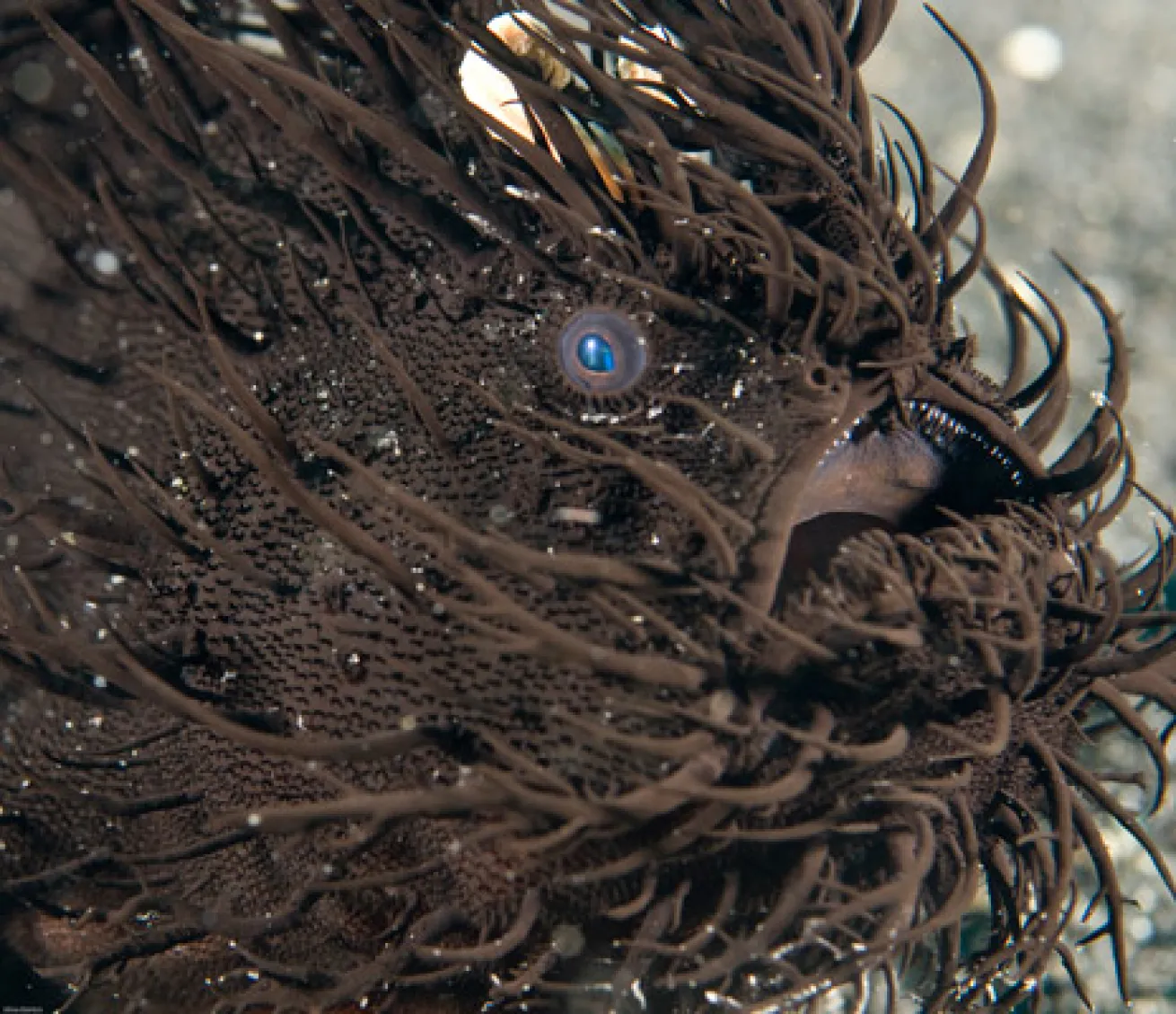
Mike BartickThis version is considered rare and was a treat to see. It proves how adaptive frogfish can be, even within the same species. The black colouration helps it to blend with the black sands of the region.
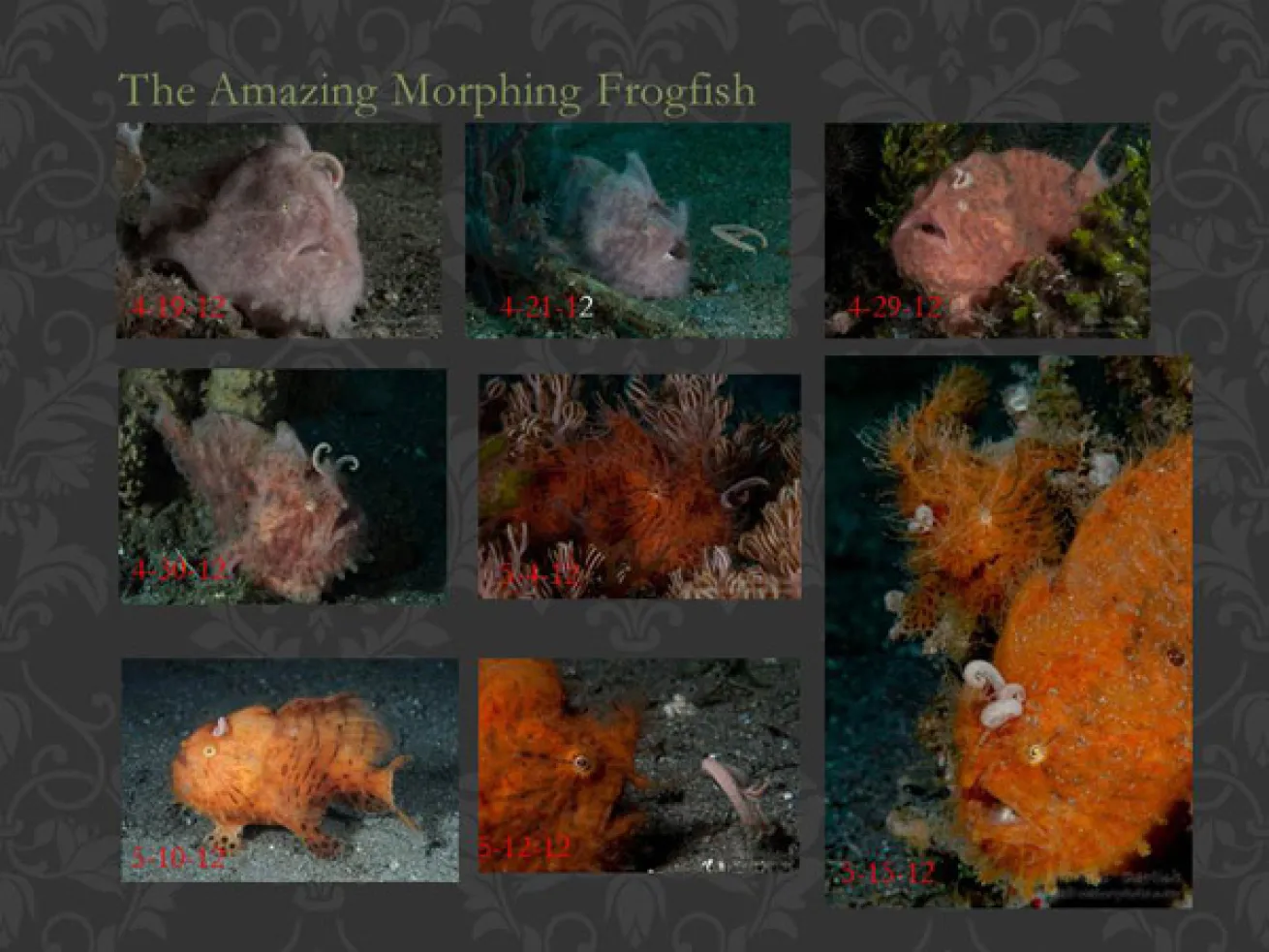
Mike BartickThis chart illustrates the colour morphing of a female A. striatus as she enters into a mating cycle. Over a five-week period, this female was observed closely as we attempted to chronicle the entire mating process.
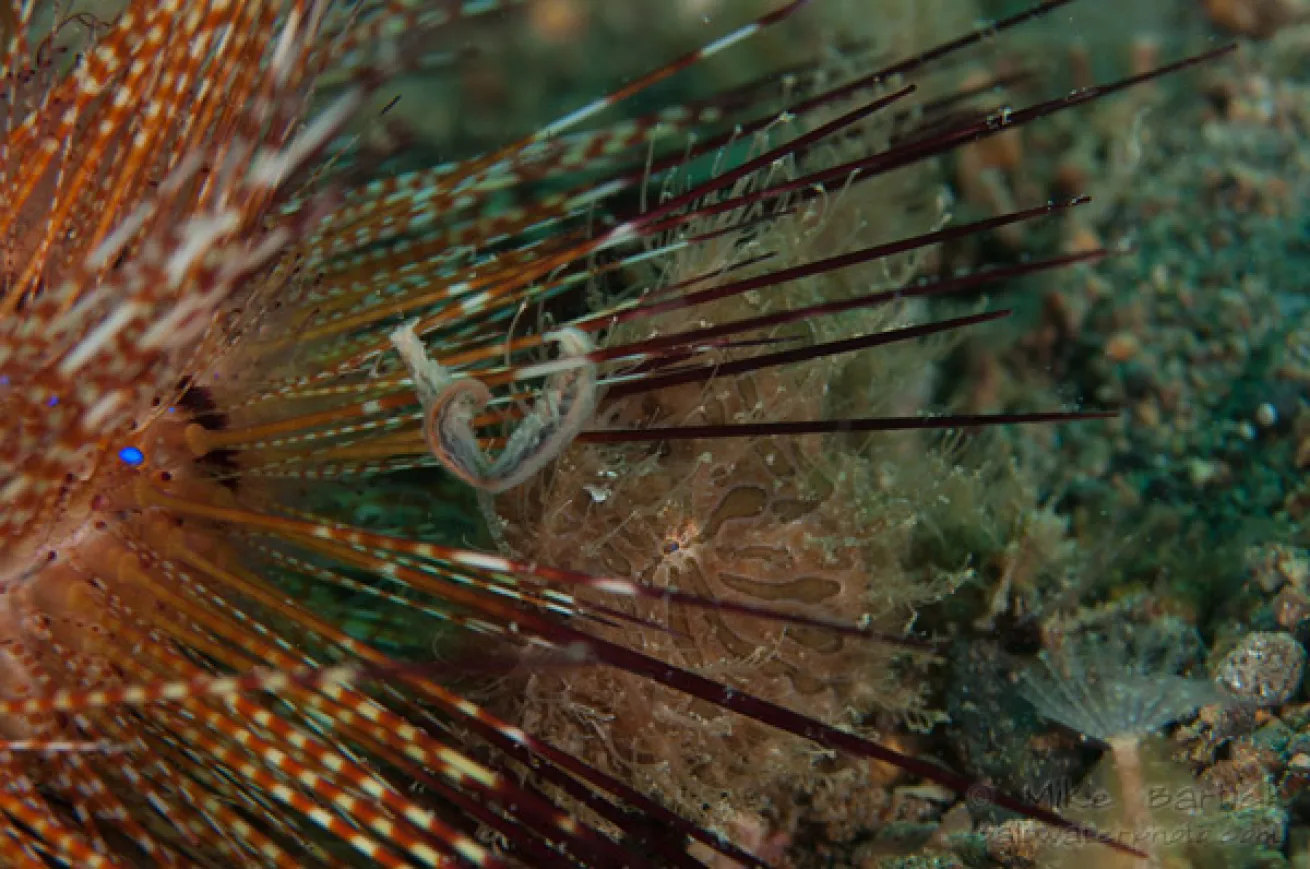
Mike BartickAdaptive behaviours always fascinate me and I couldn’t help but cringe as I watched this A. striatus stop a moving urchin with its body to feed from it. The urchins often host small cardinalfish, a tasty treat for frogfish.
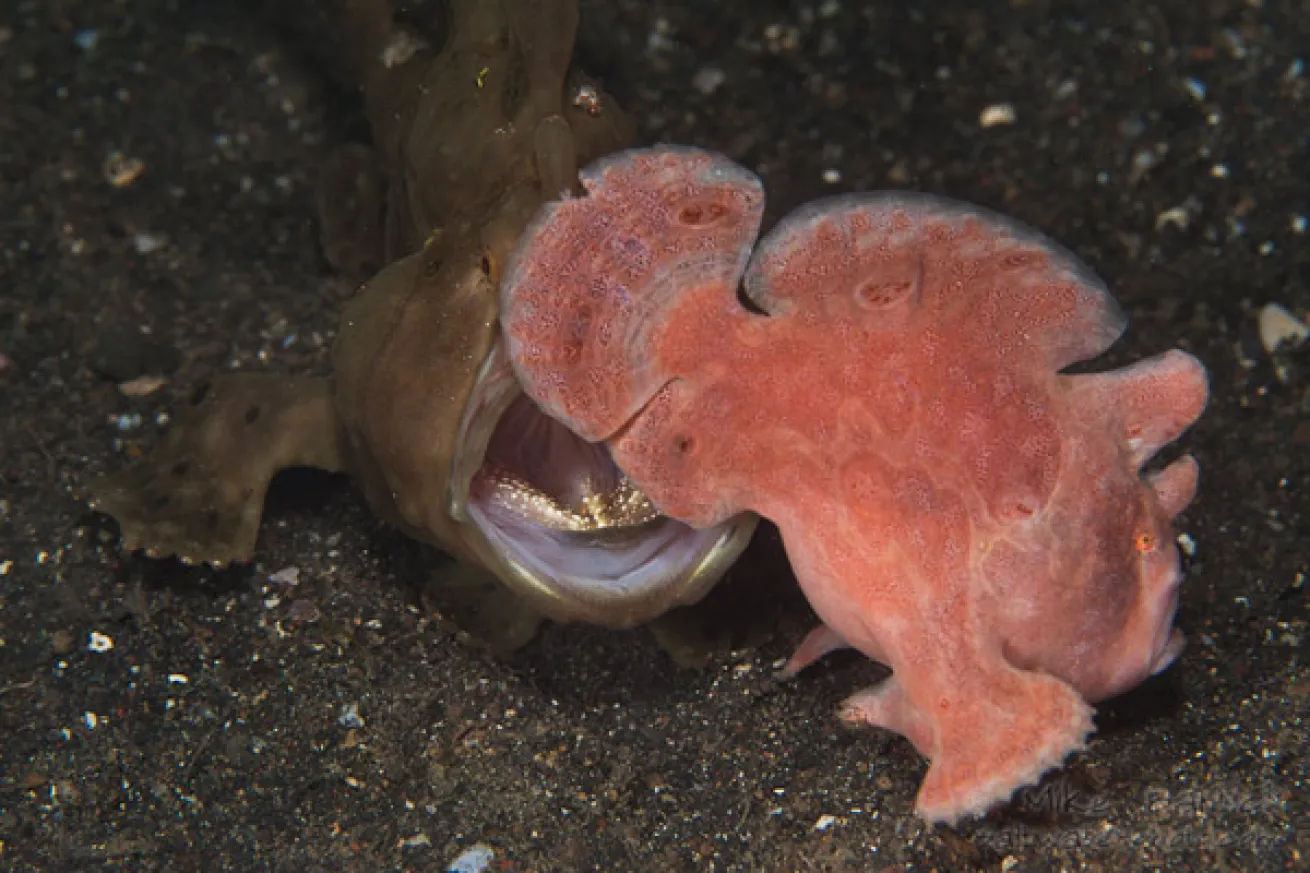
Mike BartickAntisocial behaviour in frogfish is often seen before a mating cycle has begun when a pushy male just won’t take “no!” for an answer. In this case, it appeared that the female was a little more than irritated by the male suitor, as she bit and shook him violently.
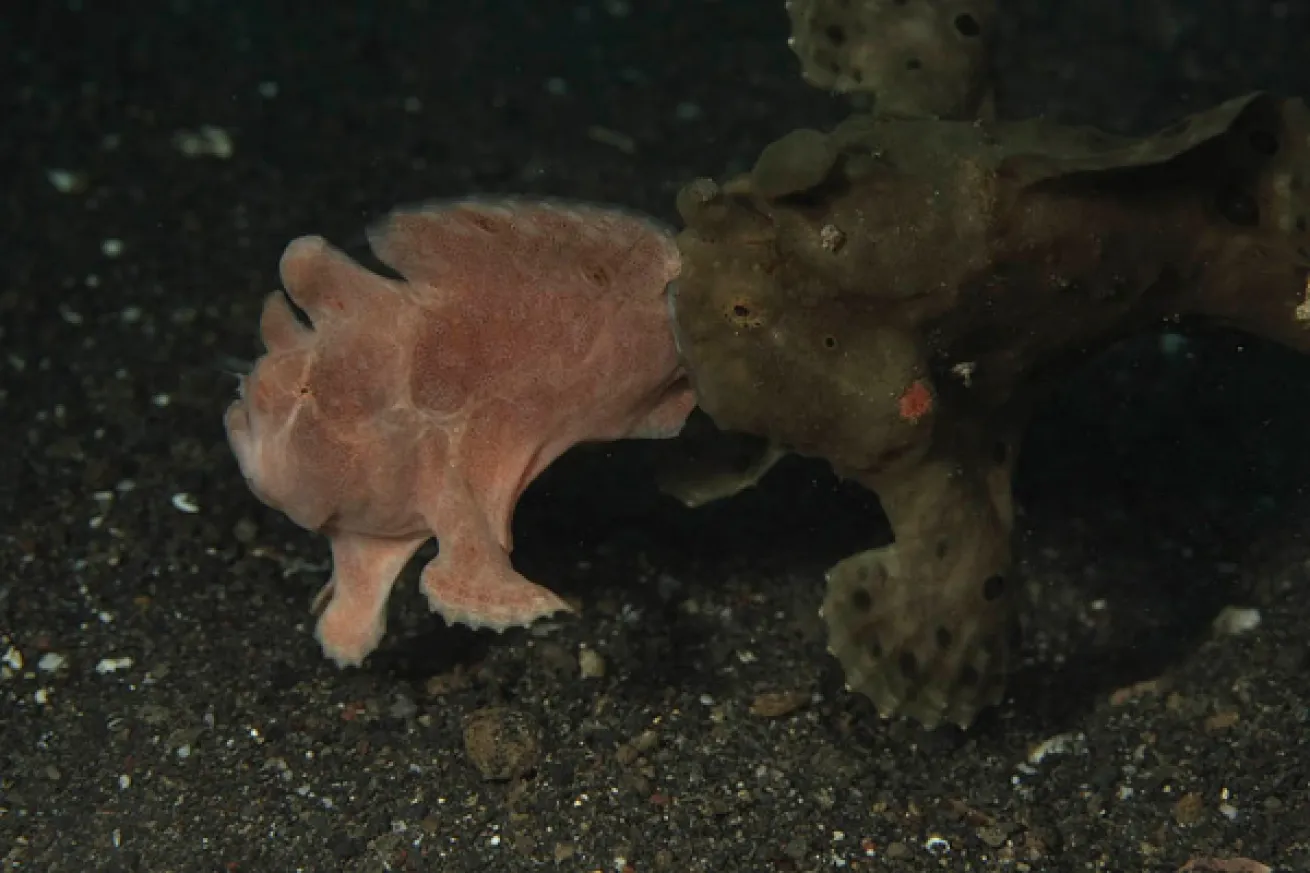
Mike BartickThere aren’t any exterior organs or markings to distinguish a male frogfish from a female, but their behaviour can sometimes give it away.
Mike BartickFemale A. striatus (foreground) uses a powerful pheromone to attract a male suitor. She may spawn twice in a mating cycle, releasing up to as many as 45,000 eggs each time.
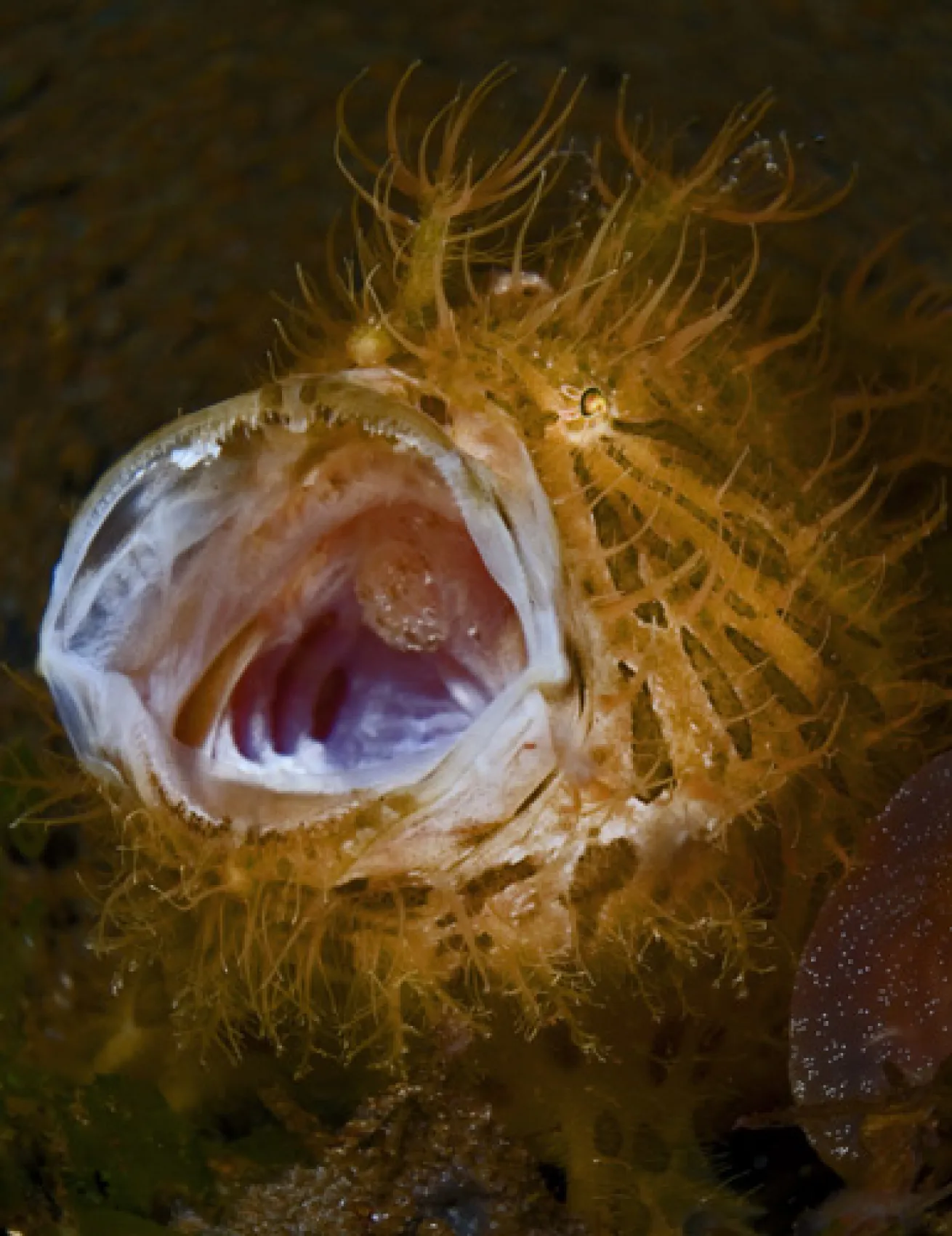
Mike BartickThis guy had a huge attitude. Yawning, possibly making himself bigger to ward off a larger predator?
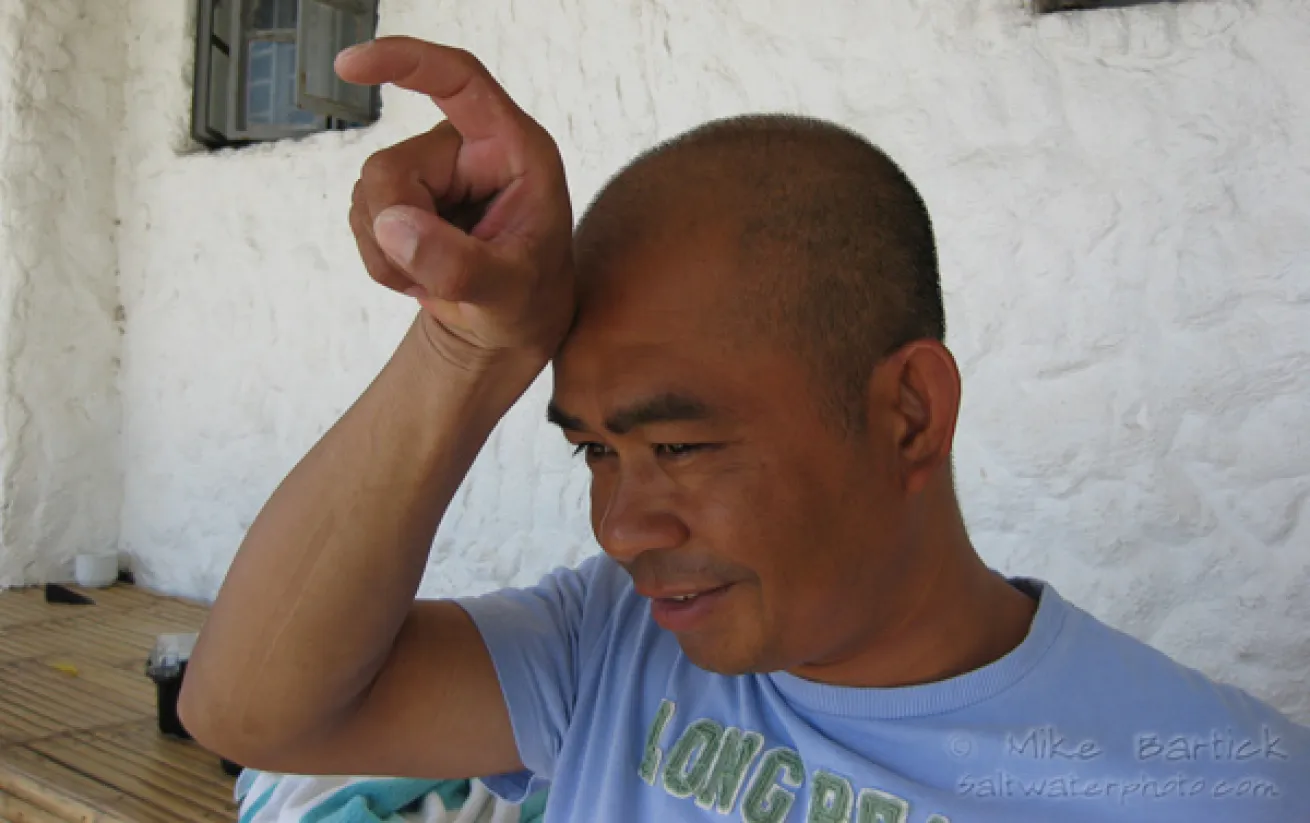
Mike BartickThis is how to signal to your buddy that you’ve spotted a frogfish
Very few creatures on earth are as amazing and diverse as frogfish. The discovery of one on a dive can excite any diver or photographer as everyone wants to get a chance to see it. At first glance, the frogfish remains motionless, appearing as a large-headed globular and scabby creature that could hardly fend for itself. But in reality, frogfish are calculating and veracious predators that have truly mastered their domain. But what makes them so unique isn’t just their colouration, size, texture, or the ability to remain motionless for hours at a time. It isn’t even the little jets behind their legs that help them swim. What makes them truly unique is that they are a type of anglerfish that come equipped with a fishing rod and lure. If that isn’t enough to pique a photographer’s interest, then I’m not sure what is. But if I’ve got your attention, check out the photo gallery and take a quick peek at a few more uncommon facts about these uncommon animals.
Mike Bartick was born and raised in Southern California, not far from the ocean in Huntington Beach. After finding his first nudibranch on an Open Water checkout dive, he was immediately hooked on diving. Bartick, who splits his time between the Indo-Pacific and the Eastern Pacific as a freelance photographer, photojournalist and field guide, shoots with a Nikon D300 and D300s, Sea and Sea housings, and YS-D1 and YS 250 pro strobes. To see more of his work, visit saltwaterphoto.com.
Get more tips for photographing frogfish from Christian Loader of Scubazoo.


