

As summer winds down, September offers excellent scuba diving conditions in many parts of the world, often with lighter crowds and warm water still lingering. Whether you’re chasing shoulder-season pricing or unique wildlife action, this month delivers. Below are five of the best destinations for a September scuba diving trip.
Looking for other months? See our full 2026 Scuba Travel Calendar.
Grand Cayman, Bonaire, Curaçao: Coral in the Caribbean
Dive Highlights: Night Diving, Lunar Timing, Photo Opps

Lorenzo MittigaStaghorn coral spawn at night off Bonaire.
When you think of fascinating underwater mating displays, coral probably isn’t the first animal that comes to mind. But you’d be remiss to overlook their unique spawning events, which happen at night, a few days after the full moon, in late summer throughout the Caribbean.
As corals are sessile animals, firmly attached to the seafloor, they rely on what’s called “broadcast spawning” to reproduce. Coral colonies synchronously release their reproductive cells—some corals emit clouds of sperm, others release eggs the size and shape of peppercorns, and some cast both into the water column.
Diving a spawning event looks as though you’re in the center of a shaken snow globe, delicate flakes swirling around you.
The eggs and sperm combine into free-swimming larvae called planulae, which travel upward, guided by moonlight, to catch surface currents. They drift for days or weeks before settling on the seafloor, starting their own colonies.
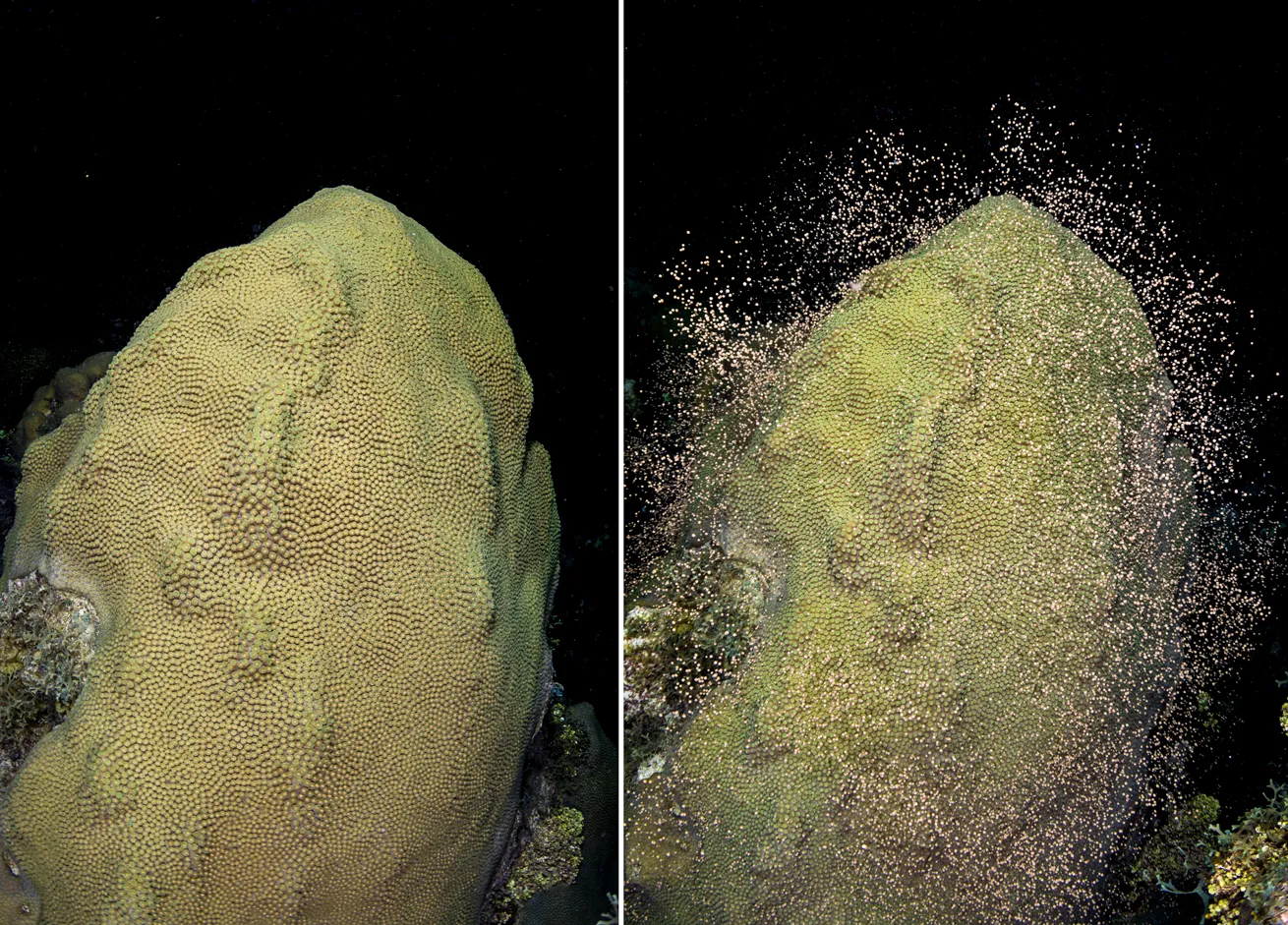
Alex MustardMountainous star coral set gamete bundles then spawn them in the waters of Grand Cayman.
With so much research being done on coral spawning, it’s getting easier and easier to time dives to the events. Three of the most reliable places to catch a Caribbean spawning event are Bonaire, Curaçao and Grand Cayman.
Curaçao and Bonaire: The CARMABI Foundation releases annual spawning predictions for southern Caribbean islands, including Curaçao and Bonaire. These pinpoint the dates and times different species of coral are most likely to spawn throughout the year.
Grand Cayman: Local researchers can predict spawnings down to a 15-minute window. Several operators run specialty spawn charters starting a few days after the full moon in September. —Melissa Smith
Operators: Ocean Frontiers, Sunset House, Divetech (Grand Cayman); Buddy Dive Resort; Dive Friends; Delfins Beach Resort; Plaza Resort/Toucan Diving (Bonaire); Ocean Encounters; Fundiving Curaçao (Curaçao)
Related Reading: Smoke Show: Where to Dive Top Coral Spawn Events
South Florida: Gaggle of Goliaths
Dive Highlights: Wrecks, Boat Dives, Aggregations

Brandon ColeGoliath grouper aggregate near a wreck during spawning season.
Goliath grouper aren’t called so for nothing—fully mature adults can weigh as much as 800 pounds and measure up to 8 feet long. And divers can see them by the dozens off Jupiter, Florida, from August to October.
Hundreds of goliath grouper mob these waters during spawning season. You’re not likely to see the actual spawning—in fact, no human has documented them releasing their reproductive plumes into the water column at night. However, you’ll need no luck to dive with schools of these colossal creatures during the day as they size up potential mates. They can typically be found congregating around wrecks like the MG-111 and the Zion Train. —Melissa Smith
Operators: Pura Vida Divers; Sea Experience
Related Reading: Think Big: How To Put Grouper in the Spotlight
Galápagos Islands: Big Animal Haven
Dive Highlights: Advanced Diving, Cold Water, Liveaboard Options, Big Animals
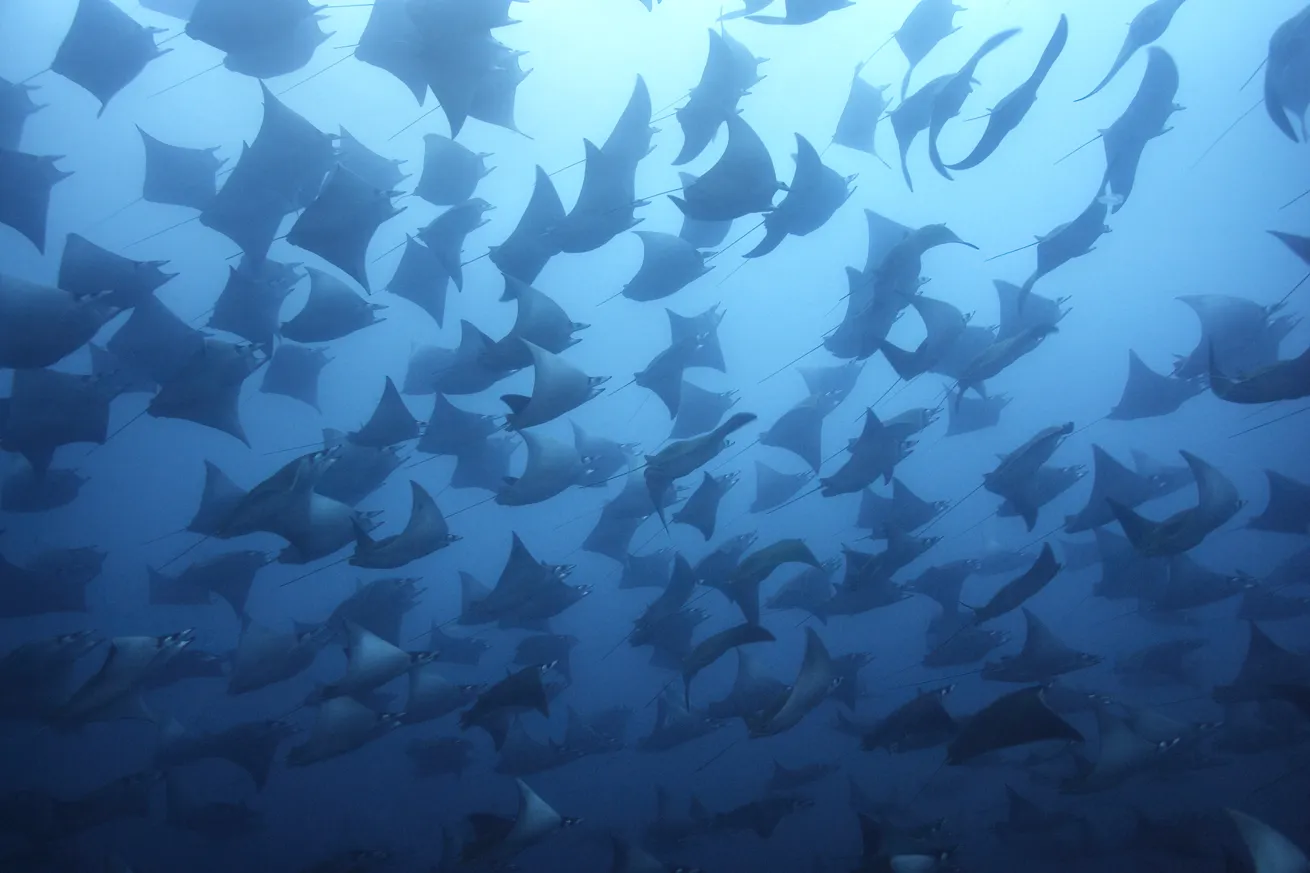
Brandon ColeSmoothtail mobula rays (Mobula munkiana) fly in the blue around the Galápagos Islands.
September lands you straight in the Galápagos' cold season. At this time of year, nutrient-rich currents draw in the big boys.
Whale sharks cruise through Darwin and Wolf islands, many of which are 40-foot-long pregnant females. Schooling hammerheads and curious Galápagos sharks patrol in the hundreds, just off the reef, while divers cling to the rocks watching in awe.
Make no mistake though, these aren't lazy tropical dives. Expect chilly thermoclines, heavy currents and surge. Bring a reef hook and know how to use your SMB. Still, the payoff is huge. You’ll also likely see marine iguanas, sea lions, mola mola and manta rays. —Candice Landau
Operators: Galapagos Master; Galapagos Sky Liveaboard; Galaxy Expeditions; Explorer Ventures
Related Reading: Don't Dive the Galapagos Without Reading This First
Channel Islands: Giants in the Kelp
Dive Highlights: Cold Water, Shore Diving, Photo Opps
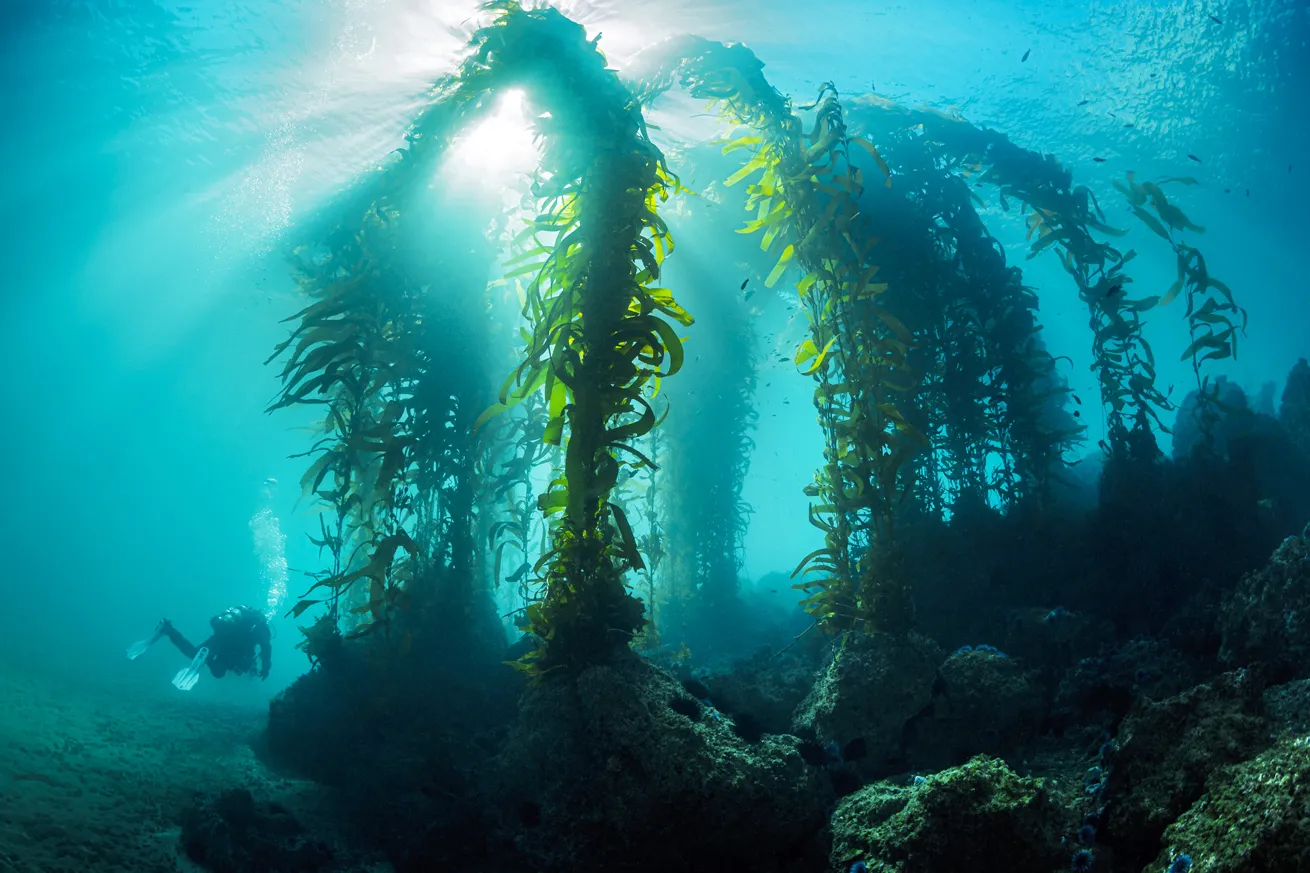
Tobias FriedrichSeptember is an ideal time to visit the giant kelp forests of the Channel Islands.
The Channel Islands National Park sees few visitors—and even fewer divers—but off the coast of Southern California, a golden underwater cathedral awaits. Among snippy goldfish-orange Garibaldi, shy horn sharks and playful sea lions, this archipelago of eight islands (five of which make up the national park) is an underrated marine treasure.
Weather and water temperature are the only barriers: By late fall, conditions can be hit or miss, and a 7 mm wetsuit or drysuit is recommended. Dive in September, when peak visibility may reveal the real prize: the protected giant sea bass, which can grow to hundreds of pounds. These gentle giants quietly patrol the kelp fronds, enchanting divers with their massive size and curious nature. —Ariella Simke
Operators: Spectre Dive Boat
Related Reading: Guide to Diving in Channel Islands National Marine Sanctuary
Iceland: Cold Clarity at Silfra Fissure
Dive Highlights: Cold Water, Shore Diving, Advanced Diving
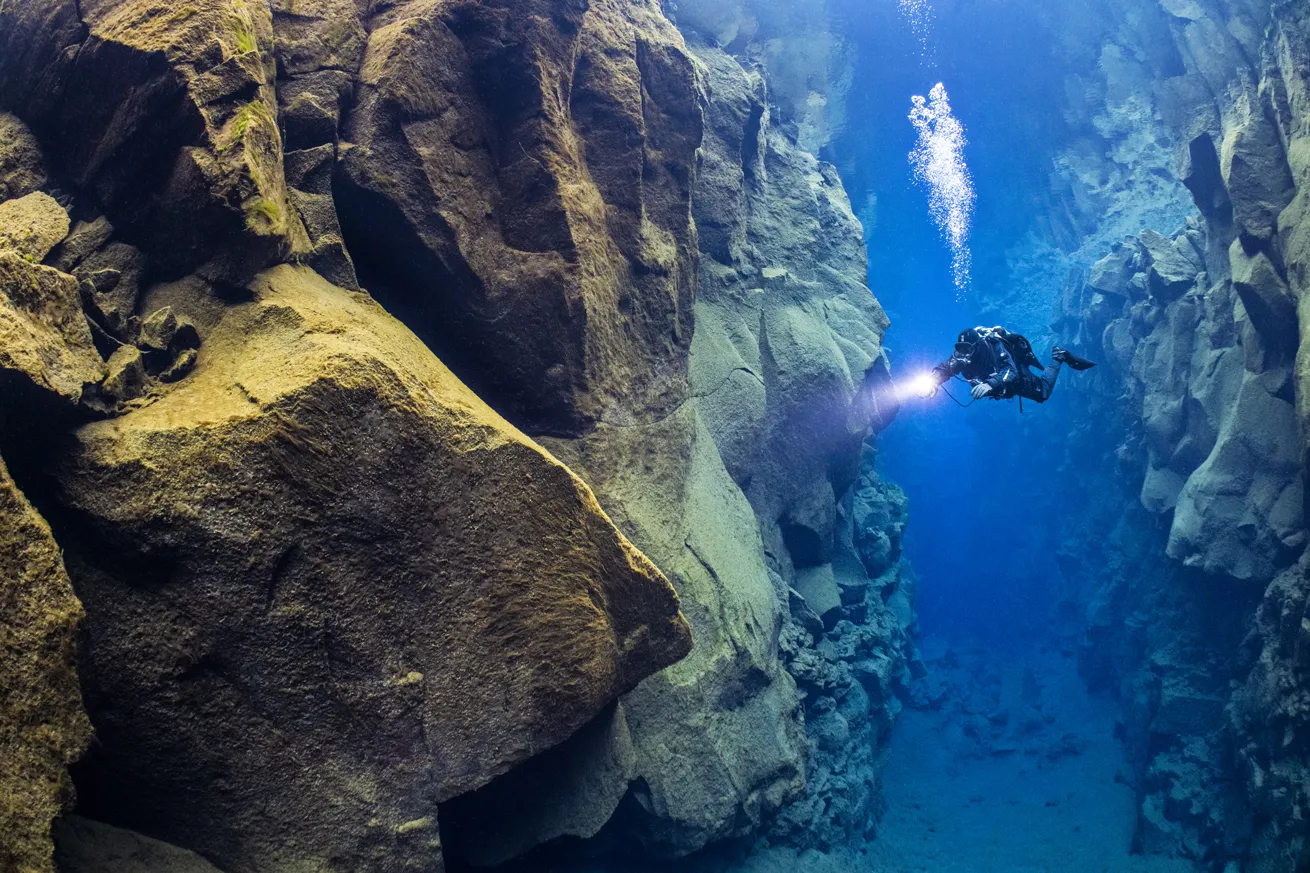
Alex MustardA diver swims through the Silfra Fissure, a crack in the Earth's crust between the North American and Eurasian continental plates that is filled with glacial melt water. In this photo, the American plate is on the right.
Nothing quite prepares divers for the sheer translucency of Silfra, where navigating the freshwater fissure between the North American and Eurasian tectonic plates can feel like floating through air.
Visibility regularly surpasses the 300-foot mark in these glacial waters that have trickled their way through porous lava rock, naturally filtering out sediment along the way. Water temperatures stay between 35 and 39 degrees year-round, so a drysuit is a must.
Plan to visit in September, when night’s darkness increases your likelihood of witnessing aurora borealis light up the skies in curtains of green but winter’s frozen depths won’t have you shivering at the surface. —Terry Ward
Operators: Arctic Adventures Dive School; Dive.is
Related Reading: Diving the World's Clearest Water
Where to Dive Next Month
The Caribbean, South Florida, the Galápagos Islands, the Channel Islands and Iceland are five of the best scuba diving destinations in September. If you’re planning another trip this year, click below for more recommendations from Scuba Diving editors.


